This site is supported by our readers. We may earn a commission, at no cost to you, if you purchase through links. This content is for general informational and educational purposes only and is not a substitute for professional medical, dermatological, or nutritional advice.
Genetics load the gun, but your daily habits pull the trigger. Most men blame patchy, brittle growth entirely on DNA, yet follicle health responds fast to what you put on your skin and in your body. Zinc deficiency alone slows keratin production within weeks, and dry, unconditioned strands snap long before they reach their potential length.
A consistent daily hair care routine for oily hair and skin can keep excess oil from clogging the same follicles your beard depends on to thrive.
Beyond zinc and moisture, nutrient-dense foods play a role too—research on how black sesame seeds support pigment-producing enzymes suggests what you eat shapes beard color and vitality just as much as topical care.
If you’re wondering how fast beard hair actually grows and what’s slowing yours down, this guide on the real factors behind beard growth speed breaks down the science beyond just genetics.
That’s where natural beard health remedies earn their keep. Oils like jojoba and argan condition the hair shaft without clogging pores, while targeted nutrients rebuild what harsh products strip away.
Ahead, you’ll find the specific oils, foods, and routines dermatology research actually backs, so you can grow a fuller, healthier beard starting this week.
Table Of Contents
- Key Takeaways
- Best Natural Oils for Beard Health
- Vitamins and Foods for Beard Growth
- Daily Natural Beard Care Routine
- Natural Remedies for Beard Problems
- Healthy Habits Supporting Beard Growth
- Frequently Asked Questions (FAQs)
- How do I make my beard healthy again?
- What is the 3 month beard rule?
- Why is my beard so itchy all of a sudden?
- What helps your beard grow naturally?
- How to naturally take care of your beard?
- What is the best natural remedy for beard growth?
- Which vitamin is best for beard growth?
- How long does natural beard growth take?
- Can diet alone improve beard thickness naturally?
- What age should men start beard care?
- Conclusion
Key Takeaways
- Your beard’s health depends more on daily habits than genetics alone, so nourishing oils and proper nutrition can noticeably improve growth and texture within weeks.
- Applying oil to a damp beard right after washing (within two minutes) locks in far more moisture than waiting until it’s dry.
- Protein, biotin, zinc, vitamin D, and omega-3s all play direct roles in keratin production and follicle health, making diet just as important as topical care.
- Consistency matters more than intensity: stick with a routine of gentle washing, oiling, brushing, and regular trims for 4-6 weeks before expecting real results.
Best Natural Oils for Beard Health

Not every oil sitting on your bathroom shelf belongs in your beard. Your skin and hair need specific fatty acids, vitamins, and compounds to stay soft and healthy. Here are five natural oils worth adding to your routine, starting with a proven favorite.
A quality beard oil blend is the easiest first step, locking in moisture while nourishing skin underneath the beard for a fuller, healthier look.
Coconut Oil for Softness
That jar in your bathroom cabinet does more than smell like the tropics. Coconut oil melts on contact with skin, delivering lauric acid straight into the hair shaft for real hair softening.
Apply it after washing for moisture retention and friction reduction while combing. You’ll notice a creamy texture, better hydration, and a smoother skin barrier supporting real beard softness within days. Studies show coconut oil can help reduce skin inflammation.
Jojoba Oil for Hydration
Coconut oil provides softness, but jojoba oil earns its place for pure hydration. It mimics your skin’s own sebum, creating a lightweight beard oil that coats each strand without clogging pores.
Rich in vitamin E, copper, and zinc, jojoba oil strengthens the moisture barrier while soothing scalp comfort underneath. Apply it to damp beard hair for absorption that actually lasts.
Argan Oil for Conditioning
Where jojoba hydrates, argan oil conditions. Its oleic and linoleic acids smooth the hair cuticle, cutting frizz and boosting shine.
Loaded with vitamin E and polyphenols, it fights surface damage and softens coarse strands.
- Massage into a damp beard 2-3 times weekly
- Focus on ends if you’re oily
- Detangles without weighing hair down
- Leaves a polished, glossy finish
Rosehip Oil for Skin
Argan takes care of the hair. Rosehip takes care of the skin underneath, where beard health actually starts.
Its vitamin A content spurs collagen and cell turnover, while beta-carotene and vitamin E deliver antioxidant protection against UV damage. Linoleic acid strengthens your skin barrier, and anti-inflammatory compounds calm redness or irritation, even fading old acne scars over consistent use.
Diluting Essential Oils Safely
Undiluted essential oils can irritate skin fast, so mix them into a carrier oil like jojoba or coconut oil first.
Follow a 2% dilution ratio, about 12 drops per ounce, for safe daily use. Sensitive skin? Drop to 1%, six drops per ounce. Accurate drop measurement matters more than you’d think.
Vitamins and Foods for Beard Growth

Your beard doesn’t grow from oil alone; it grows from the inside out. What you eat directly shapes keratin, the protein structure behind every strand. Here’s what your plate needs to build a fuller, healthier beard.
A beard doesn’t grow from oil alone; it grows from the inside out, shaped by what you eat
Protein for Keratin Production
Your beard is only as strong as the protein you eat. Keratin production depends entirely on amino acid sources like eggs, lean meat, and legumes, since cystine (sulfur amino acids) builds keratin’s disulfide bonds.
- Eggs: complete amino profile
- Fish: lean protein plus omega-3s
- Legumes: plant-based building blocks
Dietary protein quality matters more than quantity for consistent beard nutrition.
Pairing a nutrient-rich diet with the right routine, like this beginner’s guide to choosing beard oils, helps lock in moisture and keep every strand looking healthy.
Biotin for Hair Structure
Samson had strength in his hair; you have biotin. This B7 vitamin (C10H16N2O3S) acts as a coenzyme for carboxylases, driving keratin synthesis in your cortex, 80% of each strand. Adequate biotin improves elasticity and cystine bonding.
| Nutrient | Dose | Benefit |
|---|---|---|
| Biotin | 30 mcg | Keratin structure |
| Fish oil | 250-500mg | Reduces inflammation |
| Zinc | Varies | Growth support |
Vitamin D and Beard Health
Sunlight does more for your beard than you’d think. Vitamin D activates receptors in follicle cells, switching on genes tied to growth. Deficiency correlates with weaker, thinner facial hair.
- Get 10-30 minutes midday sun weekly
- Eat salmon, mackerel, egg yolks
- Test blood levels: target 30-50 ng/mL
- Take supplements with fatty meals
Correcting deficiency helps skin and follicle health, even without guaranteed density gains.
Zinc-Rich Foods for Growth
Low zinc, weak beard. This mineral fuels testosterone production, directly influencing follicle density and growth.
| Food | Type | Zinc Benefit |
|---|---|---|
| Pumpkin seeds | Plant | Best source, easy daily addition |
| Red meat | Animal | Highly absorbable zinc |
| Seafood | Animal | Shrimp, oysters boost intake |
| Legumes, nuts | Plant | Steady support in balanced diets |
Aim for 11mg daily, pairing sources for the best beard nutrition and growth.
Omega-3s for Follicle Support
Think of omega-3s as firefighters for angry follicles. Fish oil calms TNF-α inflammation, letting dermal papilla cells proliferate up to 112%.
EPA boosts circulation and nitric oxide, feeding follicles oxygen. It also balances sebum, preventing clogged pores. Aim for 250-500mg EPA/DHA daily.
Six months of consistent intake extends growth phase, activating thicker, denser beard strands.
Daily Natural Beard Care Routine
Great oils and solid nutrition only take you so far without the right daily habits behind them. Your beard reacts to routine, not random effort, so consistency matters more than intensity. Here’s what your day-to-day care should actually look like.
Cleanse Without Overwashing

Washing too often strips sebum faster than skin replenishes it, leaving beards brittle and itchy.
Aim for 2-3 washes weekly, using lukewarm water, not hot, which damages hair and skin. Choose natural cleansers with aloe or oat extract to protect moisture.
Watch for beardruff or breakage. Rinse cool to seal pores and lock in hydration.
Oil a Damp Beard

Once you’ve rinsed and patted down, don’t reach for a towel-dry finish. Apply oil within two minutes, while cuticles stay open and pores receptive. Waiting longer cuts absorption by up to 30%.
Use 3-4 drops for short beards, 5-7 for medium, 8-10 for longer growth. Warm it between your palms, then massage into the skin, not just hair, working roots outward for even distribution.
For best results, apply right after showering when your beard is about 90% dry, since argan oil for beard care absorbs noticeably better than on damp or fully dry hair.
Brush With Natural Bristles

Once oil’s absorbed, grab a boar bristle brush. Bristles carry sebum and oil from root to tip, giving even Bristle Oil Distribution and preventing Beardruff Prevention issues before they start.
Daily strokes deliver real Scalp Massage Benefits, boosting circulation to follicles. This also trains hairs downward, a subtle Hair Training Direction effect that builds thicker, tamer growth over weeks.
Choose Oil, Balm, or Wax
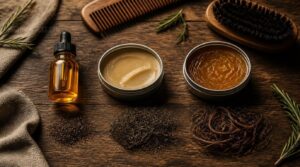
Brushing sets direction, but product choice determines hold.
Beard oil (Jojoba or Coconut Oil) absorbs into skin for softness, no styling strength.
Beard balm offers medium hold via beeswax, good for shaping stubble to medium lengths.
Beard wax delivers maximum grip for longer beards needing structure.
Match product to length: oil short, balm medium, wax long and unruly.
Trim Split Ends Regularly
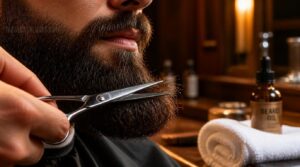
Split ends ruin a beard’s polish fast. Look for frayed, dry-looking tips that snag your comb.
- Frizzy, splitting tips
- Rough texture at the ends
- Dull shine despite oil
- Snagging during brushing
- Uneven length
Trim every 6-8 weeks, removing just 2-5mm. Use sharp shears, not scissors that crush hair. See a barber if splitting persists.
Natural Remedies for Beard Problems
Every beard hits rough patches, and yours is no exception. Itch, flakes, ingrown hairs, brittleness, and irritation all have natural fixes rooted in simple science. Here’s how to treat each one, starting with the itch that tempts too many men to shave it all off.
Soothe Beard Itch Naturally
That itchy beard driving you crazy? Skin barrier disruption, not hair growth, is usually the cause.
Aloe vera application calms redness fast. Diluted tea tree oil fights microbial buildup.
| Method | Benefit | Frequency |
|---|---|---|
| Aloe vera | Cools irritation | Daily |
| Tea tree oil | Antimicrobial | 2-3x/week |
| Beard oil | Hydrates skin | Daily |
Consistent beard oil benefits include lasting comfort, no more scratching your crown of confidence.
Treat Beard Dandruff
Those white flakes on your shoulders? That’s Malassezia fungus, and it responds fast to treatment.
Diluted tea tree oil (1:10 with a carrier) delivers real antifungal properties, improving dandruff scores 61% in trials. Add weekly exfoliation, cut hot showers, and hydrate well. Sleep quality and stress reduction matter too. Consistency beats intensity here.
Prevent Ingrown Beard Hairs
Curled hairs piercing skin, that’s the real cause of razor bumps.
Fix your shaving angle to 30 degrees, always with the grain. Exfoliate beforehand, cold compress after.
- Exfoliate 2-3x weekly
- Shave with grain
- Replace blades every 5-7 shaves
- Trim to 3-5mm
- Use rounded tip scissors
Consistent grooming techniques prevent 90% of ingrown flare-ups within weeks.
Repair Dry, Brittle Hair
Brittle beard hair snaps before it grows. Warm coconut oil weekly for 30 minutes, deep penetration softens strands and cuts breakage.
Try weekly protein masks: egg yolk, mayonnaise, or banana rebuild damaged shafts. Aloe vera gel, applied 15-20 minutes, locks in moisture and heals split ends.
Consistency beats intensity here. Skip the heat tools, air-dry instead, and watch texture improve within weeks.
Reduce Skin Irritation
Redness under your beard isn’t just annoying, it’s inflammation talking. Calm it fast:
- Aloe vera gel for 15-30 minutes
- Diluted essential oils (1-5%) like tea tree
- Weekly oatmeal bath soaks
Carrier oils seal moisture for 6-8 hours. Skip harsh products. Consistent skin moisturization prevents flare-ups before they start.
Healthy Habits Supporting Beard Growth

Oils and grooming tools only get you so far. What happens outside your bathroom mirror matters just as much for beard growth. Here are five daily habits worth building into your routine.
Stay Properly Hydrated
Your beard is roughly two-thirds water beneath the surface, and skin cells need that supply to stay resilient. Don’t wait for thirst; drink at regular intervals throughout the day instead.
Check your urine color. Pale straw means good fluid balance; darker shades signal it’s time to top up. Urinating every two to four hours is a solid hydration guide.
Manage Stress Through Exercise
Water fuels follicles, but cortisol undermines them. Stress hormones choke circulation to hair roots, so exercise becomes damage control.
Aerobic activity for 20-30 minutes lowers cortisol and lifts mood for hours afterward.
- Walk briskly or bike most days
- Split sessions: morning and lunch
- Start slow, build gradually
Consistent movement isn’t optional for beard growth. It’s follicle protection, plain and simple.
Prioritize Consistent Sleep
Exercise settles cortisol, but sleep is where follicles actually rebuild. Aim for consistent sleep and wake times, even on weekends, capping bed time at eight hours.
Add a calming wind-down routine and morning sunlight within thirty minutes of waking. This locks in circadian rhythm alignment, so your beard care routine gets the recovery window it needs. Patience pays off here.
Maintain a Balanced Diet
Sleep repairs, but food supplies the raw materials. Your beard runs on protein quantity and quality, complex carbs, and healthy fats.
- Eggs and chicken breast for keratin-building amino acids
- Oats and quinoa for steady, fiber-rich energy
- Salmon and flax for omega-3 circulation
- Brazil nuts for selenium and vitamin E
- 2,150 daily calories to fuel follicle metabolism
Follow a Consistent Routine
Rarely does one remedy transform a beard. Results come from a daily oiling habit stacked on weekly trim schedule consistency.
| Habit | Frequency | Best Time |
|---|---|---|
| Morning oil ritual | Daily | Post-shower |
| Cleansing | 2-3x weekly | Morning |
| Trim | Every 1-2 weeks | Anytime |
| Evening moisturizing | Nightly (long beards) | Before bed |
| Brushing | Daily | 2 minutes |
Patience matters. Full results take 4-6 weeks, not days.
Frequently Asked Questions (FAQs)
How do I make my beard healthy again?
Restoring beard vitality starts with daily beard oil. Massage jojoza or argan oil into damp skin, brush with natural bristles, eat protein-rich meals, and stay consistent. Quick beard recovery follows healthy habits, not overnight fixes.
What is the 3 month beard rule?
The 90-day commitment period means letting your beard grow untouched through the patchy phase. Skip trimming, rely on grooming tools and patience instead. By week 12, you’ll have a real growth evaluation for your style decision.
Why is my beard so itchy all of a sudden?
Sudden itch usually signals new growth irritation, sharp hairs scratching follicles during the stubble phase, or dry skin under beard. Yeast overgrowth and ingrown hairs cause it too. Jojoba oil soothes irritation while restoring your skin’s moisture barrier.
What helps your beard grow naturally?
Like Samson’s strength, your beard thrives on fundamentals: protein for keratin, biotin supplements, and coconut, jojoba, argan, or rosemary oil massaged into skin. Add sleep, stress reduction, and hormonal balance, and you’ll support the beard growth cycle naturally within weeks.
How to naturally take care of your beard?
Samson’s power lived in his hair, and your beard thrives on the same principle. Wash gently, massage in jojoba or argan oil nightly, brush daily, rinse with cold water, and trim monthly for lasting strength.
What is the best natural remedy for beard growth?
Massage castor oil and rosemary essential oil into your beard daily. This combo boosts circulation to follicles, but pair it with coconut oil, biotin supplements, and a protein-rich diet for real, lasting growth results.
Which vitamin is best for beard growth?
Biotin wins top honors, driving keratin production for stronger strands. Vitamin D activates dormant follicles, while B6 and B12 fuel cell energy. Together, this Vitamin B Complex helps promote thicker, healthier beard growth within weeks.
How long does natural beard growth take?
Rome wasn’t built in a day, and neither is a beard. Expect visible growth in 2-6 weeks, with full beard thickness by 2-4 months. Genetics, age, hydration, and stress all shape your timeline.
While you wait for those follicles to catch up, a nourishing argan and jojoba beard oil and balm set can keep new growth soft and healthy instead of wiry and unruly.
Can diet alone improve beard thickness naturally?
Diet alone can’t rewrite your genetics. It helps existing follicles through protein, biotin, zinc, and omega-3s, but won’t create new ones. Expect gradual thickness gains, not dramatic transformation, especially if a medical condition limits growth.
What age should men start beard care?
Start once facial hair appears consistently, often around 16- Genetics and puberty timing vary widely, but early care habits like gentle cleansing and moisturizing build healthier skin under the beard, supporting fuller growth through your twenties and beyond.
Conclusion
Think of a patchy jawline as an honest messenger, not a life sentence. It’s telling you what your follicles are missing.
Consistent oiling, zinc-rich meals, and disciplined sleep rebuild what stress and neglect erode. Natural beard health remedies work because they address root causes, not symptoms. Give your routine six weeks.
Genetics decided where hair grows. Your habits decide how well it thrives. That’s your crown of confidence, earned one disciplined day at a time.