This site is supported by our readers. We may earn a commission, at no cost to you, if you purchase through links. This content is for general informational and educational purposes only and is not a substitute for professional medical, dermatological, or nutritional advice.
Run your fingers through your ponytail and count the strands left behind. Three or four is normal shedding. A small handful means something else is going on, and it’s probably breakage, not loss.
Breakage happens along the shaft, not at the root, and it shows up as fraying, dryness, and ends that split no matter how carefully you brush. Hot showers, tight heat tools, and rushed towel-drying all play a part. The damage builds slowly, so most people don’t notice until their hair stops growing past a certain length.
The good news? Hair breakage prevention methods work fast when you target the right habits. From your shampoo routine to what’s on your dinner plate, small changes add up to stronger, longer hair.
Table Of Contents
- Key Takeaways
- Hair Breakage Signs and Common Causes
- How to Prevent Hair Breakage Daily
- Top 8 Hair Breakage Prevention Products
- 1. Pantene Miracle Rescue Damaged Hair Treatment
- 2. amika Kure Strength Repair Treatment
- 3. Briogeo Rice Water Protein Treatment
- 4. It’s A 10 Keratin Conditioner
- 5. MONDAY HAIRCARE Moisture Shampoo 30oz
- 6. Dove Breakage Remedy Hair Conditioner
- 7. Moroccanoil Treatment Hair Oil 1.7oz
- 8. tgin Miracle RepaiRx Anti Breakage Serum
- How to Repair Damaged, Breaking Hair
- Nutrition and Lifestyle for Stronger Hair
- Frequently Asked Questions (FAQs)
- What is the best thing to prevent hair breakage?
- What vitamin are you lacking if your hair is breaking?
- What is the biggest cause of hair breakage?
- What can I put on my hair to keep it from breaking?
- How do you prevent hair breakage?
- What is a holistic approach to preventing hair breakage?
- How to repair hair breakage?
- Can hair care products prevent hair breakage?
- What are hair breakage treatments & products?
- What are the different types of hair breakage treatments?
- Conclusion
Key Takeaways
- Most hair loss you notice in your ponytail isn’t shedding at all, it’s breakage along the shaft caused by heat, dryness, and rough handling.
- You can stop breakage early by lowering heat tool temps, using a heat protectant, and switching to gentle habits like microfiber towels and wide-tooth combs.
- Balancing protein and moisture is key to repair, so test your hair’s elasticity weekly and adjust with protein masks or deep conditioning as needed.
- Strong hair depends as much on your diet as your routine, so prioritize protein, iron, zinc, omega-3s, and hydration to support growth from within.
Hair Breakage Signs and Common Causes
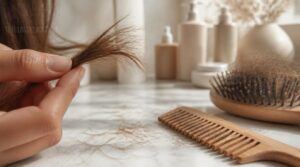
Hair breakage rarely happens for just one reason. Your strands can send warning signs long before real damage sets in, and the root cause often traces back to daily habits. Here’s what to watch for, and what’s likely behind it.
If you notice excessive shedding, split ends, or unusual dryness, these simple ways to prevent further hair damage can help you protect your strands before breakage takes hold.
Uneven Strands and Split Ends
Run your fingers through your ends. Feel rough patches or spot strands shorter than the rest? That’s split end identification 101.
Uneven Strand Causes usually trace back to breakage, not growth patterns. Left untreated, splits travel upward and fray further.
Regular trims stop the damage climbing higher. Pair that with gentle detangling and protective styles to keep new splits from forming. Scheduling trims every 6–8 weeks is the only definitive way to prevent existing splits from traveling further up the shaft.
Dryness and Overwashing
Splits aren’t the only warning sign. Straw-like texture and squeaky-clean strands after washing point to overwashing, which strips natural oils fast.
Hot water worsens it, so stick to lukewarm rinses. Hard water minerals compound the dryness too.
- Wash 2-3 times weekly, max
- Apply conditioner to mid-lengths and ends
- Skip scalding water
- Eat protein-rich meals for hydration support
Balanced nutrition and consistent moisture retention keep strands flexible, not brittle.
Heat and Chemical Damage
Heat and chemicals attack hair from different angles, but together they’re brutal. Straighteners running above 200°C denature keratin proteins, while dyes and bleach lift the cuticle, making strands 2-3 times more vulnerable to heat damage.
Always apply a heat protectant spray first. Keep tools below 180°C, and avoid excessive heat styling on chemically treated hair to prevent bubble hair formation and protein loss.
Rough Handling and Tight Styles
Your hair breaks when you handle it like it can take a beating. Aggressive brushing, brushing wet hair, and tight ponytails create constant pulling on the follicle, leading to hairline thinning over time.
Treat your hair gently, or aggressive brushing and tight ponytails will pull it toward thinning
Practice gentle detangling, loosen your grip, and avoid hair tension whenever possible. Try loose braid patterns, low-manipulation hairstyles, and a silk bonnet at night for real protection.
Nutrient Deficiencies and Health Issues
When your diet falls short, your hair shows it fast. Low protein, iron, or zinc weakens keratin production, causing brittle, breakage-prone strands. Watch for biotin deficiency signs like brittle nails or scalp rashes.
Boost iron absorption by pairing spinach with vitamin C. Add zinc food sources like pumpkin seeds, omega3s from fatty fish, and vitamin D sources such as sunlight or fortified foods. A balanced diet, plus vitamin E oil, restores strength from within.
How to Prevent Hair Breakage Daily
Breakage prevention isn’t one big fix. It’s a handful of small habits, repeated daily, that protect your strands from root to tip. Here’s exactly where to start.
Wash Hair Without Stripping Oils
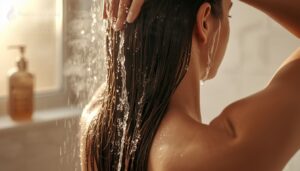
Every wash strips away oils your hair needs to stay strong. Stick to a gentle cleansing routine using sulfate-free shampoo and lukewarm water, 2-3 times weekly. This preserves your moisture barrier.
- Softer, shinier strands
- Less frizz and tangling
- Fewer split ends
- A calmer, balanced scalp
Don’t overwash. Your scalp’s natural oils are protection, not a problem to scrub away.
Detangle Damp Hair Gently
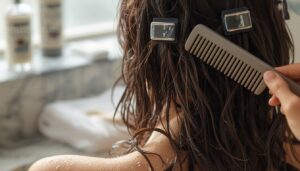
Knots don’t vanish on their own, so how you comb makes all the difference.
Section hair first, then work a wide-tooth comb from ends upward.
Add conditioner slip for glide, use finger detangling on stubborn spots, and don’t brush wet hair roughly.
Damp timing matters most: cuticles handle product best before drying fully.
Reduce Heat Styling Damage
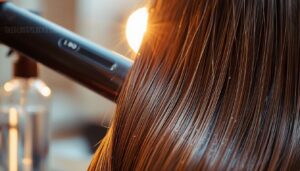
Every degree counts when heat meets your strands. Stick to lower heat settings, ideally under 350°F, and let ceramic tools distribute heat evenly instead of scorching one spot.
Always apply heat protectant spray first, section hair before styling, and never linger on one strand. Cool down after each pass. Skip daily heat entirely when you can, don’t apply too much heat, and rinse with lukewarm water for healthier strands.
Dry Hair Without Friction

Rubbing wet strands with a rough towel is basically sandpapering your cuticle. Swap it for a microfiber towel, which absorbs seven times its weight in water and cuts drying time in half.
Blot gently instead of scrubbing. This simple habit, plus a wide-tooth comb for any last tangles, keeps friction (and breakage) to a minimum.
Protect Hair While Sleeping

Eight hours on a rough pillowcase can undo everything you did at bedtime. Switch to a Silk Pillowcase or wear a Satin Bonnet to cut friction.
Finish hair completely dry, apply Overnight Oil, then secure a Loose Braid. Night Detangling with gentle detangling first prevents snarls. Skip tight ponytails, they stress the shaft while you sleep.
Top 8 Hair Breakage Prevention Products
Good habits only get you so far without the right products backing them up. You need formulas that actually rebuild strength, not just mask damage temporarily. Here are eight options worth adding to your routine.
1. Pantene Miracle Rescue Damaged Hair Treatment
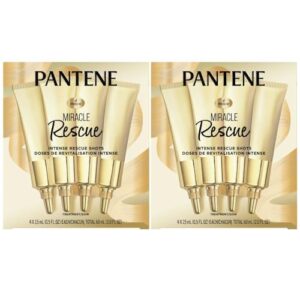
Pantene’s Miracle Rescue line is built for hair that’s dry, damaged, and prone to split ends. As a conditioning treatment, it’s applied after shampooing, working Provitamin B5, antioxidants, and lightweight oils through mid-lengths to ends.
You’ll get real slip and softness without heavy silicone buildup. Leave it on for a few minutes, then rinse for smoother, more manageable strands.
Two cartons of four 0.5 oz ampoules make it easy to keep on hand. Use it every few days, not daily, especially if your hair runs long or extra damaged.
| Best For | People with dry, damaged, or split-end-prone hair who want a quick deep-conditioning boost between salon visits, including those with synthetic braids or extensions. |
|---|---|
| Product Type | Conditioning Treatment |
| Key Ingredient | Provitamin B5 |
| Best For | Dry, damaged hair |
| Paraben Free | Not specified |
| Application Frequency | Every few days |
| Cruelty Free | Not specified |
| Additional Features |
|
- Delivers visibly healthier, shinier, and stronger hair after just one application
- Restores moisture and helps reduce the look of split ends without heavy silicone buildup
- Convenient single-use ampoules make it easy to grab and go, even for touch-ups on braids or extensions
- Not meant for daily use, so it requires some planning to fit into a hair care routine
- Can make shower surfaces slippery during application
- Longer or more severely damaged hair may need multiple ampoules per treatment, using up the supply faster
2. amika Kure Strength Repair Treatment
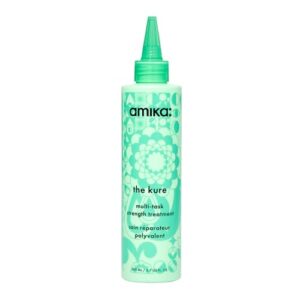
Speed matters when your strands are already fragile, and that’s where amika Kure Strength Repair Treatment earns its spot. This vegan, bond-fortifying formula works in just 60 seconds, using quinoa proteins, sea buckthorn oil, and mango butter to target weak points along the shaft. Clinical testing showed hair strength increased 2.4 times, with breakage dropping 58% after three uses.
Use it after shampooing and conditioning, once or twice weekly. You’ll feel the difference almost immediately: softer texture, easier detangling, and a noticeable boost in shine, without any heaviness weighing your hair down.
| Best For | Anyone with damaged, overprocessed, color-treated, or breakage-prone hair (types 1‑4c) looking for a fast, lightweight treatment to strengthen and smooth strands. |
|---|---|
| Product Type | Bond Repair Treatment |
| Key Ingredient | Quinoa Protein |
| Best For | Damaged, color-treated hair |
| Paraben Free | Not specified |
| Application Frequency | 1-2x weekly |
| Cruelty Free | Vegan formula |
| Additional Features |
|
- Clinically shown to increase hair strength 2.4× and cut breakage by 58% after three uses
- Safe and gentle for color-treated hair
- Leaves hair feeling softer, shinier, and more manageable without weighing it down
- May require extra product to fully saturate hair, increasing how much you use per application
- Some users reported no noticeable improvement even after weeks of consistent use
- Non-returnable, so you can’t return or exchange it if it doesn’t work for you
3. Briogeo Rice Water Protein Treatment
If quick fixes aren’t cutting it, rice water might be your answer. Briogeo’s Rice Water Protein Treatment strengthens hair up to 2X and cuts breakage by 60% after one use.
Its rice protein complex, blended with B vitamins and algae extract, fortifies damaged cuticles and rebuilds elasticity from within. Apply to clean, damp hair for 10 minutes weekly, targeting your most damaged sections.
At 98% naturally derived and free of sulfates, silicones, and parabens, it suits every texture, straight, wavy, curly, or coily, craving real repair.
| Best For | Anyone with damaged, color-treated, or chemically processed hair who wants a weekly deep-repair treatment that strengthens strands and restores elasticity without stripping color. |
|---|---|
| Product Type | Protein Treatment |
| Key Ingredient | Rice Protein |
| Best For | Damaged, chemically processed hair |
| Paraben Free | Yes |
| Application Frequency | Weekly |
| Cruelty Free | Not specified |
| Additional Features |
|
- Clinically shown to strengthen hair up to 2X and reduce breakage by 60% after just one use
- 98% naturally derived formula free of sulfates, silicones, parabens, and phthalates, safe for color-treated hair
- Works across all hair textures, straight, wavy, curly, or coily
- Some users find the label text too small to read easily
- A few customers reported bottles arriving without the cap
- The dual-chamber dispenser may not dispense product evenly from both sides
4. It’s A 10 Keratin Conditioner
Rice water works from the outside in. This one works from the inside out.
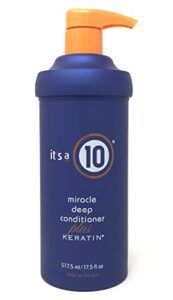
It’s A 10 Keratin Conditioner pairs hydrolyzed keratin with amino acids that patch gaps along the cuticle, rebuilding strength where chemical processing has thinned it out. Aloe vera and sunflower seed extract smooth rough spots while shielding strands from heat and UV rays.
Rub a small amount between your palms, then work it through towel-dried hair from mid-lengths to ends. Skip the roots. Your color-treated hair will thank you.
| Best For | anyone with dry, brittle, color-treated, or chemically processed hair looking to rebuild strength and tame frizz. |
|---|---|
| Product Type | Keratin Conditioner |
| Key Ingredient | Hydrolyzed Keratin |
| Best For | Dry, brittle, color-treated hair |
| Paraben Free | Yes |
| Application Frequency | Regular use |
| Cruelty Free | Yes |
| Additional Features |
|
- Hydrolyzed keratin and amino acids restore moisture and strength to damaged strands
- Paraben-free, cruelty-free formula made with natural ingredients like aloe vera and sunflower seed extract
- Adds shine and manageability without weighing down fine or oily hair
- Pricier than standard drugstore conditioners
- Some users have reported issues with a missing or faulty pump
- Availability can be inconsistent depending on the retailer
5. MONDAY HAIRCARE Moisture Shampoo 30oz
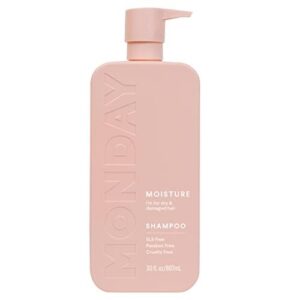
Dry, coarse hair needs a shampoo that hydrates without weighing strands down. MONDAY HAIRCARE’s Moisture Shampoo uses coconut oil and shea butter to soften texture while sealing the cuticle against moisture loss. Hyaluronic acid binds water to the shaft, and coco glucoside cleanses gently without stripping your natural oils.
It’s sulfate-free, pH-balanced, and safe for color-treated hair. Use it daily if needed. The 30oz bottle gives you months of consistent hydration, making it easy to keep breakage-prone hair soft, manageable, and less prone to snapping.
| Best For | People with curly, wavy, or frizzy hair—including color-treated hair—who want a gentle, daily-use shampoo that softens strands and cuts down on greasiness between washes. |
|---|---|
| Product Type | Shampoo |
| Key Ingredient | Coconut Oil & Shea Butter |
| Best For | Curly, wavy, frizzy hair |
| Paraben Free | Yes |
| Application Frequency | Daily |
| Cruelty Free | Yes |
| Additional Features |
|
- Formulated with coconut oil, shea butter, and vitamin E to soften hair and control frizz
- Free from SLS, parabens, and phthalates, and dermatologically tested with a pH-balanced formula
- Cruelty-free certified (Leaping Bunny) and packaged in 100% recyclable bottles
- Doesn’t add volume or styling hold
- May not be moisturizing enough on its own for very dry or coarse hair without a conditioner
- Neutral scent may disappoint those who prefer a fragranced shampoo
6. Dove Breakage Remedy Hair Conditioner
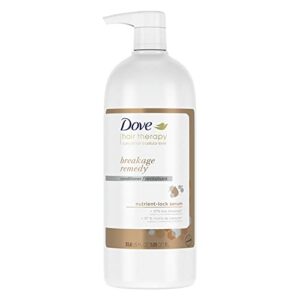
A three step system built around one goal: stopping breakage before it starts. Dove’s Breakage Remedy Conditioner uses a Nutrient-Lock serum with dipeptides that work at the strand level, cutting breakage by up to 97% with regular use.
You’ll notice thicker, stronger-looking hair within weeks. It’s paraben-free, suitable for fine, curly, thick, or grey hair, and won’t weigh strands down.
Apply from mid-lengths to ends, leave on for one to two minutes, then rinse thoroughly. Pair it with the matching shampoo for the best results.
For a routine that works year-round, tailor your timing to your hair type using this guide to how often you should condition your hair.
| Best For | Anyone with fine, curly, thick, or grey hair dealing with breakage who wants noticeably thicker, stronger-looking hair after a few weeks of consistent use. |
|---|---|
| Product Type | Conditioner |
| Key Ingredient | Dipeptides |
| Best For | Fine, curly, thick, or grey hair |
| Paraben Free | Yes |
| Application Frequency | Regular use |
| Cruelty Free | Yes |
| Additional Features |
|
- Nutrient-Lock serum with dipeptides targets hair at a cellular level to cut breakage by up to 97%
- Paraben-free and cruelty-free, with packaging made from 70% recycled plastic
- Moisturizes without weighing down fine hair, while detangling and improving manageability
- Results take several weeks of regular use to become noticeable
- Can feel overly slippery on fine, thin hair, which may reduce styling hold
- Large bottle size makes it less convenient for travel
7. Moroccanoil Treatment Hair Oil 1.7oz
If you’ve ever wondered why salon stylists reach for the same bottle again and again, argan oil is usually the answer. Moroccanoil Treatment uses it to boost shine by up to 118% while smoothing the cuticle layer from within.
Apply just 1 to 2 pumps to damp, towel-dried hair, working from mid-lengths to ends. It detangles, cuts frizz, and builds a light barrier against humidity, all without greasy buildup when you don’t overdo it.
If your ends still feel dry or brittle no matter what, this guide on how to fix dead hair walks through deeper repair steps.
| Best For | People with medium to thick or curly hair who deal with frizz and want extra shine and easier styling. |
|---|---|
| Product Type | Hair Oil |
| Key Ingredient | Argan Oil |
| Best For | Medium to thick or curly hair |
| Paraben Free | Not specified |
| Application Frequency | Every wash |
| Cruelty Free | Not specified |
| Additional Features |
|
- Boosts shine by up to 118% while conditioning and detangling in one step
- Works as a heat protectant primer and adds smoothness before blow drying or styling
- Leaves hair soft and manageable without feeling greasy when used in the right amount
- Costs more than typical drugstore hair oils
- Can feel heavy or greasy on fine hair if you use too much
- Strong fragrance and shine may fade after several hours, needing reapplication
8. tgin Miracle RepaiRx Anti Breakage Serum
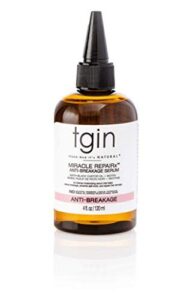
Six oils in one bottle sounds like a lot, but that’s the point. tgin’s Miracle RepaiRx blends castor, coconut, olive, argan, jojoba, and peach kernel oils with vitamin E to strengthen weakened strands from root to tip.
The CPR Protein Treatment built into this serum helps rebuild internal strength, not just surface shine. It’s sulfate, paraben, and petrolatum free, so you won’t strip your progress while making it.
Warm a dime-sized amount between your palms for a hot oil treatment, or smooth onto damp hair to seal moisture and calm frizz.
| Best For | anyone with dry, damaged, or curly hair looking to repair breakage while adding lasting hydration and shine. |
|---|---|
| Product Type | Hair Oil/Treatment |
| Key Ingredient | Multi-Oil Blend |
| Best For | Frizzy, breakage-prone hair |
| Paraben Free | Yes |
| Application Frequency | Regular use |
| Cruelty Free | Yes |
| Additional Features |
|
- Six nourishing oils plus vitamin E work together to hydrate, soften, and define curls while taming frizz
- CPR Protein Treatment targets internal strand strength, not just surface shine
- Free of sulfates, parabens, petrolatum, lanolin, and artificial colors, and cruelty-free
- Thin consistency can make it tricky to find the right amount for your specific hair texture
- Some users notice better shine and manageability but little change in actual breakage
- The 4-ounce bottle is small and may run out quickly for those with thick or long hair
How to Repair Damaged, Breaking Hair
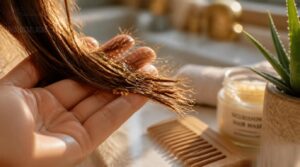
Once breakage starts, prevention alone won’t undo the damage already done. Your hair needs targeted repair to rebuild strength and restore moisture from the inside out. Here’s exactly how to bring it back to life, one step at a time.
Balance Protein and Moisture
Snapping strand? That’s a protein cry. Test it wet: stretch gently. Snaps back, you’re balanced. No bounce means add moisture; instant snap means protein’s low.
- Test elasticity weekly
- Snap = protein mask
- Mushy = deep conditioning
- Rotate moisture and protein
- Space protein treatments 4-8 weeks
Protein moisture balance keeps elasticity intact and breakage away.
Apply Leave-in Conditioner
Think of leave-in conditioner as your hair’s daytime bodyguard, guarding moisture retention long after you rinse.
Apply to towel-dried strands, mid-lengths to ends. Comb through with a wide-tooth comb for even coverage.
Curly hair? Go richer for definition. Fine hair needs lighter, water-based formulas.
Choose ingredients wisely: proteins and glycerin support real hair breakage repair without weighing hair down.
Seal Ends With Hair Oil
Leave-in conditioner locks in moisture, but oil seals it there. Choose sealant oils like jojoba, argan, or coconut, they coat the cuticle and block water loss.
Apply 2-3 drops on damp ends. For thick hair, use up to 4 teaspoons.
Try a nighttime oil routine under a silk cap. Weekly hair masks or a coconut oil scalp massage boost hydration too.
Trim Split Ends Regularly
Oil only seals what’s already healthy. Split ends still need cutting, or damage travels up the shaft.
Trim every 6 to 8 weeks. Check for tiny forks at the tips, that’s your sign.
DIY option: twist small sections, snip 0.5cm with sharp shears. Dust lightly to preserve length while stopping breakage before it spreads.
Pause Heat and Chemical Treatments
Trimming stops damage from spreading, but your strands still need a break from what caused it.
Give hair a real Recovery Time Schedule: skip heat styling tools and chemical treatments for 2-4 weeks straight.
- Picture your ends finally relaxing, no more scorching or stripping
- Feel the relief of soft, undamaged lengths again
- Watch breakage slow as your Chemical Rest Period takes hold
When you return to styling, use heat protectant spray every time.
Nutrition and Lifestyle for Stronger Hair
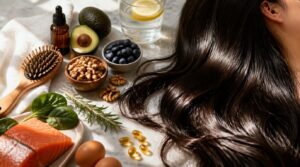
Healthy hair starts from the inside out. What you eat and how you care for your body directly shapes your hair’s strength. Here’s what your daily routine should include.
Eat Enough Daily Protein
Your hair is roughly 90% protein, so skimping on it shows up fast as breakage. Aim for 46g daily (women) or 56g (men) through lean meat, eggs, tofu, and legumes. Spread protein across meals instead of one big dose. Plant sources like lentils count too.
Pair food intake with occasional protein masks for extra reinforcement.
Prioritize Iron and Zinc
When your iron runs low, hair follicles feel it first. Aim for 18mg daily (women) or 8mg (men) from lentils, spinach, or grass-fed steak. Pair iron-rich meals with vitamin C to boost absorption, but skip tea or dairy nearby.
For zinc, target 8-11mg daily through pumpkin seeds or chickpeas. Cap supplements at 40mg to avoid nausea.
Include Omega-3 Food Sources
Your scalp needs fat to stay hydrated, not just water. Omega-3 fatty acids ease inflammation and boost scalp health, feeding stronger, more elastic strands.
Rotate your sources:
- Fatty fish like salmon, mackerel, sardines
- Plant ALA foods: flaxseed, chia, walnuts
- Fortified eggs, yogurt, or milk
- Omega-3 supplements when fish intake is low
- Canola or soybean oil in cooking
Aim for 250-500mg EPA/DHA daily through a balanced diet.
Stay Consistently Hydrated
Every strand you have is roughly a quarter water, so daily water intake matters as much as any product on your shelf.
Sip water frequently, eat water-rich foods, and check urine color as your fluid monitoring cue, aiming for pale yellow.
| Cue | Target |
|---|---|
| Water | 8 cups |
| Urine color | Pale |
| Void frequency | 5-7x |
| Diet | Balanced |
Seek Help for Severe Breakage
Some breakage needs more than a good routine. If shedding feels excessive or patches appear, book a dermatologist consultation for scalp exam and blood test guidance (thyroid, ferritin, vitamin D). Ask about:
- Scalp biopsy for suspected alopecia areata
- Insurance coverage questions before testing
- Prescription options like minoxidil or JAK inhibitors
Getting answers early makes hair breakage treatments far more effective.
Frequently Asked Questions (FAQs)
What is the best thing to prevent hair breakage?
Think of your hair as a fraying rope, one snag from unraveling. The single best fix? Consistent gentle care: sulfate-free shampoo, weekly protein masks, heat protectant, wide-tooth comb detangling, and a silk pillowcase every night.
What vitamin are you lacking if your hair is breaking?
Biotin deficiency is the top suspect, disrupting keratin production. Low Vitamin C, D, or B12, plus insufficient iron, Vitamin A, or Vitamin E for hair, can also weaken strands. A blood test confirms which nutritional deficiency impact is driving your breakage.
What is the biggest cause of hair breakage?
Your flat iron and blow dryer top the list. Thermal styling breaks down protein bonds in each strand, and pair that with chemical processing, physical tension from tight ponytails, or moisture lack, and breakage becomes almost inevitable.
What can I put on my hair to keep it from breaking?
Funny how the priciest salon fixes often work less than a $10 oil. Try hydrolyzed keratin and argan oil for strength, silk amino acids for smoothness, and a weekly protein mask to seal moisture in.
How do you prevent hair breakage?
Blot hair with a microfiber towel, apply heat protectant, and stick to a weekly oil treatment. Space out washes, get regular trims, practice gentle detangling with a wide-tooth comb, and sleep on silk pillowcases to cut friction.
What is a holistic approach to preventing hair breakage?
Think root to tip, not just quick fixes. Combine gentle detangling, silk pillowcases, deep conditioning, and a balanced diet with stress reduction and scalp massage. Low-manipulation styles plus daily hydration build lasting strength from the inside out.
How to repair hair breakage?
You’ll rebuild damaged strands with a bond builder therapy, weekly protein masks, and a moisture lock treatment. Add a cuticle repair serum, leave-in conditioner, and regular trims to boost elasticity while limiting heat and chemical processing.
Can hair care products prevent hair breakage?
Yes. Sulfate-free shampoo, deep conditioning treatments, and leave-in conditioners restore moisture protein balance and reduce friction. Avoid high-pH formulas that strip oils.
A heat protectant role matters too, shielding strands whenever you reach for hot tools.
What are hair breakage treatments & products?
Your damaged strands need targeted repair, much like frayed rope fibers. Protein masks, bond-building therapy, leave-in conditioners, and repair serums restore elasticity, strengthen weak points, and support your hair’s structure from the inside out.
What are the different types of hair breakage treatments?
Not every fix works the same way, and that’s the point. Protein Bond Repair targets weak internal bonds.
Moisture Rebalancing and Cuticle Smoothing masks restore softness, Hair Oil Sealing locks in shine, and leave-in conditioner plus sulfate-free shampoo maintain daily strength.
Conclusion
Ready to run your fingers through your ponytail again, without dread? Strong hair isn’t luck. It’s the result of consistent hair breakage prevention methods: gentle washing, careful detangling, and smart nutrition working together daily. Skip a step, and damage creeps back in. Stick with the routine, and you’ll see fewer strands on your brush and more length past your shoulders. Your hair remembers every habit. Choose the ones that build it up, not tear it down.