
This site is supported by our readers. We may earn a commission, at no cost to you, if you purchase through links. This content is for general informational and educational purposes only and is not a substitute for professional medical, dermatological, or nutritional advice.

Your shins flake after every shower. Your hands crack by November. Your face feels two sizes too small by noon.
That tight, scratchy feeling has a cause, and it’s rarely just the weather. Cold wind, dry indoor air, and hot water all strip the lipids your skin needs to hold moisture. Age, genetics, and medications pile on. Some cases signal something deeper, like a thyroid problem or an infection.
The right dry skin treatment options depend on what’s driving the damage. Once you know the trigger, you can repair your barrier at home or spot the signs that call for a dermatologist.
Table Of Contents
- Key Takeaways
- Causes and Triggers of Dry Skin
- Dry Skin Symptoms: Severity and When to Seek Care
- Dry Skin Treatment Options: Moisturizers and At-Home Relief
- Daily Habits to Prevent Dry Skin Flare-Ups
- Medical Treatments for Persistent or Severe Dry Skin
- Frequently Asked Questions (FAQs)
- What is the most effective treatment for dry skin?
- What is your body lacking when you have dry skin?
- What do doctors prescribe for very dry skin?
- What is the fastest way to hydrate dry skin?
- What is the best treatment for extremely dry skin?
- How to treat dry skin on face for kids?
- Can dry skin cause permanent scarring?
- How often should I replace moisturizers?
- Does drinking more water improve dry skin?
- Are expensive moisturizers more effective than drugstore?
- Conclusion
Key Takeaways
- Dry skin usually comes from a leaky moisture barrier, so you can often fix it at home by spotting your trigger, whether that’s cold, dry air, hot showers, harsh products, or chlorine.
- Moisturize within three minutes of bathing on slightly damp skin, using a fragrance-free cream with ceramides, glycerin, and an occlusive like petrolatum, and keep showers short and lukewarm.
- Medications and conditions like thyroid disease, diabetes, or kidney disease can also dry your skin, so tell your doctor about everything you take and never stop a medication on your own.
- Book a dermatologist visit if itching lasts past two weeks, the dryness persists despite regular moisturizing, or you see cracking, and get care the same day for spreading redness, pus, red streaks, or fever.
Causes and Triggers of Dry Skin

Dry skin doesn’t show up out of nowhere. Your skin is reacting to something, and the cause is often easy to spot once you know where to look. Here are the seven common triggers to check, from the weather outside to the products in your bathroom.
Once you’ve ruled out the usual culprits, building a simple skincare routine for dry skin can help your skin barrier recover and hold onto moisture.
Cold
The cold strips moisture from your skin fast. It weakens your skin barrier function, so moisture retention drops like a leaky bucket. Wind makes it worse.
Then you step inside, and indoor heating effects pile on more dryness. Cover up with gloves before you head out. Seal in moisture with a thick ointment after washing. Run a humidifier at night.
Dry Air
is the quiet partner of cold. Indoor humidity below 50% pulls water from your skin like a thirsty sponge. When relative humidity falls below 30%, trans-epidermal water loss rises, and the outer skin layer stiffens and becomes more vulnerable to irritation.
Fix it fast:
- Run a humidifier overnight.
- Aim for 40–60% indoor humidity.
- Wear soft protective clothing outdoors.
- Moisturize to rebuild your moisture barrier.
Spot these environmental triggers early. Control them, and your skin stays comfortable.
Hot Water And Overwashing
Water can be a quiet thief too. Hot showers strip the oils that seal your skin, and transepidermal water loss climbs once you step out.
Overwashing and harsh detergents make it worse. Each wash peels away more lipids than your skin can replace, so your moisture barrier wears thin.
Keep showers short and lukewarm. Use cleanser where you need it.
Aging And Genetic Factors
Time and DNA play a part too. Aging effects show up fast, and genetic factors can stack the deck.
- Ceramides drop by your 30s.
- Skin elasticity fades.
- Stratum corneum integrity weakens.
- Filaggrin mutations cut natural moisturizers.
- Menopause lowers hydration.
One mutated copy brings mild dryness. Two bring heavy scaling. Your routine can’t rewrite DNA, but it can protect your barrier.
If your skin feels tight after cleansing, a gentler option like these essential oil and vitamin C facial cleansing wipes may help, though patch testing first is still wise.
Underlying Medical Conditions
An internal problem can dry your skin from the inside out. Check this list:
| Condition | Effect | Tip |
|---|---|---|
| Diabetes | Less sweat | Moisturize feet |
| Hypothyroidism | Fewer oils | Thicker creams |
| Kidney disease | Toxin buildup | Ask your doctor |
| Chemotherapy | Cell damage | Use gentle cleansers |
Thyroid disease and kidney disease hit hardest, so don’t ignore stubborn flaking. Your skin is a smoke alarm, not noise.
Medication Side Effects
Sometimes your pills are the culprit. Diuretics pull water from your body, and your skin feels it. Statins can thin your skin’s lipid barrier. Chemotherapy slows skin renewal, so cracks come fast.
Retinoids dry you out, too. Even topical corticosteroids can thin skin over time. Don’t stop anything on your own. Tell your doctor first. They can suggest gentler swaps.
Harsh Products And Chlorine
Think of your skin barrier as a brick wall, and chlorine as the wrecking crew.
Chlorine and other harsh products strip the oils that power moisture retention. Your skin feels tight fast.
Rinse with fresh water right after swimming. Switch to fragrance-free cleansers, then smooth on a ceramide moisturizer while you’re still damp. Do it every single time, no exceptions.
Dry Skin Symptoms: Severity and When to Seek Care
Your skin sends signals long before dryness becomes a real problem. Learning to read them puts you in control and keeps you safe. Below, you’ll see how to tell mild dryness from something that needs a doctor’s attention.
Mild Dryness Symptoms

Ever feel like your skin shrank in the wash? That’s mild dry skin talking. You’ll notice tightness after a shower, fine white flakes on your shins, and an occasional itch. Redness stays faint. Pain never shows up.
Your moisture barrier is running low on skin hydration. Gentle cleansing and basic emollient therapy usually fix it within a day or two.
Severe Or Persistent Dryness
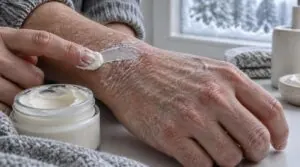
Dryness that won’t quit isn’t just a cold-weather nuisance. It’s your skin asking for backup. Persistent xerosis cutis often points beyond simple dryness. Watch for:
- Cracks or bleeding
- Marked itching
- Widespread scaling
- Dryness despite regular moisturizer use
Barrier repair and emollient therapy help, but skin hydration alone may not fix a root cause. Ask a clinician what’s really driving it.
Signs Of Skin Infection
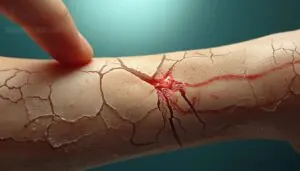
Dry skin can turn into a door with no lock. Cracks let germs walk right in, especially if you have eczema, atopic dermatitis, contact dermatitis, or other inflammatory skin conditions.
Cracked, dry skin leaves a door unlocked for germs, especially if you live with eczema or other inflammatory skin conditions
Watch for a skin infection: spreading redness, warmth, swelling, pus, honey-colored crust, or worsening pain. Red streaks or fever mean it’s moving. Don’t scratch, because scratching widens that door further.
When To Seek Care

Some signs mean you shouldn’t wait. If itching keeps you up at night or lingers past two weeks, book a dermatologist consultation. Home care has had its shot.
Red streaks, fever, or fast-spreading redness need care today. Don’t tough it out. Your doctor may use prescription ointments or topical steroids and guide skin barrier repair, especially with inflammatory skin conditions.
Dry Skin Treatment Options: Moisturizers and At-Home Relief

Dry skin responds well to simple, steady care at home. Below, you’ll find three points that cover barrier-supporting ingredients, the right timing for moisturizer, and a few home remedies worth trying (plus some exfoliation cautions).
Think of them as your starter toolkit for calmer, softer skin.
Choosing Moisturizers and Barrier-Supporting Ingredients
Most dry skin needs a moisturizer that rebuilds your skin barrier, not just coats it. Look for ceramides, cholesterol and fatty acids. They deliver lipid replenishment, like mortar between bricks.
Pair them with humectants such as glycerin and hyaluronic acid to pull water in. Add emollient ingredients like squalane or shea butter to smooth rough patches. Choose gentle, fragrance-free formulas.
When and How to Apply Moisturizer
You’ve picked the right formula. Now timing matters just as much as the product.
Moisturizer works best on clean, slightly damp skin. Follow these steps:
- Pat dry, leaving skin damp, not dripping.
- Apply within 3 minutes of bathing.
- Smooth on a generous layer with gentle, downward strokes.
- Repeat twice daily if your skin is sensitive.
That 3-minute window locks in skin hydration.
Home Remedies and Exfoliation Precautions
Moisturizer does the heavy lifting, but a few kitchen staples help too. Keep your showers lukewarm and your cleansers fragrance-free.
| Remedy | Use |
|---|---|
| Oatmeal baths | Calm itching |
| Sunflower oil | Reduce water loss |
| Aloe vera | Soothe hands overnight |
| Honey | Soften and hold moisture |
Exfoliate once or twice weekly. Skip large, gritty scrubs. They cause microtears, and your barrier pays for it.
Daily Habits to Prevent Dry Skin Flare-Ups

You can stop most flare-ups before they start. Daily habits work like a good raincoat: they keep trouble out.
Take lukewarm showers and keep them under ten minutes. Hot water strips oils fast. Wash with a fragrance-free cleanser, pat your skin dry, and apply moisturizer within three minutes. Treat that window like a closing door.
Run a humidifier in your bedroom and aim for 40 to 50 percent humidity. Wear cotton against your skin, and choose protective clothing like gloves and scarves outside in cold weather. Keep your nails short. Add an oatmeal bath when skin feels tight.
Drink water, eat omega-3 rich foods, and go easy on alcohol and caffeine. Keep a symptom journal to spot triggers. Try yoga.
Medical Treatments for Persistent or Severe Dry Skin

Sometimes moisturizer and good habits aren’t enough, and that’s your cue to call in backup. Persistent or severe dry skin needs a medical treatment plan, and two areas matter most. Here’s what to look at next.
Prescription Treatments and Dermatologist Care
Dry skin that won’t quit needs a pro. Start with hydrocortisone, then level up:
- Mild steroids calm itching fast.
- Tacrolimus protects thin facial skin.
- Crisaborole avoids steroid side effects.
- Phototherapy resets stubborn patches.
- Dupixent quiets severe eczema.
Rough, scaly spots? Ask about topical chemotherapy creams or photodynamic therapy. Stick with dermatologistrecommended, gentle pH balanced cleansers meanwhile. Your skin will thank you soon.
Addressing Underlying Conditions and Medication Effects
Maria’s heels cracked despite daily lotion. Her culprit? Untreated hypothyroidism. Fix the cause, and creams finally work.
| Trigger | Feeling | Fix |
|---|---|---|
| Thyroid | Tired | Treatment |
| Diuretics | Tight | Review |
| Kidneys | Itchy | Hydration |
| Retinoids | Raw | Moisturize |
Genetic factors, contact dermatitis, seborrheic dermatitis and topical chemotherapy creams can also mimic or worsen dryness. Tell your doctor about every medication. Don’t stop any on your own.
Frequently Asked Questions (FAQs)
What is the most effective treatment for dry skin?
Moisturize after bathing, while skin’s damp. Pick a fragrance-free ceramide cream with glycerin and petrolatum. It boosts skin hydration, mimics natural moisturizing factors, helps epidermal repair, and rebuilds your moisture barrier through skin lipid replenishment.
What is your body lacking when you have dry skin?
Your body usually isn’t lacking anything. Dry skin means your moisture barrier is leaking water, like a cracked bucket. Ceramides, filaggrin and natural moisturizing factors matter, but dryness alone doesn’t prove a deficiency. Hyaluronic acid helps hold water.
What do doctors prescribe for very dry skin?
Doctors usually start with prescription moisturizers containing urea or lactic acid. They’re emollients that rebuild your moisture barrier and boost moisture retention. For inflamed, itchy patches, they add short-term steroid creams, then tacrolimus if eczema’s behind it.
What is the fastest way to hydrate dry skin?
Petrolatum cuts water loss by over 98% within hours. So pat your skin damp after bathing, then seal it within 60 seconds with a humectant like glycerin, plus an occlusive like petrolatum.
What is the best treatment for extremely dry skin?
Reach for thick occlusives like petrolatum, plus ceramides. They seal in moisture retention and cut trans epidermal water loss if filaggrin runs low. Apply after a lukewarm shower, and see a dermatologist if cracking persists.
How to treat dry skin on face for kids?
Your child’s cheeks are a garden in winter, and the moisture barrier is its fence.
Use fragrancefree cleansers, lukewarm showers, and an oatmeal bath. Thick cream helps keratinocyte differentiation, so your child’s skin rebuilds smoothly.
Can dry skin cause permanent scarring?
Dry skin rarely scars if you manage it well. Scratching is the real culprit, since it breaks your moisture barrier. With eczema, low filaggrin or a disrupted skin pH balance, prioritize early itch relief now.
How often should I replace moisturizers?
Picture a jar of cream that’s gone slightly sour on your shelf. Replace your moisturizer every 6 to 12 months after opening. Jars sit near the short end because fingers add bacteria, so pumps last longer.
Does drinking more water improve dry skin?
Think of water as the foundation, not the paint. Drinking enough keeps your skin hydration steady, especially if you usually drink little. But extra water won’t repair barrier function or lock in moisture retention. Eczema needs a moisturizer.
Are expensive moisturizers more effective than drugstore?
Think of a glass of water. Pricey or plain, it quenches the same thirst. Drugstore moisturizers work just as well when they pack ceramides, hyaluronic acid and glycerin. Those ingredients rebuild barrier function. Luxury buys texture, not results.
Conclusion
Picture Maria, who battled cracked knuckles every winter and blamed the cold. Her culprit was scalding dishwater. She switched to lukewarm rinses, slathered on a cream within minutes of drying, and the cracks closed in two weeks.
Your skin works the same way. Match your dry skin treatment options to your trigger, and most flare-ups fade at home. If the itch lingers, the skin weeps, or redness spreads, book a dermatologist visit. Rebuild it daily.