This site is supported by our readers. We may earn a commission, at no cost to you, if you purchase through links. This content is for general informational and educational purposes only and is not a substitute for professional medical, dermatological, or nutritional advice.
That uncomfortable tight feeling across your scalp isn’t something you should ignore. When your scalp loses its natural moisture barrier, it triggers a cascade of issues—persistent itching, flaking, irritation, and sometimes even hair texture changes that no conditioner seems to fix.
The problem is that most people treat the symptoms without addressing what’s actually stripping moisture away in the first place. Understanding the root causes, from harsh sulfates in your shampoo to environmental factors you can’t control, makes all the difference in choosing solutions that actually work.
Whether you’re dealing with occasional winter dryness or chronic scalp sensitivity, restoring moisture requires a targeted approach that combines the right products, effective techniques, and preventive habits that protect your scalp’s health long-term.
Table Of Contents
- Key Takeaways
- Causes of Dry Scalp and Moisture Loss
- Recognizing Symptoms of Dry Scalp
- Choosing The Right Shampoo for Moisture
- Effective Scalp Moisturizing Techniques
- Natural Remedies to Restore Scalp Moisture
- Exfoliating The Scalp for Better Hydration
- Preventing Dry Scalp Recurrence
- Top 10 Products to Restore Scalp Moisture
- 1. SheaMoisture Aloe Butter Pre-Wash Masque
- 2. Living Proof Dry Scalp Treatment
- 3. Christophe Robin Hydrating Aloe Vera Scrub
- 4. Nécessaire Scalp Serum For Hair Growth
- 5. Head Shoulders Clinical Itch Relief Shampoo
- 6. Head Shoulders Classic Clean Shampoo Twin
- 7. Medicated Dandruff Shampoo For Adults
- 8. Neutrogena Extra Strength Dandruff Shampoo
- 9. Neutrogena T Sal Scalp Shampoo Pack
- 10. Nizoral Psoriasis Shampoo and Conditioner
- When to Seek Professional Scalp Care
- Frequently Asked Questions (FAQs)
- Conclusion
Key Takeaways
- Dry scalp stems from multiple causes including harsh sulfates in shampoos, environmental stressors like low humidity, underlying skin conditions such as eczema or psoriasis, and genetic factors that weaken your skin’s moisture barrier.
- Effective treatment requires a three-part approach: switching to sulfate-free, moisturizing shampoos with ingredients like glycerin and ceramides, applying targeted scalp serums or lightweight oils 2-3 times weekly, and gentle exfoliation once weekly to remove buildup that blocks hydration.
- Natural remedies including jojoba, argan, and avocado oils provide proven moisturizing benefits when applied directly to the scalp, while aloe vera and oat kernel extract offer anti-inflammatory relief without heavy residue.
- Professional help becomes necessary when symptoms persist beyond six months of consistent home treatment, if you experience significant hair loss or bleeding, or when over-the-counter products fail to provide relief—signs that may indicate conditions like seborrheic dermatitis or scalp psoriasis requiring prescription intervention.
Causes of Dry Scalp and Moisture Loss
Your scalp can lose moisture for more reasons than you might expect. Some causes stem from your daily habits, while others are tied to underlying medical conditions or factors beyond your control.
Let’s look at the main culprits behind a dry, irritated scalp.
Environmental Factors (weather, Humidity)
When winter arrives with its cold, low-humidity air, your scalp loses moisture quickly, often leading to increased dryness and flaking. Indoor heating exacerbates this by further stripping the air of hydration.
On the other hand, high humidity can trap sweat and pollutants, weakening your scalp’s protective barrier. Strong winds and harsh sun exposure also deplete natural oils, leaving your scalp tight and irritated. Additionally, high humidity can cause greasy buildup on the scalp.
Over-washing and Harsh Shampoos
Beyond environmental stressors, your hair washing routine can sabotage scalp hydration. Washing more than twice weekly if you have a dry scalp strips away protective oils, leaving skin tight and flaky. Shampoos containing sulfates—like sodium lauryl sulfate—remove impurities effectively but often irritate sensitive scalps and impair barrier function.
Adjusting your routine based on your hair type is also important, as fine hair needs more frequent washing than other types. Choosing sulfate-free, moisturizing formulas and adjusting shampoo frequency based on your scalp type helps preserve natural moisture without compromising cleanliness.
Skin Conditions (eczema, Psoriasis, Seborrheic Dermatitis)
Sometimes dry scalp isn’t just about moisture—it’s an underlying skin condition demanding different treatment options.
Scalp eczema affects roughly 20% of people globally, causing dry, itchy patches with small flakes. Psoriasis creates thick, silvery psoriasis plaques on 2–3% of the population. Seborrheic dermatitis, linked to yeast overgrowth, affects up to 50% as dandruff.
These scalp conditions often require:
- Medicated shampoos containing antifungals
- Topical corticosteroids for inflammation
- Moisturizing treatments to repair barrier function
- Dermatologist guidance for condition overlap
Product Allergies and Irritants
Your shampoo might be sabotaging your scalp. Between 2001 and 2016, 9% of allergy patients tested positive for hair product ingredients, with contact dermatitis cases doubling since 1996. Common allergens include sulfates, parabens, formaldehyde-releasing preservatives, and fragrances.
Women face higher risk due to frequent product use. If you’re experiencing itching, redness, or burning after washing, allergic dermatitis could be stripping moisture and triggering a sensitive scalp.
Genetics and Age-related Changes
Even if you follow a perfect routine, genetic predisposition and aging scalp can undermine your efforts. Up to 10% of Europeans carry filaggrin gene mutations that weaken barrier proteins and compromise skin hydration, while oxidative stress accelerates moisture loss over time.
Even with perfect care, genetics and aging can sabotage scalp moisture—up to 10% of Europeans carry gene mutations that weaken skin’s ability to hold hydration
Key genetic and age-related factors affecting scalp health:
- Sebum production drops sharply after menopause, leaving less natural oil to retain moisture
- Sex differences emerge in your 50s—women show lower pH and increased dryness versus younger decades
- Filaggrin deficiency increases susceptibility to dry scalp and skin conditions like dandruff
- Collagen and elastin production slow with age, thinning skin that holds less hydration
If over-the-counter remedies fail, a dermatologist consultation can assess underlying issues.
Recognizing Symptoms of Dry Scalp
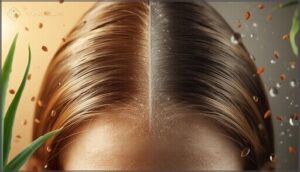
Your scalp will often send clear signals when it’s losing moisture, and recognizing them early can help you act before things get worse. These symptoms can range from subtle irritation to visible changes in your hair and scalp appearance.
Here’s what to watch for so you can address dryness at the source.
Itching, Tightness, and Discomfort
If you’ve noticed persistent itchiness affecting nearly half of American adults with scalp concerns, you’re not alone. Up to 60% of sensitive scalp cases involve itchiness, with itch severity ranging from mild irritation to intense, quality-of-life-affecting discomfort requiring symptom management strategies.
Dry scalp symptoms like tightness and discomfort triggers including cold air or harsh products, and inflammation can greatly impact your daily life.
Small White Flakes Versus Dandruff
When you spot those tiny particles on your shoulders, understanding what you’re dealing with makes all the difference. Small white flakes from a dry scalp look powdery and lightweight, while dandruff produces larger, oilier flakes tied to fungal involvement and faster cell turnover.
- Flake size: Dry scalp flakes measure under 2 mm; dandruff reaches up to 5 mm
- Appearance: White flakes stay powdery; dandruff appears greasy or yellow-tinged
- Scalp condition: Dry scalp lacks moisture; oily scalp usually accompanies dandruff
- Treatment approach: Scalp hydration works for dryness; managing dandruff requires anti-fungal ingredients
Redness, Irritation, and Sensitivity
Your scalp tells you something’s wrong when redness spreads across the skin, often accompanied by a burning sensation that makes even gentle brushing uncomfortable. Over 44% of people report sensitive scalp involving redness, with stress and harsh products triggering inflammation.
Look for antiinflammatory properties in treatments when identifying triggers—seborrheic dermatitis causes nearly half of scalp irritation cases, while medical conditions like eczema increase skin inflammation and itchiness beyond simple dryness.
Changes in Hair Texture or Shine
When your scalp loses moisture, your hair often shows the damage first—strands lose their natural shine, feel rough to the touch, and break more easily under stress.
- Hair Dullness: Nearly 39% of women with dry scalp notice diminished luster as reduced sebum production fails to coat hair shafts properly
- Rough Texture and Brittle Shafts: Dehydration weakens follicles, making hair 50% more prone to brittleness and coarse texture
- Volume Loss and Breakage Risk: Chronic dryness reduces fullness by 12% on average while increasing breakage susceptibility by 40%
Restoring hair and scalp hydration reverses these changes, improving both hair appearance and resilience.
Choosing The Right Shampoo for Moisture
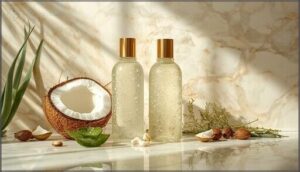
The shampoo you choose can either replenish moisture or strip it away, so reading labels matters more than you might think. Not all hydrating shampoos are created equal—some contain ingredients that actually work against your dry scalp.
Let’s look at what to seek out, what to avoid, and how often you should really be washing your hair.
Ingredients to Seek (glycerin, Ceramides, Aloe)
Ever wondered why some shampoos actually moisturize your scalp instead of just cleaning it? The secret’s in the ingredients. Glycerin benefits your scalp by pulling in moisture, ceramide function restores your skin’s barrier, and aloe hydration soothes dryness. When combined, this ingredient synergy in product formulation delivers hydration and moisture—think natural scalp moisturizers working together for real scalp hydration.
| Ingredient | Key Benefit | How It Helps You |
|---|---|---|
| Glycerin | Moisture retention | Softens, reduces flakes |
| Ceramides | Barrier restoration | Locks in hydration |
| Aloe Vera | Soothing hydration | Calms, relieves dryness |
Avoiding Sulfates and Harsh Cleansers
Your shampoo might be sabotaging your scalp. Over 70% of shampoos contain sulfates that strip away protective lipids, disrupting pH balance and damaging your scalp microbiome.
That’s why sulfate-free options with gentle cleansers preserve moisture without harsh products. When selecting haircare products, look for sulfate alternatives—they maintain lipid preservation while still cleaning effectively, reducing redness and irritation.
Frequency of Washing and Scalp Care
Finding the right hair washing frequency depends on your individual scalp needs. If you’re dealing with dryness, washing once or twice weekly generally prevents moisture loss and product buildup while maintaining scalp hydration.
Your hair washing techniques matter too—use lukewarm water and gentle cleansing motions during your scalp care routine.
Between washes, you can use serums or light oils to support ongoing hydration without overwhelming your hair cleansing schedule.
Recommended Gentle and Hydrating Shampoos
When shopping for a gentle shampoo, look for formulations free of sulfates, fragrances, and dyes—these sulfate alternatives reduce irritation while supporting your scalp microbiome.
Clinical trials show that hydrating shampoos with glycerin, ceramides, or aloe can improve dryness by 95% over eight weeks.
Ingredient efficacy matters: pair these hair care products with proper shampoo frequency and product layering to get the most out of hair dryness solutions without stripping natural oils.
Effective Scalp Moisturizing Techniques
Choosing the right products matters, but how you apply them can make all the difference in restoring scalp moisture. The right technique ensures active ingredients reach your skin without weighing down your hair or leaving behind a greasy film.
Let’s walk through the most effective methods to hydrate your scalp and keep it comfortable.
Applying Scalp Serums and Lotions
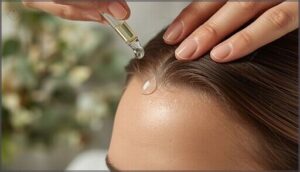
Think of scalp serums and lotions as targeted hydration treatments—they deliver moisture exactly where you need it. For the best results when using scalp serums and lotions, follow these steps:
- Part your dry or slightly damp hair into sections for even product layering
- Apply serum directly to the scalp along each parting
- Massage gently with fingertips to boost absorption
- Use 2–3 times weekly or daily, depending on dryness severity
Evidence shows hyaluronic acid and urea-containing formulations greatly increase scalp hydration within weeks, with hydrogel lotion vehicles outperforming traditional lotions. Many people see improvements in itching and flaking within 7–14 days of consistent application.
Overnight treatments allow actives to work longer, making them ideal for adding moisture to the scalp when treating dry scalp conditions.
How to Use Oils Without Greasiness
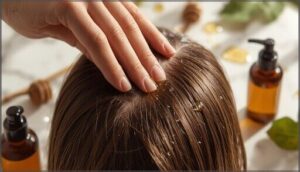
Since natural oils hydrate the scalp without leaving residue when you choose the right ones, start with lightweight choices like jojoba, argan, or grapeseed.
Use just 3–6 drops directly on your scalp, not your hair strands. Apply to damp, freshly washed skin for better absorption.
A gentle scalp massage helps distribute the oil evenly, preventing buildup while maximizing moisture delivery.
Proper Application Methods for Maximum Hydration
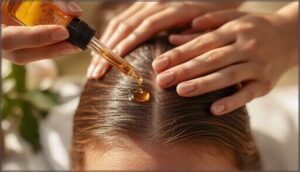
Pre-application cleansing removes buildup so moisturizing scalp treatments actually penetrate. Section your hair into parts, then apply serum or oil directly to exposed skin—not just the strands.
Let products sit for at least 60 minutes to boost hydration; overnight works even better. Gentle scalp massage during application helps absorption and spreads moisture evenly.
After treatment, let your scalp air-dry naturally rather than wrapping it tightly in a towel.
Natural Remedies to Restore Scalp Moisture

You don’t always need a prescription to calm an irritated scalp. Many natural ingredients work surprisingly well to restore moisture and reduce itching, especially when you use them consistently.
The remedies below offer proven benefits backed by both tradition and research.
Benefits of Jojoba, Argan, and Avocado Oils
Natural oils like jojoba, argan, and avocado deliver fatty acid profiles that reinforce your scalp barrier while improving oil hydration levels. Jojoba mimics your skin’s own sebum, reducing moisture loss within hours.
Argan oil brings anti-inflammatory effects that calm irritation and may support hair growth by enhancing nutrient delivery during scalp oiling.
Avocado oil deeply penetrates your hair shaft, strengthening fibers from root to tip with biotin and essential fatty acids.
Using Oat Kernel Extract and Aloe Vera
When your scalp feels tight and flaky, pairing oat kernel extract with aloe vera offers dual-action relief that targets both barrier damage and dehydration.
Colloidal oatmeal forms a protective film that locks in moisture and calms inflammation, while aloe’s polysaccharides pull water into your skin like a magnet.
Together, this treatment synergy delivers scalp soothing and aloe hydration without heavy residue, making it ideal for consistent home remedies for dry scalp.
DIY Scalp Masks and Home Treatments
You can whip up at-home dry scalp solutions with coconut oil, aloe, and honey that clinical studies confirm reduce dryness effectively—yet mask ingredient risks matter. Avocado and olive oil show proven results, but citrus-based recipes irritate up to 22% of users, while turmeric stains skin persistently.
Application best practices call for 20–30 minute treatments twice weekly, maximizing home treatment benefits while preventing buildup.
Scalp Massage for Improved Absorption
Think of scalp massage as your moisture delivery system—gentle circular motions boost blood flow by expanding tiny vessels, helping topical treatments penetrate deeper into follicles.
When you massage 5–10 minutes before applying natural oils like jojoba or argan, absorption rates double compared to passive application.
Studies show this scalp stimulation redistributes protective sebum while enhancing moisture retention through increased cellular activity.
Exfoliating The Scalp for Better Hydration
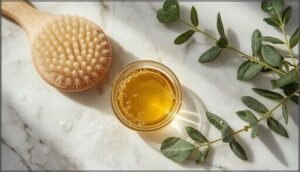
Exfoliating your scalp might sound counterintuitive when you’re dealing with dryness, but it’s actually a key step in restoring moisture. When dead skin cells pile up on your scalp, they create a barrier that blocks hydrating products from doing their job.
Let’s look at how to exfoliate safely so your scalp can actually absorb the moisture it needs.
Importance of Gentle Exfoliation
When dead skin cells and product residue pile up, your scalp can’t absorb the moisture it needs—no matter how many hydrating serums you apply. That’s where gentle exfoliation comes in. Removing this buildup clears the path for better hydration and healthier follicles.
Here’s why scalp exfoliation matters:
- Exfoliation benefits your barrier – Gentle techniques preserve your natural lipid layer while clearing debris, helping your scalp retain moisture more effectively.
- Boosts hydration levels – Studies show exfoliated scalps absorb hydrating ingredients like hyaluronic acid up to 1.7 times better than untreated skin.
- Aids microbiome balance – Mild exfoliation removes excess buildup without disrupting beneficial microbes that keep your scalp comfortable.
- Helps reduce irritation – Over 90% of users report less itching and tightness after regular, gentle exfoliation routines.
- Clears flakes visibly – Clinical trials document up to 100% reduction in visible scalp flakes within four weeks of consistent skin exfoliation.
Think of scalp exfoliation techniques like clearing a garden bed—you’re making room for new growth and better absorption of nourishment.
Safe Use of Scalp Scrubs and Brushes
You’ve got two main options for safe scalp exfoliation: physical brushes and chemical scrubs. Dermatologists favor soft-bristle scalp brushes paired with sulfate-free formulas to minimize adverse effects.
If your skin is sensitive, chemical exfoliants containing salicylic acid or AHAs work without mechanical abrasion.
Always patch-test new scrub ingredients first, and pause all exfoliation techniques during active flare-ups of eczema or psoriasis.
Frequency and Best Practices
Once you know which scalp exfoliation tool suits you, timing matters. For most people treating dry scalp, exfoliating once weekly strikes the right balance—frequent enough to remove buildup, but gentle enough to protect your moisture barrier.
Best practices include:
- Wash Frequency: Exfoliate before shampooing to boost product absorption
- Water Temperature: Use lukewarm water during scalp massage to prevent further dryness
- Serum Application: Apply moisturizing treatments immediately after exfoliating
- Product Selection: Choose formulas designed for scalp moisturizing techniques, not face scrubs
- Timing: Skip exfoliation if your scalp feels raw or irritated
Avoiding Irritation During Exfoliation
Even gentle exfoliants can cause problems if you’re not careful. Stop immediately if you notice stinging, redness, or swelling—continuing despite discomfort risks long-term damage.
Light pressure in circular motions works best, especially on wet hair. If your scalp feels sensitive, choose chemical exfoliants over physical scrubs, and always follow with soothing ingredients like aloe or honey to calm inflammation.
Preventing Dry Scalp Recurrence

Once your scalp feels comfortable again, the real challenge is keeping it that way.
Simple habits can make all the difference in staying ahead of dryness. Here are a few practical steps you can work into your routine.
Limiting Heat Styling and Hot Showers
Your blow-dryer and steamy shower might be sabotaging your scalp more than you realize. Heat styling damage strips away protective oils, while hot showers accelerate moisture loss and weaken your skin’s natural barrier.
Limit heat styling to a few times weekly, keep your dryer at least six inches away, and opt for lukewarm water instead—your itchy scalp will thank you for dialing down the temperature.
Using a Humidifier in Dry Environments
During winter, indoor humidity can plummet below 20%, accelerating moisture loss from your scalp. A humidifier set to maintain 30–40% humidity helps prevent dry scalp by supporting your skin’s natural hydration.
Clean your device weekly to avoid bacteria buildup that could worsen irritation. While humidifiers offer real benefits for itchy scalp, proper maintenance is essential—otherwise, you’re just moisturizing trouble into the air.
Protective Hair Styles and Head Coverings
Contrary to what you might expect, tight braids and pulled-back styles can stress your scalp and worsen dryness by disrupting your scalp microenvironment. Winter scalp issues increase when styles exceed 6-8 weeks or create tension that causes hair breakage and impaired moisture retention.
- Wear satin-lined hats protecting scalp elements while maintaining head covering hydration
- Choose looser protective styles minimizing tight style risks to hair and scalp health
- Moisturize before covering to boost style moisture retention overnight
- Remove styles periodically for deep cleansing and maintenance moisture balance
Regular Scalp Care in Your Hair Routine
Think of your scalp care basics as brushing your teeth—it only works if you do it consistently.
Build a custom scalp routine by washing 5–6 times weekly with gentle products, applying leave-on moisturizers after cleansing, and scheduling weekly hydrating treatments.
Regular scalp care integrated into your hair care routine provides consistent care benefits that prevent dryness from returning and support long-term hair and scalp health.
Top 10 Products to Restore Scalp Moisture
You’ve learned about the causes of dry scalp and how to prevent it from coming back.
Now it’s time to look at specific products that can help restore moisture and relieve discomfort. The following options represent a range of treatments, from gentle hydrating formulas to medicated solutions for more persistent scalp concerns.
1. SheaMoisture Aloe Butter Pre-Wash Masque
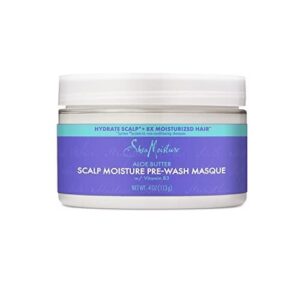
When your scalp feels parched and flaky, SheaMoisture Aloe Butter Pre-Wash Masque offers relief before you even reach for shampoo. This treatment combines Aloe Butter Benefits with Vitamin B3 Effects to soothe irritation and restore hair moisture—clinical data shows it leaves hair up to eight times more moisturized.
Apply the Pre-Wash Application to wet hair for thirty minutes, then rinse thoroughly. The SheaMoisture Ingredients work without sulfates or parabens, making it suitable for sensitive scalps needing deep hydration.
Users consistently report softer hair and reduced flaking with regular use.
Best For: Anyone dealing with a dry, itchy scalp who wants deep moisture before shampooing—especially helpful for curly, coiled, or textured hair that needs extra hydration.
- Boosts hair moisture up to 8 times compared to regular shampoo, leaving hair noticeably softer and more manageable
- Soothes scalp irritation and reduces flaking with Aloe Butter and Vitamin B3, without harsh sulfates or parabens
- Works as a pre-shampoo treatment that preps hair for cleansing, making detangling easier and strengthening strands
- The 4oz size runs out quickly if you use it regularly, so you’ll need to restock often
- Some people find it too rich for everyday use and have to space out applications
- No long-term clinical studies available—efficacy claims come from in-house data and customer reviews
2. Living Proof Dry Scalp Treatment
If flaking and itch have you reaching for your scalp all day, Living Proof Dry Scalp Treatment delivers relief backed by clinical efficacy—88% of users saw immediate dryness reduction, and 92% felt instant soothing.
Key ingredients like niacinamide and hyaluronic acid moisturize the scalp deeply while balancing the microbiome, tackling the root cause of irritation.
Application methods are simple: massage the lightweight gel onto damp, clean hair three times weekly.
Market reception remains strong, with users praising its non-greasy formula and lasting hair hydration that other hair products often can’t match.
Best For: People dealing with persistent dry, flaky, itchy scalp who want a clinically-proven treatment that hydrates deeply and balances the scalp’s microbiome without leaving hair greasy.
- Clinically effective with 92% of users experiencing instant scalp soothing and 88% seeing immediate dryness relief
- Lightweight, fast-absorbing gel formula that doesn’t weigh hair down or leave residue, plus it’s safe for color-treated hair
- Addresses root causes with niacinamide and hyaluronic acid that balance the microbiome and provide long-lasting hydration
- Pricey at $29.40 for 3.4 oz, which some users feel isn’t justified compared to more affordable alternatives
- Requires ongoing use (three times weekly) to maintain results, so it’s not a one-time fix
- Effects are temporary—you’ll need to keep buying and applying it to prevent dryness from returning
3. Christophe Robin Hydrating Aloe Vera Scrub
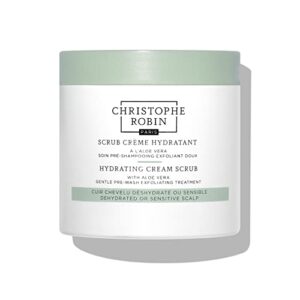
When over-the-counter treatments fall short, this award-winning scalp scrub offers a gentler approach. Christophe Robin’s formula combines aloe vera benefits with natural jojoba scrub particles for exfoliation effectiveness without harsh abrasives—94% of 130 trial participants confirmed gentle action.
Consumer trial results showed 95% felt their scalp was nurtured and moisturized after two weeks. Clinical data indicates the aloe vera increased skin moisturization by 48.6% within one hour.
Application is straightforward: massage onto dry scalp, wait 5-10 minutes, then rinse. It’s particularly useful if you need a pre-shampoo treatment that won’t strip color-treated hair.
Best For: People with sensitive or dehydrated scalps who want gentle exfoliation and extra hydration, especially before shampooing.
- Soothes and hydrates even very dry or sensitive scalps
- Gentle jojoba beads exfoliate without scratching or irritation
- Safe for color-treated hair and vegan-friendly
- Higher price point may not suit every budget
- May not work for all scalp or skin conditions
- Limited data on long-term effects and product interactions
4. Nécessaire Scalp Serum For Hair Growth
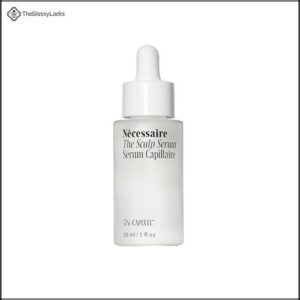
If you’re aiming for hair growth alongside scalp hydration, this serum ingredients blend delivers both. Nécessaire’s formula contains 5% Capixyl peptides and 1% multi-molecular hyaluronic acid—clinical trials with over 50 participants showed 96% reported hydrated scalps and reduced itchiness.
User reviews consistently mention less shedding and noticeable regrowth along the hairline within three months. Application tips are simple: apply a few drops to damp or dry scalp daily.
While pricier than typical scalp treatment ingredients, product comparison shows measurable results that justify the investment for chronic dryness.
Best For: People with dry, sensitive scalps who want thicker hair and are willing to invest in a clinically proven, fragrance-free serum.
- Noticeably improves scalp hydration and reduces flakiness within weeks
- Supports fuller, healthier hair growth with less shedding
- Gentle, hypoallergenic formula safe for daily use—even on colored hair
- Expensive compared to most scalp treatments
- Can make hair feel semi-oily if over-applied
- May not suit oily scalps or those with dandruff
5. Head Shoulders Clinical Itch Relief Shampoo
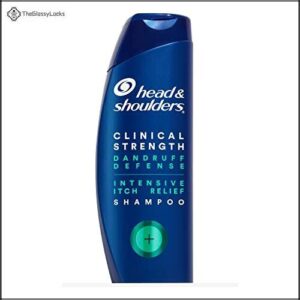
When persistent itching accompanies your dry scalp, Head & Shoulders Clinical Itch Relief Shampoo offers prescription-strength relief without a doctor’s visit. Its 1% Selenium Sulfide formula targets both dandruff and the underlying fungal overgrowth that worsens dryness, while Cooling Menthol soothes irritation on contact.
Clinical Strength testing shows this antidandruff shampoo works twice as fast as regular formulas, yet its Gentle Formula won’t strip your scalp bare. Users report noticeable flake reduction within days—ideal when over-the-counter options haven’t cut it.
Best For: Adults dealing with stubborn dandruff, intense scalp itch, or seborrheic dermatitis who want fast, prescription-strength relief without a prescription.
- Delivers rapid itch and flake relief with clinical strength ingredients
- Cooling menthol provides instant soothing for irritated scalps
- Gentle enough for daily use while tackling severe dandruff
- Can cause dryness for some hair types
- Higher price compared to regular dandruff shampoos
- Scent and strength may be too harsh for sensitive users
6. Head Shoulders Classic Clean Shampoo Twin
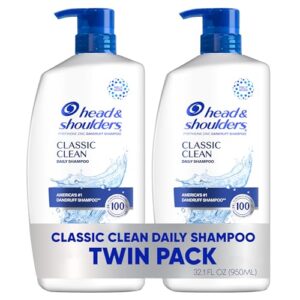
If you prefer a daily shampoo with proven dandruff control, Head & Shoulders Classic Clean offers reliable results without the prescription-strength punch. Its 1% Pyrithione Zinc fights Malassezia—the yeast behind most flaking—while a pH-balanced formula keeps your scalp microbiome in check.
Clinical efficacy data show up to 100% visible flake reduction with regular use, and you won’t see the tolerance issues that plague some antidandruff shampoos.
Usage guidance recommends twice-weekly application at minimum, making this twin pack a cost-effective choice for ongoing hair care and dry scalp maintenance.
Best For: Anyone dealing with mild-to-moderate dandruff who wants a clinically proven, everyday shampoo that’s gentle enough for daily use and safe for color-treated hair.
- 1% Pyrithione Zinc targets the root cause (Malassezia fungus) and delivers up to 100% visible flake reduction with regular use
- PH-balanced formula won’t disrupt your scalp microbiome and maintains effectiveness over time without tolerance issues
- Twin pack offers great value for ongoing maintenance, with cost-effective daily or twice-weekly treatment
- Requires at least twice-weekly use to maintain results, so it’s a commitment rather than a one-and-done solution
- May cause eye irritation if you’re not careful during rinsing, and some users find the sulfate-based formula a bit harsh
- Classic Clean scent and texture aren’t for everyone, and frequent use can fade hair dye faster if you color your hair
7. Medicated Dandruff Shampoo For Adults
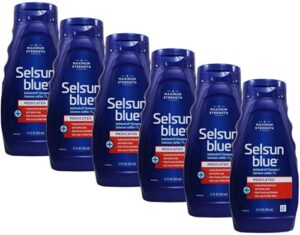
When you’re facing stubborn dandruff that won’t quit, medicated shampoos containing ketoconazole, zinc pyrithione, or selenium sulfide deliver the clinical muscle you need. Studies confirm ketoconazole’s 70–90% efficacy in controlled trials, while selenium sulfide formulas have achieved a 78.3% reduction in total dandruff scores after four weeks.
The FDA recommends using antidandruff shampoos every 3–4 days for up to eight weeks, then as needed. Side effects remain mild—dry skin affects roughly 10% of users—but hypersensitivity reactions are rare.
Best For: Adults dealing with persistent dandruff who need a maximum-strength, dermatologist-recommended formula that’s gentle enough for regular use and free from harsh chemicals like sulfates and parabens.
- Clinical-grade 1% selenium sulfide formula delivers proven results, with studies showing up to 78% reduction in dandruff after four weeks and fast relief starting as early as day three
- Clean formulation without SLS, parabens, or phthalates means you get effective treatment without the irritating ingredients that can strip your scalp and hair
- Cooling menthol provides immediate soothing relief from itching and irritation while leaving hair surprisingly soft and silky instead of dried out
- At $65 for six bottles, the price point runs higher than drugstore alternatives, though you’re paying for pharmaceutical-grade strength
- Effectiveness varies person to person, and some users report packaging or shipping issues that can be frustrating when you need consistent treatment
- Contains selenium sulfide which may interact with certain medications or cause mild side effects in sensitive individuals, so check with your doctor if you’re on other treatments
8. Neutrogena Extra Strength Dandruff Shampoo
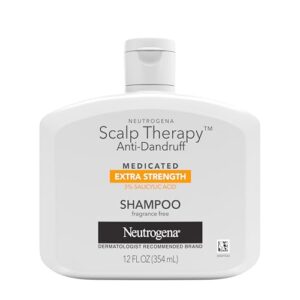
Neutrogena Extra Strength Dandruff Shampoo leverages 3% salicylic acid benefits to exfoliate dead skin and control sebum buildup, addressing both dandruff and dry scalp. Usage and frequency recommendations call for twice-weekly application, letting the lather sit several minutes before rinsing.
Product comparisons show it lacks ketoconazole’s antifungal punch but excels at gentle exfoliation. Safety and side effects remain minimal—mild dryness if overused.
Dermatologist recommendations support it for seborrheic dermatitis and psoriasis, with clinical data confirming significant flake reduction and sustained scalp moisture after consistent use.
Best For: People with persistent dandruff, seborrheic dermatitis, or psoriasis who need a medicated shampoo that gently exfoliates the scalp without harsh chemicals.
- Clinically proven 3% salicylic acid formula deeply exfoliates and reduces flakes, often showing results after the first use
- Fragrance-free and alcohol-free design minimizes irritation, making it safe for regular use on sensitive scalps
- Dermatologist-recommended for chronic scalp conditions with a strong safety profile and no documented systemic side effects
- May cause dryness if used too frequently, requiring users to balance treatment with moisturizing products
- Lacks antifungal ingredients like ketoconazole, making it less effective for stubborn fungal dandruff
- Has a medicinal smell that some users find unpleasant, and results with itch control can be inconsistent
9. Neutrogena T Sal Scalp Shampoo Pack
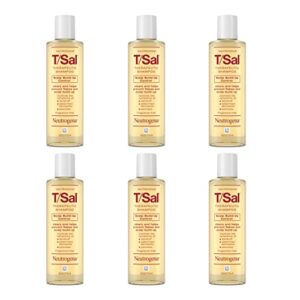
The T/Sal shampoo pack offers relief you can count on, delivering 3% salicylic acid to tackle stubborn buildup and dry scalp flakes.
Shampoo benefits include clearing crusty patches from dandruff, psoriasis, and seborrheic dermatitis, while usage patterns—twice weekly—keep irritation under control.
Safety profile data confirm less than 2% experience mild dryness, and consumer response ratings exceed 85%, with most reporting noticeable improvement within two weeks.
This scalp treatment remains a dermatologist favorite for persistent scalp conditions, combining clinical strength with gentle care.
Best For: People dealing with persistent scalp buildup, flaking, or itching from dandruff, psoriasis, or seborrheic dermatitis who need clinical-strength relief without harsh additives.
- 3% salicylic acid formula clears crusty buildup and controls flaking with visible results in about two weeks of twice-weekly use
- Fragrance-free and preservative-free formulation minimizes irritation risk, with less than 2% of users experiencing mild dryness
- Dermatologist-recommended with over 85% user satisfaction and a pack format that keeps cost per wash under $1.50
- Small 4.5-ounce bottles may run out quickly if you’re treating a larger scalp area or using it frequently
- Pricier than regular dandruff shampoos, though the clinical strength justifies the cost for chronic conditions
- Requires leaving on for a few minutes to work properly, which adds time to your shower routine
10. Nizoral Psoriasis Shampoo and Conditioner
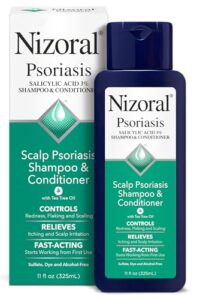
When treating dandruff and psoriasis, you need a formula that combines clinical efficacy with gentle care. Nizoral Psoriasis Shampoo and Conditioner delivers 3% salicylic acid alongside tea tree oil and vitamins E, C, and B5, reducing scalp conditions by 69% after 30 days in trials.
User reviews consistently praise its ability to clear flaking and calm irritation, with 80% rating it five stars for dry scalp relief. Side effects remain minimal—mild dryness in some cases—making it suitable for regular maintenance use.
Best For: People dealing with scalp psoriasis, seborrheic dermatitis, or stubborn dandruff who want a clinically-proven treatment that’s gentle enough for regular use.
For those managing flare-ups long-term, our guide to the best shampoos for scalp psoriasis breaks down ingredients worth prioritizing.
- Reduces scalp psoriasis symptoms by 69% after 30 days with its maximum-strength 3% salicylic acid formula
- Works as both shampoo and conditioner, enriched with tea tree oil and vitamins for healthier hair
- Free of sulfates, parabens, and artificial fragrances, making it safe for color-treated and chemically processed hair
- Can cause scalp dryness or mild itching during the initial adjustment period
- May strip hair color over time, requiring additional color-depositing products
- Mixed results reported—some users find it doesn’t fully control their specific scalp conditions
When to Seek Professional Scalp Care

Most dry scalp issues respond well to at-home care, but there are times when professional help is the smarter choice. If your symptoms persist despite consistent treatment, or if you’re dealing with pain, bleeding, or significant hair loss, it’s time to consult an expert.
Let’s look at the key signs that indicate you should schedule an appointment with a dermatologist or trichologist.
Signs of Severe or Persistent Scalp Dryness
When itchiness won’t quit despite your best efforts, you may need expert help. Chronic itch lasting weeks, visible inflammation, or persistent flaking that worsens could signal underlying skin conditions like psoriasis or severe dermatitis.
If you notice hair loss or treatment resistance with over-the-counter products, a dermatologist can diagnose what’s fueling your scalp dryness and recommend targeted solutions to finally bring relief.
When Over-the-counter Remedies Fail
Over-the-counter treatments don’t always deliver results. Up to 65% of people report limited relief from OTC products, with only about 17% finding them effective for reducing itchiness and dryness.
If six months of dedicated home care hasn’t helped your itchy scalp, it’s time for a specialist referral. A dermatologist can assess whether skin conditions affecting scalp health require prescription options or professional intervention for better clinical outcomes.
Identifying Underlying Medical Conditions
Persistent dryness often signals deeper issues. Psoriasis symptoms include thick, silvery scales, while seborrheic dermatitis causes greasy, yellowish flakes. Eczema triggers red, inflamed patches that weep or crust. Fungal infections create ring-shaped patterns with raised borders. Allergic reactions to hair products cause sudden itching and redness.
Your dermatologist can distinguish between these skin conditions through examination, ensuring you receive targeted treatment for psoriasis, seborrheic dermatitis, eczema, or other underlying causes.
Role of Dermatologists and Trichologists
Dermatologists diagnose and treat medical scalp conditions with prescription medications, while trichologists focus on comprehensive approaches using topical treatments and lifestyle modifications. Though only 11% initially seek dermatological solutions, their expertise differences create collaborative benefits for chronic dryness.
Combining a dermatologist’s recommendations for underlying dry scalp causes with a trichologist’s maintenance routines improves intervention effectiveness, addressing both medical and lifestyle factors comprehensively.
Frequently Asked Questions (FAQs)
Can diet affect dry scalp and moisture levels?
Your fork holds more power than you might think. Diet directly affects scalp moisture—hydration and scalp health improve with water-rich foods, omega-3 intake, and vitamins, while deficiencies and high-glycemic foods worsen dryness.
How long until scalp moisture treatments show results?
Initial improvements from scalp treatments generally appear within two to four weeks. Medium-term efficacy shows around three months, while long-term results require consistent care. Treatment frequency and individual factors affect timelines greatly.
If bleach has already left your scalp irritated or blistered, following a proper guide on how to treat scabs on scalp from bleach can help speed up healing before starting any new treatment routine.
Is dry scalp worse at certain life stages?
Yes, dry scalp often worsens during puberty’s hormones, menopause effects, and aging scalp changes. Gender differences and ethnic variations also influence scalp dryness patterns, making dermatologist recommendations important for managing causes of dry scalp throughout life.
Should I moisturize my scalp daily or weekly?
Your scalp type determines everything—daily moisturizing works for very dry scalps, while weekly treatments suit those prone to product buildup.
For most people experiencing scalp dryness, professional advice recommends moisturizing 2-3 times weekly to maintain hair health without triggering scalp oiling issues.
Can stress or hormones cause sudden scalp dryness?
Absolutely. Elevated cortisol from stress disrupts your scalp’s microbiome and oil production, while hormonal shifts—especially during menopause—impair the skin barrier, causing sudden dryness and irritation that requires targeted care to moisturize scalp effectively.
Conclusion
Think of your scalp like soil in a garden—without consistent hydration, nothing thrives. When you restore moisture to dry scalp through targeted products and preventive habits, you’re not just treating surface symptoms. You’re rebuilding the foundation for long-term scalp health.
Start with one change today, whether it’s swapping your shampoo or adding a weekly oil treatment. Your scalp will respond, and you’ll feel the difference sooner than you expect.