This site is supported by our readers. We may earn a commission, at no cost to you, if you purchase through links. This content is for general informational and educational purposes only and is not a substitute for professional medical, dermatological, or nutritional advice.
Two brothers, same parents, same house growing up. One fills in a thick beard by 18. The other still patches at 25, no matter what he tries.
That’s beard growth genetics and ethnicity at work, not bad luck or laziness. Your follicles inherited a blueprint from both sides of your family, and your ancestry shapes how those follicles respond to hormones like DHT. Some patterns show up early, others take years to reveal themselves.
Once you understand what’s actually driving your growth, you’ll know exactly which factors you can influence, and which ones you’re stuck working with!
Table Of Contents
Key Takeaways
- Your beard’s density, pattern, and timing come from a mix of genes inherited from both parents, so patchiness or thickness isn’t about laziness or bad luck.
- DHT (a hormone made from testosterone) drives beard growth by binding tightly to your follicles, which is why some guys fill in fast while others take years.
- Your ancestry shapes common beard patterns, like fuller cheek coverage in European genetics or earlier chin and mustache growth in East Asian genetics, but individual variation still runs wild within any background.
- You can’t change your genetic blueprint, but good nutrition, solid sleep, less stress, and proven products like minoxidil can help you grow the fullest beard your genes allow.
How Genetics Shape Beard Growth

Your beard isn’t random—it’s written into your DNA. Genes control everything from how thick your hair grows to where it fills in first. Let’s break down the key genetic factors that decide what your beard will actually look like.
If your genes have blessed you with a dense, fast-growing beard, picking the right tool matters—check out this guide to the best trimmers for thick, coarse beards built to handle the job.
Inherited Density and Growth Patterns
Look in the mirror, then look at your dad or granddad. That’s not coincidence, that’s follicle density inheritance at work.
Families pass down the same blueprint:
- Where fullness fills in first
- How thick your cheek-to-chin growth gets
- Whether patchiness runs in your bloodline
- How your pattern holds steady for decades
Cheek and chin density often move together, mapped straight from your ethnic and family roots.
Androgen Receptor Gene Sensitivity
Density is only half the story. Your androgen receptor gene sensitivity decides how your follicles respond to testosterone and DHT.
Even men with identical receptor sensitivity can experience different shedding patterns, since each follicle’s hair growth cycle stage shapes how aggressively DHT disrupts growth over time.
Shorter AR CAG repeats mean stronger gene transcription activity at your androgen response elements, boosting hormone binding affinity. Receptor dimerization kicks growth signals into gear. This process relies on androgen-specific DNA-dependent dimerization, which allows the receptor to bind target genes with high selectivity. It’s a hidden switch behind ethnic variation in hair, explaining why some hair follicles answer the androgen call louder than others!
Polygenic Facial Hair Traits
Your beard isn’t controlled by one gene, it’s a team effort. Polygenic inheritance means hundreds of small-effect variants combine, shaping density, follicle size, and hair follicle sensitivity all at once.
That’s why facial hair genomics research uses polygenic risk scoring to predict thickness. Genetic variant density and allele interaction effects explain trait heritability estimates, and why ethnic variation in hair, even within Y-chromosome haplogroups, still varies person to person!
Maternal and Paternal Influences
Here’s a twist: your androgen receptor gene sits on the X chromosome, so it comes straight from mom!
Dad still matters though, contributing other inheritance patterns and Y-chromosome haplogroups that shape hair follicle sensitivity.
It’s a genetic tag-team, not a solo act, blending maternal and paternal influences into the beard you’re growing right now.
Family Beard Growth Patterns
Ever notice how you and your dad or uncles seem to grow in at the same spots? That’s hereditary growth timing at work, plus follicle density inheritance passed straight through the family line.
Families often share:
- Patchy lower cheeks
- Strong chin growth
- Similar onset ages
- Matching mustache shape
This regional growth similarity and patchiness clustering shows ethnic pattern transmission shaping your whole family’s beard story.
Since genetics dictate this patchy, region-by-region rollout, it’s worth understanding why shaving won’t actually speed up beard growth before you reach for the razor out of impatience.
How Hormones Trigger Beard Development

Genetics load the gun, but hormones pull the trigger. Your beard doesn’t just grow on its own, it waits for specific chemical signals to kick things into gear. Here’s what’s happening under the surface, step by step.
Genetics load the gun, but hormones pull the trigger, waiting for chemical signals to spark beard growth
Testosterone and DHT Roles
Testosterone gets the credit, but DHT calls the shots. Your body converts testosterone into DHT using 5 alpha reductase, and DHT binds androgen receptors 2-3 times tighter!
That stronger grip means more follicle stimulation, more sebaceous gland activity, and faster beard development. So when your beard fills in, thank DHT’s potency, not just your testosterone levels.
Terminal Hair Follicle Conversion
Once DHT locks onto androgen receptors, your peach-fuzz vellus hairs start their glow-up. This vellus to terminal shift thickens each strand dramatically, going from wispy to wiry!
Your hair follicles shift from resting to active growth phase, and local growth factors kick in to sustain the transformation. Healthy skin microenvironment matters too, since inflammation can stall the whole process cold.
Follicle Sensitivity to Androgens
Why do some guys hit puberty and grow a full beard while others stay patchy for years? It comes down to follicle sensitivity variation, not just testosterone levels.
Key factors:
- Androgen receptor binding strength
- DHT conversion efficiency
- 5 alpha reductase activity
- AR coactivator activity
- Local androgen metabolism
Your genetics set these dials, and no two beards read them identically!
Puberty and Beard Maturation
Puberty flips the switch. Around ages 13 to 15, testosterone surges and converts to DHT, triggering facial hair onset.
Stubble shows up first, then cheeks and jawline fill in later, sometimes years after that first chin fuzz appears. Your genetics decide the pace, but patience pays off. Full density often takes years to mature!
Beard Growth Patterns Across Ethnicities
Your ancestry plays a real role in how your beard grows in. Genetics don’t play favorites, but they definitely play patterns! Let’s break down what the research shows across different backgrounds.
European Ancestry Beard Patterns
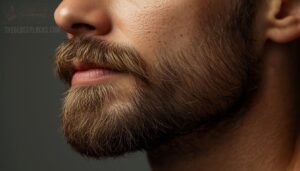
Think of European ancestry beards as built for full coverage. Density runs moderate to high, jawlines connect smoothly, and mustaches often cover the philtrum completely. Cheek growth varies more, though. Genetics and androgen receptor sensitivity drive it, not just testosterone conversion.
Common traits:
- Strong jawline connection
- Full mustache-philtrum coverage
- Wavy texture patterns
- Sideburn-jawline alignment
East Asian Ancestry Traits

East Asian beards tell a different genetic story. Lower cheek density is common, while chin and mustache regions often fill in earlier and thicker. That’s androgen sensitivity at work, not less testosterone.
Hair texture tends finer and straighter, and patchiness patterns vary widely. Growth onset can lag other groups, but cultural pride in beards runs just as deep.
South Asian Beard Density

Now flip to South Asia, and the pattern shifts again. You’ll often see medium to high beard density with solid cheek coverage from jawline to chin. Density often builds toward the chin, creating that balanced lower silhouette guys love.
Family history matters here too, dense-bearded dads often mean earlier, fuller growth for sons.
Middle Eastern and African Variations
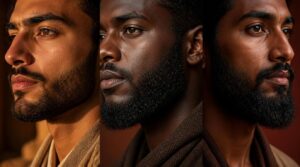
South Asia’s density story has a cousin in the Middle East, where androgens hit early and hard, driving visible growth by late adolescence.
Cheek density often runs high, uniform, with less patchiness than other regions.
African beard patterns vary widely by lineage. Straighter or wavy textures show up alongside coarser, curlier ones, shaped by tribal ancestry and local hormone response.
Individual Variation Within Ethnicities

Here’s the twist: even brothers within the same family can look totally different. Cheek density variation and chin patch inheritance don’t follow one rulebook, genetics and ethnicity just set the range.
You’ll see mustache fullness diversity, growth pace differences, and even seasonal beard changes shift things further. Hair follicle density and Y-chromosome haplogroups add their own fingerprint too!
How Beard Characteristics Vary
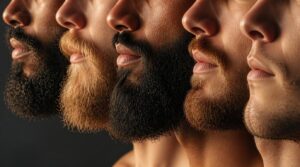
Your genes don’t just decide how much beard you grow—they shape what kind you grow, too. Density, texture, color, even how fast it comes in, all get written into your DNA differently for everyone. Let’s break down the five traits that make your beard uniquely yours.
Follicle Density Versus Thickness
Not all beards are created equal, even genetically! Density means follicle count per square centimeter, while thickness measures each hair shaft’s diameter. Here’s why both matter:
And if you’re not sure which camp your beard falls into, this guide to thick hair vs. thin hair breaks down how strand diameter changes everything from stiffness to styling.
- High density, thin hairs = fine coverage
- Moderate density, thick hairs = bold presence
- Both high = fullest look
- One compensates for the other visually
- Regional variation creates natural patchiness
Cheek, Chin, and Mustache Growth
Ever notice your mustache came in before your chin filled out? That’s hormonal sensitivity by region at work.
Mustache growth rate starts fastest, chin maturation timeline lags behind, and cheek density variation stays the wildest card genetically.
Ethnic follicle patterns shape all three, tying beard genetics by country, ethnicity, facial hair density, and hormonal levels into one messy, personal timeline!
Straight, Wavy, and Curly Textures
Straight strands lie flat with even light reflection, wavy hair curves in soft S-shapes needing moisture balance, and curly texture stands away from skin, risking frizz.
Your genetic makeup shapes hair follicles differently across your jaw, so texture transitions naturally near the chin. Curl-enhancing products and consistent hydration keep frizz prevention easy, no matter your ethnicity.
Growth Rate Versus Fullness
Long doesn’t always mean full. Growth speed measures how fast hair lengthens, while fullness reflects follicle activity and density.
Quick facts:
- Faster growth ≠ thicker beard
- Density depends on genetic makeup
- Chin often grows quicker
- Cheeks fill in slower
- Both traits shift across your hair growth cycle
Your ethnicity influences this balance, but patience wins. Appearance balance improves as density catches up to length!
Beard Color and Pigmentation
Two pigments call the shots: eumelanin (brown-black) and pheomelanin (red-yellow). Your genetic inheritance sets the ratio, with MC1R variants nudging things toward red or blond.
Sun exposure plays a role too, bleaching darker eumelanin and revealing the warmer tones underneath — a process explained further in this guide on why beards and mustaches turn blonde or orange over time.
Density varies across follicles, so some patches look richer than others. Age fades things too, graying sides first, while sun and nutrition shift tone slightly over time.
Can Genetic Beard Growth Improve?

Your genes set the blueprint, but they don’t write the whole story. There’s real, practical ground between "it’s genetic" and "there’s nothing I can do," and that’s where your daily choices come in. Let’s look at what actually moves the needle, and what’s just wishful thinking.
Nutrition and Follicle Health
Your genes set the blueprint, but nutrition builds the bricks. Protein intake fuels keratin production, while zinc and hair growth go hand in hand. Iron deficiency and poor vitamin support can stall follicles too.
- Eat protein, fish, and leafy greens
- Watch zinc and iron levels
- Skip biotin supplementation unless deficient
Good diet won’t rewrite DNA, but it clears the runway for growth.
Sleep, Stress, and Wellness
Diet clears the runway, but rest and calm keep the engine running. Poor sleep and chronic stress raise cortisol, which throws off the hormonal balance your follicles rely on. Keep a consistent bed and wake time, cut caffeine and alcohol before bed, and try mindfulness to lower stress reactivity.
Your beard reflects your overall health, not just your genes!
Beard Product Effectiveness
Once your habits are dialed in, the right products can push things further. 5% minoxidil boosts blood flow to follicles, waking dormant patches, while biotin helps with keratin if you’re deficient. Beard oil protects against breakage.
- Minoxidil
- Biotin
- Beard oil
- Beard roller
- Beard growth kits
Results show in 3-6 months, maxing out around a year!
Shaving Thickness Myth
Shaving makes it thicker" is a total myth. Blunt ends from cutting just feel stiffer, faking density. Your genetic makeup of hair, whether tied to certain Y-chromosome haplogroups or phenotypic expression, stays unchanged.
| Belief | Reality | Why |
|---|---|---|
| Shaving thickens | False | Blunt tips only |
| Skin sensitivity | Temporary | Irritation, not growth |
| Grooming habits | Cosmetic | No density shift |
When Patchiness Needs Medical Care
Okay, so your patchy beard is genetic. But some patches aren’t. Small bald spots, itchiness, or exclamation mark hairs at the edges signal something more, maybe hormonal imbalance or nutritional deficiencies. Patches lasting past 4-6 weeks, or multiple patches popping up at once? See a dermatologist. Topical treatments work best early, so don’t wait it out!
Frequently Asked Questions (FAQs)
Can beard growth supplements actually increase density?
Not really. Supplements can boost follicle response in weak hairs, but they can’t create new hair follicles. If your genetics set a low follicle count, no pill fills those gaps, unless a true nutrient deficiency exists.
Does shaving more frequently stimulate faster growth?
Grab your razor daily, wait for that beard to sprout back thicker overnight, right? Nope, that’s a myth. Growth rate stays fixed by genetics and hormones like DHT. Shaving just creates a blunt-cut illusion, not faster follicle activity.
Are patchy beards permanent or temporary issues?
Both, honestly! Many gaps fill in naturally through your early twenties as follicles mature. But if your family patterns show lasting patchiness, stable follicle distribution means those spots may stick around despite years of growth.
Can medical conditions cause sudden beard loss?
Sudden patches often signal autoimmune beard alopecia (alopecia areata), infections like ringworm, scarring hair loss, medication shedding, or telogen effluvium from stress.
Root medical conditions and hormonal shifts can trigger it too, so don’t ignore a fast-spreading bald spot.
Do twins always have identical beard patterns?
Mirror images, but never carbon copies. Twin beard variation stems from polygenic traits and hormonal influence differences, so DHT sensitivity, regional follicle sensitivity, and even patchiness asymmetry can make identical twins’ beards grow completely differently over time.
Why do beard growth rates slow down with aging?
Testosterone and DHT levels dip with age, weakening follicle stimulation. Add hair follicle miniaturization, slower renewal cycles, and skin changes affecting blood supply, and your beard growth naturally loses steam, no matter your genetic makeup!
Conclusion
Funny enough, those two brothers from the intro? Their father and grandfather had the exact same split, thick versus patchy, decades before anyone Googled it. That’s beard growth genetics and ethnicity proving its case in real time.
Your follicles already know their destiny, written long before puberty hit. What you control is smaller but real: nutrition, stress, patience, and knowing when patchiness signals something worth a doctor’s visit.
Work with your blueprint, not against it. That’s how real beards get built.