This site is supported by our readers. We may earn a commission, at no cost to you, if you purchase through links. This content is for general informational and educational purposes only and is not a substitute for professional medical, dermatological, or nutritional advice.
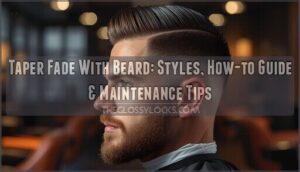
Walk into any barbershop in 2026 and you’ll see the same move repeated in every chair: clippers sculpting a taper fade that doesn’t stop at the sideburns. The modern taper fade with beard creates one continuous line from temple to jawline, erasing the old-school disconnect between haircut and facial hair.
It’s sharp, intentional, and instantly frames your face with the kind of definition you can’t fake. Whether you’re working with stubble or a full beard, the blend matters more than length. Get it right and you look like you walked out of a magazine. Miss the technique and you’re stuck with two separate grooming efforts that never quite sync up.
If you want inspiration for nailing that seamless blend, this guide to Japanese beard styles and grooming traditions shows how precision and subtlety go hand in hand.
Table Of Contents
- Key Takeaways
- What is a Taper Fade With Beard?
- Best Taper Fade and Beard Combinations
- Choosing The Right Style for Your Face Shape
- Step-by-Step Guide: Achieving The Look
- Beard Fade Techniques for Seamless Blending
- Maintenance Tips for a Sharp Finish
- Styling Inspiration and Modern Variations
- Frequently Asked Questions (FAQs)
- Conclusion
Key Takeaways
- The taper fade with beard creates one continuous blend from temple to jawline, eliminating the disconnect between your haircut and facial hair for a sharp, intentional look that frames your face with precision.
- Match your fade height to your face shape—low fades soften square jaws, high fades add angles to round faces, and mid fades work universally when paired with the right beard length for balanced proportions.
- Seamless blending requires clipper-over-comb technique with graduated guard lengths (no jumps), weekly touch-ups every 2-3 weeks, and detail trimmers to carve clean cheek and necklines without harsh steps.
- You can execute this at home with the right tools—adjustable clippers, precision trimmers, beard oil, and patience—but the learning curve demands conservative starts and consistent maintenance to avoid choppy results.
What is a Taper Fade With Beard?
A taper fade with beard is more than just a haircut—it’s a full look that ties your hair and facial hair together in one clean, blended style. The fade gradually shortens the hair on the sides and back while your beard gets shaped and tapered to match, creating a smooth flow from top to bottom.
If you’re new to this style, a classic taper fade haircut offers a versatile foundation that works with almost any beard length or face shape.
A taper fade with beard is a full look that blends your haircut and facial hair into one seamless, flowing style
Let’s break down what makes this combo stand out, how it’s different from other styles, and why it’s taken over barbershops in 2026.
Definition and Key Features
A taper fade with beard merges a gradual fade on your sides and back with facial hair that flows right into the haircut. The fade starts near your temple and tapers down to a close cut at the neck, creating a smooth line.
Your beard aligns with the fade effect for a smooth connection, emphasizing clean contrast and a defined jawline across all hair textures.
Differences From Other Fade and Beard Styles
Understanding how this beard combo stands apart from other grooming trends gives you control over your style evolution. Here’s what separates a taper fade with beard from the pack:
- Unified blend – Your hair texture flows into facial hair without a hard stop, unlike disconnected styles that leave sharp boundaries.
- Continuous fade effect – Classic fades stop at your hairline, but this beard fade keeps tapering right into your jawline.
- Denser chin focus – You keep fuller beard growth below your cheeks while sideburns blend upward, creating deliberate contrast.
- Aligned cheek and neck lines – Everything frames your face as one cohesive unit, not separate grooming zones.
- Synchronized maintenance – Hair and beard trimming work together, demanding more precision than simpler fade techniques.
This beard blending approach delivers rugged sophistication that plain hair-only fades can’t match.
For more insight into the technique, check out guides on achieving a perfect beard fade blend.
Why This Combo is Trending in 2026
Celebrity barbershops lighting up social media have turned this beard combo into the grooming move of 2026. You’re seeing influencers pair varied top lengths with different beard fullness, proving versatility drives demand.
Fashion forecasts now label it timeless rather than temporary, while pop culture keeps pushing precise fade-and-beard combinations.
Grooming brands responded with lightweight balms and hold sprays built specifically for this trend.
Best Taper Fade and Beard Combinations
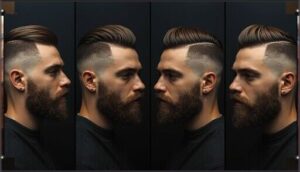
The taper fade and beard combo isn’t one-size-fits-all. You’ve got options that range from clean and subtle to bold and statement-making, depending on how much contrast you want between your hair and facial hair.
Let’s break down the top combinations that actually work in real life.
Low Taper Fade With Short Beard
Looking for a clean, sharp edge that works from the boardroom to the barbecue? The low taper fade with short beard delivers modern style with minimal fuss.
This taper fade gradually transitions from longer hair on top to shorter sides, paired with a neatly trimmed short beard. It suits all hair textures—straight, wavy, or curly—and adapts beautifully to thick or fine hair, making maintenance straightforward with trims every four to six weeks.
For additional grooming insights, check out this guide on precision beard blending techniques.
High Taper Fade With Full Beard
Want bold contrast that makes people look twice? The high taper fade with beard starts at or above your temples, blending into a full beard that frames your face with serious edge.
This fade haircut works brilliantly with textured crops and curly tops, enhancing facial structure while softening angular features.
Keep your beard length around 10-20mm for balance—grooming tips include visits every 1-2 weeks to maintain that crisp, commanding look.
Mid Taper Fade With Light Stubble
Somewhere between subtle and statement lives the mid taper fade with light stubble—your shortcut to adaptable ease. This beard style starts the fade around mid-scalp and pairs beautifully with textured tops, working for all hair textures through proper face shape analysis.
Touch-ups every 3-4 weeks keep it sharp, while stubble maintenance stays minimal. Let natural flow guide your styling for that relaxed vibe.
Bald Taper Fade With Disconnected Beard
Maximum impact meets zero compromise with the bald taper fade and disconnected beard—a power move that owns the room. This fade haircut drops to skin while your beard stays full and sculpted, creating deliberate separation that demands focus.
- Skin-tight fade techniques showcase bold hair texture contrast
- Beard length runs 2-4 inches for dramatic effect
- Beard styling emphasizes sharp, sculpted lines
- Skin care prevents irritation on freshly shaved sides
Touch-ups every 2-3 weeks and beard fade grooming keep this taper fade with beard looking razor-sharp.
Tapered Afro With Patchy Beard
A patchy beard doesn’t disqualify you from owning this look—the tapered afro actually makes sparse growth work in your favor.
The fade techniques on your afro texture draw eyes upward, while your beard style fills in naturally over time. Use hair products like moisturizing cream to define curls, and let your facial hair grow without forcing it.
This taper fade with beard combo turns “patchy” into personality.
Choosing The Right Style for Your Face Shape

Your face shape isn’t a limitation—it’s a blueprint for choosing the right taper fade and beard combo. When you match your cut to your bone structure, you’re not just following trends, you’re mastering your look.
Here’s how to pick the style that brings out your best features.
Oval Face Recommendations
If you’ve got an oval face, you’re basically working with a blank canvas—most taper fade with beard combinations will suit you. Your balanced proportions mean you can experiment with taper fade variations and mens haircut styles without overthinking face shape analysis.
A mid taper fade paired with a medium beard offers classic appeal, while oval haircuts with textured tops and light stubble keep things modern and sleek.
Round Face Enhancements
Round faces need height and angles to break up soft layers and round jawlines. A mid taper fade with beard creates slimming effects by adding vertical lines—think volume on top, clean sides, and a longer chin beard for face symmetry.
This angular reduction transforms your silhouette. Beard and haircut combinations like high fades work wonders here, giving you that commanding edge every fade haircut should deliver.
Square and Rectangular Face Balancing
Square faces pack a powerful jawline, but low taper fade with beard combinations soften those sharp angles without losing your edge. Face shape analysis shows rectangular faces need similar angular reduction—textured tops and medium beards create facial harmony by balancing strong features.
Here’s your blueprint for balanced silhouettes:
- Choose fade haircut styles with soft volume on top
- Keep beard fade rounded at the edges
- Layer hair above the temples
- Maintain medium beard length for softening jawlines
- Skip blunt cuts that emphasize sharpness
Diamond and Triangular Face Options
Diamond faces need strategic face framing—those pronounced cheekbones demand balance. Your taper fade with beard should add width where you’re narrower: forehead and jawline enhancement through fuller beard growth around the chin creates facial balance.
Try side-swept hairline design to minimize cheekbone accent. Fade haircut styles with fringe work beautifully here. This men’s grooming approach transforms sharp angles into sculpted symmetry through smart beard fade placement.
Step-by-Step Guide: Achieving The Look
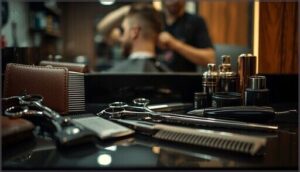
Getting this look right isn’t magic—it’s about having the right tools and following a solid process. You can absolutely tackle this at home if you’ve got steady hands and some patience.
Here’s what you need to know to create a sharp taper fade that blends seamlessly with your beard.
Tools and Products Needed
You’ll need the right grooming tools and barbering techniques to nail this look. Professional men’s grooming tools make all the difference between a clean fade and a choppy mess. Here’s what belongs in your grooming kits:
- Clippers with guards 0 to 3 – stainless steel blades stay sharp 6 to 12 months with proper clipper maintenance
- Precision beard trimmer – trimmer settings from 0.5mm to 3mm create sharp edges
- Detail trimmer – cleans lines your main clipper can’t reach
- Beard oil – nourishes skin and keeps hair manageable
- Aftershave balm – soothes freshly faded skin and prevents irritation
Preparing Hair and Beard
Once you’ve got your tools lined up, prep work sets the stage for a clean cut. Wash your hair with moisturizing shampoo and towel dry completely—wet hair throws off clipper precision.
For your beard, use a warm towel to soften the hair, then apply pre-shave oil to reduce friction. Exfoliate your skin to dodge ingrown hairs and comb everything straight before you start.
Creating The Taper Fade
Start with a two guard at the temple and work your way down the sides, dropping guard lengths as you approach the neckline. The fade effect relies on smooth transitions—no visible steps. Use clipper maintenance habits to keep blades sharp for clean cuts.
- Anchor your low taper above the ears for subtle contrast
- Follow natural hair texture patterns for even blending
- Check taper anatomy from multiple angles before detailing
This fade haircut framework preps you for smooth beard blending next.
Blending Beard With Haircut
Your fade haircut looks unfinished if the beard texture doesn’t flow into it. Use clipper over comb around the sideburns to soften any hard edges, working upward to match your low taper fade. Styling products help tame stray hairs during blending.
This fade technique creates smooth facial framing where your hairline design meets your beard fade—no visible disconnect between hair and whiskers.
Defining Neckline and Cheek Lines
Sharp lines transform your low taper fade with beard from good to legendary. Position your neckline one finger width above the Adam’s apple, keeping it symmetrical on both sides for facial symmetry. Your cheek line should follow natural growth patterns just above the cheekbone.
- Pull skin taut when defining hairline with a precision trimmer
- Use a straight razor for crisp beard contouring along the neck
- Refresh neckline shaping and cheek lines every 7-14 days
Beard Fade Techniques for Seamless Blending
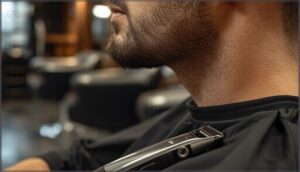
Getting the beard to melt smoothly into your fade takes the right technique and a steady hand. You can’t rush the blend—it’s all about working in gradual steps and knowing when to switch tools.
Let’s break down the core methods that’ll give you that clean, professional finish every time.
Clipper Guard Selection and Usage
Choosing the right guard is where most taper fade with beard attempts fall apart. Fade progression depends on smooth half-step transitions, not guesswork.
Your beard length guards should step up gradually—start with a 0 or 1 at the neckline, then jump to 2 and 3 as you move toward the jaw. Guard millimeter lengths vary by brand, so check your mens grooming tools chart before you start.
Clipper Over Comb Method
Think of clipper over comb as your precision workhorse for fade blending. Hold the comb between your thumb and index finger at a 45-degree angle, lifting hair slightly while your blade glides along the spine.
This comb anchoring locks in length control and prevents those harsh steps that scream amateur. Keep your wrist fluid, adjust for hair texture, and let the comb guard against blade exposure.
Detailing With Trimmers and Razors
Detail trimmers bring your taper fade and beard to pro-level precision. Use narrow T-blades to carve clean cheek lines and necklines—gentle downward pressure at 0.4 to 2.0 millimeters keeps edge definition crisp without nicking skin.
Blade maintenance matters: clean between passes to avoid blur. For razor safety, apply pretrim moisturizer and finish with alcohol-free balm.
These trimmer techniques and skin preparation steps enhance your grooming game.
Avoiding Harsh Lines and Steps
Once you’ve dialed in those detail lines, focus on edge shift and step prevention. Blend at least three guard lengths across your temple and sideburn zone to dodge abrupt jumps. Move clippers in small circles during the final pass—this fade technique softens harsh lines naturally.
Proper skin preparation before you start and a light against-the-grain brush after help line blending appear smooth on every taper fade with beard.
Maintenance Tips for a Sharp Finish
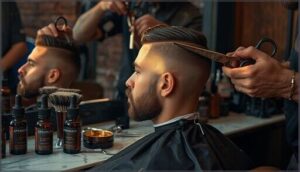
You’ve nailed the cut and dialed in the blend—now it’s time to keep it looking razor-sharp. A taper fade with a beard isn’t a one-and-done deal; it demands consistent upkeep to maintain that clean, commanding edge.
Here’s what you need to stay on top of to own the look every single day.
Touch-Up Frequency
Your taper fade demands regular attention if you want to keep that crisp, commanding edge. Most cuts need touch-up schedules every two to three weeks, while beard maintenance and fade maintenance work hand in hand. Growth tracking helps you stay ahead of regrowth, and color fading means tighter intervals when you’re rocking dyed hair.
- Schedule adjustments based on your hair’s growth speed and lifestyle exposure
- Grooming advice: inspect your hairline weekly to catch dullness early
- Mens grooming pros know that consistent touch ups separate sharp looks from sloppy ones
Beard Trimming and Shaping
Once you’ve locked down your trim schedule, sharpening your facial hair becomes the next power move. Beard length determines which trimming tools you grab—adjustable clippers for bulk, detail trimmers for precision. Shaping techniques like clipper over comb blend your faded beard into the taper fade seamlessly. Styling products and smart beard care and maintenance keep every strand aligned with your cut.
| Beard Length | Primary Trimming Tools | Shaping Techniques |
|---|---|---|
| Light stubble (1–3 mm) | Detail trimmer, foil shaver | Straight edge for cheek and neck lines |
| Short beard (4–10 mm) | Adjustable clipper (guards 1–3), precision trimmer | Clipper over comb for fade blend |
| Medium beard (11–20 mm) | Clipper (guards 3–6), scissors | Finger combing to check evenness |
| Full beard (21+ mm) | Barber scissors, longer guards | Layering and point-cutting for texture |
| Patchy or curly | Detail trimmer, boar bristle brush | Circular motion fades to soften gaps |
Skin and Scalp Care Post-Fade
Fresh skin demands respect. After your taper fade, scalp hydration becomes your first defense—rinse with lukewarm water and a pH-balanced cleanser twice daily, then lock in moisture with a fragrance-free lotion.
Sun protection is non-negotiable: slap on SPF 30+ before heading out, or wear a cap during peak hours.
If you notice skin irritation or redness past 72 hours, loop in your barber.
Recommended Grooming Products
Your grooming toolkit needs to work as hard as your fade. Reach for sulfate-free beard wash 2–3 times weekly, then smooth on 3–4 drops of jojoba-based beard oil to lock in moisture for 8 hours. A lightweight balm shapes stubborn hairs, while alcohol-free aftershave balms calm fresh skin.
Pair clarifying shampoos with SPF 30 moisturizer—smart grooming techniques keep both cut and beard sharp.
Styling Inspiration and Modern Variations
You’ve got the technique down, now it’s time to make the look your own. These modern variations show how adaptable the taper fade with beard combo can be, whether you’re after classic refinement or something that turns heads.
Here’s a breakdown of five popular styles that work in 2026.
Taper Fade With Side Part and Beard
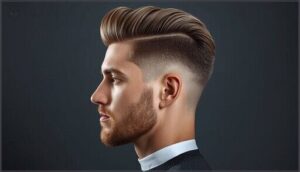
A side part draws a sharp line that splits your haircut into two zones—longer texture on top and a clean fade below. This classic move gives you face-framing precision while letting beard length blend smoothly into your taper fade. Skin preparation and fade techniques matter just as much as the part itself.
- Comb the part line before you clip to lock in placement
- Use a low taper fade on the sides for subtle contrast
- Let your beard fade mirror the hair taper for smooth blending
- Keep hair texture on top with light product for hold
- Define cheek lines to sharpen the overall frame
Colored Hair and Faded Beard
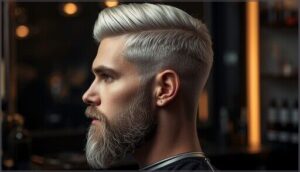
Bold color on top meets a faded beard for a high-impact look that screams confidence. Choose a shade one to two levels lighter than your hair for natural balance, then use color-safe beard shampoo to keep vibrancy alive. Patch test dye a day before to dodge irritation, and reapply every three to six weeks to cover new growth.
| Element | Best Practice |
|---|---|
| Dye selection | Use beard-labeled formulas to minimize skin irritation |
| Application timing | Process beard longer than scalp hair for even tone |
| Maintenance frequency | Touch up color every 3–6 weeks for consistent results |
Tapered Braids With Curly Beard
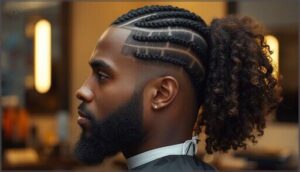
Want head-turning style that’s equal parts edge and elegance? Tapered braids with a curly beard create a striking contrast—defined braid patterns frame your jawline while curly texture adds volume at the chin.
This fade haircut pairs three to five braids with a low or mid taper fade, showcasing your barbering expertise. Proper taper techniques and fade maintenance keep beard length balanced, while beard oil preserves curl elasticity.
Handlebar Mustache and Beard Fade

The handlebar mustache with a beard fade is a statement of character—upward-curved ends sit above a graduated facial hair blend that sharpens your jawline.
Mustache styling demands lightweight wax for curl enhancement, while fade techniques keep sideburns aligned with your taper.
Handlebar maintenance includes weekly trims to preserve that iconic shape, and beard texture stays balanced with daily oil application for smooth blending.
Summer-Ready Short Beard Fades

When heat climbs, a short beard fade becomes your coolest weapon—low taper fade paired with trimmed facial hair cuts heat buildup around your jawline while keeping your edge sharp.
Schedule touch-ups every two to three weeks, apply light beard oil for softness without greasiness, and use non-greasy moisturizer to fight summer irritation. Warm weather care means fade maintenance that breathes.
Frequently Asked Questions (FAQs)
What fade looks best with a beard?
Like finding the right frame for a portrait, the best fade haircut depends on your beard texture and face shape.
Low fades suit subtle, short beards, while high fades complement fuller styles.
Can you get a taper fade with a beard?
Absolutely. You can pair any taper fade haircut with a beard by blending the fade line into your facial hair.
The style works across all hair textures, face shapes, and beard lengths with proper trimming.
What is a tapered cut with beard blend?
You’ve probably noticed how a tapered cut with beard blend creates one smooth gradient from your haircut straight into your facial hair, eliminating harsh lines and giving you that polished, intentional look everywhere.
Does a taper fade work with gray beards?
Yes, taper fades pair beautifully with gray beards. The fade techniques help silver tones blend smoothly into your beard, especially when you choose a softer gradient that complements your natural gray hair blending and beard color matching.
How much does a professional fade cost?
Your wallet won’t take a beating—most barbershops charge between $35 and $70 for a solid fade, though high-end spots can hit $
Service complexity, location, and your barber’s reputation all shift the price.
Can I do a taper fade at home?
You can pull off a taper fade at home with DIY fade kits and self-grooming tools, but expect a learning curve.
At-home maintenance gets easier with practice—just start conservative and build your barber skills gradually.
What beard length works best with fades?
Here’s the deal: beard length hinges on fade height. Short stubble suits low taper fades, medium beards balance mid fades, and full beards contrast high fades.
Match your face shape for styling tips that actually work.
How do I fix a patchy beard fade?
Line up your fade at the strongest growth zones to hide gaps.
Daily beard oil keeps patchy hairs flexible, while a tinted balm fills visible spaces for smooth blending and polished taper maintenance.
Conclusion
The right clipper guards give you control. The right blend gives you definition. The right maintenance keeps you sharp between cuts.
Master the taper fade with beard and you don’t just look put together—you command attention without saying a word.
This isn’t about following trends. It’s about owning a look that frames your face with precision and intention. Walk out of that chair knowing every line was earned, not accidental.