This site is supported by our readers. We may earn a commission, at no cost to you, if you purchase through links. This content is for general informational and educational purposes only and is not a substitute for professional medical, dermatological, or nutritional advice.
Nine out of ten clients point to a photo and say the same thing: "just fade it." That’s the problem. A taper fade haircut isn’t one cut. It’s a whole system of heights, blends, and finish work.
Get the height wrong and you walk out looking nothing like that picture. Get the top length wrong and your barber can’t fix it until it grows back.
This guide breaks down every taper fade type, how to pick one for your face and hair, and exactly what to say in the chair so you get it right the first time.
Table Of Contents
- Key Takeaways
- What is a Taper Fade Haircut?
- Main Types of Taper Fades
- Best Taper Fade Variations
- Choose Your Best Taper Fade
- How to Ask Your Barber
- How to Style Taper Fades
- Maintain Your Taper Fade
- Frequently Asked Questions (FAQs)
- What is a fade taper haircut?
- What hair ages you?
- What is better, a taper or a fade?
- How do I ask for a taper fade?
- Can women wear taper fade haircuts?
- How much does a taper fade cost?
- What face shapes suit taper fades best?
- Does a taper fade work with thinning hair?
- How long does a taper fade take?
- What products work best for taper fades?
- Conclusion
Key Takeaways
- A taper fade keeps length while gradually shortening hair, whereas a full fade blends all the way down to skin for sharper contrast.
- Choosing the right fade height and top length depends on your face shape, hair texture, and how much upkeep you’re willing to commit to.
- Clear communication with your barber—using reference photos, guard numbers, and specific terms for neckline and sideburns—prevents a botched cut you can’t fix until it grows out.
- Maintenance between visits, including regular touch-ups every 1–4 weeks and careful neckline cleanup, is what keeps a taper fade looking sharp long-term.
What is a Taper Fade Haircut?
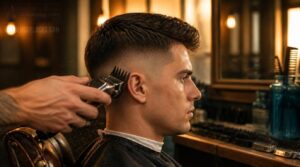
A taper fade is one of the most requested cuts in any barbershop. It’s not just one style, it’s a whole approach to blending hair. Here’s what you need to know before you sit in the chair.
If you’re unsure how to explain the blend you want, this guide to describing a taper fade to your barber makes the conversation a lot easier.
Before you decide, it helps to understand how a taper fade compares to a drop fade, since each blends the hairline differently.
Definition and Key Features
Precision is the whole game with a taper fade. Hair shortens gradually from the ears up, blending top length into the sides with zero harsh lines.
Key features:
- Smooth blending at the fade point
- Gradual length change toward the neckline
- Natural contour shaping around your hairline
This creates a clean silhouette. Your top stays longer. Your sides disappear into skin or short stubble.
Taper Versus Fade
People mix up "taper" and "fade" all the time. They’re not the same thing.
Taper trims hair short near the neckline, no skin exposure. Fade blends hair down to skin for max contrast intensity. Understanding different taper vs fade variations can help you choose the right style.
| Taper | Fade |
|---|---|
| Minimal scalp exposure | Full hairline coverage into skin |
| Softer edge | Sharp growth look |
| Low maintenance | Higher upkeep |
| Subtle fade | Bold contrast |
| Classic look | Modern edge |
Why It Suits Men
Once you know the difference between taper and fade, the real question hits: why does this cut work so well on guys?
It builds a masculine silhouette, sharpens jawlines, and signals grooming discipline. Benefits include:
- Facial structure enhancement
- Cleaner jaw outline
- Professional image boost
- Confidence through polish
- Works with any hair texture
Clean, Blended Neckline
Confidence shows up in the details. A clean blended neckline turns a sharp haircut into a finished one, using gradual gradient techniques instead of one hard line.
Barbers shape a natural curve, prevent shadowing, and keep the sideburn junction flowing smooth. No harsh borders, no visible step. Whether you’re rocking a low, mid, or high taper fade, proper hairline blending seals the whole look together.
Main Types of Taper Fades
Not all taper fades look the same. Each style changes where the fade starts and how much contrast it shows. Here’s a breakdown of the five main types you can ask for.
Low Taper Fade
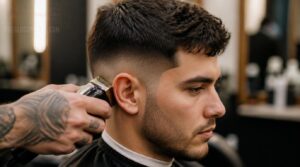
Want a fade that won’t scream for attention? The low taper fade starts just above the ear, keeping things subtle and workplace-ready.
Guards shrink gradually from top to bottom, no harsh lines. This builds smooth regrowth patterns and keeps your natural hairline framing intact. Fuller sides, low shift, clean look.
Great pick for curly, straight, or coily hair needing easy texture volume management without heavy contrast.
Mid Taper Fade
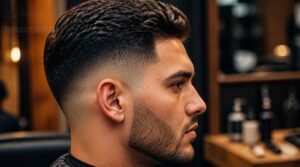
Split the difference and you get the mid taper fade. Starts at temple placement, roughly an inch above the ear, giving balanced contrast without extreme drift.
If you’re pairing this fade with straight hair, checking out this guide to lightweight oils for frizz-prone strands can help keep the taper looking sharp without weighing it down.
Smooth flow, wider blending area than a high fade. Works for:
- Oval faces
- Square jawlines
- Straight or wavy texture
Touch-ups every 2-3 weeks keep the taper fade haircut sharp.
High Taper Fade
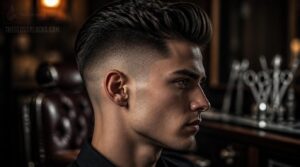
Push it up top and you get the high taper fade. Starts two to three inches above the ear, near the crown, for max visual impact.
Sharp gradient blending, bold side profile, structured silhouette. Best on angular or oval faces.
Touch-ups every 2-3 weeks. Ask your barber for this haircut style for men when you want an edgy mens hairstyle.
Skin Taper Fade
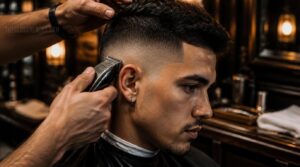
Bare skin at the bottom, that’s the whole point. A skin taper fade takes the lowest guard down to nothing, way sharper contrast than a low taper fade.
Getting there takes real guard progression, blending guard by guard until the lines disappear. Fade shape follows your head’s contours, curving clean around the ears.
Neckline edge cleanup keeps it crisp. This mens hairstyle needs a detailed barber consultation before every session.
Classic Taper Fade
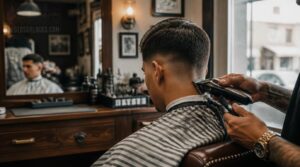
This one’s the middle ground. A classic taper blends top length down to the neckline without ever hitting skin, using smooth blending techniques for a soft finish.
Guard size selection matters here, longer up top, shorter near the ears. Works on straight, wavy, or curly hair. Round or tapered neckline, your call. It’s the go-to for barber consultations when clients want low-key mens hairstyles.
Best Taper Fade Variations
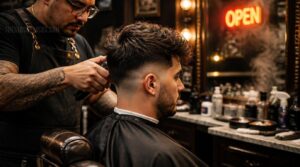
A basic taper fade is a solid start. But the real style comes from what you pair it with on top. Here are five variations worth asking your barber about.
Taper Fade With Lineup
Taper fade with lineup takes a clean fade and adds a crisp border up front. The lineup traces your hairline with a straight edge, sharpening definition around the forehead and temples.
To keep that edge looking razor-sharp, explore haircut line designs and maintenance tips that help you decide how often to book touch-ups before fading sets in.
Sharpness levels vary by preference. Some clients want a razor-sharp edge, others a softer line to reduce scalp irritation.
Lineup maintenance runs every 2 to 4 weeks. This keeps hairline framing tight and your overall style looking fresh.
Curly Taper Fade
Curls and clippers can work together, not against each other. A curly hair taper fade keeps a skin-close shift on the sides while your top curls stay full and bouncy.
Good barbering techniques here mean careful guard number selection and scissor over comb work, so texture never gets crushed. A silk cap at night protects that curl pattern between visits.
Afro Taper Fade
Afro taper fade keeps your crown full while sides fade to skin. Volume retention up top, sharp contrast below.
Barbers scale afro length to your hair texture, applying moisture for curl definition and less shrinkage. This silhouette shaping suits mens haircut styles wanting bold texture without heavy product weight. Ask your barber for the right guard and mix height.
Blowout Taper Fade
Height on top, tapered sides below. That’s the blowout silhouette shape — a pyramid built for volume.
Barbers use a blow dryer and round brush for crown volume, lifting roots while sides stay tight. Add texture layering to avoid flatness, then finish with a matte finish product. Always use heat protectant before drying. High blowout taper fades add drama; low versions stay office-ready.
Side Part Taper Fade
Want sharp without the drama? This combo does it.
Barber cuts a distinct part line, lifts top length away from temples, and sides fade clean to skin. Straight or wavy hair holds the part best. Medium top length, 2-4 inches, gives you room to comb over.
Professional, easy to style, and works for the office or a night out.
Choose Your Best Taper Fade

Not every taper fade works for every guy. Your face shape, hair type, and daily routine all play a part. Here’s what to think about before you sit in the chair.
Match Your Face Shape
Your mirror doesn’t lie, but it does need a plan. Facial structure analysis starts with one question: what’s your face shape doing?
- Round: mid-high fade for vertical face lengthening
- Square: low-mid shift for jawline softening techniques
- Heart: tapered sides balance forehead width
- Diamond: cheekbone framing styles keep proportions even
- Oval: wear any taper fade haircut
Consider Your Hair Texture
Genetics call the shots here. Follicle shape decides curl pattern: round follicles grow straighter, oval ones create waves and coils.
That affects strand diameter and volume, plus porosity, which changes how product absorbs. Coilier textures need richer product for hold; fine, straight hair needs lighter stuff.
Your barber adjusts blending techniques and guard sizes across your scalp to match how your specific hair texture behaves.
Think About Maintenance
How much time can you actually give this cut? Low tapers stretch to 3–4 weeks between visits. Mid and high tapers need touch-ups every 2–3 weeks. Skin fades demand attention every 1–2 weeks since regrowth shows fast.
Factor in neckline grooming and edge cleanups between full cuts too. If your schedule’s tight, pick a fade that matches your real availability, not your ideal one.
Match Your Workplace Style
Your office decides your fade as much as your face shape does. Corporate grooming standards favor a low or mid taper with clean linework. Conservative offices? Skip harsh contrast. Client-facing roles benefit from a blended, polished look that reads competent, not casual.
Keep it consistent week to week. Workplace grooming consistency signals discipline, and that’s part of your professional image whether you’re at a desk or in an interview.
Choose Contrast Level
Some fades shout. Others whisper. Your natural coloring decides which volume works.
Dark hair with light eyes creates high contrast — go bold with a high taper fade. Medium coloring suits a mid taper fade. Light hair, light eyes? A low taper fade keeps things soft.
- Check hair-eye balance
- Match wardrobe contrast
- Consider lighting effects
- Test in photos first
How to Ask Your Barber

Getting the right cut starts before the clippers ever touch your head. A good consultation covers more ground than most guys expect. Here’s exactly what to bring up in that chair.
Bring Clear Reference Photos
A blurry phone pic won’t get you a clean fade. Bring 2-3 sharp photos: front, side, back. Skip the ones with weird lighting or shadows covering half your head. Natural light works best for true color and skin tone.
Avoid photos with motion blur near the hairline. Your barber needs to see the edges clearly to match the cut.
Pick Fade Height
Photos show your barber the look. Fade height tells them where to start.
Low taper fade begins near the ears, low contrast, professional. Mid taper fade sits at temple level, balanced. High taper fade starts higher, more vertical head length, edgy look. Know your fade placement boundaries before you sit down. This decision drives visual contrast impact and scalp exposure levels across the whole cut.
Specify Top Length
Fade height sets your sides. Top length sets your volume.
Give a clipper guard number like a 2 or 3, or ask for scissor length precision instead. Longer top means more scissor work and more hair volume and lift for styling. Shorter top means less effort, flatter finish. Match it to your daily styling effort.
Discuss Neckline Shape
Your neckline is the back-and-sides border. Get it wrong, and the whole taper fade haircut looks off.
Get the neckline wrong, and the whole taper fade haircut looks off
Ask for Natural Curve Blending that follows your jaw-to-neck line, not a flat box edge. Discuss Neckline Elevation Impact too. Lower reads longer, higher reads compact.
Mention Skin Termination Techniques for clean bare-skin blends, plus Profile Symmetry Balance so both sides match evenly.
Mention Sideburn Length
Sideburns tie your whole taper fade haircut together. Skip this detail, and even a clean fade looks unfinished.
Set a clear length category: short (top-of-ear), medium (center), or extra-long (bottom-of-ear). Keep width under 1.5 inches for a conservative look.
Match length to face shape for jawline alignment and facial symmetry. Longer faces want shorter sideburns; shorter faces can go longer, within reason.
How to Style Taper Fades
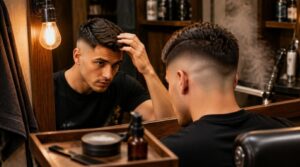
A good fade doesn’t stop at the cut. Styling makes or breaks how sharp it looks day to day. Here’s how to do it right, step by step.
Start With Damp Hair
Damp, not dripping. That’s the sweet spot for shaping a taper fade haircut.
Tilt your head forward. No drips, no shine.
Detangle ends-up, working small sections to prevent breakage.
Damp hair absorbs product better, so timing matters:
- Feel cool, not soaked
- Comb gently from ends
- Avoid yanking knots
- Let pliability guide your set
Controlled drying locks the shift in clean.
Use Matte Clay
Grab a pea-sized amount of matte clay and warm it between your palms first. This stuff gives you a natural, non-shiny finish that hides oil without looking greasy.
Work back to front for even coverage. Use fingertips, not palms, to build texture and separation.
Start small. Matte clay controls bulk and adds grip, perfect for fine hair volume without weighing anything down.
Try Sea Salt Spray
Spritz sea salt spray on damp hair and scrunch to wake up natural texture. It’s built for straight and wavy hair, adding grip without grease.
Minerals like magnesium absorb extra oil, so scalp stays balanced, not dry.
- Lifts roots for volume
- Adds beachy separation
- Reduces frizz and shine
- Works on short to medium lengths
- Extends time between washes
Choose Pomade for Shine
Want that mirror-shine look after your taper fade? Pomade’s your tool.
Water-based formulas wash out clean but hold strong. Choose gloss intensity based on style: high shine for slick backs, lighter formulas for textured tops.
Look for argan oil or shea butter in the mix. Warm a pea-sized amount between your palms, work it through, then comb for even, reflective shine.
Shape With a Blow Dryer
A round brush and blow dryer build real shape into your taper fade haircut. Section hair into 4-6 parts, work back to front.
Medium-high heat, cool finish sets it. Keep the nozzle 1-2 centimeters away. Direct airflow down the shaft for smoothness, tilt the brush slightly for lift at the crown.
Maintain Your Taper Fade
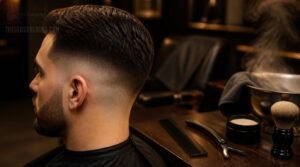
A sharp fade doesn’t stay sharp on its own. Keeping that clean look takes real upkeep between visits, not just a good first cut. Here’s what that upkeep actually looks like.
Schedule Regular Touch-ups
A sharp fade doesn’t stay sharp on its own. Book edge-ups every 2 to 3 weeks to keep lines crisp before they blur.
This cadence also takes care of split-end prevention, product buildup, and beard coordination in one visit. Skipping appointments means a full recut later, costing more time and money. Consistent scheduling protects your haircut’s longevity and keeps maintenance budgeting predictable instead of reactive.
Clean Your Neckline
Between visits, grab a detail trimmer and follow your barber’s existing line. Don’t rebuild it — just clean strays below it.
Check both sides in a mirror for neckline symmetry. Keep your head straight, use light pressure, and shave with the grain to avoid irritation. A steady hand keeps your hairline shaping natural instead of blocky.
Wash Without Over-drying
Keep water lukewarm, not hot. Hot water strips natural oils fast.
Shampoo your scalp, not the ends. Rinse quick — long rinses pull moisture out.
Apply conditioner mid-length to ends, leave it a minute, then rinse clean.
If hair still feels tacky afterward, explore common reasons hair feels sticky after washing to pinpoint possible buildup or product issues.
Skip the rough towel rub. Pat dry gently to protect your taper fade haircut and reduce breakage during grooming.
Refresh Edges Carefully
Your hairline and neckline grow back at different speeds. That’s why edges need touch-ups between full cuts.
Only remove loose regrowth. Don’t recut the whole line every time. Over-trimming creates thin, see-through spots at the temples.
Consistency protects your edge longevity. Same guard, same technique, every touch-up. This prevents patchy regrowth and keeps your taper fade haircut looking sharp without thinning your hairline.
Know When to Recut
Edges are one signal. The rest of the fade tells its own story.
Watch for choppy growth between guard lengths, flattened contrast, or cowlicks pushing through the shift. Uneven regrowth around the crown often shows up first.
- Blurred taper lines
- Flat, less defined contrast
- Visible cowlick disruption
- Rounded, worn-down edges
Recut based on appearance, not the calendar. That’s real haircut maintenance for lasting haircut longevity.
Frequently Asked Questions (FAQs)
What is a fade taper haircut?
Your hair shortens gradually from top to bottom, blending sides and back into a smooth tapered silhouette. No hard lines, just smooth transitions. It’s a modern grooming staple, giving you a clean, flexible look that works for nearly any face shape or texture.
What hair ages you?
Five things age hair fast: scalp visibility from thinning, harsh color contrast, flat volume, dated tight texture, and heavy fringe. A well-placed taper fade and matching face shape fix most of it instantly.
What is better, a taper or a fade?
Neither wins outright. Fades expose more scalp for bold contrast; tapers keep length for a softer look. Pick based on maintenance tolerance, workplace rules, and how sharp you want that silhouette to read.
How do I ask for a taper fade?
Bring 2–3 reference photos, then state fade height (low, mid, or high), guard number, neckline shape, sideburn blending, and contrast level. Clear details prevent guesswork and get you the exact look you want.
Can women wear taper fade haircuts?
Absolutely, a thousand times over. This cut has zero gender rules built in. It’s just gender-neutral styling: faded sides, any top shape. Pair it with a pixie or textured crop, and it becomes one of the boldest mens hair trends borrowed for women’s chairs too.
How much does a taper fade cost?
Prices run $25 to $60 standard, up to $100 at premium shops. Add-ons like beard trims or lineups cost extra. Urban barbershops charge more than suburban ones. Budget accordingly for regular touch-ups and mens grooming upkeep.
What face shapes suit taper fades best?
Oval faces handle any height. Round faces need higher fades for elongation, square jaws soften with lower ones, heart shapes balance with low fades, and oblong faces avoid extra height on top.
Does a taper fade work with thinning hair?
Picture a client with a thinning crown asking for more length on top. Yes, it works. Lower contrast levels reduce scalp exposure, longer top hair creates volume, and soft blending hides thin zones better than sharp, high-contrast fades.
How long does a taper fade take?
Your fade holds sharp for 2 to 4 weeks, depending on growth rate and texture. Straight hair shows regrowth faster. Low fades stretch longer; high and skin fades need touch-ups every 1 to 2 weeks to stay clean.
What products work best for taper fades?
Go with matte clay or texturing powder for natural hold without shine. Prefer shine? Pomade or sea salt spray works. Prevent buildup with clarifying shampoo, and keep your scalp healthy for a crisp, humidity-resistant fade line.
Conclusion
A blueprint holds up a building. Clear words hold up your haircut. Name your height, length, and neckline, and any barber can build the look from scratch. Skip the guesswork.
A sharp taper fade haircut isn’t luck. It’s communication plus skill, repeated every few weeks in the chair. Walk in with a plan, not just a photo. That’s how you leave looking exactly like you pictured, every single time.