This site is supported by our readers. We may earn a commission, at no cost to you, if you purchase through links. This content is for general informational and educational purposes only and is not a substitute for professional medical, dermatological, or nutritional advice.

Most men never think twice about the foam they slap on their face before shaving. They grab a can, press a button, and call it preparation. But that pressurized foam—mostly air and synthetic stabilizers—sits on the skin like a dry shield, doing little to protect or soften.
The difference between a nick-filled shave and a clean, comfortable one often comes down to lather quality. A well-built lather cushions the blade, holds moisture against your beard, and lets the razor glide instead of dragging. Learning how to build shaving lather properly takes about five minutes to grasp and changes every shave after that.
Table Of Contents
- Key Takeaways
- Why Proper Shaving Lather Matters
- Choosing The Right Shaving Soap or Cream
- Selecting and Preparing Your Shaving Brush
- Step-by-Step Guide to Building Shaving Lather
- Troubleshooting Common Lather Problems
- Preparing Your Skin for The Perfect Lather
- Essential Tips for Consistently Great Lather
- Frequently Asked Questions (FAQs)
- How to make good shaving lather?
- How to make your own shaving foam?
- How do I get the smoothest shave?
- Can shaving lather expire or go bad?
- Does water temperature affect lather quality?
- How much soap should a beginner buy?
- Can you mix two different shaving soaps?
- Is distilled water better for building lather?
- Conclusion
Key Takeaways
- Dense, glossy lather cushions the blade and softens beard hair by up to 30%, making it the single biggest factor in a comfortable, nick-free shave.
- Loading your brush for 30 to 60 seconds and adding water drop by drop—not in splashes—is what separates good lather from thin, runny foam that disappears mid-shave.
- Hard water quietly kills lather quality, but a switch to distilled water or a pinch of citric acid fixes the problem immediately.
- Your soap choice matters less than your technique, but reading the label for stearic acid (32–50%) and a solid glycerin ratio will steer you toward products that actually perform.
Why Proper Shaving Lather Matters
Most guys don’t realize how much lather is doing during a shave — it’s not just foam, it’s what stands between your blade and your skin. Get it right, and everything else falls into place.
Getting the technique just right takes a little practice, but improving your shave routine from the ground up starts with understanding why lather is the foundation of everything.
Lather isn’t just foam — it’s the only thing standing between your blade and your skin
Here’s what proper lather actually delivers.
Benefits for Skin and Beard
Good lather does more than prep your beard — it transforms your skin. The right shaving soap and shaving brush combo delivers real, measurable benefits:
- Moisture Retention locks hydration in, preventing that tight, dry feeling after each pass
- Beard Softening swells coarse hairs up to 30% for cleaner cuts
- Exfoliation Boost and irritation prevention come naturally from circular brush motions
Lather quality and consistency matter more than most guys realize. The [glycerin acts as humectant](https://www.razoremporium.com/blog/everything-you-need-to-know-about-shaving-soaps) helps lock moisture into the skin.
Lather’s Role in Shave Comfort
Proper shaving lather isn’t just foam — it’s your blade’s first line of defense. A dense cushioning buffer keeps the razor riding on lather, not skin. That glide smoothness makes every stroke feel controlled. Hydration softening keeps whiskers pliable through each pass, while multi‑pass protection ensures nothing runs dry.
Using pre‑shave oil protection can reduce friction and prevent razor burn.
| Lather Quality | Shave Result |
|---|---|
| Dense, glossy lather | Smooth glide, less irritation |
| Airy, bubbly lather | Blade drag, razor burn |
| Over‑hydrated lather | Slick but thin protection |
| Under‑hydrated lather | Pasty drag, skin redness |
Good lathering technique — circular motions, controlled water additions — turns sensory enjoyment from a bonus into a built‑in benefit.
Common Lather Mistakes to Avoid
Even great lathering techniques fall apart when the basics get skipped. Watch out for these five mistakes:
- Insufficient Loading — 10–15 seconds on the puck leaves you with thin foam, not cream.
- Overloading Brush — Too much soap kills lather consistency before you even start building.
- Excess Water — Ruins lather quality fast; add drops, not splashes.
- Hot Water — Breaks lather creation methods down into a slippery mess.
- Skipping Soak — Dry bristles mean uneven lather building from the first stroke.
Choosing The Right Shaving Soap or Cream
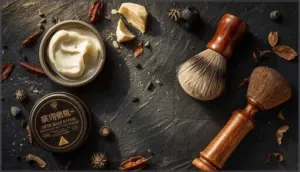
What you put in your brush matters just as much as how you use it.
The right soap or cream is the foundation of a great shave, and knowing what to look for saves you a lot of trial and error.
Here’s what you need to know before you buy.
Soap Vs. Cream: Pros and Cons
Both shaving soap and shave cream deliver quality shaving lather — the difference is how you get there. Soap rewards patience with higher lather density and long-lasting cushion across multiple passes. Cream trades that control for speed.
If you want a deeper look at how cream, soap, gel, and foam each stack up, this shaving product comparison by lather, cushion, and slickness breaks it down clearly.
| Factor | Shaving Soap | Shave Cream |
|---|---|---|
| Lather Creation | Slower, more deliberate | Fast, minimal effort |
| Lather Density | Thick, structured, durable | Softer, airier |
| Skin Irritation | Lower risk, glycerin-rich | Higher with cheap formulas |
| Cost Efficiency | Better long-term value | Lower upfront cost |
| Ritual Preference | Craft-oriented routine | Quick, convenient shaving techniques |
Key Ingredients for Quality Lather
The label on your shaving soap or cream tells the whole story.
Stearic acid — ideally 32 to 50 percent — gives lather its density and cushion. Glycerin ratio determines how well it hydrates while you work. Sorbitol benefits the texture, keeping lather spreadable and stable. Lanolin content adds that silky slip. Surfactant boosters help everything foam, especially when water type runs hard.
Recommended Brands for Beginners
A few names keep showing up in Shaving Product Reviews for good reason.
Proraso Starter kits give you a matched set right out of the box.
Nivea Sensitive shaving cream stays under five dollars and works gently on reactive skin.
Cella Classic soft soap loads fast on a Shave Brush.
Arko Budget sticks cost almost nothing.
Yaqi Synthetic brushes build Shaving Lather quickly with any Shaving Soap or Shaving Cream you choose.
Selecting and Preparing Your Shaving Brush
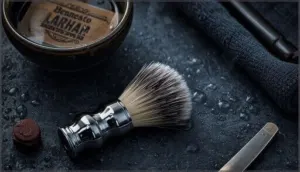
Your brush is just as important as your soap, and the wrong choice can make lathering harder than it needs to be.
Before you touch soap to bristle, you need to know what you’re working with and how to get it ready.
Here’s what to keep in mind when selecting and prepping your brush.
Synthetic Vs. Natural Hair Brushes
shave brush choice shapes everything.
Synthetic hair brushes offer strong backbone strength, consistent bristle softness levels, and impressive durability and lifespan — often starting under $40.
Badger hair feels luxurious but costs more, especially silvertip grades.
Boar hair sits in the middle: firm backbone, low cost, and it toughens up with use.
Water hardness impact matters less with brush type than people think.
How to Soak and Prep Your Brush
before you ever touch soap. Give your natural-hair shave brush a proper pre‑soak rinse, then submerge the knot in warm water — around 100°F — for one to three minutes depending on brush type. Badger softens faster; boar needs a little longer.
Once it’s ready, shake gently twice for clean moisture removal, then move straight to brush loading.
Breaking in a New Brush
brand-new boar shave brush can feel like scrubbing with a toothbrush. That’s normal. Tip splitting happens gradually — expect 10 to 20 shaves before the bristles soften and splay properly.
Speed things up with accelerated soaking: submerge the knot overnight, then rub the tips on a towel. Defunking odor is simple — wash with dish soap first.
Badger hair and synthetic hair brushes need almost no break‑in at all.
Step-by-Step Guide to Building Shaving Lather
This is where the real work begins.
Building lather well comes down to three things: how you load your brush, which method you use to build it, and how you manage the water. Get these right, and everything else falls into place.
Loading The Brush With Soap or Cream
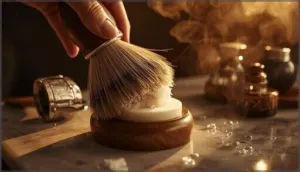
Loading is where the magic starts. Your shave brush’s dampness level matters — too wet and you dilute the soap before lathering even begins.
Use a circular loading motion, pressing the bristles gently onto your shave soap or shave cream for 30 to 60 seconds.
Hard soaps need the full minute.
Watch for tiny, dense bubbles with no large air pockets — that’s your signal that the brush is fully loaded.
Bowl, Face, and Hand Lathering Methods
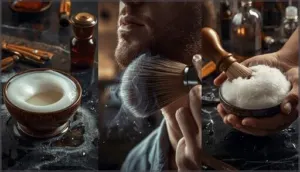
Once your shave brush is loaded, you’ve got three ways to build lather: bowl, face, or hand.
Bowl lathering gives you the best water control — work the brush in circles inside your shave bowl, then switch to side-to-side strokes.
Face lathering lets your skin give direct feedback as consistency builds.
Hand lathering works anywhere but limits your total volume — a real trade-off for travel convenience.
How to Add Water for Optimal Consistency
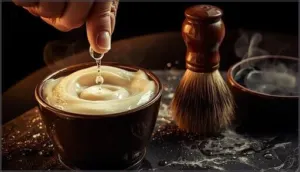
Water makes or breaks your lather — and control is everything here.
Use the Drop-by-Drop Technique for precise Incremental Hydration Timing:
- Add 3–4 drops at a time using your fingertips
- Whip for 20 seconds, then check Visual Lather Cues — peaks, gloss, yogurt texture
- Apply Water Temperature Control: aim for 100–110°F
- Make Water Hardness Adjustments — switch to Distilled Water if Hard Water kills your lather
Troubleshooting Common Lather Problems
Even experienced shavers run into lather issues — it happens to everyone at some point.
The good news is that most problems come down to just a few fixable causes.
Here’s what to look for and how to correct it.
Fixing Thin or Runny Lather
Thin, runny shaving lather almost always comes down to two culprits: not enough soap or too much water. Focus on soap loading time first — work the brush on your shave soap for a full 30 to 45 seconds.
Then practice water drop control, adding just a few drops at a time. Brush wringing technique matters too; squeeze out excess moisture before you start lathering.
Dealing With Lather That Disappears
Runny lather disappears for different reasons than thin lather does. Water excess in your brush is usually the main one — even two or three extra shakes matter. Here’s what causes lather to vanish mid‑shave:
- Soap Loading too briefly leaves insufficient soap to sustain foam
- Oil Interference from pre‑shave products breaks down shaving lather instantly
- Ambient Air Exposure dries lather within minutes between passes
- Re‑Lathering Technique matters — dip, don’t flood
Solutions for Hard Water Issues
Hard water is a quiet saboteur — it fights your lather before you even load the brush.
The fix depends on what you have handy. Distilled water costs almost nothing and solves the problem immediately. A pinch of citric acid in your bowl works just as well. Calgon softener and the boiled water method both help too.
Hard-water-tolerant soaps like Mitchell’s Wool Fat or Stirling are worth keeping on your shelf.
Preparing Your Skin for The Perfect Lather

Most guys skip straight to the brush, but what you do before that matters just as much. Your skin and beard need a little prep work to get the most out of your lather.
Here’s what to focus on before you ever pick up the brush.
Getting your prep right makes all the difference, and this step-by-step guide to achieving 180 waves breaks down exactly what your hair and tools need before you start brushing.
Pre-Shave Cleansing and Hydration
Before your razor ever touches your face, your skin has to be ready. Wash with a gentle cleanser using circular cleansing techniques for 20 to 30 seconds — that alone removes oils, sweat, and most surface bacteria.
Smart exfoliation timing, two or three times a week, clears dead skin without overdoing it. Follow with lightweight moisturizer application and the right hydration products to lock in skin preparation that actually holds.
The Importance of Warm Water
Warm water is your secret weapon before the blade ever moves.
It softens beard hair by up to 65 percent, making each stroke cleaner and less resistant.
This is where soap bloom begins — warm, hydrated skin grips lather tighter and activates slickness.
Hard water fights you here, so consider soft water or distilled water for better lather generation and real temperature balance.
How to Apply Lather for Maximum Effect
lather that performs like armor?
Start with gentle circles using your shave brush, working the shaving soap or cream deep into the beard. Switch to painting strokes to lay lather in the brush direction you’ll shave.
Keep skin tension steady, add water droplets as needed, and sequence passes—reapplying between each. Adapt your lathering technique for every area, from jawline to neck.
Essential Tips for Consistently Great Lather
Getting consistent lather isn’t just about the right soap—it’s also about how you work with it every single time.
Small habits and a little tool care go a long way toward making each shave better than the last.
Here’s what separates a good lather routine from a great one.
Adjusting Technique for Different Soaps
Not every shaving soap plays by the same rules. Tallow vs vegan bases, hard vs crop formats, and water hardness impact how you load and lather — so your shaving technique has to flex accordingly.
- Adjust load time: 30–60 seconds for dense pucks, 10–20 for crops
- Match your shave brush stiffness to soap hardness for better pickup
- Add water in drops, not splashes, especially with vegan bases
- In hard water areas, load longer and face lather more aggressively
- Tallow soaps handle more water; vegan shaving soap needs tighter control
Maintaining Your Shaving Tools
Your shaving kit performs best when you treat it right between uses.
Rinse your razor after each shave, and do a proper deep-clean with a soft toothbrush every week or two.
Replace blades every 5–10 shaves.
Keep brush drying on a stand — especially your badger hair or synthetic brush — and store everything away from shower steam.
Lubricate twist-to-open mechanisms when they feel stiff.
Enhancing The Wet Shaving Experience
Once your tools are dialed in, the ritual itself becomes the reward.
Choose a shave soap with an aroma selection that you actually look forward to — it changes the whole mood.
Put on some shaving music, get your temperature control right with consistently warm water, and your post‑shave care routine is locked down.
That’s when wet shaving stops feeling like a chore and starts feeling like craft.
Frequently Asked Questions (FAQs)
How to make good shaving lather?
The less you rush it, the better it gets.
Good shaving lather starts with a damp shave brush, quality shave soap, and patience — water hardness and brush loading pressure do the rest.
How to make your own shaving foam?
Mix liquid castile soap, aloe vera gel, a carrier oil, and distilled water in a foaming pump bottle.
You get DIY ingredients that rival store-bought shaving cream, with custom scent and eco-friendly formulas built in.
How do I get the smoothest shave?
secret’s in the details.
sharp blade, proper razor angle, warm water, rich shaving lather, and smart pass technique.
post-shave care, and you’ll rarely nick yourself again.
Can shaving lather expire or go bad?
Yes, shaving lather can go bad.
Shaving soap lasts two to three years unopened, while shave cream expires within six to twelve months after opening.
Watch for odor changes, visual spoilage, or texture degradation as clear warning signs.
Does water temperature affect lather quality?
Water temperature shapes your shaving lather more than most people realize.
Lukewarm Benefits shine around 85–95°F — hot water risks breaking down soap structure, while cold water challenges lather spreadability and tugs hairs uncomfortably.
How much soap should a beginner buy?
Start with a sample pack — three 1-ounce pucks give you real cost per shave insight without committing to a full soap weight guide.
Budget-friendly brands like Stirling or Arko make ideal starter kit sizing.
Can you mix two different shaving soaps?
You can absolutely mix two different shaving soaps.
Many shavers blend complementary formulas for better soap compatibility, improved glycerin boost, and scent pairing. Just check pH matching first and monitor your skin for irritation.
Is distilled water better for building lather?
Distilled water can genuinely transform your lathering results.
Mineral‑free lather builds faster, lasts longer, and gives you full consistency control — a real volume boost with less soap wasted per shave.
Conclusion
It’s no coincidence that barbers have built their reputation on the smallest details—and lather is where that reputation begins.
Every shave that ends without irritation, every blade that glides instead of catches, traces back to what happened in those first sixty seconds with a brush.
Now that you know how to build shaving lather the right way, that level of precision belongs to you.
The razor hasn’t changed.
Your approach has.