This site is supported by our readers. We may earn a commission, at no cost to you, if you purchase through links. This content is for general informational and educational purposes only and is not a substitute for professional medical, dermatological, or nutritional advice.

Most beginners blame the razor when a shave goes wrong. The real culprit is usually the lather. Thin, watery foam offers almost no cushion between a sharp blade and your skin—and that’s where nicks, burns, and irritation sneak in.
Good lather does three things at once: it protects, hydrates, and softens beard hair before the blade ever touches it. The difference between a miserable shave and a clean, comfortable one often comes down to what’s on your face before the first stroke. These lather building tips for beginners will close that gap fast.
Table Of Contents
- Key Takeaways
- Why Good Lather Matters for Beginners
- Choosing The Right Shaving Soap or Cream
- Picking and Preparing Your Shaving Brush
- Step-by-Step Guide to Building Lather
- Different Lathering Methods Explained
- Troubleshooting Common Lather Problems
- Essential Lather Tips and Maintenance
- Frequently Asked Questions (FAQs)
- How do you make a good lather?
- How long does it take for lather to build?
- Is it still possible to make a lather?
- How do you make shaving lather?
- How to build a good lather?
- How long does a shaving soap typically last?
- Can I use lather with a safety razor?
- Does lather work differently on sensitive skin?
- How much soap should a beginner buy first?
- Is face mapping needed before applying lather?
- Conclusion
Key Takeaways
- Good lather — not the razor — is the real reason most beginner shaves go wrong, so fix your lather first.
- Let your lather sit on your face for 1–2 minutes before the first stroke; it softens beard hair and cuts blade resistance by up to 65%.
- Start with shaving cream over soap — it lathers in under 30 seconds and handles hard water up to 400 ppm without a fight.
- Add water drop by drop until your lather holds soft, glossy peaks — that texture is your signal it’s ready to shave with.
Why Good Lather Matters for Beginners
Most beginners skip lather and wonder why their skin feels raw after every shave.
Skipping that step strips away your skin’s natural protection—here’s a full breakdown of razor burn causes and how to prevent them before your next shave.
The truth is good lather does more than just feel nice—it’s what stands between your blade and your skin. Here’s why it matters more than anything else in your routine.
Skin Protection and Irritation Prevention
Shaving without good lather is like driving without brakes — risky and rough. A dense, stable lather forms a cushion that blocks direct blade contact, cutting nicks by up to 50 percent on sensitive skin. The right lather consistency, built with a quality shaving brush, does four things:
Shaving without lather is like driving without brakes — dense, stable lather is the cushion between your blade and your skin
- Locks in moisture using glycerin moisture retention
- Soothes inflammation with jojoba oil and shea butter soothing agents
- Protects the skin barrier through stearic acid barrier formation
- Prevents skin irritation before it starts
Shea butter pre‑shave treatment further softens hair for a smoother glide.
Improving Razor Glide and Comfort
Good lather does more than protect — it lets your razor glide instead of drag. Slick, glossy lather from quality shaving soap reduces blade friction considerably, so your shaving technique feels smooth.
Maintain light shave pressure, keep consistent blade angle, and hold proper skin tension.
Lather temperature matters too — warm lather stays workable longer, giving you a genuinely comfortable shave from first stroke to last.
A synthetic brush ensures synthetic brush consistency for a smooth shave.
Hydrating and Softening Beard Hair
Razor glide gets even better when your beard is properly hydrated. Wet hair absorbs up to 30% of its volume in water, cutting resistance drops by 65%. That’s where lather building earns its place.
Quality shaving soap with glycerin benefits your beard through water absorption mechanics. Let it dwell 1–2 minutes:
- Glycerin draws moisture deep into each strand
- Lanolin lubrication coats hair for elasticity
- Shea butter moisture softens coarse texture
- Dwell time effects enhance beard hydration
Choosing The Right Shaving Soap or Cream
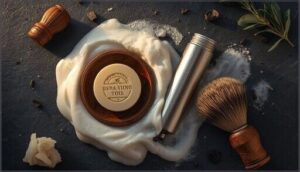
The soap or cream you pick makes a bigger difference than most beginners expect. Some lather up thick and easily, while others fight you every step of the way.
Here’s what to look for before you buy.
Key Ingredients for Dense Lather
The dense lather starts inside the formula. Stearic acid — sitting at 30 to 50 percent concentration — builds that thick, creamy structure. Potassium hydroxide keeps it soft and fast-loading.
That cushioning effect is exactly what makes stearic acid concentration so critical to shaving lather density — get it right, and the razor just glides.
Glycerin ratio matters too; it locks in moisture and prevents dry-out mid-shave.
Add tallow fatty acids for cushion, a castor oil boost for volume, and you’ve got soap quality that actually performs.
Soap Vs. Cream: What’s Best for Beginners
Cream wins for beginners — no debate. Here’s why it pulls ahead in wet shaving:
- Learning curve: Cream lathers in under 30 seconds
- Water hardness tolerance: Manages 100–400 ppm without complaint
- Skin type suitability: Built-in moisturizers protect sensitive skin
- Cost per shave: Around $0.20–0.40, but easy
- Shelf life: Shaving soap pucks last 100–200 shaves
Your shave brush and shaving techniques and tips evolve — start with cream, switch to shaving soap later.
Recommended Products for Starters
Three products stand out for beginners. Proraso White shaving soap costs under $10 and works with most water types without complaint.
Pair it with a Maggard 22mm synthetic shaving brush — around $9 and built to last.
For affordable lather bowls, the Kingsley bowl under $15 keeps your knuckles clear. These budget soap picks and starter brush deals make lather creation simple from day one.
Picking and Preparing Your Shaving Brush
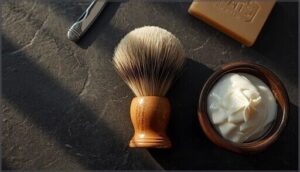
Your brush is just as important as the soap you pick. The wrong brush can ruin even the best lather before you start.
Here’s what you need to know to choose and prep yours right.
Synthetic Vs. Natural Hair Brushes
Your brush type shapes everything — from how much water it holds to how your lather feels. Here’s a quick breakdown:
- Synthetic Hair — Soft from day one, lasts 5–10 years, uses 20–30% less product
- Badger Hair Shave Brush — Excellent water retention, builds dense lather fast, costs $50–$200+
- Boar Brush — Budget-friendly at $15–$40, needs 20–30 uses to soften
- Softness Levels — Synthetics match silvertip badger comfort without the price
How to Soak and Prep Your Brush
Water temperature is your starting point. Keep it between 100 and 113°F — warm enough to soften bristles, cool enough to protect the knot glue.
For your soak duration, give badger one minute and boar two to three minutes.
Use a shave bowl or mug as your soaking container. Submerge only halfway up the bristles. Then shake five to ten times for proper excess water removal before loading.
Breaking in a New Brush
A new shave brush needs a little patience before it performs its best. Natural hair brushes — especially boar — arrive stiff and sometimes funky‑smelling. Work through that with these four break‑in steps:
- Salt Soak Method: Soak overnight in salted water to soften bristles and kill the odor
- Soap Washing Cycles: Lather with dish soap 5 to 11 times to purge residues
- Fridge Cold Soak: Submerge bristles in cold water for 24 hours to soften gradually
- Towel Scruffing Technique: Rub bristles on a dry towel for 5 to 10 minutes to split tips
Your badger brush breaks in faster — around 6 to 11 practice lathers. Boar needs 10 to 20 full shaves. Proper shave brush care and consistent brush maintenance turn raw grooming tools into smooth performers.
Step-by-Step Guide to Building Lather
Building lather is easier than it looks, but few key steps make all the difference.
Get these right, and you’ll have a thick, protective lather in under two minutes.
Here’s exactly what to do.
Loading The Brush Properly
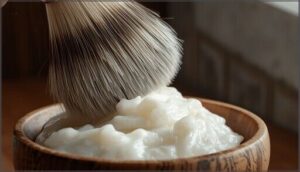
Loading your shave brush correctly is where great lather creation actually begins.
Soak your shaving brush for one to two minutes, then shake out the excess — damp, not dripping. Press the knot in circular swirls over your shaving soap for 20 to 30 seconds, using firm, even brush pressure.
Good soap texture should coat every bristle like thick toothpaste. That’s a properly loaded brush.
Adding Water Gradually
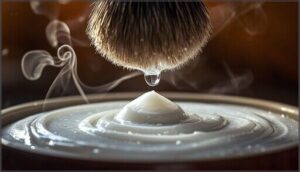
Now that your shave brush is loaded, water is what turns that paste into real lather.
Use the Incremental Drip Technique — add 2 to 3 drops every 30 seconds, never pour.
Watch for visual lather cues: a shiny gloss means you’re close.
Keep water lukewarm, around 100 to 110°F.
Temperature control tips like this prevent breakdown and keep hydration balance benefits locked in.
Achieving The Ideal Lather Consistency

Once your lather turns glossy and starts holding soft peaks, you’re there. Think stiffly whipped egg whites — dense, smooth, no big bubbles.
- Bubble Size Control comes from consistent Brush Pressure and steady Agitation Speed
- Soap-to-Water Ratio shifts with each Shaving Soap, so adjust slowly
- Lather Quality locks in when Water Temperature Ratio stays around 100–110°F
That’s Wet Shaving and Lather Creation done right.
Different Lathering Methods Explained

There’s no single "right" way to build lather — just the method that works best for you.
Your brush, your soap, and your routine all play a role in which approach clicks.
Here are the three main techniques worth knowing.
Bowl Lathering Technique
Choosing the right shave bowl changes everything. A ceramic or metal bowl with ridge texture effects at the bottom helps your shave brush break down shaving soap faster.
Aim for a bowl size of 10 to 15 centimeters wide.
Heat retention benefits kick in when you preheat it with hot water.
water temperature control in mind — warm works, hot breaks down lather.
Face Lathering Technique
Face lathering skips the bowl entirely — your skin becomes the workspace. Soak your shave brush, load it with shaving soap, then work circular brush motion directly onto your wet cheek.
That circular action lifts stubble and drives lather deep into the beard. Skin temperature control matters here; warm skin helps lather creation to absorb faster.
Switch to painting strokes for lather layering across your jaw and neck.
Hand Lathering Technique
Hand lathering puts everything in your control. Cup your non-dominant palm slightly, then work your loaded shave brush in short circular strokes against it. Palm temperature matters — warm hands activate shaving soap faster. Follow these steps:
- Wet palm with warm water, around 100°F
- Load brush with shaving soap for 30 seconds
- Apply water droplet control — one drop at a time
- Use alternating finger motion patterns to aerate lather
- Test glide testing method by rubbing lather between thumb and forefinger
Glossy lather with soft peaks means you’re ready. Wet shaving mastery starts here.
Troubleshooting Common Lather Problems
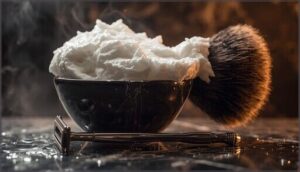
Even experienced shavers run into lather problems from time to time, so don’t get discouraged when it happens to you.
The fix is usually simpler than you’d think. Here are the three most common issues and exactly how to correct them.
Fixing Thin or Runny Lather
Too much water is the usual culprit. Runny lather almost always comes down to poor water ratio control — you’ve simply diluted the soap too far.
Start by improving your brush squeeze technique: shake and squeeze the shave brush two or three times before loading. Then focus on soap loading time, spending a full 30 to 50 seconds building thickness. Slow down your agitation speed adjustment, and use gentle pumping strokes to rebuild structure.
Solving Disappearing or Dry Lather
Lather vanishing mid-shave usually means your shaving soap wasn’t loaded long enough, or your shave brush started too dry. Moisture retention drops fast once the lather thins out.
Reloading mid-shave with a quick dip helps. Temperature control matters too — hot water breaks lather down quickly.
Warm water, and practice wet shaving techniques consistently to lock in lather quality throughout every pass.
Overcoming Hard Water Issues
Hard water is a lather killer. Minerals in tap water bind to your soap before it can foam.
Fix it fast: soak your brush with distilled water — it’s 99.9% pure and cuts your soap use nearly in half. Add a pinch of citric acid for chelation against stubborn calcium. Boiling tap water for 10 minutes also reduces mineral interference considerably.
Essential Lather Tips and Maintenance
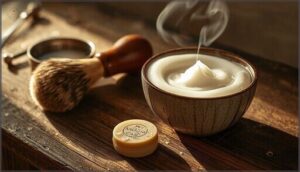
Good lather doesn’t stop at the right technique — it also comes down to a few small habits that make a real difference. Water temperature, brush care, and a willingness to experiment will sharpen your results over time.
Here’s what to keep in mind.
Using Warm or Distilled Water
makes or breaks your lather. Warm water effects on beard hair are real — temperatures between 85–95°F soften stubble and improve the results of your shave brush. water over 125°F.
For lather creation, temperature control tips matter: distilled water to eliminate mineral interference. Acidified water use, like adding citric acid, also boosts shaving soap performance instantly.
Cleaning and Storing Your Brush
Your shave brush is an investment — treat it like one. A solid Daily Rinse Routine takes under a minute and prevents soap buildup from breaking down bristles over time.
Follow a Deep Cleaning Schedule every two to four weeks to keep things fresh.
- Rinse under lukewarm water until it runs clear
- Use a Brush Stand for Moisture Prevention and proper drainage
- Apply the Air Dry Technique — never store it damp
- Deep clean with mild shampoo for full Shave Brush Care
These simple Grooming Tips protect your Personal Grooming tools for years.
Experimenting for The Best Results
Once your brush is clean and stored correctly, the real fun begins. Start your own product tests — try a 4:1 water ratio with tallow soap, then bump it to 6:1 with cream.
Time your builds at 30-second intervals. Run brush trials switching between synthetic and badger weekly. Small technique comparisons across methods reveal what works best for your skin.
Frequently Asked Questions (FAQs)
How do you make a good lather?
right shave brush selection and care, warm water temperature, and quality shaving soap or cream.
Load your brush for 30 to 60 seconds, then whisk slowly, adding water drop by drop.
How long does it take for lather to build?
Most beginners take 5 to 7 minutes.
With practice, bowl lathering drops to 45 to 90 seconds.
Face lathering hits peak consistency in under 2 minutes.
Synthetic brushes and warm water cut that time almost in half.
Is it still possible to make a lather?
Modern synthetic brushes build rich, skin‑friendly lather in under 60 seconds. Distilled water benefits your results immediately, and a citric acid boost fixes hard water fast. Lather creation has never been more accessible.
How do you make shaving lather?
Like mixing bread dough, shaving lather rewards patience.
Load your shaving brush on shaving soap for 30 seconds, add water drop by drop, and whip until lather consistency reaches that dense, shiny peak.
How to build a good lather?
Load your brush for 30 to 60 seconds, then add water one drop at a time.
This technique helps you build a rich, creamy lather — and Stirling shaving soap’s standout qualities make that extra loading time genuinely worth it.
You’re aiming for a meringue texture — glossy, dense, and smooth.
That consistency means your lather is ready.
How long does a shaving soap typically last?
A single puck can outlast your expectations—or disappear fast.
Soap weight, hardness impact, and usage frequency all decide the timeline.
Most shavers get 3 to 6 months from a standard shaving soap.
Can I use lather with a safety razor?
shaving lather works perfectly with a safety razor.
Good lather thickness cushions the blade, optimizes your 30-degree angle, and protects skin across every pass. It’s the foundation of a clean, comfortable shave.
Does lather work differently on sensitive skin?
It does. Sensitive skin needs a slicker, glycerin-rich lather with strong cushioning effect and pH compatibility. Skip fragrances. Hydration balance keeps your barrier intact and cuts post-shave sting fast.
How much soap should a beginner buy first?
Start with a sample puck. A 1-ounce Stirling soap gives you 15 to 30 shaves to practice lather creation without wasting money. It’s the smartest, most budget-friendly option for any beginner.
Is face mapping needed before applying lather?
Face mapping isn’t required before lather placement on day one.
Focus on grain awareness after a few shaves, then use that skin feedback to improve your shave preparation and lather coverage zone by zone.
Conclusion
proof is in the pudding — and after your first truly great shave, you’ll feel it immediately. preparation wins before the blade moves.
Load your brush right, control your water, and adjust until the lather feels rich and slick. skin will tell you when you’ve nailed it.
razor will never take the blame again.
- https://www.therazorcompany.com/blogs/the-benefits-of-wet-shaving/how-to-create-the-perfect-lather-shaving-soap-and-cream-techniques
- https://www.thepersonalbarber.com/blogs/guides/how-to-build-the-perfect-shaving-lather-a-step-by-step-guide
- https://hairmaker.gr/en/blog/traditional-shaving/top-tips-for-creating-the-perfect-shaving-cream-lather