This site is supported by our readers. We may earn a commission, at no cost to you, if you purchase through links. This content is for general informational and educational purposes only and is not a substitute for professional medical, dermatological, or nutritional advice.

Neck shaving feels harmless until you catch that one angry red stripe under your jaw and it burns all day.
The wild part? Most of the damage comes from the angle of your razor, not how “sensitive” your skin is.
On the neck, hair grows in swirls, the skin is thinner, and the wrong tilt of the blade scrapes instead of cutting.
Dial in the right shaving angle in the neck area and the burn, bumps, and mystery nicks start to disappear.
Think of this as learning to drive a curve in the road instead of flooring it straight.
Table Of Contents
- Key Takeaways
- Why Neck Shaving is Challenging
- Mapping Neck Hair Growth Direction
- Choosing The Best Razor for Necks
- Selecting Shaving Creams and Gels
- Preparing Your Neck for Shaving
- Mastering The Shaving Angle
- Shaving Technique for The Neck Area
- Avoiding Common Neck Shaving Mistakes
- Post-Shave Neck Care Tips
- Troubleshooting Neck Shaving Issues
- Frequently Asked Questions (FAQs)
- Conclusion
Key Takeaways
- Neck shaving is tricky because the skin is thinner and more sensitive, and the hair grows in swirls and different directions, so you need to treat the neck as separate zones instead of shaving it like a flat cheek.
- Before shaving, you should map your hair grain with fingers, light, or a card, and then shave with the grain first (and only lightly across the grain if your skin tolerates it), using short strokes and very light pressure.
- Aim to hold the razor at roughly a 30‑degree angle while adjusting your head position and gently stretching the skin so the blade stays flat over curves and creases, which prevents scraping, nicks, and razor burn.
- The biggest wins for comfort come from good prep and aftercare—cleanse, gently exfoliate, soften with warm water, use slick, fragrance‑free products and sharp, clean blades, then finish with a cool rinse plus alcohol‑free, soothing aftershave and moisturizer.
Why Neck Shaving is Challenging
Shaving your neck is one of those spots that looks simple but quickly reminds you it’s not.
If you struggle with those angles, this guide to the closest electric shavers for neck hair breaks down smarter options.
Between touchy skin, awkward curves, and hair that seems to grow in every direction, it’s easy to get irritation or missed patches.
To make this easier, let’s quickly break down what makes neck shaving so tricky.
Sensitive Skin and Irritation Risks
Guarding sensitive skin on your neck matters because its barrier is 40 percent thinner than your cheeks and holds fewer oil glands, so skin irritation and razor burn flare fast.
Use Gentle Shaving and careful shaving technique, plus sensitive care products, for irritation prevention and basic shaving safety precautions that limit blade passes, pressure, heat, and micro‑cuts on skin here.
Using a dull razor can increase irritation, so avoid shaving with dull razors.
Complex Neck Contours
Sensitive neck skin is half the battle; the way your neck is built causes the rest. The Adam Apple Ridge, Jawline Angle, and Posture Curvature keep the blade from lying flat, without skin care for shaving, razor burn bites.
- Horizontal Folds demand Neck Shaving Techniques.
- Muscle Cords respect Shaving Safety Tips.
- Adjust Shaving Direction and Grain carefully.
Understanding skin barrier disruption helps prevent irritation.
Chaotic Hair Growth Patterns
tricky contours get worse once you notice how wild your neck hair is.
Swirl Mapping around cowlicks, Mid‑Neck Reversal, and Sideways Fan Growth under the jaw flip Hair Growth Direction, so your Shaving Direction must change too. Neck Shaving Techniques that respect Flat Follicle Patches and Asymmetrical Zones cut Razor Burn and Ingrown Hairs with Skin Care for Shaving.
Mapping Neck Hair Growth Direction
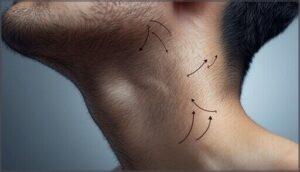
Before you shave a single stroke, you need to know which way your hair actually grows — and on the neck, that’s rarely a straight answer.
The grain shifts, doubles back, and changes direction depending on where you look.
Here’s how to read it, map it, and work with it.
Identifying Hair Grain on The Neck
Think of your neck as a map of Hair Growth Direction. Before any Neck Shaving, you must read Grain Indicators and plan Shaving Direction.
- Swirl Mapping below jaw where hairs radiate outward.
- Use Directional Light and Mirror Technique for Stubble Visualization.
- Go With The Grain first, later Against The Grain.
- Treat each direction change as its own shaving zone.
Tools for Mapping Grain
Learning your neck’s map starts with simple tools used before shaving your neck.
| Tool | Purpose | Feeling |
|---|---|---|
| Finger Rubbing | Sense Hair Growth Direction | Calm control |
| Credit Card Method | Hear grain during Shaving Technique | Satisfying clicks |
| Cotton Ball Test | Confirm Shaving With The Grain | Gentle reassurance |
Selfie Photo Mapping and Printable Face Templates guide daily practice and even tighten Razor Maintenance habits.
Adapting to Multi-Directional Growth
Once you’ve charted your Growth Pattern Charting map, adapting becomes second nature. Your neck won’t cooperate with one Shaving Direction — so don’t fight it.
Shift your Variable Stroke Direction zone by zone: With The Grain first, Across The Grain if needed, never Against The Grain on sensitive spots. Variable Blade Angle and Adaptive Pressure Control keep each pass clean without forcing the razor.
For a deeper dive into grip, grain, and pressure basics, see this guide on cartridge razor shaving technique.
Choosing The Best Razor for Necks

On the neck, the razor you choose matters just as much as your shaving angle.
Some tools are better for sensitivity, others for tight curves or quick cleanups.
Let’s quickly walk through the main razor options so you can pick the setup that actually suits your neck.
Cartridge Razors Vs. Safety Razors
Ever notice how neck complains louder than your cheeks after a shave?
A Cartridge Razor uses Pivoting Mechanics and buffers, so it forgives Pressure Sensitivity but can overwork one spot.
Safety Razors demand better Shaving Technique and Shaving Direction control, with lower Blade Exposure, yet win on Cost Efficiency, Environmental Impact, and calmer, cleaner Neck Shaving for most necks.
Electric Razors and Trimmers
On tricky necks, Electric Razors can feel like cheating, especially models built for Neck Shaving. Look for a Flexible Head Design that follows curves, plus Lift‑and‑Cut Technology so flat hairs don’t escape.
Wet‑Dry Shaving lets you add gel for extra skin care, while Precision Trimmer Attachments and Motor Speed Optimization help you trace Shaving Direction cleanly with a detailed trimmer.
Blade Sharpness and Maintenance
Sharp blades quietly do half the work on your neck.
That Sharpness Impact is huge: a HighPerformance Blade like Feather Blades cuts cleanly, letting your Shaving Technique stay light.
Use Blade Dull Detection—more tugging after 3–5 shaves means you should adjust your Replacement Schedule.
Solid Razor Maintenance means simple Cleaning Techniques and Storage Tips, protecting your Shaving Tools and your skin longer.
Selecting Shaving Creams and Gels

On your neck, the cream or gel you use matters just as much as the razor in your hand. The right product cushions the blade, calms sensitive skin, and keeps tricky neck hair gliding instead of fighting back.
Next, we’ll look at which creams and gels are best, why lubricating options are so helpful, and how to put them on so your neck shave feels smooth instead of stressful.
Products for Sensitive Neck Skin
Trying to calm angry neck skin? Start with Fragrance-Free Formulas in a gentle Shaving Cream built for Sensitive Skin, like aloe‑based options, then add a light Preshave Oil for extra glide.
Follow with an Alcohol-Free Aftershave packed with Calming Botanical Extracts and a Ceramide-Rich Moisturizer.
Non-Comedogenic Gels also help keep pores clear while everything stays soothing during daily neck shaves.
Benefits of Lubricating Gels
With your sensitive Shaving Gel picked, adding a Lubricating Gel for Neck Shaving gives you more control and less skin irritation. Here’s what it does:
- Friction Reduction for smoother strokes and Shaving Precision Boost during Neck Shaving.
- Barrier Hydration cushions skin, powering Razor Burn Prevention on sensitive spots.
- Ingrown Hair Mitigation through cleaner Shaving Technique and fewer harsh passes overall.
Application Techniques for Neck Area
That extra slick layer is only half the story; now you need smart application on the neck.
Start with solid Skin Preparation, then use Stubble Mapping to plan Neck Shaving strokes.
Focus on Grip Positioning, gentle Razor Tilt, and Blade Adjustment so you’re Shaving With The Grain.
Maintain light Skin Tension to support clean Shaving Technique and prevent Razor Burn.
Preparing Your Neck for Shaving

Before you worry about blade angles or fancy techniques, your neck needs the right prep.
A clean, softened surface makes the hair easier to cut and your skin far less likely to complain afterward.
In the steps below, you’ll see the simple things to do before the razor ever touches your neck so you set yourself up for a smooth, comfortable shave.
Cleansing and Exfoliation
Building a Skin Preparation routine starts at the sink. Think:
- Use a Gentle Facial Wash with lukewarm water before exfoliation for shaving.
- Occasionally try a Double Cleansing Method at night.
- Limit chemical exfoliant frequency and use a Soft Exfoliation Mitt instead on off days.
- Finish with Non‑comedogenic Moisturizer so that shaving cream and shaving technique sit on skin care and maintenance.
Using Pre-Shave Oils
Once your neck is clean and exfoliated, pre‑shave oil is your shaving technique, shaving safety.
Massage Technique matters: warm 3–4 drops between palms, work into creases for Barrier Formation and less skin irritation during neck shaving.
| Focus | Quick Note |
|---|---|
| Oil Benefits | Smoother razor glide, less tug |
| Ingredient Selection | Jojoba, argan, grapeseed work well |
| Absorption Timing | Wait 60 seconds before lather |
Softening Hair With Warm Water
Letting warm water do the lifting is your Skin Preparation step before Neck Shaving. Aim for warm water temperature 100–110°F and hydration duration 3–5 minutes for keratin softening and cutting force reduction.
- Shower steam method: stand under spray, rotate with Hair Growth Direction.
- Work Shaving Cream in slowly, supporting precise Shaving Technique.
- Feel smoother strokes, fewer snags instantly each pass.
Mastering The Shaving Angle
Getting the right shaving angle on your neck is what separates a rough, patchy result from a clean, comfortable finish.
The right shaving angle turns a neck shave from rough punishment into calm, clean comfort
Instead of guessing, you want a simple plan for how to hold the razor and how to adjust it as the neck curves and the grain changes.
In the next section, you’ll see the key angles and adjustments to focus on so your neck shave finally feels under control.
Ideal Blade Angle for Necks

Ever feel neck shaving swings between glass‑smooth and sandpaper some days?
Aim for an ideal 30‑degree blade angle, within a gentle 25–35° range, for safer, consistent neck cutting.
| Emotion | Angle focus |
|---|---|
| Calm | Consistent Blade Tilt, Shaving With The Grain |
| Focused | Angle Adjustment Techniques, Angle Measurement Tools, Shaving Techniques |
| Frustrated | Remember Pressure‑Angle Balance, Shaving Direction and Grain, encouraging Shaving Tips. |
Adjusting for Curves and Creases

Handling neck curves starts with Head Tilt: look slightly up for the front, turn sideways for the jaw, and tuck for Nape Flattening.
Use gentle Skin Tension and short strokes, treating deep lines as Crease Mini‑Sections. Match Stroke Angle to Shaving Direction and Grain, prioritizing Shaving Safety, efficient Neck Shaving, and deliberate Shaving Techniques within your Shaving and Grooming routine.
Preventing Nicks and Razor Burn

Want fewer nicks and less razor burn on your neck? Start with Grip Stability and Skin Tension Control, then keep Razor Blade Sharpness high and Pass Frequency low.
Use a slick Shaving Cream, light pressure, and a shallow Shaving Technique angle around curves.
Finish with Temperature Management: cool rinse plus gentle, alcohol‑free Aftershave for real Shaving Safety every time.
Shaving Technique for The Neck Area

Once your neck is prepped and your razor is ready, the real difference comes from how you actually move the blade. A few simple technique tweaks can mean the gap between daily irritation and a clean, calm finish.
Below are the key habits to use every time you shave your neck.
Shaving With The Grain
Shaving With The Grain is your neck’s safety net against Razor Burn and Skin Irritation.
Pairing this technique with a complete shave routine built around skin health takes the guesswork out of every step, from prep to blade storage.
Start with simple Grain Detection Methods—fingertips, cotton ball, a card—so every pass respects growth.
Build a Grain-Based Stroke Order and keep Grain Consistency Monitoring in mind; steady direction plus Grain-Aligned Pressure turns Shaving Techniques into Shaving Care, minimizing Grain Influence on Razor Burn over time.
Light Pressure and Short Strokes
Think of your grip as a dimmer switch: with correct Grip Positioning near the handle’s end, your Gentle Razor naturally lightens up.
Combine one‑second Stroke Timing, 1–2 cm strokes, and a shallow Blade Angle for control.
This Micro‑Pressure Control acts like built‑in Pressure Sensors, prime Shaving Techniques, Shaving Safety and Precautions, Shaving Tips and Advice, and Shaving and Skin Health.
Flattening The Skin Properly
Once your strokes are light, start flattening the neck so the blade tracks safely. Use Forward Lean with Head Tilt, then try Adam Apple Swallow or Tongue Press to smooth the center. Add Manual Stretch at sides.
These Shaving Techniques support Shaving With The Grain, reduce Razor Burn, and better protect Skin Care and Beauty under Shaving Safety and Precautions.
Avoiding Common Neck Shaving Mistakes

Even with good technique, a few small habits can undo all your hard work on the neck. The same mistakes tend to show up again and again, causing irritation, bumps, and patchy results.
Let’s walk through the main ones so you know exactly what to watch for next time you shave.
Ignoring Hair Growth Direction
ignoring neck grain guarantees shaving irritation. Your neck pays the price.
- Shaving With The Grain reduces grain misalignment risks.
- Going Against The Grain is a razor bump trigger.
- Aggressive Across The Grain strokes cause an ingrown hair surge.
- Poor Shaving Techniques create follicle damage and lasting soreness.
- Damaged follicles raise infection likelihood as bacteria enter easily.
Using Dull or Dirty Blades
You can respect grain perfectly and still wreck your neck if your shaving razor is tired.
Once Blade Sharpness Decay sets in, you feel tugging, Pressure Increase, and fast Razor Burn.
Residue Accumulation on dirty blades raises Infection Risk and becomes a Razor Bump Trigger.
Strong Razor Maintenance habits stop most shaving problems, even when shaving with the grain properly.
Over-Shaving and Repeated Strokes
Sharp, clean blades are half the story; how often you pass them over your neck matters as much.
Every extra pass ramps up Microtrauma Accumulation, delaying Barrier Recovery Time and turning small Shaving Problems into Razor Burn or Razor Bumps.
Practice Stroke Count Limiting, steady Pressure Management, and Sensitivity Monitoring while Shaving With The Grain to keep the shaving neck calm.
Post-Shave Neck Care Tips

Once the razor leaves your neck, what you do next matters just as much as the shave itself.
Good post-shave care keeps redness, bumps, and tight, itchy skin from crashing the party.
Let’s walk through a few simple steps so you know exactly how to treat your neck right after every shave.
Rinsing and Cooling The Skin
Think of rinsing as the cooldown lap after a workout, clearing away Shaving Gel.
Aim for Short Rinse Duration and smart Rinse Timing: 20–30 seconds of lukewarm water, then a gentle Temperature shift into a Cold Water Finish.
This brief Cold Water Shaving step calms Skin Irritation.
Follow with Cool Compress Application on hot spots, then Aftershave and Moisturizer afterward.
Applying Aftershave and Moisturizer
Once your Cooling Rinse Benefits kick in, work through a simple Layering Sequence: first a liquid Aftershave, then a light Moisturizer.
Use Patting vs Rubbing to limit Skin Irritation, especially anywhere you tend to get Razor Burn.
For stubborn zones, a Targeted Spot Treatment of balm pressed in gently is one of the most effective Grooming Tips you can adopt.
Calming Ingredients for Irritation
Relief matters now, especially if your neck shows a bit of skin irritation.
Reach for Aloe Vera Gel or an alcohol‑free Witch Hazel Astringent right after your after‑shave gel; both calm sensitive skin fast.
For deeper repair, Colloidal Oatmeal Soak, Chamomile Extract Soothing, and Centella Asiatica Recovery rebuild the barrier, especially if pre‑shave oil or lubricating gel wasn’t enough.
Troubleshooting Neck Shaving Issues

Even with good technique, neck can still act up—bumps, burn, and random rough patches.
This section is where you figure out what went wrong and what to tweak, without guessing.
We’ll walk through the most common neck shaving problems and the specific fixes you can try next.
Preventing Razor Bumps and Ingrowns
Razor bumps and ingrown hairs are basically your skin’s protest against poor technique. Exfoliation frequency matters here — aim for two to three times weekly using salicylic acid to keep follicles clear.
shave with the grain, use light strokes, and commit to post-shave hydration with alcohol-free balms. These grooming tips for men combining anti-inflammatory ingredients and skin barrier repair genuinely change everything.
Managing Razor Burn
Your neck feels on fire after a shave? That’s Razor Burn on Sensitive Skin, but you can settle it fast with a few targeted moves.
- Ice Pack Relief, cold compresses reduce inflammation.
- Aloe Soothing plus Witch Hazel Toning calms.
- Aftershave, Coconut Oil Moisturizer soothes Razor Bumps.
- Schedule a Shaving Break so skin recovers.
- Shaving Techniques for Sensitive Skin matter most.
When to Change Your Shaving Routine
Sometimes neck is telling you to pivot.
When blade dullness signs appear after a few shaves, or your skin irritation threshold drops into razor burn and bumps, it’s time for shave frequency adjustment.
Watch for product efficacy decline, seasonal hair changes, and how shaving frequency and skin respond to shaving techniques for sensitive skin—my core grooming tips and advice.
Frequently Asked Questions (FAQs)
What direction am I supposed to shave my neck?
Let’s get you on the straight-and-stubble path: first use Grain Mapping Techniques to find Under‑Chin Direction and Left‑Right Asymmetry, then shave with the grain, later across the grain if shaving techniques for sensitive skin tolerate.
Conclusion
Some days it feels like your neck has thousand tiny landmines waiting for your razor, but you’re now trained to step around them. You’ve mapped the grain, chosen the right tool, built a simple prep routine, and learned how to control the shaving angle the neck area demands.
Treat each pass like a slow practice swing, not a race. With that mindset, smooth, calm skin becomes your default, not a lucky accident you outgrow entirely.