This site is supported by our readers. We may earn a commission, at no cost to you, if you purchase through links. This content is for general informational and educational purposes only and is not a substitute for professional medical, dermatological, or nutritional advice.

That post-shave sting hits differently when you’re already running late. One minute you’re finishing up; the next, your skin looks like it lost an argument—red, irritated, and refusing to calm down.
Most people blame their razor or their skin type and leave it there. The real culprits are usually subtler: a blade used two weeks too long, skipping a proper rinse, or one too many passes over the same patch.
The good news? Redness after shaving responds fast when you address the right things. Here’s exactly how to calm it down—and keep it from coming back.
Table Of Contents
- Key Takeaways
- Why Your Skin Turns Red After Shaving
- Razor Burn Vs. Razor Bumps: Key Differences
- Skin Types Most Prone to Post-Shave Redness
- How to Prep Your Skin Before Shaving
- Shaving Techniques That Reduce Redness
- Best Post-Shave Remedies to Calm Redness Fast
- Choosing The Right Products for Irritated Skin
- When Post-Shave Redness Needs a Doctor’s Attention
- Frequently Asked Questions (FAQs)
- How to reduce post shave redness?
- How to prevent razor burn & other shaving irritations?
- What causes Razor Burn After a shave?
- Why does my skin itch after shaving?
- How to quickly reduce redness after shaving?
- How long until redness goes away after shaving?
- Will razor burn go away naturally?
- Can diet and hydration affect post-shave redness?
- Are electric shavers gentler on easily irritated skin?
- Can stress or hormones worsen shaving-related inflammation?
- Conclusion
Key Takeaways
- Redness after shaving is mostly caused by micro-cuts, dull blades, and shaving against the grain, not just your skin type or razor.
- Prep your skin with warm water, gentle cleansing, and a lubricating shaving cream or oil to cut down on irritation.
- Shave with the grain using light pressure, short strokes, and rinse your blade often to prevent razor burn and bumps.
- Calm redness fast with a cold water rinse, aloe vera or oatmeal-based products, and fragrance-free moisturizers to restore your skin barrier.
Why Your Skin Turns Red After Shaving

That post-shave redness isn’t random — your skin is actually reacting to some pretty specific things happening during the shave. Once you understand the triggers, it’s a lot easier to stop them before they start.
If your skin tends to flare up easily, razor maintenance tips for sensitive skin can help you identify and cut out the most common culprits before they cause a reaction.
Here are the three main reasons your skin lights up after a shave.
Micro-Cuts and Skin Barrier Disruption
Every time your razor glides across skin, it leaves behind tiny microcuts — linear nicks in the stratum corneum that disrupt your lipid barrier. That barrier is what keeps moisture in and irritants out.
Once it’s compromised, skin barrier disruption triggers an inflammatory response: blood rushes in, redness flares, and exposed nerve endings sting. Micro-cut healing takes time, so repeated passes make postshave inflammation worse.
Dull Blades Pulling and Tugging Hair
A dull razor doesn’t cut hair — it grabs it. That pulling sensation you feel mid-stroke? That’s your blade dragging instead of slicing.
Blade edge sharpness matters because a worn edge bends hair before severing it, triggering micro‑injury along each stroke. Blade clogging build‑up worsens this fast.
Replace your blade every 5–7 shaves, and you’ll notice postshave redness drop dramatically.
Shaving Against The Grain
Going against the grain feels closer — but it costs you. The blade meets hair at the wrong angle, lifting and catching instead of gliding, which spikes follicle stress fast.
Three things happen immediately:
- Grain alignment issues force more friction management problems
- Hair curl direction means cut hair can retract under the skin
- Blade angle optimization breaks down, triggering razor burn
Stick with the grain for postshave redness reduction.
Razor Burn Vs. Razor Bumps: Key Differences
Redness after shaving doesn’t always mean the same thing, and mixing up razor burn with razor bumps can send you chasing the wrong fix. They look different, show up at different times, and need different solutions.
Here’s how to tell them apart.
How Each One Looks on The Skin

Razor burn and razor bumps look different — knowing which one you’re dealing with changes how you treat it.
| Feature | Razor Burn | Razor Bumps |
|---|---|---|
| Appearance | Diffuse red patches | Raised papules, ingrown hairs |
| Texture | Rough texture, swollen pores | Firm, tender bumps |
| Skin pattern | Postshave redness spreads broadly | Pinpoint follicle dots cluster tightly |
Razor burn spreads like a blush across shaved skin, while razor bumps sit stubbornly and raised — a postshave rash versus a structural problem.
Timing and Onset After Shaving
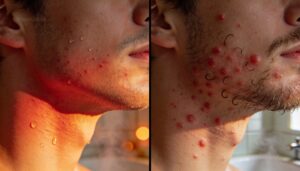
Timing tells you a lot. Immediate redness shows up within minutes — that’s friction heat timing doing its thing.
If it flares up fast like that, something from this list of aftershave products made for sensitive skin can help calm things down before the irritation sets in.
Razor burn peaks around 30 minutes, then fades within a couple of hours. Razor bumps, though? Those develop slowly as trapped hairs trigger delayed irritation deep in the follicle.
| Condition | Onset | Resolution |
|---|---|---|
| Razor Burn | Minutes to 30 min | Hours to 1 day |
| Razor Bumps | Hours to days | Days to weeks |
Which One You Are Actually Dealing With
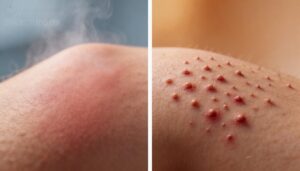
Not sure which one you’re dealing with? Here’s a simple check. Run your finger over the red area — if it’s smooth and warm, that’s razor burn (mechanical irritation from friction heat). Feel raised bumps? That’s likely razor bumps or ingrown hairs.
| Feature | Razor Burn | Razor Bumps |
|---|---|---|
| Texture | Smooth, flat redness | Raised, firm bumps |
| Cause | Mechanical irritation, heat redness | Ingrown hairs, follicle inflammation |
| Sensation | Stinging, post-shave erythema | Tender, itchy |
| Reaction type | Contact dermatitis or allergic reaction | Bacterial or follicular irritation |
| Treatment priority | Cool and soothe | Exfoliate and release |
Skin Types Most Prone to Post-Shave Redness
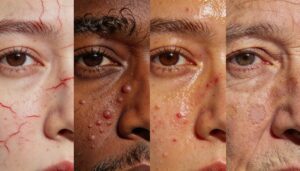
Not everyone walks away from a shave with the same results, and that’s not random. Some skin types are just built to react harder, whether it’s a thin barrier, curly hair, or years of shaving catching up.
Here’s who’s prone to struggle most.
Sensitive and Thin-Barrier Skin
Think of sensitive skin as a wall with missing bricks — it just can’t hold moisture or block irritation the way it should. Lipid Depletion in the stratum corneum raises Friction Load Management stakes considerably. You’ll notice:
- Heat-Induced Vasodilation makes post-shave flushing brighter and longer-lasting
- Alcohol Sensitivity turns most standard aftershaves into liquid fire
- Moisture Trapping from tight clothing worsens redness hours later
Fragrance-free products win every time here.
Curly or Coarse Hair and Ingrown Risk
Curly and coarse hair play by different rules. The curl pattern influence means hair often bends back toward the skin after shaving, and coarse hair diameter makes those sharp tips more likely to pierce nearby tissue.
Follicle blockage worsens when keratin buildup seals the opening — leaving nowhere for regrowth to go. Ingrown hair timing usually runs 1–3 days post-shave, which is when postshave redness and skin inflammation really kick in.
| Factor | What Happens | Result |
|---|---|---|
| Curl Pattern | Hair curves back toward skin | Ingrown hairs form |
| Coarse Hair Diameter | Sharp tip snags tissue | Skin inflammation increases |
| Keratin Buildup | Follicle opening narrows | Hair trapped beneath surface |
| Follicle Blockage | No exit path for regrowth | Red, tender bump develops |
| Ingrown Hair Timing | Appears 1–3 days post-shave | Postshave redness worsens |
Frequent Shavers and Accumulated Damage
Daily shavers often don’t realize the damage quietly stacks up. Each pass chips away at your skin barrier, and without enough recovery time, postshave redness just doesn’t fade like it should. Blade replacement frequency matters too — a dull edge drags instead of cuts.
Watch for:
- Microinflammation persistence from excessive shave passes
- Keratin plug formation blocking follicles
- Friction-induced barrier damage worsening skin inflammation
A sharp razor and cold compress help reset irritated skin.
How to Prep Your Skin Before Shaving

What you do the razor even touches your skin matters more than most people realize. A few simple steps can mean the difference between a smooth shave and a red, angry face twenty minutes later.
Here’s what to do to set yourself up right.
Warm Water to Soften Hair and Open Pores
Warm water is your skin’s best warm-up act before a razor ever touches it. The ideal temperature range sits around 37 to 42°C — warm enough to trigger vasodilation effects that loosen hair follicles, but not so hot it amps up irritation.
Aim for a warm rinse duration of one to two minutes. That hydration timing matters because the hair softening mechanism only kicks in once the shaft absorbs moisture.
Pre-Shave Cleansing and Exfoliation
Once your skin is warm and hydrated, a Gentle Face Wash clears away oil and dead skin, so the blade actually cuts hair — not debris. Follow that with Low-Abrasion Scrubs or Mild Acid Exfoliation, using glycolic or salicylic acid.
Enzyme Exfoliants (think papain from papaya) dissolve surface cells gently. Using a pH Balanced Cleanser keeps irritation low, helping you exfoliate before you shave with the grain, safely.
Choosing a Lubricating Shaving Cream or Oil
Once your skin is clean and exfoliated, lubrication is your next line of defense. The right shaving cream or oil dramatically cuts friction — which is exactly what causes that red, stinging aftermath.
- Shaving cream wins on foam stability and cushioning; look for glycerin (a humectant) and coconut oil in the ingredient list
- Shaving gel or shaving soap suits sensitive skin when ingredient transparency matters — fewer additives, less irritation risk
- Shaving oil offers a lightweight emollient blend with controlled oil viscosity, ideal for precision areas
Check humectant levels before buying anything. Applying shaving oil before cream helps oil reduces friction for a smoother glide.
Shaving Techniques That Reduce Redness
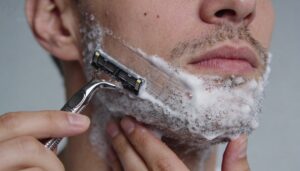
How you actually move the razor matters more than most people realize. Small adjustments in technique can mean the difference between smooth skin and a red, irritated mess.
Here are three simple moves that make a real difference.
Shaving With The Grain Using Light Pressure
Think of your razor as a guest, not a bulldozer — it works best when you let it glide. Shave in the direction of hair growth, keeping pressure featherlight.
Flexible razor heads handle angle alignment naturally, so trust the pivot. A gentle skin stretch smooths uneven surfaces, and if stubble’s long, trim first.
Less resistance means less redness.
Short Strokes and Rinsing The Blade Often
Once your razor is gliding, keep each stroke short — think half the length you’d normally use. Short stroke timing matters because it limits how long the blade drags across one spot. Blade swarf management is the other piece: rinse the edge after every few strokes to clear hair and lather buildup.
- Short strokes reduce friction on curved areas like your jaw and neck
- Frequent rinsing keeps the edge clean, improving edge cleanliness and cutting consistency
- Clear blade = fewer correction strokes, which directly helps prevent razor burn and bumps
Limiting Repeat Passes Over The Same Area
Every extra pass is another chance for redness to flare. One-Pass Targeting works simply: shave in the direction of hair growth, use light pressure, and stop.
If you miss a spot, don’t repeat the same stroke — try the Angle Shift Technique instead.
Zone-Based Shaving helps too: work in small sections, finish each one completely, and move on.
Blade Contact Reduction is the goal, not a perfect outcome.
Best Post-Shave Remedies to Calm Redness Fast
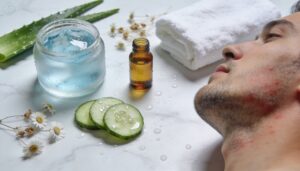
Once the razor’s put away, what you do next matters just as much as how you shaved. Your skin is a little raw right now, and right moves can calm things down surprisingly fast.
Here are the remedies that actually work.
Cold Water Rinse and Cool Compress
Cold water is your fastest free fix. Right after shaving, splash your face with cool (not ice-cold) water — cold rinse timing matters here, so do it while skin is still reactive.
For extra relief, press a cloth-wrapped cool compress against the area for 5–10 minutes. This post-shave cooling constricts blood vessels, dialing down redness fast.
Stop if skin turns white or numb.
Aloe Vera, Colloidal Oatmeal, and Witch Hazel
Three ingredients pull real weight here.
Aloe vera’s anti-inflammatory properties cool irritated skin fast, colloidal oatmeal provides barrier support by calming itchiness and roughness, and witch hazel works as a gentle astringent for pH balancing after shaving.
Their ingredient synergy is the real win — combined in one post-shave soothing product, aloe vera, colloidal oatmeal, and witch hazel tackle redness from multiple angles simultaneously.
Fragrance-Free Moisturizers to Restore The Barrier
Shaving strips away your skin’s natural lipids — so moisturizing after shaving isn’t optional; it’s repair work. Reach for a fragrance-free lotion with a ceramide complex, which replenishes the barrier lipid blend your skin just lost.
Humectant hydration from glycerin or hyaluronic acid pulls moisture back in, while emollient slip softens irritated tissue. A lightweight occlusive layer seals everything in place without clogging pores.
Choosing The Right Products for Irritated Skin

Not all post-shave products are created equal, and picking the wrong one can make redness worse instead of better. The ingredients on that label actually matter — a lot.
Here’s what to look for, what to skip, and which razor options are gentler on sensitive skin.
Soothing Ingredients to Look For
Think of your post-shave routine as damage control — your skin just took a hit, so give it the right tools.
Look for aloe vera, colloidal oatmeal, and witch hazel to calm irritation fast. A Ceramide Complex helps rebuild your barrier, while Panthenol B5 and a Niacinamide Boost reduce redness and dryness. Allantoin Soothing, chamomile toner, and green tea extract round things out nicely.
Ingredients and Fragrances to Avoid
Your post-shave skin is basically an open door — don’t let the wrong ingredients walk in.
Post-shave skin is an open door — choose your ingredients like a bouncer, not a welcome mat
Fragrance allergens like linalool and limonene, alcohol drying agents, and sulfate surfactants are the usual troublemakers. Watch for these on labels:
- Fragrance/parfum – artificial scents and chemical irritants in shaving products
- Formaldehyde releasers – DMDM hydantoin, quaternium-15
- Sodium lauryl sulfate – strips moisture, worsens redness
Safety Razors and Single-Blade Options
Your razor choice matters just as much as what you put on your skin afterward. A single-blade safety razor reduces repeated blade-to-skin contact, which directly lowers your chances of razor burn.
Pay attention to guard type, blade exposure, clamp tightness, and angle setting — small adjustments here make a real difference. Swap blades regularly, because dull edges tug instead of cutting, making post-shave redness worse.
When Post-Shave Redness Needs a Doctor’s Attention
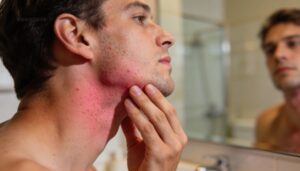
Most post-shave redness clears up on its own within a day or two, but sometimes your skin is trying to tell you something more serious. Knowing the difference between normal irritation and a real problem can save you a lot of trouble.
Here’s what to watch for.
Signs of Infection Vs. Normal Irritation
Most post-shave redness settles within 24–48 hours — that’s normal irritation. But watch the pattern.
Infection shows a different story: Pain Progression that worsens instead of easing, Swelling Pattern that feels deeper and thicker, and Redness Spread moving outward.
Lymphatic Streaks or a fever? That’s urgent.
Folliculitis and pseudofolliculitis barbae both need more than your usual post-shave skin care routines.
Persistent Redness, Pustules, or Scarring
Beyond infection, some redness just won’t quit. Inflammatory mark monitoring matters here — if you’re still seeing red spots weeks later, that’s post-inflammatory hyperpigmentation, not active irritation.
Pustule healing process can leave flat pink marks that fade in three to six months. Scar redness indicators like raised, firm bumps need dermatology eyes.
Long-term skin care and skin barrier protection prevent these from compounding.
Alternatives if Shaving Keeps Causing Problems
If shaving keeps leaving your skin angry, it might be time to explore other options. Several alternatives to shaving work well for irritation-prone skin:
- Electric Trimmers — cut above the skin, less friction
- Depilatory Creams — dissolve hair chemically, no blade contact
- Threading and Tweezing — precise, blade-free removal
- Laser Hair Removal — reduces regrowth long-term
Sometimes the best fix is simply putting the razor down.
Frequently Asked Questions (FAQs)
How to reduce post shave redness?
Start with blade sterilization practices, then focus on shave pressure monitoring and skin pH balancing.
Post-shave cooling and sealing pores with a cold compress, anti-inflammatory ingredients, and gentle pat drying — plus hydration and nutrition — keep redness minimal.
How to prevent razor burn & other shaving irritations?
Want fewer red patches after every shave?
It mostly comes down to your shaving technique, blade sterilization routine, and tool maintenance — plus postshave cooling and sealing pores with a good moisturizer for skin inflammation reduction.
What causes Razor Burn After a shave?
Razor burn happens when friction overwhelms your skin.
Blade clogging, insufficient lubrication, dry skin, a dull razor, long stubble, blade angle misalignment, or when you shave against the grain — any one of these skin irritation triggers can spark it.
Why does my skin itch after shaving?
That itch is nerve irritation — the blade nicks your barrier, blade buildup drags across skin, and environmental dryness finishes the job. Improper towel drying makes it worse.
How to quickly reduce redness after shaving?
Cold water is your fastest fix. Rinse the area, press a cool cloth against it for a few minutes, then pat dry gently.
Redness usually settles down pretty quickly after that.
How long until redness goes away after shaving?
For most people, post shave redness fades within 30 to 60 minutes. Your healing window stretches to 3–6 hours if irritation ran deeper. Redness lasting past 48 hours signals your routine needs a rethink.
Will razor burn go away naturally?
Yes, mild razor burn usually clears up on its own within one to two days. Your healing timeline depends heavily on hydration and how gently you treat the skin afterward.
Can diet and hydration affect post-shave redness?
Your diet and hydration quietly shape how your skin manages shaving stress.
Staying hydrated, cutting sugar, and supporting your skin with Vitamin C support all help reduce how fiercely your skin reacts afterward.
Are electric shavers gentler on easily irritated skin?
Generally, yes. Electric shavers keep a blade-to-skin gap that reduces friction and limits surface scraping. Foil shaver benefits include fewer micro-cuts, making them a solid pick for sensitive skin.
Can stress or hormones worsen shaving-related inflammation?
As the old saying goes, the body keeps the score.
Stress hormone effects are real — cortisol-induced dryness weakens your barrier, testosterone-driven oiliness clogs pores, and estrogen loss, redness spikes, post-shave inflammation fast.
Conclusion
So, what’s holding you back from smooth, calm skin? You’ve got this!
To calm redness after shaving, remember: it’s all about understanding your skin, adjusting your technique, and using the right products. Ditch the harsh chemicals, prep your skin, and shave with care.
With these simple tweaks, you can say goodbye to post-shave irritation and hello to a confident, comfortable you. Take control, and enjoy the smooth results.