This site is supported by our readers. We may earn a commission, at no cost to you, if you purchase through links. This content is for general informational and educational purposes only and is not a substitute for professional medical, dermatological, or nutritional advice.

Most people blame their skin when shaving goes wrong—the redness, the razor burn, the cluster of angry bumps that lingers for days. The real culprit is usually the blade.
A dull edge doesn’t cut hair cleanly; it drags, folds, and tears it at the root, triggering an inflammatory response, your skin didn’t ask for.
Replacing blades on a consistent schedule is one of the most effective, lowest‑effort interventions in dermatology—yet most people stretch a blade two or three times past its useful life. Knowing when to replace blades can prevent irritation before it starts, not just treat it after.
Table Of Contents
Key Takeaways
- dull blade doesn’t just shave poorly — it drags and tears hair at the root, triggering inflammation that shows up as redness, razor burn, and bumps.
- Replacing your blade on a consistent schedule (every 3–10 shaves depending on hair type and razor) is the single most effective way to prevent skin irritation before it starts.
- Hard water buildup, poor cleaning habits, and humid bathroom storage can shorten blade life by up to 50%, so rinse thoroughly, disinfect with 70% isopropyl alcohol, dry completely, and store in a ventilated holder.
- Your skin signals blade failure before you do — pulling, worsening post-shave redness, rough glide despite good technique, and multiplying nicks all mean replace the blade now, not later.
Why Fresh Blades Reduce Irritation

A dull blade doesn’t just shave poorly — it works against your skin. The difference between a fresh edge and a worn one shows up immediately in how your skin responds.
Switching to one of the best single blade razors can make a noticeable difference — fewer passes, less irritation, and a cleaner result overall.
Here’s exactly why replacing your blade on time keeps irritation from starting in the first place.
Less Friction on Skin
A dull blade doesn’t just scrape — it drags. Sharp edges glide cleanly through hydrated hair, reducing friction at every stroke. Excess moisture can increase skin friction, as moisture elevates friction, so keeping the area dry helps prevent irritation.
Proper Hair Hydration Techniques, Lubricant Compatibility, and Blade Angle Optimization work together to protect your skin.
- Wet hair thoroughly before shaving
- Match shaving gel to your skin type
- Keep consistent blade angle
- Use Stroke Speed Control — short, light passes only
Fewer Micro-Cuts and Nicks
Friction reduction is only part of the story. A worn edge tears hair instead of cutting it — and that tearing is what causes nicks and cuts.
Proper Blade Angle Optimization and Skin Guard Utilization help, but they can’t compensate for blade dullness.
Apply Gentle Pressure Technique with Pivot Head Alignment and prioritize Hair Capture Efficiency.
When blade sharpness detection reveals resistance, your blade replacement schedule is overdue.
Smoother Glide With Fewer Passes
sharp blade clears hair in one clean pass. When blade dullness sets in, you compensate — more strokes, more pressure, more damage.
A sharp blade shaves clean once; a dull one punishes you with every extra stroke
Combine Pre-Shave Hydration with smart Grain Mapping, apply solid Lubrication Techniques, and keep Stroke Consistency throughout. Angle Optimization and proper blade lubrication do the rest. Stick to your blade replacement schedule, and a smooth shave stops being a goal — it’s just Tuesday.
Lower Risk of Razor Burn
Razor burn isn’t just redness — it’s your skin signaling real friction damage. Blade dullness forces you to press harder, dragging rather than cutting.
Start with Warm Water Prep and Pre-shave Exfoliation to soften skin, then use Gentle Pressure with a fresh blade. Finish with an Aftershave Moisturizer for Skin Hydration.
Consistent blade replacement is your most reliable razor burn prevention tool.
Signs Your Blade Needs Replacing
Your blade won’t announce when it’s done — but your skin will.
The signs are usually obvious once you know what to look for.
Here’s what to watch for before your next shave.
Pulling or Tugging While Shaving
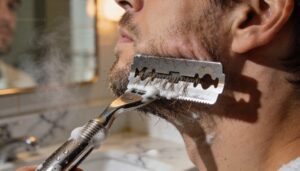
That catch-and-drag feeling mid-stroke is your clearest signal. When blade dullness sets in, edge geometry breaks down — the blade stops slicing cleanly and starts pulling hair instead.
Shaving pressure, grain direction, and stroke length all matter, but no technique fixes a worn edge.
Pulling or tugging means blade replacement guidelines apply now. Don’t wait for razor burn prevention to become damage control.
More Redness After Each Shave

Post-shave redness that keeps getting worse isn’t a skin type problem — it’s a blade problem. Dullness forces more passes, each one stripping more of your skin barrier and triggering inflammation.
warning signs:
- Redness spreads beyond the shaved area
- Skin stays red hours after shaving
- Ingredient irritation worsens from your aftershave moisturizing routine
- Razor burn appears even with correct shave angle and water temperature
- Skin pH shifts, leaving tightness and visible irritation
Replace the blade now.
Rough Glide Despite Good Technique

When your technique is solid but the glide still feels like sandpaper, the blade is telling you something. Edge rounding and micro chipping break down PTFE glide coatings, so even perfect lather lubrication can’t compensate.
Mineral film from hard water accelerates blade dullness further. Without hair pre-softening, blade lubrication fails completely. Hard water buildup is a fixable problem — regular razor maintenance habits like rinsing thoroughly and drying properly can slow mineral deposit accumulation and keep your blade sharper, longer.
That roughness isn’t your fault — it’s blade wear. Replace it.
More Cuts, Bumps, or Ingrowns

A dull blade doesn’t just pull — it punishes. Blade dullness increases friction, which creates micro-cuts that let bacteria in and trigger razor bumps.
Poor shaving angle and hair growth direction compound this. Skipping skin preparation makes it worse.
Even clothing friction afterward irritates already-stressed follicles. For ingrown hair prevention, one clear rule applies: when cuts and bumps multiply, replace the blade immediately.
Visible Rust, Chips, or Orange Spots

Orange spots aren’t cosmetic — they’re iron oxide, meaning the steel is actively breaking down. Moisture staining and rust spot identification matter here: even small rust spots signal corrosion that disrupts the blade edge.
Edge damage signs like chips cause dragging instead of cutting.
Orange oxide formation and metal oxidation accelerate in humid bathrooms.
For blade rust prevention, replace immediately — corrosion prevention starts before the blade ever touches your skin.
Best Replacement Schedule by Razor Type

Not all razors age the same way.
Your blade type, hair texture, and shave frequency all shape how long a blade stays sharp.
Here’s what a smart replacement schedule looks like for each.
Cartridge Razors: 5–10 Shaves
Cartridge razors pack a lot of smart engineering — Pivoting Multi-Blade heads, Guard Bars, Blade Coating, and a Moisturizing Strip — but none of that saves you from blade dullness forever.
Stick to this blade replacement schedule:
- Replace every 5 shaves for coarse or wiry hair
- Replace every 7–10 shaves for finer hair
- Replace immediately at first sign of skin irritation or razor burn
For Eco-Friendly Disposal, check your cartridge razor brand’s recycling program.
Safety Razors: 3–7 Shaves
Unlike cartridge systems, a safety razor holds a single double-edge blade — no multi-layer buffer between your skin and the edge.
That’s why edge geometry matters more here.
Replace every 3–7 shaves depending on hair type matching, and shave pressure.
| Hair Type | Shave Pressure | Replace By |
|---|---|---|
| Fine | Light | 7 shaves |
| Medium | Moderate | 5 shaves |
| Coarse | Firm | 3 shaves |
Consistent lather consistency slows blade dullness and helps skin irritation prevention.
Look into blade recycling programs for safe disposal.
Coarse Hair: Replace Sooner
Coarse or thick hair hits a blade differently. Every pass loads the edge with more force — that’s Blade Load Stress working against you faster. Hair coarseness effect is real: wiry strands accelerate Edge Wear Acceleration, pushing your Skin Irritation Threshold sooner than you’d expect.
Replace earlier to keep Coarse Hair Friction low:
- Replace after 3–5 shaves, not 7.
- Watch for tugging — it signals blade dullness before burns appear.
- Reduce Shave Pass Optimization by using sharper, fresher edges.
- Match your blade replacement schedule to hair texture, not just frequency.
- Prioritize Preventing Razor Burn Through Proper Maintenance by changing blades at the first rough glide.
Daily Shaving Vs Occasional Shaving
How often you shave matters as much as how you shave.
Daily shavers accelerate blade wear — more skin contacts mean faster irritation build-up and less time for skin recovery between sessions. Occasional shavers get more shaves per blade but can miss early dullness signals.
Match your blade replacement schedule to your shaving frequency: daily shavers should replace every 5 shaves, not 7.
Why Premium Blades Still Wear Out
Even higher-priced razor blades wear out — because physics doesn’t negotiate. Here’s what degrades them over time:
- Coating Degradation strips the friction-reducing surface, increasing metal-to-skin contact.
- Thermal Stress from friction causes edge fatigue and micro-deformation.
- Surface Roughness increases as corrosion sets in between shaves.
- Manufacturing Variability means blade lifespan varies even within the same brand.
- Hair thickness and coarseness accelerate metal fatigue faster than any marketing claim.
What Shortens Blade Life Faster

Even a brand-new blade won’t last if certain habits are working against it. Some factors drain sharpness faster than you’d expect — and most are easy to fix once you know what to watch for.
Here’s what’s quietly cutting your blade life short.
Thick or Wiry Hair
Thick, wiry hair puts up serious blade edge resistance — each strand is stronger and more rigid than fine hair. That physical pushback dulls your blade faster, meaning you’ll hit signs that razor blades need replacement sooner than most guides suggest. Coarse or thick hair can shorten blade life by up to 50%.
| Factor | Fine Hair | Coarse or Thick Hair |
|---|---|---|
| Blade Dullness Rate | Slower | Up to 50% faster |
| Shave Pass Frequency | 1–2 passes | 2–3 passes |
| Best Replacement Schedule | Every 6–7 shaves | Every 4–5 shaves |
Curl retention effects and poor moisture absorption make each pass harder on your blade edge. Replace sooner. Don’t wait for razor burn to confirm what the tugging already told you.
High Shaving Frequency
Daily shavers burn through blades faster — simple math.
Every shave adds micro cut accumulation and strips skin barrier oils before full recovery period completes.
Shaving frequency directly accelerates blade dullness, compressing what would stretch across a week into two or three days.
Replace blades after 5–7 shaves regardless of the calendar.
Frequency irritation and razor burn follow when you don’t.
Hard Water Buildup
Hard water is quietly dulling your blade between shaves. Dissolved calcium and magnesium ions deposit a chalky calcium scale and magnesium film directly on the edge — increasing drag and accelerating wear.
Hard water effects compound with heat, so rinsing under hot water speeds the buildup. Limescale prevention starts with water softening or a final cool rinse.
Mineral-coated edges dull up to 50% faster.
Poor Cleaning Habits
Skipping the rinse step is one of the fastest ways to wreck a good blade. Residue accumulation — dried lather, skin oils, hair fragments — creates drag and invites bacterial contamination with every pass.
Three habits that cut blade life short:
- Leaving blade wet after shaving accelerates rust.
- Neglecting handle cleaning lets buildup transfer back onto the edge.
- Using tap water only skips the blade sanitation that 70% isopropyl alcohol provides.
Storing Razors in Humid Bathrooms
Moisture is your blade’s enemy — and your bathroom is full of it. Steam from hot showers keeps metal damp long after you’ve dried off, accelerating corrosion and cutting blade shelf life considerably.
Move your razor to a dry storage solution outside the bathroom. Use moisture absorbing packs for rust prevention, and choose holders designed for airflow optimization to optimize corrosion protection.
Clean Blades to Prevent Razor Burn
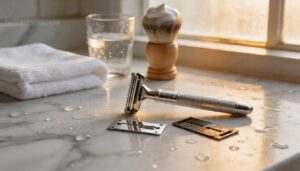
A dull blade isn’t the only thing causing razor burn — a dirty one does just as much damage. Leftover hair, soap residue, and moisture turn your razor into a breeding ground for bacteria between shaves.
These five cleaning steps will keep your blade sharp, safe, and ready to go.
Rinse Debris After Every Shave
Every stroke leaves behind hair, lather, and skin oils — and if you don’t rinse, that residue dries onto the blade and changes how it feels next time. Use warm water and a back-to-front rinse direction for one or two strokes.
This rinse technique, done with rinsing after each use, flushes debris before it sets, supporting better blade maintenance and proper storage prep.
Brush Away Hair and Lather
Rinsing gets most of it — but not all. Fine hairs and dried lather cling to the blade edge even after a good rinse. A soft brush fixes that.
- Use gentle strokes for proper hair lift technique — bristle firmness matters here
- Good lather consistency means less buildup sticks in the first place
- Keep brush hydration moderate to avoid bending the edge
Disinfect With 70% Isopropyl Alcohol
Once the brush has done its job, it’s time for antibacterial cleaning. Apply 70 rubbing alcohol directly to the blade surface and let it sit for at least 30 seconds — contact duration matters here. Surface wetting gives the alcohol time to disrupt microbes properly.
One flammability warning: keep it away from open flames.
This step is effective cleaning and disinfection, residue free.
Dry Without Scraping The Edge
After the alcohol dries, resist grabbing a towel and scrubbing. That abrasive motion nicks the edge quickly.
Instead, use a Gentle Blotting Motion along the handle and spine — never the cutting edge. Tilt the blade down for Tilted Razor Drainage, then let the Airflow Drying Method finish the job.
This Edge-Free Drying approach is your best drying and rust prevention method.
Add a Light Protective Oil
Once your blade is dry, that bare metal is exposed — and humid bathroom air starts working against it immediately. A light coat of mineral or baby oil changes that.
- Apply a thin film right after drying for best Application Timing results
- Use just enough for Thin Film Protection — a drop covers the edge
- Wipe excess for proper Residue Control; thick coats gum up
- Both oils offer Metal Compatibility and create a true Moisture Barrier
Store Razors to Avoid Corrosion

Where you store your razor matters just as much as how you clean it. Steam, trapped moisture, and poor airflow are the fastest routes to rust and a ruined blade.
These five storage habits will keep corrosion off your razor and your shaves smooth.
Keep Blades Away From Steam
Steam condensation is a slow killer for razor blades. Every time you shower, warm vapor settles on exposed metal and starts moisture corrosion — dulling the edge before your next shave.
Coating degradation follows, and mineral deposits from evaporating water create microscopic rough patches.
Dry your blades immediately after use and store them outside the shower zone.
Moisture is your blade’s enemy.
Use a Ventilated Razor Holder
Choosing the right holder makes drying easy. A ventilated razor holder uses Airflow Slot Design to keep air circulating around the edge — no pooling, no lingering moisture.
- Blade Positioning keeps the edge angled for passive drainage
- Corrosion-Resistant Materials like chrome, resist bathroom humidity
- A consistent Holder Cleaning Routine prevents residue buildup in slots
Good air circulation is your first line of razor rust prevention.
Avoid Sealed Wet Plastic Cases
sealed plastic cases seem convenient — but they’re working against you. Trap a wet razor inside one, and you’ve created the perfect corrosion environment. Moisture is your blade’s enemy, and a closed case locks it in.
| Problem | What Happens | Better Alternative |
|---|---|---|
| Sealed humidity | Condensation forms on blade steel | Open Air Drying on a holder |
| Plastic Offgassing Risks | Chemical vapors leave residue on edge | Rust-Resistant Coatings or chrome stands |
| Mineral salt concentration | Localized corrosion weakens cutting edge | Dry storage solutions with ventilation |
| Lather residue contact | Soap film accelerates rust spotting | Rinse thoroughly before storing |
| Micro rust buildup | Edge degrades before visible damage appears | Rust inhibition oil after drying |
Absorbing Pouches near your storage area help, but they can’t compensate for a sealed container. Skip the plastic case entirely — razor rust prevention starts with airflow, not enclosure.
Use Silica Gel for Moisture Control
Silica gel is one of the simplest dry storage solutions you can use. Drop a small sachet near your razor holder — silica gel placement close to the blade creates a dry pocket by pulling water vapor out of the surrounding air.
Watch the indicator color change from blue to pink; that’s your signal to reactivate or replace it.
Humidity buffering benefits your blade directly: less moisture means less corrosion, better rust inhibition, and fewer chances of razor burn from a degraded edge.
Reapply Oil to Metal Parts
Oil is your blade’s last line of defense against rust spots. Get the timing right and the method simple:
- Oil Application Timing — reapply after cleaning and drying, never before, so you’re protecting clean metal.
- Thin Even Coating — a drop of mineral oil or baby oil is enough; over‑oiling leaves residue.
- Oil Compatibility — mineral oil and baby oil work for standard blades and lubricating electric cutters or a popup trimmer.
Wipe excess before your next shave to guarantee Residue Removal and prevent rust build‑up.
Build a Low-Irritation Blade Routine
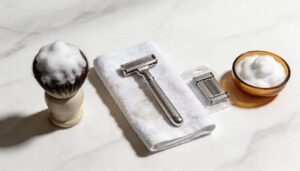
Good habits don’t have to be complicated — they just have to be consistent. A low-irritation blade routine comes down to a few simple steps you repeat every time you shave.
Here’s exactly what to do.
Track Shaves Per Blade
Think of it like a mileage tracker for your car — your blade needs one too. Start Shave Count Logging after every use.
Most people should replace razor blades after 5–10 shaves, depending on hair type. Blade Wear Analytics and Pass Count Correlation help you map your personal Irritation Threshold Mapping, so Custom Replacement Alerts tell you exactly when blade lifespan and replacement become non‑negotiable.
Inspect The Edge Before Use
Your shave count gets you close — but a quick inspection before each shave catches what numbers miss.
Run this inspection checklist every time:
- Visual Edge Check — Look for nicks, chips, or orange corrosion under good light.
- Moisture Residue Inspection — Dried lather along the blade edge increases drag and irritation.
- Blade Frame Integrity — Check for cracks or looseness in the holder.
- Alignment Verification — Confirm the blade sits centered with even exposure on both sides.
- Glide Test — A light dry drag on clean skin reveals blade dullness, snagging, or rough edge damage instantly.
Signs that razor blades need replacement show up here before your skin pays the price. Blade edge maintenance starts before the first stroke.
Replace at The First Warning Sign
Your inspection gives you data. Now act on it.
The First Drag Sensation — that subtle resistance on stroke one — is your Edge Skip Cue. Don’t wait for Micro-Cut Accumulation or Lather Disruption to confirm what you already feel.
Blade dullness telegraphs itself early. Razor burn stacks fast once you ignore the first signal.
Replace immediately. That’s how you stay ahead of skin damage.
Match Blade Changes to Skin Sensitivity
Not every skin reacts the same way to blade dullness. Coated Blade Comfort fades faster on sensitive skin — you’ll notice skin irritation after fewer shaves than someone with tougher skin. That’s Skin-Type Matching in practice: your Tailored Replacement schedule is yours alone.
- Adjustable Exposure settings on safety razors reduce razor burn risk for reactive skin.
- Material Sensitivity matters — some coatings irritate certain skin types even on a fresh blade.
- Skin-Type Matching means shortening your replacement schedule when redness appears earlier than expected.
Dispose of Used Blades Safely
Once a blade is done, it’s still dangerous. Don’t toss it loosely into a trash bag — that’s how waste workers get cut.
| Disposal Method | Key Requirement |
|---|---|
| Sharps container usage | Puncture-resistant, sealed, labeled |
| Secure transport packaging | Double-wrapped, bag tied closed |
| Labeling for safety | Mark "sharps" in permanent marker |
| Local regulations compliance | Follow your waste authority’s rules |
| Eco-friendly disposal alternatives | Blade recycling programs, manufacturer drop-offs |
Proper disposal methods protect everyone handling your trash.
Frequently Asked Questions (FAQs)
Is it worth replacing shaver heads?
Yes, absolutely. Worn heads drag instead of cutting, which means more friction, more razor burn, and rougher skin.
Replacing shaver heads restores sharp, clean performance — your skin will notice the difference immediately.
Can blade choice affect acne-prone skin?
Absolutely. Blade composition, edge geometry, and coating technology all influence how a razor interacts with acne-prone skin.
A dull blade raises friction, increases razor burn risk, and can trigger folliculitis through repeated micro-cuts.
Do cold and hot water affect blade performance?
Hot water speeds up rust and wears coatings faster. A cold rinse slows corrosion and limits heat-induced rust. Either way, moisture is your blade’s enemy — always dry completely after rinsing.
Should you shave more gently with a new blade?
Fresh edges cut cleanly, so ease up on pressure. Adjust your blade angle, slow your stroke speed, and let grip comfort guide you.
Gentle mode protects your skin barrier without sacrificing closeness.
Can sharing razors increase skin infection risk?
Sharing a razor is a direct cross-contamination pathway. Micro-cuts let bacteria transfer instantly. Folliculitis spread, MRSA transmission, and bloodborne pathogen risk are all real. Keep your razor personal — no exceptions.
Conclusion
Think of your razor blade as a trusted ally in your daily shave. When it’s sharp, it fights for a smooth, irritation-free complexion.
But when it’s dull, it turns against you, causing redness and discomfort. To keep the peace, replace blades on a consistent schedule to prevent irritation.
By doing so, you’ll enjoy a closer shave, healthier skin, and a happier you. Make the switch and experience the difference for yourself, starting today with a fresh blade.