This site is supported by our readers. We may earn a commission, at no cost to you, if you purchase through links. This content is for general informational and educational purposes only and is not a substitute for professional medical, dermatological, or nutritional advice.

Most razor bumps aren’t caused by how you shave—they’re caused by what’s living on your blade. A used razor can harbor more bacteria per square centimeter than a toilet seat, and that’s before you factor in the trapped hair fragments, dried shaving cream, and skin oil that coat the blade after a single use.
That cocktail of debris doesn’t just sit there quietly; it dulls the edge, drags across your skin, and sets off an inflammation cycle that keeps bumps coming back shave after shave. Knowing how to sanitize your razor and avoid bumps breaks that cycle before it starts.
Table Of Contents
- Key Takeaways
- Why Dirty Razors Cause Bumps
- Cleaning Vs Sanitizing a Razor
- Tools Needed for Safe Sanitizing
- Rinse Away Hair and Cream
- Disinfect The Blade Correctly
- Dry and Store Razors Properly
- Replace Blades Before They Irritate
- Sanitize Brushes and Electric Tools
- Pair Sanitizing With Better Shaving
- Fix Common Sanitizing Mistakes
- Frequently Asked Questions (FAQs)
- Conclusion
Key Takeaways
- A used razor traps bacteria, skin oil, and hair fragments that dull the blade and trigger the recurring razor bumps—so cleaning (removing debris) and sanitizing (killing microbes with 70% isopropyl alcohol) are two separate steps you need for every single shave.
- Storing your razor in the shower is quietly sabotaging you—humidity accelerates rust and biofilm growth, so drying it blade-up and keeping it outside the spray zone is one of the easiest wins for your skin.
- Blade dullness isn’t just annoying—it forces repeated passes, stresses hair follicles, and creates ragged cut ends that curl back under the skin, so swapping out every 5–7 shaves (sooner if you feel tugging) is non‑negotiable bump prevention.
- Technique matters as much as tool hygiene—shaving with the grain, using light pressure, exfoliating beforehand, and choosing fragrance‑free, non‑comedogenic products all work together to keep inflammation from starting in the first place.
Why Dirty Razors Cause Bumps

A dirty razor isn’t just gross — it’s quietly working against your skin every single shave. Bacteria, old cream, and trapped hairs all build up faster than you’d think, and each one plays its own role in triggering those stubborn bumps.
It adds up faster than most people realize — here’s why a dirty razor causes burns and bumps and what the buildup is actually doing to your skin.
Here’s exactly what’s happening under the blade.
Bacteria, Residue, and Trapped Hair Buildup
Every time you skip cleaning your razor, something sneaky is happening on that blade. Sebum-Driven Bacteria feed on skin oils left behind, and Biofilm Accumulation turns your razor into a breeding ground fast.
Keratin Hair Traps lock in debris, while Residue Film Persistence keeps moisture clinging to the surface.
The overlapping cuticle scales on hair can also trap microbes, creating additional niches for growth. That combo? Pure Microbial Irritation waiting to happen.
Watch out for:
- Biofilm quietly coating the blade between shaves
- Sebum mixing with product residue, fueling bacterial growth
- Trapped keratin fragments increasing postshave infection risk
How Clogged Blades Create Drag and Micro-cuts
Once bacteria and residue settle in, your blade starts working against you. Blade Gap Narrowing traps debris between edges, creating Residue Drag that makes every stroke feel like sandpaper. That buildup triggers Edge Roughness Amplification — tiny snags that score your skin.
| What Happens | Why It Hurts |
|---|---|
| Wedge Action Mechanics | Blade pushes instead of cuts |
| Interblade Re-deposition | Residue transfers back to skin |
Why Dull, Contaminated Blades Worsen Ingrowns
A dull blade doesn’t just pull — it sets off a chain reaction. Edge Micro-roughness from oxidation and Rust-Induced Irritation create uneven cuts, leaving hair ends ragged enough to curl back under your skin — the classic Hair Curling Trigger for ingrowns.
Add Residue Friction Boost from leftover oils, and the Biofilm Inflammation Cycle keeps firing, making blade dullness and skin irritation basically a package deal.
Areas Most Prone to Razor Bumps
Some spots are just bumps waiting to happen. Curly, coarse hair and sensitive skin are a rough combo — and these areas get hit hardest:
- Beard Chin – coarser regrowth curls back easily
- Neck Jawline – sensitive skin, tricky hair direction
- Underarm Area – curved surfaces trap cut hairs
- Bikini Line – friction plus close shaving equals irritation
- Scalp Body – anywhere hair is dense and frequently shaved
Bacterial contamination loves these zones, especially without proper razor sterilization methods.
Cleaning Vs Sanitizing a Razor
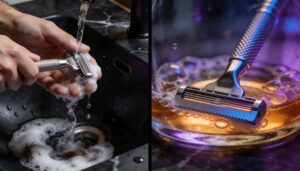
Most people treat these two steps like they’re the same thing — they’re not. Cleaning and sanitizing each do a different job on your blade, and skipping either one is where the trouble starts.
Here’s what each step actually covers.
What Cleaning Removes From The Blade
Think of your razor blade like a kitchen knife — you wouldn’t cook with one caked in yesterday’s grease. Cleaning physically strips away the gunk: soap scum, oil film, hair shards, skin flakes, and mineral deposits left behind by hard water. These are the silent culprits behind drag and uneven cuts.
| What Builds Up | Where It Collects | Why It’s a Problem |
|---|---|---|
| Soap scum | Around blade edges | Reduces glide, traps moisture |
| Oil film | Blade face | Increases drag, dulls cutting feel |
| Hair shards | Between blade gaps | Causes uneven, snagging strokes |
| Skin flakes | Along blade surface | Holds moisture, feeds bacterial buildup |
| Mineral deposits | Metal surface | Accelerates blade rust over time |
Rinsing clears this physical debris — and that matters more than most people realize.
What Sanitizing Kills on The Surface
Cleaning removes the gunk — but sanitizing goes after the invisible stuff.
Disinfectant alcohol (think 70% isopropyl) and hydrogen peroxide disrupt bacterial colonies, fungal spores, and virus particles living right on your blade.
These microbes hide in skin oil residue and biofilm fragments, driving microbial growth between shaves.
| Microbe Type | Where It Hides | What Kills It |
|---|---|---|
| Bacterial colonies | Blade edge buildup | Disinfectant alcohol |
| Fungal spores | Skin oil residue | Hydrogen peroxide |
| Bacterial biofilm | Blade face gaps | Alcohol + contact time |
| Virus particles | Shaving cream film | 70% isopropyl solution |
| Microbial growth | Rust pits, grooves | Full surface coverage |
Why Hot Water Alone is Not Enough
Hot water feels like it’s doing the job — but it’s really just a rinse cycle. It flushes visible cream and hair, yet residue film and blade biofilm cling to micro‑gaps where water never fully reaches. That’s insufficient disinfection in action.
Moisture retention keeps bacteria thriving long after you’ve set the razor down.
| What Hot Water Does | What It Misses | Proper Solution |
|---|---|---|
| Removes visible debris | Microbial survival in biofilm | Alcohol or hydrogen peroxide |
| Loosens shaving cream | Residue film on blade face | 70% isopropyl coverage |
| Reduces bacterial load | Bacterial buildup in micro‑gaps | Proper razor sterilization methods |
When You Need Both Steps Every Shave
Every shave deserves both steps — no shortcuts. Rinse first for debris removal, then disinfect for full blade coverage against bacterial buildup on skin breakouts. Dual step timing keeps consistent hygiene in your corner.
| Situation | Skip Cleaning? | Skip Sanitizing? |
|---|---|---|
| Normal daily shave | No | No |
| Heavy product buildup | No | No |
| Razor dropped on floor | No | Re-sanitize immediately |
Tools Needed for Safe Sanitizing
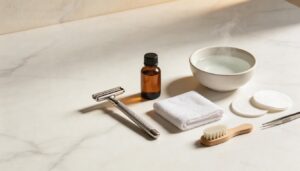
Good news — you don’t need a fancy setup to sanitize your razor the right way.
A simple dry spot on your bathroom shelf goes a long way — check out these razor blade hygiene tips to see how small storage habits can seriously cut down on rust and bacteria.
A few basic tools are all it takes to keep your blade clean, sharp, and ready to go.
Here’s exactly what you need.
Hot Running Water for Debris Removal
Your faucet is doing more work than you think. Running warm water over your blade flushes out hair clippings, shaving cream residue, and dead skin before they compact into a clog.
That steady blade edge flow matters — debris is easiest to clear while it’s still wet. Hot water loosens cream better than cold, and consistent rinsing between strokes helps with mineral deposit prevention and bacterial buildup too.
Alcohol-based Disinfectant for Blade Coverage
Rinsing alone won’t kill bacteria — that’s where alcohol steps in. 70 isopropyl rubbing alcohol solution hits the sweet spot for proper razor sterilization methods: strong enough to eliminate germs, not so concentrated it evaporates before doing its job.
Spray coverage technique ensures every edge gets wet. Let it air-dry — that wet dwell duration is what actually works.
Clean Towel or Drying Rack
Once your blade is disinfected, don’t grab just any damp towel. Towel hygiene actually matters here — a wet cloth can reintroduce moisture and bacteria, undoing your proper razor sterilization methods.
Opt for a fully dry towel or a wire drying rack. Rack materials with open slats support airflow optimization, letting your blade air-dry completely. Smart moisture management now prevents razor blade rust later.
Ventilated Storage Outside The Shower
Where you store your razor matters just as much as how you clean it.
Ditch the shower caddy — bathroom humidity accelerates blade rust and bacterial buildup fast.
Instead, grab an open-slot holder or elevated drying rack outside the spray zone. Humidity-resistant design, anti-rust materials, and smart ventilation placement keep air circulating around all sides, supporting proper razor sterilization methods between every shave.
Gloves or Careful Handling for Safety
Good storage gets you halfway there — safe handling finishes the job.
When you sterilize your razor or work through your cleaning and sterilizing razors routine, bare hands near exposed blades are a gamble. Cut-Resistant Gloves reduce that risk substantially. Follow this Hand Hygiene Protocol before touching any sanitizing solution:
- Do a Glove Fit Check — snug, no bunching
- Confirm Material Compatibility with your disinfectant
- Practice Safe Blade Handling — grip the body, not the edge
- Wash hands after removal
Rinse Away Hair and Cream

Rinsing your razor sounds simple, but most people do it wrong without even realizing it. A blade that looks clean can still be hiding cream buildup and tiny hair fragments packed between the edges.
Here’s what you actually need to know to rinse it right.
How to Flush Out Shaving Cream Residue
Think of leftover shaving cream as wet cement — let it dry, and you’ve got a real problem.
A quick Tilted Rinse Technique works wonders: angle the blade so hot water flows directly through the gaps. Use the Rapid Agitation Method by shaking the razor firmly.
For stubborn buildup, try a Warm Water Soak with soap to Emulsify Soap Film, then Brush and Toothpick out any remaining gunk before you sanitize your razor.
Best Water Temperature for Rinsing Blades
lukewarm water — somewhere between 85 and 95°F — hits the sweet spot for rinsing blades. You get the Warm Water Benefits of loosening cream and debris without scalding your skin.
Hot shower temps can actually increase irritation, while the Cold Contraction Effect may stress the edge. For Blade Edge Stability and Skin Irritation Mitigation, lukewarm is your Rinse Temperature Range.
How Often to Rinse During Shaving
So how often should you rinse your razor? Watch for these Blade Load Indicators:
- Lather turns cloudy or thick on the blade.
- You feel increased drag mid-stroke.
- You’ve finished one full Shave Pass Strategy section.
- Stubble is dense or longer than usual.
Rinse timing matters because loaded blades pull instead of cut, worsening skin irritation and razor bumps fast.
How to Check if Debris is Fully Removed
After rinsing your razor, don’t just assume it’s clean — verify it.
Run a quick Blade Thread Inspection by lightly swiping your thumb across (not along) the edge to feel for grit or tackiness.
Then do a Visual Flush Test: clear water means you’re close.
Use the Gap Lighting Check, Towel Swipe Test, and Motion Feel Test to confirm no debris remains before you sterilize your razor.
Mistakes That Leave Buildup Between Blades
Even small habits can quietly wreck your blade. Cold Water Rinsing won’t dissolve hardened cream the way warm water does. Blade Angle Misalignment during rinsing lets residue hide under the guard — that’s Incomplete Guard Cleaning waiting to happen.
Drying with a Lint‑y Cloth deposits fibers near the edge.
Humid Storage Conditions reactivate leftover residue, accelerating bacterial buildup, blade dullness, and skin irritation.
Disinfect The Blade Correctly
Rinsing gets rid of the visible stuff, but it doesn’t kill what you can’t see. That’s where proper disinfecting comes in, and there’s a right way to do it.
Here’s exactly what to do.
Step-by-step Alcohol Sanitizing Method
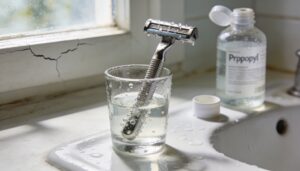
Sanitizing your razor isn’t complicated — it just needs to be done right. After rinsing away debris, apply your alcohol-based disinfectant carefully, keeping vapor ventilation guidelines in mind, by cracking a window first.
- Wet the entire blade using a blade immersion technique — no dry patches
- Check alcohol concentration (70% isopropyl works best)
- Allow 30 seconds minimum contact time, then air-dry for post-sanitizing inspection
Bacteria don’t get second chances.
How Much Disinfectant to Apply
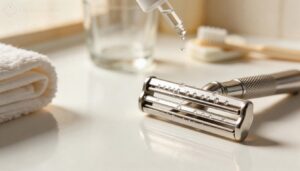
More isn’t better here. You just need enough disinfectant to keep both cutting edges visibly wet — that’s your Surface Wetness Indicator. Follow Measured Dilution Ratios exactly as the label states; going stronger doesn’t kill more bacteria, it just leaves residue that contributes to blade dullness and skin irritation.
| Application Goal | What to Do |
|---|---|
| Label Volume | Match product instructions exactly |
| Excess Avoidance | Wet edges only, no pooling |
| Bacterial Buildup Risk | Cover shadowed blade undersides |
| Concentration | Never exceed label maximum |
Contact Time Consistency starts with getting coverage right first.
Minimum Contact Time Before Drying
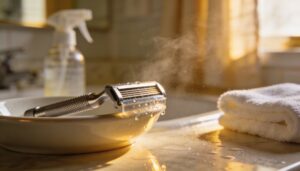
Coverage gets you started — but time is what actually does the killing. Your disinfectant needs to maintain a visible Wet Film Duration across the blade for the full Label Contact Time (usually 30 seconds minimum).
Environmental Evaporation is sneaky; Humidity Impact and Airflow Control both affect how fast that film dries. In warm, breezy bathrooms, reapply before it vanishes.
Why Full Blade Coverage Matters

Time did its job — now make sure the disinfectant actually reaches everywhere. Uniform wetting across the full blade isn’t optional. Edge residue elimination depends on it.
Miss a corner, and that contaminated strip still drags across your skin every stroke. Full coverage means consistent microbial load reduction, less cross contamination prevention failure, and real blade sharpness protection without hidden buildup wrecking your next pass.
When to Sanitize Before and After Shaving
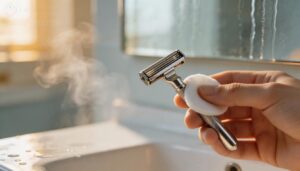
Both ends of your shave matter for shaving hygiene. Do a quick Pre-shave Moisture Check — if your razor sat in a damp bathroom, wipe it with alcohol first. That’s your Pre-shave Blade Prep.
Afterward, don’t skip the Post-shave Sanitizing Window before storage. A Post-shave Storage Delay of just a few minutes for air-drying protects against post-shave infection and preserves blade sharpness longer.
Dry and Store Razors Properly
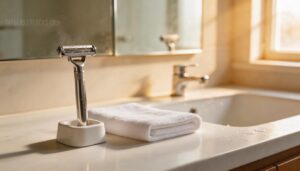
rinse their razor, set it down somewhere wet, and call it a day — and that’s exactly where things go wrong. store your blade between shaves matters more than you’d think.
Here’s what to know about keeping your razor dry and your skin clear.
Why Moisture Leads to Irritation and Buildup
Leaving your razor wet is like leaving a petri dish on your sink — and your skin pays the price. Moisture triggers a chain reaction you don’t want anywhere near your face:
- Barrier Weakening softens outer skin cells, making every pass more irritating
- Skin Plasticization increases Friction Amplification, turning light strokes into micro-cuts
- Residue Film from cream and oils traps bacteria and clogs pores
- Microbial Growth thrives in damp blade crevices, accelerating bacterial buildup
- Blade Dullness and skin irritation worsen faster when moisture speeds up rust and residue hardening
Dry storage isn’t optional — it’s your razor hygiene foundation.
Best Way to Air-dry a Razor
Once you’ve rinsed, don’t just set the razor down and walk away. Pat the blade head with a dry, clean towel — paying attention to the gap areas — then let Blade Elevation Angle do the work.
magnetic hook placement keeps your razor tilted, so Airflow Direction pulls moisture off naturally.
Dry storage in a low-humidity spot, with good ambient temperature impact prevents blade dullness and skin irritation before your next shave.
Why Shower Storage Makes Contamination Worse
Your shower might seem like a convenient spot for your razor, but it’s quietly working against you. Shower humidity and ventilation deficit create the perfect conditions for biofilm accumulation — basically a microbial slumber party on your blade. Add hard water scaling and splash cross-contact from drain water, and bacterial buildup on skin breakouts becomes almost inevitable.
Storage tips to prevent razor contamination start with one simple move: get it out of there.
Safe Blade Storage Between Shaves
Once your razor is clean and dry, where you put it matters just as much as how you clean it. Good storage is one of the most overlooked storage tips to prevent razor contamination. Try one of these:
- Mount a Magnetic Blade Holder on the wall for airflow
- Slip blades into an Anti‑Rust Sleeve between uses
- Tuck the razor in a Separate Bathroom Drawer away from steam
- Pack travel razors in a ventilated Travel Razor Case
- Add Humidity‑Control Packets nearby to pull moisture from the air
How Dry Storage Helps Prevent Rust
Rust is basically your blade’s worst enemy — and moisture is what lets it win. In Low Humidity Environments, corrosion slows dramatically.
Store your razor in an Elevated Blade Position with Controlled Airflow Storage, add Moisture-Absorbing Packs nearby, and always make sure Blade Guard Drying before putting it away.
A dry place isn’t optional — it’s how you protect both the blade and your skin.
Replace Blades Before They Irritate
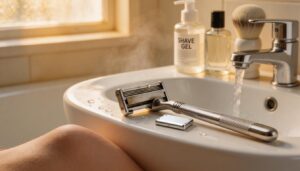
Even the cleanest razor becomes a problem once the blade gives out.
Dull edges don’t just pull and tug — they set the stage for irritation, ingrowns, and those stubborn bumps you’re trying to avoid.
Here’s how to know when it’s time to swap the blade and why it makes such a difference.
Signs Your Razor is Too Old
Your blade is basically sending you distress signals — you just have to know how to read them. Excessive drag, hair snagging mid‑stroke, or that annoying blade vibration? Those aren’t technique problems. That’s your razor telling you it’s done.
dead giveaways:
- Corrosion pitting or rust spots along the edge
- The lubricating strip has faded or peeled off the blade cartridge
- Edge chipping you can feel as tugging on the first pass
- razor burn or razor bump flare‑ups after normal shaving
- won’t rinse clean, no matter how long you run it under water
How Blade Dullness Contributes to Bumps
Think of a dull blade like a butter knife — it doesn’t cut cleanly, it drags. Edge rounding and micro chipping force you to press harder, causing pressure increase and repeated passes over the same spots.
A dull blade drags instead of cuts, forcing repeated passes that stress follicles and trigger bumps
Those repeated passes stress your follicles, trigger skin nicks, and set the stage for razor bumps.
A sharp blade glides; a dull blade grinds.
Typical Replacement Timing for Disposables
So how often should you actually replace disposable razors? A solid Shave Count Schedule is every 5–7 shaves. That’s your Usage Replacement sweet spot.
A Weekly Blade Rotation works well for daily shavers.
Got thick stubble? The Stubble Thickness Factor speeds up blade dullness and skin irritation fast. Even Travel Blade Longevity drops with multiple passes — pack extras.
Why Rusted Blades Should Be Discarded Immediately
Even if a blade just hit the 5–7 shave mark, visible rust changes everything — toss it immediately.
Corrosion Damage causes Metal Pitting that creates an uneven Edge Degradation, meaning instead of clean cuts, you get tugging and micro-nicks.
That roughened surface becomes a Bacterial Harboring zone, raising your Infection Risk every single pass.
No amount of disinfectant reverses pitted metal.
How Fresh Blades Improve Skin Comfort
A fresh blade is basically night and day compared to a worn one. When you replace your blade cartridge regularly, you access real Sharp Edge Benefits — think Reduced Friction, Improved Glide, and Minimized Pulling that actually lets skin breathe.
- Cleaner cuts mean fewer inflamed follicles
- Improved glide reduces repeated strokes over the same spot
- Enhanced Comfort follows naturally when blade dullness and skin irritation stop compounding
- razor bump prevention starts with a sharp edge, not a miracle cream
Sanitize Brushes and Electric Tools

Your razor isn’t the only tool that needs attention after a shave.
Brushes and electric shavers can quietly collect bacteria, dead skin, and leftover product — and if you’re not cleaning them, you’re basically undoing all that careful blade work.
Here’s what to do with each one.
Cleaning Shaving Brushes After Each Use
Your shaving brush holds onto more than just lather — dead skin, soap scum, and bacteria build up fast. After each shave, rinse it under a lukewarm rinse of running water, massaging through the knot.
A drop or two of shampoo treats stubborn residue. For deeper grooming hygiene, a vinegar dilution loosens buildup.
Rinse until the water runs clear.
Drying Brushes Bristles-down
Hanging your shaving brush bristles-down isn’t just a quirky habit — it’s gravity drainage doing real work. Water flows away from the ferrule, protecting the glue that holds bristles in place and supporting shape retention as it dries.
Airflow optimization matters too, so store it outside the shower in a dry place. Good storage hygiene keeps bacterial buildup out of your grooming hygiene routine.
Removing Hair From Electric Shavers
After each session, your electric razor deserves more than a quick shake. Tap the shaving head gently first — that’s your Tap and Brush routine loosening trapped clippings without bending delicate foils.
For a foil shaver, a Foil Debris Flush under running water clears cream residue before it hardens. Rotary Hair Extraction means popping the rotor heads and brushing underneath.
Left unchecked, that buildup drives bacterial buildup, blade dullness, skin irritation, and postshave infection.
Disinfecting Clipper Heads and Guards
Clipper Guard Sterilization is where most people cut corners — pun intended. Before applying any disinfectant, brush loose hair from every guard channel, because buildup blocks Blade Groove Coverage completely.
For proper Alcohol Contact Assurance, spray both blade sides and guards, then wait the full dwell time:
- Treat top and underside of blades
- Cover all guard surfaces
- Let disinfectant stay visibly wet
- Use Rapid Drying Method afterward, then store in Anti-Rust Packaging
Why Dirty Tools Can Reintroduce Bacteria
Think of your shaving brush or clipper head as a tiny ecosystem. Skip proper cleaning, and you’ve got Microbial Growth Zones — warm, moist pockets where Biofilm Persistence thrives.
Residue Shielding from trapped oils and hair lets bacteria hide from sanitizers, turning your tools into Cross-Contamination Sources.
Blade Surface Roughness from buildup only makes things worse, pressing those microbes right back into freshly shaved skin.
Pair Sanitizing With Better Shaving

A clean razor is only half the battle—how you actually shave makes a huge difference too. Getting your technique right works hand in hand with proper sanitizing to keep those bumps away for good.
Here’s what to focus on before the blade even touches your skin.
Exfoliating Before Shaving to Reduce Blockage
Dead skin is basically a pore-clogging roadblock for your razor. Exfoliation before you shave clears that layer, so hairs exit cleanly instead of curling back.
Acid choice matters here — salicylic works well for oily or bump-prone skin, while lactic acid suits sensitive types.
Gentle scrub alternatives work too.
Aim for two or three times weekly, and always do it before, never after.
Softening Hair With Warm Water First
Warm water is your razor’s best setup crew. Pre-shave hydration softens hair shafts so blades cut cleanly instead of dragging — and that drag is exactly what triggers blade dullness and skin irritation over time.
- Warm soak benefits: 40–50°C water boosts hair flexibility and follicle opening in minutes
- Temperature comfort guide: test on your wrist — comfortably warm, never scalding
- Shave preparation tip: stay moist through lathering for consistent blade glide
Shaving With The Grain, Not Against It
Your hair doesn’t grow in one direction — that’s where most people go wrong.
Use the Grain Mapping Technique: wet your face, then drag a fingertip across different areas to feel which way hairs lie flat.
Shaving with the grain means following that Hair Growth Direction, giving you a Gentle Blade Glide with Minimal Skin Tugging, Reduced Ingrown Hairs, and far fewer bumps overall.
Using Light Pressure and Short Strokes
Once you’ve got the grain direction down, technique is next — and it’s simpler than you think.
Keep your Grip Pressure light, like you’re holding a marker, not a hammer. Use short strokes, and stay mindful of your Blade Angle and Skin Tension.
- Light pressure lets sharp blades glide, not scrape
- Short strokes reduce Pass Count over sensitive spots
- Steady Stroke Rhythm prevents drag that triggers bumps
Applying Non-comedogenic Shave Products
Your product choice matters just as much as your technique. A Lightweight Non-Comedogenic shave cream with Glycerin Hydration Boost keeps skin moist without clogging pores. Look for a Fragrance-Free Formula with Acne-Safe Ingredients — no dyes, no alcohol.
| Feature | What to Look For | What to Avoid |
|---|---|---|
| Oil-Free Lubrication | Water-based gels | Heavy waxes or mineral oil |
| Fragrance-Free Formula | Unscented, dye-free labels | Perfumed or colored creams |
| Glycerin Hydration Boost | Glycerin listed early | Alcohol as main ingredient |
| Acne-Safe Ingredients | Salicylic acid, aloe vera | Comedogenic oils |
| Rinse Behavior | Clean-rinsing, lightweight | Thick residue-leaving creams |
A solid noncomedogenic product rounds out your postshave aftercare routine naturally.
Fix Common Sanitizing Mistakes

Even the best sanitizing routine can quietly fall apart in ways you’d never expect. A few small habits, ones that feel totally harmless, are often the real reason bumps keep coming back.
Here are the most common mistakes worth fixing right now.
Sharing Razors With a Partner or Roommate
Sharing a razor feels harmless — until you realize used blades carry bacteria, skin oils, and potentially bloodborne residue from the last person who shaved. Infection transmission risk is real, even without visible cuts. Microscopic nicks happen every shave.
For personal hygiene everyone deserves, individual blade ownership is non‑negotiable. Keep your razor in personal razor storage, separate from shared bathroom hygiene zones.
Reusing a Blade That Still Feels Rough
tugging sensation isn’t just annoying — it’s your skin sending a distress signal. Edge Roughness Indicators like pulling, needing extra passes, or Tugging Pain Symptoms mid‑shave all point to blade dullness and skin irritation in the making.
Reusing that blade spikes your Increased Ingrown Risk fast. Watch for:
- Visible buildup that won’t rinse away
- Pressing harder than usual to cut
- Consistent discomfort despite clean technique
Switching to Fresh blades is the smarter Blade Lifespan Economics move.
Skipping Post-shave Blade Drying
Leaving your razor wet after shaving is one of those small habits that quietly causes big problems.
Moisture speeds up Metal Corrosion Speed, triggers Blade Edge Pitting, and allows Microbial Survival Extension on the surface.
Residual Film Solidification hardens leftover cream into a layer that increases Increased Drag Risk next time.
That drag feeds blade dullness, skin irritation, bacterial buildup, and disrupts your postshave care for skin healing.
Using Harsh Products That Irritate Skin
What you put on your skin after shaving matters just as much as the blade itself. Fragrance allergens, harsh surfactants, and preservative reactions can all trigger postshave irritation on freshly shaved skin.
Alcohol drying strips moisture, strong acids over‑foliate, and scented products worsen blade dullness and skin irritation by compromising your barrier. Stick to gentle, fragrance‑free formulas, your skin can actually tolerate.
Ignoring Persistent Bumps That Need Treatment
Some bumps just won’t quit — and that’s your skin asking for backup.
If a bump sticks around for weeks, grows, bleeds, or hurts, don’t chalk it up to blade dullness and skin irritation.
That’s when symptom monitoring matters.
A dermatology referral or skin cancer screening isn’t overkill — pseudofolliculitis barbae can scar permanently.
Persistent bumps deserve medical evaluation, not guesswork.
Frequently Asked Questions (FAQs)
Can diet affect razor bump severity or healing?
Yes, diet plays a real role.
High Glycemic Impact foods and Dairy Hormones can fuel skin inflammation, while Omega-3 Anti-inflammatory foods, Micronutrient Repair nutrients, and strong Hydration Barrier support faster postshave care recovery.
Are razor bumps contagious through shared bathroom surfaces?
Razor bumps themselves aren’t contagious — they’re irritation, not infection. But shared towels and damp surfaces can transfer bacteria or fungal growth, so keep your bathroom tools personal and dry.
Can stress or hormones trigger more frequent razor bumps?
Absolutely — stress and hormones genuinely fuel razor bumps.
Cortisol Impact triggers Stress-Induced Inflammation, while Testosterone Hair Growth thickens hair, increasing bacterial risk and weakening your skin barrier through disrupted Immune Signaling and Hormonal Influence.
Do razor bumps leave permanent scars if untreated?
Left untreated, they absolutely can. Chronic inflammation from folliculitis barbae drives long-term skin changes, including permanent hyperpigmentation and keloid formation risk — especially on darker skin tones.
Conclusion
Ironically, the secret to a smoother shave isn’t in the shave itself, but in the cleanup that follows. By learning to sanitize your razor and avoid bumps, you’re not just dodging pesky ingrowns—you’re taking control of your skin’s health.
To sanitize your razor and avoid bumps for good, focus on regular sanitizing. Make sanitizing your razor a habit, and you’ll be saying goodbye to razor bumps and hello to a healthier, happier you every day.