This site is supported by our readers. We may earn a commission, at no cost to you, if you purchase through links. This content is for general informational and educational purposes only and is not a substitute for professional medical, dermatological, or nutritional advice.

Your kitchen might already have a better deep conditioner than anything on the salon shelf. Yogurt—the same kind you eat for breakfast—contains lactic acid and proteins that work directly on dry, damaged strands.
The lactic acid gently seals the hair cuticle while drawing in moisture, and the proteins fill in weak spots along the shaft to reduce breakage.
A yogurt hair mask for hydration doesn’t require a chemistry degree or a $40 bottle; it takes about five minutes to mix and thirty minutes to work. Here’s exactly how to make one that actually produces outcomes.
Table Of Contents
- Key Takeaways
- Why Yogurt Hydrates Hair
- Greek Yogurt Vs Regular Yogurt
- How to Make a Yogurt Mask
- How to Apply a Yogurt Mask
- Safety Tips and Best Frequency
- Frequently Asked Questions (FAQs)
- Is yogurt hydrating for hair?
- What is a natural hair mask for seborrheic dermatitis?
- Can yogurt masks work on color-treated hair?
- Does yogurt help with dandruff or scalp flakes?
- How long until you see noticeable results?
- Can you refrigerate leftover yogurt mask mixture?
- Is yogurt safe for fine or oily hair?
- Conclusion
Key Takeaways
- Yogurt’s lactic acid seals the hair cuticle and pulls in moisture, while its proteins—casein and whey—fill in weak spots along the strand to cut down on breakage.
- Greek yogurt packs roughly twice the protein of regular yogurt, making it the better pick for dry or damaged hair, while lighter regular yogurt suits fine or oily hair better.
- Apply the mask to damp, clean hair, focusing on mid-lengths and ends where dryness hits hardest, and leave it on for 20–30 minutes before rinsing with warm, then cool water.
- Once a week is the sweet spot—overusing a protein-heavy mask leads to stiffness and breakage, so watch for straw-like texture or snapping strands as early warning signs.
Why Yogurt Hydrates Hair
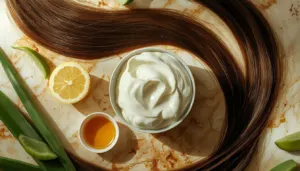
Yogurt isn’t just for breakfast — it’s packed with ingredients your hair actually reacts to. The science behind it is simpler than you’d think, and it comes down to a few key things working together.
Its acidity is the real workhorse — a detail explained well in this guide on mixing yogurt into henna for deeper color and conditioning.
Here’s why it makes such a difference for dry, thirsty strands.
Lactic Acid Helps Lock in Moisture
Lactic acid is yogurt’s quiet overachiever. It works through three key mechanisms:
- Humectant Water Binding — draws moisture toward each strand and holds it there
- pH Barrier Support — lowers the cuticle’s surface acidity for better Cuticle Sealing
- Scalp Hydration Balance — keeps your scalp’s moisture levels steady without greasiness
That’s deep conditioning without the salon price tag. Lactic acid also acts as an alpha hydroxy acid, gently exfoliating and enhancing skin texture.
Proteins Support Weaker, Dry Strands
Moisture alone won’t save dry, breaking strands — they need structure too. Yogurt delivers both.
Its casein fills gaps along damaged shafts, while whey protein repairs weak spots so hair resists snapping.
Think of it like patching cracks before painting.
Silk protein elasticity and hydrolyzed protein boosts flexibility without stiffness.
That’s the protein-moisture balance your yogurt hair mask brings to dry hair.
| Protein Type | What It Does | Best For |
|---|---|---|
| Casein | Fills shaft gaps | Dry, porous hair |
| Whey | Repairs weak spots | Breakage-prone strands |
| Silk | Adds elasticity | Fine or fragile hair |
Yogurt Can Soften Rough Cuticles
Protein fills the shaft, but lactic acid treats the surface. Yogurt’s natural acidity triggers cuticle pH adjustment, gently flattening those rough, raised edges that cause friction and dullness.
surface friction reduction is what makes hair feel noticeably softer after just one yogurt hair mask. real texture uniformity — smoother strands, better moisture retention, and that soft hair feel you’re after.
It May Help Soothe Dry Scalp
Your scalp feels the difference too. A yogurt hair mask maintains scalp pH balance naturally, and its live probiotic cultures offer probiotic soothing that can calm irritation and reduce flaking.
Think of it as gentle cleansing from the inside out — anti-itch ingredients working quietly while moisture retention does its job.
For dry hair, consistent scalp care and dandruff prevention start with something this simple.
Greek Yogurt Vs Regular Yogurt
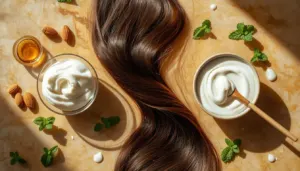
Not all yogurt is created equal — and that difference actually matters when it’s going on your hair. The type you grab at the store can change how your mask feels, how much protein your strands get, and whether it suits your hair type.
Here’s what to know before you scoop.
Greek Yogurt Offers More Protein
Greek yogurt earns its place in your DIY yogurt hair mask because of one key advantage: the straining process. Removing whey concentrates protein, giving you twice the amino acid boost per serving compared to regular yogurt. That protein concentration translates directly into moisture restoration for dry hair — filling gaps in each strand for real hair hydration.
Greek yogurt’s straining process doubles the protein, turning each strand into a gap-filling, moisture-restoring powerhouse
| Feature | Greek Yogurt | Regular Yogurt |
|---|---|---|
| Protein per 6 oz | 15–20g | 8–10g |
| Texture | Thick, creamy | Thin, pourable |
| Straining process | Yes | No |
| Amino acid boost | Higher | Lower |
| Best for | Dry, damaged hair | Fine or oily hair |
Regular Yogurt is Lighter on Hair
Regular yogurt’s higher water content gives it a natural water slip that helps it glide through strands without clumping. Its light texture spreads evenly, making your yogurt hair mask easier to apply and rinse out.
Gentle conditioning without the heaviness — that’s the trade-off you get here.
| Feature | Regular Yogurt |
|---|---|
| Texture | Light, pourable |
| Rinse behavior | Easy rinse, reduced residue |
| Best for | Fine or oily hair |
| Mask type | Moisturizing hair mask |
Choose Plain, Unsweetened Yogurt Only
Whatever type you choose, always go plain and unsweetened. Flavored yogurts bring added sugar and thickeners that make your moisturizing hair mask sticky and inconsistent.
Plain yogurt keeps ingredient simplicity front and center — just milk and live cultures, nothing extra. No added sugar also means no tacky residue on your scalp.
| What to Check | Why It Matters |
|---|---|
| No added sugar | Prevents sticky buildup |
| Live cultures listed | Confirms active lactic acid and protein |
| Plain label | Ensures consistent texture every time |
| Allergy awareness | Still contains dairy — not dairy-free |
Pick The Best Texture for Your Hair Type
Texture isn’t an afterthought — it’s the difference between a mask that works and one that drips down your neck. Match it to your hair type for real results.
| Hair Type | Best Texture |
|---|---|
| Curly and coily hair | Thick, creamy blend |
| High-porosity hair | Smooth consistency |
| Fine or straight hair | Lighter, fluid yogurt |
Porosity matching matters. Thick vs fluid choices affect rinse ease, scalp sensitivity, and moisture retention every time.
How to Make a Yogurt Mask
Making a yogurt mask is easier than you might think, and you only need a few ingredients from your kitchen. The base is always plain yogurt, but what you add next depends on what your hair actually needs.
Here are four simple combinations worth trying.
Start With a Simple Plain Yogurt Base
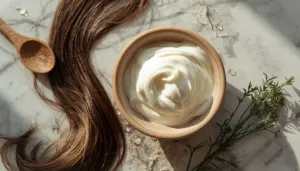
Your base sets the tone for everything.
Reach for plain, unsweetened yogurt — it brings live cultures, an acidic pH that smooths cuticles, and a protein coating that helps moisture retention without mystery ingredients. Its thick consistency clings to strands long enough to deliver deep hydration and moisture.
That ingredient control is exactly what makes it a reliable foundation for natural hair conditioning.
Add Honey for Extra Hydration
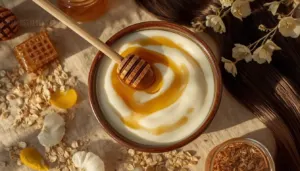
Honey is the quiet MVP of any DIY yogurt hair mask recipe. Its humectant power pulls moisture toward each strand, while its naturally viscous film coats the cuticle for smoother, softer results.
Add 1 to 2 tablespoons to your yogurt and honey mask base — enough for deep hydration and moisture without tackiness.
Rinse thoroughness matters here; leftover honey attracts dirt fast.
Mix in Olive Oil for Dryness
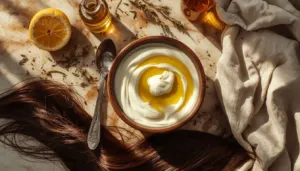
Olive oil is the next natural ingredient to reach for when dry hair is the main concern. A yogurt and olive oil hair mask combines protein with slip enhancement for serious softness — making detangling ease a real bonus.
- Add 1 tablespoon for fine hair
- Use 2 tablespoons for dry hair and thicker textures
- Mix into yogurt for even oil proportion distribution
- Coat mid-lengths and ends for a natural scalp barrier
- The oil acts as a heat shield, slowing moisture loss
Coat evenly for deep hydration and moisture that lasts.
Blend Banana or Avocado for Softness
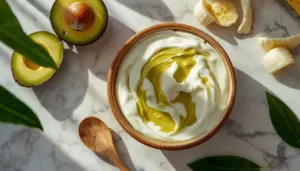
For softness, blend a ripe banana or half an avocado directly into your yogurt base.
Both create a Lump-Free Consistency that coats strands evenly — which Even Coating Film is what gives you Slip for Detangling without snagging.
The Smooth Blend Method also ensures a Rinse-Friendly Finish.
A yogurt and banana mask, or avocado version, delivers real deep hydration and moisture using simple natural ingredients.
How to Apply a Yogurt Mask
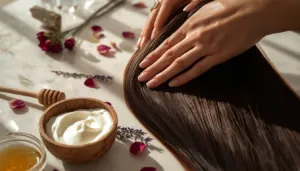
Getting the application right makes all the difference between a mask that works and one that just makes a mess.
It’s less complicated than you might think — a few simple steps and you’re set.
Here’s exactly how to do it.
Apply to Clean, Towel-dry Hair
Before you apply the mask, your hair needs to be clean and just damp — not dripping wet. Wash first, then use a gentle squeezing motion with a microfiber towel to blot out excess water.
Skip the towel twists; wet hair breaks more easily than you’d think. Aim for that damp hair timing sweet spot — hair that feels moist but not soaked — for deep hydration and moisture absorption.
Section Hair for Even Coverage
Once your hair is damp, sectioning is what separates a rushed job from real results. Part into four quadrants using a tail comb — comb part lines keep coverage honest. Then apply the mask section by section with a wide-tooth comb.
- Use clips for section size consistency
- Follow a step-by-step application guide per quadrant
- Check clip placement, then do a coverage check before moving on
Mask smoothing technique matters here: work the yogurt through each section completely before sealing with plastic wrap.
Focus on Mids and Ends First
Once your sections are clipped, start working the yogurt hair mask into your mid-lengths first — that’s where targeted moisture matters most.
Mids and ends lose natural oil fastest, so protein-rich yogurt delivers real end split prevention and hair moisture retention right where split ends form.
Keeping product off your roots also controls weight distribution and improves detangling efficiency with mid-length slip.
| Zone | Why It Matters | What Yogurt Does |
|---|---|---|
| Mid-lengths | Driest after washing | Boosts protein coating, adds slip |
| Ends | Most porous, prone to damage | Reduces hair damage, seals splits |
| Roots | Already oiled naturally | Skip — prevents heaviness |
Leave on 20 to 30 Minutes
Once the mask is fully coated through your ends, set a timer — 20 to 30 minutes is your sweet spot for heat avoidance and moisture retention. Skip the blow dryer while you wait.
Use this window for detangling benefits: run a wide-tooth comb through your coated strands while the DIY yogurt hair mask recipes do their work. Timer consistency across sessions keeps your results predictable.
Rinse With Lukewarm, Then Cool Water
When your timer goes off, step into the shower and start with warm water — around 32–40°C — to loosen the yogurt hair mask and make residue removal easy. Then finish with a cool water rinse below 20°C for cuticle sealing and hair shine.
- Temperature Shift flushes protein and moisture barriers cleanly
- Warm water dissolves dairy residue without roughing up strands
- Cool water rinse flattens cuticles and reduces flyaways
- Scalp Comfort improves when you avoid extreme temperatures throughout
Safety Tips and Best Frequency
Yogurt masks work best when you use them the right way and at the right pace. A few simple rules can help you get results without overdoing it.
Here’s what to keep in mind before you add this to your routine.
Patch Test Before First Use
Before you coat your hair in yogurt, do a quick skin sensitivity check first. Pick a spot like your inner forearm or behind your ear for your test area selection. Apply a small amount of the exact formula you plan to use — same ingredients, same proportions.
This patch test procedure needs a 24-hour observation window.
Watch for allergy reaction signs: redness, itching, swelling, or hives.
If you notice any of these reactions, stop use immediately and consult a dermatologist before trying any natural lemon juice acne remedies again.
Avoid if You Have a Dairy Allergy
If you have a milk allergy, yogurt hair masks aren’t for you — full stop. Milk protein allergens absorb through the scalp, triggering real reactions. Cross contact risk is also worth noting; even "non-dairy" labels can hide casein or whey.
- Check every ingredient for milk, whey, or casein
- Try dairy-free substitutes like coconut milk or aloe vera
- Repeat your allergy patch test with any new formula
Don’t Overuse Protein-heavy Masks
Too much of a good thing is real here. Protein Buildup from overusing protein-rich hair treatments triggers Hair Elasticity Loss — your strands literally snap more easily.
Straw-like Texture and increased Breakage Risk? Classic protein overload signs. Moisture Balance breaks down fast without enough conditioning in between.
| Warning Sign | What It Means | Fix |
|---|---|---|
| Stiffness after rinsing | Protein overload | Add deep conditioner |
| Hair snaps during brushing | Hair Elasticity Loss | Skip protein mask this week |
| Rough, coated feel | Protein Buildup | Clarify, then moisturize |
| Straw-like Texture | Too many protein-rich hair treatments | Hydration mask only |
| Dull, less bouncy hair | Moisture Balance disrupted | Alternate protein and moisture |
Use Once Weekly for Hydration Support
Once you’ve dialed back the protein, a simple weekly rhythm works best. Using your DIY yogurt hair mask once a week gives your strands a reliable Moisture Lock-In without pushing into Hygral Fatigue Prevention territory.
Think of it as a Weekly Moisture Cycle — a Scalp Hydration Reset that keeps Hair Softness Maintenance on track while balancing protein and probiotic effects on scalp and hair between washes.
Watch for Buildup or Stiffness
Even the best yogurt hair mask can backfire if residue builds up over time. Watch for these warning signs:
- Residue Rinsing issues — hair feels stiff or crunchy after drying, signaling an incomplete rinse-out
- Honey Stickiness — tacky strands that attract dust point to leftover buildup
- Oil Layering — repeated olive oil masks without clarifying cause a coating
- Hard Water Effects — mineral deposits worsen protein overload, dulling dry hair
Frequently Asked Questions (FAQs)
Is yogurt hydrating for hair?
Yes, yogurt genuinely hydrates hair. Its lactic acid penetration smooths the cuticle, while the protein absorption rate improves strand flexibility.
Together, these moisturizing properties support hydration longevity, especially for higher Hair Porosity Interaction types.
What is a natural hair mask for seborrheic dermatitis?
plain yogurt hair mask with aloe vera and tea tree oil offers probiotic benefits, antifungal additives, and pH balancing agents that soothe seborrheic dermatitis, ease dandruff, and support gentle exfoliation for a calmer scalp.
Can yogurt masks work on color-treated hair?
Yogurt masks are generally safe for color-treated hair.
lactic acid helps with pH Stabilization, smoothing cuticles to support Pigment Preservation and Dye Compatibility — though don’t expect Color Fading Prevention miracles.
Does yogurt help with dandruff or scalp flakes?
It can.
The lactic acid in yogurt helps regulate scalp pH, while live probiotic cultures work to balance your microbiome and suppress Malassezia growth — the yeast most often behind stubborn dandruff and scalp flakes.
How long until you see noticeable results?
Results can show up fast — and that’s the strange part.
Your first softness timing might be the same day, but real hydration weeks of consistent use build the deeper, lasting moisture your hair actually needs.
Can you refrigerate leftover yogurt mask mixture?
Yes, you can refrigerate leftover DIY yogurt hair mask mixture.
Follow refrigeration guidelines: store it in airtight storage below 40°F, and respect the shelf life duration of five to seven days maximum.
Is yogurt safe for fine or oily hair?
Fine and oily hair can handle a yogurt hair mask — just keep it lightweight.
Its natural protein and pH compatibility help with oil control without heavy residue, as long as you skip the scalp.
Conclusion
Your pantry has been holding out on you. A yogurt hair mask for hydration doesn’t need a fancy label or a steep price tag to deliver real results—it just needs the right ingredients and a little consistency.
Apply it weekly, rinse thoroughly, and pay attention to how your hair responds over time. Soft, manageable strands aren’t a distant goal; they’re what happens when you stop overlooking what’s already in your fridge.