This site is supported by our readers. We may earn a commission, at no cost to you, if you purchase through links. This content is for general informational and educational purposes only and is not a substitute for professional medical, dermatological, or nutritional advice.
Dry, brittle hair that snaps at every detangling—most people blame their products, their technique, or their hair type. But the real culprit is often a moisture problem happening at the strand level.
Glycerin works differently from most conditioning agents. Rather than coating the hair surface, it pulls water from the air and holds it close to each strand, creating continuous hydration where your hair needs it most.
natural hair especially, that distinction matters. Understanding how glycerin behaves—and when it works against you—makes all the difference between softer, more elastic curls and a frizzy, sticky mess.
Table Of Contents
- Key Takeaways
- What Glycerin Does for Hair
- How Glycerin Hydrates Natural Hair
- Best Hair Types for Glycerin
- Humidity and Glycerin Performance
- How to Use Glycerin Safely
- DIY Glycerin Hair Mist Recipes
- Glycerin Hair Masks and Deep Conditioners
- Sealing Moisture After Glycerin
- Glycerin Benefits for Scalp Health
- Glycerin Side Effects and Fixes
- Frequently Asked Questions (FAQs)
- What are the disadvantages of glycerin on hair?
- Can you leave glycerin in your hair overnight?
- Can glycerin replace leave-in conditioner entirely?
- Does glycerin expire or lose effectiveness over time?
- Can glycerin be used safely before heat styling?
- Is plant-derived glycerin better than synthetic glycerin?
- Does glycerin interact poorly with protein treatments?
- Conclusion
Key Takeaways
- pulls water from the air and holds it against your hair strand — but only when humidity is between 35–55%; in dry air, it draws moisture out of your hair instead.
- High-porosity and curly hair types benefit most from glycerin because their open cuticles let it absorb quickly, while low-porosity hair needs warmth and dilution to see any real results.
- Always dilute glycerin before use — one part glycerin to three or four parts distilled water — and apply it to damp hair, then seal with a light oil to keep that moisture from evaporating.
- Glycerin supports scalp health by reducing dryness, itching, and flaking, but you should patch test first and stop using it if you notice irritation, stickiness, or increased dryness.
What Glycerin Does for Hair
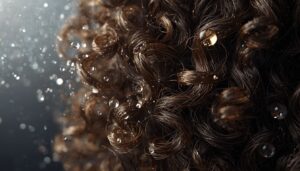
Glycerin does more for your hair than most people realize. It works on a chemical level to pull moisture in and help your strands hold onto it.
It’s actually one of the most effective hair moisturizing ingredients out there, drawing humidity from the air straight into your strands.
Here’s a closer look at exactly how that process works.
How Glycerin Works as a Humectant
Glycerin works by pulling water toward your hair and keeping it there. It’s a humectant — meaning it grabs moisture from the air through hydrogen bond dynamics and holds it at the strand level. This molecular hygroscopicity slows evaporation rate reduction, so strands stay hydrated longer.
Its GRAS‑approved humectant status ensures safety for cosmetic use.
- Fewer dry, brittle moments between wash days
- More pliable hair that detangles with less effort
- A softer feel that lasts
Why It Attracts and Holds Moisture
That pulling power comes down to chemistry. Glycerin has three polar hydroxyl groups — tiny water-loving sites that form molecular hydrogen bonds with water vapor in the air.
This hygroscopic molecular structure creates a vapor pressure gradient, drawing moisture toward your strands.
The result is moisture reservoir formation right at the hair surface, so hydration doesn’t just arrive — it stays.
How It Supports Natural Hair Hydration
Once moisture reaches your strands, glycerin’s water binding capacity keeps it there. It facilitates cuticle hydration by maintaining a steady moisture gradient balance across each strand — so water doesn’t just arrive and evaporate.
Here’s what that looks like in practice:
- Curls stay flexible longer after wash day
- Ends feel less dry between rinses
- Strands absorb water more evenly
- Humectant synergy improves when paired with a leave-in
- Adaptive humidity response helps hair adjust to shifting conditions
Why It Helps Reduce Dryness and Brittleness
Dry hair doesn’t just feel rough — it breaks. When strands lose water, they stiffen, and that stiffness makes them snap under everyday tension like detangling or styling.
Dry hair doesn’t just feel rough — it breaks
Glycerin works against this through moisture buffering, keeping hydration levels steady rather than letting hair swing between soaked and parched. That stability promotes fiber flexibility and better stress distribution along each strand.
| What Happens Without Glycerin | What Glycerin Helps With |
|---|---|
| Cuticles lift and roughen | Cuticle cohesion improves |
| Strands become rigid and brittle | Fiber flexibility increases |
| Hydrostatic swelling cycles weaken hair | Moisture retention stays consistent |
| Breakage risk rises during styling | Hair hydration promotes breakage prevention |
Using glycerin as a hair humectant keeps dry hair from reaching that fragile state in the first place.
How Glycerin Hydrates Natural Hair

Glycerin doesn’t just sit on your hair — it actually pulls moisture in and helps your strands hold onto it. That one function ripples into several changes you can see and feel.
If you’re missing that hydration boost from your old routine, why L’Oréal’s clay shampoo line disappeared from shelves explains what happened and what to try instead.
Here’s how it plays out.
Moisture Retention in Hair Strands
Think of your hair strand as a tiny sponge. Glycerin — a powerful humectant — uses water binding kinetics to form hydrogen bonds with water molecules, drawing them into the strand through cuticle permeability.
Porosity-dependent retention means high-porosity hair absorbs this hydration fastest.
Hit the ambient humidity threshold above 35%, and moisture locking strategies keep your natural hair care routine working all day.
Improving Softness and Flexibility
When hair stays hydrated, it bends instead of breaks. Glycerin softens hair by maintaining the water balance inside each strand, which directly improves flexibility during detangling and styling.
Here’s what that looks like in practice:
- Glycerin adds slip, making combing easier and reducing mechanical stress
- Slip-Boosting Additives, like lightweight conditioners help it spread evenly
- Texture-Enhancing Routines benefit from applying glycerin on damp hair
- Glycerin helps length retention by lowering everyday breakage
Less breakage, more length.
Adding Shine to Dull Hair
Dull hair usually means one thing: raised cuticles scattering light instead of reflecting it. Glycerin improves shine by supporting cuticle smoothing, which helps each strand lie flat and catch the light evenly.
Pair it with film-forming agents like honey or aloe, and you’re building a light-reflective finish from the inside out. A clarifying rinse first removes buildup, so polishing oils can seal everything in cleanly.
Helping Hair Feel Smoother Between Washes
Between washes, hair loses flexibility fast — and that’s when tangles and frizz take over. Glycerin moisturizes hair by maintaining hydration in each strand, giving you real Smooth Slip and Detangling Boost when you need it most.
For a complete moisture routine, pairing glycerin-based products with proven scalp barrier repair techniques keeps both your strands and skin balanced between washes.
A leave-in conditioner with glycerin adds slip, reduces friction, and promotes Frizz Reduction through:
- Moisture Lock — keeps strands hydrated longer
- Tackiness Control — dilute glycerin to avoid sticky buildup
- Flexible hold — glycerin reduces frizz without stiffness
Best Hair Types for Glycerin

Glycerin doesn’t work the same way for every hair type — and that’s actually good news. Knowing where your hair falls on the spectrum helps you get real results instead of guessing.
Here’s a closer look at hair types tend to respond best.
Benefits for Curly and Coily Hair
Curly and coily hair thrives with glycerin because it genuinely needs what glycerin delivers. Each curl’s spiral shape makes moisture escape faster than it does in straight hair.
Glycerin steps in as a Moisture Lock, pulling water toward the strand and supporting Elasticity Enhancement, so curls stay flexible, not brittle.
You’ll notice Curl Definition Boost, Frizz Control, and even Scalp Relief — real, practical wins for natural textures.
Why High-porosity Hair Responds Well
High-porosity hair has naturally raised cuticle scales — think of them as small open doors. Those gaps make Cuticle Gap Penetration easier, giving glycerin’s Humectant properties a direct Intercellular Moisture Pathway into the strand.
The result is Rapid Humectant Uptake that you can actually feel.
Pair that with Sealant Layering Benefits using a light oil, and Hydration for high porosity hair improves noticeably — supporting Porosity-Driven Elasticity over time.
When Low-porosity Hair Needs Caution
Low-porosity hair is the opposite story. Its tight, smooth cuticle resists letting anything in — including glycerin. Without heat assisted application, glycerin draws moisture to the surface but can’t push it inside the strand.
Here’s what to watch:
- Apply to damp hair with gentle warmth to improve absorption.
- Use a careful dilution ratio — heavily diluted glycerin reduces tackiness and surface coating.
- Clarifying frequency matters; buildup blocks moisture entry fast.
- Avoid product buildup prevention failures by skipping heavy layers.
- Watch for protein overload risk — low-porosity hair stiffens quickly with too much.
If you’re unsure how much is too much, this guide to using rice protein for hair breaks down the right frequency for low-porosity strands.
How Textured Hair Can Benefit Most
Textured hair — from loose 2C waves to tight 4C coils — gets the most out of glycerin’s humectant action. Because textured strands have more surface exposure, moisture escapes faster.
Glycerin slows that loss, supporting curl cohesion, slip optimization, and elasticity enhancement all at once. That means better styling flexibility, real breakage prevention, and consistent curly hair hydration, wash after wash.
Humidity and Glycerin Performance

Glycerin doesn’t work the same way in every climate — where you live matters more than most people realize.
The humidity in the air around you directly shapes how glycerin behaves on your hair.
Here’s what you need to know about each scenario.
Why Humidity Changes Glycerin Results
Glycerin’s performance hinges entirely on what’s happening in the air around your hair.
It’s hygroscopic, meaning it pulls moisture from its environment — but only when enough water vapor exists to pull from.
Think of it as a moisture gradient: air with higher humidity pushes water toward your strands, while dry air reverses that flow, triggering evaporation slowdown, failure, fiber swelling loss, and sorption equilibrium collapse.
Best Results in Moderate Humidity
moderate humidity — roughly 35 to 55 percent relative humidity — is glycerin’s sweet spot.
At balanced moisture levels, the air holds just enough water vapor for glycerin’s humectant properties to work without overdoing it.
A lightweight formulation diluted with water spreads evenly, conditions naturally, and won’t feel sticky.
Your product timing strategy matters too: apply to damp hair, then seal with a light oil to keep that moisture in place.
Risks in Very Dry Climates
When the air drops below 35% relative humidity, glycerin’s humectant properties can work against you. Instead of pulling moisture in, it accelerates evaporative water loss from your strands.
Watch for these dry climate effects:
- Cuticle lift risk increases, causing frizz and roughness
- Scalp tightness develops as surface moisture disappears
- Uneven strand drying leaves some sections brittle
- Heat-induced brittleness worsens without proper sealing
Always dilute glycerin in dry weather.
Problems in High-humidity Weather
When humidity climbs past 70%, glycerin humid weather use becomes a balancing act. Too much glycerin pulls excess moisture into your strands, swelling the cuticle and triggering puffiness instead of frizz reduction. Extended Drying Time worsens this, keeping hair damp longer.
| Humidity Level | Glycerin Effect | Result |
|---|---|---|
| Below 35% | Pulls moisture out | Dryness, brittleness |
| 35–55% | Balanced absorption | Defined, hydrated hair |
| Above 70% | Over-absorption | Frizz, puffiness |
Use less glycerin on humid days.
How to Use Glycerin Safely

Glycerin works best when you use it the right way — a little know-how goes a long way. There are a few simple habits that make a real difference in how your hair responds.
Here’s what to keep in mind before you add it to your routine.
Diluting Glycerin Before Application
Pure glycerin is thick and sticky — not something you’d want to slap straight onto your strands. Diluting it first makes all the difference.
- Ratio Selection: Start with 1 part glycerin to 3–4 parts distilled water for a lightweight mist.
- Distilled Water Preference: Tap water introduces minerals that can disrupt your mixture.
- Mixing Consistency: Shake well until fully blended — no separation, no guesswork.
- Storage Stability: Store in a sealed spray bottle away from heat.
- Application Temperature: Use at room temperature for best absorption.
Glycerin mixed with conditioner or glycerin added to leave‑in products works the same way — always diluted, never straight. These simple dilution techniques for glycerin application keep your hair hydrated without the tacky residue.
Applying It to Damp Hair
Timing matters more than you’d think. Applying glycerin mixed with water to damp hair — not soaking wet, not bone dry — gives you the best product absorption rate. That’s your pre-wet timing sweet spot.
Damp strands let you comb through evenly, supporting even distribution from roots to ends. This also facilitates natural hair moisture retention techniques and keeps hair moisture balance steady as strands dry.
Using The Right Amount for Your Routine
There’s no one-size-fits-all custom dosage here — the glycerin you need to dilute will shift with the season, your hair type, and how often you wash. For proper use of glycerin in hair care, start small and adjust.
- Exact Measurement: Begin with a dime-sized amount per section.
- Application Frequency: Scale back if hair feels heavy between washes.
- Seasonal Adjustment: Use less in dry winter months for balanced product distribution.
Avoiding Tackiness and Buildup
Sticky hair isn’t a glycerin problem — it’s usually a formulation problem. Preventing tackiness by diluting glycerin before adding it to your leave-in keeps the product spreadable and residue-free.
Your layering strategy matters too: finish with a lightweight oil sealant, skip heavy butters, and adjust your humidity-adjusted dilution seasonally.
Use a clarifying shampoo every few weeks to reset buildup completely.
DIY Glycerin Hair Mist Recipes
Making your own glycerin mist at home is easier than you’d think, and you probably already have most of what you need. The recipes below work for different hair needs, so you can pick what fits your routine.
Here are a few simple blends to get you started.
Simple Glycerin and Water Spray
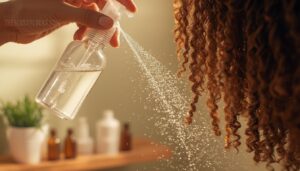
The simplest DIY glycerin hair mist recipes start with just two ingredients. Mix equal parts glycerin and distilled water in a spray bottle — that’s it.
- Use an eco-friendly glass or BPA-free bottle for temperature sensitivity and travel convenience
- Hold at a 45-degree spray angle for even mist coverage
- Apply to damp natural hair so this humectant draws in moisture effectively
Glycerin With Rosewater Blend
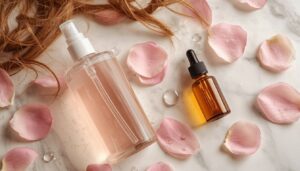
Want a little more than plain water in your mist? Try blending rosewater with glycerin.
The rosewater aroma makes application feel pleasant, while the humectant synergy between both ingredients draws moisture straight to your strands.
A good starting point: fill about four-fifths of your bottle with distilled rosewater, then add glycerin for the rest. Shake well, and you’ve got a lightweight mist that actually works.
Adding Aloe for Extra Slip
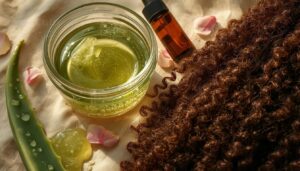
If your rosewater mist needs more glide, adding aloe vera gel is the fix. Aloe’s natural slip helps fingers move through natural hair with less snagging.
For gel consistency balance, try a simple aloe slip ratio: one part aloe to two parts rosewater-glycerin blend. Mix until smooth.
Apply to damp hair — slip duration timing peaks right after application, so detangle immediately.
How to Store Homemade Mists
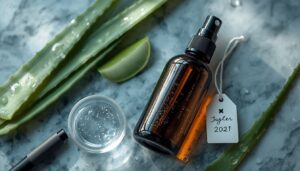
Once your aloe-glycerin mist is ready, store it in an opaque HDPE bottle — bottle material choice matters because dark containers slow ingredient breakdown. Refrigeration is your best temperature control move.
Label each batch with the date and ingredients using a waterproof marker — simple labeling practices that track shelf life indicators like odd smells or color changes. Toss it if anything looks or smells off.
Glycerin Hair Masks and Deep Conditioners
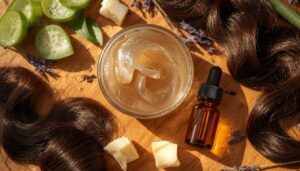
Masks and deep conditioners take glycerin’s hydrating power a step further than a quick mist ever could. They give moisture more time to actually sink into the strand, which makes a real difference for dry or high-porosity hair.
Here are a few simple treatments worth trying.
Glycerin and Aloe Vera Mask
This mask is one of the more cost-effective natural hair care ingredient combinations you can make at home. Mix equal parts aloe vera gel and glycerin — that’s your ingredient ratio sorted.
Apply to damp hair and leave it on for 30 minutes.
Pair your hair mask with a diet rich in protein, iron, and healthy fats, and check these tips to grow afro hair fast for more on nourishing growth.
The aloe vera and glycerin mask delivers serious slip, softness, and hydration without heaviness.
This blend is compatible with most leave-in routines too.
Glycerin and Honey Treatment
Honey’s thick, syrupy texture — that’s honey viscosity at work — helps coat each strand while drawing in moisture, much like glycerin does. Together, they make one of the most effective DIY glycerin hair treatments you can mix at home.
Combine 1/4 cup honey with 1/4 cup glycerin, and 2 tablespoons coconut oil. Apply to damp hair, wait 30 minutes, then rinse.
Adding Glycerin to Deep Conditioners
Your go-to deep conditioner gets a serious upgrade when you stir glycerin in.
Start with a small amount — about one part glycerin to three parts conditioner — for easy ratio optimization without throwing off the viscosity control or pH balance of your formula.
Look for these signs it’s working:
- Hair feels pliable, not stiff, after rinsing
- Strands detangle with noticeably less resistance
- conditioner spreads more evenly through each section
How Long to Leave Treatments On
Timing matters more than most people think. Here’s a quick guide based on treatment type, porosity timing, and humidity shifts:
| Treatment Type | Leave-in Duration | Rinse-out Window |
|---|---|---|
| Rinse-out conditioner | N/A | 2–5 minutes |
| Deep mask/glycerin hair mask recipes | N/A | 10–30 minutes |
| Leave-in treatment/glycerin added to leave-in | All day | No rinse needed |
High-porosity hair absorbs faster — 10–20 minutes works well. Low-porosity hair needs closer to 30. Watch scalp contact; if stickiness builds, rinse sooner.
Sealing Moisture After Glycerin
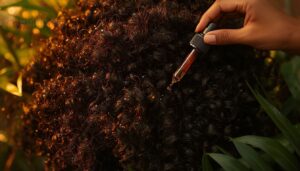
Glycerin does a great job pulling moisture in, but it needs a little help staying put.
Without a sealant on top, that hydration can evaporate before your hair even dries.
Here are the best ways to lock it in.
Why Sealing Helps Lock in Hydration
Glycerin pulls moisture in, but without a sealant after glycerin application, that water evaporates fast. An occlusive barrier — think oils or butters — slows evaporation prevention by coating the cuticle, smoothing it in the process.
Moisture swing dampening keeps your strands feeling soft longer, enhances curl definition stability, and is one of the simplest moisture balance strategies for dry hair.
Using Light Oils After Application
Light oils are your best friend right after glycerin. Oil Application Timing matters — apply immediately while hair is still damp.
For Curl Surface Smoothing and a serious Slip Boost, try these Light Oil Blends:
- Squalane for fine strands
- Grapeseed oil for mid-textures
- A squalane-grapeseed mix for Seasonal Oil Adjustments
Press — don’t rub — from mid-length to ends. That’s your light oil sealant working.
Using Butters for Thicker Textures
For thicker, coarser strands, oils alone sometimes aren’t enough.
That’s where Butter Types like shea, cocoa, or mango come in.
Their higher Melting Point means they stay solid at room temperature but soften at Application Temperature — right in your palms.
This Layering Technique seals glycerin’s moisture deep into the shaft.
A simple Formulation Ratio: roughly 80% butter to 20% avocado or coconut oil keeps it spreadable without heaviness.
Layering Products Without Heaviness
Once you’ve sealed with butter, the goal is to keep everything light. Think of it as a thin layer strategy: start with a leave‑in conditioner on damp hair, follow with your glycerin mix, then seal last.
Work in sections for even distribution without overloading any spot.
Stack products from most watery to most occlusive — that sequential product order prevents buildup and keeps strands flexible, not weighed down.
Glycerin Benefits for Scalp Health
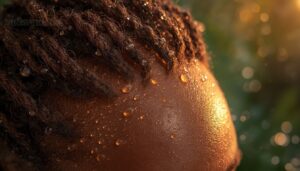
Most people focus on their strands and forget about the scalp—but that’s where healthy hair actually starts. Glycerin can do quiet, steady work up there too, from easing dryness to calming irritation.
Here’s how it helps scalp health in a few key ways.
Supporting a Less Dry Scalp
When your scalp feels tight or flaky, that’s usually a sign it’s lost too much water.
Glycerin’s humectant properties work quietly in the background — drawing moisture toward the scalp and helping it stay there. This promotes scalp moisturization without heaviness, which is especially helpful in dry indoor air.
Consistent use can visibly reduce dry scalp discomfort, making glycerin benefits for scalp health hard to overlook.
Helping Reduce Itchiness
Persistent itching often signals a dry, compromised barrier — and glycerin’s humectant action directly targets that. By boosting scalp moisturization, it can interrupt the dryness-itch cycle before it spirals.
Pair it with fragrance-free formulas and barrier repair strategies for better results.
A gentle scalp massage relief technique during application helps improve absorption.
Glycerin benefits for scalp health feel most noticeable once consistent hydration replaces chronic dryness.
Hydration Support for Flaky Scalp
Flaky scalp is usually a moisture problem—and glycerin directly targets that. As a humectant, it draws water to the scalp surface, supporting scalp moisture balance and slowing the shedding cycle tied to dryness.
Barrier Reinforcement and consistent Moisture Retention are key here.
Adding glycerin as a humectant in conditioners or as a Nighttime Scalp Treatment works well, especially alongside Anti-Inflammatory Additives like aloe vera.
When a Sensitive Scalp May Benefit
If your scalp is prone to react to most products, glycerin might actually be a safe starting point. Its Gentle Ingredient Blend and Fragrance-Free Formulations reduce common irritants.
Think of it as Low-Intensity Application — supporting Scalp Barrier Support without overwhelming sensitive tissue.
Always follow a Patch Test Protocol first, and watch for glycerin allergy considerations.
For many, the humectant benefits for scalp health are well worth it.
Glycerin Side Effects and Fixes

Glycerin works well for most people, but it’s not without its quirks. Like any hair ingredient, how it behaves depends a lot on your environment, your hair, and how much you use.
Here’s what to watch for and how to fix it when things don’t go as planned.
Dryness From Low-humidity Use
Dry air is glycerin’s kryptonite. When relative humidity drops below 35%, moisture loss mechanics shift — instead of drawing water from the air, glycerin pulls it from your strands.
Three warning signs to watch for:
- Cuticle hardening that leaves hair rough and tangled
- Evaporation acceleration causing moisturizing hair in low humidity to feel pointless
- Static electricity rise and flyaways by day two
For glycerin dry weather use, always dilute and seal.
Frizz and Puffiness From Excess Moisture
Too much of a good thing is still too much. In high humidity, glycerin pulls in excess moisture, triggering cuticle swelling and hydrogen bond disruption inside each strand. That leads to uneven strand swelling, puffiness, and lost curl definition — classic overhydration effects.
Pairing glycerin-rich products with an alkaline cleanser like African Black Soap for curl-friendly cleansing can help rebalance strands before overhydration sets in.
Product film interaction makes it worse. Dilute glycerin and layer a sealant on top to keep moisture overload from turning hydration into frizz.
Allergy and Patch-test Precautions
Glycerin is generally safe, but reactions happen. Before adding it to your routine, a patch test keeps things simple and smart.
Follow these glycerin safety and precautions steps:
- Skin Preparation: Apply to clean, unbroken skin only.
- Patch Test Timing: Leave it for 48 hours, read at 96 hours.
- Medication Interference: Skip antihistamines 72 hours before testing.
- Avoiding Irritants: No creams or soaps on the test area.
Reading results safely means stopping use if redness appears.
Signs to Reduce or Stop Use
Sometimes glycerin just isn’t working for your hair — and that’s okay. Here’s when to pull back:
| Warning Sign | What to Do |
|---|---|
| Tacky feel or weighty buildup | Dilute more or clarify |
| Hair swelling or limpness | Reduce amount used |
| Dryness after use (humidity impact) | Switch method in dry weather |
| Scalp irritation or flaking | Stop leave-on use |
Frequently Asked Questions (FAQs)
What are the disadvantages of glycerin on hair?
It works well, but glycerin side effects exist.
In glycerin dry weather, it pulls moisture from your strands. Undiluted, it causes tackiness, Scalp Irritation, Hair Weigh Down, and Reduced Volume — especially in low humidity.
If you color your hair, it helps to check whether Herbal Essences is good for colored hair before relying on it for protection.
Can you leave glycerin in your hair overnight?
Glycerin is safe for natural hair overnight when diluted. Apply it to damp strands, seal after sleep with a light oil, and use a satin bonnet to enhance sleep-time hydration.
Can glycerin replace leave-in conditioner entirely?
Think of glycerin as a sponge, not a sealant. It attracts water but won’t deliver the Conditioning Film, Emollient Role, or Extended Hydration a true leave-in provides. Use both.
Does glycerin expire or lose effectiveness over time?
Pure glycerin stays stable for years. But once diluted or mixed into a product, preservative degradation and microbial contamination risk can reduce performance over time — especially after opening.
Can glycerin be used safely before heat styling?
Glycerin can be used before heat styling, but use it sparingly. It conducts heat, so heavy application raises damage risk.
Dilute it, apply to damp hair, and always follow with a heat protectant.
Is plant-derived glycerin better than synthetic glycerin?
Does the source really matter? Both plant-derived and synthetic glycerin share the same molecule. Your hair can’t tell the difference—performance depends on purity and formulation, not the label.
Does glycerin interact poorly with protein treatments?
No, it doesn’t.
Glycerin actually promotes keratin stability enhancement by keeping proteins hydrated and less prone to unfolding — a real glycerin-protein synergy that helps minimize hair breakage prevention issues after protein treatments.
Conclusion
Funny how one ingredient can simplify everything you thought was complicated about moisture. Glycerin for natural hair hydration isn’t a trend—it’s basic science working quietly in your favor.
Pull water from the air, hold it close, seal it in. That’s the whole system.
Check your climate, dilute properly, and layer a light oil on top. Your hair doesn’t need a complicated routine. It needs the right conditions to stay hydrated on its own.