This site is supported by our readers. We may earn a commission, at no cost to you, if you purchase through links. This content is for general informational and educational purposes only and is not a substitute for professional medical, dermatological, or nutritional advice.

Most people lose between 50 and 100 strands of hair daily—and never think twice about it. But when growth stalls or shedding spikes, suddenly every strand feels like a crime scene. The frustrating part? Most hair growth advice skips the science and jumps straight to miracle claims.
Your scalp is surprisingly responsive to the right ingredients. Rosemary oil matched 2% minoxidil in a clinical trial. Peppermint oil triggered early anagen phase activation in follicle research. These aren’t wellness myths—they’re measurable results.
Knowing ingredients make hair grow faster, and how to actually use them, changes everything about your routine.
Table Of Contents
- Key Takeaways
- Best Ingredients for Faster Hair Growth
- Rosemary Oil for Scalp Circulation and Density Support
- Peppermint Oil for Stimulating The Anagen Growth Phase
- Onion Juice for Keratin Support and Patchy Regrowth
- Castor Oil for Thicker-looking Strands and Scalp Conditioning
- Aloe Vera for Calming Inflammation Around Follicles
- Coconut Oil for Reducing Protein Loss and Breakage
- Green Tea Extract for Antioxidant Scalp Support
- Fenugreek Seeds for Protein-rich Root Strengthening
- Fermented Rice Water for Amino Acids and Strand Resilience
- Ingredients for Specific Hair Concerns
- For Slow Growth: Rosemary Oil, Peppermint Oil, Onion Juice
- For Shedding: Protein, Iron, Zinc, Omega-3 Fatty Acids
- For Breakage: Coconut Oil, Rice Water, Egg Masks
- For Itchy Scalp: Aloe Vera, Tea Tree Oil, Ketoconazole Shampoo
- For Oily Scalp: Salicylic Acid, Green Tea, Lightweight Serums
- For Hormone-related Thinning: Rosemary Oil, Green Tea, Ketoconazole
- For Patchy Regrowth: Onion Juice, Aloe Vera, Gentle Scalp Massage
- Foods That Support Hair Growth
- Lean Proteins for Keratin Production
- Eggs for Protein and Biotin
- Salmon, Mackerel, and Herring for Omega-3s
- Lentils, Red Meat, and Oysters for Iron
- Pumpkin Seeds, Chickpeas, and Oysters for Zinc
- Almonds, Sunflower Seeds, and Sweet Potatoes for Biotin
- Whole Grains for B Vitamins and Steady Nutrient Support
- Collagen Powder for Hair-shaft Strength and Elasticity
- DIY Hair Growth Treatment Recipes
- How to Use Ingredients Correctly
- Step 1: Cleanse With a Gentle or Exfoliating Shampoo
- Step 2: Apply Lightweight Scalp Actives First
- Step 3: Massage Oils Into The Scalp Consistently
- Step 4: Hydrate With Aloe Vera or Hyaluronic Acid
- Step 5: Seal Dry Strands With Coconut or Castor Oil
- Patch Test Essential Oils Before Full Use
- Avoid Overusing Strong Exfoliants
- Track Results for at Least Three to Six Months
- Rotate Ingredients to Avoid Scalp Irritation
- Top 5 Hair Growth Products
- Frequently Asked Questions (FAQs)
- Conclusion
Key Takeaways
- Rosemary oil and peppermint oil aren’t just wellness trends — they have real clinical backing, with rosemary matching 2% minoxidil for hair density in a six-month trial.
- Your diet does as much heavy lifting as your scalp routine — protein, iron, zinc, and omega-3s are what your follicles actually run on.
- Matching the right ingredient to your specific concern (slow growth vs. breakage) vs. oily scalp) matters more than using a lot of products at once.
- Consistency over months — not days — is what separates real results from wishful thinking, so start simple, track progress, and give it at least three months.
Best Ingredients for Faster Hair Growth
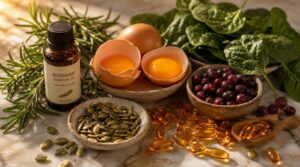
Some ingredients have real science behind them — not just good marketing. These are the ones worth knowing about if faster, fuller hair is what you’re after.
Before spending another dime on serums, it helps to see how tested skin and scalp care products compare, so you back only what actually delivers.
If you want to see these ingredients in action, Pura D’Or Hair Thinning Therapy Shampoo is one product that actually puts several of them to work.
Here’s what’s actually proven to make a difference.
Rosemary Oil for Scalp Circulation and Density Support
Rosemary oil works by driving microvascular stimulation right at the scalp, waking up sluggish hair follicles and supporting follicle proliferation over time. It even blocks DHT — the hormone behind thinning.
One trial matched it against 2% minoxidil for hair density improvement techniques, with both performing equally at six months.
Dilution guidelines are simple: 3–4 drops per tablespoon of carrier oil, applied 2–3 times weekly.
Research highlights its antioxidant and anti‑inflammatory effects for scalp health.
Peppermint Oil for Stimulating The Anagen Growth Phase
While rosemary targets circulation, peppermint oil works differently — it triggers an early anagen switch, nudging resting follicles back into active growth mode.
That tingle you feel? That’s TRPM8 activation boosting scalp circulation through vasodilation.
In mice, peppermint oil outpaced minoxidil for follicle deepening and IGF-1 upregulation in just four weeks.
Key things to know:
- Drives early anagen switch in dormant hair follicles
- Boosts scalp circulation via TRPM8 nerve activation
- Promotes follicle deepening and dermal thickness
- Stimulates IGF-1 upregulation faster than minoxidil (mouse model)
- Always follow dilution ratios — 2–3 drops per tablespoon of carrier oil
Onion Juice for Keratin Support and Patchy Regrowth
Peppermint wakes follicles up — onion juice keeps them working. Its sulfur chemistry triggers keratin pathway activation deep in the follicle, and a small clinical study showed 86.9% regrowth in alopecia areata patients after six weeks.
For patchy application timing, focus on thin spots twice weekly.
The natural pH is acidic, which helps scalp pH optimization.
Just rinse thoroughly — odor mitigation strategies matter here.
Castor Oil for Thicker-looking Strands and Scalp Conditioning
Onion juice supports regrowth — castor oil supports thickness.
Its ricinoleic acid creates a viscosity coating along each strand, making hair look and feel fuller almost immediately. It’s also a solid occlusive moisture barrier, locking hydration into a dry scalp.
Always use dilution techniques — mix it with coconut oil — so the weight doesn’t overwhelm fine hair. Scalp barrier reinforcement, done simply.
Aloe Vera for Calming Inflammation Around Follicles
When your scalp feels tight, itchy, or inflamed, aloe vera steps in like a first responder. Its polysaccharide soothing compounds and mucilage barrier create a cooling gel application that calms redness without clogging follicles. This scalp barrier support promotes follicle stimulation by reducing the irritation that slows growth.
Always choose a latex-free formula — one of the most underrated natural ingredients for hair growth and overall scalp health.
Coconut Oil for Reducing Protein Loss and Breakage
Coconut oil works harder than most people realize. Its lauric acid barrier actually enters the hair shaft — not just coats it — making it a standout protein retention strategy among natural ingredients for hair growth.
Here’s why it earns a spot in your routine:
- Pre-wash conditioning layer: Apply 15–30 minutes before shampooing
- Cuticle smoothing effect: Reduces friction and breakage during washing
- Heat friction shield: Protects dry ends before blow-drying
Green Tea Extract for Antioxidant Scalp Support
Green tea quietly does a lot of heavy lifting for your scalp. Its EGCG mechanism targets free radical scavenging, reducing scalp ROS that inflames follicles and slows growth.
These catechin antioxidants deliver polyphenol protection at the root level — calming irritation, supporting green tea DHT blocking activity, and keeping your scalp environment cleaner.
Apply a cooled green tea rinse post-wash, twice weekly.
Fenugreek Seeds for Protein-rich Root Strengthening
Fenugreek seeds punch way above their weight. Soaked and ground into a paste, these protein-rich seeds deliver amino acid delivery and mineral support — iron, zinc, magnesium — straight to your roots.
The mucilage conditioning effect coats each strand, reducing breakage and improving manageability.
Use 2–3 tablespoons as a pre-wash protection treatment weekly. Paste texture optimization tip: lukewarm water makes spreading easier.
Fermented Rice Water for Amino Acids and Strand Resilience
Think of fermented rice water as a tiny repair crew for your strands. The Bioactive Fermentation process breaks rice protein into amino acids that your hair actually absorbs — fueling keratin production from the inside out.
- Amino Acid Enrichment fills in weak spots along the shaft
- Cuticle Alignment leaves hair smoother and less frizzy
- Scalp pH Optimization helps the outer layer stay flat
- Strand Flexibility Boost reduces snapping during combing
- rice water rinse after washing adds real hair strength improvement
Leave it on for 5–20 minutes, once weekly.
Ingredients for Specific Hair Concerns
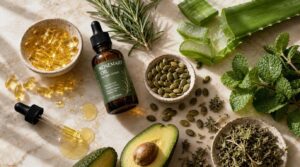
Not every hair struggle looks the same, and what works for shedding won’t necessarily fix breakage or a flaky scalp.
Matching the right ingredients to your actual concern makes a real difference. Here’s a quick breakdown to help you find exactly what your hair needs.
For Slow Growth: Rosemary Oil, Peppermint Oil, Onion Juice
Slow growth frustrates everyone — but these three actives genuinely move the needle. Rosemary oil improves scalp circulation, peppermint oil’s menthol sensation signals real hair follicle stimulation, and onion juice delivers sulfur compounds that rebuild keratin from the root up.
Rosemary, peppermint, and onion juice are the three actives that genuinely move the needle on slow hair growth
| Ingredient | Dilution Ratios & Application Timing | Scalp Cooling & Safety Guidelines |
|---|---|---|
| Rosemary oil | 1 drop per tsp carrier oil; 2–3×/week, 30+ min | Mild warmth; patch test 24 hrs first |
| Peppermint oil | 1 drop per tsp carrier oil; 30–60 min leave-on | Strong scalp cooling; avoid sensitive skin |
| Onion juice | Undiluted; 15–30 min, 2–3×/week | No cooling; rinse thoroughly, watch for staining |
Synergistic blends — like rosemary and peppermint together in jojoba — stack benefits without overwhelming your scalp.
For Shedding: Protein, Iron, Zinc, Omega-3 Fatty Acids
Topical oils handle your scalp, but shedding usually starts from within.
Protein timing matters — eat a quality source at every meal so follicles never run short on keratin-building amino acids. Iron absorption improves when you pair iron-rich foods with vitamin C. Zinc balance is fragile, so don’t over-supplement. Add omega-3 fatty acids daily for nutrient synergy that keeps follicles calm and strands holding on.
For Breakage: Coconut Oil, Rice Water, Egg Masks
Breakage is a strand problem, not a scalp one. Coconut oil massages and coats each fiber with lauric acid, improving protein retention before every wash. Follow up with a rice water rinse — 5 to 15 minutes does the job — for real fiber reinforcement.
Weekly egg masks add temporary structure and heat protection. Application timing matters: always do oils before shampooing, never after.
For Itchy Scalp: Aloe Vera, Tea Tree Oil, Ketoconazole Shampoo
itchy scalp often signals inflammation or fungal imbalance — and that’s a different fix than breakage.
Aloe vera’s soothing gel formulations cool irritation fast and support scalp health without disrupting scalp pH balance.
Add tea tree oil for hair, using proper dilution safety guidelines — never apply it straight.
For persistent flaking, ketoconazole shampoo targets anti-fungal mechanisms directly.
Always follow patch test protocol first.
For Oily Scalp: Salicylic Acid, Green Tea, Lightweight Serums
Oily scalp? That’s a different beast altogether. Salicylic acid for hair works by dissolving excess sebum, so your follicles can actually breathe — use it one to three times weekly for smart exfoliation frequency.
Follow with a green tea rinse to calm inflammation, then layer a non-comedogenic formulation serum.
oil control layering light, and your scalp health stays balanced without the grease.
For Hormone-related Thinning: Rosemary Oil, Green Tea, Ketoconazole
Hormone-related thinning hits differently — and three ingredients actually have clinical trial insights backing them up for androgenetic alopecia.
- Rosemary oil enhances scalp circulation and may work through androgen receptor blockade pathways.
- Green tea’s EGCG targets follicle inflammation and DHT inhibition at the root level.
- Ketoconazole shampoo restores scalp microbiome balance, reducing DHT-linked shedding.
Use all three consistently. Results take months, not days.
For Patchy Regrowth: Onion Juice, Aloe Vera, Gentle Scalp Massage
Patchy spots need patience — and the right trio. Onion juice delivers sulfur compounds that kickstart follicle blood flow and promote hair growth in thinning areas.
Aloe vera follows as your inflammation soothing gel, restoring scalp pH balance for better nutrient penetration.
Then massage it all in gently.
| Ingredient | What It Does |
|---|---|
| Onion Juice | Stimulates follicle activity, promotes keratin |
| Aloe Vera | Soothes inflammation, improves hair shaft elasticity |
| Scalp Massage | Boosts circulation to patchy zones |
| Combined Routine | Enhances natural hair care results overall |
Foods That Support Hair Growth

What you eat matters just as much as what you put on your scalp. Hair is made of protein, and your body needs steady fuel — the right vitamins, minerals, and amino acids — to keep those follicles working.
Here are the foods that actually move the needle.
Lean Proteins for Keratin Production
Your hair is basically made of keratin — and keratin is made of amino acids. That’s why lean proteins matter so much.
Chicken, fish, and lean beef are complete protein sources, meaning they deliver every amino acid your follicles need. Smart protein distribution across meals keeps amino acid timing steady.
For plant-protein pairing, combine lentils with whole grains to cover all bases. Think of leucine-rich foods as your follicles’ favorite fuel for protein synthesis.
Eggs for Protein and Biotin
Eggs might be the most underrated item in your kitchen for hair growth. Each one packs a double hit that your follicles actually need:
- Yolk biotin — about 10 mcg per egg, supporting keratin production
- White protein — roughly 6 g total, delivering a solid amino acid profile
- Cooking heat triggers avidin inactivation, making biotin fully absorbable
- Egg protein hair mask adds direct protein enrichment to damaged strands
Always eat them cooked.
Salmon, Mackerel, and Herring for Omega-3s
Think of salmon, mackerel, and herring as your follicles’ best friends. These fatty fish deliver EPA and DHA — omega-3 fatty acids that reduce scalp inflammation and keep follicle cell membranes working smoothly.
Aim for two 100–170g servings weekly.
Cooking method matters: baking or steaming preserves more omega-3s than deep-frying.
Their synergy with protein makes every bite count twice.
Lentils, Red Meat, and Oysters for Iron
Iron is quietly one of the most underrated players in hair follicle health. Without enough of it, your follicles simply don’t get the oxygen they need to grow.
- Lentil Iron Boost: 1 cup delivers 6 mg iron — pair with vitamin C for better absorption (Vitamin C Synergy works here).
- Red Meat Heme iron absorbs faster than plant sources.
- Oyster Iron Rich: 8 mg per 3 oz serving.
- Consistent intake beats one big dose — spread these nutrient-rich foods across your week to fight iron deficiency and support real hair growth.
Pumpkin Seeds, Chickpeas, and Oysters for Zinc
Zinc quietly keeps hair follicles dividing and repairing — and without enough of it, shedding creeps up fast.
| Food | Zinc Per Serving |
|---|---|
| Oysters (3 oz) | ~74 mg |
| Pumpkin seeds (1 oz) | ~15% daily value |
| Chickpeas (½ cup cooked) | ~1.5 mg |
Seafood Zinc Boost from oysters wins outright. For Plant Zinc Synergy, soak chickpeas first — Phytate Reduction genuinely improves Zinc Bioavailability from these dietary sources of zinc.
Almonds, Sunflower Seeds, and Sweet Potatoes for Biotin
Biotin — or vitamin B7 — is one of those quiet workhorses for keratin production.
Almond biotin content sits around 1.5 mcg per ounce, sunflower seed dosage delivers about 2.6 mcg per quarter-cup, and a sweet potato serving gives you roughly 2.4 mcg per half-cup.
These biotin-rich foods won’t flood your system, but consistent intake genuinely nurtures hair nutrition over time.
Whole Grains for B Vitamins and Steady Nutrient Support
Whole grains are quietly doing a lot of heavy lifting. Brown rice, oats, and barley are B‑Vitamin Rich Grains packed with thiamin, niacin, riboflavin, and folate — all working together for Micronutrient Synergy that promotes follicle cell activity.
Steady Fiber Release keeps nutrient levels consistent throughout the day.
As dietary sources of hair‑building nutrients, they’re some of the most underrated whole-grain, nutrient‑rich foods you can eat.
Collagen Powder for Hair-shaft Strength and Elasticity
Beyond grains, collagen powder quietly earns its place here too.
About 10 grams daily — mixed into your morning coffee or smoothie — delivers hydrolyzed peptides that support strand cohesion and hair shaft flexibility.
Pair it with a vitamin C boost for better absorption.
These hydrolyzed proteins aid keratin synthesis and help with protein loss prevention, making each strand noticeably less brittle over time.
DIY Hair Growth Treatment Recipes
You don’t need a medicine cabinet full of expensive products to get started. Most of these recipes use ingredients you probably already have in your kitchen.
Here are nine simple treatments worth adding to your routine.
Rosemary Oil Diluted With Jojoba or Grapeseed Oil
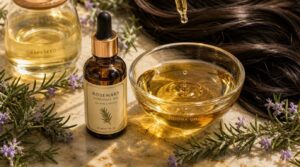
Keep it simple: mix 1–2 drops of rosemary oil per teaspoon of jojoba or grapeseed carrier oil.
Jojoba mimics your scalp’s natural sebum, so absorption speed is fast with minimal grease. Grapeseed suits oily or fine hair better. Both offer great stability factors.
Follow sensitivity guidelines — patch test first — and apply 2–3 times weekly for real hair growth results.
Warm Coconut Oil Scalp Massage

Warm coconut oil is one of the easiest wins for your scalp. Gently heat it until just liquid — always check temperature safety by testing on your wrist first. Then massage using light circular pressure for 5–10 minutes, 2–3 times weekly.
- Blood flow stimulation: Gentle massage pressure boosts blood circulation to the scalp
- Scalp moisture retention: Coconut oil forms a protective layer that locks hydration in
- Application timing: Leave it on for 30–60 minutes, then shampoo twice to remove buildup
Castor Oil Blended With Coconut Oil
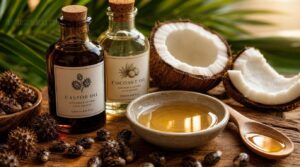
Castor oil alone is like trying to spread cold honey — thick, sticky, and frustrating. Blending it with coconut oil fixes that instantly. The right mixing ratio is 1 part castor oil to 2–3 parts coconut oil, which lowers overall viscosity and improves spreadability tips dramatically. Temperature sensitivity matters too: warm the blend slightly for easier application near hair follicles.
| Factor | Castor Oil | Coconut Oil Blend |
|---|---|---|
| Viscosity Ratio | High | Balanced |
| Shelf Life | 1–2 years | 1–2 years |
| Scalp Spreadability | Difficult | Easy |
Onion Juice and Aloe Vera Pre-wash Treatment
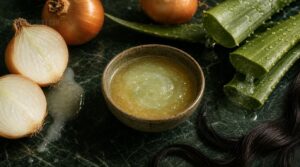
Onion juice sounds intense — and honestly, it is. But pair it with aloe vera, and you’ve got one of the most effective DIY scalp treatment recipes out there.
Follow mix ratio guidelines of 1 part onion juice to 3 parts aloe vera gel. Apply using circular scalp massage technique for two to three minutes, leave 20–30 minutes, then rinse.
For odor neutralization tips, shampoo immediately after. Stick to treatment frequency recommendations of once or twice weekly for real hair growth results.
Fermented Rice Water Rinse
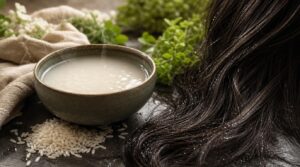
Fermented rice water is one of those quiet overachievers. Let rice soak 24–48 hours at room temperature — fermentation length matters here.
That acidic pH does real work: cuticle smoothing happens naturally, leaving strands shinier and less prone to breakage.
Rinse your scalp for 10–20 minutes once or twice weekly. This nutrient-rich rinse delivers protein and amino acids straight to your scalp microbiome.
Store it refrigerated; shelf-life storage tops out around seven days.
Fenugreek Seed Scalp Paste
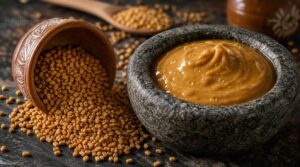
Fenugreek seeds punch well above their weight. Soak 2–3 tablespoons overnight, then blend into a smooth paste.
Their saponin benefits and anti-inflammatory action support DHT inhibition while delivering protein straight to your roots.
Apply to your scalp 30–40 minutes weekly — scalp pH modulation happens quietly in the background.
Always do an allergy patch test first. Hair growth rewards consistency.
Egg and Olive Oil Protein Mask
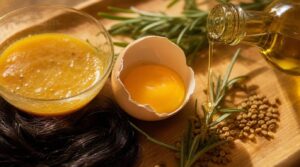
Your fenugreek paste strengthened roots — now let’s feed the strands themselves.
Crack one egg into a clean bowl, add 1–2 tablespoons of olive oil, and whisk. That’s your mix ratio sorted.
- Apply mid-lengths to ends for 15–20 minutes
- Rinse with lukewarm water — never hot
- Use immediately; storage hygiene matters with raw egg
This protein-rich DIY hair mask promotes hair strengthening and moisture retention beautifully.
Green Tea Scalp Rinse
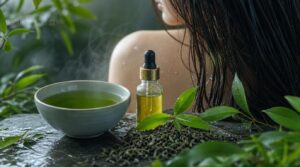
After that protein boost, give your scalp some antioxidant love.
Brew green tea using 1–2 teaspoons of leaves per cup, steep 5–10 minutes, then cool it down. Add a little glycerin for slip and panthenol for conditioning.
Pour or mist it onto your clean scalp, leave it 5–10 minutes, and rinse. EGCG’s antioxidant properties work quietly to support hair growth and calm irritation.
Aloe Vera Gel Scalp Mask
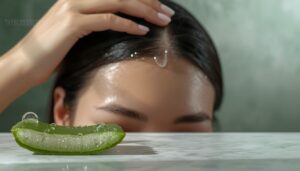
Now, cool it down — your scalp’s turn for some real hydration.
Scoop 2–3 tablespoons of pure aloe vera gel and apply it directly to your scalp. Its acemannan hydration locks moisture in, while its natural pH optimization keeps your skin barrier balanced. Gel film formation seals everything in place. Leave it 20–30 minutes, rinse, and repeat twice weekly for noticeable results.
How to Use Ingredients Correctly
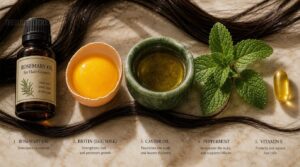
Good ingredients only work when you use them right — in the right order, at the right frequency, with a little patience.
Think of your routine as a simple five-step rhythm that your scalp can actually respond to. Here’s how to build it.
Step 1: Cleanse With a Gentle or Exfoliating Shampoo
Think of cleansing as clearing the runway before takeoff — your scalp needs a clean surface to absorb everything you apply next. Surfactant selection matters here.
Skip sodium lauryl sulfate and reach for sulfate-free shampoos with gentle exfoliant options like salicylic acid.
Scalp pH optimization keeps things balanced around 4.5–6.0. Use lukewarm water for rinse temperature control, and limit scalp exfoliation to once or twice weekly for smart hard water management.
Step 2: Apply Lightweight Scalp Actives First
Once your scalp is clean, timing between actives matters more than most people realize. Apply lightweight serums — niacinamide or rosemary oil with proper carrier oil dilution — directly to your scalp using the sectioning technique: part hair into quarters and work crown-outward.
- Use fingertips, not palms, for even distribution
- Target thinning spots with a dropper for precision
- Let leave-on absorption happen before layering anything heavier
Step 3: Massage Oils Into The Scalp Consistently
Aim for three to five sessions per week — that’s your sweet spot for session frequency. Dilute your rosemary oil or castor oil using proper oil dilution (about 1–2% essential oil in the carrier).
Then work through scalp sectioning, massaging in small circles with gentle massage pressure for five to ten minutes. Pre-wash timing works best, letting the oil sit before shampooing.
Consistent blood flow to scalp is what unlocks the real benefits of scalp massage for hair health.
Step 4: Hydrate With Aloe Vera or Hyaluronic Acid
After rinsing out your oils, damp hair application is your window — don’t wait until hair is fully dry. Pat it down, then smooth on aloe vera gel or hyaluronic acid for hair serum.
Both excel at scalp hydration and moisture retention without heaviness.
For leave‑in vs rinse options, aloe works either way. Keep product viscosity light and water temperature cool.
Step 5: Seal Dry Strands With Coconut or Castor Oil
Now your hair’s thirsty strands are ready for the final lock-in. Damp-to-dry sealing is where the magic actually sticks.
- Light oil dosage: A few drops of coconut oil — no more than a teaspoon — are your post-wash moisture trap. Overdo it, and hair goes limp fast.
- End-focused application: Castor oil belongs on mid-lengths and ends only. That’s where breakage lives.
- Buildup control routine: Limit oil sealing to after washes, never daily.
Patch Test Essential Oils Before Full Use
Before putting any essential oil on your whole scalp, do a patch test first — skip this step and you risk a full-blown reaction.
Mix 1–2 drops into a teaspoon of carrier oil (jojoba works great), dab a small amount behind your ear, and wait 24 hours.
Watch for allergy symptoms like redness or itching.
Keep a simple documentation log of each essential oil dilution you try.
Avoid Overusing Strong Exfoliants
More isn’t better regarding scalp peels and exfoliants. Stick to frequency limits — once weekly is plenty for most people, twice only if your scalp shows zero irritation.
Watch for irritation indicators like burning, redness, or extra flaking; those are your barrier protection alarms going off.
After exfoliating, always prioritize post-exfoliation hydration and mild cleansing options between sessions.
For guidance on what to wear, check out these spray tan clothing tips to avoid lines and protect your results while your skin stays moisturized.
Track Results for at Least Three to Six Months
Scalp care is slow work — and that’s not a bad thing. A clinical study comparing rosemary oil to minoxidil ran six full months before seeing real density shifts.
That’s the timeline for natural hair growth results you’re working with. Start a Photo Consistency Guide every two weeks, add a Shedding Tally Method weekly, try Swatch Hair Counting, a Length Tracking Routine, and an Adherence Monitoring Sheet to catch honest progress.
Rotate Ingredients to Avoid Scalp Irritation
Now that you’re tracking results, think about what you’re putting on your scalp and how often. Rotating ingredients — Active Rotation — prevents repeated irritation from the same active. Practice Category Swapping, like swapping rosemary oil for aloe gel.
Use a Scalp Rest Cycle weekly.
Irritation Tracking and Frequency Limiting help catch scalp sensitivity early.
Always patch test first.
Top 5 Hair Growth Products
You don’t need a cabinet full of products to see real results. These five picks use the same ingredients we’ve talked about — just in ready-to-use forms that take the guesswork out of it.
Here’s worth your time and money.
1. Seven Minerals Organic Aloe Vera Gel
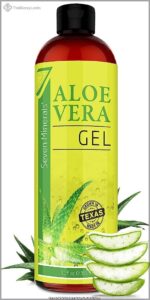
Seven Minerals Organic Aloe Vera Gel keeps it refreshingly simple — just five core ingredients, led by 98.7% freshly cut aloe straight from Southern Texas farms. No powder fillers, no alcohol, no synthetic thickeners.
The natural agar base gives it a light, non-sticky feel that absorbs quickly into your scalp.
Massage it in two to three times weekly to calm follicle inflammation and reduce dryness.
At $16.95 for 12 oz, it’s a clean, certified-organic option worth keeping in your routine.
| Best For | Anyone with dry, sensitive, or eczema-prone skin who wants a clean, no-nonsense aloe gel for soothing irritation, daily moisturizing, or scalp care. |
|---|---|
| Primary Use | Scalp & skin care |
| Volume | 12 fl oz |
| Price | $16.95 |
| Key Ingredient | Aloe vera |
| Packaging | Pump bottle |
| Additive-Free | No preservatives or colorants |
| Additional Features |
|
- Made from freshly cut aloe — no powders, fillers, or synthetic thickeners, just the real thing
- Absorbs fast and leaves no sticky residue, so it works well on the scalp, face, and body
- NSF Organic and IASC certified, vegan, unscented, and free from alcohol and preservatives
- The pump can be a pain — some people have to ditch it entirely just to get the gel out
- It’s on the thinner side, which can feel a little too watery when you’re covering larger areas
- At $16.95, it costs more than most drugstore aloe gels, so heavy daily use adds up fast
2. Organic Virgin Coconut Oil
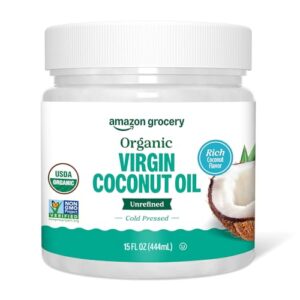
Next up is something you probably already have in your kitchen. Organic virgin coconut oil — USDA-certified, Non-GMO verified — pulls double duty as a scalp conditioner and protein protector.
It actually penetrates the hair shaft rather than just sitting on top, which cuts protein loss during washing by up to 25%.
Warm a small amount between your palms, massage it in two to three times weekly, and leave it on for at least 30 minutes before shampooing.
Simple, affordable, and genuinely effective.
| Best For | Anyone looking for a versatile, chemical-free way to condition their scalp and reduce protein loss during washing. |
|---|---|
| Primary Use | Hair & skin moisture |
| Volume | 15 fl oz |
| Price | Not listed |
| Key Ingredient | Coconut oil |
| Packaging | Wide-mouth jar |
| Additive-Free | 100% coconut oil only |
| Additional Features |
|
- Penetrates the hair shaft instead of just coating it, which actually cuts protein loss during washing
- USDA-certified organic and Non-GMO verified — clean ingredients you can feel good about
- Works beyond hair care too: skin moisturizer, cooking oil, pet-safe, and more
- Solidifies in cooler temps, so you’ll need to warm it up before use
- Can clog pores and trigger breakouts if used too heavily on skin
- May harden in plumbing if you’re not careful about rinsing it out thoroughly
3. SANOOR Himalayan Red Onion Oil
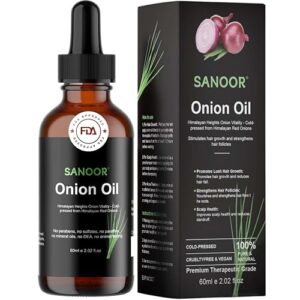
If you want something clean and no-fuss, SANOOR’s Himalayan Red Onion Oil is worth a look. It’s cold-pressed, single-ingredient, and comes in a glass dropper bottle — no plastic, no preservatives.
Just pure red onion oil. Apply a few drops to your scalp two to three times weekly, massage gently, and leave it on for at least 20 minutes before washing.
Clinical research backs onion juice for keratin support and regrowth. At under $9 for 60 ml, it’s genuinely accessible.
| Best For | Anyone who wants a simple, no-additives hair oil that skips the chemical clutter and is easy on the wallet. |
|---|---|
| Primary Use | Scalp hair growth |
| Volume | 60 ml |
| Price | $8.87 |
| Key Ingredient | Red onion oil |
| Packaging | Glass dropper bottle |
| Additive-Free | No preservatives |
| Additional Features |
|
- Single-ingredient formula — you know exactly what you’re putting on your scalp
- Plastic-free glass dropper bottle is a nice touch for eco-conscious buyers
- At under $9 for 60 ml, it’s easy to try without much risk
- The onion smell can be a dealbreaker, especially if you’re sensitive to strong scents
- Results vary — some users see real improvement, others notice nothing
- The glass bottle is fragile, and 60 ml goes fast if you’re using it regularly
4. Parachute Onion Coconut Hair Oil
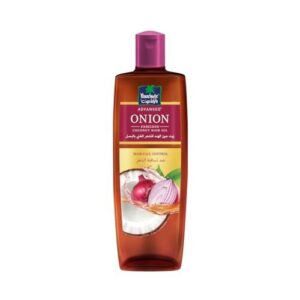
Parachute Onion Coconut Hair Oil gives you two proven actives — onion and coconut — in one easy bottle.
The coconut base helps cut protein loss and reduce breakage, while the onion targets your scalp environment for fuller-looking growth over time.
It’s non-sticky, rinses clean, and works as a pre-wash treatment.
Massage it in, leave it for an hour, then shampoo out.
At 300 ml, it lasts a while. Just note — it’s for general hair health, not severe loss.
| Best For | Anyone dealing with hair fall, dryness, or dull strands who wants a simple, everyday oil that actually smells good and doesn’t feel like a chore to use. |
|---|---|
| Primary Use | Hair root activation |
| Volume | 10.14 fl oz |
| Price | Not listed |
| Key Ingredient | Onion & coconut oil |
| Packaging | Standard bottle |
| Additive-Free | No noted additives |
| Additional Features |
|
- Combines onion and coconut oil so you get scalp care and moisture in one shot
- Light, pleasant fragrance and non-sticky — doesn’t feel heavy or greasy if you use the right amount
- Versatile enough to use pre-wash, post-wash, or even before heat styling
- Can feel too oily for some people, especially on fine hair — may need to dilute it or use a spray bottle
- Not the right pick if you’re dealing with serious hair loss — it’s a general wellness oil, not a treatment
- The scent, though mild, might not work for anyone with a sensitive scalp or fragrance sensitivity
5. Handcraft Premium Rosemary Essential Oil
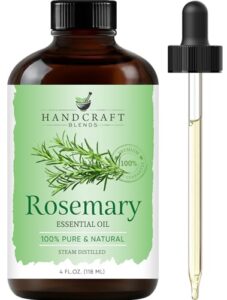
Rosemary oil is the one active I recommend most often, and Handcraft’s version earns that spot on your shelf.
It’s 100% pure, steam-distilled, and third-party tested — no fillers, no synthetic shortcuts.
That matters because diluted oils simply don’t deliver the same scalp circulation benefits.
Mix 3–4 drops into a tablespoon of jojoba oil, massage it in, and leave it for 30 minutes.
Do that twice a week, and you’re following the same protocol that matched 2% minoxidil results in clinical trials.
| Best For | Anyone looking for a clean, versatile rosemary oil — especially people using it for hair care, DIY personal care products, or aromatherapy. |
|---|---|
| Primary Use | Scalp hair health |
| Volume | 4 fl oz |
| Price | $12.99 |
| Key Ingredient | Rosemary essential oil |
| Packaging | Amber glass dropper |
| Additive-Free | No fillers or synthetics |
| Additional Features |
|
- 100% pure and third-party verified, so you know exactly what you’re getting — no mystery fillers or synthetic additives.
- Comes in a solid amber glass bottle with a dropper, which protects the oil and makes it easy to measure out the right amount.
- Works for a ton of uses — diffusing, scalp treatments, homemade soaps, candles — so one bottle goes a long way.
- The scent is seriously strong, which can be overwhelming if you’re sensitive to smells or prefer something subtle.
- At $12.99 for 4 oz, it’s not the cheapest option out there, and heavy users will burn through it faster than expected.
- The glass bottle looks nice but drops easily and can shatter — worth being careful around tile floors or bathroom sinks.
Frequently Asked Questions (FAQs)
Will HRT make my hair grow?
It might, but it’s not a sure thing. HRT can help hair stay in the growth phase longer — especially when thinning is hormone-driven. Results take months, not days.
Can stress cause hair to stop growing?
Yes, stress really can slow or stop hair growth. It pushes follicles into a prolonged resting phase, delaying regrowth.
Once stress drops, your follicles gradually wake back up and start cycling again.
How long does hair actually grow per month?
On average, your hair grows about 9 to 15 millimeters per month — roughly half an inch. It doesn’t sound like much, but that’s completely normal.
Does scalp massage alone speed up growth?
Scalp massage can help — but it’s not the whole story. About 4 minutes daily may boost thickness over months.
It won’t override genetics or hormones, though. Think of it as support, not a solution.
Can hair grow faster after a big cut?
No. A big cut doesn’t make your follicles work harder. Hair grows about 1 to 5 centimeters monthly regardless. What changes is breakage drops, so more of that growth actually stays visible.
Conclusion
Here’s a funny coincidence—the ingredients that make hair grow faster have been sitting in your kitchen and medicine cabinet all along.
Rosemary on your shelf. Coconut oil by the stove. Eggs in the fridge.
Your scalp doesn’t need a miracle. It needs consistency, the right tools, and a little patience.
Start with one or two ingredients. Give it three months.
Your follicles are already listening—you just have to show up.