This site is supported by our readers. We may earn a commission, at no cost to you, if you purchase through links. This content is for general informational and educational purposes only and is not a substitute for professional medical, dermatological, or nutritional advice.
Most hair serums can’t regrow hair—and the ones that can only work under specific conditions. That’s not pessimism; it’s the distinction that separates people who see results from those who spend months on a product that was never going to help them.
The difference comes down to what’s actually happening at the follicle level, because thinning hair from chronic stress looks nothing like thinning hair driven by DHT, and they don’t respond to the same treatments. Knowing whether your follicles are dormant or gone, inflamed or starved, is the first real step.
What follows breaks down the science, the ingredients with actual clinical backing, and how to apply serums in a way that gives them a fighting chance.
Table Of Contents
- Key Takeaways
- Can Hair Serums Regrow Thinning Hair?
- Common Causes of Thinning Hair
- Ingredients That Support Hair Growth
- Top 7 Hair Serums for Thinning Hair
- How to Apply Hair Serum Correctly
- Results, Risks, and Limitations
- Frequently Asked Questions (FAQs)
- Can hair loss serum regrow hair?
- Do people with Ehlers Danlos have thin hair?
- What to do for GLP-1 hair loss?
- Can hair serums be used during pregnancy?
- Do hair serums work differently for men and women?
- Can you use multiple hair serums at once?
- Does hair type affect how well serums work?
- Are hair serums safe for color-treated hair?
- Conclusion
Key Takeaways
- Hair serums can genuinely regrow thinning hair — but only if your follicles are dormant, not dead; once they’re gone, no dropper bottle brings them back.
- The root cause of your hair loss dictates everything — DHT-driven thinning, stress shedding, and nutrient deficiency each demands a different ingredient, so buying blind is just burning money.
- Minoxidil is the only FDA-approved topical for pattern loss, but stopping it hands control back to your biology — regrowth reverses within months, so it’s a long-term commitment, not a quick fix.
- Real results take three to six months of daily, consistent use on a clean scalp — if you’re judging at week two, you’re not giving the science a fair shot.
Can Hair Serums Regrow Thinning Hair?
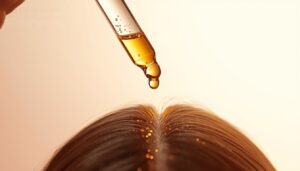
The honest answer is: it depends. Hair serums can support real regrowth — but only under the right conditions, and not for every type of hair loss.
The same logic applies to shampoos — and understanding where shampoo actually fits in the hair loss picture helps set realistic expectations before you invest in any product.
Here’s what actually determines whether a serum will work for you.
When Hair Serums May Support Visible Regrowth
Hair serums can support visible regrowth — but only under the right conditions. Clinical evidence supporting topical hair treatments shows they work best when follicle dormancy is the issue, not permanent follicle loss.
Miniaturized follicle reactivation is possible when scalp microcirculation improves and barrier permeability allows active ingredients to reach the root. Think of it as waking sleeping follicles, not rebuilding destroyed ones.
Clinical studies show that a minoxidil 5% serum can increase follicular blood flow within weeks.
Why Serums Work Better for Early Thinning
Timing is everything here. Your follicles don’t flip off like a switch — early thinning means most are still active, just struggling. That’s when follicle receptivity is highest, and serums can actually deliver.
Caffeine provides a microcirculation boost, peptides support early cycle support and nutrient delivery, and barrier restoration keeps actives where they belong.
Scalp health and its impact on hair density is real — and clinical evidence supporting topical hair treatments confirms it.
Difference Between Regrowth, Reduced Shedding, and Thicker-looking Hair
Three outcomes aren’t the same thing — and mixing them up leads to frustration. Reduced shedding comes first, usually within weeks. New short hairs signal true regrowth, though cycle phase overlap means you can shed and regrow simultaneously.
Perceived thickness tricks your eye through strand diameter changes, not follicle miniaturization signs reversing. Shedding rate metrics and hair density are separate wins — hair regrowth therapy targets both, but on different timelines.
Why Genetic Hair Loss Usually Needs Ongoing Treatment
Genetic balding doesn’t take breaks — and neither can your treatment. Chronic androgen sensitivity means follicles continuously receive DHT signals, driving ongoing miniaturization in androgenetic alopecia.
Pairing your regimen with natural supports like pumpkin seed oil for hair growth can help nourish follicles while medication works on the hormonal side.
That’s why identifying what disrupts the hair growth cycle matters so much — it’s the first step toward targeting DHT’s relentless effect on follicles.
Stopping minoxidil triggers DHT rebound within months. This follicle cycle shift rapidly reverses progress, as the biological process demands uninterrupted intervention.
Relapse upon cessation isn’t a product flaw — it’s biology demanding consistency.
Stopping treatment doesn’t pause your biology — it surrenders to it
When Thinning Hair is Unlikely to Respond to Serum Alone
Some thinning simply won’t budge with a serum. Late-stage miniaturization, follicle depletion, and hormone-driven resistance from long-standing androgenetic alopecia put real limits on what any topical can do. Persistent scalp irritation compounds the problem.
At that stage, irreversible alopecia needs more than a dropper bottle — think nonsurgical hair restoration options like platelet-rich plasma (PRP) or low-level laser devices, or even surgical hair transplants.
Common Causes of Thinning Hair

Before you buy a single serum, it helps to know what’s actually driving your hair loss. The cause shapes everything — which ingredients matter, how long treatment takes, and whether a serum can do anything at all.
Here are the most common reasons hair starts thinning.
Stress-related Shedding and Temporary Hair Loss
Stress can quietly hijack your hair cycle before you even notice it.
- Trigger identification — a stressor (illness, trauma, burnout) shifts follicles into rest mode
- Shedding timeline — visible loss appears 6–12 weeks after the trigger
- Stress biomarkers — diffuse thinning across the scalp, not patchy loss
- Recovery prognosis — once the trigger resolves, most people’s hair regrows within 3–6 months
Preventive self-care starts with recognizing the pattern early.
Nutrient Deficiencies Linked to Thinning Hair
What you eat—or don’t eat—can quietly undermine your follicles from the inside out. Iron levels, Vitamin D status, Zinc insufficiency, and Dietary protein all directly affect hair structure and shedding. Biotin testing can reveal deficiency worth correcting.
| Nutrient | What Happens When It’s Low |
|---|---|
| Iron | Reduced oxygen to follicles, increased shedding |
| Vitamin D | Disrupted follicle cycling, thinning worsens |
| Zinc | Impaired keratin production, dry scalp |
| Biotin | Increased breakage, confirmed via blood test |
Micronutrient supplementation for hair works best when you’ve confirmed actual deficiency—not just guessed.
Hormonal and Androgenic Hair Loss
Some hair loss isn’t about what’s on your scalp — it’s a battle happening inside your follicles.
- Genetic androgen predisposition determines which follicles respond aggressively to DHT
- 5α-Reductase activity converts testosterone into potent local DHT production at the scalp
- Follicle receptor sensitivity drives androgenetic alopecia’s characteristic patterned thinning
- Hormonal cycle impact explains why women often shed more post-pregnancy or during menopause
- DHT inhibition via saw palmetto, minoxidil mechanism of action, or peptides and exosomes can slow progression
Scalp Buildup, Inflammation, and Poor Follicle Health
Your scalp is a living ecosystem — and when it’s compromised, your follicles pay the price. Sebum Accumulation mixed with Product Residue can physically clog follicle openings, while Microbial Dysbiosis triggers scalp inflammation that weakens the Barrier Disruption response.
Chronic inflammation pushes follicles into early shedding and, in severe cases, Folliculitis Scarring causes permanent damage.
Early intervention matters, as understanding how skin trauma affects hair follicle regrowth can help gauge whether shedding is reversible or a sign of deeper damage.
Anti-inflammatory scalp care and consistent follicle stimulation are your first line of defense.
Why Identifying The Cause Matters Before Choosing a Serum
Choosing a serum without knowing your cause is like treating a fever with sunscreen — it won’t touch the real problem. Cause‑Serum Matching starts with a Diagnostic Checklist: iron levels, hormones, stress-related hair shedding, scalp health, and its impact on hair density.
Mismatched product risks are real — wrong formulas delay your Targeted Treatment Strategy.
When in doubt, professional assessment changes everything.
Ingredients That Support Hair Growth

Not every ingredient in a hair serum earns its place on the label. Some have real clinical data behind them — the kind that shows actual follicle changes, not just shinier strands.
Here’s what’s worth paying attention to.
Minoxidil and FDA-approved Topical Regrowth
Minoxidil is the only FDA-approved topical ingredient for pattern hair loss — and its regulatory status matters because it means real clinical evidence backs it up.
Here’s how it works:
- Widens follicles and extends the anagen (growth) phase
- Concentration variations — 2% for women, 5% for men — affect dosing
- Stopping use reverses gains within months
Rogaine 5 Minoxidil Topical Solution remains the exemplar for topical hair growth solutions.
Caffeine for Scalp Stimulation and Thicker-looking Strands
Caffeine works differently from minoxidil — but it’s no afterthought. It penetrates hair follicles directly, where it triggers cAMP activation by blocking the enzyme that breaks cAMP down. This signals follicle cells to remain metabolically active, supporting anagen-prolongation and reducing shedding. Its antioxidant protection also guards against follicle damage over time.
Of course, caffeine works best alongside a solid nutritional foundation, so it’s worth pairing it with the right vitamins and minerals for hair growth — just get your levels tested first and skip the biotin before bloodwork.
For scalp circulation and the role of caffeine in promoting hair thickness, The INKEY List Caffeine Stimulating Scalp Treatment puts that dose concentration to practical use in hair serums.
Peptides for Follicle Support and Density Improvement
Peptides go deeper than surface-level thickening. Through matrix signaling, ingredients like acetyl tetrapeptide and GHK copper reinforce follicle anchoring by rebuilding collagen and laminin around each follicle. This mechanism demonstrates how peptides work at the cellular level to strengthen hair follicles structurally.
Capixyl efficacy data shows roughly 11% density gains over four months, underscoring the role of peptides in hair restoration. This highlights actual follicle activation through peptide technology, not cosmetic illusion. The results confirm that peptides drive meaningful biological changes to enhance hair growth.
Rosemary Oil as a Natural Growth-support Ingredient
Rosemary oil earns its place here for real reasons. A randomized trial compared its efficacy against 2% minoxidil over six months—a significant study duration. Its antioxidant shield neutralizes free-radical damage, while its anti-inflammatory properties soothe follicle stress. Additionally, its microcirculation boost ensures nutrients effectively reach the follicle.
Formulation potency matters, however. Concentration guidelines vary widely, so verify your serum’s actual percentage to ensure optimal results.
Saw Palmetto and Zinc for DHT-related Thinning
If androgen-driven thinning affects you, consider saw palmetto and zinc. Saw palmetto acts as a natural DHT blocker, inhibiting the enzyme that converts testosterone into DHT. Zinc supports hair follicle function and hormone metabolism. Together, their DHT-blocking synergy targets the root cause of the issue.
Clinical trial variability means individual results may differ. Supplement safety hinges on consistent, appropriate saw palmetto dosage and zinc bioavailability. Always prioritize these factors for effective outcomes.
Biotin Serums and Their Limits for True Regrowth
Biotin gets a lot of credit it hasn’t fully earned — at least on the regrowth front.
It promotes keratin production, but topical follicle penetration remains questionable, and most people aren’t actually deficient. That gap between evidence versus claims matters.
- Nutrient deficiency relevance: biotin only helps if you’re genuinely low
- Clinical evidence supporting topical hair treatments is limited for biotin specifically
- Biotin dosage efficacy drops when follicles are already miniaturized
- No DHT blocker synergy — biotin doesn’t touch androgen pathways
- Biotin and pumpkin seed oil for hair strength may improve shaft condition, not true regrowth
Top 7 Hair Serums for Thinning Hair
Not every serum earns its shelf space — but a few actually deliver on what they promise.
The list below pulls from formulas with real ingredients, clinical backing, or strong user evidence. Here’s what’s worth your attention.
1. Kerastase Initialiste Scalp Hair Serum
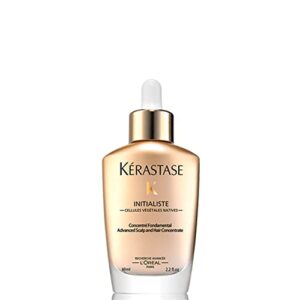
Kérastase Initialiste isn’t your average serum—it’s built around SP94, a gluco-peptide complex that targets keratin-associated proteins to reinforce hair fiber from the inside out.
Apply it straight to the scalp using the pipette, working in clean sections on towel-dried hair. Massage it in and leave it; no rinsing is required.
At $64 for 2.12 oz, it’s a premium commitment. Use it at least three times weekly to achieve a gradual reduction in breakage and improved fiber strength over time.
| Best For | Anyone dealing with hair thinning, breakage, or scalp stress—especially those going through hormonal shifts, perimenopause, or post-chemo recovery. |
|---|---|
| Price | $64.00 |
| Volume | 2.12 oz |
| Application Method | Leave-in scalp |
| Hair Type | All types |
| Vegan Formula | Not specified |
| Key Active | Conditioning agents |
| Additional Features |
|
- Lightweight and non-greasy, so it won’t weigh hair down or feel heavy on the scalp
- Works as a leave-in, making it easy to fold into your existing routine
- Regular users report less shedding and noticeably softer, shinier hair over time
- At $64 for a small 2.12 oz bottle, it’s a steep ask for something you’re using three times a week
- Results take time—most people don’t see real changes until around the 3–4 month mark
- The dark bottle makes it nearly impossible to tell how much product you have left
2. Sephora Collection Strengthening Hair Serum
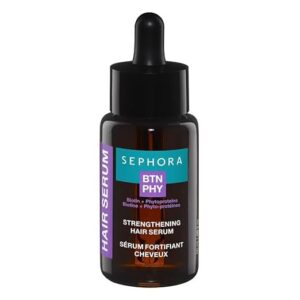
At $29.99, the Sephora Collection Strengthening Hair Serum punches above its price point. It pairs biotin with vegetal proteins—structurally similar to keratin—to reinforce the hair fiber and reduce breakage over time.
Apply a few drops to your dry or damp scalp each evening, massage it in, and leave it; no rinsing is needed. In a small 20-volunteer test, users saw measurable density gains after 28 days.
Note that: Biotin aids fiber resilience more than true regrowth.
| Best For | Anyone with fine, thinning, or damaged hair who wants a lightweight daily strengthening treatment without spending a lot. |
|---|---|
| Price | $29.99 |
| Volume | 1.69 oz |
| Application Method | Damp or dry hair |
| Hair Type | Fine or thinning |
| Vegan Formula | Not specified |
| Key Active | Biotin & phytoproteins |
| Additional Features |
|
- Biotin and plant-based phytoproteins work together to reduce breakage and build hair resilience over time.
- Lightweight serum texture means no heavy or greasy residue — just apply and go.
- At $29.99, it’s an affordable option compared to most salon-grade treatments.
- The 1.69 oz bottle is pretty small, so daily users will likely need to restock often.
- No independent reviews or clinical data to back up the efficacy claims.
- The full ingredient list isn’t public, which makes it tricky to know if it’s safe for sensitive scalps or certain hair types.
3. Rene Furterer Reactional Hair Serum
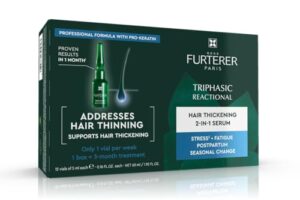
If your hair started falling out after childbirth, illness, or a rough stretch of stress, the Rene Furterer Triphasic Reactional Serum was built exactly for that scenario. It targets temporary, reactional thinning — not pattern baldness.
The formula combines Bio Propolis to boost keratin production, zinc gluconate as a natural DHT blocker, and a Lotus Mineral Complex to support scalp microcirculation.
One application weekly for three months is all it takes — no daily commitment required. Brand data reports pro-volume results in 92% of users from the first month.
Note: Best suited for stress- or event-triggered shedding only.
| Best For | People experiencing temporary hair thinning triggered by postpartum changes, stress, illness, or dietary shifts who want a drug-free option safe for breastfeeding. |
|---|---|
| Price | Not listed |
| Volume | 4.8 oz |
| Application Method | Direct scalp applicator |
| Hair Type | All types |
| Vegan Formula | Not specified |
| Key Active | Drug-free botanical |
| Additional Features |
|
- Drug-free and dermatologist-tested, so it’s a low-risk pick — especially for breastfeeding moms
- Easy scalp-direct application with a snap-off tip; no rinsing needed
- Targets the root cause of reactional thinning with ingredients like zinc gluconate and Bio Propolis
- Only works for temporary, event-triggered shedding — won’t help with pattern hair loss
- No independent clinical data to back up the brand’s claimed results
- Requires consistent daily use over three months, which can feel like a lot to keep up with
4. Briogeo Density Serum Caffeine Biotin
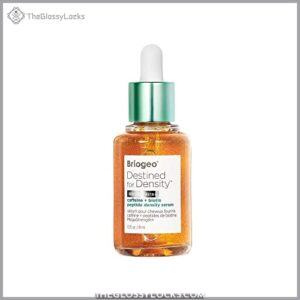
Three actives, one goal — Briogeo’s Density Serum delivers them without the greasy residue that kills motivation for consistency. Caffeine stimulates microcirculation, copper tri-peptide 34 aids hair growth cycles, and biotin reinforces strand elasticity.
The formula is 97% naturally derived, fragrance-free, and safe for color-treated hair.
Clinical testing showed up to a 3× increase in hair density at 16 weeks. Apply 1–2 drops daily, massage in, and allow at least four months for results.
| Best For | Anyone dealing with fine, thinning, or hormone-related hair loss who wants a clean, fragrance-free serum they can use daily without weighing their hair down. |
|---|---|
| Price | $57.00 |
| Volume | 2 oz |
| Application Method | Leave-in scalp |
| Hair Type | All types |
| Vegan Formula | Yes |
| Key Active | Caffeine, biotin, peptides |
| Additional Features |
|
- Clinically backed — up to 3× hair density increase after 16 weeks, with a solid active trio of caffeine, biotin, and copper peptides.
- Clean formula that’s 97% naturally derived, vegan, and safe for color-treated hair without any greasy residue.
- Works across all hair types, so it’s a versatile pick whether you have straight, curly, or chemically processed hair.
- Results take time — most people don’t see noticeable changes for three to four months of consistent daily use.
- Some users report a sticky or slightly oily feel, and a few noticed an "unwashed" look after applying.
- At $57 for just 2 oz, it’s pricey — and if you’re applying twice daily, that bottle won’t last as long as you’d hope.
5. The Nue Supa Thick Hair Growth Serum

Where Briogeo leans on caffeine and peptides, The Nue Co. Supa Thick takes a different angle — your scalp’s microbiome. The formula pairs probiotics and prebiotics with rosemary leaf oil, zinc, and plant extracts to target follicle stem cells and dermal papilla cells directly. That’s deeper than most serums go.
Its lightweight, non-greasy texture is designed for a routine applied a few times weekly, before washing. Results require patience, as they may take 60-plus days to manifest. However, the microbiome-first approach justifies the wait.
| Best For | Anyone focused on scalp health who wants a clean, plant-based serum and is willing to play the long game for thicker-looking hair. |
|---|---|
| Price | Not listed |
| Volume | 4 oz |
| Application Method | Direct scalp applicator |
| Hair Type | All types |
| Vegan Formula | Yes |
| Key Active | Prebiotic-probiotic blend |
| Additional Features |
|
- Targets the scalp microbiome with a prebiotic-probiotic blend — a smarter, deeper approach than most serums
- Lightweight and non-greasy, so it won’t weigh hair down or leave residue
- Vegan, plant-based formula with a built-in applicator that makes weekly use easy
- Results can take 60-plus days, and some users never see a noticeable difference
- Small 4 oz bottle at a premium price means you’re repurchasing often
- The rosemary/peppermint scent is strong — refreshing for most, but a dealbreaker for some
6. Vegamour GRO Hair Growth Serum
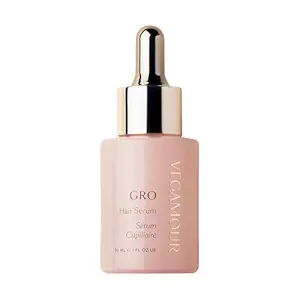
Vegamour GRO takes a plant-first approach — think curcumin stem-cell extract, red clover, and mung bean, paired with caffeine and biotin. No hormones, no silicones, just a lightweight water-based dropper serum you apply daily with a quick 30-second massage.
Around 90 days in, most users report noticeably less shedding and fuller-looking hair. It won’t work miracles on late-stage thinning, but for early-stage loss, it’s a clean, vegan option worth your attention at $44.80 per month.
| Best For | People in the early stages of hair thinning or shedding who want a clean, vegan-friendly serum without hormones or harsh chemicals. |
|---|---|
| Price | $44.80 |
| Volume | 1 oz |
| Application Method | Dropper scalp |
| Hair Type | All types |
| Vegan Formula | Yes |
| Key Active | Curcumin, red clover, caffeine |
| Additional Features |
|
- Plant-based formula with no silicones, hormones, or animal-derived ingredients — great if you’re keeping things clean and natural
- Lightweight and easy to use — just a dropper and a 30-second scalp massage each day
- Most users notice less shedding and fuller-looking hair around the 90-day mark
- Results aren’t guaranteed — a good chunk of reviewers saw no new growth or even more shedding
- At $44.80 for a 30-day supply, the cost adds up fast, especially since you need to stay consistent long-term
- The water-based formula can mess with your styling, and some buyers reported damaged packaging on arrival
7. Vitality Extracts Hair Growth Serum
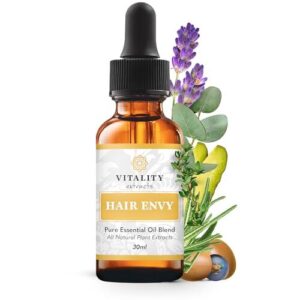
Vitality Extracts offers a plant-powered solution with 15 pure essential oils, including rosemary, argan, and castor. Each ingredient undergoes GC-MS testing and contains zero synthetic additives, ensuring a natural formulation.
At $30.85 for 2.4 oz, it stands out as one of the more affordable options, blending accessibility with quality.
Rosemary, a key component, boasts clinical backing comparable to 2% minoxidil, elevating the formula beyond mere aromatherapy.
A fair warning: the high oil content may weigh down fine hair. For best results, apply sparingly to a clean scalp and allow it to work effectively.
| Best For | Anyone looking for a clean, plant-based hair growth serum — especially those with dry, thinning, colored, or damaged hair who want to avoid synthetic ingredients. |
|---|---|
| Price | $30.85 |
| Volume | 2.4 oz |
| Application Method | Leave-in scalp |
| Hair Type | All types |
| Vegan Formula | Yes |
| Key Active | 15 plant-based oils |
| Additional Features |
|
- Packed with 15 essential oils (including rosemary, argan, and castor) that are GC-MS tested for purity — no fillers, no synthetics
- Works for a wide range of hair types and concerns, from thinning edges to scalp eczema
- At $30.85, it’s an affordable option that doesn’t skimp on ingredient quality
- High oil content can leave fine or oily hair feeling greasy, so a little goes a long way
- Essential oils can cause mild irritation near the eyes — use carefully if applying to brows or lashes
- Comes with no instructions or packaging, so you’re on your own figuring out how to use it
How to Apply Hair Serum Correctly
Getting the right serum is only half the battle—how you use it determines whether it actually works. Most people apply it incorrectly and wonder why nothing changes.
Here’s what the application process should actually look like.
Apply Directly to a Clean Scalp, Not Just Hair Strands
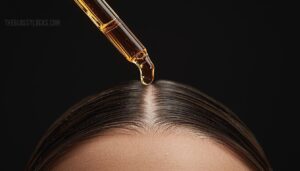
Think of your scalp like soil — serum can’t reach roots buried under residue. Pre-application cleansing clears that path. Apply your hair serum to a damp scalp base after washing, then use sectioned drop placement from hairline to crown.
This residue-free absorption approach ensures targeted follicle contact where thinning actually happens — not just along your strands.
Use Consistent Daily Application for Best Results
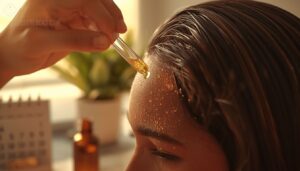
Consistency is your real active ingredient. A daily scalp serum routine for ideal results isn’t about being perfect — it’s about showing up regularly enough that the formula can do its job. Timing consistency matters because hair growth cycles are slow and unforgiving of gaps.
- Same time daily builds scalp tolerance and reduces irritation risk
- Steady absorption optimization means ingredients reach follicles without interruption
- Progress tracking becomes meaningful only after 90 days of honest daily use
- Skipping often makes your application routine impossible to evaluate fairly
Massage The Serum Into Thinning Areas for 60–90 Seconds
Once you’ve applied the serum, work it in with fingertip pressure — never your nails — using slow circular motions across your thinning zones for 60–90 seconds. That brief scalp massage does real work: it drives scalp microcirculation, enhances scalp hydration, and helps ingredients actually reach your follicles.
Keep the amount modest; too much product creates residue buildup that blocks absorption rather than boosting it.
Leave-in Versus Rinse-out Serum Application

Not all serums work the same way — and the format matters. Leave-in formulas stay on your scalp, maximizing contact time and ingredient penetration into each follicle. These methods ensure prolonged interaction with the scalp, enhancing their effectiveness.
Rinse-out treatments deposit actives quickly, then wash away, leaving minimal film residue. For a daily scalp serum routine focused on hair density, leave-in application methods usually outperform rinse-out ones — they simply do more work.
How Long to Wait Before Judging Results

Give it time — real time. Hair doesn’t follow your schedule. Here’s a practical visible results timeline to keep you grounded:
- Weeks 1–6: Take baseline photos; track shedding, not growth
- Week 6–8: Your patience threshold — reduced shedding often appears first
- Month 3: The true evaluation period; clinical studies evaluate progress here
- Month 6+: Progress indicators for genetic thinning; adjustment timing matters if nothing’s shifted
Results, Risks, and Limitations

Hair serums can do real things — but they won’t work overnight, and they’re not without trade-offs. Knowing what to expect upfront saves you from quitting too early or missing a warning sign worth acting on.
Here’s what the evidence actually says about results, risks, and where serums hit their limits.
Expected Timeline for Reduced Shedding
Don’t expect overnight miracles — hair operates on its own timeline, and that’s non-negotiable. Due to Shedding Cycle Lag, hairs already mid-shed will keep falling even after you start. Clinical evidence supporting topical hair treatments shows an Early Shedding Drop usually arrives at weeks 4–6 with consistent daily use.
| Week Range | What to Expect |
|---|---|
| Week 1–3 | No visible change |
| Week 4–6 | Early shedding drop begins |
| Week 7–10 | Shedding slows noticeably |
| Week 11–16 | Cycle-dependent improvements emerge |
| Week 17+ | Visible results timeline solidifies |
Your consistency’s impact directly controls your outcome. A daily scalp serum routine for best possible results isn’t optional — it’s the whole strategy for hair thinning management strategies that actually stick.
When Baby Hairs or Density Changes May Appear
Baby hairs don’t announce themselves — they sneak in quietly. Because of follicle activation lag and cycle latency period, new growth usually surfaces between weeks 3–6.
Here’s what to watch for:
- Fine strands at the hairline emergence pattern zones
- Gradual hair density shifts from improved scalp health
- Dermal papilla activation visible as soft, shorter regrowth
- Stress recovery window improvements showing reduced daily shedding
- Seasonal growth variation influencing peptide-supported regrowth timing
Why Most Serums Need 3–6 Months of Use
Those early baby hairs are just the opening act. Real, measurable density gains take longer — because follicle cycle timing doesn’t bend to impatience. The hair growth cycle runs on its own clock.
Cumulative ingredient build-up from a daily scalp serum routine for best results, combined with scalp delivery consistency, is what drives delayed visible regrowth.
Clinical studies back 3–6 months as the minimum for peptides and other actives to meaningfully shift scalp health and its impact on hair density.
Long-term treatment compliance isn’t optional — it’s the whole game.
Possible Irritation, Itching, Redness, or Allergies
Not every serum plays nice with your scalp. Fragrance allergens, preservative reactions, and essential oil irritation are real triggers — even in "natural" formulas. Harsh chemicals can cause barrier disruption fast.
Watch for:
- Redness or scalp irritation after first use
- Persistent itching — a sign of potential side effects of hair serums
- Swelling or blistering, pointing to allergic contact dermatitis
Always run a patch test protocol first.
Why Stopping Minoxidil Can Reverse Results
Minoxidil’s stimulus withdrawal effects are real — and most people don’t see them coming. When you stop, your hair cycle doesn’t freeze in place. Instead, cycle length reversion kicks in gradually, pulling follicles back toward baseline.
That delayed shedding surge — usually peaking months later — can feel sudden. Miniaturization resumes too.
This hair regrowth serum requires long-term commitment; stopping quickly undoes the density you built.
When to See a Dermatologist for Thinning Hair
Stopping minoxidil is one thing — but some signs tell you a serum was never going to be enough. See a dermatologist if you notice:
- Sudden patchy loss appearing over days or weeks
- Scalp inflammation, redness, or persistent burning
- Eyebrow loss or thinning beyond your scalp
- Rapid shedding that won’t slow down
- A strong family history of early hair loss
Dermatologist-approved hair treatments exist for every stage.
Frequently Asked Questions (FAQs)
Can hair loss serum regrow hair?
Some hair loss serums genuinely support hair regrowth—especially those containing minoxidil, which has strong clinical trial evidence behind it.
Results depend heavily on the cause of thinning and how consistently you use them.
Do people with Ehlers Danlos have thin hair?
Many people with EDS experience thinning, but it’s often breakage, not true loss. Defective collagen weakens follicle support, leading to this issue.
Subtype variability means the degree differs widely from person to person.
What to do for GLP-1 hair loss?
GLP-1 hair shedding is usually temporary. Focus on protein intake optimization, iron panel screening, and a scalp soothing routine.
If shedding persists past six months, integrated dermatologist follow‑up helps rule out deeper causes.
Can hair serums be used during pregnancy?
Most serums are fine during pregnancy — but check labels carefully. Skip minoxidil, retinoids, and formaldehyde-releasing preservatives. Patch test anything new. When in doubt, ask your dermatologist before starting.
Do hair serums work differently for men and women?
Not dramatically.
The biology is mostly the same — but hormonal response, scalp sensitivity, and male pattern baldness versus female pattern hair loss mean minoxidil concentrations, viscosity balance, scent preferences, and packaging design often differ.
Can you use multiple hair serums at once?
You can — but smarter, not more. Serum Layering works best when products target different zones.
Always do a Duplication Check, prioritize Buildup Prevention, and respect Scalp Sensitivity.
Patch Testing both formulas first is non-negotiable.
Does hair type affect how well serums work?
Hair type influences sebum level impact, curl pattern distribution, and scalp contact efficiency, all affecting serum spread dynamics and strand thickness perception.
Clinical effectiveness ultimately hinges on your scalp health and consistent use.
Are hair serums safe for color-treated hair?
Most hair serums are color-safe — free of sulfates, parabens, and harsh chemicals that strip dye.
Watch for fragrance sensitivity, and choose formulas with cuticle coating and heat protection to prevent dye fade.
Conclusion
Thinning hair doesn’t play fair, but now you’re playing smarter. Understanding whether hair serums can regrow thinning hair for your specific situation—whether that’s DHT-driven loss, stress shedding, or a sluggish scalp—changes everything about which product deserves a spot in your routine.
The right serum, right ingredients, applied consistently to a clean scalp: that’s not hope dressed up as science. It’s a real strategy.
Give it three to six months, and let the follicles speak.