This site is supported by our readers. We may earn a commission, at no cost to you, if you purchase through links. This content is for general informational and educational purposes only and is not a substitute for professional medical, dermatological, or nutritional advice.
Most people grab a hair serum hoping for a miracle and then wonder why their hair looks exactly the same three days later. Here’s the thing: some serums deliver results within seconds of application—dimethicone-based formulas literally smooths the cuticle on contact, reducing frizz by up to 92% before you’ve even put the bottle down. Others, like peptide-dense growth serums, need eight to twelve weeks of daily use before your mirror tells you anything useful.
How long does hair serum take to work depends almost entirely on what you’re asking it to do—and knowing the difference between instant-action ingredients and slow-burn actives changes everything about how you use them.
Table Of Contents
- Key Takeaways
- How Long Hair Serum Takes
- Immediate Versus Long-Term Results
- Factors Affecting Serum Results
- Ingredients and Expected Timelines
- Silicones for Instant Smoothness and Shine
- Panthenol for Early Hydration and Softness
- Niacinamide for Scalp Comfort Within Weeks
- Peptides for Gradual Strengthening and Thickness
- Caffeine for Hair Growth Support Over Weeks
- Biotin and Keratin for Long-term Resilience
- Minoxidil-style Ingredients for Slower Visible Growth
- How to Use Hair Serum
- Apply to Damp Hair for Better Distribution
- Use a Pea-sized Amount for Short or Fine Hair
- Use More Carefully for Thick, Coarse, or Long Hair
- Focus Smoothing Serums on Mid-lengths and Ends
- Apply Scalp Serums Directly to Thinning Areas
- Avoid Overusing Serum to Prevent Greasy Buildup
- Track Progress With Monthly Photos and Shedding Checks
- Top 5 Hair Serum Products
- Frequently Asked Questions (FAQs)
- How do I know if my hair serum is working?
- What to do for GLP-1 hair loss?
- Can hair serum expire or lose its effectiveness?
- Is it safe to use serum every single day?
- Can hair serum cause scalp irritation or allergies?
- Should you wash out serum before bed?
- Can two different serums be layered together safely?
- Conclusion
Key Takeaways
- Smoothing serums work almost instantly — dimethicone-based formulas seal the cuticle on contact, cutting frizz by up to 92% — while growth serums need 8 to 12 weeks of daily use before you’ll notice any real change.
- Your results depend as much on your hair type, scalp health, and consistency as they do on the serum itself — skipping applications even briefly can reset your progress faster than you’d expect.
- Ingredients determine the timeline: silicones and panthenol deliver shine and softness right away, peptides take 2 to 6 months to visibly thicken strands, and caffeine or minoxidil-style actives need at least 8 weeks to shift follicle activity.
- Track your progress with monthly photos and a shedding log — your memory will convince you nothing’s working long before the mirror actually proves it.
How Long Hair Serum Takes
Hair serum doesn’t work on a single timeline — it depends on what you’re using it for. A smoothing serum shows effects you can see and feel right away, while a growth serum asks for a little more patience.
Think of it like how quickly a serum absorbs into skin — fast on the surface, but the real results take time to build.
Here’s how the timeline actually breaks down, from the first application to the three-month mark.
Instant Results: Shine, Smoother Feel, and Frizz Control
Apply the right serum, and your hair transforms immediately — no waiting required.
The product delivers instant benefits through four key mechanisms:
- Humidity Blocking film seals the cuticle, keeping moisture out
- Cationic Conditioning delivers instant softness and slip
- Multi-Oil Blend replenishes lipids for reduced frizz on contact
- High-Gloss Emollient adds measurable frizz reduction — up to 92% — plus added shine
These instant benefits make frizz control visible after one use.
The product uses a five‑oil blend formula to replenish hair’s natural lipids.
First Week: Easier Detangling and Better Manageability
That instant shine is just the beginning. By day three or four, you’ll notice something even better: your comb actually glides. The slip boost from consistent serum use creates real friction lessening across the shaft, making wet combing feel smooth.
Knot release happens faster, root softness improves noticeably, and hair manageability climbs — these short-term results quietly signal your routine is working.
2–4 Weeks: Reduced Breakage and Improved Softness
Around week two, the real shifts begin. Cuticle alignment improves, creating a smoother hydration layer that locks in moisture and delivers a genuine elasticity boost.
Frictionless combing becomes your new normal. Breakage metrics actually drop — clinical data show up to 30% less snapping by week four.
These short-term results confirm your hair texture is genuinely strengthening, not just looking better temporarily.
4–12 Weeks: Stronger-looking Hair and Visible Fullness
By month two, the timeline for hair serum results gets genuinely exciting. Cuticle alignment and film coating work together to increase shaft thickness, while scalp microcirculation improves beneath the surface.
With consistent use over 8 to 12 weeks, expect:
- Visible hair density increase in previously thin zones
- Stronger strands with real hair strength improvement
- A volumizing slip that keeps styles looking fuller longer
Growth-focused Serums: Why Results Usually Take Longer
Growth-focused serums work differently because they target your follicles directly — and follicles run on their own schedule.
Follicle Cycle Lag, Cumulative Dose Threshold, and Microcirculation Enhancement Delay all stack up. Due to hair growth cycle phases, active ingredients need time to accumulate before triggering change.
Stem‑Cell Activation Timeline and Active Ingredient Accumulation explain why the timeline for hair growth serum results usually stretches 8–12 weeks minimum.
Immediate Versus Long-Term Results

Not all hair serum results show up on the same schedule, and that’s actually by design. Some changes happen the moment you smooth it through your strands, while others quietly build over weeks or even months.
Here’s a closer look at what to expect and when.
What Hair Serum Can Improve After One Use
One use can genuinely transform how your hair looks and feels. A pea-sized amount of serum delivers instant benefits — silky texture, color shine, and static reduction within minutes.
You’ll notice reduced frizz and a lightweight feel as the formula smooths the cuticle and locks in moisture retention. These immediate effects aren’t tricks; they’re real, short-term results from the very first application.
Why Smoothing Serums Work Faster Than Growth Serums
Here’s the simple truth: smoothing serums deliver instant benefits because they work on the hair you already have. Silicone slip coats each strand immediately, creating a film barrier that reduces friction and delivers quick static control. That fiber-focused action means reduced frizz and a rapid detangling aid from day one.
Growth serums, by contrast, need weeks to shift follicle biology — a completely different timeline of hair serum results.
When to Expect Less Frizz and Fewer Flyaways
Frizz doesn’t disappear overnight — but it gets noticeably better faster than you’d expect. Smoothing serums deliver instant benefits through cuticle smoothing, and with consistent use, short-term results compound quickly.
Here’s your realistic timeline of hair serum results for reduced frizz and flyaway frequency tracking:
- Day 1: Static electricity mitigation kicks in immediately after application
- Days 2–3: Humidity resistance improves as the silicone barrier strengthens
- Week 1: Cuticle smoothing duration extends between wash days
- Weeks 2–3: Flyaways decrease as moisture barrier maintenance stabilizes
- Week 4: Signs the serum is working include visibly smoother, calmer hair through humid conditions
When Breakage Reduction Becomes Noticeable
Breakage reduction isn’t an overnight win — it’s a slow build. Cuticle coating and friction reduction start protecting strands from day one, but elasticity recovery takes two to four weeks of consistent use before you’ll notice fewer snapped ends.
Watch for signs that hair serum is working: less hair on your brush, stronger strands during detangling, and better end protection overall.
Why Hair Density Changes May Take Months
Hair density doesn’t change overnight because your follicles run on their own clock. The anagen phase duration alone can span years, and follicle cycle lag means new growth won’t show up for three to six months after you start.
Several factors further delay the process:
- Scalp inflammation recovery slows the hair growth timeline further
- Nutrient absorption delay limits how fast active ingredients reach follicles
- Shedding latency period means less shedding becomes visible weeks after progress begins
Factors Affecting Serum Results
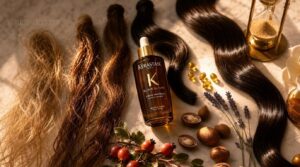
Not every serum works the same way on every person, and that’s not a flaw in the product — it’s just how hair works. A handful of factors quietly shape how fast (or slow) you’ll see results.
Here’s what actually makes the difference.
Hair Type, Texture, and Porosity
Your hair type, texture, and porosity are the biggest factors influencing hair serum effectiveness. Low porosity hair resists absorption, so short-term results take longer to appear. High porosity strands absorb product quickly but lose moisture just as fast.
Curl pattern and strand diameter also significantly impact outcomes. Coarser, coily textures require richer, more nourishing formulas, while fine hair typically shows quicker moisture retention shifts.
Structural changes to the hair, however, demand patience regardless of type. Visible improvements in hair structure generally take 8 to 12 weeks of consistent use.
Scalp Health and Product Absorption
Your scalp’s condition shapes how well any serum actually works. Think of it as the foundation everything else depends on.
Key factors that affect scalp health and hair serum interaction:
- Barrier Hydration keeps the skin surface calm, supporting consistent vehicle penetration
- pH Optimization helps active ingredients function optimally on the scalp
- Contact Duration decreases fast if irritation sends you scratching
- Microenvironment Compatibility determines whether sebum and sweat dilute your formula
- Skin barrier function shields follicles while still allowing targeted absorption
A flaky, inflamed scalp blocks ingredients before they start.
Serum Ingredients and Formulation Strength
What’s inside the bottle matters just as much as what’s on your scalp.
Active concentration determines how fast you see results — most effective serums pack key actives between 2% and 10%.
Molecular size affects how evenly ingredients coat each strand, while viscosity control keeps the formula from clumping.
pH compatibility and ingredient stability guarantee those actives actually work once they touch your hair.
Application Consistency and Frequency
Even the best formula won’t perform if applied randomly. Consistent use—whether daily or every wash day—drives real results. This requires adhering to a scheduled application, using a measured dosage (pea-sized for most hair types), and practicing consistent sectioning for uniform coverage.
Dropping your routine’s frequency, even briefly, resets progress faster than you’d think.
Heat Styling, Weather, Pollution, and UV Exposure
Your serum is fighting more than just your hair’s natural texture. Three environmental factors quietly undo progress faster than most people realize:
- Heat styling releases nanoparticle emissions that degrade silicone and antioxidant components — always use a heat protectant.
- Humidity frizz resurgence and pollution particle deposition dull shine and roughen the surface.
- UV-induced dryness and ozone oxidation risk accumulates daily, especially without UV protection for color-treated hair.
Diet, Stress, and Nutritional Deficiencies
What you eat and how well you manage stress quietly determines how far your serum’s effectiveness can go. Iron deficiency, zinc deficiency, and vitamin D deficiency all slow down follicle activity, limiting the timeline of hair growth serum results regardless of your product’s quality.
Chronic stress triggers stress-related shedding by disrupting nutrient absorption, further hindering progress.
Pair your serum with adequate protein intake, a nutrient-rich diet, and targeted supplements for real outcomes.
Ingredients and Expected Timelines
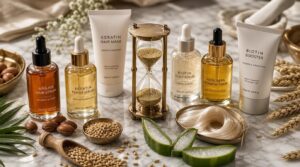
Not all serum ingredients work on the same schedule, and knowing what to expect from each one saves you a lot of guessing. Some deliver results within a single use, while others need weeks or months to do their job properly.
Here’s a breakdown of the key ingredients and when you can realistically expect to see them kick in.
Silicones for Instant Smoothness and Shine
Silicones are the reason your hair looks glossy before you’ve even finished styling. A silicone-based formula works instantly — dimethicone smooths the cuticle, while phenyl trimethicone delivers serious hair shine enhancement by reflecting light off each strand. Lightweight silicones like cyclomethicone offer quick evaporation, keeping things feeling fresh.
The UV protective film also guards against environmental damage.
Just watch for silicone buildup — clarifying regularly ensures immediate versus long-term benefits of hair serum and sustained gloss amplification.
Panthenol for Early Hydration and Softness
Panthenol pulls double duty from day one. As a humectant, it draws moisture into the hair shaft and holds it there — that’s your Humectant Boost at work. Its Surface Film Formation creates a lightweight protective layer for Immediate Softness and Barrier Reinforcement against dryness.
Within your first few applications, you’ll notice real improvements in hair texture and short-term results through consistent Moisture Retention.
Niacinamide for Scalp Comfort Within Weeks
A troubled scalp can quietly sabotage your results — and that’s where niacinamide earns its spot. It delivers short-term results through Irritation Soothing and Hydration Boost, while building toward lasting Barrier Restoration, Oil Regulation, and Flake Reduction over 6–8 weeks of consistent use.
Here’s what niacinamide targets:
- Scalp inflammation and redness
- Dryness, tightness, and flaking
- Oiliness imbalance that worsens irritation
Peptides for Gradual Strengthening and Thickness
Think of peptides as tiny repair crews working shift by shift on your strands. Through Peptide Cuticle Bonding and Multi-Peptide Synergy, these bioactive peptides gradually smooth the outer layer, reducing breakage and boosting hair strength over two-to-four weeks.
Copper peptides and Gradual Shaft Fortification deliver the best long-term benefits after consistent use — usually three-to-six months for visible Thickness-Boosting Peptides results.
Caffeine for Hair Growth Support Over Weeks
Peptides rebuild quietly over months — caffeine works on a different clock. As a key ingredient in hair growth serum, caffeine facilitates follicle signaling by interacting with cellular pathways in your hair roots, helping prolong the anagen phase. Dosage consistency matters here: irregular use disrupts scalp microcirculation support.
Watch for these short-term results and medium-term effects:
- Weeks 1–2: Improved scalp comfort
- Weeks 4–6: Reduced shedding (signs serum is working)
- Weeks 6–8: Penetration timing peaks; follicles respond
- Week 8+: Detectable density shifts
- Months 3–6: Caffeine stability enhances visible results
Biotin and Keratin for Long-term Resilience
Caffeine sets the stage — biotin and keratin take it further. Through biotin metabolic pathways, biotin acts as a cofactor that keeps keratin infrastructure running efficiently.
Meanwhile, keratin coating mechanics work to fill surface gaps, reducing brittleness through protein crosslinking effects.
This synergistic ingredient pairing delivers long-term benefits you’ll notice after consistent use — think stronger strands and resilience feedback markers like less daily breakage.
Minoxidil-style Ingredients for Slower Visible Growth
Beyond biotin and keratin, some serums take a slower, deeper approach — targeting actual follicle activity. Minoxidil-style ingredients like adenosine and Tricho-Solve signaling compounds serve as low-irritation alternatives worth considering.
These ingredients operate through microcirculation enhancement and sulfotransferase-dependent activation pathways, offering a gentler mechanism compared to traditional options.
Expect a realistic timeline for hair growth treatments: 8–12 weeks before visible signs of progress emerge.
How to Use Hair Serum
Getting results from your serum comes down to more than just picking the right formula — how you apply it matters just as much. Small habits, like timing, amount, and placement, can make the difference between hair that transforms and hair that just sits there.
Here’s what to do to get the most out of every drop.
Apply to Damp Hair for Better Distribution
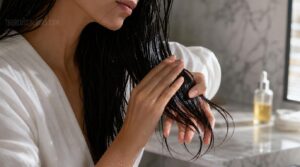
Damp hair is your serum’s best friend. When your strands are still slightly wet after towel-drying, the cuticles stay receptive enough for real absorption — that’s cuticle receptivity working in your favor. The leftover moisture boosts glide efficiency, ensuring distribution uniformity across every strand without sticky patches.
This simple application method builds a protective barrier fast, setting you up for styling smoothness that lasts.
Use a Pea-sized Amount for Short or Fine Hair
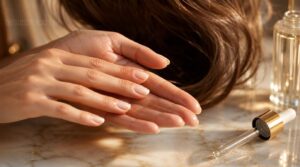
For short or fine hair, a pea-sized amount delivers an even film application without weighing strands down — volume preservation depends on it. Rub the serum between your palms first, then smooth it through using a product spread technique that prioritizes the outer layer.
This approach ensures a lightweight finish and prevents buildup avoidance issues before they start.
Use More Carefully for Thick, Coarse, or Long Hair

Thick, coarse, or long hair demands smarter portion control — not more product. A dime-sized amount works for most, but length-specific application matters: distribute evenly from root to ends so lower lengths don’t stay dry.
Coarse hair slip improves with silicone-rich formulas, but layering product too heavily causes buildup fast.
Seasonal adjustment helps too — humidity seasons may need less.
Focus Smoothing Serums on Mid-lengths and Ends

Smoothing serums should be applied from your midlengths to ends — not at the roots. That’s where frizz actually lives. Start mid-shaft for slip-coating mid-lengths, then glide down for end-focused shine and targeted flyaway management. This weightless finish technique keeps roots lifted while segmented product distribution smooths the strands that need it most.
Immediate effects show up fast: softer texture, controlled flyaways, visibly sleeker ends.
Apply Scalp Serums Directly to Thinning Areas
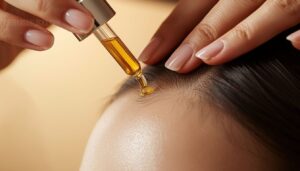
Scalp serums only work where they actually land — so precision matters. Use targeted parting to expose thinning zones, then apply drops directly along each part line. This scalp mapping approach ensures active ingredients reach struggling follicles, not just your hair shaft.
Key application techniques include:
- Use the microdose technique: small amounts per section
- Apply localized massage in circular motions for 1–2 minutes
- Practice residue minimization by building coverage gradually
- Target thinning zones first for highest concentration
Avoid Overusing Serum to Prevent Greasy Buildup
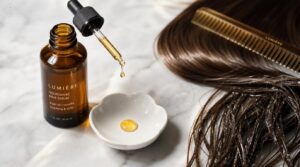
More isn’t better here — portion control is everything. A pea-sized amount is genuinely enough for most hair types. Doubling it doesn’t double the results; it just creates product buildup and greasy visual cues you can’t style away. Practice layering with restraint, especially over leave-ins.
If residue accumulates, a clarifying wash becomes non-negotiable. Match your hair type’s dosage to your texture, or you’ll compound the problem faster than you’d expect.
Track Progress With Monthly Photos and Shedding Checks

Hair doesn’t lie — but your memory will. Tracking progress with monthly photographs and a shedding log removes the guesswork and reveals real trends over time.
Monthly photos and a shedding log reveal the truth your memory conveniently edits out
- Use angle standardization and lighting consistency so photos compare accurately
- Log shedding at the same intervals for reliable shedding log frequency data
- Practice scalp coverage mapping to monitor thinning zones visually
- Use trend visualization to distinguish temporary hair shedding phase shifts from true improvement
Top 5 Hair Serum Products
Knowing what to look for in a serum is one thing — finding a product that actually delivers is another. The options below cover everything from smoothing and frizz control to scalp-focused growth support, so there’s something here no matter what your hair needs right now.
Here are five worth your attention.
1. The Ordinary Multi Peptide Hair Serum
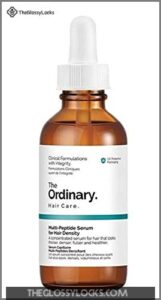
At $24 for a 60 ml bottle, The Ordinary Multi Peptide Hair Serum punches well above its price point. It combines Redensyl, Procapil, Baicapil, and high-solubility caffeine into a silicone-free, vegan formula that absorbs quickly without leaving residue.
Apply a few drops nightly to a clean, dry scalp. You won’t see dramatic overnight changes — density improvements usually emerge between 8 and 12 weeks — but consistent use makes that timeline very achievable.
| Best For | Anyone dealing with thinning hair from aging, hormonal shifts, or medication side effects who wants an affordable, clean-formula serum to layer into their existing routine. |
|---|---|
| Volume | 2 fl oz (59 mL) |
| Price | $24.00 |
| Hair Type | All types |
| Rinse Required | No |
| Frizz Control | Indirect via scalp health |
| Key Ingredient | Multi-peptide complex |
| Additional Features |
|
- Stacked with heavy-hitter peptides like Redensyl, Procapil, and CapiXyl — ingredients you’d usually pay a lot more for
- Lightweight and non-greasy, so it won’t weigh your hair down or mess up your scalp
- Vegan, cruelty-free, and free of silicones, alcohol, and gluten — plays nicely with sensitive scalps
- Results are slow — you’re looking at a few months of nightly use before noticing real changes
- Some users find it heavier than expected and end up washing their hair more often
- Works best alongside other treatments; on its own, it may not move the needle much
2. Garnier Fructis Anti Frizz Serum
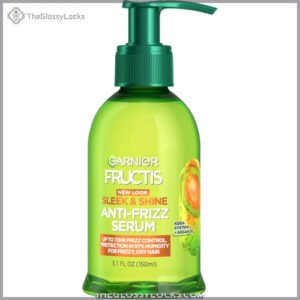
If long-term density is your goal, The Ordinary is hard to beat — but if frizz is the problem you’re solving right now, the Garnier Fructis Anti Frizz Serum delivers at just $6.97.
Apply one to two pumps on damp hair, focusing on mid-lengths to ends. You’ll notice smoother, shinier strands almost immediately.
The results come down to science — how conditioner protects and strengthens hair explains why those polymers and lipids make such a visible difference.
The argan oil and silicone blend seals the cuticle fast, and the formula resists humidity up to 97%.
Go easy — too much, and fine hair turns greasy.
| Best For | Anyone dealing with everyday frizz who wants a quick, affordable fix without overthinking their hair routine. |
|---|---|
| Volume | 5.1 fl oz (150 mL) |
| Price | $6.97 |
| Hair Type | Straight and curly |
| Rinse Required | No |
| Frizz Control | Yes, up to 97% humidity |
| Key Ingredient | Moroccan argan oil |
| Additional Features |
|
- Argan oil formula smooths and adds shine fast — results you can actually see
- Holds up in high humidity (up to 97%), so it works on bad-weather days too
- Super affordable at $6.97 and a little goes a long way, so the bottle lasts
- Easy to overdo it — fine hair gets greasy quickly if you use more than two pumps
- The fruity-citrus scent is strong, which won’t work for everyone
- Won’t fix deeper damage like split ends — you’ll still need a good conditioner alongside it
3. Root Activator Hair Growth Shampoo
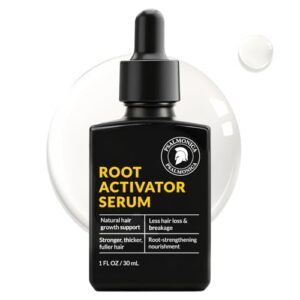
The Root Activator Hair Growth Shampoo takes a different approach to scalp care, focusing on more than just frizz control. It combines over 12 plant extracts—including ginger root, rosemary oil, black sesame, and Polygonum multiflorum—to promote a healthier scalp environment with each wash.
This sulfate-free formula is designed for daily use across all hair types, offering gentle yet effective cleansing. However, the 0.9 fl oz bottle is small, meaning daily users may find it depletes quickly.
| Best For | Anyone dealing with thinning hair, postpartum shedding, or male-pattern hair loss who wants a plant-based, scalp-focused shampoo for daily use. |
|---|---|
| Volume | 0.9 fl oz (26 mL) |
| Price | Not specified |
| Hair Type | All types |
| Rinse Required | Yes |
| Frizz Control | Indirect via fuller appearance |
| Key Ingredient | Herbal plant extracts |
| Additional Features |
|
- Packed with 12 herbal extracts like ginger root and rosemary oil that support a healthier scalp environment
- Gentle enough for daily use across all hair types, without the harsh stripping feel of traditional shampoos
- Targets both hair loss and scalp irritation at once, helping reduce itching and breakage over time
- The 0.9 fl oz bottle is tiny—daily users will burn through it fast, making the cost add up quickly
- The scent runs strong and masculine, which won’t be everyone’s cup of tea
- Despite the "sulfate-free" claim, some reviewers spotted sodium sulfate on the ingredient label, and at least one user reported a serious allergic reaction
4. Paul Mitchell Super Skinny Blowout Primer
Not every serum is about growth—sometimes you just need smooth, fast, and frizz-free hair. That’s where the Paul Mitchell Super Skinny Blowout Primer earns its spot.
A lightweight silicone blend seals the cuticle on damp hair, cutting blow-dry time while locking out humidity. One to two pumps manages medium-length hair without the greasy aftermath.
At $12 for a travel-sized 0.85 fl oz bottle, it delivers immediate shine and manageability from the very first use.
| Best For | Anyone who wants faster blow-dries and frizz-free hair without a heavy, weighed-down feel. |
|---|---|
| Volume | 0.85 fl oz (25 mL) |
| Price | $12.00 |
| Hair Type | Straight, wavy, curly |
| Rinse Required | No |
| Frizz Control | Yes, humidity-resistant |
| Key Ingredient | Silicone blend |
| Additional Features |
|
- Cuts blow-dry time by letting heat pass through more efficiently
- Works for straight, wavy, and curly hair — one product, no extras needed
- One or two pumps goes a long way, so the small bottle lasts
- Fine or thin hair can end up greasy if you use too much
- Silicone builds up over time, so you’ll need a clarifying shampoo in your routine
- At $12 for 0.85 fl oz, it costs more than a lot of drugstore serums
5. 5 Percent Minoxidil Rosemary Hair Growth Spray
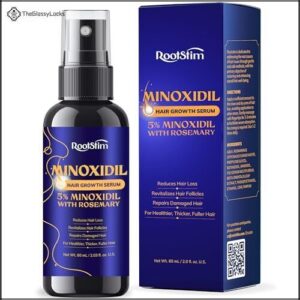
This spray is designed for real thinning hair, not just frizz. It combines 5% minoxidil with rosemary extract in a lightweight, fast-absorbing mist that targets your scalp without leaving residue.
Apply it twice daily directly to thinning areas, then massage it in. Don’t expect overnight miracles; visible regrowth typically requires 8–12 weeks of consistent use.
The 60 mL bottle is travel-friendly, paraben-free, and suitable for both men and women.
| Best For | Anyone dealing with real hair thinning—whether it’s a receding hairline, crown thinning, postpartum shedding, or early alopecia—who wants a clean, no-fuss daily treatment. |
|---|---|
| Volume | 2 fl oz (60 mL) |
| Price | Not specified |
| Hair Type | All types |
| Rinse Required | No |
| Frizz Control | Indirect via regrowth |
| Key Ingredient | 5% Minoxidil |
| Additional Features |
|
- Combines clinically recognized 5% minoxidil with rosemary extract in one lightweight spray—no mixing, no mess
- Dries fast and leaves zero greasy residue, so you can style your hair right after applying
- Gentle formula (no parabens, sulfates, or artificial fragrance) works for sensitive, color-treated, or fine hair
- Results take time—most people need 8–12 weeks of twice-daily use before seeing noticeable regrowth
- Some users experience an initial shedding phase early on, which can be alarming if you’re not expecting it
- Spraying directly onto hair instead of the scalp can cause temporary wetness and a slightly greasy feel, so technique matters
Frequently Asked Questions (FAQs)
How do I know if my hair serum is working?
Think of your hair as a report card — the serum’s results show up in small, measurable ways. Look for less frizz, easier detangling, and fewer broken strands collecting on your brush.
What to do for GLP-1 hair loss?
GLP-1 medications can trigger telogen effluvium through rapid calorie restriction. Prioritize protein intake, check ferritin and vitamin D levels, and consider topical minoxidil if shedding persists beyond three months.
Can hair serum expire or lose its effectiveness?
Yes, hair serum can expire and lose effectiveness.
After the PAO date, active ingredients break down, oils oxidize, and preservatives weaken — meaning less shine, less frizz control, and potential scalp irritation.
Is it safe to use serum every single day?
Most serums are safe to use daily — but it depends on what’s in them. Gentle, hydrating formulas handle everyday use well.
Stronger actives like exfoliating acids or retinoids should be eased in slowly to avoid irritation.
Can hair serum cause scalp irritation or allergies?
Hair serum can cause scalp irritation or allergic reactions, especially if it contains fragrances, preservatives like methylisothiazolinone, or sensitizing dyes.
Patch test first, and stop use immediately if redness, itching, or swelling develops.
If you’re curious which foods and habits support healthy strands, this guide to stimulating hair growth naturally is a good place to start.
Should you wash out serum before bed?
Most leave-on serums are designed to stay in overnight. Don’t rinse unless it feels greasy or causes irritation — that’s usually a sign you’ve applied too much.
Can two different serums be layered together safely?
Layering two serums is doable, but order matters.
Go thinnest to thickest, let each absorb before adding the next, and avoid stacking two strong actives together — that’s when irritation shows up.
Conclusion
Take Maya—she switched from a daily smoothing serum to a peptide formula and spent weeks frustrated by zero visible change. Once she understood that how long hair serum takes to work depends entirely on the ingredient, she stopped second-guessing and stayed consistent. Eight weeks later, her shedding had dropped noticeably.
Your serum isn’t failing you—it’s working on its own clock. Learn that clock, and every product you use starts making sense.
- https://trybello.com/blogs/news/how-long-does-it-take-for-hair-growth-serum-to-work-effectiveness-explained?srsltid=AfmBOoop1wRjAiLzJZc_lEp02GFVkjZY0w1cywJJbJej5oKgYZYTwYGO
- https://hairgivers.com/blogs/treatments/how-long-will-it-take-to-see-the-result-of-your-treatment
- https://wellbel.com/blogs/journal/how-long-does-it-take-for-hair-supplements-to-work-a-realistic-timeline?srsltid=AfmBOopSx5cMDZa2TxBvR4P2R7L_9bisQJM1TJbYECPzP2GQ1up4W41K