This site is supported by our readers. We may earn a commission, at no cost to you, if you purchase through links.
Most store-bought leave-in conditioners share a short list of active ingredients—like aloe vera, plant oils, and shea butter—padded out with preservatives, silicones, and stabilizers. These additives ensure shelf-stable formulas but offer little benefit to hair health. This disconnect between what’s in the bottle and what your hair actually needs creates an opportunity for natural alternatives to shine.
Natural leave-in conditioners, such as jojoba oil, argan oil, and flaxseed gel, target specific concerns—frizz, dryness, or scalp imbalance—with ingredient transparency that commercial products rarely provide. Unlike conventional options, these alternatives prioritize functional, recognizable components without unnecessary fillers.
The following guide will break down which natural options work best, how to apply them correctly, and how to build custom formulas tailored to your hair’s unique needs.
Table Of Contents
- Key Takeaways
- Best Natural Leave-in Conditioner Alternatives
- Top 7 Leave-in Conditioner Alternatives
- 1. Klorane Mango Butter Leave In Cream
- 2. Tgin Green Tea Leave In Conditioner
- 3. Frontier Co Op Organic Marshmallow Root
- 4. Not Your Mothers Leave In Conditioner
- 5. Honest Company Leave In Detangler
- 6. SheaMoisture Virgin Coconut Oil Leave In Treatment
- 7. California Naturals Coconut Milk Leave In Conditioner
- Choose Alternatives by Hair Type
- DIY Natural Leave-in Recipes
- Safe Application and Storage Tips
- Frequently Asked Questions (FAQs)
- Conclusion
Key Takeaways
- Most store-bought leave-in conditioners rely on a short list of real actives padded with preservatives and silicones that do little for your hair’s actual health, while natural alternatives like jojoba oil, argan oil, and flaxseed gel deliver targeted results with full ingredient transparency.
- Matching the right natural ingredient to your hair type matters more than the ingredient itself—fine hair thrives with lightweight aloe or flaxseed gel, curly hair needs humectant-sealant layering like aloe plus shea butter, and high-porosity hair requires immediate oil sealing on damp strands to lock in moisture before it escapes.
- DIY leave-in formulas are straightforward to make with measured, functional ingredients, but safe storage, refrigeration for water-based blends, and discarding any batch that changes in smell or texture are non-negotiable steps to avoid microbial contamination.
- Application technique determines results as much as ingredient choice—always work the product into damp hair, focus on mid-lengths and ends, keep heavy oils off the scalp, and patch-test any new oil or botanical extract before committing to full use.
Best Natural Leave-in Conditioner Alternatives
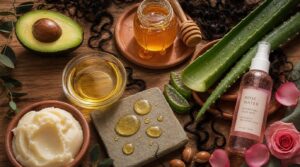
Your kitchen and bathroom cabinet might already hold everything your hair needs. Skipping the store-bought bottle doesn’t mean skipping results — it means choosing ingredients that actually make sense for your hair.
From a nourishing avocado mask to a honey rinse, a solid deep conditioning treatment for natural hair can come together with things you already have on hand.
Here are seven natural alternatives worth knowing.
Aloe Vera Gel for Lightweight Hydration
Aloe vera gel is one of the most effective natural alternatives to leave-in conditioner — lightweight, fast-absorbing, and genuinely functional. Its polysaccharides deliver humectant layering that locks moisture into the hair shaft without grease.
- Provides non-greasy finish on fine or oily hair
- Aids hair hydration through water-rich gel composition
- Delivers cooling scalp relief when applied to damp strands
- Facilitates quick absorption compared to oil-based DIY leave-in conditioners
- Works as a standalone or a base for natural alternatives to hair conditioner
Coconut Oil for Dry, Damaged Ends
Where aloe manages surface hydration, coconut oil works deeper. Its lauric acid penetration reaches the hair shaft itself, supporting protein loss reduction that other oils simply can’t match.
The result is a moisture lock barrier that shields dry ends between washes. It also creates a lightweight protective barrier against UV rays and environmental stress.
| Benefit | How It Works |
|---|---|
| Cuticle smoothing effect | Aligns raised scales for softer feel |
| Split end prevention | Reduces ongoing breakage at tips |
Argan Oil for Frizz Control and Shine
Coconut oil nourishes the hair shaft—while argan oil treats the hair surface. Its fatty acid conditioning and vitamin E protection work together to seal the cuticle, flattening lifted scales that scatter light and cause frizz. That’s exactly what makes it one of the best silicone-free options for shine.
Frizz control using argan oil works because:
- Cuticle sealing reduces moisture absorption from humid air
- Light reflection improves when the surface lies flat
- Provides thermal shielding during blow-drying without silicone buildup
Apply a small drop to damp ends only.
Jojoba Oil for Balanced Scalp Moisture
Unlike argan oil, which works on the hair surface, jojoba oil penetrates deeper to prioritize scalp health.
Its structure closely resembles the skin’s natural sebum, enabling sebum regulation without overproduction. This unique compatibility ensures balanced moisture control.
The wax-like texture creates a lightweight occlusive barrier, effectively locking in hydration while restoring the scalp’s protective layer.
For optimal results, apply selectively to dry patches, delivering targeted nourishment and comfort where needed most.
Shea Butter for Curls and Coils
Shea butter is one of the few natural ingredients that manages moisture sealing and curl definition simultaneously. Its dual functionality makes it ideal for curly hair care, addressing both hydration retention and styling needs.
Its waxy, occlusive texture effectively locks hydration into dry curls between washes, preventing moisture loss. Additionally, the creamy slip of shea butter simplifies detangling, reducing breakage during hair care routines.
For heat compatibility, melt shea butter first, then blend it with a lighter oil. This process creates leave-in conditioners without silicone, tailored for curly hair formulations. Such blends offer effective, natural alternatives to traditional styling products.
Flaxseed Gel for Slip and Definition
Flaxseed gel works differently from most leave-in conditioners — its mucilage slip coats each strand, reducing friction so detangling actually feels easy. As a silicone-free option in DIY hair care recipes, it delivers real curl definition through film hold that flexes without crunch. Here’s how to use it well:
- Apply to damp hair for curl clumping
- Adjust texture thickness by simmering longer or diluting with water
- Rewetting reactivates refreshes curls without restarting your whole routine
Marshmallow Root Rinse for Detangling
Marshmallow root rinse is one of the quieter heroes in DIY hair care recipes — but don’t underestimate it.
Its mucilage slip coats strands and smooths cuticles, making detangling genuinely easier without the weight of traditional leave-in conditioners. It also enhances elasticity boost and moisture sealing for softer hair.
Among natural alternatives, it stands out.
Store your homemade batch refrigerated; it keeps about a week.
Top 7 Leave-in Conditioner Alternatives
Not all leave-in conditioners are created equal, and the right one depends on what your hair actually needs.
These seven picks cover a range of textures, ingredients, and budgets — so there’s something worth trying no matter your hair type.
Here’s what made the cut.
1. Klorane Mango Butter Leave In Cream
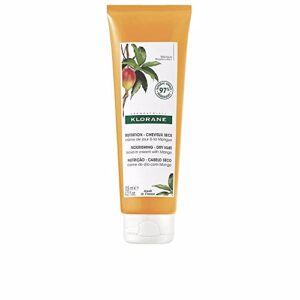
Klorane’s Mango Butter Leave-In Cream earns its place here for good reason. It delivers deep moisture to dry, brittle, or color-treated hair without relying on silicones, a common "crutch" in mainstream products.
The formula, enriched with mango butter, avoids parabens and sulfates, minimizing chemical trade-offs.
Apply a pea-sized amount to damp mid-lengths and ends—avoid the scalp. At $21 for roughly 4.2 oz, it positions itself as a premium option.
While effective, very fine hair types may find its texture slightly heavy.
| Best For | Anyone with dry, curly, wavy, or color-treated hair who wants serious moisture without silicones or harsh chemicals weighing things down. |
|---|---|
| Format | Cream |
| Key Ingredient | Mango Butter |
| Sulfate-Free | Yes |
| Paraben-Free | Yes |
| Frizz Control | Yes |
| Price (USD) | $21.00 |
| Additional Features |
|
- Mango butter gives real, lasting hydration — great for brittle or chemically treated hair
- Clean formula with no parabens, silicones, or sulfates, so you’re not trading one problem for another
- Works on damp or dry hair and tames frizz without leaving a greasy feel
- At $21 for about 4.2 oz, it’s pricier than most drugstore leave-ins and rarely goes on sale
- Some newer batches have a stronger, almost chemical scent that can be a dealbreaker if you’re scent-sensitive
- Very fine hair types may find it a bit heavy or oily, especially near the scalp
2. Tgin Green Tea Leave In Conditioner
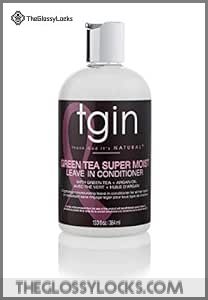
If your curls need a reliable daily anchor, tgin’s Green Tea Leave-In Conditioner is worth examining. Its silicone-free formula combines argan oil, shea butter, and green tea extract with aloe leaf juice and behentrimonium methosulfate — a conditioning base that penetrates the cuticle rather than merely coating it. At 12.8 oz, it offers solid value.
However, be aware: the fragrance is strong, and phenoxyethanol may irritate sensitive scalps. Type 4 hair might need an additional sealant for all-day moisture retention.
| Best For | Curly and wavy hair types — kids and adults alike — who want a silicone-free leave-in that detangles, defines, and fights frizz without heavy buildup. |
|---|---|
| Format | Liquid |
| Key Ingredient | Argan Oil & Shea Butter |
| Sulfate-Free | Yes |
| Paraben-Free | Yes |
| Frizz Control | Yes |
| Price (USD) | Not listed |
| Additional Features |
|
- Softens and defines curls right away, working well on both damp and dry hair
- Silicone-free formula actually penetrates the cuticle instead of just sitting on top
- Great for detangling tightly coiled or textured hair, which cuts down combing time big time
- The fragrance is strong — a dealbreaker if you’re scent-sensitive
- Moisture can fade within a day on very dry type 4 hair, so you may need a sealant on top
- No pump on the bottle, and it can leave white flakes if you don’t blend it in well with water
3. Frontier Co Op Organic Marshmallow Root
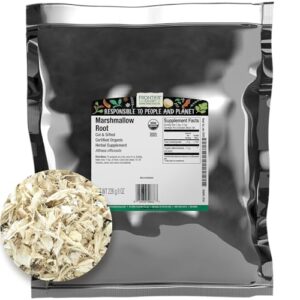
Think of Frontier Co-op’s Organic Marshmallow Root as your kitchen’s secret detangling weapon. The cut and sifted Althaea officinalis root releases mucilage when cold- or warm-infused — a naturally slippery compound that coats and detangles without silicones or synthetics.
It’s USDA Organic, certified by QAI, and packaged in a resealable 8-oz bulk bag.
Use one tablespoon per cup of water to create a conditioning rinse that’s as clean as it gets. Skip boiling water — heat breaks down the mucilage before it can work.
| Best For | Anyone looking for a clean, natural way to soothe throat irritation, support digestion, or add a silicone-free conditioning boost to their herbal routine. |
|---|---|
| Format | Dry Root |
| Key Ingredient | Marshmallow Root |
| Sulfate-Free | N/A |
| Paraben-Free | N/A |
| Frizz Control | No |
| Price (USD) | Not listed |
| Additional Features |
|
- Certified organic and sustainably sourced from Bulgaria — you know exactly what you’re getting
- High mucilage content means it actually works, whether you’re making a throat-soothing drink or a hair rinse
- Versatile enough to use in teas, syrups, skincare, and more — all in one resealable bag
- Boiling water kills the mucilage, so you have to plan ahead for cold or warm infusions
- The earthy flavor can be a bit much on its own — you’ll probably want to add honey or other herbs
- Rarely, highly sensitive people may experience skin irritation
4. Not Your Mothers Leave In Conditioner
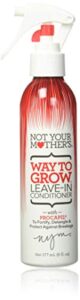
Not Your Mother’s Curl Talk Leave-In Conditioner is the ready-made answer for wash days when you don’t want to brew anything, especially if marshmallow root is your pantry hero. It’s silicone-free, paraben-free, and built around a Superfood Oil Blend featuring avocado, buriti, and marula oils, alongside a protein-rich Rice Curl Complex with keratin amino acids.
This combination enhances curl definition and moisture without greasiness.
One heads-up: the fragrance runs strong, so scent-sensitive users should sample before committing.
| Best For | Anyone looking for a daily leave-in that detangles, fights frizz, and supports hair growth across all hair textures—especially those with curly or coily hair. |
|---|---|
| Format | Spray |
| Key Ingredient | Procapil Peptide |
| Sulfate-Free | Yes |
| Paraben-Free | Yes |
| Frizz Control | Yes |
| Price (USD) | Not listed |
| Additional Features |
|
- Lightweight fine-mist spray that adds moisture and softness without greasiness or buildup
- Works on wet or dry hair, so it fits right into any routine—post-shower or midday refresh
- Formulated with Procapil and bioactive extracts to support stronger, longer hair over time
- The fragrance is strong—if you’re scent-sensitive, this one might be too much
- Fine or very dry hair types may find it sticky, greasy, or not conditioning enough
- At just 6 oz, heavy users will burn through it fast and need to reorder often
5. Honest Company Leave In Detangler
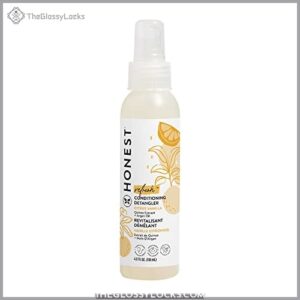
If fragrance sensitivity is already on your radar, the Honest Company Conditioning Detangler is worth a closer look. Its formula relies on chamomile, calendula, quinoa protein, jojoba, argan oil, and shea butter — a practical mix that hydrates without silicones, parabens, or synthetic dyes.
The 4 fl oz spray works on damp or dry hair, suits kids and adults alike, and keeps brushing pain minimal.
A fragrance-free variant is available if the citrus vanilla scent feels like too much.
| Best For | Parents, sensitive scalps, and anyone dealing with tangles — from toddlers to adults — who want a clean, lightweight formula they can use every day. |
|---|---|
| Format | Spray |
| Key Ingredient | Argan Oil & Shea Butter |
| Sulfate-Free | Yes |
| Paraben-Free | Yes |
| Frizz Control | Yes |
| Price (USD) | $6.99 |
| Additional Features |
|
- Gentle enough for kids and sensitive scalps, with no parabens, silicones, or synthetic fragrances
- Works on damp or dry hair, so it fits easily into any routine
- Naturally-derived ingredients like chamomile, argan oil, and shea butter hydrate without leaving hair greasy or weighed down
- The 4 fl oz bottle goes fast if you have thick or long hair
- May not be enough moisture on its own for very dry or frizzy hair
- The scent, while generally liked, can feel strong for people who are fragrance-sensitive
6. SheaMoisture Virgin Coconut Oil Leave In Treatment
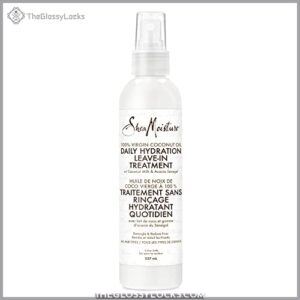
SheaMoisture’s Virgin Coconut Oil Leave-In Treatment offers a texture-focused upgrade from sensitivity-focused formulas. This 8 fl oz spray combines 100% virgin coconut oil, coconut milk, shea oil, and Acacia Senegal, all free of sulfates, silicones, parabens, and phthalates.
The Acacia Senegal gum excels at detangling even severely matted curls, while hydrolyzed wheat protein provides structural support for stronger hair.
Apply the treatment to damp mid-lengths and ends. For fine hair, use a light hand to prevent buildup, ensuring optimal absorption without weighing strands down.
| Best For | People with natural, curly, or wavy hair who struggle with tangles, frizz, and dryness and want a clean, lightweight daily leave-in. |
|---|---|
| Format | Spray |
| Key Ingredient | Coconut Oil & Shea Oil |
| Sulfate-Free | Yes |
| Paraben-Free | Yes |
| Frizz Control | Yes |
| Price (USD) | $8.97 |
| Additional Features |
|
- Detangles even seriously matted curls without weighing hair down
- Clean formula — no sulfates, silicones, parabens, or phthalates
- Affordable at under $9 and easy to use with the spray bottle
- Spray can come out as a thick stream instead of a fine mist, so you may need to spray into your hands first
- Can cause buildup on fine or low-porosity hair if you use too much
- Results vary — a small number of users didn’t notice much difference
7. California Naturals Coconut Milk Leave In Conditioner
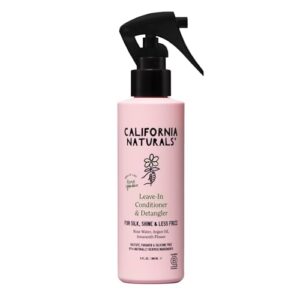
California Naturals Coconut Milk Leave-In Conditioner offers a lighter alternative to heavier products like SheaMoisture. It combines coconut milk, mongongo oil, and sunflower sprout extract into a versatile 3-in-1 primer, detangler, and styler. The formula is free of parabens, sulfates, and silicones, catering to various hair needs.
Apply 1–2 pumps to damp mid-lengths and ends, requiring no rinsing. This product won’t weigh fine hair down and is safe for color-treated strands.
The result is a soft, non-greasy finish that maintains style integrity, whether air-drying or heat styling.
| Best For | Anyone with dry, chemically-treated, or color-treated hair who wants a lightweight daily leave-in that works across all hair textures without weighing strands down. |
|---|---|
| Format | Liquid |
| Key Ingredient | Meadowfoam & Argan Oil |
| Sulfate-Free | Yes |
| Paraben-Free | Yes |
| Frizz Control | Yes |
| Price (USD) | $9.99 |
| Additional Features |
|
- Packed with good-for-hair ingredients like meadowfoam seed oil, argan oil, and aloe that hydrate and reduce frizz without leaving a greasy feel.
- Works for all hair types (1A–4C) and color-treated hair, so the whole household can share one bottle.
- Clean formula — 97% naturally-derived, free of sulfates, parabens, silicones, and synthetic fragrance, plus it’s vegan and cruelty-free.
- Fine or low-volume hair types may not notice much of a detangling effect, and over-applying can cause clumping.
- No heat-protectant ingredients, so you’ll need a separate product if you’re regularly using hot tools.
- The scent leans floral (light rose), not the coconut/vanilla vibe the name suggests — and a few reviewers weren’t fans.
Choose Alternatives by Hair Type
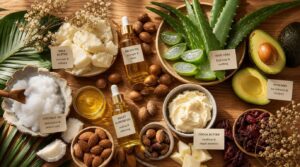
Not every leave-in works the same on every head of hair — and that’s not a flaw, it’s just chemistry. Your hair’s texture, porosity, and oil production all shape which ingredients will actually help versus weighing you down.
Hair is not one-size-fits-all; your texture, porosity, and oil production determine what actually works
Here’s how to match the right alternative to your specific hair type.
Best Lightweight Options for Fine Hair
Fine hair doesn’t need a heavy product — it needs the right one. A volumizing mist built on aloe vera or flaxseed gel gives you weightless slip and an airy finish without flattening your roots.
Silicone-free shine comes naturally from lightweight oil treatments, like jojoba or argan, applied sparingly to ends only. These silicone-free options deliver low-build hold, so your volume stays.
Richer Natural Moisturizers for Curly Hair
Curly hair craves layers — and that’s exactly where a Humectant Sealant Duo shines. Start with a humectant like glycerin or aloe vera to pull moisture in, then lock it down with Deep Conditioning Butters (e.g., shea) or Nourishing Oil Mixes (e.g., coconut or argan).
These curly hair specific formulations, including leave-in conditioners without silicone, support natural moisturization techniques through Layered Moisture Lock without synthetic buildup.
Sealing Oils for High-porosity Hair
High-porosity hair loses moisture fast—the cuticle’s open structure works against you. That’s why Sealant Application Timing matters: apply your sealing oil immediately after moisturizing damp hair, so the film traps water before it escapes.
Oil Blending Techniques, like combining castor with jojoba, refines Film Thickness Optimization without heaviness. These methods ensure effective moisture retention without weighing hair down.
These moisture retention strategies for high-porosity hair make oil-based hair conditioning and leave-in conditioners without silicone genuinely effective.
Lighter Formulas for Low-porosity Hair
Low-porosity hair doesn’t absorb products easily—the tightly sealed cuticle keeps most things sitting on the surface. That’s why lightweight hair oils, water-based emulsifiers, and light cationic agents work better here than heavy butters.
To enhance absorption and moisture retention, consider these strategies:
- Use Heat-Assisted Penetration: Warm, damp hair opens the cuticle slightly.
- Apply Humectant Balance Strategies with glycerin or honey to attract moisture.
- Choose Slip-Boosting Polymers like flaxseed gel for silicone-free leave-in conditioner options.
- Pick natural alternatives—jojoba or argan—over dense occlusive oils.
Non-greasy Alternatives for Oily Hair
Oily hair doesn’t need more oil — it needs smarter hydration. Stick to water‑based detanglers and micro-emulsion sprays that deliver moisture without disrupting sebum regulation.
Aloe vera gel works as a lightweight gel seal applied mid-length to ends, keeping roots clean. Flaxseed gel offers a silicone-free finish with real definition.
These silicone-free leave-in conditioner options — avoiding heavy oils entirely — ensure products work with your scalp, not against it.
Gentle Options for Sensitive Scalps
A sensitive scalp burns, tingles, or itches when exposed to the wrong formula—so ingredient selection isn’t optional. Prioritize barrier-friendly ingredients like aloe vera, allantoin, and panthenol, which soothe without disrupting skin comfort.
Opt for silicone-free options with lightweight textures to minimize buildup risk. For scalp comfort, apply leave-in conditioners primarily to mid-lengths and ends, avoiding direct contact with the scalp.
Always patch test all DIY alternatives and soothing plant extracts first to prevent adverse reactions.
Children’s Hair and Safety Considerations
Children’s scalps produce less sebum than adults’ scalps, which makes them more reactive to heavy or concentrated formulas. That’s why silicone-free options with minimal botanicals work better here.
Keep safety considerations for children’s hair care front of mind:
- Eye Contact Risk is real — thin sprays drip
- Allergy Sensitization builds with repeat exposure
- Ingestion Prevention means modest application amounts
- Scalp Barrier Health demands gentle, pH-balanced formulas
- Application Frequency should stay low — 1–2 times weekly
DIY Natural Leave-in Recipes
Making your own leave-in conditioner is easier than you might think, and you probably already have most of the ingredients in your kitchen.
Each recipe below uses a handful of clean, functional components with specific measurements so you get consistent results every time.
Here are seven DIY formulas worth trying.
Aloe Vera Leave-in Spray Recipe
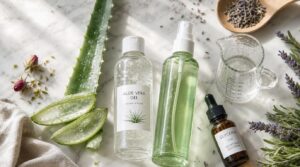
Mix 2 oz aloe vera gel with 4 oz distilled water — that is your water ratio baseline. Add 1 teaspoon glycerin for slip, and if including any carrier oil, a few drops of Polysorbate 20 keeps everything blended.
Shake well, pour into a fine-mist spray bottle, and apply to damp hair.
Refrigerate this DIY leave-in conditioner; preservation methods matter. Discard after four weeks.
Coconut Oil Leave-in Mist Recipe
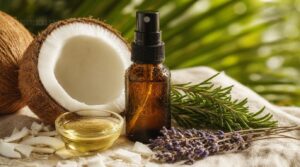
Coconut oil leave-in conditioners work best when diluted—straight oil will weigh your hair down fast.
For optimal results, combine 1 tablespoon coconut milk with 6 oz filtered water as your base.
- Shake before every use for emulsion stability.
- Add 3–5 drops essential oil pairings like lavender or rosemary.
- Skip preservatives? Refrigerate and use within one week for shelf-life extension.
Spritz onto damp hair for a silicone-free leave-in conditioner.
Shea Butter Curl Cream Recipe
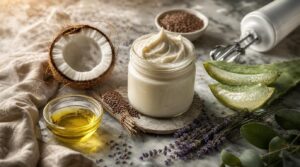
Where the mist ends, the cream begins. Melt 2 tablespoons each of shea butter and coconut oil, then refrigerate during the Cooling Phase until partially solid.
Whip using a hand mixer—this Whipping Technique transforms the mixture into a creamy, non-greasy texture.
Fold in 2 tablespoons aloe gel, 1 tablespoon flaxseed gel, and Essential Oil Options like lavender. Apply this silicone-free leave-in conditioner to damp mid-lengths.
Storage Practices: Keep in a sealed jar for a maximum of one month. For Texture Adjustment, add jojoba oil to enhance slip.
Marshmallow Root Detangling Spray
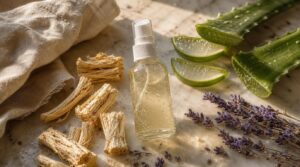
Marshmallow root’s mucilage slip is what makes this DIY infusion genuinely useful — it coats each strand so knots release without force.
Simmer 1 tablespoon of marshmallow root in 1 cup distilled water, strain, cool, then combine with 2 tablespoons of aloe gel.
Add lavender for essential oil pairing, especially if scalp sensitivity is a concern.
Refrigerate and use within three weeks.
Flaxseed Gel Conditioning Styler
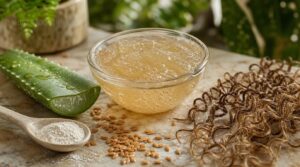
Flaxseed gel does something most leave-in conditioners can’t — it creates a film-forming coating that seals moisture without silicone.
Simmer 1 tablespoon of flaxseeds in 1 cup water, strain, then stir in 1 teaspoon aloe vera for aloe infusion benefits and a pinch of xanthan gum for thickening.
This temperature-adjusted gel suits silicone-free options for curl definition and lasting slip.
Avocado and Honey Hydration Mask
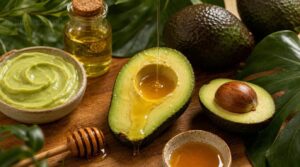
Honey’s Humectant Power pulls water into each strand, while avocado’s Nourishing Lipids and Antioxidant Defense compounds coat and soften — a simple pairing that rivals commercial DIY leave-in conditioner formulas.
For Smooth Consistency, blend until fully combined:
- Mash one ripe avocado
- Add 1 Tbsp honey
- Add 1 Tbsp avocado oil
- Blend until smooth
- Apply to damp hair, Ideal Wait Time: 30 minutes
This avocado and honey mask delivers real moisture retention — leave-in conditioners without silicone, done right.
Yogurt and Aloe Moisture Mask
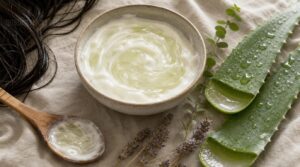
Yogurt brings lactic acid exfoliation to the mix, gently loosening build-up while aloe vera gel delivers soothing hydration that keeps things calm.
Combine 1 tablespoon of each for ideal mask consistency, apply to damp hair, and leave it on for 15 minutes before rinsing. If you have skin sensitivity, patch test first — these natural alternatives work, but dairy and plant extracts can surprise you.
Safe Application and Storage Tips
Getting the most from your natural leave-in alternatives comes down to how and when you use them.
A few smart habits can mean the difference between hair that thrives and products that go to waste.
Here’s what you need to know before applying or storing your next formula.
Apply Alternatives to Damp Hair
Damp hair is your window of opportunity — that’s when strands are swollen, open, and ready to absorb moisture. After a pre-drying squeeze to remove dripping excess, move on to sectional application, ensuring every section gets even coverage. This approach works effectively for DIY leave-in conditioner, silicone-free options, or any natural hair conditioning formula.
Key principles include:
- Dampness activates absorption — dry hair resists
- Sectioning prevents uneven, patchy moisture
- Post-application airflow locks in hydration naturally
Focus Product on Mid-lengths and Ends
Your scalp already makes its own oils — the mid-lengths and ends are where things get dry. Mid-length layering starts a finger-combing pass from roughly ear level down, distributing lightweight oil treatments for fine hair or DIY leave-in conditioner evenly before concentrating any remaining product on ends. Sealing the ends with a butter or silicone-free option creates a protective layer that flattens split ends temporarily.
| Zone | Recommended Product |
|---|---|
| Mid-lengths | Aloe gel, light milk |
| Ends | Shea butter, castor oil |
| Both | Flaxseed gel |
| Avoid | Root/scalp area |
Portion control matters — texture balance collapses fast when you overapply.
Avoid Heavy Oils on The Scalp
Sealing your ends is smart — coating your scalp with heavy oils isn’t. Scalp oil management means keeping rich butters and thick oils off the skin entirely, as they mix with sebum and create buildup fast.
- Choose lightweight oil treatments for fine hair or sensitive scalp types
- Use silicone-free options and leave-in conditioners without silicone that won’t clog follicles
- Apply comedone-free formulas only from ears downward
- Support bacterial balance by practicing minimalist scalp care with non-greasy application techniques
Adjust Frequency by Dryness or Oiliness
How often you use leave-in conditioners depends on what your hair is telling you. Oiliness signals—such as roots shining within 24 to 48 hours or buildup near the scalp—mean you should scale back. Conversely, dryness indicators like tightness or rough texture suggest you need to apply more.
Climate humidity, your wash schedule sync, and product weight balance all influence this frequency. These shifting factors require ongoing adjustments to maintain hair health.
Silicone-free leave-in conditioner options and frequency guidelines for DIY hair treatments work best when you actually listen to your hair. Prioritize its feedback over rigid routines.
Patch Test Oils and Plant Extracts
Before applying any natural oil or botanical extract, do a patch test — even familiar ingredients can trigger essential oil sensitization. Apply a small, diluted amount to your inner arm, wait 48 hours, and check for redness or itching.
Reaction grading systems flag even mild responses as worth noting. Allergen dilution levels matter: stronger isn’t always safer.
Store Homemade Formulas Safely
Once you’ve patch-tested your formula, storage becomes your next line of defense. Pour your homemade conditioner into airtight glass jars — opaque ones work best for light-proof storage. Always add date label tags so you know exactly when you made each batch.
Use a portion control pump to minimize air exposure, and refrigerate any water-based or aloe-heavy mixes.
Replace Mixtures With Odor or Texture Changes
Your DIY leave-in conditioner signals issues when the smell or feel shifts unexpectedly. Off-odors indicate oxidation—a classic volatile aroma management red flag—while texture changes like thinning or greasiness reveal ingredient breakdown.
Whether using gel-to-cream or silicone-free options, trust these changes. Discard the batch immediately and start fresh to ensure safety and effectiveness.
Frequently Asked Questions (FAQs)
What is a natural substitute for leave-in conditioner?
Think of your hair as thirsty soil — it needs the right drink. Natural oils, aloe vera, and humectant boosters like honey work as silicone-free leave-in conditioner options without harsh additives.
What can replace leave-in conditioner?
Natural oils, DIY leave-in conditioner blends, rice water mist, and silicone-free shine serum all serve as effective alternatives. Even herbal steam treatments or vitamin C sprays can replace conventional leave-in conditioners, delivering solid results.
What should I use if I don’t have leave-in conditioner?
No leave-in conditioner? Reach for aloe vera gel — it delivers an instant moisture boost without weight. A few drops of argan oil work just as well for frizz and shine.
Do natural alternatives work well in hard water?
Hard water’s calcium and magnesium deposits cling to oils and butters, dulling shine and stiffening strands.
A weekly apple cider vinegar rinse helps clear mineral interference without stripping your silicone-free options.
Are natural leave-ins safe during pregnancy?
Most natural leave-ins are generally safe during pregnancy, but watch for ingredient exposure to fragrances, preservative risks, and microbial contamination in DIY formulas. Always do patch testing before full use.
Conclusion
Entire cosmetic laboratories exist just to replicate what jojoba oil and flaxseed gel do naturally—and they still fall short. Your hair doesn’t need a twelve-syllable preservative; it needs ingredients that actually work.
Exploring natural leave-in conditioner alternatives gives you full control over what touches your strands, with no hidden fillers and no guesswork. Choose based on your hair type, apply correctly, and store carefully.
Simple ingredients, handled well, consistently outperform the complicated stuff.
- https://www.minimalistbeauty.com/blog/no-more-chemical-hair-care-part-3-conditioners-leave-ins
- https://nurturebyanita.com/blogs/our-blog/coconut-oil-vs-aloe-vera-for-frizzy-hair?srsltid=AfmBOoq6ciRS2aEMFTmHPsJviJHkqN5e0G1qSXByHBAdw8y2RA9LVrdV
- https://kinkycurlyyaki.com/blogs/natural-hair-blogs/14-homemade-leave-in-conditioner-recipes?srsltid=AfmBOopFJDuF2xAE27cjFO99VRRNxDZY9xvBPnmZBfxkQDwnsF9Yw8gE