This site is supported by our readers. We may earn a commission, at no cost to you, if you purchase through links. This content is for general informational and educational purposes only and is not a substitute for professional medical, dermatological, or nutritional advice.
Timing your moisturizer matters more than most people realize—not by hours, but by seconds. Skin that’s freshly washed sits in a vulnerable window: the barrier is temporarily disrupted, surface water is evaporating, and the cells responsible for holding hydration are primed and waiting.
Apply your moisturizer too late, and you’re sealing in air instead of water. Apply it on soaking-wet skin, and the formula dilutes before it can work.
The three-minute window after cleansing is where the best time to apply facial moisturizer for absorption becomes less of a tip and more of a mechanism—one rooted in how humectants, ceramides, and occlusives actually function on compromised skin. Getting the timing right means your product does its full job, not half of it.
Table Of Contents
- Key Takeaways
- Best Time to Apply Moisturizer
- The Three-Minute Moisturizer Rule
- Morning Moisturizer Timing Steps
- Night Moisturizer Timing Steps
- Timing by Skin Type
- Top 5 Night Moisturizers
- Moisturizer Absorption Mistakes
- Frequently Asked Questions (FAQs)
- What is the 3 minute rule for moisturizer?
- Can heavy moisturizer cause milia?
- Can diet affect how well moisturizer absorbs?
- Does water temperature during cleansing impact hydration?
- How does climate change moisturizer absorption rates?
- Should moisturizer be refrigerated for better skin benefits?
- Does age affect how quickly moisturizer absorbs?
- Conclusion
Key Takeaways
- Apply your moisturizer within three minutes of cleansing while skin is still slightly damp, because the brief window is when humectants can bind surface water and occlusives can seal it in before evaporation takes over.
- Your skin type changes the ideal timing: dry skin benefits from immediate application, oily skin needs a 30–60 second pause, and acne-prone skin does best with lightweight gel formulas applied right after cleansing.
- Layer in the right order — serum first on damp skin, moisturizer second, then sunscreen after a 1–2-minute settling wait — because skipping or rushing steps disrupts absorption and weakens UV protection.
- Applying moisturizer on fully dry skin, using too much product, or rushing sunscreen on top of a still-tacky base are the most common habits that quietly undermine even the best formula.
Best Time to Apply Moisturizer

Timing matters more than most people think regarding moisturizer. Your skin is most receptive in a narrow window after cleansing, and missing it means your product works harder for fewer results.
Knowing exactly when to apply moisturizer in your skincare routine can be the difference between hydration that actually absorbs and product that just sits on the surface.
Here’s exactly when to apply it.
Within Three Minutes After Cleansing
Right after you rinse, your skin enters a brief absorption window — and the 3-Minute Rule exists for good reason. Applying postcleansing moisturizer immediately after cleansing while skin is still damp aids barrier reactivation, activates humectant timing, and allows an even product spread before the surface dries.
This rapid occlusive seal locks in surface moisture and delivers real post-cleanse comfort before water escapes.
While Skin Feels Slightly Damp
That brief cooling sensation you feel right after washing—that’s your hydration window in action. Slightly damp skin keeps moisture absorption pathways open, creating the ideal surface for uniform product spread and prime humectant activation.
Humectants bind available surface water directly, supporting enhanced penetration of ingredients and reducing the tightness feeling before evaporation closes the window.
After Patting, Not Rubbing
How you dry your face matters more than most people realize. Patting — not rubbing — is the smarter move for barrier protection and peeling prevention. Rubbing creates friction that drags across the surface, increasing irritation risk and disrupting even product distribution.
Instead, gentle touch on damp skin assists consistent moisturizer absorption across every zone, keeping your post-cleansing routine smooth. This ensures your post-wash moisturizer application works exactly as intended.
Before Skin Fully Dries
Timing is everything here. Once your skin reaches full dryness, surface water retention drops sharply — and humectant activation depends on that moisture being present. Damp skin diffusion allows ingredients to travel more evenly across your barrier, supporting postcleansing moisture lock before evaporation delay runs out. Sealing retained water within the first 60 seconds after shower enhances moisturizer absorption.
Use moisturizer right after you wash your face to enhance skin absorption and trigger barrier lipid replenishment:
- Apply within 60–90 seconds of patting dry
- Look for a slightly cool, damp feeling on your skin
- Spread product in thin, even strokes across all zones
- Don’t wait until the tight, dry sensation sets in
After Sweat Evaporates
After exercise, wait until sweat has fully evaporated before applying moisturizer. Residual salt film left behind after evaporation disrupts the skin’s boundary layer clearance and interferes with sweat residue interaction, reducing skin permeability.
Humidity impact and thermal regulation lag mean moisture lingers longer in humid conditions. Once your skin feels cool and dry — not damp — damp skin application restores balance without trapping solutes.
The Three-Minute Moisturizer Rule
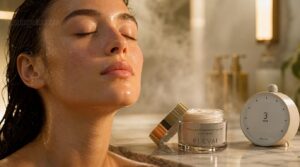
Timing your moisturizer isn’t just a nice habit — it’s what separates a product that works from one that sits on the surface doing nothing. The three-minute rule gives your skin exactly what it needs, right when it’s most ready to receive it.
Applying within that window actually does for your skin.
Locks in Surface Water
Think of your skin right after rinsing — that faint dampness is a window of opportunity. Damp skin application gives humectants like glycerin the surface moisture they need for effective humectant synergy, pulling water directly into the outer layers.
This damp skin advantage also aids occlusive film formation and emulsion spreadability, creating a true moisture lock that keeps hydration exactly where your post-cleansing routine needs it most.
Reduces Post-wash Moisture Loss
Washing disrupts your skin barrier function almost immediately — warm water removes natural lipids, and exposed skin begins losing moisture within seconds. Your post-cleansing routine needs to counter this fast:
- Occlusive film blocks transepidermal water loss before evaporation accelerates
- Lipid replenishment rebuilds the intercellular barrier washing strips away
- Temperature control matters — patting dry reduces post-wash friction and heat-driven moisture escape
Post-wash moisturizer application within three minutes keeps moisture lock intact.
Helps Humectants Bind Hydration
Humectants are only as effective as the water available to them. Applied to damp skin, ingredients like hyaluronic acid—a film-forming humectant—capture surface moisture immediately, while NMF-aligned humectants such as sodium PCA complement your skin’s own hydration chemistry.
This occlusive-humectant synergy is your moisturizer timing strategy at work: ambient humidity effects matter less when your post-cleansing routine gives humectants water to actually bind.
Supports Faster Product Absorption
Damp skin doesn’t just help humectants — it speeds up your entire moisturization schedule. When you apply moisturizer in the morning on slightly moist skin, product layering becomes noticeably smoother and faster.
- Layering Order sets the product absorption rate
- Particle Size affects how quickly formulas penetrate
- Boosting Additives like niacinamide improve absorption
- Skin Massage during application improves your layered skincare approach
Protects The Skin Barrier
Your skin’s barrier is more fragile right after cleansing than it looks. Applying moisturizer within three minutes promotes ceramide replenishment and lipid barrier restoration before transepidermal water loss accelerates. This postcleansing routine step also stabilizes acid mantle balance and reinforces natural moisturizing factors that keep corneocytes cohesive.
Apply moisturizer within three minutes of cleansing — your barrier is far more fragile than it appears
| Barrier Benefit | What It Does |
|---|---|
| Corneocyte cohesion | Keeps outer cells bound tightly |
| Dermal barrier repair | Seals gaps left by cleansing |
Morning Moisturizer Timing Steps
Your morning routine sets the tone for your skin all day, so getting the order right actually matters.
A few simple steps, done in the right sequence, can make the difference between moisturizer that absorbs well and one that just sits on the surface. Here’s exactly how to time each part of your morning routine for the best results.
Cleanse or Rinse First
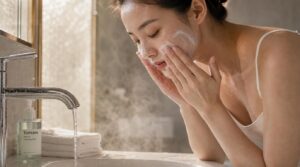
Every effective morning routine starts the same way: cleanse first, and do it right. Use gentle finger cleansing with lukewarm water — hot water strips your barrier and spikes TEWL. Focus on thorough cleanser residue removal without scrubbing.
Here’s your four-step foundation:
- Massage cleanser with fingertips only
- Rinse with lukewarm water completely
- Avoid scrubbing — friction irritates
- Finish with a soft towel pat
Apply Serum Before Moisturizer
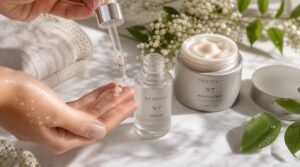
Once your skin is cleansed, think of it as prime real estate for moisture absorption — and serums get first claim. Serum absorption timing matters because water-based serums need direct skin contact. Oil barrier prevention is the reason the layering order benefits you: serum first, then layer on moisturizer.
To maximize effectiveness, follow these steps: apply serum to damp skin, wait 60–90 seconds for absorption, then apply moisturizer. This process ensures active ingredients are locked in, enhancing hydration.
| Step | Why It Works |
|---|---|
| Apply serum to damp skin | Direct contact maximizes humectant binding |
| Wait 60–90 seconds | Serum absorbs before the next layer |
| Apply moisturizer over serum | Locks in active ingredients underneath |
| Choose water-based serums first | Prevents oil barrier from blocking absorption |
| Match serum to moisturizer type | Ensures skin type compatibility throughout |
This humectant synergy, built on skin type compatibility, makes your post-cleanser moisturizer and moisturizing routine far more effective. Choosing water-based serums first prevents an oil barrier from blocking absorption, while matching serum and moisturizer types ensures optimal results for your skin.
Wait Before Sunscreen
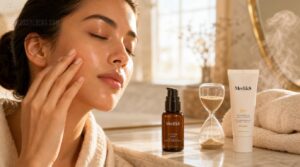
Once your serum and moisturizer are layered, give them a genuine skin settling interval — about one to two minutes — before reaching for sunscreen. Rushing disrupts the film-setting time and raises your sunscreen disturbance risk.
That pre-sun buffer period lets your moisture barrier stabilize, minimizing UV protection delay and ensuring your sunscreen layering actually works as intended. This stabilization is critical for optimal performance during before sunscreen application.
Let Moisturizer Settle Fully
After that one-to-two-minute buffer, let your moisturizer fully settle — two to five minutes are enough. This layering wait interval allows occlusive film stability to develop, locking in postwash moisturizer application benefits before anything else touches your skin.
Rushing disrupts emollient spread uniformity and triggers pilling. Give humectant binding time to complete, ensuring your moisture lock holds steady throughout the morning.
Apply Makeup After Absorption

Applying makeup too soon is one of the most common reasons foundation looks patchy by midday. Once your moisturizer settles — confirmed by a simple tactile absorption check — gently touch your skin to ensure no stickiness remains. This signals that your layering hierarchy can proceed naturally.
Wait two to five minutes after moisturizing before applying primer, then foundation. Humidity’s effects can slow absorption, so adjust your moisturizing schedule accordingly to maintain optimal timing.
Night Moisturizer Timing Steps

Your nighttime routine is where real skin repair happens. Getting the order and timing right makes the difference between waking up with genuinely hydrated skin versus just going through the motions.
Follow these steps to get the most out of your night moisturizer.
Cleanse Before Bedtime
Think of Evening Skin Prep as resetting your skin before it does its repair work overnight. Start with a Gentle Night Cleanser — ideally a pH-Balanced Wash that won’t strip your barrier.
If you’ve worn makeup or sunscreen, double cleansing removes what a single rinse misses. This ensures thorough removal of impurities before proceeding.
This pre-sleep cleansing step is what makes nighttime moisturizing actually work — clean skin absorbs your post-cleanser moisturizer far more effectively.
Apply Treatments First
Once your skin is clean, active sequencing matters. Apply serums first — this is your treatment absorption window, when skin is most receptive.
Whether you’re targeting fine lines with retinol or brightening with vitamin C, pre-moisturizer priming ensures those actives contact skin directly.
Serum barrier prep locks your layering pH balance and enhances postcleanser moisturizer effectiveness.
Don’t rush this step.
Seal With Moisturizer Last
Moisturizer earns its place as the final step because it creates an occlusive layer that prevents everything underneath from evaporating overnight. Think of it as the seal on an envelope — without it, your serums and treatments are exposed. For reliable barrier reinforcement and seal efficiency, follow this sequence:
- Let treatments absorb for 60–90 seconds
- Apply an even film application across your entire face
- Press gently to enhance final moisture lock
This facilitates overnight skin recovery and consistent moisture retention.
Use Richer Night Formulas
Night is when your skin does its heaviest repair work — so your moisturizer should match that effort. Richer formulas deliver deep moisture through nourishing oils and moisture lock technology that lightweight daytime lotions simply can’t sustain.
| Feature | Lightweight Lotion | Rich Night Cream |
|---|---|---|
| Texture | Thin, fast-absorbing | Thick, slow-absorbing |
| Skin Comfort | Surface-level | Deep, sustained |
| Rich Cream Benefits | Minimal occlusion | Strong barrier seal |
Enhanced absorption of overnight treatments improves when rich humectants keep active ingredients in contact with skin longer.
Support Overnight Barrier Repair
Your skin barrier does its most intensive rebuilding while you sleep — so give it the right tools. A ceramide-enriched night cream promotes skin barrier repair by reinforcing the lipid layer, while occlusive slugging locks overnight treatments in place.
- Ceramide Enrichment rebuilds lipid gaps overnight
- Occlusive Slugging seals in nighttime moisturizer benefits
- Microbiome Support keeps nighttime skin regeneration stable
Look for formulas that balance emollient properties with microbiome support and irritation soothing.
Timing by Skin Type
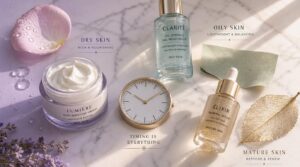
Not every skin type plays by the same rules for moisturizer timing. What works perfectly for dry skin can leave oily skin feeling congested, and mature skin has its own set of needs entirely.
Here’s how to time your moisturizer based on what your skin is actually doing.
Dry Skin: Apply Immediately
If you have dry skin, don’t wait — apply your moisturizer immediately after cleansing, while your skin still feels slightly damp. That brief window of Damp Skin Synergy is when Quick Humectant Binding works hardest, pulling surface water into your skin before it escapes.
This Immediate Occlusive Layer facilitates Barrier Restoration Boost and Rapid Moisture Capture, delivering real hydration lock and water loss prevention through targeted skin barrier repair.
Oily Skin: Brief Pause
Oily skin requires a brief post-cleanse pause—about 30 to 60 seconds—to let excess sebum settle before applying products. This facilitates better sebum control and sets up quick moisture capture without overloading pores.
- Lightweight gel timing matters: apply your lightweight moisturizers before skin fully dries
- A non-comedogenic finish prevents clogged pores while locking in hydration
- Smart moisturization timing for your skin type means fewer breakouts and less shine
Acne-prone Skin: Lightweight Gels
Acne-prone skin needs moisturizer — skipping it actually worsens irritation from actives like benzoyl peroxide or retinoids. The key is selecting a noncomedogenic formulation with humectant complexes to hydrate without clogging pores.
Gel formulation textures offer barrier support and active compatibility, making them ideal for acne-prone skin. Their lightweight consistency ensures hydration without heaviness, aligning with the needs of irritated or treated skin.
Apply your gel cream moisturizer right after cleansing, before treatments dry out the skin. This timing optimizes absorption and prevents moisture loss, enhancing the effectiveness of subsequent skincare steps.
Mature Skin: Richer Creams
Mature skin loses lipids over time, which means your skin barrier thins and water escapes more easily. Heavy creams earn their place by addressing this depletion through rich formulas designed to rebuild what’s been lost.
These creams rely on Ceramide Enrichment, Emollient Richness, and Lipid Restoration to fortify the skin’s protective layer. Together, these elements work synergistically to replenish essential fats and strengthen the barrier.
For deeper hydration, a Hyaluronic Boost is integrated, while Peptide Firmness supports anti-aging repair processes, particularly during overnight recovery.
Apply the cream immediately after cleansing, every morning and night, without skipping, to maximize absorption and maintain consistent results.
Combination Skin: Zone Application
Combination skin calls for a split approach — lighter gel textures on the T-zone to balance texture where oil runs high, and a cheek hydration boost with richer emollients where dryness typically settles. Dual-texture formulas exist for this reason, but zone-specific application works just as well.
- Apply lightweight moisturizer across your forehead, nose, and chin
- Layer a richer cream only on cheeks
- Let each layer settle 60 seconds before sunscreen
Top 5 Night Moisturizers
Nighttime is when your skin does its best repair work, so what you put on before bed actually matters. The right night moisturizer seals in your serums, strengthens your barrier, and delivers ingredients while you sleep.
Here are five worth considering.
1. CeraVe Skin Renewing Night Cream
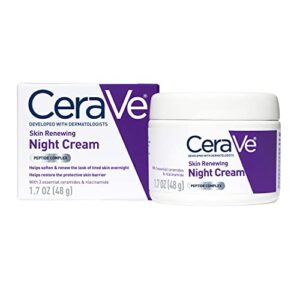
CeraVe Skin Renewing Night Cream earns its place in any serious nighttime routine. It combines three essential ceramides — the building blocks of your skin barrier — with hyaluronic acid, glycerin, and niacinamide to deliver continuous hydration while you sleep.
The MVE technology releases these ingredients gradually, ensuring your skin remains moisturized and supported throughout the night, not just at application.
Its formulation is fragrance-free, non-comedogenic, and dermatologist-developed, making it a reliable choice for dry, sensitive, or mature skin.
| Best For | Anyone with dry, sensitive, or mature skin who wants a no-fuss overnight moisturizer that hydrates and supports the skin barrier without irritation. |
|---|---|
| Hyaluronic Acid | Yes, via MVE delivery |
| Fragrance-Free | Yes |
| Skin Type | Sensitive, dry, mature |
| Overnight Use | Yes, primary use case |
| Non-Comedogenic | Yes |
| Cruelty-Free | Dermatologist-developed |
| Additional Features |
|
- Releases ceramides, hyaluronic acid, and niacinamide gradually through the night so your skin stays hydrated, not just right after you apply it.
- Fragrance-free and non-comedogenic, so it works well for sensitive, acne-prone, or eczema-prone skin without causing flare-ups.
- Plays nicely with other actives like retinol and can even be worn under a CPAP mask without breaking the seal.
- No inner seal on the jar, which can feel like a hygiene concern if you’re used to that extra layer of protection.
- Won’t do much for deep wrinkles or dark circles — it’s more of a barrier and hydration product than an intensive anti-aging treatment.
- The lightweight texture might not feel like enough for very dry or thick skin types that need something richer.
2. Cetaphil Rich Hydrating Night Cream
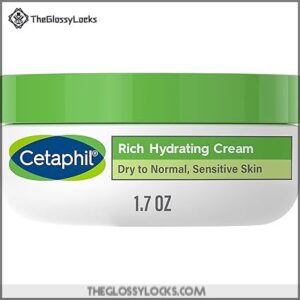
If your skin tends toward dryness or sensitivity, the Cetaphil Rich Hydrating Night Cream deserves a spot in your routine. It combines hyaluronic acid and glycerin—both humectants that pull water into the outer skin layer—with dimethicone, which seals that moisture in overnight. Sweet almond oil softens, and Vitamin E aids repair while you sleep.
At $13.88, it’s a practical, fragrance-free, dermatologist-tested option that works well around the eye area without causing irritation.
| Best For | Anyone with dry, sensitive, or eczema-prone skin who wants a simple, no-fuss overnight moisturizer that won’t break the bank. |
|---|---|
| Hyaluronic Acid | Yes, for 24-hour hydration |
| Fragrance-Free | Yes |
| Skin Type | Sensitive, dry, combination |
| Overnight Use | Yes, nighttime moisturizer |
| Non-Comedogenic | Yes, won’t clog pores |
| Cruelty-Free | Dermatologist-tested |
| Additional Features |
|
- Fragrance-free and hypoallergenic, so it plays nice with even the most reactive skin
- Works around the eye area without irritation — one less product to buy
- Lightweight and fast-absorbing, so you’re not going to bed feeling greasy
- The formula runs on the lighter side, so if your skin is seriously dry, it might not feel like enough
- At 1.7 oz, the jar goes fast — some folks feel like they’re not getting great value for the price
- A few buyers have reported receiving product without a seal or with an off consistency, so it’s worth double-checking authenticity when ordering
3. Doppeltree Renew Overnight Hydrating Face Mask
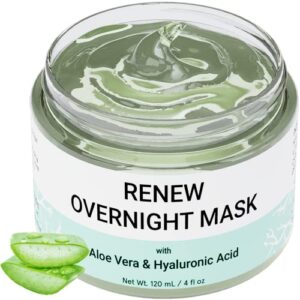
Think of the Doppeltree Renew Overnight Hydrating Face Mask as a barrier and treatment in one step. It combines glycerin and hyaluronic acid to draw moisture into your skin, while aloe vera and green tea extract calm irritation and deliver antioxidant support overnight.
At $21.95 for 5.29 oz, it’s a practical pick that absorbs without transferring to your pillow.
Apply it as your final step—it seals everything underneath and leaves skin noticeably softer by morning.
| Best For | Anyone who wants a simple, no-fuss way to lock in moisture overnight—especially those with dry, sensitive, or mature skin. |
|---|---|
| Hyaluronic Acid | Yes, humectant active |
| Fragrance-Free | Yes, no synthetic fragrances |
| Skin Type | All skin types |
| Overnight Use | Yes, overnight mask |
| Non-Comedogenic | Yes, lightweight formula |
| Cruelty-Free | Yes, vegan and cruelty-free |
| Additional Features |
|
- Layers nicely over serums and night creams, boosting what you’ve already put on
- Lightweight and non-greasy, so it won’t mess up your pillowcase
- Soothes irritation from sun, wind, or hormonal breakouts while you sleep
- Leaves a slightly sticky feeling at first that some people find annoying
- The 5.29 oz bottle goes fast if you’re generous with your application
- Not a great fit for very oily or acne-prone skin that needs a fully non-occlusive product
4. Glow Recipe Watermelon Overnight Mask
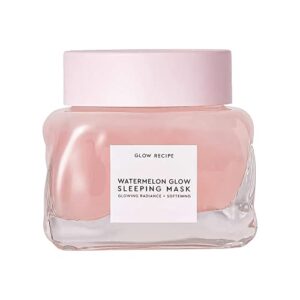
Watermelon isn’t just for summer — it’s doing serious overnight work in this mask. The Glow Recipe Watermelon Overnight Mask combines hyaluronic acid, glycerin, and gentle AHAs to hydrate and mildly exfoliate while you sleep, so you wake up with smoother, brighter skin without any irritation.
Its lightweight, pillow-proof, and oil-free formula makes it ideal for normal to combination skin. At 30 ml, the product runs small, so apply a generous layer to avoid pilling.
| Best For | Anyone with normal to combination skin who wants to wake up with softer, brighter skin without a heavy or greasy feel. |
|---|---|
| Hyaluronic Acid | Yes, in gel formula |
| Fragrance-Free | Yes |
| Skin Type | All skin types |
| Overnight Use | Yes, sleeping mask |
| Non-Comedogenic | Yes, gel-type formula |
| Cruelty-Free | Yes, vegan and cruelty-free |
| Additional Features |
|
- Pulls double duty — works as an overnight mask or a quick 10-minute treatment
- Hyaluronic acid and AHAs hydrate and gently exfoliate at the same time
- Vegan, cruelty-free, and free of a long list of common irritants
- 30 ml goes fast, especially if you’re applying the generous layer it needs to avoid pilling
- Can feel sticky if you use too little — there’s a bit of a learning curve
- Pricey for the amount you get, and no spatula included
5. Aloe Infusion Aloe Vera Cream
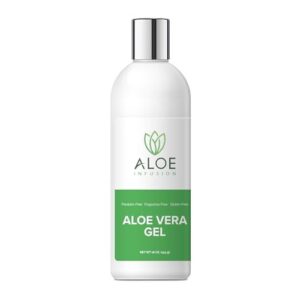
Aloe Infusion Aloe Vera Cream delivers simple, effective hydration. Built on a base of pure aloe vera and enriched with shea butter and Manuka honey, it hydrates without leaving a greasy residue, making it ideal for nightly use—even under other treatments.
The formula is free of alcohol, parabens, and synthetic fragrances, ensuring sensitive skin tolerates it well. Its clean composition prioritizes gentle care without compromising moisture retention.
Apply it as the final seal in your routine, layered after serums. This locks in hydration and maximizes the benefits of preceding products.
One key consideration: the cream contains citric acid, so avoid pairing it with salicylic acid products to prevent potential irritation.
| Best For | Anyone with dry, sensitive, or irritated skin who wants a clean, no-fuss moisturizer that works on both face and body. |
|---|---|
| Hyaluronic Acid | Yes, in aloe base |
| Fragrance-Free | Yes |
| Skin Type | Sensitive, dry, all types |
| Overnight Use | Yes, nighttime moisturizer |
| Non-Comedogenic | Yes, non-greasy |
| Cruelty-Free | Yes, cruelty-free |
| Additional Features |
|
- Pure aloe vera base with shea butter and Manuka honey means real hydration without the greasy feeling
- Free of alcohol, parabens, and synthetic fragrance — great if your skin tends to react to stuff
- Super versatile — use it as a face moisturizer, after-sun lotion, or post-shave balm
- Contains citric acid, so it can clash with salicylic acid products and cause irritation
- Some users have reported redness or skin inflammation, so it’s not a guaranteed fit for everyone
- It’s not a full skincare solution — you’ll likely need to pair it with other products if you’re targeting acne or aging
Moisturizer Absorption Mistakes
Even with the right moisturizer and perfect timing, small application habits can quietly sabotage your results. Most people don’t realize the problem isn’t the product — it’s the process.
These are the most common mistakes worth fixing.
Applying on Fully Dry Skin
Waiting until your face is completely dry is one of the most common timing mistakes people make. Without surface moisture, your moisturizer loses its advantage — humectants can’t bind well, spreadability drops, and product patching becomes likely.
Delayed occlusion means your skin loses water faster through increased TEWL before any barrier forms.
| What Happens | Why It Occurs | How It Affects You |
|---|---|---|
| Reduced Spreadability | No surface water to glide across | Uneven coverage, dry patches |
| Product Patching | Moisturizer clumps instead of blending | Some areas over-moisturized, others bare |
| Tightness Sensation | Delayed occlusion slows barrier sealing | Skin feels tight within minutes |
Knowing when to apply facial moisturizer — specifically, before dry skin fully loses water — helps your transepidermal water loss management actually work. Apply your moisturizer while skin still holds a slight dampness.
Using Too Much Product
Barrier Overload occurs when excess product sits on the skin’s surface instead of absorbing, creating Product Buildup that mixes with sebum and triggers Excess Greasiness.
Pilling Risk increases when layering moisturizer over still-damp serums before bed.
Prolonged skin contact with ingredients can intensify Ingredient Irritation.
A pea-sized amount is sufficient—pilling prevention starts with using less, not more.
Skipping After Exfoliation
Even a pea-sized amount won’t help if you skip moisturizer after exfoliating. Exfoliation triggers a sensitivity spike—your barrier healing pause is real, and leaving skin bare amplifies dryness quickly. Skipping invites irruption escalation and disruption in layering for your next steps.
For solid post-exfoliation care, apply immediately:
- Humectants need surface moisture to bind hydration
- Occlusives seal before water escapes
- Skin hydration stabilizes within minutes of application
- Morning moisturizer application resets your barrier effectively
Applying Sunscreen Too Soon
Rushing sunscreen onto a tacky, still-settling moisturizer layer is one of the most common morning mistakes. Layer mixing disrupts film formation, leading to uneven coverage and reduced SPF across your face. Your daytime SPF lotion needs a hydrated base, not a slippery one.
Give your morning moisturizer application two to five minutes to absorb fully, then apply your broad-spectrum sunscreen for real skin barrier protection.
Frequently Asked Questions (FAQs)
What is the 3 minute rule for moisturizer?
The 3-Minute Rule is simple: apply your moisturizer within three minutes after cleansing, while skin is still damp.
That brief post-wash hydration window helps lock in hydration before evaporation takes over.
Can heavy moisturizer cause milia?
Yes, heavy moisturizers can cause milia. Occlusive ingredients like petrolatum and silicone create product buildup that traps keratin beneath the surface.
Oil-rich formulas slow skin turnover, making milia prevention harder for clog-prone skin types.
Can diet affect how well moisturizer absorbs?
Your diet is the foundation your skin builds on. Poor hydration, excess sugar, and low omega‑3 intake weaken your barrier, so moisturizer absorbs unevenly.
Antioxidant intake and hydration‑rich foods help it actually work.
Does water temperature during cleansing impact hydration?
Water temperature matters more than most people realize. Hot water strips barrier lipids, accelerates temperature-driven TEWL, and creates a post-wash moisture lag.
Lukewarm cleansing preserves the skin barrier, ensuring humectants have something to work with. This approach maintains integrity, preventing excessive moisture loss after washing.
How does climate change moisturizer absorption rates?
Climate shapes how your skin absorbs moisturizer more than most people realize. Humidity impact, temperature effects, and seasonal barrier changes all shift absorption timing and product feel.
Should moisturizer be refrigerated for better skin benefits?
Refrigerating your moisturizer won’t boost absorption. Cold storage may help ingredient stability and extend shelf life, but texture changes can reduce even coverage.
The cooling sensation feels soothing, not functionally better.
Does age affect how quickly moisturizer absorbs?
Yes, age does affect moisturizer absorption. As the stratum corneum thickens, lipids decline, and sebum reduces, these changes alter the skin’s surface, slowing percutaneous penetration. Consequently, the same formula absorbs differently in mature skin.
Conclusion
The less effort you put into timing, the harder your moisturizer has to work—and often, it still falls short. Knowing the best time to apply facial moisturizer for absorption isn’t complicated: damp skin, three minutes, consistent routine.
Your barrier doesn’t ask for much, just the right conditions to do what it’s built to do. Give it that window, and every drop of product you apply becomes an investment your skin actually collects on.