This site is supported by our readers. We may earn a commission, at no cost to you, if you purchase through links. This content is for general informational and educational purposes only and is not a substitute for professional medical, dermatological, or nutritional advice.

Most oils sit on top of your hair like a coat of wax—coating the surface, adding shine, then washes away without doing much. Coconut oil works differently. Its lauric acid molecules are small enough to slip past the cuticle and reach the cortex, where actual structural damage happens. That’s not marketing language; it’s backed by protein-loss studies comparing coconut oil against mineral and sunflower oils.
Sleeping with it in your hair takes penetration a step further. Those extra hours let the oil seal moisture deeper, lock in hydration, and give strands time to truly absorb nutrients. When applied correctly, an overnight coconut oil mask can make the difference between hair that looks treated and hair that genuinely feels restored.
Table Of Contents
Key Takeaways
- Coconut oil’s lauric acid molecules are small enough to penetrate the hair shaft and bind to proteins, making it fundamentally different from surface-coating oils like mineral or sunflower oil.
- Leaving coconut oil on overnight for 6–8 hours allows body heat to drive deeper absorption, significantly reducing protein loss and locking in moisture compared to short treatments.
- Hair type determines how you use it—coily, dry, and high-porosity hair thrive with full overnight application, while fine or oily hair needs oil applied to mid-lengths and ends only, skipping the roots entirely.
- Proper removal matters as much as application: start with a lukewarm rinse, double-shampoo to clear buildup, and finish with an apple cider vinegar rinse to restore scalp pH and flatten the cuticle.
Why Use Coconut Oil Overnight

Coconut oil isn’t just a kitchen staple — it’s one of the few natural oils that actually gets inside the hair shaft rather than just sitting on top of it.
That deep penetration is what makes it a go-to ingredient in so many natural hair treatment remedies — it actually repairs, rather than just coats.
That deeper reach is what makes leaving it on overnight so much more effective than a quick 20-minute treatment. Here’s why it works so well.
Lauric Acid and Hair Shaft Penetration
What makes coconut oil genuinely different from other oils comes down to one thing: lauric acid. This medium-chain fatty acid has a molecular size advantage that lets it slip right through cuticle gaps — that’s cuticle gap diffusion doing its quiet work. Its low molecular weight allows the acid to slide between cuticle scales. Once inside, its protein-binding affinity helps reinforce your hair shaft from within.
Here’s what’s happening inside each strand:
- Molecular size — Lauric acid’s C12 structure fits between overlapping cuticle cells.
- Penetration depth — Oil penetration into the hair shaft reaches the cortex, not just the surface.
- Cortex lipid reinforcement — It rebuilds your hair’s internal hydrophobic barrier.
- Humidity impact diffusion — Moisture conditions affect how deeply the oil travels overnight.
How Overnight Masking Reduces Protein Loss
Beyond penetration, the overnight coconut oil hair mask employs smart protein preservation strategies. The oil forms a bond protection layer that limits water contact, keeping swelling under control so the cuticle remains tighter against the cortex.
Less disruption to cuticle tightening means fewer proteins escape during rinsing. This protective mechanism directly reduces protein loss.
Adding occlusive hydration and friction reduction while you sleep further minimizes damage, ensuring protein loss drops noticeably.
Moisture Retention, Shine, and Frizz Control
Protein protection and moisture retention go hand in hand. An overnight coconut oil hair mask works through film formation and cuticle smoothing, sealing the surface so your hair holds onto hydration longer.
This sealant balance creates a natural humidity barrier, keeping frizz control strong even on damp mornings.
The result? Real moisture retention, slip enhancement, and genuine hair shine enhancement — lasting softness that’s noticeable.
Split End Support and Breakage Prevention
That lasting softness isn’t just cosmetic — it’s working overtime on split end prevention too. Coconut oil’s cuticle smoothing effect creates a friction shield along each strand, so ends glide rather than snag.
Coconut oil doesn’t just soften hair — it builds a friction shield that keeps ends gliding instead of snapping
This elasticity boost and fiber strengthening means hair bends under stress instead of snapping. Hair breakage prevention with oils comes down to this: overnight coconut oil conditioning gives your hair time to actually rebuild its strength.
Scalp Hydration and Dandruff Relief
When your scalp feels tight and flaky, overnight coconut oil hair conditioning creates an occlusive barrier that slows moisture loss and softens dry surface skin. Here’s what that hydration comfort actually does:
- Dry scalp relief — eases the itchy, "stretched" feeling within hours
- Natural dandruff remedy — lauric acid aids yeast regulation against Malassezia
- Scalp moisturization — keeps skin pliable, making flakes less visible
- Scalp oil balance — light application prevents residue removal struggles at washout
Who Benefits Most From It

Coconut oil works beautifully for many people, but it doesn’t treat every hair type the same way. Some hair types soak up the benefits overnight, while others need a lighter touch.
Here’s a breakdown of who gets the most out of this mask — and a few things to know before you try it.
Best Hair Types for an Overnight Mask
Not every hair type reacts to coconut oil the same way. Coily hair, thick hair, and wavy hair tend to drink it up overnight, show real improvements in frizz control and softness by morning.
Medium porosity hair absorbs the oil steadily without much resistance.
Chemically treated hair, dry hair, and dry scalp conditions also respond well — the added moisture genuinely improves texture and hair thickness.
Dry, Damaged, Curly, and High-porosity Hair
If your hair is prone to snap, frizz, or feel perpetually parched, a coconut oil hair mask might be exactly the dry hair remedy you’ve been missing. High-porosity strands especially benefit—their open cuticle gaps absorb oil fast, making an overnight treatment with coconut oil ideal for moisture-locking strategies.
Here’s what this deep conditioning routine targets:
- Brittle, breakage-prone strands — oil penetration into the hair shaft coats fragile areas, reducing snap during detangling.
- Lifted cuticles causing frizz — sealing with coconut oil aids humidity control overnight.
- Chemically damaged hair — protein rebuild treatments work best alongside consistent oil masking.
- Dry, coily curls — natural oils struggle to travel down tight coils, so the mask fills that gap.
- High-porosity assessment wins — once you identify your hair’s porosity, protective styling post-mask locks in results longer.
Fine Hair and Oily Scalp Precautions
Fine hair works differently — it tips toward looking flat and greasy quickly, especially with an overnight coconut oil treatment. Root greasiness becomes a real concern because oil migrates upward during sleep, weighing roots down by morning. Scalp weight management is critical here.
| Hair Concern | Smart Adjustment | Why It Helps |
|---|---|---|
| Oil buildup concerns | Apply mid-lengths to ends only | Prevents scalp saturation |
| Volume preservation | Use 2 tbsp maximum | Lightweight formulations avoid heaviness |
| Oil migration control | Skip roots entirely | Reduces morning greasiness |
Focused application still delivers scalp nourishment and hair breakage reduction — just without the flat-root aftermath.
When to Avoid Scalp Application
Not every scalp is ready for an overnight oil treatment. Skipping application makes sense when you’re dealing with:
- An Inflamed Scalp, Open Wounds, or active infections — prolonged exposure traps heat and worsens irritation
- Heavy Buildup or persistent flaking — oil coats existing residue, making removal harder
- Known Allergy Risk — allergic reaction risk is real, even with natural oils
When in doubt, keep oil on mid-lengths and ends only.
Patch Testing Before First Use
Before you commit your scalp to an overnight soak, a quick patch test can save you a lot of trouble. Even natural oils carry a risk of allergic reactions for some people.
| Patch Test Step | What to Do |
|---|---|
| Site Selection | Inner forearm, clean and unbroken |
| Thin Layer | Small dab, evenly spread |
| Timing Window | Leave on 24–48 hours undisturbed |
| Observation Signs | Watch for redness, itching, swelling |
| Result Interpretation | No reaction means you’re good to go |
Ingredients and DIY Mask Recipe

Making this mask doesn’t require a long shopping list or anything hard to find. You likely have most of what you need already sitting in your kitchen.
Here’s exactly what to gather before you start.
How Much Coconut Oil to Use
Getting the amount right is honestly half the battle with any DIY coconut oil hair mask recipe. Porosity dosage matters — high-porosity strands drink oil fast, while low-porosity hair needs less or it’ll feel coated. Density measurement plays a role too; thick, full hair needs more coverage.
For an overnight hair treatment with coconut oil, aim for visible slip without dripping.
Ratios by Short, Medium, and Long Hair
Length dosage breaks down simply once you see the coverage math:
- Short (8–10 in.): 1–2 tbsp
- Medium (12–15 in.): 2–3 tbsp
- Long (16–20 in.): 3–5 tbsp
- Curly compensation: add ½ tbsp extra
Density scaling and porosity tweaks matter, too—thick or high-porosity hair need the higher end of each range for complete coverage.
Warming The Oil Safely Before Use
Once you’ve measured your oil, warm it gently using a water bath — set your heat-safe container inside a bowl of hot water for five to ten minutes. This method maintains texture consistency and prevents uneven heating.
Microwaves often create uneven hot spots that no heating rules can reliably prevent, making a water bath the safer choice.
Always perform a quick wrist temperature test before applying your coconut oil hair mask to ensure it’s comfortably warm and safe for use.
Optional Add-ins Like Honey, Aloe, or Avocado
Once your oil is warm, you can boost it with a few simple add-ins. Honey adds humectant stickiness that locks in moisture, while aloe vera’s high water content creates natural aloe dilution, making the blend lighter and easier to spread. Avocado creaminess thickens your DIY coconut oil hair mask beautifully.
Match your add-in ratios to the oil volume, and always check for allergen alerts beforehand.
Rosemary and Peppermint Essential Oil Options
To elevate your overnight coconut oil hair treatment, incorporate rosemary essential oil and peppermint essential oil for enhanced results. For DIY coconut oil hair masks, mix 3–5 drops of each into 2–3 tablespoons of carrier oil—this dilution ratio ensures scalp safety during extended wear.
The essential oil blend delivers therapeutic benefits while balancing the scent of herbal rosemary and cool peppermint, creating a genuinely pleasant aromatic experience.
Choosing Extra-virgin Coconut Oil
The label is your first clue. Reach for an extra virgin organic coconut oil that lists one ingredient, smells faintly of fresh coconut, and turns solid when cool — signs of minimal processing and genuine cold-pressed extraction.
- Ingredient purity: No added fragrances, preservatives, or blended oils
- Aroma assessment: Clean, mild coconut scent — never rancid or paint-like
- Texture consistency & shelf-life storage: Smooth when warmed, stored away from heat and light
How to Apply It Correctly
Getting the application right is honestly where most people go wrong—and it’s simpler than you think once you know the steps.
How you put the oil on matters just as much as which oil you use. Here’s exactly how to do it from start to finish.
Before you even reach for the bottle, it helps to know the roots of this ritual, like the way a humble Yunnan konjac root has long been prized for gentle skin care, as explained in this guide on konjac sponge benefits for sensitive skin.
Start With Dry or Slightly Damp Hair

Hair that’s towel dried to a slightly damp moisture checkpoint is your sweet spot for an overnight coconut oil hair treatment. That light dampness delivers a natural slip boost, giving the oil something to glide through rather than drag against dry hair.
You’ll notice drip reduction immediately, and detangle assistance kicks in before you even section. Evenly coating the oil becomes noticeably easier.
Sectioning Hair for Even Coverage
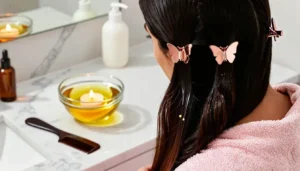
Skipping sectioning is the fastest way to end up with patchy, uneven results. Think of it as building Clip Zones to keep everything organized before your overnight hair treatment begins.
Follow this step-by-step hair oil application process:
- Create a center part using a tail comb for Uniform Parting
- Divide horizontally across the crown for consistent Section Thickness
- Clip each zone before starting Sequential Application
- Work through each section using recomb passes with a wide-tooth comb
- Unclip one zone at a time, following your hair mask application guidelines
A fabric shower cap keeps everything contained once you’re done.
Massaging The Scalp With Circular Motions
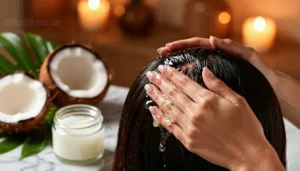
Once your sections are ready, use your finger pad technique to work the oil in — pads only, never nails. Press with light to medium pressure, keeping the circles small and slow. Spend about 10–15 seconds per area, switching directions occasionally as you go. That timing ensures even coverage without over-scrubbing.
Good oil viscosity ensures the coconut oil hair mask glides smoothly, making circular motions easy during the overnight coconut oil hair treatment.
Coating Mid-lengths and Ends Thoroughly
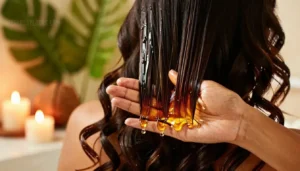
Your ends are the oldest, most fragile part of your hair — they require the most attention during any coconut oil hair mask.
Follow these hair mask application guidelines for thorough end saturation:
- Mid-length first — start at ear level, not roots
- Layer thickness control — thin, even coat, no globs
- Finger raking — rake oil into inner strands
- Tip inspection — run fingers along each end, adding oil where dry
This facilitates oil penetration into the hair shaft and enhances moisture retention overnight.
Using a Wide-tooth Comb to Distribute Oil
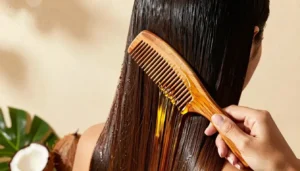
Once your fingers have done the initial work, a wide-tooth comb elevates even distribution. Its spaced teeth glide through oil-coated strands without snagging, acting as a quiet detangling aid while ensuring consistent coverage across all sections.
Follow these hair mask application guidelines for optimal overnight results:
| Stroke Direction | Area Focus | Purpose |
|---|---|---|
| Downward, root to tip | Mid-lengths | Even distribution along shaft |
| Upward, ends first | Fragile tips | Prevents tugging and breakage |
| Gentle, minimal passes | Near roots | Avoids scalp saturation |
This simple step transforms your coconut oil hair mask into a thorough, salon-worthy conditioning ritual.
Securing Hair With a Bun or Topknot
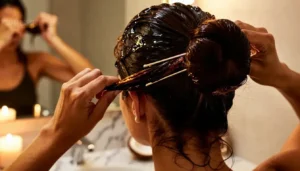
Once the comb has done its work, gather everything into a topknot or bun. Twist your ponytail before wrapping — that extra tension keeps strands bundled together overnight.
For pin placement, slide bobby pins in a crisscross pattern under the bun base. Balanced tightness matters: firm enough to stay put, never tight enough to pull.
A little flyaway control with leftover oil keeps everything neat.
Covering Hair With a Shower Cap Overnight

Slide a shower cap over your bun — this is where overnight hair conditioning really locks in. The cap creates a moisture seal that keeps hydration from evaporating while you sleep, and it cuts down on friction between your hair and the pillow.
Look for a fabric-lined option to avoid condensation. The elastic should offer a secure fit without pressing into your hairline.
Overnight Timing and Weekly Routine

Timing makes or breaks how well this hair mask works. Leave it on too little, and you will miss the deep conditioning benefits; leave it on too long, and you might end up with buildup you didn’t bargain for.
Getting the timing and frequency just right is key. Here’s what you need to know to achieve optimal results.
Minimum Treatment Time Vs Overnight Results
Two hours are the minimum contact time threshold for your overnight coconut oil hair treatment to work, but here’s why going longer pays off:
- Oil film stability improves over 8 hours, sealing moisture more completely
- Thermal diffusion effect from body heat pushes lauric acid deeper overnight
- Buildup risk stays low with correct amounts
Overnight hair conditioning noticeably outperforms shorter hair mask application time for softness and breakage reduction.
Ideal Overnight Window for Deep Conditioning
Aim for 6 to 8 hours for your overnight hair treatment—this window ensures ideal contact hours without overdoing it. It leverages heat retention from body warmth, while a shower cap minimizes friction against your pillow.
Set timer cues before bed to prevent the treatment from exceeding safe limits. This precaution helps avoid hygral fatigue, a risk when coconut oil remains on hair too long.
Why Fine Hair Should Avoid Overlong Wear
Fine hair and overlong wear of coconut oil treatments simply don’t mix well. When an overnight coconut oil hair treatment extends past 8 hours, oil penetration into the hair shaft approaches saturation, leaving a heavy film that flattens strands.
The potential drawbacks of heavy hair oils on finer hair textures include:
- Limp appearance from excess surface coating
- Tangling risk overnight from oil-slicked strands clinging together
- Clogged follicles if oil pools near roots
- Breakage risk during morning detangling
- Scalp greasiness that lingers after washing
How Often to Use The Mask Weekly
Once a week is the sweet spot for most people following a weekly hair mask routine. Your hair type and schedule matter here—dry or thick strands handle that frequency well, while fine hair benefits from every other week.
Watch for signs of buildup, such as dullness or greasiness, to adjust your routine. A smart rotation plan keeps scalp oil balance steady without overdoing it.
Adjusting Frequency for Damaged or Oily Hair
Damaged hair actually craves more attention—starting your overnight coconut oil hair treatment every one to two weeks lets brittle ends and hair breakage recover gradually through incremental treatment steps.
Oily scalps, though, need breathing room every two to three weeks.
Keep a simple frequency adjustment log to track how your hair responds, adjusting for climate-driven scheduling shifts and hair weight perception changes season to season.
Signs You Are Using Too Much Oil
Your hair will tell you when enough is enough. Greasy buildup near the roots, an itchy scalp the next morning, or a dull appearance instead of shine are all clear signals you’ve overdone it.
- Strands clumping and feeling slick point to excess oil blocking proper penetration into the hair shaft
- Dry residue after washing and excess tangles mean removal was incomplete
- Scalp irritation hints at compromised scalp health and hydration balance
How to Wash It Out

Getting the oil out is just as important as putting it in. Leaving residue behind can weigh your hair down and undo all the good work you did overnight.
Here’s exactly how to rinse, shampoo, and finish so your hair comes out clean, soft, and fully conditioned.
Rinsing With Lukewarm Water First
Before you reach for the shampoo, start your overnight coconut oil hair treatment with a thorough lukewarm rinse. Warm water kick-starts oil loosening, melting that thick layer so it flows off instead of sitting stubbornly on your strands.
This step deals with residue prevention and friction reduction naturally, making the whole removal process gentler on your scalp and easier overall.
Shampooing Enough to Remove Buildup
Once the lukewarm rinse has done its job, it’s time to shampoo — and one pass usually isn’t enough after an overnight coconut oil hair treatment. The double shampoo technique works well here: first wash loosens the oil, second wash actually removes it.
Watch for these buildup detection signs before rinsing out:
- Hair still feels heavy or coated
- Roots look flat and greasy
- Strands lack that light, clean bounce
Focus your scalp cleansing there — roots first, always. A gentle clarifying shampoo helps manage clarifying shampoo frequency without over-stripping, giving you that true residue-free rinse.
When to Use Conditioner After Rinsing
Once you’ve shampooed out the bulk of the oil, your next move is conditioner — but timing matters. Apply it to damp hair, not dripping wet, so the product actually coats each strand. Squeeze out excess water first.
If stubborn dye still lingers after conditioning, this guide to removing black hair dye safely helps you avoid damage before things escalate.
Focus on mid-lengths and ends, leave it for two to five minutes, then rinse completely. This post-oil conditioner step seals your overnight coconut oil hair treatment beautifully.
Apple Cider Vinegar Rinse for Residue
After conditioner, an apple cider vinegar rinse is your secret weapon for complete oil removal techniques. Mix 2 tablespoons into one cup of water, then pour it through your strands. It works through Residue Dissolution and Biofilm Disruption, clearing stubborn buildup while pH balancing your scalp naturally. Its scalp antimicrobial properties also support a healthier environment post-overnight coconut oil hair treatment.
Why ACV Works So Well:
- Loosens mineral and styling product buildup
- Flattens the cuticle for Detangling Enhancement
- Disrupts microbial imbalance on the scalp
- Restores an acidic pH after shampooing
- Leaves strands smoother without extra conditioner
What Hair Should Feel Like Afterward
Once the rinse is complete, your hair should feel noticeably different — softer, smoother, and easier to run your fingers through. Think of it like switching from rough canvas to silk.
| Quality Marker | What You Should Feel | What It Signals |
|---|---|---|
| Softness Level | Smooth from mid-lengths to ends | Good hair softness and moisture retention |
| Frizz Control | Calmer flyaways, flatter surface | Improved hair hydration and cuticle alignment |
| Shine Factors | Glossy without greasiness | Healthy hair shine and balanced moisture |
| Hair Elasticity | Flexible, not stiff or crunchy | Restored hair strength and moisture balance |
Your strands should move freely — no tackiness, no heaviness.
Common Mistakes That Leave Hair Greasy
Greasy hair after an overnight coconut oil mask often stems from product overload or rushed removal.
Using too much oil, skipping a second shampoo pass, or rinsing with cool water are the primary culprits behind residue removal failures.
For scalp sensitivity, keep coconut oil away from roots to prevent irritation.
Oil buildup causes dullness fast — so, less product and thorough washing are your best fixes for greasy hair.
Results to Expect After Regular Use
With consistent weekly use, most people notice real differences within a month. Breakage reduction shows up first — fewer snapped strands during brushing, smoother detangling. Shine improvement follows as cuticles lie flatter and reflect light more evenly.
Scalp comfort increases gradually, with less tightness and itching.
The antioxidant properties also support color preservation and hair moisture retention, keeping dyed lengths looking fresh longer.
Frequently Asked Questions (FAQs)
Can coconut oil expire or go rancid?
Yes, coconut oil can expire. High-quality virgin coconut oil lasts up to five years thanks to its antioxidant properties.
But watch for spoilage signs like a sour smell, yellow tint, or bitter taste.
Does coconut oil work on color-treated hair?
Coconut oil works well on color-treated hair.
Its fatty acids support damage repair, boost moisture, and improve oil absorption without stripping pigment, making it a reliable natural hair conditioner for color protection.
Can children use a coconut oil mask?
For most kids, a coconut oil hair mask is safe, but scalp sensitivity and oil allergies make patch testing essential first.
Stick to gentle recipes, short wear times, and adjust for child hair types.
Is fractionated coconut oil as effective?
Fractionated coconut oil stays liquid and spreads easily, making overnight application smoother.
However, it contains far less lauric acid, so deep hair shaft penetration and protein protection won’t match regular coconut oil’s performance.
Does climate or humidity affect mask results?
Climate and humidity do affect your results. In dry air, coconut oil locks in moisture longer, and frizz control lasts noticeably longer.
In humid conditions, hair porosity increases, and maintaining moisture balance can be trickier.
Conclusion
A single night can quietly change the story your hair tells. Applying a coconut oil hair mask overnight transforms your hair’s narrative, offering more than just surface-level shine. It strengthens strands internally, minimizes breakage, locks in moisture, and delivers rare hydration to the scalp.
When you apply the mask the right way—warming the oil, sectioning hair carefully, and covering it with a shower cap—you’re not merely adding luster. This method reinforces each strand from the inside out, reduces breakage, seals moisture, and nourishes the scalp with hydration it often lacks.
Stay consistent, adjust for your hair type, and the results will speak clearly enough on their own.