This site is supported by our readers. We may earn a commission, at no cost to you, if you purchase through links. This content is for general informational and educational purposes only and is not a substitute for professional medical, dermatological, or nutritional advice.

A cluttered shower caddy does more than annoy you—it quietly steals minutes from your morning. Shampoo buried behind three half-empty conditioners, a razor balanced precariously on a ledge, soap scum cementing everything in place. Sound familiar?
The good news is that a well-organized caddy isn’t about owning less; it’s about placing the right things where your hands naturally reach. A few deliberate changes to how you organize your shower caddy can turn a chaotic corner into a space that runs on autopilot—starting with what’s inside it.
Table Of Contents
- Key Takeaways
- Declutter Before Organizing Your Caddy
- Choose The Right Shower Caddy
- Group Products by Shower Routine
- Place Essentials Within Easy Reach
- Use Vertical Shower Storage Wisely
- Maximize Corner and Small Spaces
- Add Inserts, Hooks, and Containers
- Keep Grooming Tools Separate
- Maintain a Clean Shower Caddy
- Frequently Asked Questions (FAQs)
- Conclusion
Key Takeaways
- Declutter before organizing — toss expired products, remove empties, and store backup bottles outside the shower so only true daily essentials earn a spot in your caddy.
- Group products by routine (hair, skin, shaving, body) and put your most-used items at the top shelf within easy one-handed reach, with heavy bottles always at the bottom for stability.
- The right caddy type matters — corner, hanging, suction-cup, or freestanding — and rust-resistant materials like stainless steel or powder-coated finishes are non-negotiable for long-term durability in a humid shower.
- A clean caddy stays clean with weekly soap scum removal, regular shelf drying, suction-cup checks every three months, and a quarterly purge of anything you haven’t touched.
Declutter Before Organizing Your Caddy

Before you arrange a single bottle, take everything out of your caddy first. A cluttered starting point just leads to a cluttered result.
Here’s what to clear out before you begin organizing.
Remove Empty Bottles
Rinsing and inverting empty bottles over the drain stops drips from spreading across your shelves — a small habit that keeps things tidy.
Pairing this with a minimalist bathroom storage routine means fewer bottles accumulate in the first place, so there’s less to drip-dry anyway.
Set purge reminders monthly so empties don’t pile up quietly.
Use a dedicated recycling bin to label empty bottles by type, making bathroom decluttering faster.
Refill pump bottles when possible to regularly purge products and cut clutter reduction down to minutes.
Toss Expired Products
Once empties are cleared, take a closer look at what’s left. Check each product for PAO symbols — that little open-jar icon — and toss anything past its date. Expired shampoos, serums, and sunscreens lose effectiveness and can irritate skin.
Build a replacement schedule so you’re never caught off guard, and follow safe disposal methods to reduce environmental impact.
Keep Daily Essentials
Now that the clutter’s gone, it’s time to decide what stays. Your daily routine should shape your Quick-Grab Layout — only true bath essentials earn a prime spot. Think Morning Routine Flow: what do you reach for every single day?
- Front-row shampoo, conditioner, and body wash
- Face wash in a visible, easy-grab compartment
- Clear shower caddy inserts for Visibility Boosters
- Essential Item Rotation — one slot, one purpose
- Product Size Matching to avoid overcrowded compartments and dividers
Store Backups Elsewhere
Your daily essentials earned their spots — backup bottles haven’t. Store your extras outside the shower entirely. A cabinet shelf or closet bin works perfectly for spare shampoos and body wash.
Think of it as your own hybrid backup system: offsite storage that keeps prime caddy space open. This simple bathroom organization habit is one of the best space-saving bathroom ideas you’ll use.
Limit Duplicate Items
Two bottles of the same conditioner taking up shelf space? That’s bathroom clutter you don’t need. Limit essentials to one of each product, and declutter your shower before adding anything new.
Think of it like a centralized inventory list — if it’s already there, don’t duplicate it. This approach prevents redundancy and streamlines your routine.
Categorizing your products by type makes spotting redundant items easy and keeps your caddy lean. Group shampoos, conditioners, and soaps together to maintain order effortlessly.
Choose The Right Shower Caddy
The caddy you pick makes or breaks the whole system. Not every style works for every shower, so it’s worth knowing what’s out there before you commit.
Here are the main types to explore.
Hanging Shower Caddies

Hanging caddies are one of the most flexible options available. The Over-the-Showerhead Hanging Caddy requires no tools for installation, while the Hanging Rope Shelf Caddy offers adjustable hooks to redistribute weight as your collection evolves. For added stability, the top-pick 3-Tier Shower Caddy features a grippy rubberized hook.
Key considerations for optimal use include:
- Rust Prevention: Choose stainless steel for material longevity
- Suction Strength Tips: Clean tile before placing suction cup caddies
- Adhesive Hooks for Tiles: Support up to 6 lbs, no damage
- Weight Distribution: Keep heavy bottles on lower shelves
Corner Shower Caddies

Corner caddies are the unsung heroes of space-saving bathroom ideas. They tuck right into that 90-degree corner you’re probably ignoring, giving you full corner utilization without sacrificing floor space.
| Feature | What It Means for You |
|---|---|
| Drainage Design | No more puddles or mildew buildup |
| Material Longevity | Stainless steel resists rust for years |
| Weight Distribution | Heavy bottles stay low and stable |
| Installation Flexibility | No drill installation suits renters perfectly |
A Tension Rod Corner Caddy fits snugly with zero hardware. Look for an Aesthetic Finish that matches your space.
Suction-cup Caddies

A suction cup shower caddy works best when you prep the surface first. Wipe the tile with an alcohol wipe before pressing the cup firmly for 30 seconds — that’s your seal longevity right there.
Be mindful of weight limits; one to two bottles are the sweet spot.
A Suction Cup Plastic Bin Caddy in ABS plastic resists rust and stays grippy for months.
Freestanding Caddies

Freestanding caddies are the no-commitment option of shower organization — no drilling, no damage, no stress.
They stand on their own with non-skid feet for solid base stability, and smart weight distribution across three to four tiers keeps things balanced.
Choose from material finishes like chrome or matte black for smooth aesthetic integration.
Mobility options let you move it whenever you need.
Use compartments and dividers to apply these space-saving bathroom ideas and shower organization tips.
Rust-resistant Materials

Your shower caddy’s material determines how long it lasts in daily humidity.
Choose wisely, and it’ll outlast any product inside it.
- Stainless steel grades (304 and 316) form a protective layer that keeps rust away for years
- Aluminum anodizing thickens the oxide barrier, making it lightweight and genuinely rustproof
- Copper patina finish develops naturally, protecting the surface while looking great
- Titanium corrosion resistance withstands harsh cleaners without flinching
- Powder-coated finish seals metal against moisture and soap scum buildup
Group Products by Shower Routine

The easiest way to cut time in the shower is to stop hunting for things.
Grouping your products by what you actually do — hair, skin, shaving, body — means everything you need is right where you expect it. Here’s how to break it down.
Hair Care Products
Most people own far more hair care products than they actually use daily. In your shower caddy, group shampoo types, conditioner variants, hair oils, and scalp treatments together on one shelf. Keep styling aids like mousses or heat protectants outside the shower entirely.
This simple shower organization move creates cleaner bathroom storage solutions and doubles as a smart space saving idea.
Face and Skin Care
Group your skincare items — cleanser types, serums with actives like vitamin C or niacinamide, and moisturizer — together on one shelf. Use clear, waterproof containers and label your containers so nothing gets mixed up.
Keep sunscreen in mind: store it where you’ll actually grab it last. Hydration strategies start with organization.
Shaving Essentials
After sorting your skincare, give your shaving supplies their own dedicated zone. Group your Pre‑Shave Oil, razor with blade covers, and shaving brush together.
Use small compartments or dividers to keep essential items separated. A Styptic Pocket prevents that tiny pencil from rolling away, and storing aftershave balm nearby completes the routine.
Brush drainage matters too — keep your brush upright so water escapes cleanly.
Body Wash Items
Body cleansers deserve their own dedicated spot — separate from your hair and skincare items. Group them by what they do, not just where they fit.
- Use clear containers or compartments and dividers to separate daily washes from specialty bars
- Label your containers so nothing gets mixed up in a steamy shower
- Look for Moisturizing Ingredients like glycerin, shea butter, or ceramides
- Choose Gentle Surfactants to avoid that tight, stripped feeling after washing
- Pick Fragrance Options, Exfoliating Additives, and Soothing Extracts based on your skin’s needs
Weekly Treatment Products
Weekly treatments — think exfoliating masks, peels, and retinol products — shouldn’t be mixed in with your daily items. Give them their own spot using clear containers and waterproof containers, and label your containers to ensure you grab the right thing every time. Use compartments and dividers to separate them, and store items in cool, dry storage.
Always check active ingredient labels, follow exposure time guidance, and never skip post-treatment sunscreen.
Place Essentials Within Easy Reach

Once your products are grouped, placement is everything. The goal is simple: what you use every day should never require a search.
Here’s how to set up your caddy so the right things are always right where you need them.
Daily-use Top Shelf
Think of your top shelf as prime real estate — only daily essentials earn a spot there. Keep products within a 12–18 inch one‑handed reach zone, using moisture‑proof materials and transparent labeling so you’re never squinting at bottles mid-shower.
Weight‑balanced placement and a simple rotation checklist keep things orderly.
- Face wash and daily shampoo up front
- Conditioner and body wash right beside them
- Clear compartments or dividers to separate each category
- Swap empties out as part of your daily routine
Occasional-use Lower Shelf
Your lower shelf is where backups live — spare shampoo, weekly treatments, and less-used products that would crowd your top shelf. Use spill-proof containers and non-slip shelf liners to keep things stable.
Clear identification labels make it easy to grab the right bottle fast. Build in a seasonal product rotation to weed out old stock, ensuring freshness and efficiency.
Do regular shelf stability checks to prevent shifting or tipping, maintaining a safe and organized space.
Razors in Holders
A loose razor on a wet shelf is a small disaster waiting to happen.
Use a dedicated holder with blade guard integration and a locking notch to keep shaving supplies secure and your fingers safe.
- Choose rustproof metal or stainless steel with antimicrobial materials
- Use suction mounting for rental-friendly installation
- Pack travel razor holders in separate compartments and dividers
- Opt for a waterproof caddy to prevent rust buildup
Loofahs on Hooks
A wet loofah tossed on a shelf is basically a mold farm in progress. Hang it instead. Use a shower caddy hook at shoulder height so it drips freely, dries faster, and stays out of the splash zone.
A wet loofah left on a shelf breeds mold—hang it at shoulder height instead
Proper airflow clearance is essential—keep the loofah open-side down for drainage. Practice even drying rotation by switching its sides daily.
| Feature | What to Look For | Why It Matters |
|---|---|---|
| Ideal Hook Height | Shoulder level | Easy reach, better drip drainage |
| Hook Material Match | Stainless steel or silicone | Rust-free in humidity |
| Spore-Resistant Design | Open-weave loofah style | Reduces bacterial buildup |
| Hook Mounting | 3M adhesive or suction | Damage-free installation |
| Hanging Storage Accessories | Multiple hooks, separate per user | Prevents cross-contamination |
With hanging caddies and smart hanging storage accessories, your loofah receives the airflow it needs—ensuring a cleaner, safer shower.
Heavy Bottles Below
Heavy bottles belong at the bottom of your shower caddy — no exceptions. Their wide-base bottles and broader footprint naturally lower the center of gravity, keeping your multi-tier design stable instead of wobbly. Add anti-slide inserts or base grip pads beneath them for extra security on slick shelves.
Load-bearing caddies built from rust-resistant materials handle this weight without warping, making space optimization easy from day one.
Use Vertical Shower Storage Wisely

Most showers have more vertical space than people realize — it just takes the right setup to use it well. Going up instead of out can seriously free up your caddy and keep things from piling on top of each other.
Here are five smart ways to make vertical storage work in your shower.
Tiered Shelf Layouts
Tiered shelf layouts are one of the smartest space-saving bathroom ideas you can use. Think of it like a tiered fruit basket caddy — every level pulls its weight.
When choosing shower caddy shelves for vertical storage, check each tier’s:
- Load capacity — don’t overload a single shelf
- Tier depth — deeper tiers hold larger bottles
- Shelf lip — keeps products from sliding off
- Material finish — powder-coated steel or stainless resists moisture
- Modular expansion — add tiers as your needs grow
Tiered basket organization ensures everything remains visible and within reach.
Adjustable Shelf Heights
Fine-tuning adjustable shelf heights takes vertical storage to the next level. Most shower caddy models use pin mechanisms or adjustable tracks that shift shelves in 1-inch increments — perfect for tall shampoo bottles or compact containers.
Good load balancing keeps weight low, while shelf locking prevents slipping. These features ensure stability and safety, even with heavier items.
Smart height calibration is a simple DIY shower caddy solution that maximizes every inch of space.
Over-showerhead Storage
Once you’ve nailed your shelf heights, consider an over-the-showerhead hanging caddy. It installs easily using adjustable arms and anti-slip grips, requiring no drilling. First, verify pipe compatibility; most models accommodate pipes up to 1.5-inch diameters.
Its smart weight distribution ensures stability, while the integrated soap dish keeps daily essentials organized and accessible on top.
Hanging Mesh Pockets
Another great option for vertical storage is a mesh pocket hanging caddy. Think of it like a hanging shoe organizer, but built for your shower.
Mesh strength ensures each pocket holds up to 2.5 kg, while airflow ventilation rapidly dries contents to prevent mold.
Color coding pockets by routine simplifies product retrieval.
Hook compatibility with most rails enables effortless setup and cleaning.
Wall-mounted Hooks
Wall-mounted hooks are one of the smartest hanging storage ideas for your shower. Choose rust-resistant finishes like stainless steel or brass to handle constant moisture.
For hook placement height, position them at arm’s reach—usually 5 to 6 feet up.
Adhesive vs screw mounting depends on your walls: adhesive hook, basket, or caddy options work well on tile, while screw-mounted multi-hook configurations handle heavier items with ease.
Maximize Corner and Small Spaces

A small or awkward shower doesn’t have to mean a cluttered one. With the right approach, even the tightest corners can pull serious storage weight.
Here’s how to make every inch work for you.
Tension-rod Corner Caddies
A tension rod corner caddy might be the smartest space-saving bathroom idea you haven’t tried yet. Spring tension mechanics let it press firmly between two walls — no drilling, no damage, total non-drill installation.
Here’s how to set it up right:
- Expand the tension rod until it grips both corner walls snugly
- Rely on end-cap protection to keep tiles scratch-free
- Practice load balancing by placing heavier bottles on lower shelves
- Confirm corner angle fit — walls must be reasonably square for stability
Compact Bottle Placement
Small space, big chaos — unless you’re smart about placement. Keep heavy shampoo bottles low for weight distribution, and lighter products up top for quick-grab positioning.
Always prioritize label visibility by facing every bottle forward.
| Placement Priority | Why It Works |
|---|---|
| Heavy bottles at base | Improves weight distribution |
| Daily items up front | Quick-grab positioning |
| Upright bottle orientation | Preserves seals, stops leaks |
| Non-slip bases underneath | Prevents sliding |
| Labels facing outward | Instant label visibility |
Narrow Shower Layouts
A compact shower stall doesn’t have to feel cramped. Neo-angle design and curved quadrant doors naturally open up tight corners, while frameless sliding doors eliminate swing clearance problems entirely.
- Recessed wall niches and wall-mounted storage free up every inch
- Linear drain placement allows flexible floor layouts
- A sliding rail shower caddy uses vertical space without crowding
Shared Bathroom Storage
Sharing a bathroom means sharing the chaos — unless you set it up right.
Use Color-coded Labels and Personal Grab Bags so everyone knows exactly where their things belong. Add Under-sink Pullouts with Moisture-resistant Liners and Door-mounted Racks to cut down on bathroom clutter reduction.
Use compartments and dividers to keep each person’s items separate, clean, and easy to grab.
Space-saving Accessories
The right accessories turn a cramped shower into a surprisingly functional space. A few smart swaps go a long way in compact living spaces.
- Slim acrylic shelves mount flush and free up vertical space instantly
- Magnetic cup holders keep small tools tidy without drilling
- A reusable shoe organizer works as an ingenious DIY storage idea
- Waterproof mini bins and compact bucket inserts separate products by category
- A multi-tier design adds shelves without expanding your footprint
Add Inserts, Hooks, and Containers
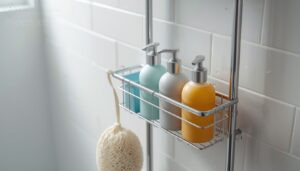
A basic caddy shelf can only do so much on its own. The real upgrade comes from the small additions you layer in — the inserts, clips, and containers that turn open shelving into a genuinely organized system.
Here are five simple add-ons worth using.
Waterproof Mini Containers
A few waterproof mini containers can quietly transform your caddy’s chaos into calm. Tiny command centers—each holding travel toiletry kits, micro first-aid supplies, or daily creams—are secured by silicone seals or snap-fit lids. UV-resistant and moisture-resistant materials shield contents, while waterproof labels ensure instant identification.
| Container Type | Best Use | Key Feature |
|---|---|---|
| Silicone-sealed pods | Creams & serums | Temperature-resistant seal |
| Snap-fit lid containers | Travel toiletry kits | One-handed access |
| Clear waterproof pouches | Micro first-aid items | Visibility + moisture resistance |
| UV-resistant canisters | Sensitive skincare | Sun & humidity protection |
Use containers and dividers to create space-saving storage within caddy shelves. Water-resistant accessories stay sorted, preventing leaks and keeping products organized.
Clip-on Razor Holders
Once your mini containers are set, don’t overlook your razor. A clip-on razor holder keeps blades safely off wet shelves and upright — one of the simplest shower caddy hacks you can use.
Look for rust-resistant or rustproof models with adjustable clamps that fit thicker grips, prioritize one-handed operation for easy removal, and consider adhesive alternatives if suction cups won’t stick to your tile.
Clear Product Pouches
Your razor holder is in place — now tackle the small stuff. Reusable zip pouches with Transparency Benefits keep travel-size products visible and leak-free. Their Barrier Layers block moisture, while Sustainability Options make them eco-friendly wins.
- Use clear containers for minis and samples
- Rely on Reusable Zip Pouches for grouping
- Clear bin organization beats cluttered shelves
- Custom Print Design helps label each pouch
- Smart product placement using organizing tools simplifies your routine
Clear bin organization beats cluttered shelves. Custom Print Design helps label each pouch. Smart product placement using organizing tools simplifies your routine.
Soap-saving Trays
Soggy soap is a small but annoying problem — and a self-draining tray solves it quietly.
Look for Ventilation Channels and an Adjustable Drain Angle (12–20 degrees) to keep moisture moving.
Silicone Durability makes cleanup easy, while Eco-friendly Materials and Modular Tray Extensions let your shower caddy organizer grow with you.
No more soap scum, no more waste.
Labeled Storage Sections
Labeling your caddy sections turns a good system into a great one. Use waterproof label materials — vinyl holds up through steam and scrubbing for years.
Color-coded sections make grabbing the right compartment instinctive: red for daily items, blue for hair care. Apply dual-sided placement so labels stay visible no matter the angle.
High-contrast fonts keep things readable at a glance.
Set a label audit schedule quarterly to maintain organization.
Keep Grooming Tools Separate

Grooming tools don’t belong mixed in with your shampoo bottles and soap bars.
Keeping them in their own dedicated spots protects your skin, your blades, and your overall hygiene.
Here’s how to do it right.
Razor Blade Safety
A sharp blade in the wrong spot is an accident waiting to happen. Always store razors in protective razor slots or dedicated compartments so the edge orientation points away from your reach.
Use blade guard covers between uses, and practice safe loading by handling only the non-cutting parts.
For spent blades, proper sharps disposal keeps everyone safe.
Beard Care Tools
Beard grooming tools deserve their own dedicated zone in your caddy. Keep a trimmer (look for 60-minute battery life) in a dry slot, and store beard oil upright for easy dropper application.
Comb material choice matters — cellulose acetate resists static and snags. Tuck scissors in a protective sleeve to maintain edge sharpness.
Balm storage solutions like screw-cap tins keep contamination out.
Magnetic Tool Strips
Magnetic strips are one of the most underrated shower organization hacks. Attach an adhesive strip to your shower wall, and metal grooming tools will cling to it. Look for neodymium strength magnets—they offer superior holding power without bulk.
Before installation, check the weight capacity to ensure safe use, and prioritize options with corrosion protection for humid environments. Confirm tool compatibility to prevent unexpected slipping.
Toothbrush-free Zones
Your toothbrush doesn’t belong in the shower caddy — and here’s why it matters. Bristles sitting near shampoo and body wash pick up residue and bacteria fast.
Set up a dedicated toothbrush-free zone using these hygiene management steps:
- Use Antimicrobial Compartments with a Perforated Base for quick Drying Airflow
- Place an Elevated Shelf away from splash zones
- Add dividers to group similar items together
- Mark essential items with Color-Coded Labels
- Choose transparent compartments for quick visual checks
Prevent Cross-contamination
Cross-contamination spreads faster than you’d think when bottles share tight compartments. Cap Seal Checks keep product residue from dripping onto neighbors, while Tilted Bottle Placement and Drainage Shelf Design redirect runoff away from openings.
Use Sealed Refill Bottles and practice Immediate Spill Cleanup to stay ahead of mold prevention.
| Hygiene Risk | Caddy Maintenance Fix |
|---|---|
| Leaking caps | Sealed Refill Bottles |
| Pooled water | Drainage Shelf Design |
| Spilled product | Immediate Spill Cleanup |
Maintain a Clean Shower Caddy

A clean caddy isn’t just about looks — it actually keeps your routine running smoothly and your products lasting longer.
Soap scum, moisture, and shifting bottles can quietly cause more problems than you’d expect.
Here’s what to do to stay on top of it all.
Weekly Soap Scum Removal
Soap scum builds up fast, but a Scheduled Cleaning Routine keeps it manageable.
Once a week, use the Vinegar Spray Technique — spritz the caddy, let it sit for five minutes, then scrub with non-abrasive tools.
For tougher buildup, a mild soap and water solution or commercial shower caddy cleaner works well.
Finish with the microfiber drying method and targeted surface cleaners to keep your shower caddy tidy.
Dry Shelves Regularly
Once the soap scum is gone, don’t let moisture undo your work. Wet shelves are where mold and corrosion quietly start.
- Use a microfiber cloth after every shower to wipe down shelves quickly.
- Apply alcohol-based sanitization monthly to kill bacteria and reduce slippery residue.
- Place a silicone liner on each shelf so water drains easily.
- Choose moisture-resistant materials and quick-drying material with drainage holes for a clean caddy.
- Conduct corrosion inspections every two weeks and replace damaged parts.
Moisture monitoring keeps everything lasting longer.
Check Suction Cups
Dry shelves help, but your suction cup fixtures need attention also. A failing seal won’t announce itself — it just drops your shower caddy hanger without warning.
| Check | What to Look For | Action |
|---|---|---|
| Seal Inspection | Cracks or stiff edges | Replace immediately |
| Surface Preparation | Soap residue or oils | Clean, then reattach |
| Load Capacity | Overloaded shelves | Redistribute weight |
| Material Selection | Silicone vs. rubber | Silicone holds better when wet |
| Maintenance Schedule | Every 3 months | Swap worn cups |
Remove each suction cup, wipe the tile clean, and press firmly back into place. Skip the adhesive strip shortcut — proper suction cup installation on a dry, smooth surface always wins.
Rebalance Heavy Items
Once your suction cups are secure, turn your attention to weight distribution. A top-heavy shower caddy is an accident waiting to happen.
- Place heavy bottles at the bottom — this lowers the center of gravity.
- Use Weight Distribution Zones and anchor mechanisms like velcro strips to prevent shifting.
- Adjust your multi-tier design’s adjustable shelves after adding new products.
That’s your Active Rebalancing Routine.
Quarterly Product Purge
Every few months, do a full sweep of your caddy. Declutter regularly to keep your shower caddy clean.
Establish a simple eligibility criteria: if you haven’t touched it this quarter, it goes. Follow a quick approval workflow—check, confirm, remove.
Use product labeling ideas like waterproof tags to track use dates.
Archive what’s worth keeping elsewhere (data archiving), and log what you toss (audit logging).
Adjust your retention settings and declutter regularly to maintain a clean shower caddy.
Frequently Asked Questions (FAQs)
How do I stop bottles from falling over constantly?
Bottles topple for one main reason: too much weight, too little support.
Use Weighted Base Inserts, Foam Padding, and dividers on your shower caddy shelves to keep everything upright and stable.
What products should never be stored in showers?
Keep sensitive skincare, flammable aerosols, electronics, food, and mold-prone items out of your shower. Heat and humidity destroy them quickly — turning your caddy into a breeding ground for waste, mildew buildup, and real safety hazards.
Avoid storing these items in humid environments to prevent rapid degradation and potential dangers.
How often should a shower caddy be replaced?
Plan a replacement schedule based on material. Rust-resistant materials last 2–3 years; plastic, 1– Watch for corrosion signs, fading suction strength, or shelves buckling under weight limits — those signal it’s time.
Are shower caddies safe for kids to use?
Yes, shower caddies can be safe for kids — if you choose wisely. Look for rounded edges, non-toxic materials, and child-proof mounting. Slip-resistant surfaces and weight limits matter too.
Conclusion
Here’s a striking coincidence: the mornings you feel most in control rarely start with a frantic search for shampoo. Learning how to organize your shower caddy efficiently doesn’t just tidy a shelf—it quietly sets the tone for everything that follows.
A place for every product; and every product within reach. That’s not a small thing.
Your shower is where the day begins; a caddy that works for you means one less battle before breakfast.