This site is supported by our readers. We may earn a commission, at no cost to you, if you purchase through links. This content is for general informational and educational purposes only and is not a substitute for professional medical, dermatological, or nutritional advice.

Shampoo didn’t exist as a daily habit until the 1970s, when marketing convinced you that suds mean clean. Your scalp disagrees. It’s a self-lubricating system, producing sebum to protect and shine hair without a single surfactant.
Water only hair washing works with that biology instead of stripping it. Warm water alone lifts sweat, dust, and loose debris, while your fingertips guide natural oils down the shaft, cuticle by cuticle.
Get the technique wrong, though, and you’ll trade grease for buildup. Master the timing, the massage, the rinse, and you’ll understand why your grandmother’s generation never worried about "wash day" at all.
Table Of Contents
- Key Takeaways
- Does Water-Only Hair Washing Work?
- How to Wash Hair With Water Only
- Managing The Water-Only Transition Period
- Water-Only Washing by Hair Type
- Benefits, Drawbacks, and Gentle Alternatives
- Frequently Asked Questions (FAQs)
- Is it okay to only wash hair with water?
- What is the Japanese hair washing method?
- Will my hair smell if I only wash with water?
- What happens if you just wet your hair without shampoo?
- Is water only hair washing right for you?
- What are the benefits of water only hair washing?
- How often will you need to wash your hair?
- Cold turkey or slow transition?
- Will your hair smell bad with water only washing?
- How long until you get good results?
- Conclusion
Key Takeaways
- Water alone won’t "clean" hair the way shampoo does—it removes sweat and dust just fine, but your scalp’s own sebum does the real conditioning work, so success depends on technique, not just skipping the bottle.
- The routine that actually works is saturating hair with lukewarm water, gently scritching your scalp to loosen oil, preening it down the strands, then rinsing root to end.
- Expect a rocky adjustment period of 2 to 6 weeks as your scalp recalibrates oil production, with extra time needed for oily scalps, humid climates, or hard water.
- Water-only washing isn’t for everyone—hard water minerals, heavy product buildup, and highly porous or damaged hair all have limits water can’t fix, so occasional co-washing or a clarifying vinegar rinse fills the gap.
Does Water-Only Hair Washing Work?
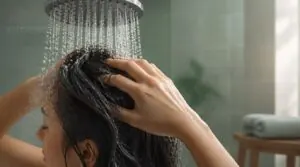
Water alone can clean hair, but "clean" means something different than what you’re used to. Your scalp does most of the real work here, not the water itself. Here’s what actually happens when you skip the shampoo.
On the days you do reach for water instead, it helps to know how often you should actually wet natural hair to keep your scalp balanced.
What Water Can Remove
Plain warm water is more capable than skeptics assume. At 38–45°C, it dissolves sweat salts, lifts dust down to 2 µm, and softens product buildup and chlorine residue within 90–120 seconds.
- Sweat and odor-causing residue
- Dust and airborne grime
- Loosened dead skin cells
A brisk scalp massage with a cool water rinse finishing touch boosts removal without stripping everything protective.
Sebum and Natural Oil Distribution
Water controls surface grime, but sebum is a different animal entirely — a waxy mixture of triglycerides, wax esters, and squalene that resists mixing with water. This sebum cuticle interaction determines everything: as oil migrates down the shaft, it coats strands, boosts shine, and cuts friction. Understanding this natural oil migration pattern is your first step toward smarter washing.
Sebum plays a key role in skin and hair protection by forming a lipid barrier that helps retain moisture and defend against microbes.
Scalp Massage for Better Cleansing
Sebum won’t redistribute itself — your hands do the real work. Use the fingertip pressure technique in small circles, focusing on temples first, then work upward:
- Loosen debris without nails
- Boost circulation and scalp health
- Guide oils down the shaft
- Exfoliate gently for buildup control
Five minutes of massage transforms wateronly hair washing from a rinse into genuine cleansing.
Limits of Water-Only Cleansing
Massage only goes so far. Once conditioner or hairspray residue builds past 0.2 mm, water can’t touch it — you need a clarifying rinse.
| Buildup Type | Water Alone | Best Fix |
|---|---|---|
| Silicone residue | Ineffective | Mild surfactant |
| Sweat salts | 30% remains | Clarifying rinse |
| Hard water minerals | Scale forms | Vinegar rinse |
Oily scalps, hard water, and color-treated strands all hit these limits fastest.
Choosing the right wash routine makes a real difference here, and this guide to the best shampoo for Asian hair breaks down formulas that balance oil control with lasting shine.
How to Wash Hair With Water Only
Technique matters more than willpower here. Your scalp reacts to how you move water and hands through it, not just how often you skip shampoo. Here’s the five-step routine that makes water-only washing actually work.
Saturate Hair With Lukewarm Water
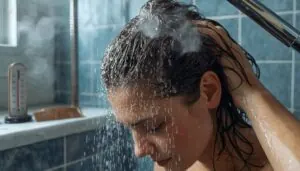
Temperature makes or breaks this step: aim for 38–41°C (100–106°F), checked with a thermometer if you’re unsure.
- Detangle first with a wide-tooth comb
- Pour in a steady 15-second stream
- Use 250–300ml per inch of length
- Saturate scalp to ends for 60–120 seconds
Skip lukewarm and you’ll disrupt your natural oil distribution before you’ve even started.
Scritch Scalp Without Scratching

Fingernails scratch; fingertips stimulate. That’s the whole secret to scritching without irritation.
Press pads in small circles, 1–2 inches per second, at 2–3 PSI—light enough that skin warms, never reddens. Work nape to crown by quadrant, 30–45 seconds each, for 2–3 minutes total.
Eczema or psoriasis? Cap sessions at once weekly. Redness past 24 hours means stop and see a dermatologist.
Preen Oils From Roots Down

Once scritching loosens sebum, work it downward using your palms and fingers like a wide-tooth comb—this is preening, mimicking how animals distribute oil.
- Damp hair (not wet) distributes oil evenly
- Capillary action pulls sebum ~1cm per 30 seconds
- Mid-length reaches saturation within a minute
- Light brush strokes prevent clumping
- Molecular weight determines penetration speed
This scalp reset relies on cuticle absorption before cuticles seal.
Rinse From Roots to Ends
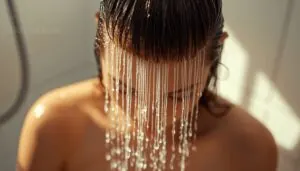
Once oils are preened downward, finish with a directional flush: crown first, water tracking down each shaft. This rinse direction benefit flattens cuticles instead of roughing them up, curbing tangles and residue buildup.
Aim for a steady 0.5-gallon-per-minute flow — gentle, not blasting — for even oil distribution and lasting hair moisture balance, all while boosting scalp circulation along the way.
Dry Hair Without Friction
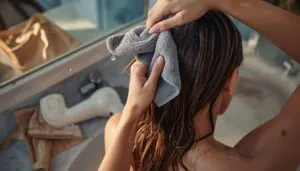
Wet hair stretches easily and snaps if you’re rough with it, so detangle first with a wide-tooth comb before any drying begins.
Skip the rough terrycloth towel — a microfiber towel blots water gently, cutting dry time by 30%. Follow with a silk pillowcase, or try a diffuser on low heat for frizz-free, breakage-preventing results that preserve elasticity and hydration.
Managing The Water-Only Transition Period

Switching to water-only washing isn’t an overnight flip, it’s a recalibration your scalp has to earn. You’ll hit some rough patches before things even out, and that’s normal, not failure. Here’s what to expect, and how to handle it, week by week.
Going water-only isn’t an overnight switch—it’s a recalibration your scalp has to earn, rough patches and all
How Long Transition May Take
Expect 2 to 6 weeks, not overnight results.
Sebum production eases within 7 days, oiliness visibly drops by week two, and full sebum migration stabilizes by week 4. Oily scalps may need 5-6 weeks.
Humid climates add 1-2 weeks; hard water, up to 4. Washing 2-3 times weekly speeds adjustment—daily can shrink it to 10 days.
Reduce Early Greasiness and Odor
Those first weeks won’t be pretty, but you have tools to fight back. Scalp massage for three minutes daily speeds sebum migration down the shaft. Keep water at 98-104°F—hotter triggers more oil production.
For odor, mix 1 tbsp apple cider vinegar with a cup of filtered water; rinse twice weekly. Weekly baking soda clarifying (1 tsp per 8 oz water) grips stubborn buildup fast.
Rinse After Sweat and Workouts
Workouts complicate the water-only method, since sweat salts crystallize fast. Rinse within 10-15 minutes post-exercise, before that hour mark where itchiness spikes in 42% of scalps.
Massage roots with fingertips for 30 seconds—circular motions lift 15% more residue than linear strokes. Rinse root-to-end, cutting scalp oil by 22%. Pat dry gently; air-dry five minutes before touching a towel.
Identify Hard Water Buildup
Sweat isn’t the only residue working against you—your water supply might be too. Run a quick hardness test strip; above 60 mg/L means trouble. Watch for dull, gritty strands, white flecking near roots, or scalp grit during massage.
- Dull, opaque film under bright light
- Fingernail-scrapable crust near scalp
- Hair feels heavier, stiffer
- pH strips read 6.0–6.5
Use Filters or Vinegar Rinses
Once you’ve spotted buildup, fight back on two fronts. Install a shower filter with activated carbon—it strips up to 99% of chlorine and lasts 6-12 months.
Then add a weekly apple cider vinegar rinse: 1 part ACV to 3 parts filtered water, worked through roots for 2-3 minutes. This restores scalp pH balance and dissolves mineral residue without disrupting sebum.
Water-Only Washing by Hair Type
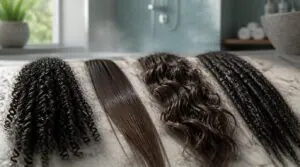
Not every head of hair takes to water-only washing the same way. Your results depend heavily on texture, porosity, and how fast your scalp produces oil. Here’s what to expect based on your specific hair type.
Curly, Coily, and Coarse Hair
Tight zig-zag curls are built for this. Your coils slow sebum’s trip down the shaft, so water-only washing favors Type 3 and 4 patterns naturally.
Coarse strands add strength but still dry out fast, so scritching matters. Expect real shrinkage, sometimes 50%+, and remember: coily hair stays your driest, most fragile texture, so handle wet strands gently.
Straight, Fine, and Oily Hair
Straight strands are basically a highway for sebum: round cross-sections mean oil zips from root to tip fast. Fine hair turns visibly greasy within 12–24 hours, since roots hold 60% of scalp oil.
Daily scritching and brushing help with sebum regulation, but oily scalp types often need washes every 3–4 days minimum.
Dry, Damaged, or Porous Hair
When cuticles lift from damage, water alone can’t do the repair work you need. High porosity hair absorbs 90% of applied water within two minutes yet loses moisture just as fast, so skipping shampoo won’t fix cuticle sealing.
Sebum helps, but severely porous strands need shea butter or fatty-acid oils to actually reduce porosity and rebuild hair elasticity.
Color-Treated Hair Considerations
Dye molecules survive longest when sulfates never touch them: skipping shampoo can preserve pigment up to eight weeks, versus four or five with detergents.
Water-only rinsing keeps your cuticle sealed and hair pH near that ideal 4.5–5.5 range, locking color in.
Add a UV spray and skip harsh sun exposure, and vibrancy stretches even further.
Adjusting for Climate and Lifestyle
Your zip code and your gym schedule matter as much as your curl pattern. Adjust for climate humidity balance, tweak water temperature seasonally, and manage sweat before oils compound.
- Muggy summers weighing your strands down
- Dry winters leaving your scalp tight
- Sweaty workouts triggering odor and buildup
Travelers should pack filtered water for hotel taps prone to hard water buildup.
Benefits, Drawbacks, and Gentle Alternatives

So where does that leave you, once the technique and the timeline are behind you? Water-only washing has real upsides, but it’s not without trade-offs, and knowing both sides keeps you in control. Here’s what to weigh before you commit.
Potential Hair and Scalp Benefits
Your scalp isn’t broken — it’s just overworked by daily surfactants. Water-only washing helps sebum retention and scalp pH balance, cutting irritation while boosting hair elasticity and reduced breakage.
Cost and Plastic Waste Savings
Ditching shampoo isn’t just gentler on your scalp — it’s lighter on your wallet. Skip 12 bottles yearly and pocket $59.88, plus $192 in family water savings.
Three wins worth tracking:
- Annual shampoo savings near $60 per person
- 15 kg less plastic waste per household
- Water filter pays for itself in two years
Minimalist hair care, maximum payoff.
Oiliness, Odor, and Mineral Deposits
Savings aside, water-only washing has real trade-offs. Skipped surfactants mean sebum buildup accumulates within 48 hours, producing visible sheen. Hard water compounds this: 120–180 mg/L calcium carbonate deposits up to 0.5 mg per centimeter of hair, dulling strands. Sweat’s sulfur compounds cause odor, though thorough rinsing removes 90% within five minutes.
A vinegar rinse dissolves minerals in minutes, restoring scalp pH and slip.
Signs Water Alone is Insufficient
So how do you know it’s time to step in? Watch for flake buildup past day five, breakage increase beyond 18 strands per 100, or frizz rise in humidity.
Persistent irritation risk, greasy mineral residue, or dull strands despite vinegar rinses mean water’s hitting its ceiling.
Your scalp’s talking—listen up.
Co-Washing and Occasional Clarifying
When water alone can’t keep up, co-washing bridges the gap. Massage conditioner into your scalp for 2-3 minutes, work it through lengths, rinse fully—no residue left behind.
Pick a rinse-out formula with jojoba or shea, pH 4.5-5.5. Clarify every 4-6 weeks (monthly in hard water) with a diluted vinegar rinse to dissolve buildup and restore scalp hydration balance.
Frequently Asked Questions (FAQs)
Is it okay to only wash hair with water?
Like a floppy disk, "no poo" sounds outdated but still works: yes, it’s safe for most. Success depends on sebum balance, hair type suitability, and patience through a genuine adjustment phase.
What is the Japanese hair washing method?
This ritual layers 38°C water saturation, a two-minute scalp massage, root-to-end rinsing, and frictionless towel drying, sometimes finished with a rice water rinse for shine and strength during your changeover.
Will my hair smell if I only wash with water?
Picture sebum oxidizing into a faint, greasy musk within 48 hours. Rinsing alone won’t stop that. Sebum oxidation causes odor, and hard water minerals trap it further—so scalp massage and occasional vinegar rinses keep smell genuinely under control.
What happens if you just wet your hair without shampoo?
Rinsing alone triggers rapid water absorption into the cuticle, lifts loose surface debris, and kicks off sebum redistribution down the shaft, coating strands within minutes but leaving oil-based residue and styling buildup untouched.
Is water only hair washing right for you?
Think of your scalp as a garden: some soil thrives untouched, some needs tending. Oil production balance, hair texture, workout sweat, and hard water all decide whether water-only hair washing suits your lifestyle compatibility—or demands vinegar rinses instead.
What are the benefits of water only hair washing?
Your scalp runs like a self-regulating system: sebum retention conditions strands, helps scalp pH balance, and boosts elasticity.
Skipping shampoo means reduced chemical exposure, better color retention, natural oil distribution, and real savings on cost and plastic waste.
How often will you need to wash your hair?
Is there a magic number? Not really. Your sebum production rate, hair type, activity level, and climate all shift things. Start washing every other day, then adjust gradually based on how your scalp actually behaves.
If you’re still struggling to pinpoint your pattern, understanding the root causes of flat, greasy hair — from overactive oil glands to mineral buildup — can help you troubleshoot faster.
Cold turkey or slow transition?
Quitting cold turkey spikes sebum fast, peaking days 3–5 with visible grease for up to 10 days. Gradual reduction—swapping one wash weekly—caps oil spikes under 10%, easing your adjustment phase without the greasy shock.
Will your hair smell bad with water only washing?
Not inevitably, no. Odor comes from sebum oxidation past 12–18 hours, sweat buildup, and shifting scalp microbiome, not from skipping shampoo. Massage thoroughly, rinse well, and add a vinegar rinse when hard water leaves residue behind.
How long until you get good results?
Patience pays off here. Your visible improvement window usually lands between two and six weeks, as oil redistribution stabilizes and your scalp adjusts wash frequency naturally — full shift can stretch to twelve weeks depending on hard water and lifestyle factors.
Conclusion
Picture week six: no shine serum, no dry shampoo cloud, just your fingertips working oil down each strand while water does the rest. That’s the quiet payoff of water only hair washing—a scalp that regulates itself instead of fighting you.
It won’t suit every porosity or lifestyle, and hard water buildup may still demand a clarifying rinse. But master the technique, and you’ll trade a cluttered shower shelf for genuine, hands-on control over your hair’s biology.