This site is supported by our readers. We may earn a commission, at no cost to you, if you purchase through links. This content is for general informational and educational purposes only and is not a substitute for professional medical, dermatological, or nutritional advice.
Your first braid probably looked like a rope that lost a fight. Mine did too, back when I was twelve and convinced a French braid should feel this hard. It shouldn’t.
The truth? Every gorgeous braid you’ve admired, fishtail, Dutch, waterfall, comes down to the same three moves your hands already know from tying shoelaces. The pros just add tension control, timing, and a few tricks nobody bothers explaining.
Grab a comb and a mirror, because you’re about to turn those clumsy first attempts into braids that actually hold, shine, and turn heads.
Table Of Contents
- Key Takeaways
- Prepare Your Hair for Braiding
- Master The Basic Three-Strand Braid
- French Braid Hair Step by Step
- Create a Dutch Braid
- Learn Fishtail, Rope, and Waterfall Braids
- Finish and Maintain Braided Hair
- Top 5 Hair Braiding Tools
- Frequently Asked Questions (FAQs)
- What is a boxer braid?
- What is a cornrow braid?
- How do you do a reverse French braid?
- How to do a simple 3 strand braid?
- How to weave hair for beginners step by step?
- Why do I struggle to braid my hair?
- Which braid is the easiest to learn?
- How do you make a braid?
- How to make braids a good hairstyle?
- Can I Braid my own hair?
- Conclusion
Key Takeaways
- Good prep work, like detangling completely and choosing damp or dry hair based on your texture, matters more for a great braid than fancy technique.
- Every braid style, from French to Dutch to fishtail, builds on the same basic three-strand crossing move you already know from tying shoelaces.
- Keeping even tension and consistent strand width throughout is the real secret to braids that look neat instead of lumpy.
- How you finish and protect your braid, using soft elastics, smoothing flyaways, and sleeping on silk, determines whether it holds up or falls apart by the next day.
Prepare Your Hair for Braiding
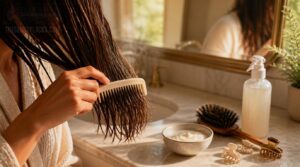
Getting your hair ready is the secret to every great braid. A few simple steps up front make braiding much easier and help your style last longer. Here’s what to do before you start weaving.
If you’re aiming for a sleek, long-lasting look, this guide to mastering feed-in braids walks you through the prep and technique that make all the difference.
Detangle Hair Completely
Before you even think about braiding, detangle your hair completely. Start at the ends, using a widetoothed comb or your fingers, and work slowly upward. Spritz on detangling spray or smooth in a little leavein conditioner for slip—this helps knots slide apart.
Section your hair, take your time, and keep your grip close to the roots to avoid pulling.
Choose Damp or Dry Hair
Once your hair is tangle-free, decide if you want to braid it damp or dry. Damp hair gives you a smooth, tighter braid and cuts breakage risk by 30%, especially for fine or curly hair. Dry hair, on the other hand, holds braids longer and reduces slippage—perfect for thick or coarse hair.
- Smoothness boost
- Less breakage
- Static reduction
- Longer hold
- Humidity resistance
Consider Hair Length and Texture
Length and texture decide your braid game plan. Curls shrink up to 2 inches, so braid when moisturized for smooth results. Medium-to-long hair suits tighter styles best; shorter strands need scalp-close sections.
| Texture | Ideal Strand Size | Best Style |
|---|---|---|
| Curly | Small | French |
| Straight | Medium | Three-strand |
| Thick | Small | Dutch |
| Fine | Larger | Rope |
Understanding your hair’s curl pattern, which is influenced by hair follicle shape.
Gather Mirrors and Tools
Set up a portable vanity mirror or use a wide mirror for a clear front view. Keep a hand held mirror handy to check braid progress at the back. Place a mirror stand for hands-free angles.
Organize hair clips, brush, and rat tail comb nearby. Good lighting and a clean towel make spotting flyaways and tidying up easier.
Section Hair for Better Control
Getting hair sections right is your secret weapon for neat braids. Use a rat-tail comb to draw a straight part line, then clip each section with silicone hair clips for control. Match section widths—1 inch for medium, 1.5 for thick, or 0.75 for fine.
Align sections with your growth direction, and wrap a soft elastic for perfect hair tension control.
Master The Basic Three-Strand Braid
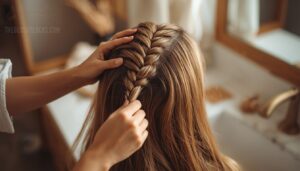
If you’re ready to braid, the classic three-strand technique is your best starting point. It’s simple, reliable, and works on nearly every hair type. Here’s what you need to do, step by step.
Divide Hair Into Three Sections
Think of your hair as a canvas—sectioning technique is your first brushstroke. Start by making a middle part alignment with a rattail comb, running from your hairline to the crown. Use boundary clips to keep each side separate, then split into three equal sections at the crown. Check strand thickness; adjust until each section feels balanced and ready for braiding.
Think of your hair as a canvas—sectioning technique is your first brushstroke toward a balanced braid
Position Your Hands Correctly
Grab the right strand in your right hand and the left in your left. Place your thumb on the outer edge of the left strand, about 1.5 cm from the scalp, keeping your thumb curved and nail parallel to the braid. Spread fingers 2–3 cm for even tension; align your wrist at a 15-degree angle for stability.
- Feel confident in your grip
- Control each section with ease
- Enjoy smooth, fatigue-free braiding
Cross Strands Over Middle
Ready for the magic move? Cross the right strand over the middle strand in a single, fluid motion—don’t hesitate. Keep each strand 1.5–2 cm wide, and use a gentle pinch, applying about 200 grams of pressure. Hold the middle section steady between your fingers, and alternate sides, maintaining a 45-degree angle for a crisp, professional braid pattern.
Maintain Even Braid Tension
Uneven tension makes braids look lumpy, so consistent strand width matters most.
If you’re struggling to keep sections even, techniques like invisible bead extensions for added volume can help create a fuller, more uniform base for braiding.
Use thumb tension control: steady pressure near the scalp, easing up as you go. Your finger grip technique keeps pull balanced—index and middle fingers steady, thumb anchoring the base. Straight hair controls firmer tension; curly hair needs a lighter touch.
A braid clip can hold your starting point while you build even hair tension throughout.
Secure The Braid Neatly
The finish line matters as much as the weave. Once you reach the ends, don’t just slap on any old hair tie.
For elastic band selection, pick a soft, thin one—wide bands flatten your hard work. Use a base wrapping technique, wrapping twice for security, then a small overhand knot for reinforcement.
Finish with a light hairspray mist to keep flyaways tame and your braid tight all day.
French Braid Hair Step by Step
Once you’ve got the basic braid down, you’re ready to level up. The French braid looks fancy, but it’s really just your three-strand skills with a clever twist. Here’s how to build it, one section at a time.
Begin Near The Crown

Since your crown sets the tone for the whole braid, that’s where every French braid tutorial should start. Use the Crown Detangling Method first, then create a clean triangular section through hair sectioning.
Crown Placement Benefits include less slipping and a braid that rises naturally from your scalp. Keep Crown Tension Control gentle here—no headaches, just a polished crown braid foundation for your favorite hair tools.
Create Three Equal Strands

Grab your tail comb and split that crown triangle into three equal strands—left, middle, right. Measure strand width so no piece overpowers another; even hair strand management now means a smoother 3-strand braid later.
Apply even tension as you hold each strand, keeping them aligned vertically. This hair sectioning groundwork makes every crossover cleaner and your braid noticeably neater.
Add Hair With Each Crossover
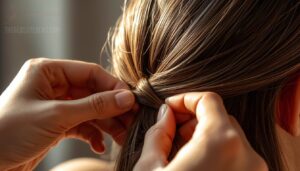
Now comes the fun part: feeding in fresh hair at each crossover. Grab a small section from the side, tuck it under, and cross like normal—that’s your micro lock technique locking it in place.
- Keep pieces close in color matching strands
- Watch crossover tension control so it stays snug
- Add gradually for a natural volume boost method
Smooth hair strand management here makes your braid pattern perfect.
Continue Toward The Nape

Keep repeating that add-and-cross motion as you work down toward the nape of your neck. Your nape section length naturally shrinks, so check hair section alignment often, keeping tension consistent so your braid pattern stays even all the way down without loosening.
Finish With Three-Strand Braiding
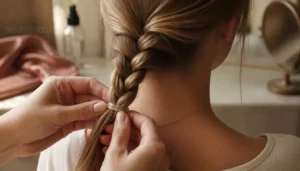
Once you hit the nape, ditch the add-ins and shift into a plain three-strand braid for the rest of the length. Cross strands evenly, keeping braid tension control steady.
Then finish strong:
- Wrap the end and secure with an elastic tie technique
- Trim flyaways for a clean edge
- Mist with finishing spray, then protect it overnight in silk
Create a Dutch Braid
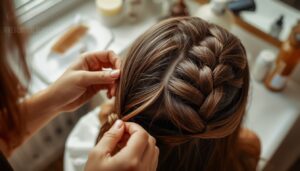
Ready to flip your braid game upside down, literally? The Dutch braid is that bold, eye-catching cousin of the French braid, and it’s easier to master than you think. Grab your comb and let’s break it down step by step.
Start With Crown Sections
Every great Dutch braid starts at the crown, your anchor point for the whole style.
Section off a 1–2 centimeter piece in a horseshoe shape, keeping height and tension even on both sides.
This crown section placement gives you a symmetrical guide, distributes tension, and keeps loose ends tucked as you build your braid downward.
Cross Strands Underneath
Flip the script here: instead of crossing over, you’ll tuck each strand underneath the middle. This underhanded weave builds that classic raised Dutch Edge Creation look.
- Left strand goes under middle
- Right strand goes under middle
- Keep Scalp Tension Balance even
- Watch for the V-shaped undercrossing texture
- Avoid loose understrands that sag
Add Hair Evenly
This is where your Dutch braid gets its volume. Each time a strand crosses under, grab a fresh 1-inch hair section from the same row and fold it in.
Use a comb for consistent strand measurement, keeping every addition equal. This incremental hair building builds thickness gradually, so a quick symmetrical mirror check every few crossovers keeps things centered and even.
Keep Sections Tight and Neat
Loose sections come undone your hard work fast, so keep tension consistent tension with every crossunder.
Stay close to the scalp for scalp proximity, pinching strands with a firm finger grip.
- Check section alignment often
- Re-grip loosened spots immediately
- Keep even strand thickness throughout
This braid symmetry keeps your Dutch braid looking sharp, neat, and ready for its finishing touch.
Pancake Braid for Fullness
Want that braid to look twice as thick? The Pancake Expansion Method is your secret weapon: gently pull each loop outward after braiding. Use silicone serum during prep and a root lift spray at the roots first.
| Step | Action | Result |
|---|---|---|
| 1 | Pull loops | Width |
| 2 | Secure end | Hold |
| 3 | Sleep in bonnet | Volume |
Learn Fishtail, Rope, and Waterfall Braids
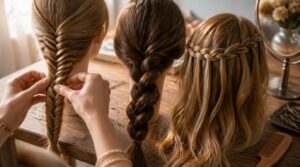
Once you’ve got the Dutch braid down, it’s time to level up with some show-stopping styles. Fishtail, rope, and waterfall braids each bring their own flair, and they’re easier than they look once you know the moves. Here’s how to master all three.
Weave a Fishtail Braid
Split hair into two sections, right and left. Pull a thin piece from the outer left edge, cross it into the right section. Repeat from the right side into the left. Keep pieces small and even for crossover precision, secure ends before elastics slip.
This stepbystep guide builds that classic chevron look strand by strand.
Twist a Rope Braid
Once your fishtail’s mastered, the rope braid feels like a breather, no crossovers, just twisting. Gather a ponytail, then split into two equal sections.
Twist each clockwise, tight for real tension, then wind them counterclockwise around each other.
- Keep twist direction consistent
- Match two strand sectioning evenly
- Twist damp hair for control
- Secure ends before slipping
- Works best on longer hair
Form a Waterfall Braid
Rope braids twist, but waterfall braids flow. Start three strands near your hairline like a French braid.
Cross the top strand over, then release it downward instead of adding it back. Grab fresh hair behind the drop, cross into the middle, repeat toward the opposite ear. Check your mirror positioning often, then secure with a small elastic once cascading sections look even.
Practice Consistent Strand Sizes
Even cascades depend on matching strand sizes every time you pull new hair in.
- Pinch equal widths using a fine-tooth comb for uniform strand measurement
- Keep section width consistent for clean alignment
- Track strand counts per pass to avoid uneven layering
- Adjust braid tightness gently for balanced tension throughout
Precision here keeps your waterfall looking easy, not accidental.
Adapt Styles for Occasions
Beyond just technique, braiding is about matching the style to the moment. Wedding braid formality calls for sleek, symmetrical parts, while workday braid neatness keeps flyaways tamed for meetings.
Outdoor plans? Tighten things up for outdoor braid durability against wind. Don’t forget seasonal braid adjustments for humidity or cold, and add evening braid polish for date night shine.
Finish and Maintain Braided Hair
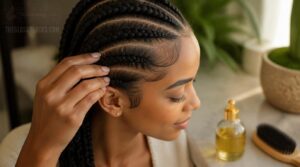
You’ve mastered the braid, so now it’s time to make it last. A few simple finishing touches can turn a good braid into a great one, keeping it neat all day and healthy for tomorrow. Here’s what you need to know to seal the deal.
Choose Damage-Free Hair Elastics
That perfect braid deserves better than a rubber band snapping strands at the end. Grab fabric covered elastics—silk or satin glide out gently, no snagging.
- Skip metal fastenings (they corrode and catch)
- Check elastic design for lasting stretch
- Match width (2mm–4mm) to your hair’s thickness
- Choose smooth builds for tangle-free removal
- Rotate elastics often to prevent hair damage
Smooth Flyaways Without Pulling
Since flyaways ruin a clean braid fast, tame them before you even start weaving. A silicone serum on damp hair, blotted with a microfiber towel, cuts static a lot.
| Product | Application | Effect |
|---|---|---|
| Silicone serum | 2–3 drops | Less static |
| Low heat dryer | 120°F | Smooth cuticle |
| Flexible spray | 6 inches away | Fewer flyaways |
Loosen Loops for Volume
Want that fuller, lived-in look? Grab a wide-tooth comb with 6mm spacing and gently tug each loop, starting at the ends and working up. Mist lightly with detangler first to cut friction.
Loosen 15 minutes after braiding, finish within 45. For extra hold without stiffness, add a light hairspray mist rated 2–3 on the hold scale.
Protect Braids While Sleeping
Cotton pillowcases are basically sandpaper for braids. Switch to silk or satin, wear a bonnet, and friction drops dramatically overnight.
Dab argan oil on ends, secure with silicone ties (not rubber bands), then sleep on your side. Small habits, but they add serious braid longevity and keep your scalp happy too.
Fix Uneven or Loose Sections
Even the best braiders end up with a wonky section sometimes, so don’t panic. Spot loose strands with a fine-tooth comb, clip them with mini alligator clips, then re-tighten using gentle tension.
- Frustration melting into relief
- Pride in a polished finish
- Confidence to try harder styles
Add extensions for thin spots, then lock everything in with finishing spray.
Top 5 Hair Braiding Tools
Even with great technique, the right tools make braiding faster and way less frustrating. A good braiding aid can help with sectioning, styling, or even adding length when you want extra flair. Here are five tools worth having in your kit.
1. Women’s Hair Braiding Kit French Braiders
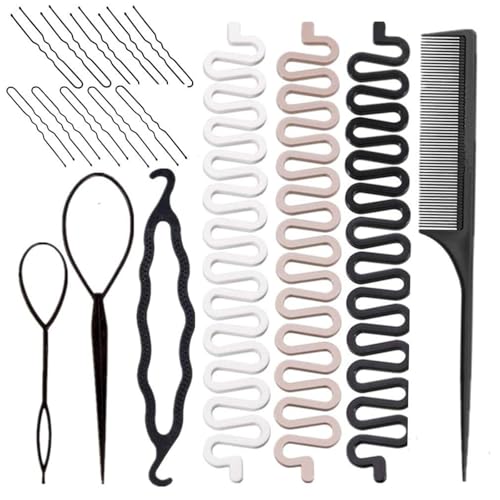
If braiding solo feels like wrestling an octopus, this kit is your fix. For $4.99, you get three color-coded French braiders, two topsy tail tools, a bun maker, ten U-shaped pins, and a styling comb.
The braiders guide sections cleanly, so beginners get salon-quality symmetry without years of practice. It’s lightweight, travel-ready, and works for casual days or dressy nights. Just don’t expect the plastic bun maker to survive super thick hair long-term.
| Best For | anyone who wants to master French braids, twists, and updos at home without salon prices or years of practice. |
|---|---|
| Material | Plastic |
| Portability | Travel-ready |
| Skill Level | Beginner-friendly |
| Best Use | Braids & updos |
| Durability Concern | Bun maker wears with thick hair |
| Occasion Use | Casual & dressy |
| Additional Features |
|
- Complete kit with color-coded braiders, topsy tail tools, a bun maker, pins, and a comb for endless styling options
- Lightweight and compact, making it perfect for travel or everyday use
- Great for both beginners and experienced stylists chasing salon-quality results
- The plastic bun maker may wear out quickly with thick or heavy hair
- Not ideal for very thick or extremely fine hair textures
- Achieving intricate styles still depends on the user’s skill and practice
2. AKOAK Fish Bone Braid DIY Tool
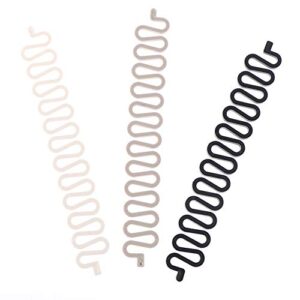
Once you’ve got French braiding down, the fishtail is your next challenge, and this tool set makes it painless. Nylon construction with a glossy finish feels comfortable in your hands, and at just 12 grams, you’ll barely notice it’s there.
You get three tricolor pieces (black, gray, white) for matching any hair shade. Heads up though: the loops sit close together, so thick or wavy hair might fight you a little while pulling through.
| Best For | Anyone who’s mastered French braids and wants an easy way to nail fishtail styles for parties, weddings, or everyday wear. |
|---|---|
| Material | Nylon |
| Portability | Compact/portable |
| Skill Level | Some learning curve |
| Best Use | Fishtail braids |
| Durability Concern | Hard on thick/wavy hair |
| Occasion Use | Parties & weddings |
| Additional Features |
|
- Lightweight nylon build with a glossy finish feels comfortable and easy to handle
- Three tricolor pieces (black, gray, white) let you match almost any hair shade
- Compact and portable, so it’s simple to toss in a bag for travel or on-the-go styling
- Tightly spaced loops can make braids look small and less natural
- Thick or wavy hair may be harder to pull through the hard plastic loops
- No instructions included, so there’s a bit of a learning curve at first
3. Quick Hair Beader Tool Set
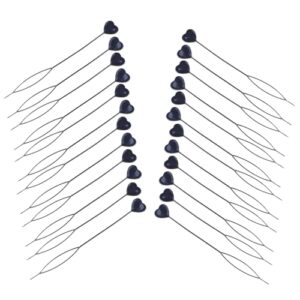
Want beads without the fuss? This set makes loading a breeze with its loop-and-slot design, sliding beads right onto your strand, no extra stringing needed.
Made from lightweight, snag-free plastic, it’s gentle on hair while you work. Sets usually include a color assortment of beads, so matching your look takes seconds.
It’s beginner-friendly, one-handed, and honestly kind of fun once you get the rhythm down.
| Best For | This set is best for anyone with fine to medium hair who wants an easy, beginner-friendly way to add braids or beaded styles at home or on the go. |
|---|---|
| Material | Plastic |
| Portability | Portable |
| Skill Level | Beginner-friendly |
| Best Use | Beaded braids |
| Durability Concern | Not heat resistant |
| Occasion Use | Everyday & travel |
| Additional Features |
|
- Loop-and-slot design makes loading beads quick and effortless, no extra stringing required
- Lightweight, snag-free plastic is gentle on hair and includes 24 compact tools per set
- Portable and secure hold, great for creating updos, ponytails, and braids anywhere
- Plastic construction isn’t built to handle high heat styling
- Small pieces are easy to lose or misplace
- May slip or struggle to hold in thick or coarse hair textures
4. Braided Synthetic Black Ponytail Extension
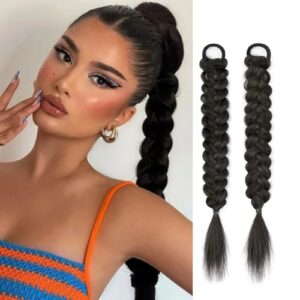
Beads are fun, but sometimes you just want instant length. Enter the braided synthetic ponytail extension, two 40cm pieces made from high-heat synthetic fiber that mimics real hair.
The elastic headband base slips on in seconds, no braiding skills required. Wear the extensions as-is or style them further, perfect for costume events, festivals, or lazy mornings when your fine hair needs a boost. Just know synthetic strands can look less natural up close.
| Best For | Anyone with short or fine hair who wants an instant length and volume boost for school, work, parties, or costume events without needing any braiding skills. |
|---|---|
| Material | Synthetic fiber |
| Portability | Compact |
| Skill Level | No skill needed |
| Best Use | Instant length |
| Durability Concern | Looks less natural up close |
| Occasion Use | Costume & festivals |
| Additional Features |
|
- Slips on quickly with an elastic headband base, no styling expertise needed
- Made from high-temperature synthetic fiber that holds up well and mimics real hair
- Versatile enough for everyday wear or costume occasions like Halloween and cosplay
- Synthetic fibers can look less natural than human hair when viewed up close
- Some users find the extensions thinner than they appear in product photos
- Comes unbraided, so you’ll need to style it yourself to get the look you want
5. MEIYIFANG Synthetic Twist Braid Ponytail Hair Extensions
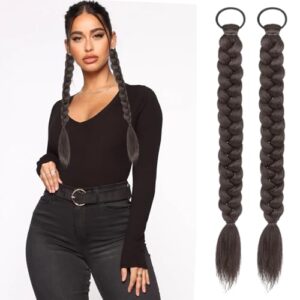
Twist braids without the wrist ache? That’s the appeal here. These extensions come in two pieces with a built-in loop for quick attachment, no cornrowing required underneath.
The heat-resistant fibers hold their twist for hours, and the glossy finish actually looks intentional, not costume-y. With seven color options, blending is easier than you’d think.
Just detangle gently and skip metal combs, since fraying is the main complaint users mention.
| Best For | People short on time or braiding skill who still want a polished twist style for parties, photoshoots, or special events. |
|---|---|
| Material | Synthetic hair |
| Portability | Compact |
| Skill Level | No skill needed |
| Best Use | Buns & updos |
| Durability Concern | Tangles & rubber band wears |
| Occasion Use | Parties & photoshoots |
| Additional Features |
|
- Quick, secure attachment with a rubber band loop, no cornrowing needed
- Seven color options make blending with natural hair easier
- Soft, easy-to-comb strands work well for buns, twists, and updos
- Strands can tangle more than expected with regular wear
- Rubber band attachment may wear out over time
- Pieces may loosen or shed when restyled or re-braided
Frequently Asked Questions (FAQs)
What is a boxer braid?
Ever wonder why athletes swear by this style? A boxer braid is two Dutch braids worn on either side of a center part, using an underhand technique that creates raised, bold texture running from hairline to ends.
What is a cornrow braid?
A cornrow braid hugs the scalp in tight, raised rows, dating back over 5,000 years to ancient Egypt. It’s practical, protective, and stylish, guarding your natural hair against breakage while making a bold cultural statement.
How do you do a reverse French braid?
Split hair into three sections, then cross the sides under the middle instead of over. Keep adding hair with each pass, working toward the nape, so the braid pops up and out instead of lying flat.
How to do a simple 3 strand braid?
Grab three even sections, cross right over middle, then left over middle, and just keep alternating. Hold tension steady, add no extra hair, and secure the ends with an elastic once you run out of length.
How to weave hair for beginners step by step?
Weaving isn’t magic, it’s just rhythm and repetition. Detangle first, divide into three even strands, then cross outer sections over the middle one at a time. Keep tension steady, add hair gradually, and practice slowly until your fingers memorize the pattern.
Why do I struggle to braid my hair?
Usually it comes down to tangled hair, mismatched strand sizes, or the wrong moisture level. Uneven tension and slippery elastics don’t help either. Nail your prep, though, and those frustrating fumbles turn into smooth, confident crossovers every time.
Which braid is the easiest to learn?
Let’s braid it down simply: the classic three-strand braid wins, hands down. No scalp attachment, no fancy footwork, just three sections crossing in a steady rhythm—perfect for building confidence before tackling French or Dutch styles.
How do you make a braid?
Split hair into three even sections, then cross right over middle, followed by left over middle. Keep alternating, hold consistent tension, and secure the ends with an elastic once you reach the bottom.
How to make braids a good hairstyle?
Think of your braid like a house’s foundation, sturdy hair holds everything up. Keep even tension, section neatly, and add a light argan oil spray for shine, that’s what turns a simple braid into a polished style.
Can I Braid my own hair?
Absolutely, yes! With detangled hair and a bit of patience, you can braid your own hair. Practice hand placement in a mirror, keep tension even, and muscle memory kicks in fast.
Conclusion
A braid is a river choosing three paths and still reaching the same sea. That’s the heart of how to braid hair: strands scattering, then finding their way back home.
You’ve moved past the rope-fighting stage. Your hands know the rhythm now, tension steady, crossovers sure.
Whether you’re weaving a simple three-strand or a Dutch braid, the payoff feels identical, real control you can wear.
Pick up that comb tomorrow. Practice turns clumsy fingers into natural artistry.