This site is supported by our readers. We may earn a commission, at no cost to you, if you purchase through links. This content is for general informational and educational purposes only and is not a substitute for professional medical, dermatological, or nutritional advice.

That pink slime creeping along the corners of your shower caddy isn’t just ugly—it’s a colony of bacteria and mold thriving in one of the warmest, wettest spots in your home.
Most people scrub their tubs and tiles religiously, but never think twice about the caddy holding everything they use to get clean. The irony writes itself. A grimy caddy transfers soap scum, rust, and mildew directly onto your shampoo bottles, then onto your hands.
Knowing how to clean a shower caddy properly—and doing it for your specific material—takes less than 30 minutes and makes the whole shower feel brand new.
Table Of Contents
- Key Takeaways
- Gather Safe Cleaning Supplies
- Empty and Inspect The Caddy
- Clean a Shower Caddy Properly
- Clean Plastic Shower Caddies
- Clean Metal Shower Caddies
- Clean Bamboo and Teak Caddies
- Clean Mesh Shower Caddies
- Prevent Mold, Rust, and Buildup
- Frequently Asked Questions (FAQs)
- How to get plastic shower tray white again?
- How to get rust off stainless steel shower caddy?
- Do plastic shower caddies get mold?
- Can I clean my shower caddy in the dishwasher?
- How do I remove hard water stains effectively?
- What removes stubborn mineral deposits from caddy surfaces?
- How often should I replace an old caddy?
- Are natural cleaning solutions safe for all materials?
- Conclusion
Key Takeaways
- Pink slime and rust build up fast on shower caddies, so matching your cleaner to your caddy’s material—plastic, metal, bamboo, or mesh—is the only way to clean it without causing damage.
- A simple combo of mild dish soap, white vinegar, and baking soda paste handles nearly every problem from soap scum to rust spots without harsh chemicals.
- Drying your caddy completely after every clean is the single most important step—leftover moisture is what invites mold, mildew, and rust back in.
- A 30-second wipe‑down after each shower and one deep clean per month keep buildup from ever getting out of hand.
Gather Safe Cleaning Supplies
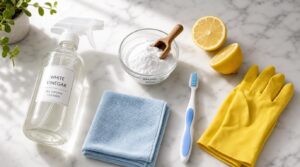
Before you start scrubbing, it helps to have the right supplies within reach. Nothing fancy — just a few simple things you probably already own. Here’s what you’ll need to get the job done right.
A soft-bristle brush, a mild cleanser, and a clean towel are the essentials, and if your grooming routine extends beyond the basics, this step-by-step beard braiding guide is worth bookmarking too.
If your walls have stubborn buildup, this guide on removing hairspray from bathroom walls walks you through exactly which supplies work best.
Mild Dish Soap
Mild dish soap is one of the safest, most multi-purpose cleaners you already own. It’s gentle enough for almost any caddy material — plastic, metal, bamboo, or mesh — without stripping finishes or irritating your skin.
To create a soap solution, just add a few drops to warm water. That’s it. Mild soaps lack harsh chemicals, providing a safer cleaning option for delicate surfaces.
White Vinegar Solution
White vinegar is basically a science experiment in a bottle. That 5% acetic acid cuts through mineral deposits and soap scum by lowering the surface pH — dissolving buildup that soap simply can’t touch.
Mix equal parts vinegar water in a spray bottle. It’s cheap, non-toxic, and safe on metal, glass, and ceramic caddies.
Baking Soda Paste
Vinegar tackles mineral buildup like a champ, but for stubborn soap scum or rust spots, you need something with a little more grip. That’s where baking soda paste earns its spot.
Mix three parts baking soda to one part water until thick and scoopable. Apply it, let it sit 5–10 minutes, then scrub.
| Problem | Solution |
|---|---|
| Soap scum | Paste + circular scrub |
| Rust spots | Paste + vinegar rinse |
Soft Brush or Toothbrush
Now that you’ve got your paste ready, you need something to actually work it in. That’s where an old toothbrush shines — literally.
Its small head lets you scrub corners and joints with real precision. Soft brush benefits here are obvious: the bristles are gentle enough not to scratch, but firm enough to brush away residue without fuss.
Microfiber Drying Cloth
One last tool to grab before you start scrubbing: a microfiber drying cloth.
- It absorbs up to 8x its weight in water
- Traps moisture instead of spreading it
- Works on metal, plastic, and bamboo
- Leaves surfaces streak-free and lint-free
Dry thoroughly after rinsing — skipping this step invites mildew fast.
Empty and Inspect The Caddy
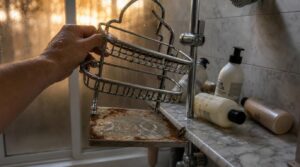
Before you grab a sponge, take a minute to clear everything out and give your caddy a proper look-over. You’d be surprised what hides behind those shampoo bottles — expired products, crusty buildup, and parts you forgot could even come off. Here’s how to prep it right.
Remove Every Product
Think of your shower caddy like a backpack you never unpack — things pile up fast. Before any soap scum removal or vinegar cleaning can happen, clear everything out first.
Grab each bottle carefully. Check container seals as you go — weakened caps drip and make a mess. Stand heavy bottles upright while moving them to prevent spills.
| Product Grouping Tips | Why It Matters |
|---|---|
| Hair care together | Speeds up restocking |
| Body wash separate | Prevents cross-contamination |
| Heavy bottles last | Reduces spill risk |
| Empty containers aside | Simplifies disposal organization |
| Fragile items first | Avoids accidental breaks |
Blot bottle bottoms with a sponge before setting them down — trapped moisture underneath is how mildew removal becomes your next headache. Work at a calm pace, and you won’t drop a thing.
Check Expired Toiletries
Now’s the perfect time to play detective with your toiletries. Pick up each bottle and look for a PAO symbol — that little open-jar icon with a number like "12M."
That means toss it 12 months after opening. No symbol? Check for a printed expiry date instead.
Anything off-smelling, discolored, or clumpy goes straight out.
Discard Empty Containers
Empty containers are sneaky clutter magnets — they take up space and do nothing for your spotless shower organization.
Here’s what to do before you put anything back:
- Triple-rinse any container that held strong products before recycling.
- Mark empties "EMPTY" to avoid accidental reuse.
- Follow local recycling protocols for plastic, glass, and metal separately.
- Remove or deface old labels per labeling standards.
- Log any questionable containers for compliance documentation.
Separate Removable Parts
Taking your caddy apart before cleaning is like opening a lunchbox — you can’t really scrub what you can’t reach.
Remove it from the showerhead and detach every removable piece: hooks, trays, and baskets. Snap‑out shelves and swivel baskets expose hidden grime spots that stay dirty otherwise.
Clear the shower caddy completely so nothing blocks your cleaning access.
Pre-rinse Loose Grime
A quick pre-rinse is your secret weapon before any real cleaning begins.
Hold the caddy under warm water for 30–60 seconds to flush away loose grime — soap scum flakes, hair, and mineral dust that sit right on the surface. This simple prep step lets your mild soap work on the stubborn stuff instead of wasting effort on loose residue.
Clean a Shower Caddy Properly
Now that your caddy is empty and ready, it’s time to give it a real clean — not just a quick rinse. The process is simple, but doing each step in the right order makes a big difference. Here’s how to get through it without the mess.
Apply Cleaner Evenly
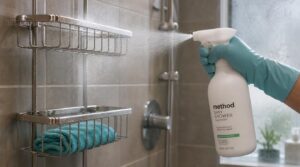
How you apply your cleaning spray matters more than most people realize. Hold your spray bottle 6–8 inches away and move in steady, overlapping passes — think of painting a fence, not hosing down a driveway.
- Spray perpendicular to the surface to avoid streaks
- Work in small sections, finishing each before moving on
- Use a microfiber cloth to spread cleaner evenly on flat areas
- Apply with care around joints to prevent pooling
- Reapply to any spots that look dry or dull
A light, even coat beats a heavy soak every time.
Scrub Corners and Joints
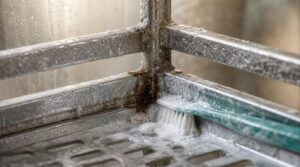
Once you’ve got cleaner on every surface, it’s time to scrub where grime loves to hide. Corners and joints are the real trouble spots — low airflow, trapped moisture, and soap scum all gang up there.
Grab a soft scrub brush or old toothbrush and work a baking soda paste into each joint. That gentle abrasion breaks up mineral deposits without scratching.
Rinse With Warm Water

Now that you’ve scrubbed every joint and corner, it’s time to wash everything away. Rinse with warm water — around 90 to 110°F — letting it sheet off all surfaces.
Tilt the caddy so water flushes through compartments completely.
Warm water naturally reduces surface tension, carrying away loosened grime and mild detergent far better than cold ever could.
Remove All Residue
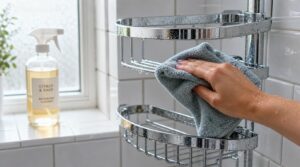
After rinsing, run a damp microfiber cloth across every surface. You’re checking for soap residue, hard water stains, and any lingering mold or mildew — things warm water alone won’t always catch.
- Wipe until the surface feels smooth, not slick
- Look for white haze — that’s mineral buildup hiding in plain sight
- Catch mold residue before it spreads further
- Use a natural acid cleaner like diluted vinegar on stubborn hard water stains
- Enzyme-based solutions break down soap scum at the source
Dry Completely Afterward

Once the rinsing is done, drying is where most people slip up. Dry immediately — bamboo and teak need wiping within five minutes to avoid warping, while metal takes 20–30 minutes fully.
| Material | Dry Time |
|---|---|
| Plastic | Under 10 min |
| Metal | 20–30 min |
| Bamboo/Teak | Within 5 min |
| Mesh | ~30 min |
A microfiber dry cloth pulls moisture faster than cotton. Crack a window or flip on the exhaust fan — better airflow cuts drying time nearly in half, keeping mildew from sneaking back in.
Clean Plastic Shower Caddies

Plastic caddies are low-maintenance, but they still need the right approach to stay clean without getting damaged. A few simple steps will keep yours looking fresh and lasting longer. Here’s what to do.
Use Mild Soapy Water
Mild soapy water is honestly one of the best-kept secrets in home cleaning — simple, cheap, and surprisingly effective. Mix a few drops of mild dish soap with warm water until you see light suds, and you’ve got a solution that lifts grease, dissolves grime, and leaves plastic surfaces looking fresh without any fuss.
Here’s what makes this combo work so well:
- Warm water loosens stuck-on soap scum faster than cold water
- Dish soap reduces surface tension, letting dirt lift away easily
- A soft brush or toothbrush reaches tight corners plastic caddies love to hide grime in
- The solution is gentle on plastic, so no warping, dulling, or damage
- It’s eco-friendly and budget-friendly — no fancy products needed
Dip your soft brush into the soapy mix, scrub in small circles, and watch the buildup disappear. Once done, rinse thoroughly with clean water to leave zero residue behind.
Avoid Bleach and Abrasives
Bleach might seem like the heavy-duty fix, but on plastic, it’s more enemy than ally. It clouds the surface, weakens the material, and can even cause discoloration over time. Stick to mild soap or vinegar — they clean just as well without the damage.
| What to Avoid | Safer Alternative |
|---|---|
| Bleach | White vinegar solution |
| Abrasive scrub pads | Soft microfiber cloth |
| Harsh chemical sprays | Mild dish soap and water |
| Steel wool | Old toothbrush |
| Abrasive powder cleaners | Baking soda paste |
Scrub Cracks Gently
Cracks are basically a grime magnet — soap scum and mineral deposits love to hide in there. Grab an old soft toothbrush, apply a little mild soap solution directly into each crack, then scrub using a steady circular motion. Light pressure is all you need.
A baking soda paste works great on stubborn spots without scratching the plastic.
Rinse Thoroughly
Now that you’ve scrubbed the cracks clean, don’t let residue sneak back in. Hold the caddy under warm water flow and let it run through every joint and pocket for 15–30 seconds per section.
This flushes away loosened soap, baking soda paste, and mild soap traces — preventing white streaks and stopping mineral deposits before they start.
Dry Before Replacing Items
Think of your caddy like a dinner plate — you wouldn’t put food on a wet one. After rinsing, use a microfiber cloth to wipe every surface in one direction.
Check corners and joints for hidden moisture. Let it air-dry for 20–60 minutes before restocking. This simple step keeps mold, mildew, and rust from sneaking back in.
Clean Metal Shower Caddies
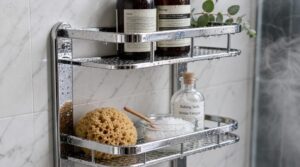
Metal shower caddies are tough, but they need a little extra love to stay rust-free and looking sharp. The good news is that a few simple steps can handle everything from soap scum to stubborn rust spots. Here’s exactly how to clean yours and keep it that way.
Soak in Diluted Vinegar
Start with a diluted vinegar soak to break down rust and mineral buildup on metal caddies. Mix 2–3 cups of white vinegar with water and let the caddy sit for about 20 minutes. This gives the acetic acid enough time to loosen grime without damaging the finish.
- Dissolves stubborn hard-water deposits naturally
- Kills surface bacteria without harsh fumes
- Safe for most metal finishes when diluted
- Leaves no toxic chemical residue behind
- Works faster than scrubbing alone
Scrub Soap Scum Buildup
Once the vinegar soak has done its work, it’s time to get hands‑on. Mix a baking soda paste with just enough water to form a thick consistency, then apply it directly to grimy spots.
The gentle abrasion lifts soap scum buildup without scratching the metal — think of it as a light exfoliant for your caddy.
Remove Rust Spots
Soap scum is one thing — rust is another beast. If you spot orange streaks on your metal caddy, don’t panic.
Dampen the rust spots with white vinegar and let it sit for 10 minutes. Then rub gently with a crumpled ball of aluminum foil. It’s soft enough not to scratch, but tough enough to scrub away rust effectively.
Polish Metal Surfaces
Once the rust is gone, your caddy deserves a little shine. Polishing metal surfaces restores that clean, bright look — and it’s easier than you’d think.
- Use a soft cloth with a small amount of baking soda paste
- Rub in gentle circular motions for even gloss enhancement
- Buff dry with a microfiber cloth for natural shine boost
- Polished surfaces resist future grime and slow corrosion buildup
Add Protective Coating
Think of a protective coating as your caddy’s invisible shield. After polishing, apply a thin layer of automotive wax or mineral oil to seal the metal surface.
This blocks moisture and slows corrosion by creating a barrier film.
Reapply every few months — it takes two minutes and keeps rust from coming back.
Clean Bamboo and Teak Caddies
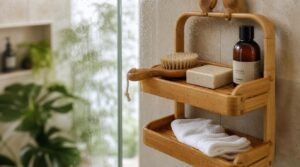
Bamboo and teak caddies bring a spa-like feel to your shower, but they need a little extra love to stay in great shape. Unlike metal or plastic, these natural materials can crack or warp if you’re not careful with how you clean them. Here’s exactly what to do to keep yours looking fresh.
Avoid Prolonged Soaking
Bamboo and teak look gorgeous, but they’re basically sponges with good PR. Don’t soak them — even a 15-minute submersion can cause swelling, warping, and cracked finishes.
Bamboo and teak are basically sponges with good PR — never soak them
Wet wood also invites mildew fast. Instead, wipe and rinse quickly, then dry immediately with a microfiber cloth.
Keep sessions short, and your caddy stays beautiful longer.
Wash With Gentle Soap
Reach for mild dish soap — it’s the gentlest weapon in your cleaning arsenal. A pH-balanced formula with soft surfactants cleans without stripping bamboo’s natural oils, keeping the wood protected and fresh.
Mix a few drops with warm water, keep it light and sudsy, and you’re ready to clean safely without harsh chemicals.
Scrub With Soft Sponge
A soft sponge is your bamboo caddy’s best friend. Its non-abrasive surface lifts soap scum without scratching the grain.
Use circular motions and gentle pressure — think of polishing a wooden table, not scrubbing a pan.
A plant-based cellulose sponge works great here and is kinder to the environment, too.
Dry Immediately
Water is bamboo’s quiet enemy. The moment you finish rinsing, grab a dry towel and start wiping every surface down.
Don’t let it sit. Dry immediately to avoid mildew taking hold in the grain. Separate any removable parts and dry each piece on its own. Then prop the caddy somewhere with good airflow — a warm spot works best.
Apply Natural Oil Lightly
Once your caddy is fully dry, it’s time to give it a little armor. A light coat of natural oil — coconut oil, olive oil, or mineral oil — seals the wood grain and shields it from moisture.
Warm a small amount between your palms first. Then press it gently into the surface. Wipe away any excess immediately so nothing feels greasy.
Clean Mesh Shower Caddies

Mesh caddies need a little more care than their plastic or metal cousins — the open weave traps soap scum and mildew faster than you’d think. The good news is they’re actually pretty easy to clean once you know the right approach. Here’s what to do.
Hand-wash in Soapy Water
Fill a basin or your sink with warm, soapy water — warm water helps soap spread and lift grime faster than cold ever could. Submerge the mesh caddy and let it soak for about 15 minutes.
Then scrub gently with a soft brush, working into every pocket and seam. Rinse until the water runs completely clear.
Use Delicate Machine Cycle
If hand-washing isn’t your thing, good news — a delicate machine cycle works just as well for most mesh caddies. Toss it in a mesh laundry bag first for extra protection, then use cold water with a mild detergent.
Keep the spin speed low. Skip the dryer completely.
Avoid Bleach
Skip the bleach entirely — it’s too harsh for mesh. Bleach damages delicate fibers, weakens fabric joints, and releases fumes in your small bathroom that irritate your eyes and throat.
Instead, a simple vinegar-water spray manages mildew and odor naturally without any toxic residue. It’s gentler, safer, and honestly just as effective.
Clean Inner Frames
Once bleach is out of the picture, don’t overlook the inner frame itself. That plastic skeleton hiding behind the mesh traps soap scum, mold, and mildew in its corners and joints just as stubbornly as the fabric does.
Wipe down each frame joint with a soft cloth dampened in warm soapy water. For corner crevice cleaning, a toothbrush works perfectly — it reaches those tight spots without scratching the plastic coating.
Air-dry Completely
Once the frame is clean, drying to avoid mildew is your next priority. Mesh holds moisture longer than you’d think, so best drying spots matter — hang it open, never folded.
- Unhook removable parts to improve airflow enhancement methods
- Open a window or run the exhaust fan for humidity control
- Try overnight drying benefits for dense mesh frames
Mold prevention starts here.
Prevent Mold, Rust, and Buildup

Cleaning your caddy is only half the battle — keeping it clean is where the real work happens. A few small habits go a long way toward stopping mold, rust, and soap scum before they even start. Here’s what to do.
Wipe After Each Shower
Think of it like rinsing your dishes right after eating — the longer you wait, the harder it gets. A quick wipe after each shower takes about 30 seconds and does a surprising amount of work. It pulls moisture off surfaces before mold gets a chance to settle in.
Grab a dry microfiber cloth and run it across the caddy’s shelves, corners, and edges. Microfiber captures leftover droplets instead of just pushing them around, which keeps both plastic and metal surfaces streak-free. This simple habit also controls soap scum buildup between deep cleans and slows corrosion on metal caddies greatly.
Deep Clean Monthly
Once a month, set aside 20 to 30 minutes for a proper deep clean — your caddy will thank you. Wipe-downs handle surface moisture, but monthly cleaning addresses the grime hiding in joints, corners, and shelf edges where mold quietly takes hold.
Improve Bathroom Airflow
Your bathroom is basically a steam room after every shower — and that trapped moisture is mold’s best friend.
Run your exhaust fan during and for at least 15–20 minutes after showering. Position it directly above the shower for best results.
Cracking a window helps too, creating cross-ventilation that pushes humid air out fast.
Store Fewer Products
Every product sitting in your caddy holds moisture against it — and that’s how rust and mold get their start.
- Fewer items mean less trapped moisture
- A lean caddy is easier to wipe down fast
- Cutting clutter lowers mold and rust risk
- Simple setups make your monthly deep clean quicker
Keep only what you actually use every week.
Inspect Rust Weekly
A rusty shower caddy doesn’t announce itself — it creeps in quietly. Run your finger along the metal edges once a week.
Catch a rough, orange spot early, and it’s a quick fix. Ignore it, and you’re dealing with full corrosion.
Inspect rust weekly, dab a baking-soda paste on any spots, and your caddy stays solid for years.
Frequently Asked Questions (FAQs)
How to get plastic shower tray white again?
Like a dingy T-shirt that’s seen too many washes, a yellowed plastic shower caddy feels beyond saving — but it’s not. A vinegar and baking soda soak pulls minerals and grime right out, restoring brightness fast.
How to get rust off stainless steel shower caddy?
Mix equal parts white vinegar and baking soda into a paste. Apply it to rust spots, let it sit 10 minutes, then scrub gently. Rinse well and dry completely.
Do plastic shower caddies get mold?
Yes, plastic shower caddies get mold. Damp seams, drainage holes, and soap scum create perfect hiding spots. Poor bathroom ventilation makes it worse. A quick wipe after each shower keeps mold from taking hold.
Can I clean my shower caddy in the dishwasher?
Some caddies love a good spin cycle — but not all of them. Plastic and stainless steel caddies can handle it. Bamboo and mesh? Skip the dishwasher entirely.
How do I remove hard water stains effectively?
Hard water stains are basically mineral armor — stubborn but beatable. A white vinegar soak for 15 minutes loosens the scale, then baking soda paste scrubs it away without scratching.
What removes stubborn mineral deposits from caddy surfaces?
White vinegar and baking soda are your best weapons. Vinegar dissolves mineral deposits fast, while baking soda scrubs them away. For tougher buildup, try citric or glycolic acid cleaners — they break down hard water scale without scratching.
How often should I replace an old caddy?
Most caddies last 1 to 2 years. Replace sooner if you spot rust, warped shelves, or mildew smells that won’t wash out — those are signs the material is breaking down, not just dirty.
Are natural cleaning solutions safe for all materials?
Not quite. Natural doesn’t mean universal. Vinegar, for instance, can etch bamboo finishes and dull acrylic over time. Always do a quick patch test on a hidden spot before committing to any cleaner.
Conclusion
Like a clean slate wiped fresh before a new day, a scrubbed-down caddy resets the whole shower experience.
Now that you know how to clean a shower caddy properly for every material—plastic, metal, bamboo, or mesh—there’s no reason to let pink slime or rust call the shots again.
A quick monthly scrub, a wipe-down after each shower, and good airflow keep buildup from ever getting the upper hand.
Your shower deserves better. So do you.