This site is supported by our readers. We may earn a commission, at no cost to you, if you purchase through links. This content is for general informational and educational purposes only and is not a substitute for professional medical, dermatological, or nutritional advice.
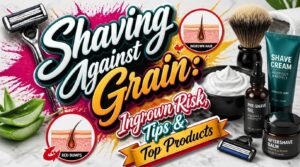
That smooth, close shave you chased this morning might be quietly working against you. Shaving against the grain pulls hair below the skin surface before cutting it—a mechanical trick called the lift-and-cut effect—leaving a razor-sharp, angled tip buried in your follicle.
From there, coarse or curly hair does what physics demands: it curves back into the surrounding tissue, triggering the redness, swelling, and painful bumps known as razor bumps or pseudofolliculitis barbae.
Certain genetic variants make this six times more likely. Understanding the mechanics behind shaving against grain ingrown risk is the first step toward getting a close shave without the aftermath.
Table Of Contents
- Key Takeaways
- Why Against-Grain Shaving Causes Ingrowns
- Who Faces Higher Ingrown Risk
- Safer Shaving Direction Strategy
- Razor Choice and Blade Control
- Top 10 Products for Ingrown Prevention
- 1. CeraVe Renewing Salicylic Cleanser
- 2. Aveeno Sensitive Skin Shave Gel
- 3. Vanicream Sensitive Skin Shave Cream
- 4. Viking Luxury Sandalwood Shaving Cream
- 5. Harry’s Plus Shaving Kit
- 6. Art of Shaving Pre Shave Oil
- 7. Vikings Blade Sandalwood Shaving Cream
- 8. Van Der Hagen Shave Butter
- 9. Barber Grade Clear Shaving Gel
- 10. Art of Shaving Sandalwood Refill
- Prevent Ingrowns Before and After
- Frequently Asked Questions (FAQs)
- Conclusion
Key Takeaways
- Shaving against the grain pulls hair below the skin surface before cutting it, leaving a sharp, angled tip buried in the follicle that acts like a needle driving into surrounding tissue.
- People with coarse or curly hair and those carrying the KRT75 gene variant face dramatically higher ingrown hair risk — the K6hf Ala12Thr variant alone raises your odds sixfold.
- tiered shaving approach — first pass with the grain, second pass across it, and only an optional third pass against it on calm skin — delivers closeness without the follicle trauma that causes razor bumps.
- Using a single-blade safety razor, replacing blades every five to seven uses, and applying a 2% salicylic acid cleanser before and after shaving are the most effective steps to break the ingrown hair cycle.
Why Against-Grain Shaving Causes Ingrowns

Against-grain shaving feels like a shortcut to smoothness, but the mechanics behind it tell a different story. Each stroke sets off a chain of events inside your follicles that can end in painful, stubborn bumps. Here’s exactly what’s happening beneath the surface.
The friction from each against-grain stroke actively lifts and tugs hair at the root, triggering the follicle inflammation detailed in this guide to razor burn causes and prevention after shaving.
Lift-and-cut Effect
When a multi-blade cartridge razor glides across your skin against the grain, something mechanical — and problematic — happens beneath the surface. The lift-and-cut sequence works like this:
- The first blade snags and lifts the hair upward
- Subsequent blades cut it progressively shorter — a process called hysteresis
- The hair retracts below skin level
- Your follicle is now housing a buried, sharpened tip
The phenomenon is known as the tug‑and‑cut method.
Subsurface Sharp Hair Tips
That buried stub isn’t just short — it ends in a sharp, angled tip.
Every shave resets thousands of hairs to a fresh cutting edge angled at roughly 45–60 degrees, making each tip three to four times more likely to pierce surrounding tissue than an uncut hair’s natural, tapered end.
Coarse hair compounds this: its rigid diameter holds that edge like a needle.
Follicle Wall Penetration
That sharp, angled tip doesn’t stay still — it acts like a needle working against soft tissue.
Transfollicular penetration happens when a hair retracted below the skin line pierces its own follicle wall inward, driving the shaft into the dermis. Extrafollicular penetration follows a different path: the hair exits, curves, and re-enters adjacent skin from outside.
- Tightly curved follicles naturally direct cut tips back inward
- Hair tip geometry — that 45–60° angled edge — facilitates piercing
- Follicle curvature in coiled hair creates a built-in inward pathway
- The KRT75 gene variant weakens follicle wall integrity, raising penetration risk sixfold
- Shaving against the grain amplifies all five factors simultaneously
Both mechanisms trigger pseudofolliculitis barbae — the root cause of razor bumps.
Inflammation and Razor Bumps
Once a hair tip pierces the follicle wall, your immune system treats it like a splinter — a foreign body reaction kicks in, flooding the area with white blood cells. That’s what creates the swelling, tenderness, and visible razor bumps you feel after shaving against the grain.
| Response Stage | What Happens | Visible Sign |
|---|---|---|
| Immune trigger | White blood cells rush in | Redness, warmth |
| Bacterial entry | Staphylococci infect the follicle | Pus-filled nodule |
| Chronic irritation | Repeated inflammation damages tissue | Dark spots, scarring |
Left untreated, bacterial infection risks escalate quickly — staph enters the inflamed follicle and creates painful, pus-filled nodules. Worse, chronic flare-ups cause post-inflammatory hyperpigmentation, leaving dark spots that can become permanent without intervention. Applying topical anti-inflammatory relief — hydrocortisone cream or aloe vera gel — early stops this cycle before it deepens into lasting skin irritation.
Pseudofolliculitis Barbae Risk
Pseudofolliculitis barbae — the clinical term for chronic razor bumps — isn’t just bad luck. Carriers of the K6hf Ala12Thr genetic variant face a sixfold higher risk, with 76% developing the condition when shaving regularly.
Chronic razor bumps aren’t bad luck — for carriers of the K6hf Ala12Thr variant, they’re nearly inevitable
Tightly coiled hair curving beyond 60 degrees post‑cut practically guarantees re‑penetration.
If your job demands daily shaving, that continuous follicle trauma accelerates everything.
Who Faces Higher Ingrown Risk
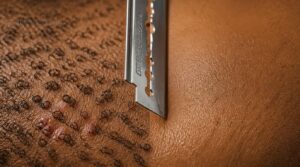
Not everyone’s skin takes against-grain shaving the same way — your hair type, skin sensitivity, and where you’re shaving all shape how much trouble you’re in for. Some people are wired, almost by biology, to get ingrown hairs more often than others. Here’s who needs to be the most careful.
Curly or Coiled Hair
If you have tightly coiled or curly hair, your risk of ingrown hairs after shaving against the grain rises sharply. Because curly follicles grow at a curved angle, freshly cut hair naturally bends back toward the skin.
That re-entry triggers inflammation — the core mechanism behind pseudofolliculitis barbae. Shrinkage compounds this: coily hair springs back after shaving, pressing sharp tips directly against the follicular wall.
Coarse Beard Texture
Coarse beard hair isn’t just about how it feels — its elliptical shaft shape and dense keratin scales make it far more likely to cause ingrown hairs when you shave against the grain. Hormonal thickness shifts, especially in your 20s and 30s, push diameter toward 0.12mm, creating sharp sub-surface tips that resist bending without piercing skin:
- Medulla-reinforced shafts resist bending, so cut tips stay rigid and angle back into surrounding follicles
- Follicle density variations mean high-density zones produce clustered ingrowns, not isolated ones
- Damaged keratin scale integrity from repeated passes leaves raw cortex exposed, worsening inflammation
Sensitive Skin Types
Sensitive skin is fundamentally a compromised defense system. Its impaired barrier function increases water loss by up to 40% and allows irritants to penetrate deeper, meaning against-grain shaving doesn’t just skim the surface — it triggers a full inflammatory cascade.
Higher nerve receptor density amplifies every micro-cut into burning, stinging discomfort that coarser-skinned shavers simply don’t experience.
Neck and Jawline Shaving
The neck and jawline are generally considered the trickiest zones on your face to shave. Jawline hair grows in multiple directions — unlike your cheeks, which follow a mostly uniform downward path — so your razor can’t just follow one consistent line without cutting against the grain somewhere.
- Neck skin has less elasticity, making it more prone to nicks and razor bumps when the blade drags
- Hair growth on the neck often swirls or grows upward, increasing ingrown hair risk with against-grain passes
- A 45-degree razor angle helps navigate jawline contours without causing tug or blade skip
- The bullfrogging technique — relaxing the skin without stretching it — reduces razor tug during second passes
- Thick, protective lather prevents micro-cuts where neck skin texture changes rapidly
That multi-directional hair growth means shaving against the grain on the neck doesn’t just risk razor bumps — it almost guarantees them in high-growth areas. Combined with thinner, less elastic skin that can’t spring back the way cheek skin does, even a single aggressive pass can trigger inflammation deep in the follicle. Use a 45-degree angle, never rush the neck, and let a rich lather do the protective work.
Bikini Line Friction
The bikini line is uniquely unforgiving — pubic hair is coarser and curlier than anywhere else, which means shaving against the grain here almost guarantees the sharp hair tip curves back into the follicle.
After shaving, wear loose, breathable cotton to minimize friction. Sweat worsens chafing, so an anti-chafe stick like Body Glide creates a barrier that keeps clothing from pushing freshly cut hairs inward.
Safer Shaving Direction Strategy
The direction you shave matters more than most people realize, and getting it right is less about absolute precision than about working through a logical sequence. Think of it as a tiered approach — each pass does a specific job, and skipping steps is where most ingrown hairs are born.
Here’s the strategy that keeps irritation low while still getting a close shave.
First Pass With Grain
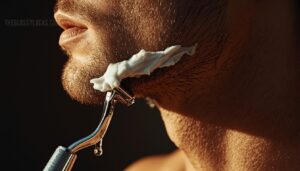
Before you attempt anything closer, start with the grain. That first directional pass — matched to hair growth direction in each zone — clears bulk stubble while keeping tugging and irritation minimal.
Think of it as laying the foundation: grain mapping each area first tells your razor exactly where to move, so you’re reducing hair gradually rather than forcing a single aggressive stroke.
Second Pass Across Grain
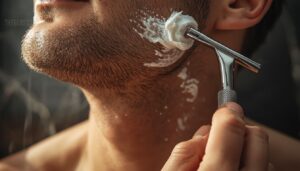
Once that first pass clears the bulk, your second pass does the precision work — moving perpendicular to hair growth, or across the grain. This sideways angle cuts closer without dragging hair below the skin surface.
Reapply lather fully, use ultra-light pressure, stretch skin gently, and keep strokes short — 1–2 inches — to stay in control and avoid ingrown hairs.
Optional Against-grain Pass
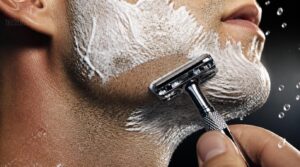
Now that across-grain has shortened the hair, an optional against-grain pass can deliver that extra closeness — but only if your skin still feels calm and well-lubricated. Because hair is already partially cut, the blade meets less resistance, reducing friction naturally.
Keep strokes short, use feather-light pressure, and skip any area showing redness.
Avoid Repeated Passes

Going back over the same area is where most shaving technique falls apart. Each extra pass — especially against the grain — pushes hair further below skin level, creating the sharp subsurface tips that trigger razor bumps. Re-lather between directional passes, keep pressure feather-light, and let 24–48 hours pass between sessions so follicles can recover fully.
- Repeated passes increase ingrown hair formation by progressively cutting hair beneath the skin surface
- Re-lathering between passes maintains lubrication, reducing friction and skin trauma considerably
- Shaving every other day lowers ingrown risk compared to daily shaving routines
Stop on Irritated Areas

When your skin is showing bright red inflammation, heat, or swollen bumps, shaving against the grain is the last thing it needs.
Stop completely — even a gentle pass worsens the irritation by driving already-compromised hair tips deeper.
Mild razor burn clears in one to two days, but ingrown-related bumps need two weeks or more to fully heal before you resume.
Razor Choice and Blade Control
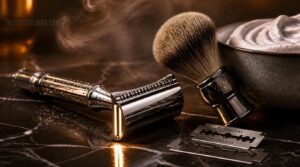
Your razor isn’t just a tool — it’s your first line of defense against ingrown hairs. The number of blades and how well you maintain them can make or break your shave, especially when you’re working against the grain. Here’s what to look for when choosing and caring for your razor.
Single-blade Safety Razors
A single-blade safety razor gives you something multi-blade cartridges can’t: precise control over cut depth.
Its fixed-angle head geometry keeps the blade at a consistent 30–40 degrees, so you’re always cutting at the surface — never below it.
The guard spacing limits blade exposure and clears lather efficiently, which means less drag, fewer repeated passes, and a substantially lower risk of ingrown hairs.
Two-blade Cartridge Razors
Two-blade cartridges sit in useful middle ground. The progressive cutting action — where the first blade lifts hair and the second cuts it — delivers a close shave without going dangerously subsurface.
The pivot head follows facial contours automatically, maintaining consistent blade contact across your jawline and neck, and the built-in lubricating strip reduces friction, lowering your risk of razor bumps.
Avoid Excessive Blade Counts
More blades don’t mean a better shave — they mean more trouble. Here’s why blade count works against you:
- Each added blade progressively shortens hair below the skin surface, increasing ingrown hair risk
- Multi-blade friction strips your skin’s protective lipid barrier
- The lift-and-cut effect pulls hairs upward before slicing them dangerously subsurface
- Cramped blades generate 45% higher skin redness than single-blade safety razors
- Manufacturers sacrifice individual blade sharpness to fit more blades into one cartridge
When shaving against the grain, extra blades compound every risk.
Replace Dull Blades Early
A dull blade is the hidden culprit behind most shaving irritation.
Tugging sensation signs — that dragging pull instead of a clean glide — tell you the edge has developed microscopic edge damage from repeated use.
At that point, extra pressure becomes unavoidable, and extra pressure means deeper cuts, more inflammation, and a higher chance of ingrowns.
Replace your blades every five to seven uses.
Dry Razor After Shaving
Moisture is a blade’s worst enemy. After every shave — especially if you’ve been working against the grain — shake off excess water, then pat the blade dry with a lint-free cloth.
Store your razor upright on a razor stand to allow full airflow. This prevents rust, preserves the edge, and keeps skin irritation from creeping into tomorrow’s shave.
Top 10 Products for Ingrown Prevention
The right products can make or break your shaving routine, especially if ingrown hairs are a recurring problem for you. From pre-shave prep to post-shave treatment, what you reach for matters just as much as technique. Here are ten products worth keeping on your shelf.
1. CeraVe Renewing Salicylic Cleanser
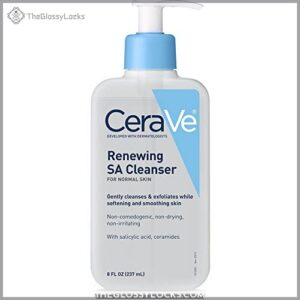
Think of the CeraVe SA Cleanser as your skin’s reset button before and after every shave. Its 2% salicylic acid dissolves dead cells clogging the follicular opening — the very blockage that traps sharp hair tips beneath the surface.
What makes it genuinely useful is the supporting cast: ceramides and hyaluronic acid maintain your moisture barrier while the acid exfoliates, so you’re not trading ingrown hairs for dryness. At $10.85 for 10.4 oz, it’s clinical-grade without the clinic price.
| Best For | Anyone dealing with ingrown hairs, blackheads, acne-prone skin, or oily skin who wants a daily cleanser that exfoliates without stripping moisture. |
|---|---|
| Skin Type | Dry, sensitive, acne-prone |
| Scent | Fragrance-free |
| Product Format | Gel-to-foam cleanser |
| Key Ingredient | 2% Salicylic acid |
| Razor Burn Relief | Pre-shave exfoliation |
| Moisturizing | Hyaluronic acid & ceramides |
| Additional Features |
|
- The 2% salicylic acid unclogs pores and smooths skin texture without harsh side effects
- Ceramides and hyaluronic acid keep your moisture barrier intact while you exfoliate
- Affordable at $10.85 for 10.4 oz — solid value for a dermatologist-developed formula
- Won’t cut it as a makeup remover on its own, especially with waterproof products
- Overuse can lead to dryness or irritation, particularly on very sensitive skin
- Produces less foam than traditional cleansers, which might feel underwhelming to some
2. Aveeno Sensitive Skin Shave Gel
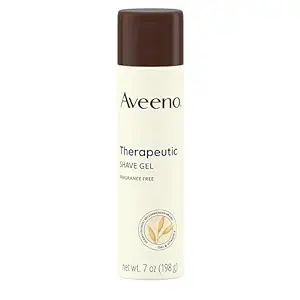
Where the CeraVe cleanser preps your skin at the cellular level, the Aveeno Sensitive Skin Shave Gel protects it during the blade’s actual pass. Its prebiotic oat and Vitamin E formula creates a lubricating cushion between razor and skin, reducing friction that pulls hair below the surface.
Fragrance-free, dye-free, and dermatologist-recommended, it’s engineered for reactive skin. A small amount builds rich lather that lifts hair for cleaner contact — fewer sharp sub‑surface tips, less irritation.
| Best For | Anyone with sensitive, dry, or reactive skin who wants a close, smooth shave without razor burn, bumps, or irritation — whether on the face or body. |
|---|---|
| Skin Type | Sensitive, dry |
| Scent | Fragrance-free |
| Product Format | Shave gel |
| Key Ingredient | Prebiotic oat |
| Razor Burn Relief | Prevents bumps & burn |
| Moisturizing | Oat & Vitamin E |
| Additional Features |
|
- Prebiotic oat and Vitamin E formula actively soothes and hydrates while you shave, not just before or after
- Fragrance-free, dye-free, and dermatologist-recommended — a safe pick for even the most reactive skin types
- A little goes a long way, so the 7 oz bottle lasts considerably longer than most shave gels
- Struggles a bit with very coarse hair unless paired with a sharp, quality razor
- The pump can get frustratingly hard to use as the bottle nears empty
- Marketed as fragrance-free, but some users with heightened sensitivity notice a faint scent
3. Vanicream Sensitive Skin Shave Cream
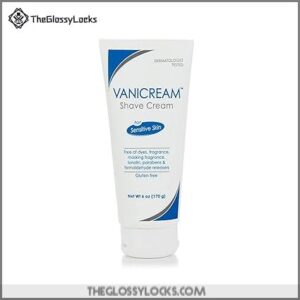
Aveeno’s gel lathers up and lifts, but Vanicream takes a different approach — no foam at all. This non-lathering formula creates a transparent glide layer that lets you actually see where the blade is tracking, which matters when you’re maneuvering tricky jawline angles.
Dermatologist-tested and free of fragrance, dyes, and parabens, it’s built for skin that reacts to almost everything. Glycerin and panthenol keep the barrier hydrated mid-shave, so the razor glides rather than drags.
| Best For | Anyone with reactive, sensitive skin — especially those dealing with rosacea, eczema, or chronic razor burn who need a no-nonsense formula without the usual irritants. |
|---|---|
| Skin Type | Sensitive, rosacea, eczema |
| Scent | Fragrance-free |
| Product Format | Shave cream |
| Key Ingredient | Gentle moisturizers |
| Razor Burn Relief | Reduces burn & redness |
| Moisturizing | Non-lathering moisture base |
| Additional Features |
|
- Completely free of fragrance, dyes, parabens, sulfates, and gluten — a rare clean slate for hypersensitive skin
- Non-lathering formula gives you a clear view of the blade’s path, making precision shaving around jawlines and contours easier
- Leaves skin soft and hydrated after shaving, with glycerin and panthenol supporting the skin barrier throughout
- Has a noticeable corn-flake-like odor that some users find unpleasant
- At only 6 oz, frequent shavers may find themselves repurchasing more often than they’d like
- Can leave a thin residue after rinsing, which may require an extra rinse or face wash
4. Viking Luxury Sandalwood Shaving Cream
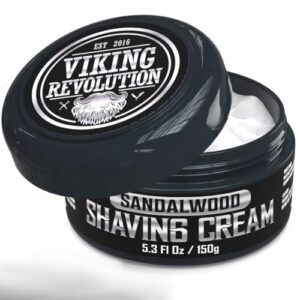
Vanicream’s fragrance-free approach works beautifully for reactive skin, but sometimes you want a shave that also feels like a ritual. That’s where Viking Luxury Sandalwood earns its place.
Its thick, cushioning lather protects the skin barrier during each pass, reducing the drag that forces you to press harder — a habit that drives blades below the skin surface and raises ingrown risk.
Sensitive skin stays conditioned, not stripped, thanks to a formula free of harsh synthetic additives.
| Best For | Anyone who wants a smooth, close shave with a touch of indulgence — especially those with sensitive skin who still want a bit of fragrance and ritual in their routine. |
|---|---|
| Skin Type | Sensitive |
| Scent | Sandalwood |
| Product Format | Shave cream |
| Key Ingredient | Natural botanical oils |
| Razor Burn Relief | Minimal razor burn |
| Moisturizing | Conditioning natural oils |
| Additional Features |
|
- Thick, rich lather that cushions the razor and cuts down on irritation and razor burn
- Gentle, natural formula free of harsh chemicals — safe for sensitive or reactive skin
- Highly concentrated, so a little goes a long way
- The sandalwood scent is quite subtle, which may disappoint anyone who wants a bolder fragrance
- Lather can thin out after multiple passes, meaning you may need to re-lather mid-shave
- Slightly pricier per ounce than traditional shaving soaps, and some users find the texture a touch sticky
5. Harry’s Plus Shaving Kit
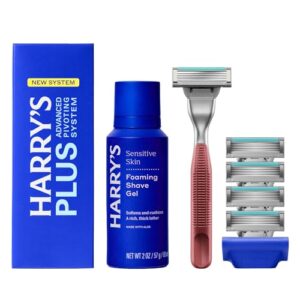
Harry’s Plus Shaving Kit is built around control — and that matters when you’re trying to keep blades from cutting too deep. The sophisticated pivoting head follows your jawline and neck contours automatically, reducing the pressure you’d otherwise apply to chase coverage.
Fewer hard strokes mean fewer sub-surface cuts.
The weighted metal handle steadies your grip on wet skin, and the lubricating aloe strip cushions each pass, lowering the friction that usually pushes a five-blade system into ingrown territory.
| Best For | Anyone who wants a close, comfortable shave with minimal irritation — especially those prone to nicking or ingrown hairs. |
|---|---|
| Skin Type | All skin types |
| Scent | Unscented |
| Product Format | Razor kit |
| Key Ingredient | Five-blade cartridge |
| Razor Burn Relief | Minimal nicking & irritation |
| Moisturizing | Lubricating strip |
| Additional Features |
|
- The pivoting head and weighted handle work together to give you real control, even on tricky spots like the jawline and neck
- Five blades with a built-in aloe strip means a smooth, cushioned shave without needing extra products
- The TSA-approved travel cover and compact design make it a genuinely useful all-in-one kit for travel
- Cartridges only fit Harry’s Plus handles, so you’re locked into their ecosystem for replacements
- The "up to 7 weeks" blade life assumes light use — heavy shavers will go through cartridges faster
- The included shave gel comes in a small tube, which won’t last long if you shave daily or just prefer a pump dispenser
6. Art of Shaving Pre Shave Oil
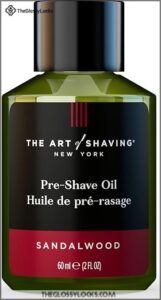
Before your blade ever touches the skin, what you put on your face makes a measurable difference. The Art of Shaving Pre-Shave Oil creates a protective lubricating layer that reduces blade friction and lets the razor glide rather than drag — meaning less tugging on curved, coily hairs that would otherwise get yanked below the skin’s surface.
A few drops, massaged in after a warm rinse, soften the beard, so your first with‑grain pass does most of the work cleanly.
| Best For | Men with sensitive skin who are prone to razor burn, ingrown hairs, or irritation — especially those using DE safety razors or straight razors. |
|---|---|
| Skin Type | Normal to dry, sensitive |
| Scent | Sandalwood |
| Product Format | Pre-shave oil |
| Key Ingredient | Sandalwood essential oil |
| Razor Burn Relief | Prevents burn & ingrowns |
| Moisturizing | Moisturizes & protects skin |
| Additional Features |
|
- Made with 100% pure sandalwood essential oil and a clinically tested formula that’s gentle enough for sensitive and dry skin
- Creates a smooth lubricating layer that reduces blade drag, helping prevent nicks, cuts, and ingrown hairs
- Works as an effective pre-shave prep step that softens beard hairs and makes any shaving routine faster and more comfortable
- At $28, it’s noticeably pricier than most generic pre-shave oils on the market
- The sandalwood scent is strong, which might be a turnoff for anyone who prefers something unscented or more subtle
- The thick consistency can feel greasy if you use too much, and may cause some blade buildup that requires extra rinsing mid-shave
7. Vikings Blade Sandalwood Shaving Cream
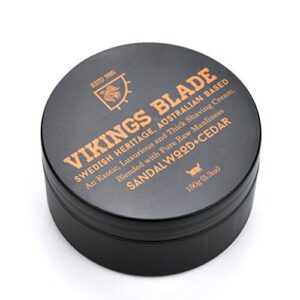
Vikings Blade Sandalwood Shaving Cream gives you something most shaving products don’t: slick lubrication without a heavy lather that masks what your blade is actually doing. The foaming surfactant base collapses into a thin, translucent layer — enough cushion to reduce drag without lifting coarse hairs too far above the skin.
A small amount, roughly a quarter teaspoon, stretched across wet skin creates consistent glide, so your optional against-grain pass stays controlled and shallow.
| Best For | Shavers who prefer a lightweight, slick lather over thick traditional foam and want a cost-effective daily cream with a pleasant woody scent. |
|---|---|
| Skin Type | All skin types |
| Scent | Sandalwood & cedar |
| Product Format | Shave cream |
| Key Ingredient | Foaming surfactant base |
| Razor Burn Relief | Minimizes razor drag |
| Moisturizing | Slick lubricating layer |
| Additional Features |
|
- A tiny amount goes a long way — roughly a quarter teaspoon per shave makes this tub last for months
- The Swedish-inspired sandalwood and cedar fragrance makes the routine genuinely enjoyable
- Collapses into a thin lubricating layer that lets you feel exactly what the blade is doing
- Foam dissipates quickly, so it won’t satisfy anyone who likes a rich, cushiony traditional lather
- The thin, translucent consistency takes some practice to apply correctly for full coverage
- May cause irritation for very sensitive skin types, and some users report an unexpected off-taste
8. Van Der Hagen Shave Butter
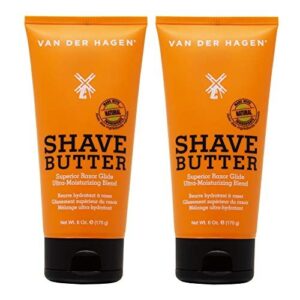
Think of Van Der Hagen Shave Butter as a skin-protective film, not a lather — and that distinction matters when you’re shaving against the grain.
Its blend of shea, mango, and cocoa butters with macadamia nut oil creates a thin, stable glide layer that keeps your blade shallow rather than dragging hair upward into sub‑surface cut territory.
Glycerin locks moisture in throughout the pass, so sensitive skin stays hydrated instead of raw.
| Best For | Anyone with sensitive skin who wants a moisturizing, irritation-free shave — especially those who shave their head or go against the grain regularly. |
|---|---|
| Skin Type | Sensitive |
| Scent | Light natural scent |
| Product Format | Shave butter cream |
| Key Ingredient | Shea & mango butters |
| Razor Burn Relief | Reduces razor burn |
| Moisturizing | Shea, mango & cocoa butters |
| Additional Features |
|
- The shea, mango, and cocoa butter blend creates a smooth glide that protects skin and reduces razor burn with every pass
- Glycerin keeps skin hydrated throughout the shave, so you can skip the aftershave entirely
- Works as both a shaving product and a post-shave moisturizer, making it a solid two-in-one for your routine
- The non-foaming texture takes some getting used to if you’re used to traditional lathering creams
- At 6 oz per jar, frequent shavers may go through it faster than expected and need to restock often
- The natural scent, while light, could be a minor issue for anyone particularly sensitive to fragrance
9. Barber Grade Clear Shaving Gel
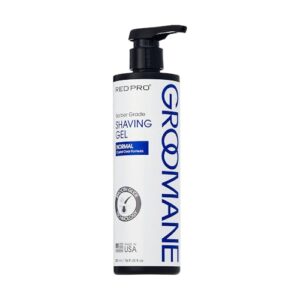
When clarity is your sharpest tool, Barber Grade Clear Shaving Gel earns its name.
The transparent, non-foaming formula lets you see exactly where your razor is tracking, so you don’t need extra passes to fix a crooked line — and fewer passes means less sub-surface cutting that triggers ingrowns.
Aloe vera and glycerin cushion the blade while keeping skin hydrated, and it rinses cleanly without clogging your razor.
| Best For | Anyone who does precision beard shaping, line-ups, or edge work and wants full visibility while shaving — especially those with sensitive skin prone to nicks or razor burn. |
|---|---|
| Skin Type | Normal to sensitive |
| Scent | Unscented |
| Product Format | Transparent shave gel |
| Key Ingredient | Aloe vera |
| Razor Burn Relief | Reduces nicks & burn |
| Moisturizing | Aloe vera hydration |
| Additional Features |
|
- The clear gel lets you see exactly where your razor is going, making crisp lines and clean edges far easier to nail
- Aloe vera keeps skin hydrated and soothed during and after the shave, reducing irritation and razor burn
- Works with virtually any razor type — straight, safety, cartridge, or trimmer — so it fits into any grooming routine
- No foam means it feels nothing like traditional shaving cream, which takes some getting used to
- Apply to wet skin only — on dry skin it gets sticky fast
- Safety razor users should rinse regularly during the shave to prevent the gel from clogging the blade
10. Art of Shaving Sandalwood Refill
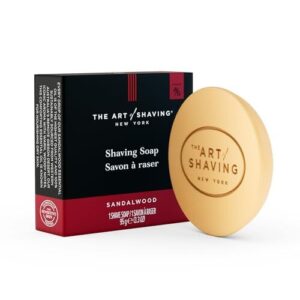
If you want a shaving soap that earns its $35 price tag through ingredients — not packaging — the Art of Shaving Sandalwood Refill makes a clear case for itself. Sustainably sourced sandalwood oil from Western Australia, pairs with glycerin and stearic acid to build a thick, cushioning lather that keeps your blade gliding rather than dragging.
That reduced friction directly limits the pressure you need to apply, which means less sub-surface cutting and fewer ingrown triggers.
| Best For | Wet shavers with sensitive skin who want a premium, skin-friendly soap that minimizes razor burn and irritation — whether shaving their face, head, or beard. |
|---|---|
| Skin Type | Sensitive |
| Scent | Sandalwood |
| Product Format | Shave soap puck |
| Key Ingredient | Sandalwood essential oil |
| Razor Burn Relief | Reduces burn & irritation |
| Moisturizing | Creamy hydrating lather |
| Additional Features |
|
- Free from synthetic dyes and alcohol, making it gentle enough for even the most sensitive skin
- Sandalwood essential oil gives it a pleasant, natural scent while the thick, creamy lather clings well and cushions the blade
- Clinically tested and dermatologist-reviewed, so the "sensitive skin" claim actually has some backing behind it
- At $50, it’s a tough sell for anyone watching their budget when solid drugstore alternatives exist
- The sandalwood scent runs lighter than many users expect, which can feel underwhelming at that price point
- Lather performance has been inconsistent across batches for some users, meaning your experience may vary puck to puck
Prevent Ingrowns Before and After
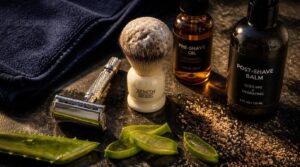
What you do before and after the razor touches your skin matters just as much as how you shave. A few targeted steps can stop ingrown hairs before they start — and calm your skin fast when irritation does show up. Here’s what to build into your routine.
Warm Shower Preparation
Shaving after a warm shower is one of the simplest ways to prevent ingrown hairs. Warm water softens the hair shaft, causing it to swell slightly, so your blade cuts cleanly rather than catching and dragging.
It also increases skin pliability, reducing the pressure you need to apply — and less pressure means less chance of pushing cut hairs back below the surface.
Salicylic Acid Exfoliation
A warm shower preps the canvas — salicylic acid finishes the job.
As a chemical exfoliant (BHA), salicylic acid is lipophilic, meaning it penetrates oil‑filled follicles where dead cells trap hairs. It disrupts desmosomal proteins — the glue holding skin cells together — clearing the path before your blade even touches skin.
Use a 0.5%–2% cleanser daily; it’s strong enough to prevent ingrown hairs without damaging your barrier.
Use Gentle Shaving Pressure
Once salicylic acid has cleared the path, your blade needs to glide — not grind.
Blade pressure is one of the most overlooked factors in shaving against grain. Too much force causes micro-scrapes that damage the follicular wall, triggering inflammation before ingrown hairs even form.
- Light pressure lets the blade cut cleanly, minimizing friction irritation
- Short, controlled strokes prevent blade skipping across uneven growth
- Less mechanical stress means fewer razor bumps on sensitive skin
Cold-water Rinse After Shaving
Once the blade lifts off your skin, your next move matters more than most people realize.
A cold-water rinse — ideally at 15–20°C — immediately constricts blood vessels, cutting post-shave redness by around 35% and stopping minor nicks within seconds. It also closes pores fast, sealing freshly shaved follicles against bacteria and reducing ingrown hair formation before it starts.
Treat Bumps Early
If a bump appears, don’t wait it out. Press a warm, wet washcloth against the area daily — warmth opens pores and draws trapped hairs toward the surface.
Follow with a 2% salicylic acid treatment twice daily to dissolve the keratin plug blocking the follicle.
If the bump persists beyond seven days or shows pus, see a dermatologist.
Frequently Asked Questions (FAQs)
Does shaving against the grain cause folliculitis?
Shaving against the grain doesn’t automatically cause true folliculitis — a bacterial infection. Most post-shave bumps are actually pseudofolliculitis: ingrown hairs triggering inflammation, not infection. Painful, spreading, or warm bumps may signal the real thing.
Can diet affect ingrown hair frequency after shaving?
Yes, diet can affect ingrown hair frequency. High-glycemic foods drive inflammation that swells follicles, while omega-3s, zinc, and vitamin A support skin repair and turnover, making ingrowns less likely to form or persist.
Are ingrown hairs contagious or spreadable between people?
No, ingrown hairs aren’t contagious — they’re a mechanical skin issue, not a germ. However, sharing a razor can transfer Staphylococcus aureus, turning a simple bump into a genuine bacterial cutaneous infection.
When should a dermatologist be consulted for bumps?
See a dermatologist if bumps don’t heal, keep returning, bleed, or grow rapidly. Persistent skin inflammation or signs of bacterial infection — swelling, pus, spreading redness — need a topical antibiotic or prescription treatment, not just patience.
Conclusion
Some swear that against‑grain shaving is the only way to get truly smooth skin—but that smoothness fades within hours, while the inflammation it triggers can last days.
Managing shaving against‑grain ingrown risk isn’t about giving up closeness; it’s about earning it smartly.
One pass with the grain, the right blade, a salicylic rinse after—these aren’t compromises.
They’re the difference between skin that looks good in the mirror and skin that actually feels good by noon.