This site is supported by our readers. We may earn a commission, at no cost to you, if you purchase through links. This content is for general informational and educational purposes only and is not a substitute for professional medical, dermatological, or nutritional advice.

A beard that looks sharp at 8 AM and still holds its shape by 6 PM doesn’t happen by accident. Most men figure out the hard way that growing facial hair is the easy part—keeping it clean, shaped, and healthy is where the real work begins.
The difference between a well-groomed beard and one that looks rough around the edges usually comes down to a handful of habits done consistently. Not expensive products. Not an hour-long routine. Just the right techniques, in the right order, with the right tools.
What follows breaks the whole process down—washing, moisturizing, trimming, and styling—so your beard always looks like you meant it.
Table Of Contents
Key Takeaways
- Washing your beard two to three times a week with a sulfate-free cleanser, then patting dry with a microfiber towel, protects the natural oils that keep hair soft and skin healthy.
- Applying 2–3 drops of beard oil to slightly damp hair and massaging it into the skin underneath—not just over the surface—delivers real hydration where it counts most.
- Always trim a dry beard using sharp scissors or an adjustable trimmer, defining your neckline two fingers above the Adam’s apple, to maintain clean lines and avoid cutting more than intended.
- Dirty tools, too much product, and skipping daily brushing quietly sabotage an otherwise solid routine, so keeping your kit clean and your habits consistent separates a sharp beard from a sloppy one.
Keep Your Beard Neat and Clean

A well-groomed beard doesn’t happen by accident — it comes down to a handful of consistent habits done right. The good news is that none of them are complicated once you know what actually works. Here’s what to focus on to keep things looking sharp every day.
Whether you’re rocking a stubble or a full beard, drawing inspiration from formal beard styles for every face shape can help you zero in on the look worth maintaining.
Wash Without Over-drying
Getting the wash right starts with water temperature. Lukewarm water cleans without stripping the oils your beard depends on — hot water leaves strands dry and rough.
Use a sulfate-free beard wash, apply gentle pressure, and rinse quickly. Lingering cleanser pulls out more than dirt. Finish by pat drying with a microfiber cloth, pressing rather than rubbing to prevent friction and frizz.
Moisturize After Cleansing
Cleansing opens the door — moisturizing closes it. While your beard skin is still slightly damp, apply 2–3 drops of beard oil and massage it in from the base outward. That short window after rinsing is when your skin absorbs product best. Applying products immediately helps prevent water loss from the skin surface.
- Apply oil before skin fully dries
- Massage in gentle circular motions
- Follow with beard balm to seal moisture
- Work product beneath the hair, not just over it
- Let it absorb before brushing
Trim Stray Hairs Regularly
Once your skin is moisturized, stray hairs become impossible to ignore. Comb your beard first so hairs stand upright, making stray hairs easier to identify along the cheek and neckline.
Use sharp trimming scissors — not clippers — to remove individual protruding hairs without disturbing the overall length. Spot-trim only what breaks the line, nothing more.
Brush Into Shape Daily
After spotting and snipping those stray hairs, brushing pulls the whole look together.
Daily brushing with a boar bristle brush trains hair to lie flat, distributes natural oils, and reduces frizz. Brush with the grain using short, steady strokes — cheeks first, then down toward the jawline. Keep mustache strokes light and directional to hold its shape without distorting the lip line.
Wash Your Beard Properly

Washing your beard isn’t the same as washing your face — it needs its own routine to stay clean without drying out. Get the method right and you’ll notice softer hair, less itch, and healthier skin underneath. Here’s what to do each time you wash.
Use Sulfate-free Beard Wash
Your beard wash matters more than most guys think. Regular shampoo strips the natural oils your skin needs, leaving that tight, itchy feeling behind. Sulfate-free beard wash cleans without that aggressive degreasing action.
Check the label for these five things:
- No sodium lauryl sulfate
- Alternative surfactants like coco-glucoside
- Conditioning oils or emollients
- Soothing ingredients for reducing facial redness
- A clear "sulfate-free" claim
Softer, less frizzy beard guaranteed.
Wash Two to Three Times Weekly
Most guys do fine washing two to three times weekly — enough to clear sweat, product residue, and oil buildup without stripping the skin dry.
| Wash Frequency | Best For |
|---|---|
| Once weekly | Dry or coarse beard hair |
| Twice weekly | Normal oil production |
| Three times weekly | Heavy sweating or product use |
| Daily | Not recommended for most |
Stick to a consistent weekly cadence and your beard hygiene stays balanced.
Pairing that routine with the right product—like a heat-activated beard balm for styling and shaping—makes each weekly session noticeably more effective.
Rinse With Lukewarm Water
Temperature matters more than most people realize. Hot water strips the natural oils from the skin beneath your beard, weakening your skin barrier and triggering dryness or redness.
Rinse with lukewarm water every time — it loosens cleanser residue, clears away grime, and keeps irritation low.
- Dissolves leftover surfactants without stressing skin
- Carries away loosened oil and dirt effectively
- Leaves hair feeling clean, not tacky
Pat Dry Gently
How you dry your beard matters as much as how you wash it. Grab a microfiber towel and press it against the hair, lifting away without dragging. Rubbing creates friction that disrupts the hair cuticle, causing frizz and flyaways before you’ve even started styling.
Pat until the towel stops picking up visible water — leaving the beard slightly damp sets you up perfectly for oil application.
Keep Skin Beneath Clean

Most guys focus all their attention on the beard itself and completely forget about the skin hiding underneath it. That skin needs just as much care, because it’s the foundation everything grows from. Here’s what to stay on top of to keep things clean and irritation-free beneath the surface.
Your beard is only as good as the skin beneath it — and most guys never think about that
Clean Hands Before Touching
Your hands carry more grime than you’d think — oils, bacteria, and fingernail debris transfer directly onto your skin the moment you touch your beard.
Before any grooming session, wash hands for 20 seconds, lathering between fingers, around knuckles, and under the nails. Rinse thoroughly, then pat dry with a clean towel. Wet hands spread residue, so dry completely before touching your face.
Check for Irritation
Redness, burning, or skin that feels warmer than usual beneath your beard aren’t random — they’re your skin signaling a problem. Run a finger along your jawline after washing; tenderness when pressed points to inflammation, not just dryness.
Before introducing any new product broadly, patch test on your neck first. If itching or swelling appears within 24 hours, pull it immediately.
Prevent Beard Acne
Beard acne starts when bacteria builds up in hair follicles, often from sweat, oil, and dead skin accumulating between washes. Keep that cycle from starting with three habits:
- Wash two to three times weekly with a sulfate-free beard wash
- Rinse thoroughly to remove all product residue
- Change your pillowcase twice weekly to cut overnight bacterial transfer
Patch Test New Products
Knowing your skin won’t react to a new product matters as much as preventing acne. Before applying any beard oil, wash, or balm broadly, patch test it first on your inner arm or behind the ear, then wait 24 to 48 hours.
| Sign | What It Means |
|---|---|
| Redness or swelling | Stop using it immediately |
| Itching or burning | Likely skin irritation |
| No reaction | Safe to apply broadly |
Test one product at a time so you know exactly what caused any reaction.
Moisturize for a Softer Beard

A dry beard is a dull beard, and skipping moisture is one of the fastest ways to end up with brittle, itchy facial hair. The right products, applied the right way, make a real difference in how your beard looks and feels. Here’s how to keep it properly hydrated from root to tip.
Apply Oil to Damp Hair
Timing matters more than most guys realize. After washing, towel-dry your beard until it’s slightly damp — not soaking wet, not bone dry. That window is where beard oil does its best work, sealing moisture inside the hair shaft before it evaporates.
- Start with 2–3 drops to avoid greasiness
- Rub oil between your palms before applying
- Let it absorb for a minute before styling
That short wait reduces frizz noticeably.
Massage Into Underlying Skin
Once the oil is on your hands, work it past the hair and down to the skin underneath. Use your fingertips with moderate, consistent pressure — gentle enough to avoid irritation, firm enough to reach the follicles.
That direct contact is what drives beard hydration deeper, improving follicle lubrication and preventing the dry, itchy feeling that lingers when you skip this step.
Use Balm for Hold
Once the oil has settled, scoop a pea-sized amount of balm, warm it between your palms until it softens, then work it from roots to tips. The beeswax in the balm grips each strand, taming flyaways without leaving a greasy finish. Finish by combing through to set the shape before it firms up fully.
Choose Products by Length
Not every beard needs the same product. Stubble under 4 inches drinks up a few drops of lightweight beard oil without any heaviness. Once you hit the 4–8 inch range, switch to a medium-hold balm that shapes without stiffness.
Long beards need conditioning peptides to fight split ends, and anything past 12 inches calls for a detangler-rich beard butter. Keep a travel-size option handy for touch-ups anywhere.
Trim and Shape Regularly
Trimming isn’t just about keeping things short — it’s about keeping things intentional. A few minutes with the right tool, done the right way, is what separates a great beard from a messy one. Here’s exactly what to focus on each time you pick up the trimmer.
Trim Dry Beard Hair

Wet hair stretches when damp and shrinks once dry, so trimming wet leads to cutting more than you intended.
Since curls spring up as they dry, it helps to choose the right types of layers for curly hair so your cut keeps its shape.
Before reaching for your electric trimmer, detangle first:
- Let the beard air dry completely
- Comb out any knots or tangles
- Set your guard to a longer length
- Make controlled passes to clean up the beard shape
Maintain an Even Length
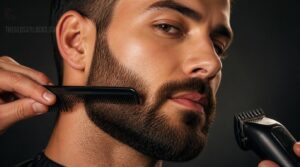
Start with the same guard number on both sides — that single habit prevents the uneven patches most guys don’t notice until the light catches them wrong.
Work in small sections, combing each one straight before trimming, and take short repeat passes rather than one aggressive sweep. After you’re done, check the beard in good lighting from the front and sides to catch anything that still sticks out.
Define The Neckline

Place two fingers above your Adam’s apple — that’s your neckline. Trim a gentle U-curve from ear to ear, keeping the center slightly higher than the sides to avoid that heavy, double-chin look.
For a deeper walkthrough with visuals, this step-by-step beard neckline trimming guide breaks down each angle so you get a clean, symmetrical shape every time.
Clean everything below that line with a trimmer, then clean it up with a razor. Check both sides match before you’re done.
Shape Cheeks Carefully

Your cheek line is where a beard goes from looking intentional to looking overgrown fast.
Follow your natural hair grain when trimming, blending the sideburn into the cheek gradually rather than cutting a hard border. Keep contour depth consistent on both sides, and resist removing too much — a few stray hairs won’t ruin it, but a dropped cheek line will.
Check Beard Symmetry

Once the cheek lines are set, symmetry is your final quality check.
- Hold your face straight in the mirror — no tilting
- Use your earlobes as alignment guides along both cheek lines
- Run a comb along the jawline on each side to compare density and contour
Small differences in coverage are normal. Trim both sides equally rather than overcorrecting one.
Brush and Style Daily

Daily brushing is what separates a beard that looks intentional from one that just happened. Done right, it trains your hair, distributes moisture, and keeps everything sitting where it should. Here’s what to work into your daily styling routine.
Use Boar Bristle Brushes
A boar bristle brush is one of the most effective beard grooming tools you can own. The bristles pick up sebum near the root and carry it through the lengths, leaving your beard visibly shinier.
Always detangle first — brushing knotted hair increases friction and ruins the purpose entirely. Use light, gliding strokes, not pressure.
Comb Longer Beards Gently
Once the brush is done, grab a wide-tooth beard comb. Detangling bottom-up — neck first, tips last — protects longer beard lengths because dry hair has less elasticity and snaps under pressure.
- Start at the neck
- Use short strokes on knots
- Finger-separate tangles before combing
- Switch to a finer comb to smooth
- Apply beard oil first to reduce combing friction
Train Hair Direction
Once your comb has smoothed things out, work while the beard is slightly damp — not soaking wet. Comb each section root-to-tip in your chosen direction, letting the hair dry fully in place.
Natural curl wants to spring back, so train zone by zone: jaw, cheeks, and chin separately. A small amount of balm locks the direction once it sets.
Smooth Flyaways
Static is the enemy. When hair dries out, flyaways spike — a lightweight serum or drop of oil smooths them without buildup.
- A spoolie brush loaded with product tames edge hairs precisely
- Beard balm seals stray hairs into the surface layer
- Glycerin or aloe reduces static by locking in moisture
- A Coanda airflow attachment draws flyaways flat using directed airflow
Style The Mustache
The mustache deserves its own attention. Work a small amount of mustache wax through the hairs using your fingertips, then use a fine-tooth comb to direct growth outward from the center — this keeps both sides even.
For handlebar ends, twist the tips upward after waxing. Trim the bottom edge clean so hair stays off your lip line.
Use The Right Grooming Tools

Your beard is only as good as the tools you use to maintain it. A mismatched kit — dull blades, the wrong comb, a trimmer that skips — will undo every good habit you’ve built. Here’s what belongs in a proper grooming setup.
Adjustable Beard Trimmer
An adjustable beard trimmer is the backbone of any solid beard grooming tips routine. Look for models offering length settings from 0.4 mm to 5.0 mm, so you can dial in stubble or a full beard with precision. Titanium-coated, self-sharpening blades stay sharp longer and cut cleaner.
A 60–180 minute battery runtime keeps beard trimming sessions uninterrupted, and a digital display removes all guesswork.
Sharp Grooming Scissors
A good pair of scissors does what a trimmer can’t — clean up individual stray hairs with pinpoint control. Look for Japanese stainless steel blades, which hold an edge longer and resist corrosion through daily use. Offset ergonomic grips reduce wrist fatigue during detail work around the jawline and mustache.
After each session, wipe the blades clean and store them in a protective sheath.
Wooden Beard Comb
Plastic combs create static that lifts hairs and dulls your beard’s shine — a wooden beard comb eliminates that entirely.
Beech wood is the go-to choice, with a tight grain that resists cracking and a smooth, splinter-free finish that glides without snagging. The dual-sided tooth spacing is perfect for both detangling and precision styling. Keep it conditioned with mineral oil, and it’ll outlast any plastic alternative in your beard grooming kit.
Clean Razor Blades
A dull blade drags — and that’s where razor burn starts. Replace cartridges every 5–7 shaves to keep edges sharp and reduce skin irritation from repeated passes.
- Rinse with warm water to clear hair and cream debris
- Dry the blade after every use to prevent blade corrosion
- Store razors in a clean, dry spot away from humidity
Flow-through cartridge designs help flush buildup automatically, but manual rinsing between passes still matters.
Beard Brush Essentials
Sharp blades manage the edges — a boar bristle brush takes care of everything in between. Natural bristles capture sebum and spread it through your beard, adding softness without product buildup. They exfoliate the skin underneath too, which prevents itchiness. Boar bristles also prevent static, keeping your beard lying flat after every brush.
Wooden grips give you better grip and last longer than plastic.
Avoid Messy Beard Mistakes

Even the most dedicated grooming routine can quietly fall apart when a few common habits slip through unchecked. Small oversights — like trimming too soon or loading on too much product — can undo a week’s worth of good work faster than you’d think.
Here are the beard mistakes worth knowing so you can stop them before they start.
Overwashing Facial Hair
Washing your beard every day strips away sebum, the natural oil your skin produces to keep hair soft and hydrated. Once that protective layer is gone, dryness sets in fast, leaving hair brittle and prone to breakage, while the skin underneath turns flaky and irritated — that’s beardruff territory.
Stick to two to three washes weekly to protect your skin barrier and avoid buildup.
Trimming While Wet
Wet beard hair lies flatter and clumps together, so what looks neatly trimmed while damp often comes out shorter than intended once it dries. Beard hair shrinks as it dries, and blades grab damp strands more aggressively, increasing tugging and uneven lines.
Always let your facial hair dry completely before reaching for your beard grooming tools.
Ignoring Neckline Shape
Trimming your cheeks while leaving the neck untouched is one of the fastest ways to undo solid grooming work. The neckline controls beard proportion balance — get it wrong, and the whole shape looks unintentional from the side profile.
Place two fingers above your Adam’s apple, then use clippers or a beard trimmer to carve a clean U-curve. That single line defines your jawline contouring and keeps neckline symmetry intact.
Using Too Much Product
More isn’t better for beard care. Overloading with oils or balms causes visible residue buildup, weighs hair down, and clogs pores beneath the surface — triggering breakouts and irritation.
Stick to 2–3 drops of oil. If your beard feels tacky or looks greasy rather than healthy, that’s your sign to scale back.
Skipping Tool Cleaning
Dirty tools quietly sabotage your beard hygiene routine. Bristle residue buildup transfers old product back into clean hair, comb snagging hair tears at follicles, and trapped moisture creates razor corrosion risks over time.
After every session, rinse your razor, brush clippings from your trimmer, and air-dry your comb. Three habits worth building:
- Wipe trimmer blades to prevent trimmer blade heat
- Rinse combs to stop comb snagging hair
- Dry razors to avoid tool contamination hazards
Frequently Asked Questions (FAQs)
Can diet affect beard growth and thickness?
You are what you eat — and your beard shows it. Protein builds keratin, zinc keeps follicles working, selenium guards against oxidative damage, iron drives oxygen to roots, and omega-3s reduce inflammation that stalls beard growth.
Does stress cause patchy or uneven beard growth?
Yes, stress can cause patchy or uneven beard growth. Elevated cortisol disrupts hormone signaling, slowing follicle activity, while telogen effluvium pushes hairs into shedding phases unevenly, creating gaps that look spotty across the beard.
How do I handle beard growth during different seasons?
Each season writes a different chapter for your beard. Winter moisture loss calls for heavier oils, spring demands frizz control, summer means managing sweat, and fall signals deeper conditioning to repair and rebalance.
Can beard hair be colored or dyed safely?
Yes, you can dye beard hair safely if you stick to beard-specific formulas, always patch test 48 hours before, and space sessions 4–8 weeks apart. Follow up with beard oil to counter dryness.
How long does it take to grow a full beard?
Two brothers, same diet, same age — one has a full beard by month three, the other’s still patchy at five. Genetics drives that gap. Expect 2 to 4 months at roughly half an inch per month.
Conclusion
Sharp beards start with simple systems. Learning how to keep a beard looking neat and clean isn’t about chasing an impossible standard—it’s about showing up daily with the right tools and a consistent routine. Wash properly. Moisturize without skipping. Trim before things get wild.
Every small habit stacks. Give your beard the same attention you’d give any skill worth having, and it’ll reflect exactly that—a man who takes his craft seriously.