This site is supported by our readers. We may earn a commission, at no cost to you, if you purchase through links.

Toss vitamin C and niacinamide into the same routine and you’ll find plenty of old forum posts warning you off it. Turns out that fear traces back to a single 1960s study using outdated, unstable formulations—modern chemists have since moved past it. Meanwhile, ferulic acid quietly boosts your vitamin C’s efficacy eightfold, and nobody’s writing panicked blog posts about that.
Knowing what ingredients work well together in skincare matters more than knowing what to avoid. The right pairs don’t just coexist—they improve each other’s benefits, tackling pores, pigmentation, and barrier repair simultaneously. Get the combinations right, and your routine starts working with your skin’s own chemistry instead of against it.
Table Of Contents
- Key Takeaways
- Best Skincare Ingredient Pairings
- Pairings by Skin Concern
- Top 5 Compatible Skincare Products
- Layering Ingredients Safely
- Frequently Asked Questions (FAQs)
- What skincare ingredients pair well together?
- What is the 4 2 4 rule in skincare?
- What works best with benzoyl peroxide?
- What is the rule of 7 skincare?
- How long until ingredient pairings show visible results?
- Can I mix skincare ingredients from different brands?
- What ingredients should never be layered together?
- How does skin type affect ingredient pairing choices?
- Should I patch test new ingredient combinations first?
- Conclusion
Key Takeaways
- Ferulic acid boosts vitamin C’s effectiveness eightfold, making the vitamin C-E-ferulic acid combo one of the most powerful antioxidant defenses against UV and pollution damage.
- Niacinamide is a versatile pairing partner, working with salicylic acid to control pores and oil, and with NAG to reduce hyperpigmentation by blocking pigment transfer up to 68%.
- A healthy skin barrier depends on ceramides, cholesterol, and fatty acids in a balanced ratio (roughly 1:1:1 to 3:1:1), which lock in hydration and repair the skin within 30 minutes.
- Layering order matters as much as ingredient choice—apply products thinnest to thickest, introduce new actives slowly (one per week), and always pair antioxidants with sunscreen for maximum protection.
Best Skincare Ingredient Pairings
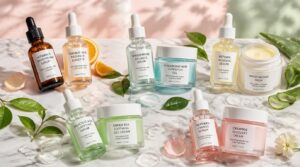
Some ingredients just work better as a team, boosting each other’s strengths while covering each other’s blind spots. That’s the whole idea behind smart pairing: you get results neither ingredient could deliver alone. Here are five combinations worth knowing, backed by real formulation science.
Layering these pairs correctly matters just as much as choosing them, so building your daily morning skin care routine around the right order locks in that synergy.
Niacinamide and Salicylic Acid
Because oil and clogged pores rarely travel alone, this pairing targets both. Salicylic acid penetrates pores to loosen debris, while niacinamide helps sebum regulation and calms redness.
Together, they improve pore size reduction and acne lesion improvement, smoothing texture without the harsh dryness exfoliation alone can cause.
For best results, make sure the two actives are in a separate formulation maintains stability to keep each ingredient at its ideal pH.
Vitamin C and Vitamin E
Where salicylic acid and niacinamide tag-team pores, vitamin C and vitamin E work oxidative damage from two angles: C in the aqueous compartment, E within the lipid phase.
C also fuels antioxidant recycling, regenerating spent E molecules. Both serve enzyme cofactor roles, too.
This antioxidant stacking boosts free radical scavenging against pollution and UV, real antioxidant teamwork, not just marketing shorthand.
Ceramides, Cholesterol, Fatty Acids
Antioxidants protect against damage, but none of that matters if your skin lipid matrix is compromised. This trio—ceramides, cholesterol, fatty acids—forms the intercellular lipid packing behind stratum corneum function.
- Locks in hydration you’d otherwise lose overnight
- Calms that tight, "stripped" feeling
- Rebuilds barrier repair in as little as 30 minutes
- Prevents flaky, reactive skin
- Restores comfort you forgot was possible
Ratios matter: 1:1:1 to 3:1:1 (C:C:F).
Niacinamide and NAG
Dark spots don’t fade from one mechanism alone, which is why pairing niacinamide with N-Acetyl Glucosamine works so well for hyperpigmentation reduction. NAG inhibits tyrosinase glycosylation, blocking melanin synthesis inhibition pathways, while niacinamide cuts pigment transfer by up to 68%.
| Ingredient | Action | Benefit |
|---|---|---|
| Niacinamide | Reduces transfer | Brightening |
| NAG | Blocks tyrosinase | Even tone |
| Combo | Dual-action | Texture boost |
Sunscreen and Antioxidants
Protection has layers, and UV filters alone only catch part of the story. Sunscreen blocks physical rays, but antioxidants like vitamin C, vitamin E, and ferulic acid tackle free-radical scavenging and lipid peroxidation prevention from UV-induced inflammation and pollution.
Pairing that antioxidant defense with broad-spectrum sunblock creates a stronger shield overall, much like how combining nourishing hair masks with daily care helps guard against everyday environmental stress.
Some even act as metal-binding antioxidants, neutralizing reactive iron.
Pairing them cuts free radicals up to 78% versus sunscreen alone—true oxidative stress mitigation, not just sunburn prevention.
Pairings by Skin Concern

Knowing which ingredients pair well is only half the equation; the other half is matching them to what your skin is actually dealing with. Different concerns call for different combinations, and picking the right one can make or break your results. Here’s how to match your biggest skin worries to the pairings that handle them best.
Pores and Excess Oil
Ever notice how oily skin looks shinier right where pores seem biggest? That’s oil reflecting light, exaggerating what’s really there.
Salicylic acid dissolves into pores to clear debris and curb sebum production, while niacinamide shrinks pore diameter by reducing surface fatty acids.
Pair them twice daily for measurable pore refinement—choose non-comedogenic, lightweight formulas to avoid re-clogging what you just cleared.
Acne and Breakouts
Why does one breakout turn into five? Comedone formation starts it, but inflammatory cascades—driven by C. acnes and follicular rupture—spread the damage.
- Salicylic acid: clears clogged follicles, curbs sebum oxidation
- Niacinamide: reduces redness, helps sebum regulation
- Zinc oxide: calms inflammation
- Avoid friction (acne mechanica)
- Pair actives for real antiacne effects
Dark Spots and Melasma
Melasma plays by different rules than typical hyperpigmentation—those symmetrical, centrofacial patches stem from melanocyte overactivity, not just UV-induced pigmentation alone.
That’s why we pair tyrosinase inhibitors strategically: niacinamide (blocking melanosome transfer up to 68%) with vitamin C for melanin synthesis inhibition.
Seasonal flare-ups demand consistency, though. Skip harsh actives; layer gently, since irritation only fuels more pigment production.
Barrier Dryness and Dehydration
Tight, flaky skin isn’t a hydration problem so much as a barrier problem—water’s escaping faster than you can replace it (elevated TEWL).
Rebuild the lipid matrix with ceramides, cholesterol, and fatty acids, then layer hyaluronic acid under an occlusive to lock it in:
- Ceramide-rich moisturizer
- Hyaluronic acid serum
- Gentle, lukewarm cleansing
That sequence restores barrier function while minimizing further stripping.
Aging and Free Radicals
Free radicals don’t clock out—your mitochondria keep churning out ROS every day, driving oxidative DNA damage and cellular senescence signaling that shows up as fine lines.
Fight back with Vitamin C, E, and Ferulic Acid: this trio delivers serious antioxidant combined effect, countering UV radical formation and antioxidant defense depletion. Ferulic acid boosts Vitamin C’s efficacy eightfold, giving you real free radical protection where sunscreen alone falls short.
Ferulic acid boosts vitamin C’s efficacy eightfold, giving antioxidants a fighting edge sunscreen alone can’t match
Top 5 Compatible Skincare Products
Knowing which ingredients play well together is one thing, but finding them already combined in a bottle is another win entirely. You don’t have to mix and measure when a formulator has already worked out the chemistry for you. Here are five products where the pairing does the heavy lifting.
1. Cosrx Niacinamide BHA Toner
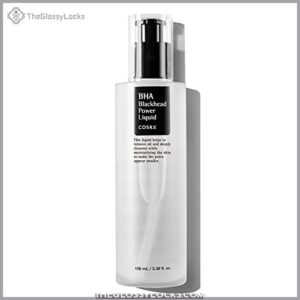
Cosrx Niacinamide BHA Toner pairs 4% betaine salicylate with 2% niacinamide in a willow bark base, hitting pore congestion two ways at once. The BHA works oil-soluble, slipping into pores to dissolve debris, while niacinamide curbs sebum production and improves texture over weeks.
Alcohol-free formulation means less irritation risk than typical exfoliating toners. Apply nightly via cotton pad after cleansing, patch-test first, and pair with daytime SPF, since exfoliated skin sunburns faster.
| Best For | Anyone with normal to sensitive skin dealing with clogged pores, blackheads, or uneven texture who wants a gentle nightly exfoliating step. |
|---|---|
| Product Type | Exfoliating treatment |
| Skin Suitability | Sensitive skin |
| Volume | 100 ml |
| Irritation Risk | Mild tingling |
| Key Active | Salicylic acid |
| Usage Frequency | Nightly |
| Additional Features |
|
- Combines 4% BHA and 2% niacinamide to tackle pore congestion and skin tone in one step
- Alcohol-free, willow bark base keeps irritation low compared to typical exfoliating toners
- Simple nightly routine that fits easily after cleansing
- Can cause brief tingling or mild discomfort, especially for first-time users
- Requires daily SPF use since exfoliated skin is more sun-sensitive
- Results depend on consistent use and may vary from person to person
2. Benton Snail Bee Essence Kit
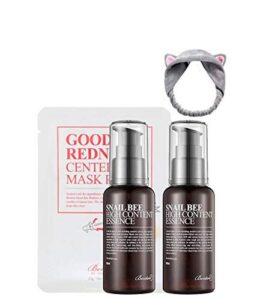
If pore-focused actives feel too active for your skin that week, this kit swings the other direction entirely. Snail secretion filtrate pulls double duty as a humectant, cutting transepidermal water loss while bee venom calms redness through mild anti-inflammatory action. Niacinamide reappears here too, this time backing up barrier repair and brightening rather than oil control.
Pat the essence in post-cleanse, before moisturizer. Skip it if you’re allergic to bee products—no exceptions there.
| Best For | Anyone with sensitive or dehydrated skin looking for a gentle, hydrating daily essence that smooths texture without harsh actives. |
|---|---|
| Product Type | Hydrating essence |
| Skin Suitability | Sensitive skin |
| Volume | 120 ml total |
| Irritation Risk | Low irritation |
| Key Active | Snail filtrate |
| Usage Frequency | Daily |
| Additional Features |
|
- Delivers intense hydration and helps even out skin texture within days
- Non-irritating formula that’s gentle enough for sensitive skin
- Comes as a generous dual-bottle set with a bonus facial headband
- Not suitable for those with allergies to snail secretion or bee venom
- Won’t address severe skin conditions like eczema or acne
- 60 ml bottles may need frequent repurchasing for heavy daily use
3. Tea Tree Clarifying Serum
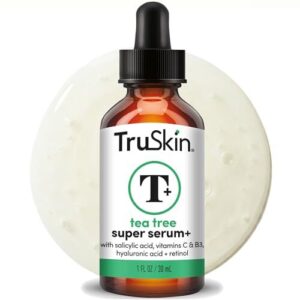
Swap calming actives for antibacterial ones and you land here. Terpenoid compounds in tea tree oil (roughly 2–10% concentration) target acne-causing bacteria directly on the pore surface, while light exfoliating partners help dissolve trapped sebum and debris.
You’ll likely feel a cooling tingle on application—that’s the terpenes working, not irritation. Best used post-cleanse, pre-moisturizer, once or twice daily. Just don’t stack it with high-strength retinoids or vitamin C right out of the gate; let your skin adjust first.
| Best For | This serum is best for those with acne-prone, oily, or combination skin looking for a multi-action treatment to reduce breakouts and improve overall texture. |
|---|---|
| Product Type | Spot treatment |
| Skin Suitability | Oily/acne-prone |
| Volume | 29.6 ml |
| Irritation Risk | Mild irritation |
| Key Active | Salicylic acid |
| Usage Frequency | Daily |
| Additional Features |
|
- Combines tea tree oil, salicylic acid, niacinamide, vitamin C, and retinol for a well-rounded approach to blemish-prone skin
- Unscented, paraben-free, dye-free, and cruelty-free, plus dermatologist-tested for added peace of mind
- Helps improve skin texture, brightness, and the look of fine lines with consistent use
- Not suitable for use near the eye area, as the salicylic acid may cause stinging
- Those with highly sensitive skin may experience mild irritation, so a patch test is recommended
- Requires 3–4 weeks of regular use to see results, making it a poor fit for anyone wanting fast relief from severe cystic acne
4. Replenix Zinc Oxide Sunscreen SPF 50
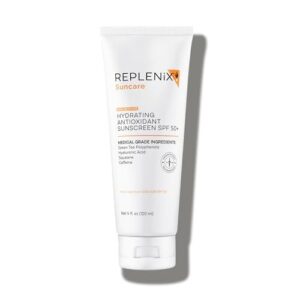
Once your bacteria-fighting actives calm down, sun protection has to close the loop. Replenix Zinc Oxide SPF 50 relies on micronized zinc oxide as its sole UV filter, delivering broad-spectrum coverage without the irritation risk chemical filters sometimes bring—handy if tea tree already has your skin adjusting.
Its High‑performing Tri-Antioxidant Mix, often featuring green tea polyphenols, adds a second layer of defense against free-radical damage. Fragrance-free and formulated for sensitive or post-procedure skin, it layers cleanly over treatment serums each morning.
| Best For | People with sensitive, acne-prone, or post-procedure skin who want daily broad-spectrum sun protection along with a moisturizing, primer-like base for makeup. |
|---|---|
| Product Type | Tinted sunscreen |
| Skin Suitability | Sensitive/aging skin |
| Volume | 118 ml |
| Irritation Risk | Low irritation |
| Key Active | Zinc oxide |
| Usage Frequency | Daily |
| Additional Features |
|
- Micronized zinc oxide offers broad-spectrum UVA/UVB protection with lower irritation risk than chemical filters
- Antioxidant complex (bisabolol, squalene, caffeine, ectoin, green tea polyphenols) adds extra defense against free-radical damage
- Doubles as a moisturizer and makeup primer, simplifying your routine
- Rich, moisturizing texture may feel too heavy in hot or humid weather
- Can run into eyes if applied too close to the eyelids
- Some recent batches have been reported to have a fishy odor
5. Murad City Skin SPF50 Sunscreen
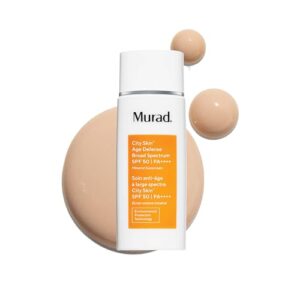
For city-dwellers, Murad’s answer swaps single-filter simplicity for a mineral duo: titanium dioxide and zinc oxide, both delivering SPF 50 broad-spectrum coverage. Dimethicone and glycerin keep the texture slip-friendly rather than chalky, while tocopheryl acetate (vitamin E) adds antioxidant backup against pollution-driven oxidative stress.
That’s the real appeal here—it’s engineered specifically for urban exposure, where UV rays and airborne particulates team up against your barrier. Layer it under makeup each morning, and you’re covering both photoaging and environmental dulling in one step.
| Best For | City-dwellers and daily makeup-wearers who want broad-spectrum, mineral-based SPF protection with a subtle color-correcting tint. |
|---|---|
| Product Type | Tinted sunscreen |
| Skin Suitability | All skin tones |
| Volume | 50 ml |
| Irritation Risk | Low irritation |
| Key Active | Zinc oxide |
| Usage Frequency | Daily |
| Additional Features |
|
- 100% mineral formula with SPF 50 protection against UVA, UVB, infrared, and blue light
- Light peach tint helps even out skin tone and blends well under makeup
- Free of parabens, sulfates, and phthalates, with 40 minutes of water resistance
- Premium price point at around $69 for 1.7 oz
- May leave a slight chalky residue on very dark skin tones or with heavy application
- Needs reapplication every 2 hours or after water exposure
Layering Ingredients Safely
Knowing which ingredients pair well is only half the battle; the order and timing you apply them in matters just as much. Layer things wrong, and you risk irritation, pilling, or actives cancelling each other out before they get the chance to work. Here’s how to build a routine that keeps every ingredient doing its job.
Morning Antioxidant Combinations
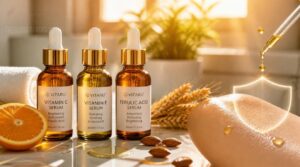
Think of your morning serum as a shield-recharging station: vitamin C, vitamin E, and ferulic acid work as an antioxidant trio, neutralizing free radicals before they trigger oxidative stress.
Vitamin C targets water-based tissue; vitamin E covers oil-rich zones; ferulic acid stabilizes both.
Layer thinnest-to-thickest, apply before sunscreen, and you’ve built a genuine photoprotection mix against daily environmental damage—UV, pollution, and beyond.
Evening Exfoliant Pairings
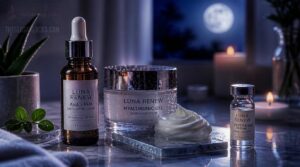
Once your evening exfoliant—glycolic acid or a gentler BHA—finishes its work, skin renewal needs backup. Pair it with hyaluronic acid for hydration, then layer ceramide recovery to rebuild lipids.
Panthenol soothing calms any tightness, while squalane moisture seals everything in. Niacinamide alongside your exfoliant keeps redness low, and peptide repair signals collagen production overnight, working quietly while you sleep.
Retinol Support Ingredients
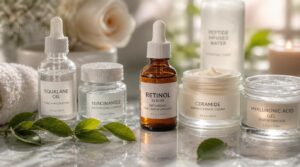
Retinol rarely works alone—it needs a supporting cast to stay tolerable. Buffer it with niacinamide and ceramides to protect your barrier, while panthenol and squalane lock in hydration during resurfacing.
Encapsulated retinol releases gradually, cutting flare-ups, and green tea polyphenols calm inflammation. Add hyaluronic acid and peptides for moisture and collagen signaling—together, they make retinol’s renewal effects far more sustainable long-term.
Barrier-first Routine Order

Sequence isn’t cosmetic—it’s chemistry. Start with a pH-balanced cleanser (lukewarm water, please), then layer humectants before occlusives so hydration actually gets sealed in, not evaporated.
Wait 60 seconds between hydrator and occlusive. Only after your barrier’s primed should synergistic actives enter, since disrupted lipids increase irritation. Hydration before actives isn’t optional; it’s the whole strategy behind lasting barrier repair.
Pairings to Introduce Slowly

Patience pays off in skincare chemistry—rushing actives invites irritation, not results.
Slow rollout basics:
- One new active weekly, minimum 10-14 days tolerance
- Alternate days rather than layering simultaneously
- Pause immediately if redness or burning persists
Patch test first, monitor daily, and prioritize barrier support timing before introducing exfoliants alongside retinoids. Gradual introduction protects skin tolerance long-term.
Frequently Asked Questions (FAQs)
What skincare ingredients pair well together?
Two actives rarely help skin alone—true magic happens in synergistic antioxidant networks and smart pairing strategies: niacinamide with salicylic acid for sebum regulation, vitamin C-E-ferulic for pigmentation inhibition, and ceramide-cholesterol-fatty acid ratios for lasting hydration layering.
What is the 4 2 4 rule in skincare?
This K-beauty ritual layers 4 minutes of oil cleansing, 2 minutes water-based cleansing, then 4 minutes rinsing warm-to-cold. That’s 10 total minutes targeting oil-soluble debris, remaining impurities, and refreshed skin, setting up your actives for better absorption.
What works best with benzoyl peroxide?
Niacinamide and ceramides pair best with benzoyl peroxide, supporting skin barrier function while managing irritation and dryness. Add hyaluronic acid for hydration and zinc oxide sunscreen to prevent post-acne marks and reduce redness during treatment.
What is the rule of 7 skincare?
Ever wonder why your toner disappears so fast? The "7 skin method" is a Korean layering technique: patting 3–7 thin toner layers onto cleansed skin, letting each absorb before the next, building hydration gradually rather than one heavy application.
How long until ingredient pairings show visible results?
Most well-matched actives show early changes within 2 to 6 weeks—texture first, tone later. Deeper skin rejuvenation builds through 8 to 12 weeks. Consistency, not frequency, drives results, so managing expectations and tracking progress matters more than switching products early.
Can I mix skincare ingredients from different brands?
Brand loyalty matters less than ingredient interaction—your skin doesn’t recognize logos. Cross-brand layering works fine if actives are compatible and SPF stability holds up; check formulation safety by matching pH and concentration, not packaging.
What ingredients should never be layered together?
Retinol and exfoliating acids, benzoyl peroxide with retinoids, and vitamin C paired with strong acids top the avoid list—pH clashes and irritation cascades cause over-exfoliation, leaving skin raw, dry, and reactive instead of glowing and balanced.
How does skin type affect ingredient pairing choices?
Your skin type is the compass, not just a label—it points every pairing decision.
Oily skin sebum favors salicylic acid duos; dry skin humectants need glycerin partners; sensitive skin soothing calls for panthenol; mature skin lipids demand ceramide-rich layering order.
Should I patch test new ingredient combinations first?
Yes—single variable testing matters. Test one active alone first, watch for skin irritation over several days, then introduce slowly. This isolates true triggers and protects reactive skin before you commit to layering new combinations.
Conclusion
Think of your skincare shelf as an orchestra: niacinamide keeps rhythm, vitamin C carries melody, and ceramides hold the bassline steady—nothing sounds right until each instrument respects the others’ timing.
That’s the real lesson behind what ingredients work well together in skincare: chemistry rewards balance, not isolation. Layer with intention, patience, and curiosity, and your routine stops fighting itself. Skin doesn’t need more products. It needs better conversations between the ones you already own.
- https://sciencebecomesher.com/skin-benefits-of-niacinamide/
- https://www.ncbi.nlm.nih.gov/pmc/articles/PMC3047947/
- https://onlinelibrary.wiley.com/doi/pdf/10.1002/9781118384824.ch10
- https://nutritionsource.hsph.harvard.edu/niacin-vitamin-b3/
- https://www.trulybeauty.com/blogs/skincare/niacinamide-and-salicylic-acid