This site is supported by our readers. We may earn a commission, at no cost to you, if you purchase through links.

Okay, first things first: you’re gonna nick yourself. Probably more than once. Every barber who’s ever picked up a blade has a scar or two to prove it, and that’s just part of the deal.
Here’s the thing though — straight razors for beginners aren’t nearly as scary as they look on YouTube. Yeah, the blade’s exposed, and yeah, one wrong angle can ruin your morning. But with the right razor and a little patience, you get a shave that no cartridge blade will ever touch.
Grab your towel. Let’s get you started the right way.
Table Of Contents
- Key Takeaways
- Top 10 Straight Razors for Beginners
- 1. Dovo Diamant Carbon Steel Straight Razor
- 2. Cambridge Stainless Steel Cutthroat Razor
- 3. Professional Stainless Steel Straight Razor Kit
- 4. Orange Scented Straight Razor Kit
- 5. Beard Club Straight Razor Kit
- 6. Disposable Straight Razors with Blades
- 7. Professional rose wood straight razor
- 8. Gentleman Jon Straight Razor Shaving Kit
- 9. Professional Straight Razor Shaving Kit
- 10. Dovo Shavette Straight Razor Set
- Choose Your Beginner Straight Razor
- Straight Razor Anatomy Basics
- Step-by-Step First Shave Guide
- Beginner Maintenance and Safety Tips
- Frequently Asked Questions (FAQs)
- What is a good beginner straight razor?
- What kind of razor is best for folliculitis?
- Can a straight razor shave help with ingrown hairs?
- What kind of razor should a beginner use?
- How often should I strop a shavette blade?
- Can I use straight razors on sensitive skin?
- How long does a straight razor shave take?
- Is a straight razor better than a cartridge razor?
- Whats the best way to travel with a straight razor?
- Conclusion
Key Takeaways
- Beginners should choose between a shavette (fresh snap-in blades, no honing) or a fixed blade (single edge that needs regular stropping and eventual sharpening), since this choice shapes maintenance effort and long-term cost.
- Round point blades, moderate blade width, and an ergonomic textured handle offer the safest, most controllable setup for someone just learning straight razor technique.
- A proper first shave depends on prepping skin with warm water and pre-shave oil, building a thick glossy lather, shaving with the grain using light pressure, and soothing skin afterward with cool water and an alum block.
- Consistent upkeep—stropping before every shave, drying the blade completely after use, and storing it in low humidity—is essential to prevent rust, dullness, and nicks over time.
Top 10 Straight Razors for Beginners
Okay, so you’re ready to buy your first straight razor, but the options out there can feel like a maze. Don’t worry, I’ve done the legwork and rounded up ten solid picks that won’t leave you frustrated or bleeding. Let’s break down what each one brings to the table, starting right here.
And if you travel often, pairing your new blade with one of these best safety razors for travel keeps your edge protected wherever you roam.
1. Dovo Diamant Carbon Steel Straight Razor
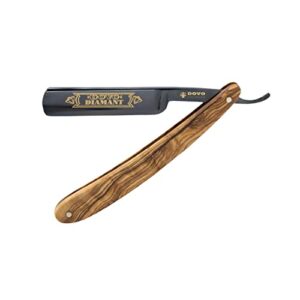
Straight out of Solingen, Germany, this one’s the real deal. The full hollow grind blade gives you that classic sharp-but-controllable feel, and the black oxidized finish with gold tang ornamentation looks sharp too (pun intended).
At 5/8 inch wide and 3.87 ounces, it balances nicely in hand. Olivewood scales add warmth and grip. Just know: carbon steel demands real commitment — dry it after every shave, or rust becomes your enemy fast.
| Best For | Experienced wet shavers who want a traditional, high-maintenance razor for precise jawline and chin work. |
|---|---|
| Blade Type | Carbon steel |
| Handle Material | Olivewood |
| Skill Level | Advanced |
| Maintenance | Stropping required |
| Included Blades | None included |
| Use Setting | Home |
| Additional Features |
|
- Full hollow grind offers a sharp, controllable shaving experience
- Olivewood handles provide a warm, comfortable grip
- Classic Solingen craftsmanship with striking black oxidized finish
- Carbon steel requires diligent drying and cleaning to avoid rust
- Steep 30 degree shaving angle demands a high skill level
- Frequent stropping is needed to keep the edge in good shape
2. Cambridge Stainless Steel Cutthroat Razor
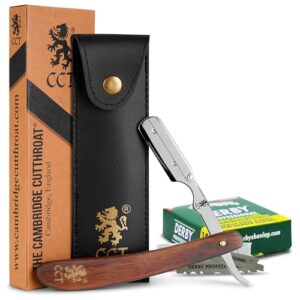
Now if carbon steel scares you off, here’s your fix. This one’s got a stainless steel blade paired with a Missanda hardwood handle — rust resistance without babying it after every shave.
The standout feature is the swing lock mechanism, letting you snap in a fresh Derby Platinum blade without any tools. No honing headaches here.
Balanced weight keeps hand fatigue down during longer sessions, and it ships with a leather travel pouch — solid pick if portability and low-maintenance matter to you.
| Best For | Shavers who want a durable, low-maintenance razor for precise beard line-ups and don’t mind spending a few weeks building up their technique. |
|---|---|
| Blade Type | Single-edge |
| Handle Material | Stainless steel |
| Skill Level | Intermediate |
| Maintenance | Blade changes |
| Included Blades | 10 blades |
| Use Setting | Home/travel |
| Additional Features |
|
- Swing-lock mechanism makes blade changes quick and tool-free
- Handcrafted stainless steel construction resists rust without extra upkeep
- Comes with a leather travel pouch, making it easy to take on the go
- Takes several weeks of practice to get the technique down
- Each shave requires a dedicated 10–15 minutes, more than a cartridge razor
- Blades need to be swapped with dry hands, which takes a little extra care
3. Professional Stainless Steel Straight Razor Kit
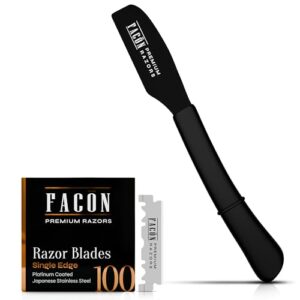
Okay, if you want the whole package without shopping around, this kit’s your buddy. It comes with a full stainless steel blade, leather strop, and even a travel pouch — everything to get shave-ready out the box.
The rounded tip keeps early nicks in check, and the ergonomic handle fights off hand fatigue during longer sessions. Just remember: regular stropping is non-negotiable here to keep that edge sharp between shaves.
| Best For | This razor is best for professional barbers and grooming enthusiasts who want precise, salon-quality shaves at home. |
|---|---|
| Blade Type | Platinum replacement |
| Handle Material | Stainless steel |
| Skill Level | Advanced |
| Maintenance | Blade replacement |
| Included Blades | 100 blades |
| Use Setting | Salon/home |
| Additional Features |
|
- Durable Japanese stainless steel construction built to last
- Ergonomic handle offers excellent control and reduces skin tugging or irritation
- Comes with 100 platinum replacement blades for consistent sharpness
- Requires frequent blade changes to maintain hygiene
- Straight edge design demands a high level of manual dexterity
- Not ideal for anyone looking for a quick, automated shaving experience
4. Orange Scented Straight Razor Kit
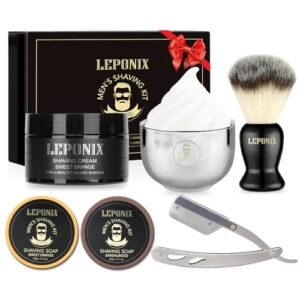
Well, if you want your shave to smell like a citrus grove, this one’s calling your name. The kit pairs a bright orange handled razor with matching soap and aftershave balm, so the scent actually lasts past the rinse.
The high carbon steel blade comes honed sharp out the box and holds its edge for several shaves. Beginner-friendly width, corrosion-resistant metal — just wipe it dry after, and this citrusy setup won’t let you down.
| Best For | Anyone wanting to try traditional wet shaving at home who enjoys citrus and sandalwood scents and doesn’t mind the extra care a straight razor requires. |
|---|---|
| Blade Type | Replacement blades |
| Handle Material | Mixed materials |
| Skill Level | Intermediate |
| Maintenance | Blade disposal |
| Included Blades | 5 blades |
| Use Setting | Home gift |
| Additional Features |
|
- Complete set with razor, five replacement blades, brush, and bowl means you’re ready to shave right out of the box
- Sandalwood and sweet orange soaps plus scented shaving cream give a long-lasting, spa-like scent
- Natural ingredients are gentle on sensitive skin and help cut down on bumps and irritation
- Straight razors take a steady hand and some practice, so it’s not the easiest option for total beginners
- You’ll need to build your own lather with the brush and bowl each time, which adds a few extra minutes to your routine
- Replacement blades eventually need to be disposed of, so there’s some ongoing upkeep involved
5. Beard Club Straight Razor Kit
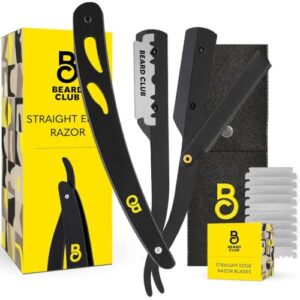
Ten blades, one locking razor, and a leather case that keeps everything corrosion-free — that’s the whole pitch here, and it works. The snap-lock system means swapping Derby blades takes seconds, no tools needed.
Rounded tips and built-in skin guards make this kit especially gentle on tricky spots, pairing well with a smooth, irritation-free shaving routine for everyday use.
The metal handle’s sculpted for grip even when your hands get soapy, and the balance keeps wobble to a minimum. Toss it in the included case and it’s ready for travel. Solid pick if you want that barbershop feel without babying a fixed blade.
| Best For | Grooming enthusiasts who want a barbershop-quality shave at home and don’t mind the extra care a straight razor requires. |
|---|---|
| Blade Type | Derby blades |
| Handle Material | Ergonomic handle |
| Skill Level | Intermediate |
| Maintenance | Blade replacement |
| Included Blades | 10 blades |
| Use Setting | Home/travel |
| Additional Features |
|
- Ergonomic, balanced handle gives you a secure grip and precise control
- Comes with 10 replaceable stainless steel blades for extended use
- Includes a durable leather case, making it easy to store and travel with
- Requires manual blade replacement to keep it performing well
- Takes more skill and care to use safely than a standard cartridge razor
- Not the best fit for beginners looking for a quick, low-maintenance shave
6. Disposable Straight Razors with Blades
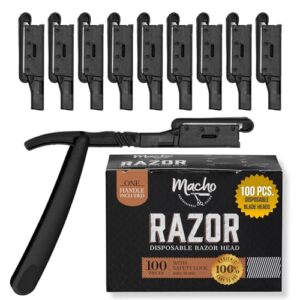
A hundred blades in one box — that’s the deal, and for barbers juggling clients all day, it’s a massive help. The quick-release two-point lock means fresh Solingen steel every time, no fumbling around.
Teflon-coated heads keep things smooth, and that safety guard actually protects your fingers during blade changes. Great for home use too, especially if hygiene’s your top priority. Just know you’re committing to frequent replacements — this ain’t a "sharpen and forget" setup.
| Best For | Professional barbers who need a fast, hygienic blade-swap system for back-to-back clients, as well as home users who prioritize sanitary, single-use shaving. |
|---|---|
| Blade Type | Single edge |
| Handle Material | Teflon-coated |
| Skill Level | Beginner-friendly |
| Maintenance | Blade changes |
| Included Blades | 100 blades |
| Use Setting | Barbershop |
| Additional Features |
|
- Quick-release two-point locking system makes blade changes fast and hassle-free
- Integrated safety guards on the blade heads help prevent accidental cuts during swaps
- 100 Solingen steel blades included, so you’re stocked up for a long stretch of use
- Disposable design means you’re constantly buying and replacing blades rather than sharpening one
- Blade heads require manual assembly onto the handle, adding a small extra step
- Teflon-coated single-edge blades may not suit those who prefer a traditional double-edge shave
7. Professional rose wood straight razor

Now here’s a razor that feels like a barbershop heirloom. The weighted rose wood handle gives you real balance, and that full tang construction means it won’t wobble mid-stroke.
You’re looking at a full hollow grind, high-carbon blade — shave-ready, tempered around 58-60 Rockwell. Expect 20 to 40 shaves per edge, and it strops back to life easily. Just don’t skip the mineral oil on that handle, or the wood dries out fast.
| Best For | This razor is best for home grooming enthusiasts and beginners who want a professional, barbershop-quality shave with easy, tool-free blade changes. |
|---|---|
| Blade Type | Single edge |
| Handle Material | Rose wood |
| Skill Level | Beginner-friendly |
| Maintenance | Blade replacement |
| Included Blades | 20 blades |
| Use Setting | Home |
| Additional Features |
|
- Matte black stainless steel resists rust and tarnish for long-term durability
- Weighted rose wood handle with a thumb notch offers excellent grip and balance
- Four-pin blade holder provides extra stability compared to standard two-pin designs
- Requires regular purchase and replacement of single edge blades
- Needs steady manual dexterity to use safely
- Rose wood handle requires specific care to stay in good condition
8. Gentleman Jon Straight Razor Shaving Kit
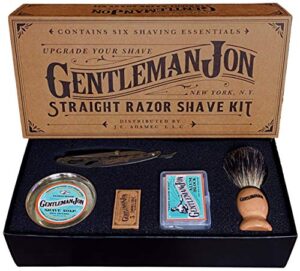
This one’s built for guys who want the full ritual without a shopping list. You get a badger brush and alum block right in the box, so post-shave irritation isn’t an afterthought.
The alum block’s a solid chunk — not liquid — and it cools skin down fast after your last pass. Pair it with the brush for lather, and you’ve basically got training wheels for straight razor confidence.
| Best For | guys who want the complete traditional wet shaving experience and are willing to learn straight razor technique rather than stick with disposable cartridges. |
|---|---|
| Blade Type | Double edge |
| Handle Material | Folding handle |
| Skill Level | Advanced |
| Maintenance | Blade upkeep |
| Included Blades | 5 blades |
| Use Setting | Home/travel |
| Additional Features |
|
- Comes with everything needed to start — brush, alum block, soap, and blades — with nothing extra to buy
- Sandalwood soap and alum block work together to calm skin and cut down on irritation and razor burn
- Compact enough to toss in a bag for travel grooming
- Straight razors take real practice, so there’s a learning curve for anyone used to cartridge shaving
- The full ritual takes noticeably more time than a quick cartridge shave
- Blades and tools need regular upkeep to stay in good shape
9. Professional Straight Razor Shaving Kit
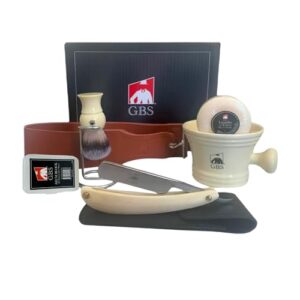
Nine pieces, one goal: getting you barbershop-ready without hunting down extra gear. The stainless steel razor comes professionally honed, shave-ready right out of the case, with an easy-open blade guard so you’re not fumbling on day one.
You also get a leather strop with paste, a synthetic brush and stand, ceramic mug, alum block, and natural shaving soap. It packs into a travel case at 2.8 pounds — everything a beginner needs, nothing you’ll outgrow.
| Best For | Men new to traditional wet shaving who want a complete, barbershop-quality setup without buying separate gear. |
|---|---|
| Blade Type | Shave-ready |
| Handle Material | Stainless steel |
| Skill Level | Advanced |
| Maintenance | Strop maintenance |
| Included Blades | 1 blade |
| Use Setting | Home |
| Additional Features |
|
- Comes with a professionally honed, shave-ready razor so there’s no setup guesswork
- Includes everything needed to get started, from the strop and brush to soap and mug
- Natural shaving soap is more economical over time than canned foams or gels
- Straight razor shaving has a learning curve compared to cartridge razors
- Blade sharpness needs ongoing maintenance using the included strop
- Some components require careful storage to stay in good condition
10. Dovo Shavette Straight Razor Set
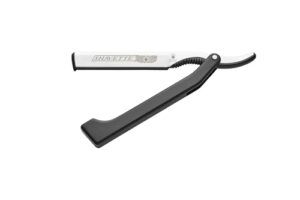
Rounding out our list, Solingen, Germany’s finest offers a shavette that skips honing entirely. This aluminum-holder set snaps in standard double-edge blades, so you get that classic straight-razor feel without the stropping learning curve.
It ships light — just 3 ounces — with a plastic pouch for travel, plus one blade to get you started (grab replacements separately). If you want German engineering minus the maintenance headache, this one’s your gateway drug into straight-razor shaving.
| Best For | shaving enthusiasts who want to try traditional straight-razor shaving without committing to the upkeep of honing and stropping a full straight razor. |
|---|---|
| Blade Type | Disposable |
| Handle Material | Plastic |
| Skill Level | Intermediate |
| Maintenance | Blade purchase |
| Included Blades | 1 blade |
| Use Setting | Professional |
| Additional Features |
|
- Uses standard double-edge blades, so it’s easy to find replacements
- Lightweight and comes with a plastic pouch, making it simple to travel with
- Crafted in Solingen, Germany, known for high-quality blade engineering
- Only one blade is included, so you’ll need to buy more right away
- The plastic handle may feel less premium than metal or wood alternatives
- Skipping the honing process means it lacks some of the traditional straight-razor experience
Choose Your Beginner Straight Razor
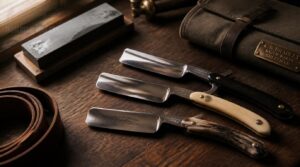
Okay, so you’ve seen the top picks — now let’s talk about actually choosing one that fits you. Not every razor suits every guy, and picking the wrong setup is how beginners end up frustrated (or nicked up) fast. Here’s what actually matters when you’re sizing up your first blade.
Shavette Vs Fixed Blade
Shavette or fixed blade? This is the fork in the road for anyone hunting the best straight razor for beginners.
- Fresh, snap-in blades vs. a single edge you hone
- No stropping vs. regular maintenance requirements
- Lower blade hygiene worries with disposables
- Long-term costs favor fixed blades over time
- Shavettes teach precision control before committing to a traditional shaving folding straight edge razor
Understanding the shavette vs straight razor differences helps you choose the right tool for your skill level.
Shavettes ease skill progression; fixed blades reward patience.
Best Blade Width
Okay, once you’ve picked your razor type, blade width is next. Think width versus maneuverability: wider blades stabilize facial contours and give better edge area feedback, while narrower ones dodge tight spots but demand steadier hands.
For your first straight razor shaving attempts, moderate width helps manage blade chatter and control shaving pressure — key for a precision shave and smart razor geometry choices.
Beginner-safe Blade Points
Blade width sorted, now let’s talk tip shape — because that curve at the end matters more than you’d think.
Round point blades are your safest bet starting out; that curved toe spreads out contact force, so you’re way less likely to gouge yourself near the nose or lips. Clip points offer more precision once you’ve got steadier hands, but for now, rounded tips win for control and confidence.
Handle Grip and Weight
Well, tip shape aside, how the handle sits in your hand matters just as much. Look for ergonomic scale contours that guide your fingers naturally, plus a knurled handle for grip when things get soapy.
A folding handle razor with balanced weight distribution cuts wrist strain and boosts maneuverability — smooth finishes look sharp, but texture wins when wet.
Blade Replacement Costs
Money talks, so let’s talk blades. Shavette blades run cheap in bulk (think 10-25 bucks per 100), while fixed blade sharpening costs add up over time.
- Carbon steel: $5-12
- Stainless: $8-18
- Damascus: $20-25
- Bulk packs save 10-30%
Subscriptions trim costs further. Bottom line: maintenance beats constant replacement for your wallet.
Straight Razor Anatomy Basics
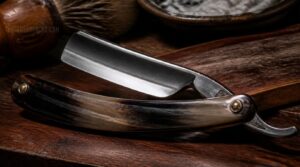
Okay, before you start swiping steel across your face, you gotta know what you’re actually holding. A straight razor isn’t just one solid piece of metal — it’s a handful of parts working together, and each one matters more than you’d think. Let’s break down the pieces so you know exactly what you’re buying and why.
Scales and Spine
Think of the scales as the razor’s handle and the spine as its backbone — together they make or break your grip. Scale material durability matters (steel, resin, or wood), while spine weight impact affects control.
Look for scale alignment precision and spine profile variety for comfort. Textured grip texture options help with wet-hand ergonomics — key for confident straight razor shaving.
Tang and Jimps
Grip is where straight razor confidence starts, and the tang’s the unsung hero.
- Rock-solid grip even soapy-handed
- Better finger placement for control
- Steadier razor ergonomics overall
- Fewer slips = precision shave
- Less irritation on tender skin
Jimp texture adds bite where your thumb rests, boosting grip stability. Dry the tang after every shave — corrosion prevention keeps those ridges sharp for years of reliable straight razor shaving.
Round Point Blades
Ever notice how a rounded toe just feels safer under your fingers? That’s the whole point of a round point blade — no sharp tip to snag skin, just a smooth semicircular curve (old-timers called it the Dutch nose) that spreads pressure evenly and guides steady along your jawline. Perfect for a forgiving, precision shave while you’re still building technique.
A round point blade trades a sharp tip for a gentle curve, spreading pressure evenly for a safer, more forgiving shave
Hollow Grind Blades
That curved, scooped-out profile running from spine to edge? That’s what gives you a razor-sharp, feather-light glide.
- Edge Sharpness: thinner steel means less resistance on hair
- Precision Honing: use light pressure — don’t flatten that bevel
- Material Compatibility: pairs great with carbon or stainless steel
Downside: less rigidity than wedge grinds, so treat it gently.
Handle Material Options
Wood vs resin comes down to feel versus function. That classic olivewood handle (or mahogany, if you want something darker) feels warm in hand, while resin fights moisture better.
Metal grips add heft but need texture to avoid slipping wet. Composite grips balance durability and grip nicely. Ceramic looks sharp but chips easy — handle with ease — handle with care, gents.
Step-by-Step First Shave Guide
Okay, you’ve got your razor picked out and you know your scales from your spine — now comes the fun part. This is where theory turns into actual technique, blade meeting skin for the very first time. Follow these five steps in order, and you’ll set yourself up for a smooth shave instead of a bloody Tuesday morning.
Prep Skin and Beard

Before any of the best straight razors for beginners touch your face, your skin needs to be ready. Wash with a gentle cleanser, exfoliate lightly, then apply pre-shave oil after a warm towel wrap.
- Detangle your beard first
- Sanitize brushes weekly
- Keep skin damp, not soaked
That’s your wet shaving foundation before soap even enters the picture.
Build Protective Lather

Okay, once your skin’s prepped, it’s lather time — and this step makes or breaks your shave.
A good lather needs proper hydration: too dry and it drags, too wet and it collapses. Load your brush in warm water, work it in circles, and aim for a thick, glossy cushion (1-2mm) that grips your skin. Humidity helps too — steamy bathrooms keep foam stable longer, giving you smoother, safer passes.
Hold The Razor Correctly

With lather laid down, your grip does the steering. Use finger placement techniques—thumb underneath, index and middle on top, pinky near the tang—to steady the blade. Try precision pinch grips, keep wrist rotation control loose, and focus on reducing shaving pressure. Even the best straight razor for beginners needs calm hands for a better shaving experience.
Shave With The Grain

Now comes the moment of truth: shave with the grain. Run a wet finger over your cheeks and neck first—coarse growth feels bold, while neck hair often grows sideways or upward. That’s grain mapping in short.
Go with the grain, light pressure, short strokes. This cuts drag, dodges irritation, and gets you that close shave without the razor burn.
Rinse and Soothe Skin

Splash your face with cool water right away—it calms the skin and knocks down redness fast. Follow with an alum block to seal any nicks, then a fragrance-free, alcohol-free toner with hyaluronic acid or aloe for hydration without clogging pores.
Pat dry, don’t rub. Moisturize within a minute, and slap on sunscreen if you’re heading outside—freshly shaved skin sunburns easy.
Beginner Maintenance and Safety Tips

Okay, so you’ve got the shave down — now let’s keep that edge (and your face) in good shape long term. A straight razor isn’t a "set it and forget it" tool, it needs a little TLC to stay safe and sharp. Here’s exactly what that upkeep looks like, step by step.
Stropping Before Shaving
Skip stropping and your razor drags like a dull pencil on rough paper.
Each pass on the leather strop realigns microscopic edges, pulling burrs straight again. Use 20-40 light laps, pressure like a half dollar’s weight, no more. Vegetable-tanned leather works best for a forgiving edge.
Do this every time, before every shave — it’s non-negotiable razor maintenance.
Drying After Each Use
Water’s the real enemy here, more than any nick you’ll ever get.
Carbon steel especially holds a grudge if you leave it wet — rust shows up fast. Pat dry, never rub, using a soft microfiber cloth (towels can scuff).
- Wipe blade, spine, and tang
- Air dry fully before storing
- Oil carbon steel blades lightly
- Check scales for trapped moisture
That’s real razor maintenance, folks.
Preventing Nicks and Cuts
Nicks happen when you rush — plain and simple. Keep that blade angle locked around 15-30 degrees, use short strokes, and let hydrated skin plus thick lather do the heavy lifting.
Light pressure only. Feel tugging? Stop, re-lather, adjust angle. That’s how you dodge razor burn and get a genuinely cut-free shaving experience every single time.
Storing Blades Safely
Where you stash your blade matters as much as how you use it. Keep humidity under 60%, toss in a silica gel packet, and always store blades bone-dry after cleaning.
- Dry completely first
- Use desiccants
- Separate carbon/stainless
- Individual sheaths
- Cool, stable spot
That’s real corrosion prevention for your grooming tools.
When to Replace Blades
Ever run your thumb along the edge and think, "eh, that’ll do"? Don’t. That’s how nicks happen.
Check for edge dullness, chips, or warping after every few shaves. For a shavette, swap replacement blades often — they’re cheap. Fixed blades? Strop first; if that doesn’t fix the drag, it’s time to sharpen or retire it.
| Sign | Fix | Cost |
|---|---|---|
| Dull | Strop | Free |
| Nicked | Replace | $10-40 |
| Warped | Replace | $20-60 |
| Rusty | Replace | $10-40 |
| Uneven | Sharpen | Free |
Frequently Asked Questions (FAQs)
What is a good beginner straight razor?
Okay, so what makes a solid beginner pick? Look for a shavette with round point blades, 5/8-inch width, and a stainless steel edge — forgiving, low-maintenance, and steady in the hand while you build real shaving confidence.
What kind of razor is best for folliculitis?
For sensitive skin, a single blade shavette with round point, replacement blades wins hands down. Ceramic coating cuts friction, mitigates follicle trauma, and safe wet shaving technique reduces irritation—way gentler on inflamed skin than multi-blade cartridges ever will be.
Can a straight razor shave help with ingrown hairs?
Yep — that single-edge cut with the grain, plus a good lather cushion, means less tugging and skin friction.
Less irritation, fewer trapped hairs curling back under the skin.
Traditional wet shaving technique done right genuinely helps folks prone to ingrown hairs.
What kind of razor should a beginner use?
Slow and steady wins the race — so start with a safety razor or cartridge razor to build technique, then graduate to a shavette before tackling a straight razor for true wet shaving mastery.
How often should I strop a shavette blade?
Give your shavette blade a quick pass on a leather strop before every shave — 10-15 gentle strokes keeps edge alignment sharp. If it starts tugging mid-shave, that’s your cue: strop again rather than forcing it.
Can I use straight razors on sensitive skin?
Oh, totally — a straight razor can actually be gentler on sensitive skin. Use pre-shave oil, thick lather cushion, minimal passes, correct blade angle, and soothing post-shave balm to prevent irritation during traditional wet shaving.
How long does a straight razor shave take?
Rome wasn’t built in a day, and neither is your shave game. First tries run 45 to 60 minutes; once you’ve got the rhythm down, a solid two or three pass shave shrinks to just 15 to 25 minutes.
Is a straight razor better than a cartridge razor?
Depends what you value. A straight razor wins on long-term costs, less environmental waste, and a genuinely close shave — but demands real shaving technique.
Cartridges win daily convenience and lower skin irritation risk for beginners still learning proper mens grooming skills.
Whats the best way to travel with a straight razor?
Pack it checked, not carried on — TSA requires that. Store your folding straight edge razor in a rigid case, blade wrapped and dry. Check international customs rules too, since blade regulations shift country to country.
Conclusion
A straight razor is a mirror with an edge — it shows you exactly who’s paying attention. That first shave might feel shaky, your hand unsure, your angle a little off. Stick with it. Every nick teaches you something a cartridge never could.
That’s the real deal with straight razors for beginners: patience turns into precision, and precision turns into a ritual you’ll actually look forward to. Strop it, respect it, and let the blade do what it does best.