This site is supported by our readers. We may earn a commission, at no cost to you, if you purchase through links. This content is for general informational and educational purposes only and is not a substitute for professional medical, dermatological, or nutritional advice.

I’ve had clients flinch mid-cut because a cheap trimmer yanked instead of cutting clean. That’s the moment you learn gear matters more than technique sometimes. A barbershop can’t afford callbacks, so nose hair trimmers for barbershop use need to handle back-to-back clients without dulling, overheating, or leaving stray hairs poking out.
Between vacuum suction, IPX7 waterproofing, and motors pushing past 9,000 RPM, the specs get technical fast. I’ve tested plenty of these tools chairside, and the differences show up the moment a client leans back. Here’s what actually holds up under real shop conditions, and what’s worth your money.
Table Of Contents
- Key Takeaways
- Top 7 Barbershop Nose Hair Trimmers
- Barber-Friendly Features to Compare
- Electric Vs Manual Trimmers
- Cleaning and Sanitation Standards
- Choosing a Barbershop Trimmer
- Frequently Asked Questions (FAQs)
- What do barbers use to remove nose hair?
- What type of trimmers do barbers use?
- What is the best nose hair trimmer for men?
- Should a man trim his nose hairs?
- How often should barbershops replace trimmer blades?
- Can one trimmer be shared across multiple clients?
- What certifications matter when buying professional grooming tools?
- How much should barbershops budget per trimmer unit?
- Conclusion
Key Takeaways
- Look for pull-free cutting design, dual-edge blades, and rotary or oscillating motors above 7,000 RPM to trim thick nasal hair without tugging or snagging.
- Choose IPX7 or higher waterproof, washable heads with vacuum suction and HEPA filtration so you can sanitize tools quickly between back-to-back clients.
- Electric trimmers win on speed (under a minute per client) for busy shops, while manual trimmers offer more precision and never fail from a dead battery.
- Replace blades every 3 to 6 months, budget $60-$250 per unit depending on durability, and prioritize ergonomic grips and thermal protection to keep tools reliable through a full shift.
Top 7 Barbershop Nose Hair Trimmers
After years behind the chair, you learn pretty fast which trimmers hold up and which ones end up in the junk drawer.
I’ve tested my fair share on real clients, from quick touch-ups to full detail work, and narrowed it down to the ones actually worth your money.
If you’re dealing with a fuller face of hair, this beard trimmer built for thick beards held up impressively well without dragging or snagging.
Here’s my honest rundown of the seven that earn a spot on your station.
1. Panasonic vacuum ear nose hair trimmer
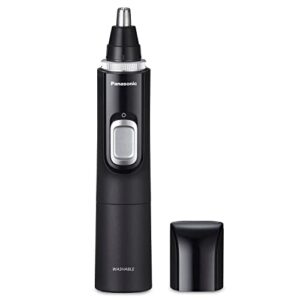
If you’ve ever finished a trim only to find stray clippings scattered on your cape, the ER-GN70-K fixes that headache fast.
Its micro-vacuum system sucks hair straight into the chamber while you work, dry or wet. Dual-edge blades, backed by a 9,400 CPM motor, chew through coarse hair without tugging. A safety cone keeps blades off skin, and the vortex cleaning setup means you just rinse it clean between clients. Runtime tops out around 40 minutes on two AAA batteries.
| Best For | anyone who wants quick, mess-free trims for nose, ear, eyebrow, and facial hair at home or on the go. |
|---|---|
| Power Source | 2 AAA batteries |
| Waterproof/Washable | Yes |
| Weight | 2.24 oz |
| Portability | Travel-friendly |
| Blade Material | Stainless steel |
| Skin Protection | Safety cone design |
| Additional Features |
|
- Micro-vacuum system catches clippings as you trim, so there’s less mess to clean up afterward
- Powerful 9,400 CPM motor with dual-edge blades handles thick, coarse hair without pulling
- Compact, cordless design with wet/dry use makes it easy to pack for travel
- Runs on two AAA batteries that aren’t included, so you’ll need to buy them separately
- No rechargeable option, meaning you’ll go through batteries over time
- Runtime caps out at about 40 minutes per battery set
2. Professional Nose and Ear Trimmer
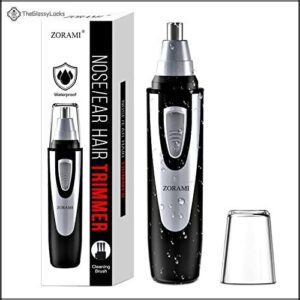
For clients who want speed without sacrificing control, a dual-blade rotary trimmer running around 9,000 RPM combats coarse nose and ear hair fast, and the 360-degree rotation reaches spots a straight blade misses.
Beveled, dual-edge blades keep the cut smooth so hair doesn’t tug or pinch mid-trim.
IPX7 waterproofing means you rinse the head clean between clients, no fuss. Add a travel lock to stop accidental power-ups in your kit, and you’ve got a reliable go-to for back-to-back appointments.
| Best For | Professional groomers and at-home users alike who want a fast, precise, and hygienic tool for trimming nose, ear, eyebrow, and facial hair. |
|---|---|
| Power Source | 1 AA battery |
| Waterproof/Washable | Yes (IPX7) |
| Weight | 2.8 oz |
| Portability | Travel-friendly |
| Blade Material | Stainless steel |
| Skin Protection | Rounded blade guard |
| Additional Features |
|
- 360-degree dual-edge stainless steel blades deliver precise, comfortable cutting
- IPX7 waterproof design allows for full rinsing and easy cleanup between uses
- Whisper-quiet motor (under 50db) with simple one-button operation
- Requires a AA battery that isn’t included in the package
- Battery life estimates are based on short 5-minute use sessions
- Compact size may feel less substantial to users wanting a heavier-duty tool
3. Electric nose and ear trimmer
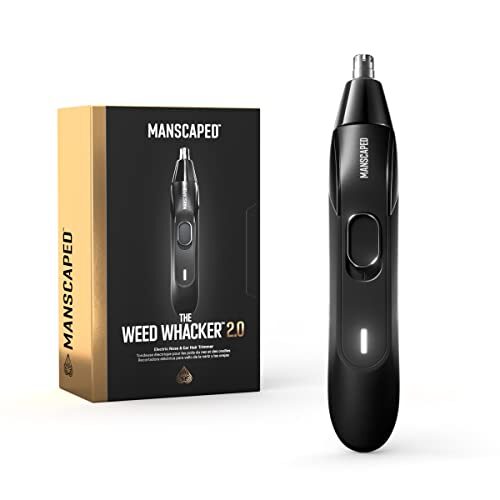
Not every setup needs a fancy attachment kit — sometimes a straightforward electric trimmer with a 7,000 RPM motor gets the job done just as well behind the chair.
That speed takes care of everyday nose and ear hair without dragging out the appointment, and a rinseable head keeps things sanitary between clients.
Pair it with a rubberized grip so it doesn’t slip mid-cut, and you’ve got a dependable middle-ground option — not the fastest on your bench, but steady, quiet, and easy on skin.
| Best For | Barbers and stylists who want a reliable, no-fuss trimmer for quick nose and ear hair touch-ups between cuts. |
|---|---|
| Power Source | USB-C rechargeable |
| Waterproof/Washable | Yes |
| Weight | 9.91 oz |
| Portability | Cordless travel use |
| Blade Material | Stainless steel |
| Skin Protection | Rubberized safe grip |
| Additional Features |
|
- 7,000 RPM motor handles everyday trims quickly without slowing down the appointment
- Wet and dry use means the head can be rinsed under a faucet for easy sanitizing between clients
- Rubberized grip stays secure in hand, even when wet
- Not the fastest option available, so it may lag behind more heavy-duty tools on a busy day
- Battery runtime tops out at 45 minutes, requiring regular USB-C recharging
- Blades are replaceable, meaning an added cost down the line
4. Philips Norelco Nose Ear Trimmer
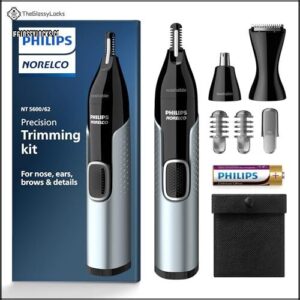
If skin protection is what you’re after, model NT5600/62 earns its keep. The Protective Guard System shields skin from direct blade contact, while dual-sided steel blades cut from multiple angles without tugging.
It’s fully washable — rinse it right under the faucet between clients, no fuss. Runs on a single AA battery, so no charging cords cluttering your station.
Add the eyebrow guards and detail trimmer, and you’ve got a compact, travel-pouch-ready tool that pulls double duty around the chair.
| Best For | barbers, stylists, and at-home users who want a gentle, precise way to tidy up nose, ear, and eyebrow hair between clients or on the go. |
|---|---|
| Power Source | 1 AA battery |
| Waterproof/Washable | Yes |
| Weight | 3.53 oz |
| Portability | Includes travel pouch |
| Blade Material | Steel blades |
| Skin Protection | Protective Guard System |
| Additional Features |
|
- Protective Guard System keeps blades from directly contacting skin
- Dual-sided steel blades trim from multiple angles without pulling
- Fully washable and comes with a travel pouch for portable use
- Runs on a single AA battery, so no rechargeable option
- Requires manual cleaning under the faucet rather than a self-clean feature
- Small size (3.94 x 1.42 x 0.79 inches) may mean more frequent battery swaps for heavy daily use
5. Wahl Micro Groomsman Personal Trimmer
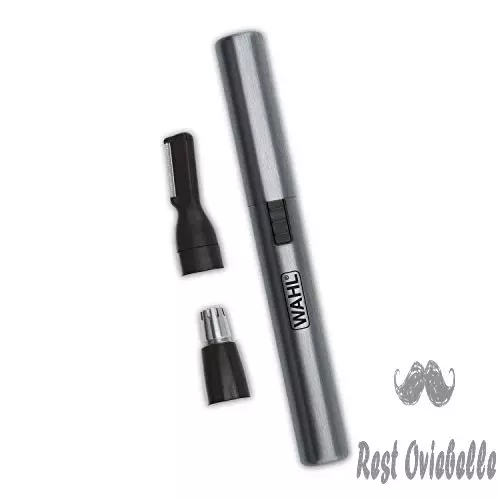
Small enough to mistake for a Sharpie, the Wahl Micro Groomsman earns its keep at the chair when you need quick detail work between cuts. That pen-style body, rugged anodized aluminum, holds up to daily shop wear without feeling bulky in hand.
Runs on a single AAA battery, no charging cords tangling around your station. The rotary head takes care of nose and ear hair without snagging, while a separate detailing head cleans up brows and edges.
Heads pop off and rinse clean, keeping things hygienic between clients.
| Best For | Barbers, stylists, and grooming enthusiasts who want a compact, professional-grade trimmer for quick nose, ear, eyebrow, and edge touch-ups between appointments. |
|---|---|
| Power Source | 1 AAA battery |
| Waterproof/Washable | Yes |
| Weight | 1.8 oz |
| Portability | Pen-style portable |
| Blade Material | Stainless steel |
| Skin Protection | Self-sharpening safe blades |
| Additional Features |
|
- Self-sharpening precision blades deliver efficient, snag-free cutting
- Detachable, rinseable heads make hygienic maintenance quick and easy
- Compact, pen-style design is durable and easy to carry between clients or trips
- Requires a AAA battery, with no rechargeable or cordless charging option
- May contain trace hygienic fiber particles left over from factory testing
- Interchangeable heads mean an extra step of swapping parts for different grooming areas
6. Manscaped Shears 3.0 Grooming Kit
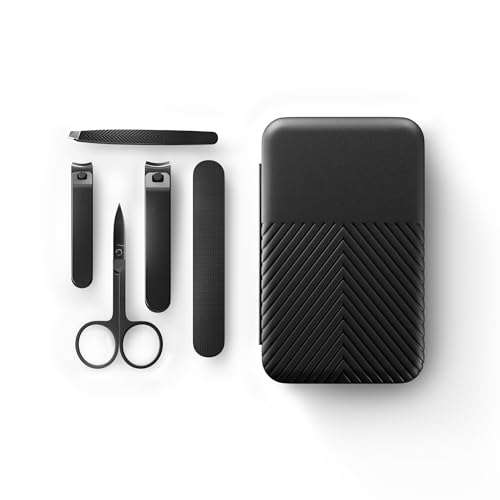
Five tools, one job: keeping nails and cuticles shop-ready between cuts. The Manscaped Shears 3.0 kit gives you fingernail and toenail clippers, a medium-grit steel file, and curved cuticle scissors, all in stainless steel with anti-slip grips.
Blades stay polished for snag-free cuts, which clients notice on their hands even if they came in for a fade. The vegan-leather travel case is water-resistant, not waterproof, but it’ll survive gym bags and barber totes fine while keeping everything sanitized between appointments.
| Best For | Barbers and grooming professionals who want a durable, travel-ready nail and cuticle kit to keep clients’ hands and feet polished between appointments. |
|---|---|
| Power Source | N/A |
| Waterproof/Washable | Water-resistant |
| Weight | 12.7 oz |
| Portability | Gym bag/carry-on friendly |
| Blade Material | Stainless steel |
| Skin Protection | Rounded file edges |
| Additional Features |
|
- Precision-sharpened stainless steel clippers and curved cuticle scissors built specifically for men’s hand and foot sizes
- Compact, water-resistant case with secure closure makes it easy to toss in a gym bag or carry-on without damaging the tools
- Rust-resistant swing-out file and non-slip tweezers add everyday versatility for quick touch-ups
- The medium-grit file may feel too coarse for anyone wanting an extra-fine finish
- Case is water-resistant only, not fully waterproof, so it needs some care around moisture
- At 12.7 ounces, it’s a bit heavier than ultra-minimalist travel kits
7. Royal Birdie Manual Nose Trimmer
![ROYAL [Made in Korea] Nose B089GGFBWF](https://theglossylocks.com/wp-content/uploads/2025/12/royal-made-in-korea-nose-b089ggfbwf-300x300.jpg)
No batteries, no charging cord, no dead trimmer mid-cut. The Royal Birdie runs on its ET-4 mechanism, twelve dual-edged blades powered by a simple handle squeeze.
That’s the appeal for busy shops: grab it, rinse it, use it, no waiting on power. Stainless steel construction controls the rinse-under-water routine between clients without corroding, and the rounded safety cutter keeps blades off skin.
It won’t win speed contests, but for detail work between fades, it’s dependable and cheap to keep sharp.
| Best For | barbers and stylists who need a quick, reliable tool for tidying up nose hair between clients without worrying about batteries or charging. |
|---|---|
| Power Source | Manual/battery-free |
| Waterproof/Washable | Water-resistant |
| Weight | 2.4 oz |
| Portability | Compact size |
| Blade Material | Stainless steel |
| Skin Protection | No skin contact design |
| Additional Features |
|
- Twelve dual-edged blades trim quickly without pulling or irritating skin
- Water-resistant stainless steel body rinses clean between uses
- No batteries needed, so it’s always ready to go
- Requires quick handle presses, which can feel less convenient than a powered trimmer
- Shaking it too much while trimming can cause hairs to pull instead of cut
- Best for light grooming only, not for removing all nasal hair
Barber-Friendly Features to Compare

Picking a trimmer off a "best of" list is one thing, but knowing why it works behind the chair is another. You need tools that hold up client after client, not just look good in a photo. Here’s what actually separates a solid pick from one that’ll let you down mid-cut.
Motor Speed and Power
Ever wonder why one trimmer glides through nose hair while another bogs down mid-stroke? It’s torque vs speed. The Manscaped Weed Whacker’s 9,000 RPM motor and Royal’s 7,000 RPM unit both rely on brushless motor efficiency and PWM speed control to hold RPM load stability under load. Good thermal management keeps that power steady, so precision trimming never stalls during a busy shift.
Understanding various motor performance terms can help you better evaluate these technical specifications.
Rotary Vs Oscillating Blades
Spinning blades or ticking ones—which wins in the chair? A rotary cutting system chops fast, generating more heat with sustained contact, great for speed. Oscillating blades tick back and forth, dissipating heat evenly, favoring precision cutting over raw speed.
For a nose hair trimmer, rotary means quicker passes; oscillating means better control on curves, with slightly lower skin snag risk during detail work.
Pull-free Cutting Design
Nothing kills client trust faster than a trimmer that yanks instead of cuts. Pull-free cutting design relies on tight blade edge geometry and dual-edge blades to reduce friction before hair even gets tugged.
- Snagging prevention built into the blade edge
- Suction zone efficiency pulling clippings away
- Reduced friction against curly nasal hairs
- Cleaner hair debris management mid-cut
- Smoother precision cutting throughout the pass
Angled Trimming Heads
Angled heads shift the cutting plane tilt 15–35 degrees, giving nasal contour alignment you can’t get with a straight-on pass.
That oblique angle access reaches the nasal floor without wrist strain.
| Feature | Range | Benefit |
|---|---|---|
| Tilt angle | 15–35° | Contour alignment |
| Cutting width | 20–32mm | Precision trimming |
| Joint type | Multi-axis | Reduced pivot joint friction |
Rotary head trimmer designs pair well here for consistent professional grooming tools performance.
Grip and Handling Comfort
Get that angled head dialed in, but if the grip’s slipping in your palm halfway through a cut, none of it matters.
Ergonomic grip textures and rubberized coatings cut hand fatigue during back-to-back clients.
- Ribbed grips for sweaty-hand control
- Vibration dampening reduces finger sting
- Balanced weight for steady precision grooming
- Contoured shape fits varied hand sizes
- Non-slip surface even when wet
Electric Vs Manual Trimmers
So which one belongs in your chair, electric or manual? Both have earned their spot in barbershops for different reasons, and picking wrong can cost you time or precision on a busy day. Here’s how they stack up where it actually counts.
Speed for Busy Shops
Some days you’ve got six guys waiting, and that’s when electric grooming devices earn their keep. A brushless motor with real torque won’t stall under load, and startup under 2 seconds means no dead air between clients.
| Trimmer Type | Time Per Client |
|---|---|
| Electric | Under 1 minute |
| Manual | 3-4 minutes |
That gap adds up fast during a Saturday rush.
Precision for Detail Work
Speed’s one thing, but tight nostril work still separates the pros from the amateurs. Manual tools shine here: micro blade geometry catches 0.2mm hairs a rotary cutting system might skip, and precision edge grip keeps your hand steady on those slow passes.
| Trimmer Type | Nostril Detail Accuracy |
|---|---|
| Manual | High |
| Electric | Moderate |
Trim head angulation adds control most rushed electric grooming devices simply can’t match.
Noise and Client Comfort

Ever notice how a client tenses up the second a motor whines near their ear? That’s why decibel level impact matters: electric trimmers run 60-75 dB, while manual tools stay silent.
| Trimmer Type | Client Comfort |
|---|---|
| Electric | Moderate |
| Manual | High |
Vibration dampening and smooth motor starts help, but nothing beats zero noise for nervous chairs during precision grooming.
Battery-free Reliability
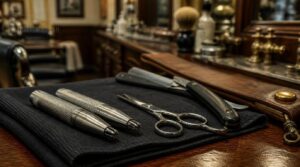
Rarely do manual tools let you down mid-cut, and that’s the real appeal here. A manual nose hair trimmer or roundedtip pair of grooming scissors needs zero charge, zero energy harvesting, zero duty cycle management—just your hand.
| Feature | Manual Tools |
|---|---|
| Power Source | None needed |
| Failure Risk | Virtually zero |
| Best For | Backup precision |
That reliability matters when your electric backup’s capacitor discharge speed just isn’t fast enough.
Best Use Cases

Truth is, both tools earn their place in a real shop. Grab the electric trimmer for precision grooming on walk-ins, save the manual for backup when batteries die mid-shift.
| Situation | Best Tool | Why |
|---|---|---|
| Full shop, back-to-back clients | Electric | Speed |
| Detail touch-ups | Manual | Control |
| Battery dead | Manual | No charge needed |
Pair either with smart appointment scheduling and solid client profiles for consistent results.
Cleaning and Sanitation Standards
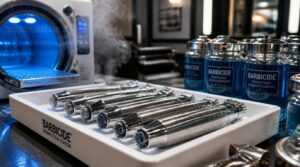
In a barbershop, sanitation isn’t optional, it’s the law, and your clients notice whether you’re keeping tools clean between chairs. A trimmer that looks sharp but can’t be properly sanitized just isn’t worth the chair time. Here’s what separates a trimmer you can trust from one that’ll get you a health code violation.
Washable Trimming Heads
Washable heads are non-negotiable in my chair. Sealed housings let you rinse under warm water for 15-30 seconds without soaking the motor, and stainless steel or high-grade polymer resists corrosion cycle after cycle. If you’re curious why detachable heads matter beyond convenience, this breakdown of how beard trimmer blades and motors handle moisture and hygiene explains the engineering behind it.
Snap-off modules and universal attachment compatibility make swapping heads quick between clients. Dry components fully, add a drop of blade oil, and you’ve got hygienic, professional-grade tools ready to go.
Waterproof Body Ratings
Not all "waterproof" claims mean the same thing. IPX7 means safe under a meter of water for 30 minutes, while IP68 goes further, sealing out dust completely. That’s a real difference when you’re rinsing tools between every fade.
Skip fabric-style hydrostatic head numbers here — they’re for jackets, not trimmers. Check seals regularly; a worn gasket voids your waterproof rating fast.
Vacuum Hair Collection
Ever notice how much hair actually flies during a trim? A built-in vacuum system solves that mess entirely. Look for 20-30 kPa suction, that’s real pickup power, paired with a 0.5-1 liter chamber so you’re not emptying constantly between clients.
HEPA filtration traps 99.97% of fine particles, keeping your station’s air clean. Combined with quieter motors running 60-75 decibels, your nose hair trimmer stays professional-grade without the racket.
Detachable Blade Cleaning
A quick-release lever pops the blade free in under two seconds, so you’re cleaning between every single client, not just at closing time. That’s real cross-contamination prevention, not a nicety.
Wash with soap, dry fully, then apply a light oil for rust prevention and smoother cutting. Snap-fit designs keep alignment solid, cut after cut.
Between-client Hygiene Tips
Snapping the head off is only step one. Between every client, wipe the trimmer body with a fragrance-free sanitizer, change gloves, and swap in a fresh disposable towel — that’s your barrier method in action.
Store the cleaned tool in a closed container until next use. These small habits build client trust fast, and honestly, they’re what separate a real pro’s station from a sketchy one.
Choosing a Barbershop Trimmer
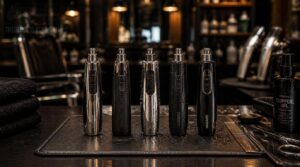
Once a trimmer passes the cleaning test, the real question becomes whether it can survive a full shop day without letting you down.
You’ve got clients back to back, so runtime, grip, and build quality matter just as much as cutting power.
Here’s what actually separates a solid daily driver from something that’ll leave you scrambling mid-shift.
Daily-use Durability
Run eight nose hair trimmers a day, and cheap gear folds fast. Look for blade tolerance precision near 0.02mm—no wobble, no tugging.
Motor thermal protection kicks in around 65°C, saving your investment during back-to-back cuts. Stainless steel construction resists corrosion from constant sterilization, while sealed lubrication retention lasts months, not weeks.
That’s the difference between a trimmer that survives your shop and one that quits by Friday.
Runtime and Charging
Durability keeps a trimmer alive, but runtime and charging decide if it’s ready for your next client. Look for a rechargeable model with lithium battery longevity rated 300-600 cycles, plus fast-charge tech delivering 40-60 minutes runtime from a 20-minute top-up.
5 Charging Must-Haves:
- Pass-through charging
- USB-C compatibility
- Smart heat regulation
- 60-90 min runtime
- 1-3 hour full charge
Attachment Versatility
Since one trimmer rarely meets every client’s needs, Interchangeable Guard Systems matter. Look for Specialized Shaping Tips, Universal Mounting Adapters, and Vacuum Nozzle Compatibility.
| Attachment | Purpose |
|---|---|
| Precision Comb Widths | Controlled clearance |
| Shaping Tips | Detail trimming |
| Mounting Adapters | Cross-brand fit |
| Vacuum Nozzle | Debris collection |
A solid multigrooming tool with swappable grooming attachments beats owning five separate personal trimmers for precision trimming work.
Travel and Storage Needs
If you bounce between shops or work events, your kit needs to survive the ride. Look for impact resistant cases with reinforced edges, plus aircraft compliant dimensions for carry-on travel.
Compact trimmer weight (30-120 grams) and cordless operation make travel grooming kits easy to stash. Prioritize portable tool organization and secure transit storage—dividers and lockable latches keep blades safe between jobs.
Value for Professional Use
Cheap trimmers cost you twice—once at checkout, again when they die mid-shift. Think long-term ROI, not sticker price.
Cheap trimmers cost you twice: once at checkout, again when they die mid-shift
- Replacement part availability (blades, guards, seals)
- Warranty coverage, 1-3 years typical
- Low maintenance costs over tool lifespan
- Consistent precision trimming, service after service
A solid professional grooming tool pays for itself. That’s the real cost of doing business right.
Frequently Asked Questions (FAQs)
What do barbers use to remove nose hair?
Think of a sculptor with chisels of every size — that’s your barber, wielding rotary blades, angled precision heads, and vacuum-equipped trimmers to shape nostril hair safely, skillfully clearing away stragglers without a single tug or nick.
What type of trimmers do barbers use?
Most shops run rotary cutting systems with dual-edge blades for corded reliability.
Cordless models with strong rotary motor torque work great for mobile precision trimming and detail work, giving you flexibility between a full mens grooming kit and quick nose hair trimmer touch-ups.
What is the best nose hair trimmer for men?
As the old shop saying goes, the right tool makes the job. For men’s grooming, the AirTrimmer Pro 3000 wins with rotary blades, skinSafe coating, 45-minute runtime, and adjustable precision trimming heads for pull-free nostril hair removal.
Should a man trim his nose hairs?
Yes, but trim rather than remove — visible hairs look unprofessional, while nose hairs still filter airborne debris. Grooming experts recommend regular trims for tidy appearance and nasal health, keeping facial hair maintenance polished without stripping away the nose’s natural protection.
How often should barbershops replace trimmer blades?
Every 3 to 6 months for busy shops, sooner if blades tug or feel dull. Watch for rust, heat, or rough sound—those signal wear. Clean and oil between clients, and inspect blades daily to catch trouble before it hits your customers.
Can one trimmer be shared across multiple clients?
Sure, if you follow strict sanitation protocols—disinfecting, using detachable and washable heads, or swapping disposable blades between clients. Skipping this risks cross-contamination and mucous membrane exposure, so train your staff properly and never cut corners on hygiene.
What certifications matter when buying professional grooming tools?
Like checking a knife’s edge before every cut, certifications matter just as much: look for Sanitation Compliance Standards, Material Safety Certifications (hypoallergenic stainless steel cone), Electrical Safety Ratings, and Performance Validation Tests — that’s real Professional Accreditation Impact for your chair.
How much should barbershops budget per trimmer unit?
Plan 60 to 120 USD for mid-range units, or 150-250 for durable metal bodies in busy shops. Add 20-40 annually for blades, plus 30-70 for spare batteries—smart investments protecting your long-term tool ROI.
Conclusion
A dull trimmer can ruin a thousand perfect fades in one single yank. That’s the truth every chair-side pro learns fast, usually the hard way.
The right nose hair trimmers for barbershop use aren’t a luxury, they’re your shield against callbacks. Whether you grab vacuum suction or a manual clipper, match the tool to your pace and client volume.
Buy smart, clean often, and let your steady hands finish the job—your reputation rides on it.