This site is supported by our readers. We may earn a commission, at no cost to you, if you purchase through links. This content is for general informational and educational purposes only and is not a substitute for professional medical, dermatological, or nutritional advice.
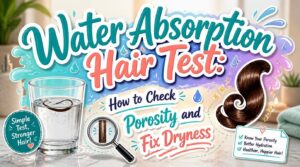
Drop a strand of hair in water. Watch closely. Does it float for minutes, or vanish beneath the surface within seconds?
That behavior tells you more about your hair’s health than any product label ever will. Cuticle scales control how fast moisture moves in and out, and damage or genetics shift that balance dramatically. A water absorption hair test takes two minutes and needs no salon visit, just a glass of water and a clean strand.
What you learn next determines which products actually work for your hair, and which ones you’ve been wasting money on.
Table Of Contents
- Key Takeaways
- What is The Water Absorption Hair Test?
- How to Test Hair Porosity at Home
- What Your Water Absorption Results Mean
- Common Water Absorption Test Mistakes
- Fixing Hair That Won’t Absorb Water
- Frequently Asked Questions (FAQs)
- How do you know if your hair absorbs water?
- Does the water hair porosity test work?
- How to fix hair not absorbing water?
- What is the rarest hair porosity?
- How often should you retest your hairs porosity?
- Can hair porosity change permanently over time?
- Does hair porosity affect coloring or dyeing results?
- Is DVS testing available for at-home use?
- Why do porosity results vary between different hair sections?
- Conclusion
Key Takeaways
- Dropping a strand of hair in water and watching whether it floats, sinks, or hovers gives you a quick read on your hair’s porosity, which controls how well it takes in and holds onto moisture.
- Low porosity hair resists water and stays shiny but tends to build up product, medium porosity absorbs and retains moisture evenly, and high porosity soaks up water fast but dries out just as quickly.
- Product buildup and hard water minerals can coat your strands and throw off your test results, so clarifying your hair first is essential for an accurate reading.
- Knowing your porosity type helps you pick the right products, like argan oil for high porosity or heat-activated treatments for low porosity, and it’s worth retesting every few weeks or after any chemical or heat treatment since porosity can shift permanently.
What is The Water Absorption Hair Test?
Your hair’s cuticle layer decides how it controls water, and that behavior is exactly what this test measures. Every strand falls somewhere on a porosity spectrum, from tightly sealed to wide open. Here’s what you need to know before you run the test yourself.
The classic method for figuring this out is the spray bottle hair porosity test, which shows in seconds whether water beads up or soaks right in.
Cuticle Structure and Water Uptake
Your hair’s cuticle acts as a gatekeeper. Overlapping scales create a roof tile effect: flat, tight scales resist water for hours, while raised or damaged ones invite rapid uptake.
On contact, cuticles swell 15-20%, breaking hydrogen bonds and letting water reach the cortex within minutes. A thin lipid barrier normally repels moisture, until damage triples absorption.
Low, Medium, High Porosity Basics
Cuticle behavior sorts every strand into one of three categories. Low porosity hair resists water, floats, and needs heat to open. Medium porosity hair absorbs and retains moisture evenly. High porosity hair soaks fast but dries faster. This hair porosity classification guides product suitability guide decisions:
- Cuticle openness levels
- Moisture absorption rates
- Water retention capacity
- Genetic and chemical influences
- Damage-driven porosity shifts
For those managing high porosity hair, understanding cuticle damage causes is essential for effective care.
How to Test Hair Porosity at Home
Testing your hair’s porosity doesn’t require a lab or fancy equipment, just a few household items and five minutes. Clean hair gives you the most accurate reading, so that’s your starting point before anything else. From there, you’ve got several simple methods to choose from, each one confirming what your strands are really telling you.
Wash Hair With Clarifying Shampoo First
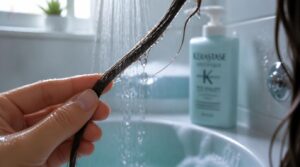
Before any test, clarify first. Buildup from conditioners or gels coats the strand, so water beads on residue instead of cuticle, skewing your hair porosity test results.
Once your strands are clean and clarified, a quick strand test can guide you toward easy-to-apply hair color methods that won’t overwhelm your hair’s natural porosity.
Wash with clarifying shampoo, massaging the scalp, then rinse thoroughly. Test hair while still wet. This cleansing step improves test accuracy and gives you a true read on water absorption and moisture retention.
The Float Test Method
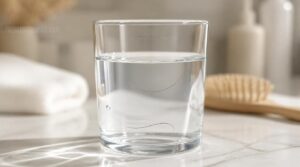
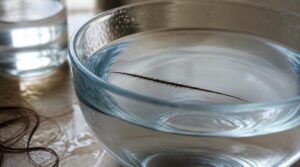
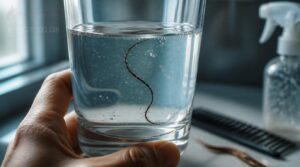
Once clean strands are ready, drop 3 to 5 into room-temperature water and watch for 2 to 3 minutes. Floating means low porosity, sinking signals high porosity, and mid-suspension points to medium.
Remember: this measures density shifts, not true water absorption, so pair it with other checks before trusting the verdict.
The Spray Bottle Test Method
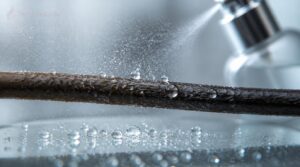
Watching water hit the strand tells you more than staring at it in a bowl. Fill your spray bottle with room temp water, mist mid-length hair, and time the absorption.
- Beading water = low porosity
- Fast soak-in = high porosity
- Gradual spread = medium porosity
- Check spray consistency first
- Watch for hair swelling
Absorption timing reveals your true hair porosity type.
The Strand Slide Test Method
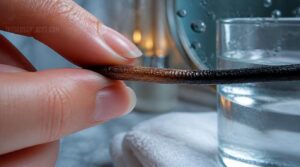
Your fingers know things your eyes miss. Slide fingertips from tip to root, slowly, feeling for cuticle texture. Smooth means low porosity; rough or jagged signals high porosity; gradual bumpiness suggests medium.
| Sensation | Porosity | Speed |
|---|---|---|
| Glass-smooth | Low | Instant |
| Slight bumps | Medium | 10-15 sec |
| Sandpaper-like | High | Instant |
Confirm with the float test for accuracy.
The Water Droplet Test Method

Place one droplet on a clean strand and watch closely. Beading signals low porosity, since surface tension keeps water sitting atop tight cuticles. Quick spreading or flattening means high porosity, cuticles too raised to resist absorption.
Time the droplet’s behavior for accurate hair porosity measurement, as this simple hair moisture absorption check reveals your hair hydration baseline in seconds.
What Your Water Absorption Results Mean

So your strands floated, sank, or hovered somewhere in between—now what? Each outcome points to a distinct porosity type, and that classification shapes exactly how your hair behaves day to day. Here’s what to look for with each result, plus what it means when your hair doesn’t fit neatly into one category.
Signs of Low Porosity Hair
Beading water and a mirror-like shine are the calling cards of low porosity hair. Your cuticle layer stays sealed shut, so drops sit on the surface instead of soaking in.
That same barrier slows drying time and invites product buildup within days. Dye and deep conditioners need extra processing time to break through at all.
Signs of High Porosity Hair
That strand sinks fast, and it won’t stop drinking.
High porosity hair absorbs water within seconds, but loses it just as quick, leaving chronic dryness, fine frizz, and fast tangling behind. You’ll notice quick product absorption too, oils vanish minutes after application.
High porosity hair drinks water in seconds but loses it just as fast, leaving strands dry, frizzy, and tangled
Any hair porosity test confirms it: raised cuticles mean weaker strands, more hair porosity and breakage, and duller shine than you’d expect.
Signs of Medium Porosity Hair
That strand hovers, neither sinking nor floating, and it tells you plenty.
Medium porosity hair shows smooth texture with slight slip, natural shine after washing, and moderate drying time between wet and dry.
- Water droplets vanish within 1-2 minutes
- Strands feel resilient, not brittle
- Color treatments turn out predictable
This balanced hair porosity test result means easier styling and fewer surprises.
Spotting Mixed Porosity Strands
Not every strand on your head plays by the same rules. Mixed porosity strands show up as Cuticle Damage Patterns from heat or color, causing Strand Test Variability, some sink, some float, some spread flat. Root Tip Differences matter too: ends absorb water faster than roots. Watch Wash Cycle Behavior over several washes. Uneven Product Absorption Gaps signal you’re managing more than one hair type at once.
Common Water Absorption Test Mistakes
Your porosity test results aren’t always telling you the truth. Certain hidden factors can throw off what you see and feel during testing, leading you to the wrong conclusion about your hair type. Here are the two biggest culprits worth ruling out first.
Product Buildup Skewing Results
If your porosity test results seem off, check what’s sitting on your hair first. Product buildup from silicones, gels, and leave-in sprays coats the shaft, blocking water absorption barriers and skewing accuracy.
A clarifying shampoo residue check before testing matters, since silicone film effects can make high porosity hair mimic low porosity readings entirely.
Hard Water Mineral Interference
Buildup isn’t the only culprit. Calcium and magnesium ions in hard water bind with soap, leaving mineral residue that coats the cuticle and skews any hair porosity test.
This same layer causes scale formation, dulls dye vibrancy, and disrupts rinsing evaporation. Try a hard water clarifying shampoo before retesting, since mineral interference affects hair moisture content, frizz, and product selection accuracy.
Fixing Hair That Won’t Absorb Water
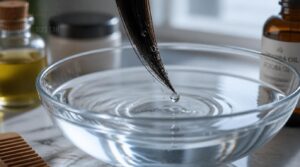
Once you know why your hair resists water, the next step is choosing products that actually work with its structure. Not every oil or treatment suits high porosity strands, and the wrong pick can leave you right back where you started. Here are a few options worth adding to your routine.
Using Josie Maran Argan Oil
Cuticles that gape open lose moisture as fast as they take it in, and Josie Maran Argan Oil seals that gap. Cold-pressed and lightweight, it smooths split ends, boosts shine, and cuts frizz without residue.
Use it on damp hair, elbows, or cuticles for lightweight moisture retention that helps water uptake without weighing high-porosity strands down.
Trying Mizani Moisture Fusion Duo
Sluggish absorption often signals real hair damage assessment territory, and Mizani’s Moisture Duo targets it with cupuaçu butter and argan oil sealing.
The Mizani shampoo cleanses gently while honey extract hydrates. Layer the mask lightly, cap it with plastic for a heat boost, and let low porosity strands drink in moisture without the greasy weigh-down.
Adjusting Routines by Season
Since your hair porosity test results shift with the weather, your routine should too.
- Dry, static-charged strands craving butter and oils in winter
- Limp, frizz-prone hair drowning in humidity by August
- Cuticles snapping shut under cold rinses after fall masks
- Thirsty ends begging for glycerin during spring’s mood swings
Seasonal product rotation protects your hair’s moisture retention capacity year-round, so let humidity-based styling guide every swap.
Frequently Asked Questions (FAQs)
How do you know if your hair absorbs water?
Watch how fast water disappears into your strand. Quick moisture entry speed signals high porosity, while beading water shows tight cuticles resisting uptake, the clearest gauge of your hair’s true water behavior.
Does the water hair porosity test work?
Like Achilles’ heel, this test has a real weak spot: it captures surface cuticle behavior, not true internal porosity. Scientific validation via DVS shows only 10-15% correlation, though home testing still guides practical product selection reasonably well.
How to fix hair not absorbing water?
Clarify buildup first with a clarifying shampoo, then apply heat conditioning on soaked hair. Follow with lightweight products, humectants, and periodic protein treatments. This combination softens cuticles, improves product penetration, and restores hair water uptake and moisturization over time.
What is the rarest hair porosity?
Rarity isn’t about a hidden fourth category. Low porosity hair holds that title, since its tightly packed cuticles resist water so strongly that among low, medium, and high porosity types, it’s the least common and hardest to saturate.
How often should you retest your hairs porosity?
Retest every 4 to 6 weeks during routine changes, every 3 months once stable, and immediately after bleaching, relaxers, or heat damage. Conflicting results within the same week usually mean leftover product, not a real porosity shift.
Can hair porosity change permanently over time?
Think of your cuticle as armor plating that only opens one way. Cuticle damage from chemical processing, heat exposure, UV degradation, and friction wear shifts hair porosity permanently, since lifted scales rarely reseal without cutting away the affected strand.
Does hair porosity affect coloring or dyeing results?
Yes. Your dye absorption rate shifts with porosity, changing shade depth, processing time, and color retention speed.
High porosity grabs pigment fast but fades quickly, while low porosity resists penetration, often needing longer dwell time and precolor preparation for even results.
Is DVS testing available for at-home use?
Vapor Sorption requires lab-grade instrumentation and controlled humidity chambers, so it isn’t practical for home use. No consumer device replicates it accurately. Stick with water absorption alternatives like float or spray tests for reliable, at-home porosity insight.
Why do porosity results vary between different hair sections?
Your strands aren’t uniform. Cuticle damage gradient, product residue, curl pattern shifts, scalp oil distribution, and weathering all vary section by section, so one part of your hair porosity test can show high porosity while another reads low.
Conclusion
You don’t need a lab to understand your own hair. A water absorption hair test costs nothing but two minutes and a glass of water, yet it reveals what years of guessing at products never could.
Low porosity resists, medium balances, high porosity drinks fast and loses just as quick. Once you know which one you’re working with, every purchase becomes intentional instead of hopeful.
Porosity isn’t a flaw to fix. It’s simply the map you follow.