This site is supported by our readers. We may earn a commission, at no cost to you, if you purchase through links. This content is for general informational and educational purposes only and is not a substitute for professional medical, dermatological, or nutritional advice.

Your showerhead can’t tell calcium from copper — it just filters what flows through. That’s the confusion tripping up most hard water shoppers: they buy a $40 filter expecting softened water and end up with the same crusty buildup three months later.
Here’s the real story. Shower filters for hard water excel at chlorine and heavy metals, using media like KDF-55 and activated carbon that work fast (5-20 minutes) and test well under NSF/ANSI 177. Scale control is a different game entirely, one where polyphosphate crystals and chelating agents only slow mineral deposits rather than remove them.
Knowing that difference changes which of the nine filters below actually solves your problem.
Table Of Contents
- Key Takeaways
- Do Shower Filters Really Work for Hard Water?
- Top 9 Shower Filters for Hard Water
- 1. Weddell Duo Black Shower Filter
- 2. Delta Clarifi Shower Filter Attachment Chrome
- 3. Jolie Filtered Showerhead High Pressure Filter
- 4. Kohler Cinq Filtered Showerhead Matte Black
- 5. Aquasana Shower Filter With Shower Head
- 6. AquaHomeGroup High Pressure Filtered Shower Head
- 7. AquaHomeGroup 20 Stage Shower Filter Vitamin C E
- 8. AquaHomeGroup 20 Stage Shower Filter
- 9. Filtered Shower Head Dual Filter 20 Stage
- In-Line Vs All-in-One Filter Systems
- Filtration Media That Targets Hardness
- Certifications That Prove Performance
- Water Pressure and Spray Performance
- Filter Lifespan and Replacement Costs
- Skin and Hair Health Benefits
- How to Choose a Shower Filter
- Frequently Asked Questions (FAQs)
- Do showerhead filters actually work for hard water?
- What are the best shower filters for hard water?
- How to filter hard water from a shower?
- Are there any shower water filters that actually work?
- Can shower filters be installed on handheld heads?
- Do shower filters work with tankless water heaters?
- Will a shower filter affect my water pressure warranty?
- Can I use a shower filter with well water?
- Are shower filters safe for septic systems?
- Conclusion
Key Takeaways
- Shower filters knock out chlorine and heavy metals fast, but they can’t actually soften hard water—minerals like calcium and magnesium mostly pass right through.
- Look for NSF/ANSI 177 certification before you buy, since it’s the only real proof a filter cuts chlorine by at least 50% instead of just claiming it on the box.
- Polyphosphate crystals and KDF-55 media can slow down scale buildup, but if your water’s genuinely hard (above 10 gpg), you’ll need a whole-house softener to solve the problem for good.
- All-in-one showerheads win on convenience and looks (tool-free swaps, matching finishes), while in-line filters need a wrench but often cost less upfront.
Do Shower Filters Really Work for Hard Water?

Short answer: yes, but not in the way most people assume—filters won’t soften your water, but they’ll tackle the chlorine and metals making hard water feel so much worse on your skin and hair.
Pairing a good filter with one of these gentle shower heads designed for kids’ sensitive skin can make bath time noticeably less irritating for little ones prone to dryness or eczema.
The real question is which technology actually delivers, and which ones just look good on a shelf.
Here’s how nine tested models stack up.
How Filtration Reduces Hardness
Here’s the truth: most shower filters don’t soften water the way a whole-house water softener does.
- Ion exchange swaps calcium/magnesium for sodium (90%+ reduction)
- Polyphosphate crystals sequester minerals, preventing scale buildup
- Chelating agents bind ions without removing hardness
Whole-house systems treat all incoming water for complete scale and mineral control.
Shower units mainly rely on polyphosphate or chelating media—not true ion exchange or distillation—limiting filter capacity but still curbing scale.
Chlorine and Heavy Metal Removal
Where filters actually shine is chlorine and metals — not hardness. Activated carbon adsorbs chlorine in 5-20 minutes; KDF-55’s copper-zinc alloy converts it to chloride via redox reactions. Ion exchange resins and ceramic blends trap lead and copper below EPA limits.
Look for NSF/ANSI 177 certification — it verifies chlorine reduction claims instead of taking marketing at its word.
Limits of Scale Prevention
Hardness is a different animal entirely — no shower filter softens water like a whole-house system does.
Polyphosphate media hit a saturation threshold, and mineral crystals just build back up. Flow rate, temperature, and pH swings all shrink effectiveness further. Think of these as a water softener alternative for mild buildup, not a fix for genuinely hard water.
Top 9 Shower Filters for Hard Water
We tested nine filters across real hard water conditions, from budget in-line attachments to full showerhead replacements. Each one earned its spot based on flow rate, filter media, and how well it actually held up over weeks of daily use.
Here’s how they stacked up, starting with the one that surprised us most.
1. Weddell Duo Black Shower Filter
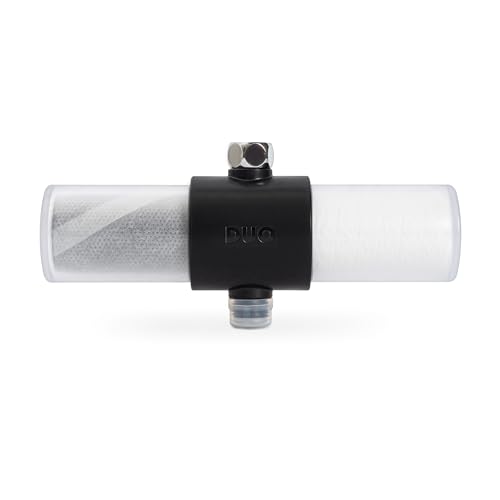
Screw-in simplicity meets serious filtration here. The Weddell Duo pairs dual cartridges with NSF/ANSI 177-certified chlorine reduction and rated PFAS removal, handling about 8,000 gallons at a strong 2.8 gpm.
Its black housing attaches straight to your supply line—no showerhead swap needed. Testers noted softer-feeling skin and less chlorine odor within days. At 0.74 lbs, it’s compact, though the screw-in fit demands basic plumbing know-how rather than a truly tool-free setup.
| Best For | People with color-treated or sensitive hair and skin who want an easy, tool-free way to reduce chlorine, PFAS, and particulates from their shower water. |
|---|---|
| Filtration Media | ABS particulate/PFAS filter |
| Installation | Tool-free |
| Connection Type | Standard shower arm |
| Filter Lifespan | Up to 8,000 gallons |
| Water Pressure | May reduce pressure |
| Skin/Hair Benefit | Improves hydration |
| Additional Features |
|
- NSF-certified to reduce chlorine by up to 99%, with independently verified PFAS and particulate reduction
- Dual cartridge design with tool-free installation on standard shower arms, plus visual monitoring of filter condition
- Helps improve skin hydration and leaves hair softer and less frizzy with regular use
- Weighs 1.17 lbs and measures 8.5 x 2.5 x 3.75 inches, so its horizontal design may not fit every shower setup
- May cause noticeable water pressure drop, especially in low-pressure systems or as the filter clogs over time
- Cartridges need replacing about every 6 months, and the upfront cost is higher than basic shower filters
2. Delta Clarifi Shower Filter Attachment Chrome
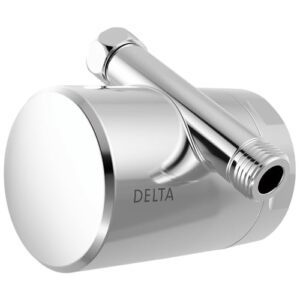
Chrome hides the tech well here. The Delta Clarifi attachment tucks between your existing showerhead and supply line, so the filter cartridge stays out of sight while chrome finish blends with most bathroom fixtures.
At 1.3 lbs with plastic housing, installation is DIY-friendly and tool-free—though testers warn against over-tightening, since the housing can crack. Filters last roughly 10,000 gallons or six months (based on 17.2 gallons per shower), backed by a 5-year warranty. Some users noted pressure dips and shallow top threading worth monitoring.
| Best For | Homeowners or renters with municipal or well water who want a tool-free way to cut chlorine and sediment for softer skin and hair without giving up bathroom style. |
|---|---|
| Filtration Media | Carbon filter |
| Installation | Tool-free |
| Connection Type | Wall-mounted shower arm |
| Filter Lifespan | ~10,000 gallons/6 months |
| Water Pressure | Maintains pressure |
| Skin/Hair Benefit | Prevents dryness |
| Additional Features |
|
- Tool-free installation that fits standard wall-mounted shower arms
- Chrome housing blends in while filtering out chlorine and sediment
- 5-year warranty plus live customer support for peace of mind
- Plastic housing can crack if over-tightened during setup
- Some users notice a dip in water pressure after installing
- Filter cartridge can be tough to remove the first time
3. Jolie Filtered Showerhead High Pressure Filter
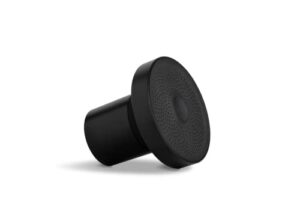
Hair shedding is the headline claim here — Jolie’s clinical testing shows a 46% average reduction, tied to KDF-55 and calcium sulfite media exceeding NSF-177 standards.
Installation takes under 20 seconds on standard ½" NPT arms, tool-free. Flow stays in the 2.0-2.5 gpm range, though some testers reported uneven spray from clogged holes.
Alloy steel with chrome finish feels premium at 8×8 inches. Just don’t over-tighten during cartridge swaps — reviewers noted occasional sticking.
| Best For | People with color-treated or hard-water-damaged hair who want an easy, tool-free way to cut down on shedding, dryness, and dandruff. |
|---|---|
| Filtration Media | KDF-55 & Calcium Sulfite |
| Installation | Tool-free, under 20s |
| Connection Type | 1/2″ NPT |
| Filter Lifespan | Not specified exactly |
| Water Pressure | Not specified |
| Skin/Hair Benefit | Reduces shedding |
| Additional Features |
|
- Clinically shown to reduce hair shedding by 46% on average
- Tool-free filter swaps in under 20 seconds on standard ½" NPT shower arms
- Premium alloy steel build with a chrome finish that protects color-treated hair from fading
- Won’t fit custom or non-standard plumbing setups
- Filter cartridge can get stuck if over-tightened during replacement
- Spray may come out unevenly due to internal design or sediment buildup
4. Kohler Cinq Filtered Showerhead Matte Black
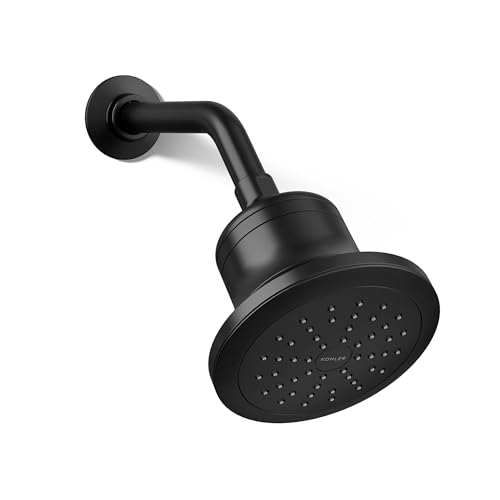
If matte black bathroom hardware is your thing, this one earns its spot on looks alone — but the five-layer Aquifer KDF-55 system backs it up with real chlorine and heavy-metal reduction.
If your water’s especially hard, pairing this filter with a dedicated softening setup can make a noticeable difference — here’s a closer look at how to choose the right shower filter or water softener for hard water.
The 5.5-inch MasterClean sprayface resists scale buildup, and a built-in dial tracks your filter’s six-month replacement date with a simple 30° twist.
Flow holds steady at 2.5 gpm. Just know it’s metal-bodied with plastic internals, skips mounting hardware, and replacement cartridges run $60-80.
| Best For | Anyone who wants a stylish matte black showerhead that also filters out chlorine and heavy metals for softer hair and skin. |
|---|---|
| Filtration Media | KDF 55 + activated carbon |
| Installation | Tool-free, 30° dial |
| Connection Type | Standard threaded |
| Filter Lifespan | ~6 months |
| Water Pressure | 2.5 GPM maintained |
| Skin/Hair Benefit | Softer hair/skin |
| Additional Features |
|
- Five-layer Aquifer KDF-55 filtration effectively reduces chlorine and heavy metals
- Built-in dial makes tracking and swapping filters every six months quick and tool-free
- MasterClean sprayface resists mineral buildup, keeping consistent 2.5 GPM flow
- Plastic internal components despite the premium metal exterior
- No wall mount or installation hardware included, so that’s an extra purchase
- Single-function spray with no adjustable patterns, and filters cost $60-80 to replace
5. Aquasana Shower Filter With Shower Head
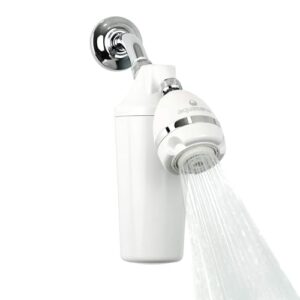
Two-stage filtration with an upflow design is Aquasana’s whole pitch, and it holds up: coconut shell carbon paired with copper-zinc media knocks out over 90% of chlorine while resisting clogging under pressure.
Some bundles include a massaging handheld wand, which is a nice bonus if you shower with kids or a partner who wants softer spray.
Cartridges last up to 10,000 gallons. Twist-and-lock replacement means no tools, no wrench, no fuss — just a quick swap every few months.
| Best For | Households on municipal, chlorinated water who want softer skin and hair without sacrificing shower pressure. |
|---|---|
| Filtration Media | Coconut carbon & copper-zinc |
| Installation | Tool-free, under 5 min |
| Connection Type | 1/2″ NPT |
| Filter Lifespan | 6 months/10,000 gallons |
| Water Pressure | High pressure maintained |
| Skin/Hair Benefit | Softer hair, less irritation |
| Additional Features |
|
- Reduces 90% of chlorine using coconut shell carbon and copper-zinc media, backed by NSF-177 certification
- Tool-free, twist-and-lock installation and cartridge swaps take just minutes
- Maintains strong water pressure while filtering, with cartridges lasting up to 10,000 gallons or 6 months
- Doesn’t address water hardness, since it won’t remove dissolved minerals like calcium or magnesium
- Heavy-use households may need to replace cartridges more often than the 6-month estimate
- Not suitable for well water with sediment or iron unless paired with a pre-filter
6. AquaHomeGroup High Pressure Filtered Shower Head
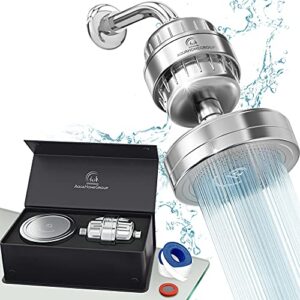
Rainfall spray with real backbone — that’s the trick this one pulls off. Increased nozzle density keeps pressure feeling strong even after water passes through the multi-stage cartridge, so you’re not trading power for filtration.
The KDF copper-zinc media grips chlorine and heavy metals, while a brushed nickel finish shrugs off bathroom humidity without corroding.
Installation’s simple: standard ½" NPT threading means it screws onto your existing arm with basic wrench tightening, no plumber required.
| Best For | Anyone dealing with dry skin, eczema, dandruff, or fading color-treated hair who wants a spa-style shower without sacrificing water pressure. |
|---|---|
| Filtration Media | 20+3 stage KDF |
| Installation | Tool-free |
| Connection Type | Universal 1/2″ NPT |
| Filter Lifespan | 6 months |
| Water Pressure | 1.8 GPM maintained |
| Skin/Hair Benefit | Improves moisture |
| Additional Features |
|
- 203 stage filtration with KDF media reduces over 90% of chlorine and heavy metals for gentler water on skin and hair
- Vitamin C, E, and A infusion helps support skin moisture and healthier-looking hair
- Tool-free universal ½" NPT installation with a stainless steel hose and brass holder makes setup quick and secure
- Filter cartridges need replacing every 6 months, and sooner if your local water quality is poor
- Won’t remove all dissolved minerals, so hard water scaling can still build up over time
- Isn’t a full replacement for a whole-house filtration system if you need comprehensive contaminant removal
7. AquaHomeGroup 20 Stage Shower Filter Vitamin C E
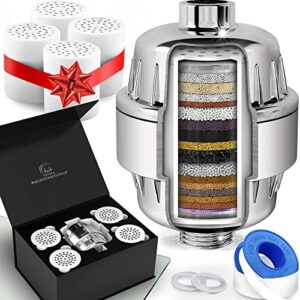
Twenty stages sounds excessive until you see what each one’s doing — sediment capture up front, chlorine and chloramine reduction through the middle layers, polishing media at the end for clarity.
The standout here is the vitamin C and E infusion, which stays active in the media to counter oxidative stress from chlorine exposure on skin and hair.
You get one installed cartridge plus a spare, and tool-free setup takes under two minutes.
| Best For | People with sensitive or eczema-prone skin, dandruff-prone scalps, or hard water at home who want an easy upgrade to their shower without any plumbing work. |
|---|---|
| Filtration Media | 20-stage KDF |
| Installation | Tool-free, under 2 min |
| Connection Type | Universal 1/2″ |
| Filter Lifespan | 4-6 months |
| Water Pressure | No flow reduction |
| Skin/Hair Benefit | Reduces dryness/irritation |
| Additional Features |
|
- 20-stage filtration tackles sediment, chlorine, and heavy metals in one pass, with no drop in water pressure
- Vitamin C and E infusion helps counter dryness and irritation from chlorine exposure
- Universal 1/2" fitting installs tool-free in under two minutes on almost any shower head
- Not certified for drinking water and won’t remove bacteria or pathogens
- Only reduces some hardness-causing minerals rather than fully softening hard water
- ABS plastic housing can crack if over-tightened during installation
8. AquaHomeGroup 20 Stage Shower Filter
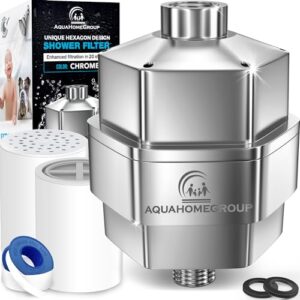
Drop the vitamin infusion and you get this model’s plainer sibling — same 20-stage cartridge, same carbon-and-KDF media stack, minus the C and E additive.
That makes it a solid pick if you just want chlorine and sediment reduction without paying extra for skin-care perks. Model number AHG15 weighs 1.6 pounds and installs tool-free in under two minutes.
Effectiveness still depends on your local water quality, so hardness levels and contaminant load will shape how long that cartridge performs.
| Best For | Anyone who wants straightforward chlorine and sediment reduction in the shower without paying extra for vitamin-infused, skin-care add-ons. |
|---|---|
| Filtration Media | 20-stage KDF |
| Installation | Tool-free |
| Connection Type | Universal |
| Filter Lifespan | Not specified |
| Water Pressure | Consistent pressure |
| Skin/Hair Benefit | Reduces dryness |
| Additional Features |
|
- 20-stage carbon-and-KDF filtration tackles chlorine, fluoride, heavy metals, and odors
- Tool-free installation fits standard shower heads in under two minutes
- Maintains steady water pressure while filtering
- No Vitamin C/E media, so it skips the added skin and hair benefits of the AHG15’s sibling model
- Filter cartridge lifespan isn’t specified, so replacement timing is unclear
- Performance depends heavily on local water hardness and contaminant levels
9. Filtered Shower Head Dual Filter 20 Stage
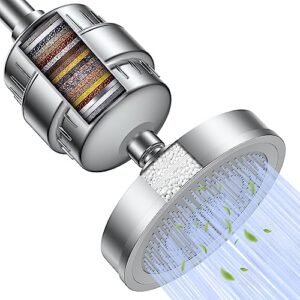
If you’d rather skip the vitamin debate entirely, this dual-filter model earns its spot with two separate filtration zones instead of one cartridge doing all the work. More surface area often means steadier chlorine reduction as water pushes through the KDF-55 and carbon stages.
Replacement inserts come as matched pairs, so you’re not hunting for odd-sized parts later. It’s a practical middle ground — less flashy than vitamin-infused options, but built for consistent, no-fuss hard water filtration.
| Best For | Renters and homeowners who want a tool-free, high-pressure shower upgrade that tackles chlorine and hard water without committing to a vitamin-infused system. |
|---|---|
| Filtration Media | KDF-55, carbon, ceramic |
| Installation | Tool-free, under 2 min |
| Connection Type | Universal 1/2″ NPT |
| Filter Lifespan | 4-6 months/10-12k gal |
| Water Pressure | No flow reduction |
| Skin/Hair Benefit | Reduces dryness/irritation |
| Additional Features |
|
- 20-stage dual-filter design with KDF-55, carbon, and ceramic balls offers steady reduction of chlorine and heavy metals
- Tool-free G1/2" installation with included plumber’s tape makes setup quick for any skill level
- Booster valve and silicone nozzle design boosts pressure, giving a stronger rain-like flow even on weak plumbing
- Some users report leaks appearing after just a few weeks of regular use
- No listed replacement schedule for filters, so it’s hard to know when performance starts to drop
- No clear customer service or return contact, which can be frustrating if something goes wrong
In-Line Vs All-in-One Filter Systems
Before you pick a filter from our top 9, you’ll need to decide how it actually attaches to your shower — and that choice affects more than just installation time.
In-line and all-in-one systems handle plumbing, looks, and cartridge changes in pretty different ways, so knowing the tradeoffs upfront saves you a returned box later.
Here’s how the two setups stack up.
Installation Differences Explained
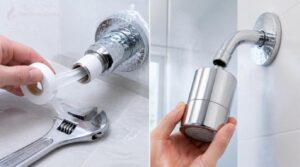
Under the hood, in-line and all-in-one systems install almost oppositely. In-line units use 1/2" NPT threads (plumber’s tape helps), while all-in-one heads often need zero adapter—just tool-free, hand-tight swaps.
| Type | Tools Needed | Install Time |
|---|---|---|
| In-line | Wrench, tape | 5-10 min |
| All-in-one | None | 2 min |
Placement matters too: mount upright, arrow-forward, on your shower arm—not your diverter valve.
Aesthetic and Finish Matching
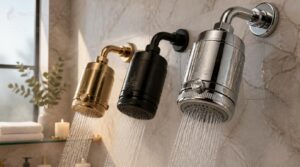
Once it’s mounted correctly, looks matter. In-line filters often mean plastic housings that clash with premium fixtures, though curved covers help conceal them.
All-in-one heads win here: chrome, matte black, and brass options match Delta, Kohler, and Moen finishes directly.
| Type | Finish Options |
|---|---|
| In-line | Limited, add-on look |
| All-in-one | Chrome, black, brass |
| Kohler Cinq | Matte black |
| Jolie | Sleek chrome |
Cartridge Swap Convenience
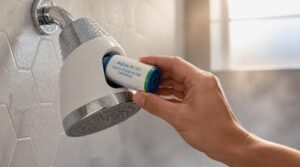
A handful of seconds is all a good cartridge swap should cost you. All-in-one heads win again: front-load access, click-lock mechanisms, and color-coded cartridges mean tool-free replacement in under a minute.
| Feature | In-Line | All-in-One |
|---|---|---|
| Tools needed | Wrench | None |
| Swap time | 2–5 min | Under 60 sec |
| Filter life indicator | Rare | Common |
Filtration Media That Targets Hardness
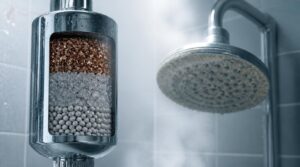
Not all filter media handle hard water the same way, and the differences matter more than the marketing copy lets on.
Some rely on alloy reactions to knock out chlorine, while others use crystals or ceramic layers to tackle scale and mineral buildup directly.
Here’s what’s actually working inside these cartridges — and why it matters for your water.
KDF-55 Copper-zinc Alloy
KDF-55 is that grayish media inside your cartridge — a copper-zinc alloy (roughly 55/45) that redox-converts chlorine and curbs heavy metals. Its antimicrobial action starves bacteria of nutrients on contact.
With hard water, it slows scale indirectly by altering mineral precipitation. Durability holds for thousands of gallons before filter replacement, and it integrates well alongside carbon or Vitamin C layers for fuller contaminant removal.
Polyphosphate Scale Prevention Crystals
Think of these crystals as bouncers, not bodybuilders — they don’t soften water, they just block crystal growth inhibition at the door.
Polyphosphate crystals aren’t bodybuilders that soften water—they’re bouncers that simply block mineral scale at the door
Trace phosphate levels create a threshold effect that stops calcium carbonate and sulfate from forming scale on heads and heaters, even in genuinely hard water.
They pair safely with KDF or carbon media, offering real scale prevention without stripping minerals your skin actually wants.
Calcium Sulfite Ceramic Layers
Porous ceramic beats plastic housings for standing up to daily hot-water blasts without cracking.
Calcium sulfite embedded in that matrix targets chlorine, not hardness minerals directly — calcium and magnesium mostly pass through. Even so, trapped particulates mean less visible scale buildup over time.
Chlorine reduction efficiency stays strong across typical shower temperatures, making cartridge use reliable for hard water setups.
Multi-stage Filtration Explained
Why rely on one filter medium when hard water throws multiple problems at you?
Multi stage filtration stacks sediment removal, chemical adsorption, and mineral ion exchange in sequence — each layer catching what the last missed. Stages run 6 to 22 deep, boosting filter capacity and NSF/ANSI 177 chlorine performance. KDF-55’s copper-zinc alloy often anchors that lineup for reliable results.
Certifications That Prove Performance

Marketing claims are cheap, but certifications are the paper trail that backs them up. A filter can call itself high-performance all day long — what actually matters is whether it passed independent testing for the contaminants you care about. Here’s what those certification numbers really mean, and why they should factor into your decision.
NSF/ANSI 177 Chlorine Standard
That little certification mark means more than marketing. NSF/ANSI 177 requires systems to cut free chlorine by at least 50%, verified through third-party chlorine reduction testing against known challenge water.
Certification also demands honest labeling — filter capacity, replacement intervals, material safety — so your hard water shower filter performs as advertised, not just on day one, but through its full rated lifespan.
NSF/ANSI 372 Lead Standard
Chlorine reduction is only half the safety picture — lead matters too. NSF/ANSI 372 caps weighted lead content at 0.25%, calculated across each wetted part’s surface area, with solder capped tighter at 0.2%.
That formula matters because:
- Every wetted component gets tested
- Contributions are summed, not averaged loosely
- Certification requires documented proof
- Results confirm drinking water compliance
- It safeguards long-term filter longevity
Why Third-party Testing Matters
Anyone can print "NSF certified" on a box. That’s why third-party certification matters — accredited labs run laboratory testing with transparent test methods, not manufacturer self-reports.
You get unbiased performance data, batch consistency validation across production runs, and a real water quality report confirming contaminant safety. Consumer testing from independent sources catches what marketing glosses over.
Water Pressure and Spray Performance

A filter that strangles your water pressure ruins the purpose, no matter how many contaminants it removes. You want clean water without sacrificing that satisfying, strong spray. Here’s how flow rates, spray settings, and pressure performance actually stack up across these nine models.
Flow Rate Ranges Compared
Numbers only tell half the story—your actual water pressure decides the rest.
- 0.5–2.0 gpm: typical filtered range
- 0.2–0.8 gpm: drop from dense media
- 40–60 psi: ideal household pressure
- 10–40%: flow loss at low pressure
All-in-one units often edge out inline setups, since shorter paths mean less resistance and steadier output.
Spray Mode Customization Options
Pressure sets the ceiling, but spray mode customization decides how that water actually feels on your skin.
| Feature | Benefit |
|---|---|
| Variable flow control | Drizzle to jet |
| Adjustable spray head height | Targets shoulders, back |
| Vibration pulsing modes | Massaging sensation |
| Pause or off setting | Saves water lathering |
Shower heads with filters on an adjustable shower bar let everyone dial in their own default.
High Pressure Handheld Models
Weak flow ruins even the best filter media. A high pressure handheld shower head delivering 1000–1800 PSI keeps spray patterns strong while filter cartridges do their job—no fighting sediment buildup on nozzles.
Look for quick-connect nozzle types, 10–25 foot hose length, and locking triggers. Portability features and pressure settings support easy installation, real water pressure maintenance, and lasting spray mode customization without sacrificing filter lifespan.
Filter Lifespan and Replacement Costs
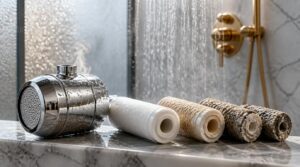
A great filter is only as good as its cartridge life, and that life comes with a real dollar figure attached. Here’s what you can expect to pay per year, and how the math shifts once you factor in gallons filtered and multi-packs. Let’s break down what your wallet’s actually looking at.
Gallons Filtered Before Replacement
That "8,000-10,000 gallons" rating on the box? It’s a lab estimate, not a guarantee. A 5-minute shower burns roughly 10 gallons, so daily use adds up fast in hard-water homes.
Media capacity shrinks faster with mineral-heavy water, meaning your filter replacement date often arrives before the calendar hits 6 months.
Annual Cost Breakdown
Sixty dollars to $180 a year is the real range once you factor cartridge replacement frequency into hard water use. Softer homes stretch a $20 cartridge past six months; hard water shortens that lifespan fast.
Media specific costs matter too — KDF blends cost less than vitamin-infused stages. Installation stays a one-time expense, so your recurring spend is nearly all filter capacity and replacement math.
2. pack Replacement Savings
Buying a 2-pack almost always beats one-at-a-time purchases: lower unit price, often free shipping, and sometimes a discount code at checkout.
With hard water chewing through filter capacity faster, having a backup cartridge ready means no gap in protection.
Bonus: shared packaging cuts waste, and some brands extend warranty coverage to both units when bought together.
Skin and Hair Health Benefits
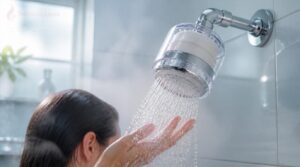
Hard water doesn’t just leave spots on your glass—it can leave your skin tight and your hair looking dull, too.
A good filter changes that equation by cutting the chlorine and mineral load hitting your body every morning.
Here’s what that improvement actually looks like, from drier skin to cleaner tubs.
Reduced Dryness and Irritation
Ever notice your skin feels tighter after a shower in hard water? That’s chlorine and mineral buildup stripping your lipid barrier. Filtered water reduces this irritation trigger, especially for eczema-prone or sensitive skin.
To boost results:
- Use warm (not hot) water
- Pat dry, don’t rub
- Moisturize while skin’s damp
This routine helps your moisture barrier and pairs well with filtration for lasting hydration.
Vitamin-infused Filter Options
Some cartridges do more than strip chlorine — they add things back. Vitamin C infusion neutralizes residual chlorine while supporting skin and hair shine, and gel-based release keeps it active between changes.
Probiotic-enriched options support your skin barrier, aromatherapy blends (citrus, lavender, green tea) fade naturally, and moisturizing additives plus mineral balance control leave hard water feeling gentler, not harsher.
Less Soap Scum Buildup
Fewer minerals hitting your glass means less soap scum sticking around — that’s the quiet payoff of filtering hard water at the source.
Filtration won’t replace your routine, though. Pair it with:
- Liquid soap over bar soap
- Quick surface drying after each shower
- A squeegee pass on doors
- A protective coating for stubborn spots
Combined with a water softener, filter replacement keeps scale buildup manageable long-term.
How to Choose a Shower Filter
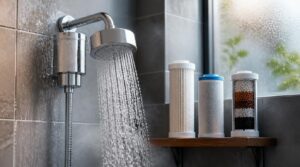
Picking the right filter isn’t about grabbing the fanciest box on the shelf—it’s about matching the unit to your water, your budget, and your bathroom setup. A filter that crushes hardness in one home might barely make a dent in another, and price tags don’t always tell you why.
Here’s what actually separates a smart buy from a wasted one.
Look for negative-ion plate technology when comparing models, since it’s one of the key features that separates everyday flat irons from the best hair straighteners for professionals.
Matching Filter to Water Hardness
Grains per gallon matter more than brand names. Test your water first — under 7 gpg, KDF-55 experiences chlorine fine; above 10 gpg, pair filtration with ion exchange softening or polyphosphate media for real scale buildup prevention.
Seasonal shifts (spring runoff, well changes) call for higher-capacity cartridges.
Treat filters as a water softener alternative, not a replacement, when hardness runs extreme.
Budget Vs. Premium Options
Once you know your gpg number, the real question is cost. A budget shower filter runs $15–$40 and grips chlorine fine; premium heads add polyphosphate crystals, larger media beds, and longer warranties.
- Lower upfront cost
- Fewer scale-fighting stages
- Premium shower head kits bundle spray settings
- Better long-term value in hard water areas
Skip water softening systems only if replacement discipline stays consistent.
Apartment-friendly Installation Solutions
Renting doesn’t mean you’re stuck with hard water. Removable shower arm adapters fit standard 1/2" NPT threads, so installation skips drilling entirely.
Look for tool-free setup, magnetic attachment, or peel-and-stick mounts — all removable without wall damage. That’s a genuine rental-friendly solution.
Your landlord gets fixtures back intact; you get a tenant-friendly upgrade and a legit DIY shower setup with zero permanent installation.
Frequently Asked Questions (FAQs)
Do showerhead filters actually work for hard water?
Like a coffee filter catching grounds but letting flavor through, a shower filter works the same way: it grips chlorine reduction and metals effectively, but hardness minerals slip right past, so scale prevention stays limited, not eliminated.
What are the best shower filters for hard water?
Your best bet pairs KDF-55 media with polyphosphate crystals for real hardness control — models like Aquasana or AquaHomeGroup’s 20-stage units balance filter capacity, installation ease, and steady water pressure without sacrificing NSF/ANSI 177 chlorine reduction.
How to filter hard water from a shower?
Test your hardness levels first, then install an inline or all-in-one filter using KDF-55 or polyphosphate media — no special tools needed, just tool-free connections that reduce scale, chlorine, and metals in minutes.
Are there any shower water filters that actually work?
Funny how a $20 gadget can outperform some $200 promises: real user results confirm chlorine drops fast, KDF55 media works, but hard water scale barely budges — filter replacement schedules matter more than marketing claims.
Can shower filters be installed on handheld heads?
Yes — universal threaded adapters make inline filter compatibility easy with most handheld showerheads. Proper seals prevent leaks while preserving water pressure and full showerhead compatibility.
Tool-free installation takes minutes, quick cartridge swaps keep maintenance simple.
Do shower filters work with tankless water heaters?
Small addition, big protection: filters generally pair fine with tankless heaters. Check flow rate impact first — low-flow cartridges can drop below ignition thresholds, causing pressure drop concerns and inconsistent hot water at distant fixtures.
Will a shower filter affect my water pressure warranty?
Most warranties cover plumbing defects, not accessories, so a properly installed filter won’t void yours. Stick to manufacturer-approved adapters, avoid tampering with the line, and follow the installation guide — that keeps flow rate, pressure, and coverage all intact.
Can I use a shower filter with well water?
Well water often carries iron and sulfur odor alongside hardness, so pick a filter rated for heavy metals, add a sediment pre-filter, and expect shorter cartridge lifespan than city-water setups usually see.
Are shower filters safe for septic systems?
Picture your septic tank as a quiet colony of bacteria doing dinner-shift work every day. Filters barely disturb it: septic-safe filter materials and low chemical load mean minimal wastewater impact, preserving bacteria balance for years.
Conclusion
Picture two glasses of water side by side: one filtered, one not. Chlorine’s gone, metals are gone, but the scale ring still forms — that’s the honest limit of shower filters for hard water. Your skin benefits immediately; your pipes don’t. Buy for chlorine removal and softer skin, not spotless glass doors.
Pair a KDF-55 filter with a whole-house softener if scale’s your real enemy. That combination, not one $40 gadget, actually solves hard water.