This site is supported by our readers. We may earn a commission, at no cost to you, if you purchase through links. This content is for general informational and educational purposes only and is not a substitute for professional medical, dermatological, or nutritional advice.

Drop a strand of your hair in a glass of water and watch what happens. If it floats instead of sinking, your cuticles are packed in 8 to 12 tight layers, sealed shut like shingles on a roof. That’s low porosity hair, and it explains why your deep conditioner sits on top instead of soaking in.
Here’s the good news: heat for low porosity hair isn’t the enemy, it’s the key. Applied at the right temperature and timing, warmth lifts those stubborn cuticles just enough to let moisture through.
Get the method right, and dry, product-resistant strands finally start drinking in what they’ve been missing.
Table Of Contents
- Key Takeaways
- How Heat Affects Low Porosity Hair
- Safe Heat Methods for Better Hydration
- Top 10 Low Porosity Heat Products
- 1. Advanced Climate Control Curl Gel
- 2. SheaMoisture Coconut Hibiscus Curl Mousse
- 3. Cake Beauty Curl Defining Cream
- 4. TGIN Rose Water Curl Defining Mousse
- 5. Cantu Thermal Shield Heat Protectant
- 6. Arvazallia Anti Frizz Humidity Spray
- 7. SheaMoisture Anti-Dandruff Scalp Care Set
- 8. Rose Water Hydrating Shampoo Conditioner
- 9. Mongongo Oil Heat Protectant Spray
- 10. Verb Ghost Primer Heat Protectant
- Low Porosity Heat Styling Routine
- Prevent Heat Damage and Buildup
- Frequently Asked Questions (FAQs)
- Conclusion
Key Takeaways
- Low porosity hair has tightly packed cuticles that block moisture from soaking in, which you can confirm with a simple float test (hair sinks slowly if it’s low porosity).
- Gentle, controlled heat—like warm water between 98°F and 104°F—actually lifts those stubborn cuticles just enough to let moisture and product finally penetrate.
- Stick to safe habits like keeping tools under 350°F, limiting heat styling to 1-2 times a week, and always applying a lightweight heat protectant to avoid pushing your hair into higher, more damage-prone porosity.
- Skip heavy oils and butters before heat styling since they sit on top of your strands and block protectant absorption, and instead choose lightweight, moisture-binding ingredients like glycerin to keep hair hydrated without buildup.
How Heat Affects Low Porosity Hair
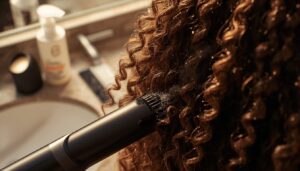
Low porosity hair plays by its own rules when heat gets involved. Your cuticles react differently than most, and that changes how you should approach every step. Here’s what you need to know before picking up a single hot tool.
If you’re not sure which category you fall into, running through how to identify your hair porosity type will save you from guessing with heat settings.
Tightly Bound Hair Cuticles
Picture roof shingles stacked eight to twelve layers deep, and you’ve got the basic idea behind low porosity hair. Your cuticle’s outer epicuticle, exocuticle, and endocuticle sit sealed shut, blocking that natural moisture barrier. This tight overlap keeps water and oils beading on the surface instead of soaking in, which is exactly why your strands feel stubborn.
Low porosity hair is like tightly stacked shingles, sealing cuticles shut so moisture beads on top instead of soaking in
Heat Improves Moisture Absorption
So how do you crack that shingled armor? Warmth is your best tool. Heat lowers water’s viscosity and speeds moisture diffusion rate into the shaft, triggering a real cuticle swelling effect that loosens those tight layers.
That’s the thermal hydration boost low porosity hair craves, whether from warm water penetration or steam-assisted absorption during your next deep conditioning session.
Signs of Low Porosity
Not sure if you’re dealing with low porosity strands? Try the float test: drop a clean hair strand in water, and if it floats, that’s your answer.
Watch for water beading on wet hair, slow drying time, and product buildup sitting on top instead of soaking in. A quick cuticle tightness check tells you what you’re working with.
For accurate results, understanding how the cuticle layer affects moisture retention is essential. cuticle layer moisture retention
Benefits and Damage Risks
Once you’ve confirmed low porosity, heat becomes your best styling ally, not your enemy. Gentle heat lifts cuticles just enough for deeper moisture penetration, boosting hydration a lot.
But there’s a catch: heat above 45°C repeatedly can shift porosity higher, causing cuticle damage and frizz.
Stick to controlled, moderate heat, and you’ll balance moisture retention with lasting protection.
Safe Heat Methods for Better Hydration
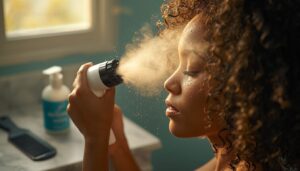
Now that you know why heat can actually work in your favor, it’s time to use it the right way. Getting hydration into low porosity hair comes down to temperature, timing, and technique, not guesswork. Here’s exactly how to make heat your ally instead of your enemy.
Warm Water Temperature Guidelines
Think of warm water as the key that unlocks your cuticles. Keep it between 98°F and 104°F, never above 110°F, for 3-5 minutes during your warm water rinse. This gentle heat softens tightly bound layers, boosting moisture absorption.
- Test water on your wrist first
- Rinse 3-5 minutes
- Stay under 110°F
- Follow with cool water
- Seal cuticles for shine
Deep Conditioning With Heat
Once your cuticles are softened, seal in that moisture with heat. Try a microwavable heat cap, warm towel, or hooded dryer for 20-30 minutes.
| Method | Heat Source | Time |
|---|---|---|
| Heat Cap | Flaxseed/Microwave | 20-30 min |
| Warm Towel | Reheated Towel | 20-30 min |
| Hooded Dryer | Direct Heat | 20-30 min |
Rinse cool after. Deep condition weekly, twice if damaged.
Steam Treatment Benefits
If your low porosity hair still feels dry after every deep condition, steam might be the missing piece.
Steam Cuticle Opening works within 5-10 minutes, letting vapor reach the cortex instead of just sitting on the surface. That means real moisture penetration depth, better product absorption boost, softer detangling, and even improved scalp circulation for healthier growth.
Bonnet Dryer Timing
Set your bonnet dryer with intention, not guesswork. Start with a 5 to 10 minute pre-warm duration on low heat, then work in 5 to 10 minute intervals, checking moisture as you go.
For low porosity hair, low to medium heat settings protect against moisture loss. Always finish with a cool-down period before removing the bonnet, protecting your scalp and locking in hydration.
Fixing Dry, Frizzy Hair
Frizz on low porosity hair usually means moisture is sitting on the surface instead of soaking in. Fix it with humectant-rich leave-ins, applied while hair’s still warm, sealed with a lightweight oil.
- Glycerin or aloe-based leave-in
- Argan or grapeseed oil seal
- Glycerin spray post-styling
- Anti-static serum for smoothing
That combo locks in hydration and calms static fast.
Top 10 Low Porosity Heat Products
Picking the right products makes all the difference when you’re working heat into a low porosity routine. You need formulas light enough to skip buildup but strong enough to shield your strands from real damage. Here are ten worth adding to your cart.
1. Advanced Climate Control Curl Gel

Want curls that hold their shape even when the air feels like soup? Ouidad’s Climate Control Gel uses anti-frizz nano technology with silk-derived sericin and wheat protein to seal the cuticle and lock out humidity.
It’s silicone-free and paraben-free, so low-porosity strands won’t deal with buildup. Pair it with the rake-and-shake method on damp hair for defined curls, a lightweight finish, and moisture that actually stays put through humid days.
| Best For | People with curly or color-treated hair who want long-lasting frizz control and defined curls in hot, humid weather. |
|---|---|
| Frizz Control | Yes |
| Sulfate Free | Unspecified |
| Paraben Free | Unspecified |
| Fragrance | Floral |
| Container Size | 8.5 fl oz |
| Model Number | 93508 |
| Additional Features |
|
- Creates an invisible humidity barrier using anti-frizz nano technology and silk-derived sericin
- Delivers flexible, moisture-locking hold without crunch thanks to ceramides and wheat protein
- Controls frizz and flyaways for up to three days while keeping curls soft and shiny
- Contains a floral fragrance that may not suit those with sensitivities, though it fades after drying
- UV protection is limited to UVB only and shouldn’t replace regulated sunscreen
- Priced higher than budget alternatives and may need a mid-day refresh for fine or low-porosity hair
2. SheaMoisture Coconut Hibiscus Curl Mousse
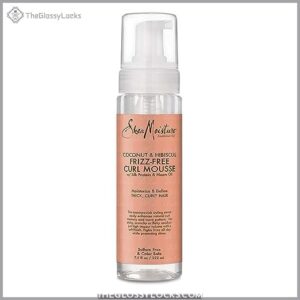
If you’re after volume instead of a tight hold, this mousse earns its spot. The jelly-like foam spreads evenly through damp curls, adding bounce without weighing down fine strands, and dries without flaking or crunch.
Coconut oil and shea butter seal in moisture while silk protein and hibiscus extract add gloss. It’s a solid daily option for wash-and-go styles, especially post-perm hair that needs gentle, everyday definition.
| Best For | People with wavy or curly hair who want lightweight, daily volume and definition without heavy hold, including those with post-perm hair or fine strands prone to falling flat. |
|---|---|
| Frizz Control | Yes |
| Sulfate Free | Yes |
| Paraben Free | Yes |
| Fragrance | Unspecified |
| Container Size | 7.5 oz |
| Model Number | FJBZW |
| Additional Features |
|
- Adds bounce and shine while enhancing natural curl and wave pattern
- Free of silicone, sulfates, parabens, phthalates, mineral oil, and petrolatum
- Lightweight formula that leaves no residue and works well for daily wash-and-go styling
- Offers only light to moderate hold, which can loosen in humidity or wind
- May require additional gel for stronger control on more stubborn curls
- Overuse can lead to stickiness or a slight crunchy feel
3. Cake Beauty Curl Defining Cream
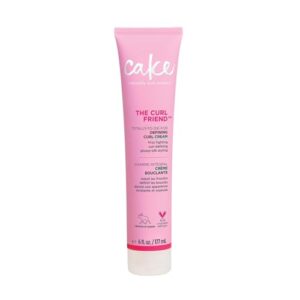
Looking for more definition and less foam? Cake Beauty’s Curl Defining Cream leans on avocado oil, shea butter, and rice protein to soften strands and seal moisture, ideal for second-day refreshes on fine to medium curls.
Apply to damp hair, roots to ends, and diffuse for bounce without stiffness. Keep in mind, that oil-butter mix can sit heavy on very fine or low-porosity strands if you overdo it, so use sparingly.
| Best For | People with fine to medium curly, wavy, or coily hair who want a lightweight, non-crunchy cream for frizz control and second-day curl refresh. |
|---|---|
| Frizz Control | Yes |
| Sulfate Free | Yes |
| Paraben Free | Yes |
| Fragrance | Lemon Meringue |
| Container Size | 6 fl oz |
| Model Number | MA00263 |
| Additional Features |
|
- Softens and defines curls without a crunchy cast, using avocado oil, shea butter, and moisture-sealing ingredients
- Vegan and cruelty-free, and free from parabens, sulfates, phthalates, mineral oil, and talc
- Gentle enough for sensitive scalps and suitable for all genders
- Can feel heavy or greasy on very fine, baby, or low-porosity hair if applied too generously
- Offers light hold, so it may need extra styling product in humid or windy conditions
- Strong lemon meringue scent might be too much for fragrance-sensitive users
4. TGIN Rose Water Curl Defining Mousse
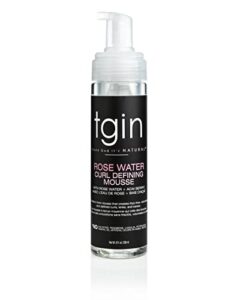
If your strands do better with foam than cream, TGIN’s Rose Water Curl Defining Mousse is worth a look. Rose water and acai berry extract hydrate without weighing down fine, low-porosity hair, and the lightweight foam texture skips the buildup that heavier creams can leave behind.
It’s sulfate-free and paraben-free, smooths cuticles for less frizz, and delivers touchable, non-crunchy definition. Best for wash-and-go styles on damp hair, applied section by section for smooth, elongated curls rather than tight coils.
| Best For | People with fine, low-porosity curly, coily, or wavy hair who want lightweight definition and volume without product buildup. |
|---|---|
| Frizz Control | Yes |
| Sulfate Free | Yes |
| Paraben Free | Yes |
| Fragrance | Rose Water |
| Container Size | 8 fl oz |
| Model Number | Unspecified |
| Additional Features |
|
- Hydrates with rose water and acai berries while keeping curls light and bouncy
- Sulfate-free and paraben-free formula smooths cuticles and cuts down on frizz
- Great for wash-and-go styles, twist outs, and refreshing curls day to day
- May need extra gel on top to hold up in high humidity
- Curl definition can fade faster for some users, leaving hair feeling coarse
- Rose water scent can stick around on dry hair until the next wash
5. Cantu Thermal Shield Heat Protectant
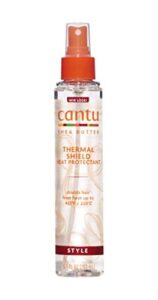
Mousse not doing enough on its own? Cantu’s Thermal Shield steps in before the flat iron or blow dryer, using pure shea butter to lock in moisture that heat often strips away.
It shields hair up to 425°F, softening cuticles for less roughness while styling. Spray on damp hair, comb through in sections, and let it dry completely before applying heat, a simple habit that keeps color-treated and relaxed strands smoother, shinier, and better protected.
| Best For | Anyone with relaxed, permed, or color-treated hair who regularly uses heat styling tools and wants an everyday layer of protection against damage. |
|---|---|
| Frizz Control | No |
| Sulfate Free | Unspecified |
| Paraben Free | Unspecified |
| Fragrance | Mild Scent |
| Container Size | 5.1 fl oz |
| Model Number | 07558-12/3PK |
| Additional Features |
|
- Shields hair from heat up to 425°F/220°C, guarding against damage from flat irons, curling irons, and blow dryers
- Shea butter formula boosts shine and smoothness while adding lasting hydration
- Lightweight hold tames flyaways without weighing hair down, and it’s cruelty-free
- Offers no protection above 425°F/220°C, so it’s not ideal for very high-heat styling
- Can leave behind residue if overapplied, especially on fine or oily hair
- Carries a noticeable scent, which may not suit those who prefer fragrance-free products
6. Arvazallia Anti Frizz Humidity Spray
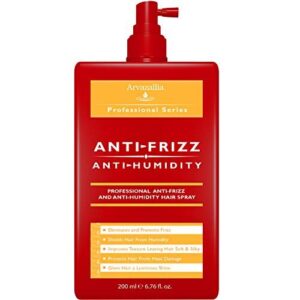
Humidity is the real enemy for low porosity curls, since it swells the cuticle just enough to invite frizz without adding real moisture. Arvazallia’s spray uses ArvaShield technology to wrap each strand in a weightless barrier that blocks that moisture uptake before it starts.
The formula is heat activated, meaning your flat iron or dryer actually strengthens the frizz control instead of undoing it. Sulfate free and paraben free, it works on color treated, keratin treated, and natural hair alike.
| Best For | People with low porosity, frizz-prone, or humidity-affected hair—including color-treated, keratin-treated, and natural hair types—who want lightweight frizz control that lasts through daily heat styling. |
|---|---|
| Frizz Control | Yes |
| Sulfate Free | Yes |
| Paraben Free | Yes |
| Fragrance | Strong Scent |
| Container Size | 8.47 oz |
| Model Number | AFAH-AFS-07 |
| Additional Features |
|
- ArvaShield technology blocks humidity at the strand level, controlling frizz for up to two days after washing
- Heat-activated formula adds extra protection during flat ironing, curling, or blow-drying instead of breaking down
- Sulfate-free, paraben-free, and lightweight enough for daily use without weighing hair down or leaving it greasy
- May not fully tame frizz on very thick or severely frizzy hair
- The scent could be off-putting for some users
- Risk of skin irritation or allergic reaction in those with sensitivities
7. SheaMoisture Anti-Dandruff Scalp Care Set
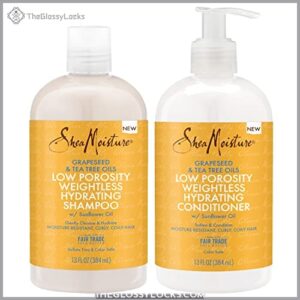
Flaky scalp throwing off your whole routine? This trio pairs 3% salicylic acid with niacinamide and shea butter, exfoliating buildup while soothing irritation, no small feat for low porosity strands prone to product pileup.
Micellar technology dissolves residue without stripping moisture, and menthol delivers instant cooling relief. Skip it if your scalp has open lesions, salicylic acid needs intact skin to work safely.
Fine or low porosity hair? The conditioner can feel heavy, so apply sparingly through mid-lengths only.
| Best For | Anyone dealing with a flaky, itchy scalp who has fine or low porosity hair and wants lightweight relief without heavy buildup. |
|---|---|
| Frizz Control | No |
| Sulfate Free | Unspecified |
| Paraben Free | Unspecified |
| Fragrance | Clean/Masculine |
| Container Size | 13 oz Each |
| Model Number | C2I_INV_B074421HRT_R |
| Additional Features |
|
- 3% salicylic acid exfoliates the scalp to cut down on flakes and itch
- Niacinamide and micellar technology hydrate and dissolve buildup without stripping moisture
- Menthol gives an instant cooling sensation for quick itch relief
- Not suitable for scalps with open or inflamed lesions
- Conditioner can feel heavy or leave a cast on fine hair if over-applied
- May not provide enough moisture for very dry or damaged hair
8. Rose Water Hydrating Shampoo Conditioner
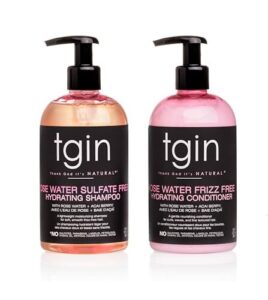
A duo shampoo and conditioner set built on rose water and acai berries, this pair detangles and hydrates without leaving buildup behind, exactly what low-porosity strands need. The sulfate-free formula stays lightweight enough for daily washing, and rose water adds a soft floral scent while keeping the scalp calm during rinsing.
Color-treated hair benefits too, since it adds shine while detangling. Just watch the pump dispenser, some arrive defective and need manual opening to prime.
| Best For | Anyone with curly, coily, wavy, low-porosity, or color-treated hair looking for a lightweight, daily-use detangling and hydrating routine. |
|---|---|
| Frizz Control | Yes |
| Sulfate Free | Yes |
| Paraben Free | Yes |
| Fragrance | Mild Scent |
| Container Size | 13.02 oz |
| Model Number | Duo Set |
| Additional Features |
|
- Sulfate-free, paraben-free formula hydrates and detangles without leaving buildup
- Gentle enough for daily washing across curly, coily, wavy, and color-treated hair types
- Adds shine and a soft floral scent from rose water without weighing hair down
- Pump dispenser may arrive defective and require manual opening
- Lightweight formula may not offer enough moisture for very dry or high-porosity hair
- Mild scent may disappoint those who prefer a stronger fragrance
9. Mongongo Oil Heat Protectant Spray
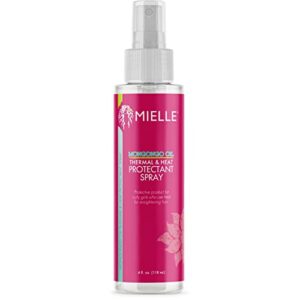
Mongongo oil comes from the same African tree family that gives us shea, and it’s prized for sealing in moisture without weighing strands down.
This spray works up to 450°F, so it covers flat irons and curling wands alike.
You’ll notice smoother glide and less friction while styling, which cuts down on breakage over time.
Layer it lightly on damp hair before heat tools for a frizz-resistant barrier that keeps curl pattern intact.
| Best For | People with natural or relaxed curly hair (3A–4C) who want daily heat protection and frizz control without weighing their strands down. |
|---|---|
| Frizz Control | Yes |
| Sulfate Free | Unspecified |
| Paraben Free | Unspecified |
| Fragrance | Fragranced |
| Container Size | 4 oz |
| Model Number | MIELLE018FG |
| Additional Features |
|
- Shields hair from heat damage up to 450°F during blow-drying, straightening, or curling
- Reduces frizz while preserving curl pattern, working well across most porosity levels
- Doubles as a lightweight leave-in conditioner, great for daily use or travel
- Can leave a sticky residue on high-porosity or oily hair types
- Doesn’t replace deep conditioning, so very dry hair may need extra moisture
- Contains fragrance, which may bother those with sensitivities
10. Verb Ghost Primer Heat Protectant
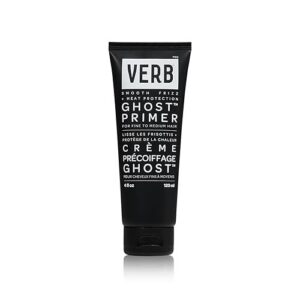
Ghost primer, fitting name for a product that works without you feeling it. This lightweight cream shields hair up to 425°F, so it works with blow dryers and flat irons alike.
Moringa oil and green tea extract moisturize while vegan proteins support your cuticle under heat. Apply a pea-sized amount to damp hair, comb through evenly, then style.
You get smoother blowouts, less frizz, and natural shine, all without that heavy, greasy residue low porosity strands hate.
| Best For | People with fine, thin, or easily weighed-down hair who want heat protection and added shine without a heavy or greasy feel. |
|---|---|
| Frizz Control | Yes |
| Sulfate Free | Yes |
| Paraben Free | Yes |
| Fragrance | Unspecified |
| Container Size | 4 fl oz |
| Model Number | Unspecified |
| Additional Features |
|
- Shields hair up to 450°F/232°C, working well with blow dryers and flat irons
- Infused with moringa oil, green tea extract, and vegan protein to nourish hair and reduce frizz by 79%
- Vegan, cruelty-free, paraben-free, and sulfate-free formula suitable for all hair types
- Works best on damp hair and loses effectiveness when applied to dry hair
- Can feel slightly tacky or resistant on certain hair textures
- Not a heavy moisturizer, so it may not provide enough hydration for very thick or coarse hair
Low Porosity Heat Styling Routine
Knowing your hair type and picking the right products is only half the battle.
Your routine ties everything together. The order you follow, from washing to that final pass with a hot tool, decides whether heat helps or hurts your strands.
Here’s the step-by-step process that keeps low porosity hair protected every time you style.
Start With Clarified Hair
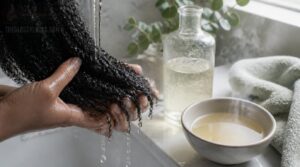
Would you flat iron over a layer of gunk? Clarify first with a sulfate-free clarifier or ACV rinse, loosening buildup so heat reaches the cuticle instead of melting residue onto it.
| Clarify Frequency | Method |
|---|---|
| Every 2-4 weeks | Sulfate-free shampoo |
| Weekly (gentle) | ACV rinse |
| Before heat styling | Warm water opens cuticle |
| Monthly | Reset curl pattern |
Distribute Heat Protectant Evenly
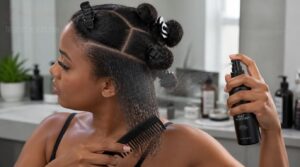
Clarified strands are ready, but skipping even distribution wastes your heat protectant fast.
Section hair into four parts and spray six to eight inches away in sweeping motions from mid-lengths to ends. Comb through with a wide-tooth comb for even coverage, reapplying on dry patches. Let it sit one minute, forming a lightweight moisture barrier before any heat touches your hair.
Choose Safe Tool Temperatures
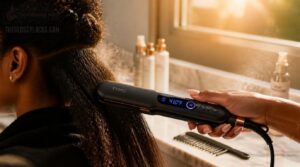
That barrier’s in place, now the dial matters. Keep flat irons at or below 350°F, with fine strands sticking to 250-300°F and medium density hair safe up to 375°F.
Start low and increase gradually, never blast full heat first try. Ceramic or tourmaline tools distribute warmth evenly, protecting fragile cuticles. Save 390-410°F silk presses for occasional salon visits only.
Limit Weekly Heat Styling
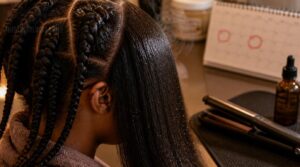
Temperature settings only work if you’re not styling every day. Cap heat sessions at 1-2 times weekly, giving cuticles a full 48 hours to close and lock in moisture. Sessions should stay under 30 minutes. Watch for frizz or brittleness afterward, those are signs to dial back. On off days, try braiding damp hair or air drying instead.
Prevent Heat Damage and Buildup
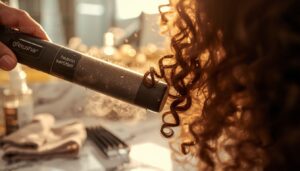
Heat can work wonders on low porosity hair, but only when you’re protecting it the right way. The wrong products or habits can undo all that progress fast, leaving you with buildup or damage instead of shine. Here’s what you need to know to keep your strands safe, hydrated, and thriving.
Avoid Heavy Oils and Butters
Heavy oils sit on top of your strands instead of soaking in, since their molecules are simply too large to pass through tightly closed cuticles. That surface coating leads to buildup, weighs curls down, and can drop elasticity noticeably.
Worse, oil left on hair before styling blocks proper heat protectant absorption, raising your risk of damage and frizz.
Choose Lightweight Protective Ingredients
Once you’ve ditched heavy oils, what should replace them? Look for lightweight protective ingredients built to work with tight cuticles, not against them.
- Silicone alternatives like cyclopentasiloxane for slip without residue
- Lightweight humectants such as glycerin for balanced hydration
- Non-greasy emollients like squalane to seal without weight
- Film-forming polymers that shield hair while staying silicone free
These prevent product buildup while locking in moisture your heat protectant needs to work properly.
Control Frizz and Humidity
On humid days, low porosity hair puffs up fast since those tight cuticles react to moisture in the air.
Fight back with humidity-resistant serums and lightweight sealants like cyclopentasiloxane, which coat strands without weighing them down. A quality heat protectant doubles as frizz control.
Finish styling with a cold air blast to seal cuticles and lock out excess moisture.
Remove Silicone Buildup Safely
Silicone buildup blocks the very moisture your strands need, so clear it out regularly. Reach for a sulfate-free clarifying shampoo every 2-4 weeks, or try a baking soda paste rinse, apple cider vinegar soak, or rice vinegar scalp spray for a gentler DIY option.
Follow with a silicone-free conditioner layer to rebuild your low porosity hair care routine without reintroducing buildup.
Maintain Moisture After Styling
Your styling work isn’t done once the heat tool cools down. Protect that hydration overnight with a satin bonnet, avoid over-brushing, and refresh dry strands with a light mist plus leave-in product. Keep hold products lightweight for frizz control:
- Satin bonnet or pillowcase
- Water-based mist
- Light gel or cream
- Gentle finger detangling
- Indoor humidity awareness
Frequently Asked Questions (FAQs)
What not to do to low porosity hair?
One wrong move can undo weeks of progress. Skip protein overload, avoid heavy oils, and don’t use hot water. These habits cause heat damage, product buildup, and leave low porosity hair weighed down instead of hydrated.
What is the best way to hydrate low porosity hair?
Clarify buildup first, then use warm, not hot, conditioning with lightweight, moisture-binding ingredients like glycerin and pro-vitamin B Gentle heat opens cuticles just enough for real absorption, without stressing strands or triggering heat damage.
How to fix dry frizzy low porosity hair?
Nearly 80% of low porosity strands stay dry despite regular conditioning. Fix it with warm water rinses, weekly steamed deep conditioning, and a lightweight heat protectant applied evenly, locking in moisture retention while keeping frizz control on point.
How do I know if my hair is low porosity?
Try the float test: drop clean, product-free strands in water. Sinking slowly signals low porosity. Watch for water beading during a spray test, slow air-dry time, and tightly packed cuticles that leave products sitting on the surface.
How often should I clarify low porosity hair?
Most low porosity hair does best with a sulfate-free clarifying shampoo every 4-6 weeks. Watch for buildup signs like flat strands or dull curls, and adjust sooner in hard water areas or after heavy product layering.
Does hair porosity change over time or stay fixed?
Genetics sets your baseline hair porosity, but it won’t stay fixed forever. Aging, chemical processing, heat styling, and mechanical damage gradually lift the cuticle layer, shifting hair from low to medium or high porosity over years.
Conclusion
Slow and steady wins this race, and your strands know it.
Used correctly, heat for low porosity hair turns resistant, thirsty hair into strands that actually drink what you give them. Warm water opens the door, gentle tools keep it open, and lightweight products do the rest. Skip the guesswork, follow the timing, and watch dryness fade.
Master this routine once, and your hair will trust you every wash day after.