This site is supported by our readers. We may earn a commission, at no cost to you, if you purchase through links. This content is for general informational and educational purposes only and is not a substitute for professional medical, dermatological, or nutritional advice.

Every hair on your head runs its own clock. While one strand grows steadily, its neighbor might be resting, and another could be about to fall out. None of this happens by accident.
Your scalp holds roughly 100,000 follicles, each cycling through anagen, catagen, and telogen phases on its own private schedule. That’s why you shed hair daily without ever seeing bald patches. It’s a quiet, staggered system built for constant renewal.
Understanding these phases gives you real insight into what your hair is doing, and why. Once you see the pattern, growth and shedding both start to make sense.
Table Of Contents
- Key Takeaways
- What is The Hair Growth Cycle?
- Anagen: Active Hair Growth Phase
- Catagen: Transitional Hair Growth Phase
- Telogen and Exogen Resting Phases
- What Disrupts The Hair Growth Cycle?
- Frequently Asked Questions (FAQs)
- How do I know if hair is in anagen phase?
- What are the big 3 for hair regrowth?
- How long can hair stay in telogen phase?
- What are the four phases of hair growth?
- How can I tell if my hair loss is normal?
- Can stress alone cause noticeable hair thinning?
- Do certain products actually speed up anagen growth?
- Is it possible to extend the anagen phase?
- How long does it take hair to regrow?
- Conclusion
Key Takeaways
- Your hair follicles each run on their own independent clock, cycling through growth, transition, and rest phases without syncing up, which is exactly why you shed hair daily without ever seeing bald patches.
- Anagen, your active growth phase, can last anywhere from two to eight years and directly determines how long your hair can ultimately grow.
- Losing 50 to 100 hairs a day is completely normal turnover, not a warning sign, since your follicles are always staggered across different phases at once.
- Nutrition, hormone balance, stress levels, and genetics all shape how well your hair cycle runs, so persistent shedding or thinning is worth a dermatologist’s attention.
Since anagen length varies so much from person to person, pairing patience with the right nutrients can make a real difference, and this guide to growing shoulder-length hair to mid-back breaks down exactly how to support that process.
What is The Hair Growth Cycle?
Every strand on your head follows a set path, from birth to shedding. That path repeats in a steady rhythm, whether you notice it or not. Here’s what that cycle actually looks like, step by step.
If you’ve ever wondered why some heads of hair grow faster than others, this breakdown of why your hair grows so fast walks through the science behind it.
Four Hair Growth Phases
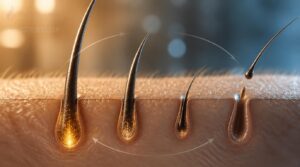
Four phases. That’s all your hair cycle really runs on.
Anagen builds new hair. Catagen transitions the follicle. Telogen rests it. Exogen releases the old strand.
Each phase plays a distinct role, and hair growth cycle timing varies by body site. Understanding these stages gives you real insight into why your hair behaves the way it does. Hair follicles operate asynchronously, so individual strands cycle through the anagen phase duration at different times rather than all at once.
Follicles Cycle Independently
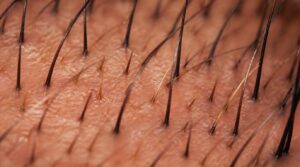
Your hair doesn’t work like a group project. Each follicle runs on its own clock, moving through Anagen, Catagen, and Telogen with zero coordination from its neighbors.
This asynchronous growth pattern creates true spatial phase distribution, one strand resting while another grows nearby. Combined with stochastic cycle initiation, it’s how your scalp maintains steady patchwork coverage despite regional duration variations across your body.
Typical Scalp Hair Distribution
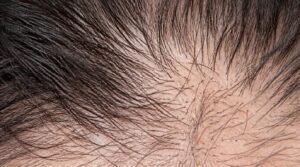
Picture your scalp as a patchwork, not a single tile. At any moment, most hairs sit in Anagen, a smaller share rests in Catagen, and the rest linger in Telogen.
That balance shifts by zone. Scalp density mapping shows regional hair proportions and follicle type variation across your crown, temples, and hairline, shaping phase balance and growth pattern visibility.
Why Cycle Length Matters

That regional balance isn’t random. It reflects something deeper: cycle length.
Anagen duration directly sets your maximum hair length. Longer active phases let hair follicles keep producing, strand after strand, for years. Shorter cycles cap growth early.
Growth rate varies by person and by body site. Understanding your own timing helps explain your hair’s ceiling, and why patience with hair density maintenance pays off.
Anagen: Active Hair Growth Phase

Anagen is where the real work happens. This phase decides how long, thick, and healthy your hair can grow. Here’s what’s actually going on beneath the surface.
What Happens During Anagen
This is where the real work happens. Root cells divide fast, building your hair shaft from the follicle up.
Your dermal papilla feeds this process with steady follicle nutrition, oxygen and all. Melanocytes add pigment as the shaft forms, giving hair its color from the inside out.
Cellular division stays active throughout, keeping growth rate steady and length climbing day by day.
Typical Anagen Duration
Two to eight years. That’s the window your scalp hair usually gets before it moves on.
Genetics set most of this timeline, though age and health matter too. Ethnic variations play a role as well, with some populations growing hair longer before shedding.
- The chance to grow past your shoulders
- Years of steady, healthy length
- Real hair density improvement over time
Identifying Anagen Hair
Ever tugged a stray hair and wondered what you’re looking at? Anagen hair resists easy pulling and often comes with a gel-like coating near the base, that’s the root sheath. You’ll notice pigment continuity too, with color running through the strand.
There’s also club hair absence, since active growth hairs stay firmly rooted, unlike shed ones.
Body Site Differences
Not all hair grows at the same pace, or for the same length of time. Scalp vs eyebrow growth shows the biggest gap, with scalp anagen lasting years and eyebrow anagen lasting weeks.
- Scalp: years-long anagen
- Beard growth rate: steady, moderate pace
- Moustache anagen length: about 16 weeks
- Trunk hair cycle: shorter, slower turnover
Factors Affecting Active Growth
Your anagen phase isn’t fixed. It bends to your body’s signals.
Hormonal balance and thyroid function set the pace. Nutritional deficiency effects (low iron, protein, vitamin D) slow follicle stimulation.
| Disruptor | Effect on Anagen |
|---|---|
| Stress hormone spikes | Pushes hairs to telogen early |
| Poor nutrition | Weakens growth signals |
| Hormonal shifts | Alters cycle length |
| Genetic growth factors | Shortens duration with age |
| Low scalp circulation | Reduces follicle stimulation |
Catagen: Transitional Hair Growth Phase

Every hair eventually takes a pause between growing and resting. That pause is catagen, and it’s shorter than you’d think. Here’s what happens during this brief but important stage.
What Happens During Catagen
Growth doesn’t stop overnight. It winds down.
During the catagen phase, the follicle begins controlled regression. Matrix activity fades, pigment production stops, and the hair shaft detaches from its blood supply.
The dermal papilla pulls upward, separating from the lower follicle while staying intact. This detachment sets the stage for shedding, though the hair itself stays put for now.
Typical Catagen Duration
Regression doesn’t take long. Most follicles finish catagen in two to three weeks, though some sources stretch that to four.
Timeline factors matter here:
- Follicle depth
- Genetics
- Age
- Overall health
- Scalp conditions
Deeper follicles often take longer. That’s why catagen duration varies from person to person, even within the same hair growth cycle.
Follicle Shrinkage and Detachment
Beneath the surface, real change is happening. The follicle shrinks to about one-sixth its original size, cutting deep roots short.
Matrix cells undergo apoptosis, shutting down pigment and growth. Blood vessels detach, cutting nutrient flow. The follicle reorganizes upward, forming a hardened club hair ready for release.
Scalp Hair Percentage
That shrinking process only affects a small slice of your scalp at once. About 1 to 2% of follicles sit in catagen at any given moment, compared to nearly 90% in anagen.
This keeps the hair growth cycle balanced. Your anagen telogen ratio stays steady because follicles cycle independently, protecting scalp density metrics from sudden, visible loss.
Telogen and Exogen Resting Phases

Every hair eventually rests before it lets go. Telogen and exogen work together to make that happen quietly. Here’s what’s going on beneath the surface, and why it’s nothing to worry about.
What Happens During Telogen
Rest doesn’t mean idle. Your telogen follicle shifts into a quiet energy state, holding the strand steady rather than pushing growth.
- A snug, club-shaped root
- Calm bulge cells
- Slowed cell division
- Steady preparation for what’s next
This telogen readiness phase quietly gets hair follicles ready for renewed, healthy hair growth ahead.
Typical Telogen Duration
So how long does this quiet stage actually last? For most people, telogen phase length runs about two to four months, averaging near 100 days.
Telogen duration factors like genetics, age, and health status all shape this window. Some individuals see telogen phase variation stretching to six months, proof that hair follicle cycling isn’t one-size-fits-all.
Telogen Versus Exogen
Rest and release aren’t the same thing. Telogen is the quiet pause. Exogen is when the hair actually lets go.
Club hair shedding marks that final step. Follicle release timing varies, which explains why hairs part ways on their own schedule. Think of exogen as the last handshake before hair says goodbye.
Why Daily Shedding is Normal
Every day, your brush collects proof of a balanced hair cycle at work. Losing 50 to 100 hairs daily is simply normal hair turnover, not a warning sign.
Losing 50 to 100 hairs a day isn’t a warning sign, it’s just your balanced hair cycle quietly doing its job
Your follicles never rest all at once. While some sit in telogen, others push through anagen. That staggered rhythm keeps daily follicle renewal steady, quiet, and completely natural.
Signs of Prolonged Telogen
Shedding that lingers past a few months tells a different story. Watch for:
- Excessive hair shedding across the whole scalp
- Thinning hair appearance, not bald patches
- Delayed shedding onset, two to three months after stress
- White bulb hairs on shed strands
- No recovery timeline improvement past six months
Your hair growth cycle modulation may need attention. Talk to a dermatologist.
What Disrupts The Hair Growth Cycle?

Your hair cycle runs on a steady rhythm, but plenty of things can throw it off. Some causes come from within your body, others from age or genetics. Here’s what to watch for.
Nutritional Deficiencies
Hair follicles need fuel. Iron deficiency anemia, low protein intake, and vitamin D deficiency all slow the hair bulb’s cell division.
| Nutrient | Role in Growth | Deficiency Signal |
|---|---|---|
| Iron | Oxygen delivery | Shedding, fatigue |
| Protein | Structural building block | Weak strands |
| Vitamin D | Follicle signaling | Thinning |
| Zinc | Enzyme function | Slowed growth |
| Biotin | Keratin support | Brittle hair |
Nutritional support for hair starts with your plate, not your bottle.
Hormonal and Medical Conditions
Your endocrine system runs the show behind the scenes. Thyroid imbalances, prolactin shifts, and adrenal disorders all disrupt normal cycling.
Stress hormones push follicles into telogen early, often called telogen effluvium. Diabetes and hormonal hair loss patterns follow similar disruption.
Conditions like alopecia areata and trichotillomania add complexity. Lab testing helps identify which hormone is behind your shedding pattern.
Aging and Genetics
Hormones aren’t the only script your body follows. Genetic variants shape how long your anagen phase lasts, passed down like eye color.
Telomere length and DNA repair efficiency affect follicle aging too. After 40, cycles shorten naturally.
Family history and epigenetic clocks often predict your pattern before symptoms show.
When to See Dermatologists
Your genes set the pattern, but your body still sends warning signs worth reading.
Unexplained hair loss, treatment-resistant rashes, or nail abnormalities deserve a dermatologist’s eye, not guesswork.
- Persistent skin changes lasting weeks
- Recurring scalp irritation or flaking
- Sudden shifts in shedding patterns
- Nail texture or color changes
- Spots that itch, bleed, or change
When home care stalls, professional evaluation clarifies what your hair follicles are trying to tell you.
Frequently Asked Questions (FAQs)
How do I know if hair is in anagen phase?
Picture a plant pushing steadily toward sunlight, never pausing. That’s active growth. Try a gentle pull test, check for a bulb root, and track length monthly. Slow growth or easy shedding often signals a shortened active phase.
What are the big 3 for hair regrowth?
Think Protein, Iron, and Vitamin D. Protein fuels keratin synthesis, iron aids oxygen delivery to follicles, and Vitamin D triggers follicle stimulation. Together they keep nutrient absorption steady, helping healthy anagen phase growth and smoother hair follicle cycling overall.
How long can hair stay in telogen phase?
Most resting hairs sit tight for two to four months before shedding. Stress or hormonal shifts can stretch that recovery period further, delaying regrowth. Healthy hair follicle cycling keeps this window short, protecting density and steady growth.
What are the four phases of hair growth?
Every strand moves through four stages on repeat. Anagen drives active growth, catagen signals a short change, telogen rests the follicle, and exogen releases the old hair shaft, making room for new growth to begin again.
How can I tell if my hair loss is normal?
Losing 50 to 100 hairs daily is normal. Watch for widening parts, thinning ponytails, or a spreading bald spot instead. Try a gentle pull test: more than two or three hairs per tug signals trouble worth discussing with your doctor.
Can stress alone cause noticeable hair thinning?
Yes. Elevated cortisol pushes hairs into shedding mode, causing telogen effluvium two to three months later. It’s diffuse, not patchy. Good news: with stress reduction, most cases resolve on their own within six months.
Do certain products actually speed up anagen growth?
Bold claims on the label, quiet biology underneath. Some formulas show real anagen phase extension in testing, but follicle response varies person to person.
Nutrient support helps follicles function, though results still depend on your scalp health and individual cycling patterns.
Is it possible to extend the anagen phase?
Your active growth window can be reinforced, not manufactured. Nutrition for Anagen, hormonal balance, and stress reduction support follicle health.
Scalp stimulation and growth factor therapies may help hair follicles stay active longer, encouraging healthy hair growth naturally over time.
How long does it take hair to regrow?
Patience beats panic here. Once shedding stops, follicles usually re-enter anagen within 2 to 3 months. Full regrowth often takes 6 to 12 months, depending on nutrition, hormones, and how well you support healthy hair growth along the way.
Conclusion
Like the mythical phoenix, your hair keeps rising from its own ashes, quietly, endlessly. The anagen telogen catagen phases aren’t random events. They’re your body’s steady rhythm: growth, rest, release, repeat. Once you understand this cycle, shedding stops feeling alarming and starts feeling ordinary. Your follicles aren’t failing you. They’re following an ancient, patient design. Watch for changes, but trust the process. Your hair isn’t disappearing. It’s simply taking its turn.