This site is supported by our readers. We may earn a commission, at no cost to you, if you purchase through links. This content is for general informational and educational purposes only and is not a substitute for professional medical, dermatological, or nutritional advice.
You peel the sheet off after twenty minutes and your face looks like it slept ten hours. Cheeks bounce back under your fingertip. Fine lines nearly vanish.
That glow is real, but it fades fast. I see patients spend serious money on sheet masks, expecting results they were never built to deliver.
So do facial sheet masks actually work? Yes, for hydration, and only for a few hours. They can’t rebuild collagen, clear pores, or fade sunspots. Here’s what they do well, which ingredients earn their place, and how to use one so the effect lasts longer.
Table Of Contents
- Key Takeaways
- Do Facial Sheet Masks Actually Work?
- How Sheet Masks Hydrate Your Skin
- What Sheet Masks Cannot Do
- How to Choose an Effective Sheet Mask
- Who Benefits—and Who Should Be Cautious?
- How to Use Sheet Masks Correctly
- Frequently Asked Questions (FAQs)
- Do dermatologists recommend sheet masks?
- Do sheet masks actually make a difference?
- What are the downsides of using sheet masks?
- How effective is a face mask sheet?
- Can you reuse a sheet mask after using it?
- Is it safe to sleep in a sheet mask?
- Should sheet masks be stored in the fridge?
- Do sheet masks work on the neck and hands?
- Are sheet masks worth the money compared to serums?
- Conclusion
Key Takeaways
- Sheet masks give a short-lived hydration boost by pulling water into your skin and trapping it there, but they can’t rebuild collagen, clear pores, fade sunspots, or repair your barrier.
- Pick a mask with one goal and an ingredient that fits your skin, like hyaluronic acid for dryness, niacinamide for oil, or ceramides for sensitivity, because the formula matters more than whether the sheet is cotton, hydrogel, or bio-cellulose.
- If your skin is sensitive, acne-prone, or eczema-prone, choose fragrance-free masks, patch test first, and cut back at the first sign of stinging, tightness, or breakouts.
- Wear a mask for 15 to 20 minutes, never sleep in one or reuse it, then pat in the leftover essence and seal it with moisturizer so the effect lasts longer.
Do Facial Sheet Masks Actually Work?

Why do people keep reaching for a sheet mask, and is it worth your money? Yes, with realistic expectations.
A sheet mask delivers short-term hydration and helps your skin barrier through occlusion, which clinical assessments back up. You’ll notice softer, plumper skin within minutes.
If you’re new to sheet masks, this roundup of the best face masks for men can help you find a formula that suits your skin type and routine.
It won’t change your skin permanently, though. Think of it as a useful boost, not a treatment. Expect modest, temporary results, not overnight miracles.
Used consistently, a dermatologist recommended routine can make it a worthwhile addition. For best results, apply the mask to clean skin, since clean skin absorbs better and lets the essence work more effectively.
How Sheet Masks Hydrate Your Skin
That plumpness comes from two things working together. Humectants like hyaluronic acid and glycerin pull water into the outer layer of your skin, which gives you immediate hydration. The sheet then acts as an occlusive delivery system, slowing moisture loss so that water stays put.
- Humectants attract water to the surface.
- The sheet traps it, supporting your skin barrier.
- The leftover essence helps with moisture retention afterward.
Seal it in with moisturizer.
What Sheet Masks Cannot Do
Moisture is where a sheet mask’s job ends. Hydration can soften fine lines for a few hours, but it won’t erase wrinkles or rebuild collagen, and laser resurfacing reaches tissue no mask can.
Since skin type shapes how much hydration actually helps, a guide on how often to use facial sheet masks can help you find a schedule that suits your skin.
A sheet mask also won’t clear pores, fade sunspots or melasma, or lift sagging skin. Any smoother appearance is temporary.
It can’t repair your barrier or treat eczema either. If redness, itching, or a rash lingers, see a dermatologist rather than reaching for another mask.
How to Choose an Effective Sheet Mask
Not every sheet mask on the shelf is worth your money, and the label alone won’t tell you which ones are. Two choices matter most: the ingredients inside and the material that holds them against your skin. Here’s how to sort through both so you can pick a mask that fits your needs.
Ingredients That Match Your Skin Needs
A pretty sheet mask won’t help you; the right ingredients will. Ingredient efficacy matters more than packaging, so match the formula to your skin.
- Hyaluronic acid: hydration for dry skin.
- Niacinamide: balances oil, calms redness.
- Ceramides: skin barrier repair.
- Vitamin C: brightens uneven tone.
- Retinol: smooths texture, but irritates easily.
If your skin is sensitive, reactive, or recovering from treatments, start with ceramides and book a dermatologist consultation before trying actives. Choose one goal per mask.
Once your barrier feels calm and steady, a simple skin care routine for a healthy complexion can help you layer products gently without overwhelming sensitive skin.
Cotton, Hydrogel, and Bio-Cellulose Compared
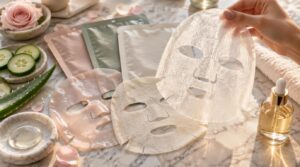
The material matters less than you’d think. A cotton sheet mask is light and pliable, but it can shift or leave loose spots with less contact. A hydrogel mask is heavier and cooler, hugs your contours, and releases moisture gradually. Bio-cellulose is thin and conforms closely, though it’s tricky to unfold.
Evidence is limited, so don’t expect better transdermal delivery or skin barrier repair from one fabric. Fit and formula matter. Follow with an occlusive moisturizer.
Who Benefits—and Who Should Be Cautious?

Sheet masks aren’t right for everyone, and your skin type decides how much you’ll get from them. Below, you’ll find four common situations, along with what each one means for your routine. Read through them to see where you fit and what to watch for.
Dry Or Dehydrated Skin
Dry skin and dehydrated skin aren’t the same problem, and that matters here. Dry skin lacks oil. Dehydrated skin lacks water and can show up on any skin type.
A sheet mask suits the second problem best. Its humectants, like glycerin, boost skin hydration briefly, and occlusion slows trans epidermal water loss. For true dryness, follow with a moisturizer that helps skin barrier function.
Pre-Event Hydration Seekers
Think of a sheet mask as a coat of primer on a wall: it smooths surfaces, but it won’t fix skin dehydration. For preevent skin preparation, that’s useful. Apply one the evening before and the morning of your event for a visible hydration boost.
A sheet mask is like primer on a wall: it smooths the surface for your big event, but it won’t fix dehydration
Leave it on 15 to 20 minutes, then pat in leftover essence and seal with moisturizer.
Sensitive Skin Precautions
Say you’ve got a flushed, stinging cheek after a lavender-scented mask. That’s a classic sign your skin objected to something in the formula.
For sensitive skin care, choose fragrance free and hypoallergenic masks, and skip alcohol denat., essential oils, and MIT. Always do a skin patch test behind your ear for 24 to 48 hours.
Remove the mask immediately if it burns.
Acne And Eczema Cautions
Acne and eczema change the rules. A sheet mask can trap sweat and oil against your skin, and comedogenic ingredients like coconut oil or algae extract may trigger breakouts. For eczema, skip fragrance, alcohol, and essential oils.
Choose hydrogel or bio-cellulose, with niacinamide or centella. Dermatologist Shilpi Khetarpal MD advises patch testing first, as sensitive skin care demands.
How to Use Sheet Masks Correctly

A sheet mask works best when you use it the right way, and a few small habits make the difference. Two things matter most: how long you wear it and what you do once it’s off. We’ll also cover how often to use one, so you get steady results without overdoing it.
Application Time and Aftercare
Leaving a mask on longer won’t make it work harder. Your application time matters because a sheet that dries out starts pulling moisture back from your skin.
Stick to 15 to 20 minutes for cotton and bio-cellulose, and 12 to 15 for jelly masks. In a quick mask material comparison, hydrogel is the exception, tolerating 30 to 60 minutes.
For aftercare, pat in leftover essence, then seal with moisturizer. That helps hydration and skin barrier repair.
How Often to Use Sheet Masks
Once you’ve timed your mask right, how often should you repeat it? Match your skincare frequency to your skin type:
- Dry or dehydrated skin: three to five times weekly.
- Oily or acne-prone skin: once or twice weekly.
- Sensitive skin: once weekly.
- Exfoliating or vitamin C masks: two to three times weekly at most.
Treat each sheet mask as part of your weekly skincare. If tightness, flaking, or redness appears, cut back so skin hydration stays comfortable.
Frequently Asked Questions (FAQs)
Do dermatologists recommend sheet masks?
Many dermatologists recommend a sheet mask as a boost, not a fix. It works best for dry skin, where hydration and skin barrier repair matter most. Treat it as an add-on to your skincare routine.
Do sheet masks actually make a difference?
Yes, but modestly and briefly. A sheet mask works through occlusion, which traps moisture so hydration rises within minutes and your skin looks plumper. It won’t change your skin barrier long term without regular skincare.
What are the downsides of using sheet masks?
A sheet mask is a damp towel on a hot day: soothing, then gone. Evaporation leaves skin drier if you overwear it. Occlusion can aggravate acne, and fragrance or alcohol-based preservatives may cause skin irritation.
How effective is a face mask sheet?
Sheet masks work well for short-term skin hydration. Occlusion and humectants like hyaluronic acid boost water content and ease dryness within minutes, but they don’t change skin structure. Your results fade without continued use.
Can you reuse a sheet mask after using it?
Say you peel off a mask after twenty minutes and think, "There’s still plenty of serum left." Don’t reuse it. Sheet masks hold bacteria, trap oils, and deliver little serum absorption the second time.
Is it safe to sleep in a sheet mask?
Does a sheet mask hydrate better overnight? That’s a myth. Standard masks dry out and pull moisture from your skin. Skip sleeping in them, especially with sensitive skin. Use a moisturizer instead for skin barrier repair.
Should sheet masks be stored in the fridge?
A patient once swore her fridge-chilled mask boosted hydration. It didn’t.
Facial masks hydrate through occlusion, helping your stratum corneum hold water. Skincare layering matters more than temperature. Chill yours only if you enjoy it.
Do sheet masks work on the neck and hands?
Wondering if that leftover mask is worth your hands? Yes, a sheet mask helps. Thinner stratum corneum means better absorption, and occlusion boosts hydration. Wear it 15–20 minutes, then moisturize to seal it in.
Are sheet masks worth the money compared to serums?
Sheet masks are worth it for occasional hydration, not as a serum replacement. An essence soaks your skin briefly, while a serum targets concerns daily. For skin barrier repair or pigmentation, spend on serums first.
Conclusion
Maybe you’re thinking a few hours of glow isn’t worth the effort. It is, if you expect the right thing. So, do facial sheet masks actually work? They do, as a quick hydration boost before an event or after a dry day.
Skip the miracle claims, pick ingredients that suit your skin, and keep sessions to twenty minutes. Seal it in with moisturizer. Hydration is the whole job, and a sheet mask does it well.