This site is supported by our readers. We may earn a commission, at no cost to you, if you purchase through links. This content is for general informational and educational purposes only and is not a substitute for professional medical, dermatological, or nutritional advice.

You find a few extra strands in the shower drain, then a few more on your pillow. Then your scalp starts to itch, flake, or sting, and the two problems feel connected. They usually are.
Scalp inflammation and hair shedding often travel together, and the link is simpler than it seems. Irritated follicles can pause their growth cycle for months, and in some cases the damage turns permanent. Most causes respond well to treatment, especially when you catch them early.
Here’s how to read the signs your scalp is sending, tell a harmless flare from a serious one, and calm things down before your follicles pay the price.
Table Of Contents
- Key Takeaways
- How Scalp Inflammation Can Cause Hair Shedding
- Signs of Scalp Inflammation and Hair Shedding
- Common Causes of Scalp Inflammation
- When Scalp Inflammation Needs a Dermatologist
- Treatments for Scalp Inflammation and Hair Shedding
- Gentle Scalp Care to Prevent Further Damage
- Frequently Asked Questions (FAQs)
- Why is my scalp inflamed and losing hair?
- How to stop hair loss due to inflammation?
- Will hair grow back after scalp inflammation?
- How do I get rid of inflammation in my scalp?
- Can stress worsen scalp inflammation and hair shedding?
- Do vitamin deficiencies make scalp inflammation worse?
- Does menopause increase scalp sensitivity and hair thinning?
- Can sun exposure inflame the scalp and trigger shedding?
- Conclusion
Key Takeaways
- Most hair shedding from an inflamed scalp is temporary, because irritated follicles simply pause and your hair usually regrows within six to twelve months once the scalp calms down.
- Smooth, shiny patches with no visible follicle openings signal scarring alopecia, which destroys follicles for good, so you’ll want to catch it early to protect the hair you still have.
- Matching the treatment to the cause works best, whether that’s a medicated shampoo for dandruff, looser hairstyles for traction, or prescription care for fungal infections and inflammatory conditions.
- See a dermatologist if you notice pustules, crusting, expanding bald spots, or symptoms that persist despite over-the-counter care, since early treatment can stop further damage but can’t revive follicles already scarred.
How Scalp Inflammation Can Cause Hair Shedding
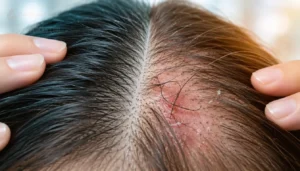
An irritated scalp can quietly thin your hair, and the good news is that the cause matters more than the shedding itself. Inflammation affects your follicles in two very different ways, and knowing which one you’re facing puts you back in control. Here’s how temporary shedding and permanent loss each work, so you know what to watch for.
Because gentle, natural remedies for scalp inflammation can calm irritation early, they may help keep temporary shedding from turning into lasting thinning.
Temporary Shedding and Hair Regrowth
Usually, scalp inflammation pushes follicles into rest, a pattern called telogen effluvium. Shedding appears three to five months later, but your follicles stay intact.
Calm scalp health helps; here’s your timeline:
- Shedding slows within two to six months.
- Hair regrowth often begins by month six.
- Density returns in six to twelve months.
- Hair loss reverses fully, sometimes taking two years.
Permanent Loss From Follicle Scarring
Not every case is so forgiving. When scalp inflammation targets the follicle’s stem cells, cicatricial alopecia can follow, and fibrous scar tissue replaces the follicle.
Because scarring destroys the follicle for good, it helps to understand what causes hair to stop growing naturally and how that differs from reversible shedding.
Scarring alopecias like lichen planopilaris cause permanent hair follicle damage, so the dermal papilla can’t restart growth. Under the microscope, all primary scarring alopecias share loss of sebaceous glands, perifollicular inflammation, and eventual fibrous scarring.
Smooth, shiny patches with no visible openings are your warning sign. Early care protects the follicles you have.
Signs of Scalp Inflammation and Hair Shedding
Your scalp usually tells you when something’s off, so a little detective work pays off. Look and feel for these five signs:
- Redness, scaling, or crusting along the hairline, behind the ears, or around individual follicles.
- An itchy scalp, or burning, tingling, and tenderness that doesn’t fade.
- Pustules, blisters, or tufted hairs, where several shafts grow from one opening.
- Shedding that’s diffuse and even, versus hair loss in distinct patches.
- A shiny, smooth bald patch with no visible follicle openings.
Flaky, dry scalp with greasy yellow scales often points to seborrheic dermatitis, which won’t cause permanent hair thinning. Sharply edged, scaly plaques suggest psoriasis.
Patchy loss with redness at the edges deserves attention sooner rather than later.
Common Causes of Scalp Inflammation

Once you know what’s behind your itchy, tender scalp, you can finally start fixing it. Most cases trace back to a handful of common culprits, and two groups cover nearly all of them. Here’s what to look for in each, so you can match your symptoms to the likely source.
If store-bought shampoos haven’t helped, these natural itchy scalp relief solutions show how simple ingredients can calm irritation at its source.
Dandruff, Psoriasis, and Scalp Infections
Think of your scalp as a garden where the wrong weeds can crowd out healthy growth.
Dandruff and seborrheic dermatitis often start when Malassezia yeast feeds on your oil, leaving greasy flakes and itch. A zinc pyrithione shampoo usually calms it.
Scalp psoriasis looks different: thick, silvery plaques with sharp edges. Patchy, broken hairs suggest fungal infection needing a doctor.
Product Irritation and Tight Hairstyles
Fragrances, preservatives, and hair dye can trigger scalp irritation or a delayed allergic reaction, and the resulting scalp inflammation often gets mistaken for dandruff. Patch testing pinpoints the culprit.
Tight braids, ponytails, and extensions are different. Repeated pulling causes traction alopecia, and hair loss follows the pull pattern. Choose looser styles, rotate them, and reach for gentle, fragrance-free scalp soothers.
When Scalp Inflammation Needs a Dermatologist
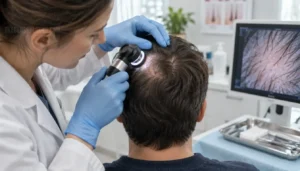
When should you stop managing scalp inflammation at home and book an appointment? Sooner than you might think, especially if you notice pustules, crusting, oozing, bleeding, or real tenderness alongside shedding. A smooth, shiny patch where follicular openings have vanished is another signal, as are bald spots that expand.
Don’t wait if itching, scaling, or redness hangs on despite over-the-counter care. Early dermatological treatment can slow or stop follicle destruction, though it can’t revive follicles that have already scarred.
Early treatment can slow or stop scalp inflammation from destroying follicles, but it can never bring back the ones already scarred
Your dermatologist will ask about your history, then perform a quick, painless dermatoscope examination to see follicles up close. If scarring is suspected, a scalp biopsy usually confirms it. Some people may also receive an injectable corticosteroid for stubborn, inflamed patches.
Treatments for Scalp Inflammation and Hair Shedding
The good news is that most scalp inflammation responds well once you treat what’s causing it. Your plan will likely start with medicated shampoos, then move to stronger options if your scalp needs them. Here’s how each step works and when it makes sense for you.
Choosing and Using Medicated Shampoos
Not all medicated shampoos work the same way, so match the active to your flaking. Zinc pyrithione and selenium sulfide calm yeast-driven dandruff, while salicylic acid loosens thick scale and coal tar slows skin-cell turnover.
Massage lather into your scalp, not just your strands, and leave it on 5 to 10 minutes before rinsing.
Stop if burning or itching appears.
Prescription Treatments for The Underlying Cause
Fungal scalp infections often need four to eight weeks of oral antifungal medication, since creams can’t reach infected hair shafts. Inflammatory conditions like lichen planopilaris call for different tools: potent topical corticosteroids or steroid injections to calm follicles before scarring sets in.
For frontal fibrosing alopecia, your dermatologist may add finasteride or dutasteride to help stabilize progression in some patients.
Gentle Scalp Care to Prevent Further Damage

Think of your scalp like a sunburned shoulder: you wouldn’t scrub it, so don’t treat your scalp that way either. The best scalp care routine is a gentle one, built around scalp protection first.
- Loosen scale gently instead of picking it.
- Detangle wet hair with a wide-tooth comb.
- Loosen tight buns, braids, and ponytails.
- Keep hot tools off your scalp.
- Patch-test new products before using them.
Moisture matters just as much. Alternate medicated shampoos with a gentle one, then follow with conditioner. Scalp moisturizing products and leave-in detanglers cut breakage while hair regrows.
Air-dry when you can, and skip coloring, perming, and blowouts during a flare. Scalp soothing habits like these are scalp inflammation remedies, and they work every day.
Frequently Asked Questions (FAQs)
Why is my scalp inflamed and losing hair?
Roughly 85% of your hairs are growing at any moment, so noticeable hair loss signals trouble. Scalp inflammation from seborrheic dermatitis, folliculitis, or scalp irritation can push your follicles into rest, so more hairs shed.
How to stop hair loss due to inflammation?
Most shedding from irritated scalps is temporary. Calm the scalp inflammation with a medicated shampoo, stop scratching, and start antiinflammatory treatment early. See a dermatologist for pain, pustules, or smooth patches.
Will hair grow back after scalp inflammation?
Wondering if your strands will come back? Often they will. If inflammation hasn’t scarred the follicle, hair usually regrows once your scalp calms down. Scarring is different, because destroyed follicles can’t produce hair again.
How do I get rid of inflammation in my scalp?
Your scalp feels like it’s hosting a bonfire, so calm it with ketoconazole shampoo two or three times weekly, leaving it on five minutes. It tames yeast, helps your scalp microbiome, and works as antiinflammatory treatment. Skip emu oil.
Can stress worsen scalp inflammation and hair shedding?
Yes, stress can worsen scalp inflammation. Cortisol elevation and systemic inflammation disrupt your follicles, while itching and poor sleep make flare-ups worse.
Hair loss often follows months later, but it’s usually temporary once stress eases.
Do vitamin deficiencies make scalp inflammation worse?
In one study, severe vitamin D deficiency showed up in 8% of people with seborrheic dermatitis, versus 8% of controls. That link is real, but it doesn’t prove cause. Still, ask about testing before supplementing.
Does menopause increase scalp sensitivity and hair thinning?
Think of estrogen as your scalp’s quiet gardener. When it fades, female pattern hair loss can surface, and an itchy scalp or dry scalp often follows. Gentle menopause hair care helps, and persistent scalp inflammation deserves a dermatologist’s look.
Can sun exposure inflame the scalp and trigger shedding?
Yes, it can. A bad scalp sunburn sparks scalp inflammation that stresses follicles, and about two to three months later you may notice diffuse hair loss. It’s usually temporary, and your hair usually regrows.
Conclusion
Your scalp is the soil, and hair is only as healthy as the ground it grows from. When scalp inflammation and hair shedding show up together, your follicles are asking for help, not giving up. Most flares fade with the right shampoo, a gentler routine, and a little patience.
Stubborn itching, painful patches, or hair that won’t stop falling deserve a dermatologist’s eye sooner rather than later. Care for the soil, and your hair follows.