This site is supported by our readers. We may earn a commission, at no cost to you, if you purchase through links. This content is for general informational and educational purposes only and is not a substitute for professional medical, dermatological, or nutritional advice.
You notice it in the shower drain first. Then the ponytail feels thinner, and your part looks a little wider than it did last spring.
Thyroid issues and hair thinning often travel together, and the timing confuses people. Hormone shifts push follicles into their resting phase early, so shedding shows up months later, long after the real trigger. Your hair may also turn dry, brittle, or oddly fine.
The good news is that this kind of loss usually isn’t permanent. Once you understand how your thyroid controls the hair growth cycle, you can spot the pattern, rule out lookalikes, and start rebuilding your hair.
Table Of Contents
- Key Takeaways
- Why Does Thyroid Imbalance Thin Your Hair?
- Thyroid Hormones and The Hair Growth Cycle
- How Hypothyroidism Changes Hair Texture
- How Hyperthyroidism Affects Follicles
- How Do You Know if Hair Loss is From Your Thyroid?
- Signs of Hertoghe and Eyebrow Loss
- Diffuse Thinning Vs. Patchy Bald Spots
- Can Hair Loss Be Caused by Something Else?
- Alopecia Areata and Autoimmune Links
- Androgenetic Alopecia and DHT
- Nutrient Deficiencies Like Celiac Disease
- What to Do About Different Types of Thyroid Hair Loss
- Diffuse Hair Shedding Solutions
- Hormonal Hair Thinning Solutions
- Autoimmune Hair Loss Solutions
- Outer Eyebrow Hair Loss Solutions
- Hair Texture Change Solutions
- How Can You Treat Thyroid Hair Loss Naturally?
- Balancing Your Thyroid Naturally
- Iodine Caution in Autoimmune Disorders
- Nutrition and Anti-Inflammatory Eating
- Biotin Before Lab Tests Warning
- Will Thyroid Hair Loss Grow Back?
- Regrowth Timelines After Treatment
- Tracking Shedding and Density
- Gentle Hair Care Habits
- Coping With The Emotional Toll
- Frequently Asked Questions (FAQs)
- How do you know if hair loss is from thyroid?
- How to balance thyroid naturally?
- Can hair loss from thyroid grow back?
- What are the early warning signs your thyroid is in trouble?
- Can thyroid medication itself cause hair shedding?
- How often should thyroid levels be tested?
- Does stress worsen thyroid-related hair thinning?
- Can pregnancy or postpartum thyroid changes affect hair?
- When should you see a doctor about thinning?
- Conclusion
Key Takeaways
- Thyroid imbalance, whether too high or too low, can push your follicles into an early resting phase, so you’ll often see diffuse shedding two to three months after the real trigger.
- Hair loss alone can’t confirm a thyroid problem, so ask your doctor for TSH and free T4 tests alongside iron and other checks, since iron deficiency, stress, medications, and autoimmune or genetic hair loss can look similar.
- Treating the thyroid condition comes first, and regrowth usually follows slowly, often three to six months after your levels stabilize, with full recovery taking closer to a year.
- If thinning continues once your levels are normal, another cause such as pattern hair loss, alopecia areata, or a nutrient gap may be involved, and you should avoid high-dose iodine, kelp, or biotin before lab tests without your doctor’s guidance.
Why Does Thyroid Imbalance Thin Your Hair?

Why does your hair suddenly seem to be everywhere, in the shower drain, on your pillow, and tangled in your brush? If you live with thyroid conditions, your hormones may be part of the answer.
Hormonal shifts during puberty can also speed up hair growth, and why hair sometimes seems to grow so fast has a lot to do with those changes.
Your hair follicles respond to thyroid hormone levels. When those levels run too low or too high, follicles can stop working normally. The result is diffuse shedding across your whole scalp, not one bald spot.
Both hypothyroidism and hyperthyroidism can cause this. Changes often appear slowly, so you may not notice them right away.
Hair loss alone can’t confirm a thyroid problem, though. Iron deficiency, stress, and some medicines can cause similar shedding. A thyroid blood test is the reliable way to find out. If you’re worried, talk with your doctor.
Thyroid Hormones and The Hair Growth Cycle
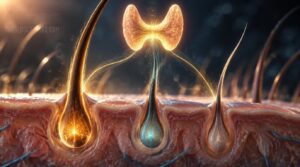
To see why your hair sheds, it helps to know how a single follicle behaves. Each one moves through the hair growth cycle in three stages. The anagen phase is active growth and often lasts two to six years. Catagen is a short shift that takes about two to three weeks. Telogen is a resting stage of roughly two to three months, after which the hair sheds and the cycle restarts.
Thyroid hormones act on follicle cells directly. Research suggests they can support the anagen phase and encourage cell growth. But more hormone doesn’t mean more hair.
When thyroid dysfunction pushes your thyroid hormone levels too high or too low, more follicles may slip into telogen early. Shedding often shows up two to three months later, so timing can mislead you.
How Hypothyroidism Changes Hair Texture

Thinning isn’t the only change you may notice with hypothyroidism. Your hair texture changing is common too, and it can feel unsettling.
Low hormone levels can leave strands dry, coarse, and brittle. Slower oil-gland activity may dry your scalp, too. Here’s what to check:
- Feel for roughness or tangling that’s new for you.
- Notice if your curl or wave pattern shifts.
- Look for flaking, since scalp dryness alone doesn’t prove a thyroid cause.
- Ask about thyroid hormone conversion, because your levels may need a fuller look.
- Rule out iron or other nutritional deficiencies, plus heat and chemical damage.
Existing strands won’t heal. Texture improves with new growth, which may be slow. Hair follicle health recovers once your thyroid is treated.
How Hyperthyroidism Affects Follicles

Hyperthyroidism can affect your hair differently. Too much thyroid hormone speeds up your hair follicles, so strands may leave their growth phase early and shed too soon.
This often shows up as diffuse hair thinning rather than bald patches. You may notice it weeks or months after your thyroid becomes overactive. Hair can also grow in finer and softer.
Here’s what to keep in mind:
- Shedding is usually diffuse, not patchy.
- Your strands may feel finer and more fragile.
- Hair follicles usually aren’t permanently damaged.
- Ongoing hormone excess can prolong shedding.
- Hair regrowth is gradual once levels normalize.
Patchy spots may point to another cause, so mention them to your doctor.
How Do You Know if Hair Loss is From Your Thyroid?

How can you tell whether your hair loss starts in your thyroid? Honestly, you can’t tell by looking. Hair thinning from thyroid conditions looks a lot like other causes, and both hypothyroidism and hyperthyroidism can trigger it.
Ask yourself if you’ve noticed:
- Your ponytail feels thinner than it used to.
- Strands cover your brush every morning.
- You’re exhausted, cold, or oddly jittery.
- Your weight shifted without a clear reason.
- You feel frightened every time you look in the mirror.
Those clues matter, but they don’t prove anything here. Shedding can also appear months after your thyroid shifts, so timing alone won’t settle it. Ask your doctor about TSH and free T4 blood tests. They’re the only reliable way to know.
Signs of Hertoghe and Eyebrow Loss

Have you noticed your eyebrows getting sparse toward the outer edges? That pattern has a name: Hertoghe sign, also called Queen Anne’s sign. It’s a form of eyebrow madarosis, meaning thinning or loss of the outer third of the brow.
When thinning like this ties back to low iron or too little protein, a few simple at-home hair loss remedies can help support regrowth alongside better nutrition.
It usually affects both brows evenly and develops slowly, so many people miss it for months. Hypothyroidism is the most common link, though the sign appears in only a minority of cases. It can also show up with hyperthyroidism or while you’re on thyroid medication.
Look at the skin there too. It may feel dry and rough.
Don’t self-diagnose, though. Atopic dermatitis, alopecia areata, lupus, and normal aging can look similar. Ask your doctor for TSH and fT4 tests. Thinning that’s uneven or goes beyond the outer third deserves a closer look. Unlike alopecia areata, which usually cause sudden, patchy, often asymmetrical loss, Hertoghe’s sign involves gradual lateral eyebrow thinning that’s usually symmetrical.
Once thyroid levels stabilize, the hair regrowth cycle can restart.
Diffuse Thinning Vs. Patchy Bald Spots
Your scalp can lose hair in two very different ways, and the pattern tells you a lot.
Thyroid dysfunction usually causes diffuse thinning. Your part widens and your ponytail feels smaller, but you won’t find a bare spot. Hormone imbalance pushes many follicles into shedding at once, a pattern called telogen effluvium.
Patchy bald spots point elsewhere. Alopecia areata often creates smooth, round patches that can appear suddenly.
| Pattern | What it suggests |
|---|---|
| Diffuse thinning | Thyroid dysfunction |
| Patchy bald spots | Alopecia areata |
Look in the mirror and track exactly where your hair is thinning. If you see even thinning, ask your doctor to check your thyroid, iron, and hormones. If you see patches, mention that too. It changes the workup entirely.
Can Hair Loss Be Caused by Something Else?

Think of your scalp as a garden with several gardeners. Your thyroid is just one, so when the plants wilt, it isn’t always the culprit.
Plenty of things cause hair loss alongside thyroid conditions. Telogen effluvium can follow fever, surgery, childbirth, or major stress, with shedding appearing two to three months later. Some medications, including beta blockers and retinoids, may do the same. Low iron and other nutritional deficiencies can thin your hair, and so can crash dieting. Tight hairstyles and harsh bleaching can cause breakage or traction damage. Scalp ringworm and seborrheic dermatitis may also play a part.
Ask your doctor to check your thyroid, iron, and medications together, since another autoimmune disorder or hormonal imbalance may be involved.
Alopecia Areata and Autoimmune Links
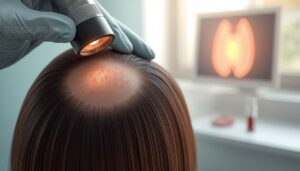
Found a smooth, round bald patch out of nowhere? That may be alopecia areata, and it’s a different problem from thyroid shedding.
In alopecia areata, your immune system attacks hair follicles. The follicles usually aren’t destroyed, so regrowth remains possible.
The two conditions can overlap. People with Hashimotos thyroiditis or Graves disease, both forms of autoimmune thyroid disease, may develop alopecia areata more often. Having one doesn’t mean it caused the other.
Your blood tests can hint at the link. Thyroid peroxidase antibodies may be present even when your hormone levels look normal. Still, those tests don’t diagnose alopecia areata.
A clinician diagnoses it by examining your scalp, sometimes with dermoscopy to spot short, broken exclamation-mark hairs at patch edges.
Androgenetic Alopecia and DHT
Not every thinning patch traces back to your thyroid. Sometimes the culprit is your genes.
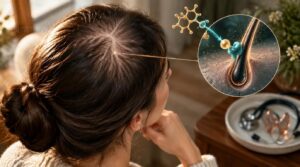
Androgenetic alopecia happens when DHT, a hormone made from testosterone, attaches to receptors in your scalp. If your follicles are sensitive, they shrink over time. A thyroid condition can make this worse, because any hormone imbalance may add stress to follicles already at risk.
Here’s how to spot it:
- Thinning starts at the temples or crown.
- Strands feel finer and weaker.
- The back and sides stay thick.
- Progress is slow, over months or years.
- Family members have similar patterns.
Your hair follicle sensitivity is inherited, so lab results alone won’t explain it. A dermatologist or endocrinologist can help you sort out which cause is at work.
Nutrient Deficiencies Like Celiac Disease

Sometimes the problem isn’t your hormones or your genes. It’s what your body fails to absorb.
Celiac disease damages the villi in your small intestine, the tiny folds that pull nutrients from food. When they flatten, you may absorb less iron, zinc, vitamin D, folate, and B12. Your follicles need all of these to grow strong strands.
Iron deficiency is the most common culprit. It can trigger diffuse shedding, which looks a lot like thyroid-related thinning. Zinc and vitamin D shortages can add to it.
Ask your doctor about a celiac blood test and a full nutrient panel. A strict gluten-free diet lets your gut heal. Nutritional supplementation may then fill the remaining gaps, but don’t start high doses without testing first.
What to Do About Different Types of Thyroid Hair Loss

Once you know what’s driving your thinning, you can match the fix to the cause. Hair loss from thyroid conditions rarely has just one answer.
Start with your thyroid itself. Whether you have hypothyroidism or hyperthyroidism, treating the thyroid disorder takes care of the trigger. Hair growth may lag behind your lab results by several months, so don’t expect a quick turnaround.
If thinning persists after your levels normalize, something else may be involved. Your pattern offers clues. Diffuse shedding, a widening part, smooth bald patches, thinning outer eyebrows, and coarse or brittle strands each point in a different direction.
Work with your doctor to sort out which applies to you. A scalp exam, and sometimes extra testing, can separate overlapping causes. The next sections walk through each type.
Diffuse Hair Shedding Solutions

If you’re shedding more than usual, you’re likely dealing with telogen effluvium. Thyroid imbalance pushes more follicles into the resting phase at once, so you notice hair shedding in shower drains and on your brush.
The first step is treating the root thyroid condition. Levothyroxine for hypothyroidism or antithyroid drugs for hyperthyroidism can restore hormonal balance and normalize your growth cycle. Your doctor will adjust the dose until your thyroid levels stabilize.
While you wait, topical minoxidil may help. This over-the-counter option helps hair follicle stimulation and can extend the growth phase, which may slow hair density loss.
Protect fragile strands in the meantime. Wash with lukewarm water, use a wide-tooth comb, and skip brushing wet hair. Limit heat styling and chemical treatments. Check with your doctor before starting anything new.
Hormonal Hair Thinning Solutions

Shedding is one thing. Slow, patterned thinning is another, and thyroid conditions can coexist with androgenetic alopecia. If your part is widening or your crown looks sparser over months, that’s a different problem and needs a different plan.
Start with your labs. Hormonal Hair Thinning Solutions only work when your thyroid is properly treated. If you take levothyroxine, your dose may need adjusting, since too much can cause hyperthyroid effects.
Next, ask your doctor to check your ferritin. Low iron can worsen hair loss, but correct a documented deficiency rather than guessing with supplements.
Topical minoxidil remains the established option for pattern thinning. You’ll need to keep using it to maintain results.
Autoimmune Hair Loss Solutions

Several treatments target autoimmune hair loss by calming the immune system’s attack on your follicles. If you have patchy loss tied to thyroid dysfunction, a dermatologist may suggest one of these options.
Corticosteroid injections go directly into bald patches. They reduce local scalp inflammation and may restart growth, though results vary from person to person.
Topical immunotherapy uses diphencyprone or squaric acid dibutyl ester. These compounds trigger a mild, controlled allergic reaction. That shift in immune modulation can redirect the inflammatory response away from your follicles.
For moderate-to-severe cases, JAK inhibitors like tofacitinib and ruxolitinib block inflammatory signaling and can produce significant regrowth.
Don’t start any of these on your own. Your doctor can match the treatment to your history.
Outer Eyebrow Hair Loss Solutions
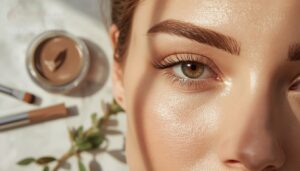
A thinning outer brow can feel alarming, but the fix often starts with your thyroid labs. If you have thyroid conditions, ask your clinician to check TSH and free T4. Once your levels are corrected, whether through levothyroxine or another treatment, eyebrow hair may slowly return. Regrowth can take months, so give it time.
Rule out other hair thinning causes too. Redness, scale, itch, or crusting may point to dermatitis. Repeated plucking or waxing can also break hairs.
While you wait, eyebrow powder or tinted gel can fill sparse spots. These products only conceal the gap.
If thinning persists with stable labs, see a dermatologist. Be cautious with off-label hair regrowth solutions like minoxidil or bimatoprost, which can irritate skin or harm your eyes.
Hair Texture Change Solutions

Think of dry, coarse hair as a parched garden. Water alone won’t fix it, but the right care helps the soil recover.
If your thyroid condition has changed your hair texture, start with gentle habits. Switch to a sulfate-free shampoo so you don’t strip the oils your strands already lack. Follow with a conditioner containing coconut or argan oil, which may improve manageability and reduce breakage.
Add a protein treatment with hydrolyzed keratin or silk amino acids. It can strengthen brittle strands and restore elasticity.
A few minutes of scalp massage with diluted rosemary or peppermint oil may support circulation to your hair follicles. Topical care helps, but hair growth and hormone balance matter most, so check with your doctor.
How Can You Treat Thyroid Hair Loss Naturally?

Think of your hair follicles as seedlings in a garden. Medication sets the weather, but soil and care decide how well they grow. Natural steps work best as support for your treatment, not a replacement.
Start with these three:
- Correct iron deficiency. Low ferritin worsens thyroid-related shedding, so check your levels first.
- Consider zinc supplementation and vitamin D3 supplementation if your labs show you’re low.
- Add selenium-rich foods, and ask your doctor about the right dose.
Eat more fatty fish, vegetables, and fruit. Cut back on sugar and alcohol.
A gentle scalp massage may boost comfort and circulation. Diluted essential oils are popular, but the evidence is thin, so patch-test first.
Always talk with your doctor before starting any supplement.
Balancing Your Thyroid Naturally

Can food and habits really steady your thyroid? They can help, though they won’t replace treatment.
Natural support works best alongside your doctor’s plan. With thyroid conditions like hyperthyroidism, small daily choices may ease the strain behind hair loss and support steadier hair growth.
| Focus | Daily Habit | Why It Helps |
|---|---|---|
| Minerals | Selenium, zinc, iron foods | Helps hormone production |
| Stress | Yoga, breathwork, sleep | May lower cortisol |
| Gut | Kefir, fiber, fewer sweets | Eases inflammation |
Start with one change. Add a Brazil nut or a serving of kefir, then protect your sleep. Consistency matters more than flawlessness.
Keep your iodine intake steady rather than high, and check with your doctor before taking supplements. Retest as advised so you can see exactly what’s working.
Iodine Caution in Autoimmune Disorders

More iodine isn’t always better for your thyroid, especially if you have an autoimmune condition.
If you have Hashimoto’s, your thyroid may not "escape" the Wolff-Chaikoff effect, the temporary shutdown of hormone production after an iodine surge. That can leave you with prolonged thyroid dysfunction and, in turn, more hair loss.
Excess iodine intake can also stir up an autoimmune response. Intake above roughly 500 to 1,000 µg a day may be enough to trigger trouble.
Check your supplement labels. Kelp and seaweed products vary widely in iodine content, and some pack far too much. Skip them unless your doctor says otherwise.
Don’t overdo vitamin A either, since it can cause hair loss on its own.
Talk with your doctor before changing any supplement.
Nutrition and Anti-Inflammatory Eating

Supplements aren’t the only place to look. Your plate matters too, and it’s the safer starting point.
No diet reverses thyroid disease or guarantees regrowth. But a Mediterranean-style pattern built on antiinflammatory foods may help your health while your treatment does its work. Picture a typical day:
- Vegetables and fruit at most meals
- Beans, lentils, and fish for protein
- Nuts, olive oil, and whole grains
- Iron-rich foods, paired with vitamin C
Your hair follicle needs steady protein and calories. Crash diets can trigger shedding months later. Low iron can thin your hair too, sometimes before anemia appears.
Ask your doctor to check for a vitamin deficiency before buying anything. Nutrition helps scalp health, but it won’t replace thyroid treatment.
Biotin Before Lab Tests Warning

Here’s one supplement worth a closer look before you reach for it. Many hair products contain biotin, and it can skew your thyroid labs.
Biotin can interfere with some immunoassays. In susceptible tests, it may produce falsely low thyroid-stimulating hormone (TSH) and falsely high free T4 or free T3. That pattern can mimic hyperthyroidism, even when your thyroid is fine. False lab results may lead to unnecessary follow-up or a change in your care.
Before any blood draw, tell your clinician and the lab the product name, dose, and last dose. Ask how long to pause it, since timing varies. Don’t adjust your thyroid medication based on a result that biotin may have affected. Mention any mismatch with your symptoms.
Will Thyroid Hair Loss Grow Back?

Often, yes. Once your thyroid medication optimization brings your TSH levels into range, diffuse shedding usually eases and hair growth can return. That’s because thyroid-related telogen phase disruption is usually reversible when your follicles stay healthy.
Regrowth isn’t guaranteed, though. If another condition is also at work, your outlook changes. Pattern hair loss involves hair follicle miniaturization, and it may continue even with steady thyroid levels. Alopecia areata, iron deficiency, or other nutritional gaps can also keep hair thin.
If you’re still losing hair after your levels stabilize, ask for an assessment. Your clinician can look for a second cause. Don’t assume your thyroid is the only culprit. Finding the cause early helps you choose treatments that actually fit.
Regrowth Timelines After Treatment

Patience matters here, because follicles run on their own schedule. Once thyroid medication optimization steadies your levels, regrowth timelines usually look like this:
- Weeks 4-8: Shedding may increase briefly as resting hairs fall out.
- Months 3-6: Shedding eases and baby hairs appear along your hairline and crown.
- Months 6-12: Hair growth thickens and texture improves.
- Around 12 months: About 70% of patients see near-complete hair regrowth.
- Months 6-18: Severe, long-standing hypothyroidism may need this long.
Your own pace can vary a lot. You might notice changes at 3-4 months, while others wait a year or longer. If progress stalls, ask your clinician to check iron, vitamin D, and free T3. Some people need added T3 or other adjustments beyond T4 alone.
Tracking Shedding and Density

A simple hair pull test gives you a starting point. Grasp 40 to 60 hairs gently and slide your fingers along their length. If more than five to ten come out, you may have active hair shedding.
For a closer look, ask your dermatologist about a phototrichogram. It photographs a clipped patch of scalp, so you can track hair density, growth rate, and hair shaft diameter over time. A trichogram examines plucked roots under a microscope and can confirm telogen effluvium.
Take photos monthly, in the same light and parting, to catch diffuse hair thinning early. Pair them with your thyroid stimulating hormone TSH results, so you can see whether hair changes follow your levels. Share everything with your doctor.
Gentle Hair Care Habits

Treat your hair like fragile fabric while your thyroid levels settle. Gentle habits can’t fix the hormone problem, but they may reduce breakage and keep more of your hair on your head.
Start with the basics:
- Wash with a sulfate-free shampoo and follow with a moisturizing conditioner.
- Detangle with a wide-tooth comb, starting at the ends.
- Skip tight ponytails, braids, and buns that tug at your roots.
- Let your hair air dry when you can, and keep heat tools for rare occasions.
- Smooth on a hair serum to cut friction and protect brittle strands.
Some people also ask about coenzyme Q10 for hair. Evidence is limited, so check with your doctor before adding any supplement. Small habits add up daily.
Coping With The Emotional Toll

Maria stopped attending her daughter’s school events because she hated the photos. Her thyroid levels were improving, but her hair hadn’t caught up.
That gap is common. Hair loss can feel like a loss of control, and the emotional toll is real. Stress may also feed shedding, so coping matters.
Hair loss can feel like losing control, and that emotional toll is real, so coping matters
| Strategy | How it helps |
|---|---|
| Talk to someone you trust | Eases isolation |
| Join a support group | Connects you with peers |
| Track your progress | Restores a sense of control |
| Tell your healthcare provider | Opens care for distress |
Raise your feelings at endocrinology visits, not just your lab numbers. Severe or lasting distress deserves mental-health support. Immune system dysfunction may drive your thyroid condition, but it isn’t your fault. You deserve support too.
Frequently Asked Questions (FAQs)
How do you know if hair loss is from thyroid?
Hair loss alone can’t tell you. Ask for a thyroid-stimulating hormone (TSH) test, plus free T4 and free T
Telogen effluvium and iron deficiency anemia mimic thyroid thinning, so your doctor should check everything together.
How to balance thyroid naturally?
Wondering if you can balance your thyroid naturally? Not reliably. TSH and T4 tests guide treatment, so skip kelp, high-dose iodine, and selenium pills. Take prescribed medication consistently, and ask your clinician before changing anything.
Can hair loss from thyroid grow back?
Within three to six months of treatment, shedding often slows. Yes, thyroid hair loss can grow back once T3 and T4 levels stabilize on levothyroxine, though telogen effluvium recovery lags, and biotin won’t speed it.
What are the early warning signs your thyroid is in trouble?
Hair often sheds weeks after a trigger, so diffuse hair shedding may look unrelated. Watch for fatigue, cold intolerance, constipation, eyebrow hair loss, or crown thinning.
Ask your doctor about TSH and free T4 testing.
Can thyroid medication itself cause hair shedding?
Yes, it can, though it’s uncommon. Levothyroxine may trigger temporary shedding in the first few months as follicles shift phases. Methimazole and propylthiouracil can too. Your hair loss usually settles as levels stabilize.
How often should thyroid levels be tested?
Think of your thyroid as a thermostat that needs regular checking. Test thyroid-stimulating hormone (TSH) and free T4 every 4-6 weeks after starting or changing medication, then yearly once stable.
Check timing with your doctor.
Does stress worsen thyroid-related hair thinning?
Maya’s thyroid labs looked fine, yet her shedding got worse after a brutal work quarter. Yes, stress can worsen thyroid-related thinning. Cortisol may push follicles into shedding, so talk with your doctor.
Can pregnancy or postpartum thyroid changes affect hair?
Yes, they can. Estrogen fluctuation after birth drives postpartum hair shedding, but your endocrine system may also contribute. If shedding lasts past six months, ask your doctor to check thyroid-stimulating hormone (TSH) and free T
When should you see a doctor about thinning?
Ignoring thinning hair is a bold plan. See a healthcare provider if hair loss is sudden or patchy, or lasts weeks, so they can check T3 and T4 hormones, your endocrine system, and hormonal thinning.
Conclusion
Your hair is a quiet gauge, and your thyroid is the hand that turns the dial.
When thyroid issues and hair thinning show up together, the pattern is usually readable. Get your levels tested, rule out lookalikes, and treat the root cause first.
Regrowth is slow, often three to six months after treatment, so stay patient and track your progress. Shedding is a signal, not a sentence. Listen to it, and your hair can recover.