This site is supported by our readers. We may earn a commission, at no cost to you, if you purchase through links. This content is for general informational and educational purposes only and is not a substitute for professional medical, dermatological, or nutritional advice.
Think about the last time you wiped hair off your clippers and called it clean. I’ve been cutting hair for years, and I can tell you that quick brush-off leaves oil, skin cells, and bacteria packed between the teeth.
That’s a problem when those blades touch your scalp, or your kid’s, or your dog’s. Skipping a real clean can lead to irritation, breakouts, and infections that spread fast.
The best way to sanitize clipper blades at home isn’t complicated, but it does demand the right disinfectant and a little patience. Grab your brush, and I’ll show you exactly how to do it safely.
Table Of Contents
- Key Takeaways
- Best Way to Sanitize Clipper Blades at Home
- Supplies for Cleaning and Disinfecting Clipper Blades
- Choose a Blade-Safe Disinfectant
- How to Disinfect Clipper Blades Step-by-Step
- How Often Should You Disinfect Clipper Blades?
- Avoid Blade Damage During Cleaning and Storage
- Frequently Asked Questions (FAQs)
- How can I disinfect my hair clippers at home?
- What do barbers use to sanitize clippers?
- Does rubbing alcohol sanitize clippers?
- Does hydrogen peroxide sanitize clippers?
- Why do my clippers pull hair after cleaning?
- Can sanitizing clipper blades prevent ringworm at home?
- Does clipper oil go on before or after sanitizing?
- What causes clippers to overheat during regular use?
- Conclusion
Key Takeaways
- Unplug your clippers and brush off all the hair and oil before you disinfect, because disinfectant can’t work through dirt and buildup.
- Pick a blade-safe disinfectant (clipper spray, Barbicide for removable blades your manufacturer approves, or 70% alcohol) and keep the blades wet for the full contact time on the label.
- Dry the blades completely, then add a few drops of oil afterward to prevent rust, friction, and overheating.
- Disinfect once a week if you’re the only one using your clippers, but do it after every single use if anyone else touches them.
Best Way to Sanitize Clipper Blades at Home
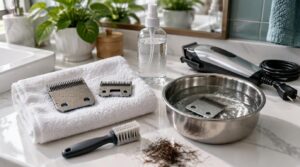
Clippers pick up more than hair. Skin oil, dandruff, and bacteria cling to the blades, and every cut spreads them around. That’s why the Best Way to Sanitize Clipper Blades at Home isn’t a quick wipe on your jeans. It’s a simple routine you can master in minutes.
Once your blades are sanitized, keeping them oiled and cared for between cuts also helps your fades stay crisp, and these taper fade maintenance tips walk you through it.
Here’s the good news. You’ve got three solid options: a disinfectant spray made for clippers, Barbicide for blades that come off, or 70% isopropyl alcohol. Each works when you use it right. The alcohol dip technique, for example, only works if the blades stay wet for at least two minutes.
Whatever you pick, unplug first and brush away all hair. Never submerge the clipper body. Follow the label and get clean blades. Skipping this step matters because dirty clippers cause irritation, including redness, shaving rash, and bumps from debris rubbing against your skin.
Supplies for Cleaning and Disinfecting Clipper Blades
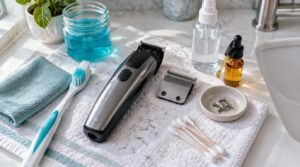
Good news: you probably own half of what you need already. Gather everything before you start, so you’re not hunting for a towel with a wet blade in your hand.
For cleaning, grab a small bristle brush. An old clean toothbrush works great if your clippers didn’t come with one. Add a few cotton swabs or a microfiber cloth for wiping blades, plus a small bowl or tray to hold parts.
For disinfecting, you’ll want clipper spray, Barbicide, or 70% alcohol.
Finish with blade oil, since clean blades need a few drops to run smoothly and resist rust. Lay a towel over your sink to catch hair, and keep a soft cloth handy for drying. Ventilate the room if spraying.
Choose a Blade-Safe Disinfectant
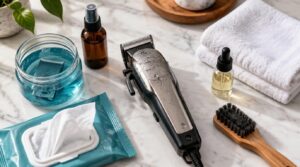
Not every disinfectant plays nicely with clipper blades, so you’ve got to pick the right one. Below are three common options, and each one has its own best use and its own catch. Read through them, then choose the one that fits your blades and your routine.
Clipper Sprays and Label Contact Times
Say you grab a can of 5-in-1 spray, mist your blades, and wipe them right away. Feels thorough, right? Not quite.
Always follow the label instructions. A true disinfectant spray lists a contact time, often 10 minutes, so keep blades visibly wet that long. A basic clipper spray may only say "let it dry." Isopropyl alcohol alone won’t replace it.
Barbicide for Manufacturer-Approved Removable Blades
If you want a true soak, Barbicide is your move, but only for removable blades your manufacturer approves. Skip it for fixed blades.
For a step-by-step walkthrough of other safe methods, see this guide on how to sanitize razor blades at home using supplies you likely already own.
Mix 1 ounce of concentrate per 16 ounces of water in a glass or plastic container. Brush off hair first.
- Submerge blades fully for 10 minutes
- Never use metal containers
- Rinse, then dry completely
- Oil right away
Rubbing Alcohol: Uses and Limitations
Rubbing alcohol, usually 70% isopropyl alcohol, has a place in your kit, but it’s no cure-all for disinfecting grooming tools.
Brush and clean the blade first, since hair and oils block contact. Then keep it visibly wet for the label’s contact time.
Check your manufacturer’s instructions first, because alcohol dries out some parts and strips oil, so re-oil afterward.
How to Disinfect Clipper Blades Step-by-Step
Disinfecting your clipper blades is easy once you know the order. Follow these seven steps and you’ll keep your tools clean, safe, and sharp. Take them one at a time, and don’t skip ahead.
Unplug Clippers and Brush Away Hair
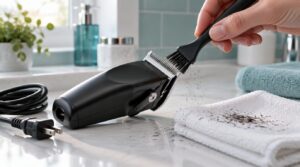
Think of it like this: you wouldn’t wash dishes with the disposal running. Unplug clippers first, every time, so a stray bump can’t switch them on in your hand.
Next, grab your cleaning brush and brush away hair from the teeth and housing. Then:
- Sweep along the blade teeth.
- Tap the clippers lightly to shake loose strays.
- Wipe with a microfiber cloth.
Easy, right?
Remove Blades Only as Manufacturer Directs
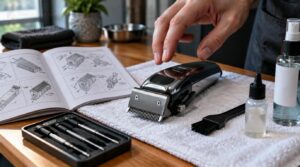
But I’m a barber, I take clippers apart all the time." Fair enough. Still, check your manufacturer instructions first. Some blade assemblies have specific release steps, and certain models warn against pulling screws at all.
Blade removal is a safe move only when your exact model’s manual says so. Otherwise, you’re gambling with clipper blade safety and a tricky reassembly.
Clean Before Applying Disinfectant
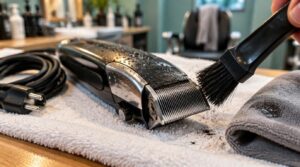
Think of disinfectant like paint: it won’t stick to a dirty wall. Clean Before Applying Disinfectant, or your blade sanitation efforts fall flat.
Disinfectant won’t stick to dirt any more than paint sticks to a dirty wall, so always clean your blades first
Start by removing hair buildup:
- Unplug the clippers.
- Use your blade brush technique, brushing across and along the teeth.
- Wipe oily residue with a damp cloth.
- Dry everything fully.
Don’t rush it; deep cleaning clippers pays off.
Follow Label Dilution and Contact Times
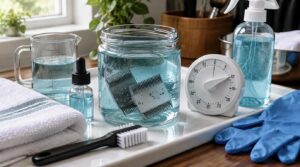
Think of the label as your boss. It doesn’t negotiate, and neither should you.
Mix your Barbicide soak or clipper blade cleaner exactly as printed. For a disinfectant spray, keep the surface wet for the full contact times. Ten minutes means ten, not "close enough."
Skip the guesswork on label dilution. Too weak won’t kill germs, and too strong can pit your steel.
Rinse if Required, Then Dry Thoroughly
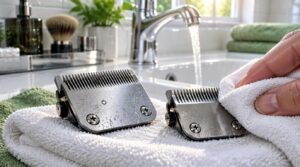
Rinse only if your disinfectant’s label says so, and only if your clippers’ blades are water-safe. Check the manufacturer’s guide first. A quick blade wash rinse under the tap removes leftover residue.
Shake off the excess, then dry thoroughly with a clean towel. Let the blades air dry about five minutes. Check for no visible moisture before moving on.
Oil Blades and Reassemble Safely
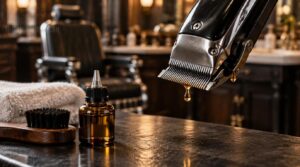
Once your blades are bone dry, grab your blade oil. Unplug the clippers, point them down, and add 2-3 drops across the teeth, plus one on the heel. Lubricating those surfaces prevents rust and overheating.
Run them 10-30 seconds, wipe excess, finish blade reassembly as the manufacturer directs.
Blade oiling frequency? Every 2-3 uses. Keep a blade cleaning brush handy.
Clean Compatible Guards and Brushes
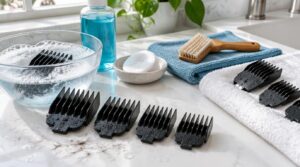
Your blades are done, but don’t stop yet. Those blade guards and your cleaning brush collect hair and gunk too.
Pop the guards off the clippers. Sweep out trapped hair with a soft brush or microfiber cloth, then wash them in warm soapy water if they’re water-safe. Barbicide or alcohol works for a quick disinfect.
Let everything dry completely before storing. Damp guards grow mold fast.
How Often Should You Disinfect Clipper Blades?
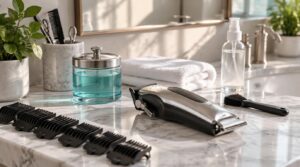
Now that you’ve got the routine down, the next question is how often to run through it.
For clippers only you use at home, once a week is plenty. That’s your regular clipper disinfection day, and it’s a good time for a Barbicide soak or a blade wash dip if your blades allow it.
If anyone else touches your clippers, the rule changes. Disinfect after every single use.
Here’s a quick checklist for when to do it:
- After each haircut on someone else.
- Before and after lending your clippers out.
- After trimming sensitive spots like your face or neckline.
- Whenever you spot hair, oil, or gunk on the blades.
- Any time you’ve skipped a blade brushing technique session and the buildup shows.
When in doubt, give them a quick look. Dirty blades don’t lie.
Avoid Blade Damage During Cleaning and Storage
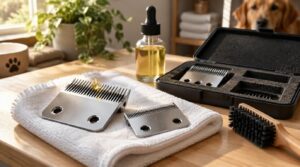
Disinfecting is only half the job. How you clean and store your clippers decides whether those blades last years or rust out in months.
Start with blade rust prevention. Moisture is the enemy, so dry every surface and joint completely after blade cleaning. Skip the heat gun, though. High heat can wreck coatings and warp nearby plastic.
Don’t scrub with abrasive pads, and keep any liquid away from the motor openings. Only use products approved for your blades, because harsh chemicals can eat the finish.
Once they’re dry, add a drop of oil. Good blade lubrication cuts friction and protects the steel.
Let hot blades cool before you handle or store them. Then tuck them into a blade storage case, away from damp spots and loose metal tools that can nick the edges.
Frequently Asked Questions (FAQs)
How can I disinfect my hair clippers at home?
Think of your clipper blades as a tiny comb for germs. Unplug them, brush off the hair, then wet the blades with 70% alcohol for a full minute. Dry, oil, done. Barbicide works only on removable blades.
What do barbers use to sanitize clippers?
Think a quick dip in bleach or distilled white vinegar works? Nope, they corrode steel. Barbers reach for a clipper disinfectant spray, like Andis Cool Care, plus 70% alcohol.
Barbicide only controls combs and guards.
Does rubbing alcohol sanitize clippers?
Wondering if that bottle under your sink is enough? Rubbing alcohol does sanitize clipper blades on the surface, but it evaporates fast. Clean off hair first, keep blades wet, then oil them.
Does hydrogen peroxide sanitize clippers?
Yes, it does. Plain 3% hydrogen peroxide works as a disinfectant on metal blades, killing bacteria, fungi, and viruses. Keep contact to 5 to 10 minutes, then dry completely and oil. Longer soaks invite rust.
Why do my clippers pull hair after cleaning?
Blame blade alignment accuracy first. Reassemble sloppy and gaps catch hair, so you get hair pulling. Next, check blade friction. Washing strips oil, and leftover hair buildup dulls blade sharpness retention. Dry, oil, realign.
Can sanitizing clipper blades prevent ringworm at home?
Yes, it helps, but only if you clean first. Ringworm persistence on dirty blades is real, so brush off hair, then use a fungicidal disinfectant spray for the full label time. Alcohol alone won’t cut it.
Does clipper oil go on before or after sanitizing?
Oil goes on after you disinfect, never before. Oil leaves a film that blocks disinfectant from reaching the blade. Let the label’s contact time finish, dry the blade completely, then add a few drops of clipper oil.
What causes clippers to overheat during regular use?
Think dull blades are the only culprit? Nope. Friction drives most overheating: hair-packed teeth, thin oil, or misaligned blades. Add heavy pressure, blocked vents, and nonstop use, and your motor cooks. Try blade cooling breaks.
Conclusion
Picture a Saturday fade on your nephew, done with blades you brushed off last week. Tomorrow he’s scratching a red patch behind his ear. That’s the cost of skipping the work.
The best way to sanitize clipper blades at home is simple: brush, clean, disinfect, dry, oil. Do it every time, and your clippers stay sharp and safe.
Treat your blades like your name on the door. Keep them spotless, and every cut ends clean.