This site is supported by our readers. We may earn a commission, at no cost to you, if you purchase through links. This content is for general informational and educational purposes only and is not a substitute for professional medical, dermatological, or nutritional advice.
You wash your hair, and by evening your roots look slick. By morning, white flakes dust your shoulders. It feels backwards, since flakes seem like a dry-scalp problem.
The cause is often the oil itself. Malassezia yeast feeds on lipids in sebum, and its by-products may irritate your scalp, trigger inflammation, and speed up cell turnover. Scrubbing harder or stripping the oil rarely helps.
The right dandruff treatment for oily scalp starts with understanding what’s feeding the flakes. Once you know that, the choice of shampoo, the way you apply it, and the point where home care stops working all get easier to judge.
Table Of Contents
- Key Takeaways
- Why Dandruff Develops on an Oily Scalp
- Choosing Dandruff Shampoo for an Oily Scalp
- How to Use Medicated Dandruff Shampoo Effectively
- Washing Frequency and Flake Removal Without Irritation
- Supporting Oily Scalp Dandruff Treatment at Home
- When Oily Scalp Dandruff Needs Medical Treatment
- Frequently Asked Questions (FAQs)
- How to get rid of dandruff on an oily scalp?
- Why do I have dandruff but an oily scalp?
- What kills dandruff fast naturally?
- What is the best dandruff shampoo for an oily scalp?
- Can dandruff cause hair loss on an oily scalp?
- Is oily scalp dandruff contagious to other people?
- Does hair color or styling product worsen dandruff?
- Can dandruff shampoo be used on children?
- Will dandruff go away permanently with treatment?
- Conclusion
Key Takeaways
- Oily dandruff often comes from Malassezia yeast feeding on your scalp’s sebum and irritating your skin, so scrubbing harder or stripping the oil won’t fix it.
- Pick one antifungal shampoo, like ketoconazole or zinc pyrithione, and use it two to three times weekly for at least a month before you judge whether it works.
- Lather it in, leave it on your scalp for 3-5 minutes, and keep conditioner on your lengths only, since technique matters as much as the active ingredient.
- If flakes stay greasy and yellow after about five weeks, or you notice redness, pain, stubborn plaques, or hair thinning, stop switching products and see a doctor about possible seborrheic dermatitis.
Why Dandruff Develops on an Oily Scalp
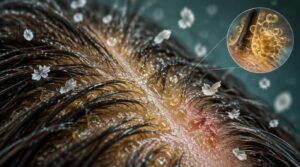
Why does an oily scalp flake? Oil alone isn’t the answer. Malassezia, a yeast that lives on most scalps, feeds on lipids in sebum. During sebum production, you may supply plenty of that food, but only some people react.
If flaking and itch keep coming back, a shampoo formulated for dry, itchy scalps can help calm the inflammation that Malassezia triggers.
An oily scalp doesn’t flake from oil alone; Malassezia yeast feeds on sebum, but only some people react
In susceptible scalps, yeast by-products can irritate skin and disrupt your scalp barrier. Water escapes, inflammation speeds cell turnover, and cells shed as flakes. That’s oily dandruff.
Fungal overgrowth and skin pH balance may also matter, though more research is needed.
Choosing Dandruff Shampoo for an Oily Scalp

Since yeast drives oily dandruff, pick an active that targets it. Match the ingredient to your scalp, and you’ll take back control.
- Zinc pyrithione may calm mild flaking and support sebum regulation.
- Ketoconazole suits stubborn flaking and offers stronger antifungal treatment.
- Selenium sulfide may slow thick flakes, though it could tint light hair.
- Salicylic acid lifts greasy buildup.
- Piroctone olamine is gentler if you’re sensitive.
Start with one active and give it a few weeks. Don’t switch products too fast. Anti-dandruff shampoo needs to stay on your scalp for 3–5 minutes of contact and be used two to three times weekly for at least a month before you can judge whether it works.
How to Use Medicated Dandruff Shampoo Effectively
Technique shapes results as much as the active ingredient. Whether your medicated shampoo contains ketoconazole, zinc pyrithione, or selenium sulfide, follow these steps:
If itching is your main complaint, pairing your shampoo routine with a scalp treatment for itchy scalp can soothe irritation while the active ingredient works.
- Wet your scalp thoroughly.
- Lather the shampoo in your hands first.
- Massage with your fingertips for 2-3 minutes, not your nails.
- Leave it on for 3-5 minutes, using a timer.
- Rinse with lukewarm water for one minute.
Keep conditioner on your lengths only. Stick to your washing frequency, even when flakes fade. It may keep yeast controlled.
If you also swim regularly, rinsing before you get in the pool and using hair care products for swimmers can help protect your lengths from chlorine without weighing down your roots.
Washing Frequency and Flake Removal Without Irritation

Once your technique is set, frequency is the next lever. Start with washing frequency of two to three times weekly with your medicated shampoo. Wash gently on other days if your roots feel greasy. Rotating with a hydrating, non-medicated wash may help prevent tolerance buildup.
Choose sulfate-free formulas for gentle cleansing, and keep water lukewarm. Salicylic acid may support scalp exfoliation without extra dryness. Skip scratching.
Watch your scalp. Tightness or brittleness suggests over-washing. Midday grease or itching suggests you need more. More research is needed.
Supporting Oily Scalp Dandruff Treatment at Home
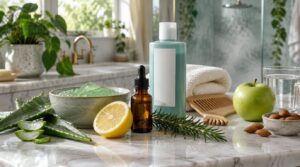
Medicated shampoo does most of the work, but your daily habits can help it work better. The two areas below look at home remedies and the lifestyle factors that may affect your scalp. You’ll see what the evidence suggests, what could go wrong, and where more research is needed.
Home Remedies: Evidence and Safety
Natural doesn’t always mean gentle. Some home remedies may help your scalp, but others could backfire.
- Tea tree oil: A 2002 study found a 5% shampoo reduced dandruff severity. Dilute it in a carrier oil first.
- Aloe vera gel: Apply it before shampooing. An Italian study suggests it may soothe itching without adding oil.
- Apple cider vinegar: Mix 1:1 with water and leave it on for 15 minutes. Small studies hint at benefits, so more research is needed.
Skip baking soda. It’s strongly alkaline and may easily irritate your scalp.
Diet, Stress, and Scalp Health
Diet and scalp health may be linked, but no specific food has been shown to clear dandruff. Sugary or oily meals don’t clearly raise sebaceous gland activity or flakes. More research is needed. Don’t drop foods without medical guidance.
Stress-induced flareups seem more common, though stress isn’t the only cause. Pair your scalp hygiene routine with calming habits. Keep using shampoo with antifungal properties.
| Factor | What it may do | Your move |
|---|---|---|
| Food | Unclear effect | Eat balanced meals |
| Stress | May worsen flakes | Rest and unwind |
| Supplements | No proven benefit | Skip self-treating |
When Oily Scalp Dandruff Needs Medical Treatment
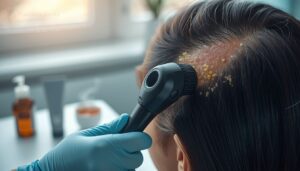
Say you’ve used an anti-dandruff shampoo for five weeks, yet your flakes still look greasy and yellow. That’s your cue to stop switching products.
Oily dandruff that won’t budge may be seborrheic dermatitis, which is often linked to Malassezia fungus. Book an appointment if you notice:
- Redness, swelling, or pain on your scalp
- Plaques that don’t improve
- Hair thinning or bald patches
A doctor may suggest a prescription shampoo or a steroid lotion. Act early, since more research is needed on hair loss.
Frequently Asked Questions (FAQs)
How to get rid of dandruff on an oily scalp?
To clear oily dandruff, use a medicated shampoo with ketoconazole two or three times weekly. Massage it into your scalp, leave it on for three minutes, and rinse well. Studies suggest this may reduce yeast-driven flaking.
Why do I have dandruff but an oily scalp?
Think of your scalp as a garden: oil is the fertilizer, and Malassezia is the weed that loves it. In seborrheic dermatitis, that yeast may inflame skin, so oily dandruff flakes appear despite good scalp hygiene.
What kills dandruff fast naturally?
Want flakes gone fast without harsh chemicals? Try tea tree oil diluted in coconut oil, or an apple cider vinegar rinse. Aloe vera may soothe. Skip baking soda; it could irritate. More research is needed.
What is the best dandruff shampoo for an oily scalp?
Is there one perfect dandruff shampoo? Probably not. Still, ketoconazole 1% may offer the strongest antifungal properties among OTC products.
Selenium sulfide or zinc pyrithione could add oil control. Try one; you’ll know within weeks.
Can dandruff cause hair loss on an oily scalp?
Oily dandruff doesn’t usually cause permanent hair loss. Scratching and inflammation may trigger temporary shedding, and your hair generally regrows once the scalp settles. Patchy loss or scarring could signal another cause, so get it checked.
Is oily scalp dandruff contagious to other people?
Malassezia lives on most adults’ scalps, so it can’t spread dandruff. Oily dandruff isn’t contagious. It reflects yeast overgrowth in your scalp microbiome. Combs and hats won’t pass it on.
Ringworm, a fungal infection, spreads.
Does hair color or styling product worsen dandruff?
Yes, they may. Hair product buildup from styling products can trap oil and dead skin, and dye chemicals may irritate your scalp. Rinse thoroughly, skip heat styling tools when flaring, and use medicated shampoo last.
Can dandruff shampoo be used on children?
Say your child has flaky patches. Check the label before using any dandruff shampoo. Medicated shampoo with antifungal properties may suit pediatric use, but ask a pharmacist first. Good scalp hygiene helps, but never guess.
Will dandruff go away permanently with treatment?
Think of dandruff as a tide, not a stain. Treatment may control it, but it rarely ends it for good. Use maintenance therapy with dandruff shampoo rotation, and see a clinician if flakes persist.
Conclusion
Say you’ve used a ketoconazole shampoo twice a week for a month, and your flakes have faded but not vanished. That’s normal. Give it time, and keep the lather on your scalp for a few minutes before rinsing.
A solid dandruff treatment for oily scalp is steady, not aggressive. Rotate your shampoo, skip harsh scrubbing, and treat home remedies as unproven extras. If itching, redness, or flaking lasts beyond several weeks, see a doctor promptly.