This site is supported by our readers. We may earn a commission, at no cost to you, if you purchase through links. This content is for general informational and educational purposes only and is not a substitute for professional medical, dermatological, or nutritional advice.
Every time you step out of the pool, your hair pays a price. Chlorine doesn’t just sit on the surface—it strips your scalp’s natural sebum, breaks down keratin disulfide bonds, and leaves your strands brittle, porous, and thirsty for moisture. Swimmers who train regularly often chalk this up to "just how it is," but the damage is preventable with the right products.
The chemistry working against your hair is specific, which means the solution has to be too. Generic shampoos won’t cut it—you need chelating agents like EDTA, targeted humectants, and protective oils that actually counteract what pool water does at a molecular level.
These ten hair care products for swimmers were selected based on their active ingredients and what they actually accomplish, not their packaging.
Table Of Contents
- Key Takeaways
- 10 Best Hair Care Products for Swimmers
- 1. UltraSwim Dynamic Duo Repair Shampoo and Conditioner
- 2. Aqua Guard Pre Swim Hair Defense
- 3. Malibu C Swimmers Wellness Remedy
- 4. Trihard Pre and Post Swim Conditioner
- 5. Triswim Chlorine Removal Swimmers Shampoo
- 6. COOLA Organic Scalp Spray and Hair Sunscreen
- 7. Ouai Hair Oil Heat Protectant
- 8. Oribe The Cleanse Clarifying Shampoo
- 9. SheaMoisture Manuka Honey Intensive Hydration Shampoo Conditioner
- 10. Kerastase Specifique Balancing Shampoo for Oily Scalp
- How Chlorine Damages Swimmer’s Hair
- Best Ingredients for Swimmers’ Hair
- Pre-Swim Hair Protection Tips
- Post-Swim Hair Recovery Routine
- How to Choose Swimmer Haircare
- Swimmer Haircare by Hair Type
- Frequently Asked Questions (FAQs)
- What do professional swimmers put in their hair?
- How do swimmers maintain their hair?
- How do I take care of my hair if I swim every day?
- What do swimmers wear on their hair?
- How often should swimmers trim their hair?
- Are silk pillowcases beneficial for swimmer hair recovery?
- How does hard water compare to pool water damage?
- Conclusion
Key Takeaways
- Chlorine doesn’t just dry out your hair — it breaks down keratin disulfide bonds and strips scalp sebum, making damage structural and cumulative, not just surface-level.
- Chelating agents like EDTA and Vitamin C are the ingredients that actually remove chlorine, copper, and mineral deposits from the hair shaft, while generic shampoos only clean the surface.
- Your pre-swim routine matters as much as your post-swim one — rinsing with clean water, applying a leave-in conditioner, and sealing with oil significantly reduces how much chlorine your strands absorb.
- Different hair types need different defenses: blonde hair prioritizes copper-chelating formulas to prevent green tints, coily hair needs humectant-rich hydration, and color-treated hair requires pH-balanced, sulfate-free products to stop dye from leaching.
10 Best Hair Care Products for Swimmers
Finding the right product makes all the difference between hair that survives the pool and hair that thrives despite it.
For coils that need extra moisture after a swim, leave-in conditioners made for 4C hair can restore softness and elasticity without weighing strands down.
These ten options cover everything from pre-swim protection to post-swim repair, each chosen for ingredients that actually work against chlorine, minerals, and salt. Here’s what belongs in your swim bag.
1. UltraSwim Dynamic Duo Repair Shampoo and Conditioner
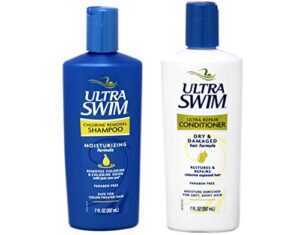
Chlorine doesn’t just strip your hair — it systematically dismantles its moisture barrier with every lap. The UltraSwim Essential Duo fights this with EDTA-based cleansing that lifts copper deposits and oxidized metals responsible for greenish discoloration, particularly in blonde hair.
Both the shampoo and conditioner contain vitamin E and aloe vera, working together to replenish the protein layer chlorine attacks. Each 7 fl. oz. bottle is kid-friendly and safe for color-treated hair, making it a practical daily post-swim solution.
| Best For | Frequent swimmers, athletes, and kids who need a gentle yet effective way to remove chlorine buildup and protect their hair from discoloration and dryness. |
|---|---|
| Product Type | Shampoo & Conditioner Set |
| Volume | 7 fl oz per bottle |
| Key Ingredient | Chlorine-removing formula |
| Primary Benefit | Chlorine & chemical removal |
| Target User | Frequent swimmers & children |
| Hair Concern | Discoloration & dryness |
| Additional Features |
|
- Dual-action shampoo and conditioner combo tackles chlorine removal and moisture replenishment in one routine
- Gentle enough for sensitive skin, kids, and color-treated hair
- Helps prevent the green tint chlorine and copper deposits can cause, especially in lighter hair
- Works best when used right after swimming — delayed use reduces its effectiveness
- The conditioner has a thinner consistency than some users expect
- May not fully protect heavily bleached or chemically damaged hair from discoloration
2. Aqua Guard Pre Swim Hair Defense
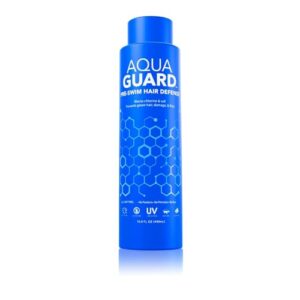
While UltraSwim takes care of post-swim repair, AquaGuard works on the front end — stopping damage before it starts. Applied to damp or dry hair a few minutes before you get in the water, it forms a lightweight protective barrier using almond oil, argan oil, and shea butter to seal cuticles against chlorine and mineral absorption.
It’s paraben-free and reef-safe, suits all hair types from dense curls to platinum blondes, and absorbs within 3–5 minutes without leaving a greasy residue.
| Best For | Competitive swimmers, water polo players, and frequent lap swimmers who want to protect their hair from chlorine, minerals, and color damage before they even hit the water. |
|---|---|
| Product Type | Protective Shampoo |
| Volume | 16.9 oz |
| Key Ingredient | Eco-friendly minerals |
| Primary Benefit | Color & moisture protection |
| Target User | Competitive & lap swimmers |
| Hair Concern | Dryness & color fading |
| Additional Features |
|
- Forms a protective barrier that blocks chlorine and mineral absorption, helping preserve both natural and color-treated hair
- Reef-safe and paraben-free formula with nourishing oils (almond, argan, and shea butter) that keeps hair soft and tangle-free
- Works for all hair types and absorbs quickly without leaving a greasy feel
- Higher price point than most standard swim or everyday hair products
- Must be applied to damp hair and allowed to absorb before swimming — it adds a step to your pre-swim routine
- Some users have experienced pump and leaking issues during shipping
3. Malibu C Swimmers Wellness Remedy
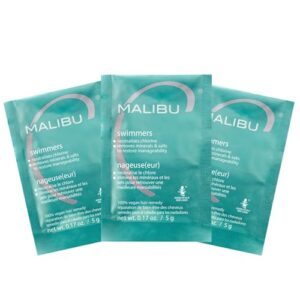
AquaGuard shields your hair going in — but when mineral damage has already taken hold, Malibu C Swimmers Wellness Remedy is where the recovery starts.
Each single-use packet contains a patented Vitamin C complex that chelates copper and metal deposits responsible for green discoloration, especially in blonde or highlighted hair. Vitamin B5 follows through by reinforcing moisture retention once those residues lift.
The formula is 100% vegan and preservative-free, dissolves in water, and needs just five minutes to work.
| Best For | Swimmers, frequent pool-goers, and anyone with blonde or highlighted hair dealing with green tints, brassiness, or mineral buildup from chlorine exposure. |
|---|---|
| Product Type | Dissolvable Treatment Packets |
| Volume | 3 individual packets (0.64 oz total) |
| Key Ingredient | Vitamin C complex |
| Primary Benefit | Mineral & chlorine detox |
| Target User | Swimmers & travelers |
| Hair Concern | Green tint & brassiness |
| Additional Features |
|
- Targets the root cause of green discoloration by chelating copper and metal deposits that pool chemicals leave behind
- Portable single-use packets make it easy to toss in a swim bag or travel kit
- 100% vegan, preservative-free, and dissolves in water for a fuss-free application
- Has a noticeable odor during use that requires shampooing and conditioning afterward to fully clear
- Needs at least five minutes to work, so it’s not a quick rinse-and-go solution
- Only comes in three packets per package, which may not last long for daily or frequent swimmers
4. Trihard Pre and Post Swim Conditioner
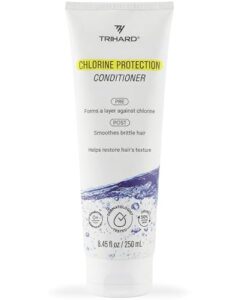
Malibu C repairs what’s already damaged — Trihard takes a different approach by stopping that damage before it starts.
Its PLECOTECH technology forms a protective film over each strand, with Red Algae and Dead Sea Minerals reinforcing that barrier against chlorine and saltwater absorption. After your swim, Jojoba Oil, Argan Oil, and Vitamin B5 work together to restore softness, reduce frizz, and support moisture retention for hours. One bottle, two jobs — and no parabens, SLS, or oxybenzone involved.
| Best For | Competitive swimmers and color-treated hair owners who want to prevent chlorine and saltwater damage before it happens, while keeping hair hydrated long after they’ve toweled off. |
|---|---|
| Product Type | Pre & Post Swim Spray |
| Volume | 9.17 oz |
| Key Ingredient | Aloe & Red Algae |
| Primary Benefit | Pre-swim & post-swim hydration |
| Target User | Competitive & casual athletes |
| Hair Concern | Chlorine absorption & dryness |
| Additional Features |
|
- Dual-action formula protects hair pre-swim and restores moisture post-swim, so you don’t need two separate products
- Free from parabens, SLS, alcohol, and oxybenzone — safe for kids, various hair types, and color-treated hair
- Red Algae and Dead Sea Minerals create a genuine barrier against chlorine absorption, not just a surface-level coating
- The greasy texture can feel heavy, especially if you apply too much
- Too much product on the roots can cause swim caps to slip during use
- Doesn’t repair existing damage the way a dedicated treatment product would
5. Triswim Chlorine Removal Swimmers Shampoo
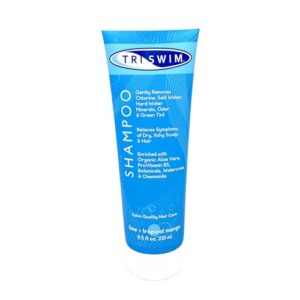
Two chelating agents are better than one — that’s the logic behind Triswim’s dual EDTA system, which binds and lifts copper, calcium, and magnesium from your hair before they can dull your color or stiffen your strands. Sodium thiosulfate neutralizes chlorine and bromine on contact, tackling chemical odor at the source.
Aloe vera and Panthenol (Pro-Vitamin B5) keep moisture levels steady throughout, so your hair doesn’t emerge feeling stripped. It’s clean, vegan, and safe for daily use on color-treated hair.
| Best For | Competitive swimmers and frequent pool users — men, women, and children — who want to protect color-treated or chemically processed hair from chlorine, bromine, and mineral buildup. |
|---|---|
| Product Type | Swimmer’s Shampoo |
| Volume | 8.8 oz |
| Key Ingredient | Aloe Vera & Pro-Vitamin B5 |
| Primary Benefit | Chemical & green tint removal |
| Target User | Swimmers of all ages |
| Hair Concern | Green tint & chemical odor |
| Additional Features |
|
- Dual-action formula tackles both chemical residue (chlorine, bromine) and hard water minerals, keeping hair soft and manageable after repeated pool exposure
- Moisturizing blend of Aloe Vera, Pro-Vitamin B5, and Chamomile replenishes hydration without stripping color-treated or permed hair
- Vegan, cruelty-free, and free of parabens and gluten — safe for daily use across all hair types
- May need a separate conditioner for deep hydration, especially for very dry or damaged hair
- Fragrance is quite strong, which won’t appeal to those sensitive to scented products
- Consistency can vary between batches, with some users receiving a noticeably watery formula
6. COOLA Organic Scalp Spray and Hair Sunscreen
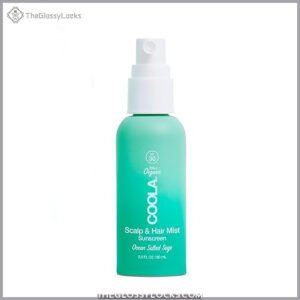
Sun damage is the silent saboteur most swimmers never think to defend against. COOLA’s Organic Scalp Spray delivers broad spectrum SPF 30 while Monoi oil conditions and adds shine — protection and nourishment in a single mist.
For a complete swim-day routine, pair your scalp spray with these proven tips for protecting color-treated hair while swimming — including cap use and hydrating conditioners.
The formula is Hawaii Reef Compliant, vegan, and free from oxybenzone and octinoxate. Gotu Kola extract helps scalp microcirculation, and it resists water for up to 80 minutes. Compact enough for your pool bag, it won’t weigh your hair down.
| Best For | Swimmers, beachgoers, and outdoor enthusiasts who want to protect their scalp and hair from UV damage without sacrificing hair health or weighing down their style. |
|---|---|
| Product Type | Scalp & Hair Sunscreen |
| Volume | 2 fl oz |
| Key Ingredient | Monoi Oil & Cica |
| Primary Benefit | UV & color fade protection |
| Target User | Beach & pool goers |
| Hair Concern | UV damage & color fade |
| Additional Features |
|
- Broad spectrum SPF 30 with Monoi Oil and Cica keeps your scalp protected and your hair nourished in one step
- Hawaii Reef Compliant and free from oxybenzone and octinoxate — so you can swim without guilt
- Lightweight mist formula won’t leave hair greasy or weighed down, making it easy to use daily
- May cause discoloration on recently bleached or color-treated hair, so patch test first
- Needs reapplication every 2 hours or after swimming, which can feel like a hassle on long beach days
- Some users have reported issues with the bottle sprayer malfunctioning, especially in heat
7. Ouai Hair Oil Heat Protectant
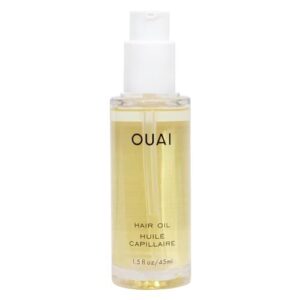
After chlorine strips your hair’s natural oils, heat styling can deepen the damage fast. Ouai Hair Oil steps in as a multitasking heat protectant, shielding strands up to 450°F while African galanga root extract and Ama oil seal the cuticle and prevent color fading.
Apply just 1–3 drops to damp or dry hair, focusing on mid-lengths to ends. It’s lightweight enough for fine hair, controls frizz without greasiness, and adds a glossy finish that counteracts the dullness chlorine leaves behind.
| Best For | Swimmers and heat-styling enthusiasts with fine, curly, or color-treated hair who want a lightweight, multitasking oil that protects against both heat damage and post-chlorine dullness. |
|---|---|
| Product Type | Protective Hair Oil |
| Volume | 1.5 fl oz |
| Key Ingredient | Ama, Baobab & Coconut Oils |
| Primary Benefit | Heat & UV protection |
| Target User | All hair type daily stylists |
| Hair Concern | Frizz & heat damage |
| Additional Features |
|
- Shields hair from heat up to 450°F while nourishing strands with a blend of Ama, Baobab, African galanga, and coconut oils
- Lightweight formula controls frizz and adds high-gloss shine without weighing hair down
- Color-safe and free from parabens, phthalates, and sulfates — safe for daily use on various hair types
- Small 1.5 fl oz bottle feels pricey relative to the amount of product you get
- Easy to over-apply, which can leave hair looking greasy or flat
- Higher price point may be hard to justify as an everyday staple for budget-conscious shoppers
8. Oribe The Cleanse Clarifying Shampoo
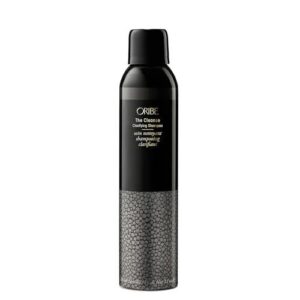
When mineral buildup turns your hair dull and heavy, volcanic ash does the heavy lifting. Oribe The Cleanse Clarifying Shampoo uses volcanic ash exfoliation to lift chlorine deposits, hard water minerals, and product residue without stripping essential oils.
The aerosol mousse transforms into a creamy, even lather, making distribution a breeze through longer hair. Watermelon, lychee, and Edelweiss Flower Extracts in the Oribe Signature Complex defend keratin against oxidative stress — so you’re not just cleansing, you’re actively protecting. Pair it with a conditioner afterward to restore softness.
| Best For | Anyone dealing with mineral buildup, chlorine damage, or oily hair who wants a deep-cleansing reset before treatments or color services. |
|---|---|
| Product Type | Clarifying Aerosol Mousse |
| Volume | 7.1 fl oz |
| Key Ingredient | Skincare-inspired exfoliants |
| Primary Benefit | Deep mineral buildup cleanse |
| Target User | Weekly detox & treatment users |
| Hair Concern | Mineral & oil buildup |
| Additional Features |
|
- Aerosol mousse lathers evenly and spreads easily, even through longer hair
- Tackles chlorine, hard water minerals, and product buildup all at once
- Shields hair with antioxidant-rich botanicals while it cleanses
- Can leave hair feeling temporarily dry right after washing
- Not reliably color-safe for all hair types
- Pricey per bottle, and some users run into faulty aerosol nozzles
9. SheaMoisture Manuka Honey Intensive Hydration Shampoo Conditioner
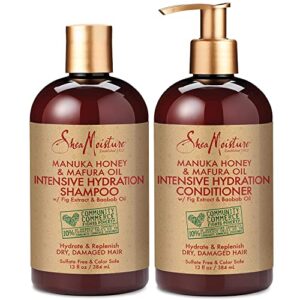
Swimmers with Type 4 coily hair deal with a double threat — pool chemicals and chronic dryness. SheaMoisture Manuka Honey Intensive Hydration shampoo and conditioner grips both.
Manuka honey draws moisture directly into the hair shaft, while Mafura and Baobab oils seal it in without heavy buildup. The sulfate-free, silicone-free formula cleanses gently, so you’re not undoing the moisture work mid-wash. At 13 oz per bottle, it’s a hydration-focused duo built for seriously parched, chemically stressed strands.
| Best For | Swimmers and naturals with Type 4 coily hair that’s extra dry, damaged, or chemically stressed and needs serious moisture replenishment. |
|---|---|
| Product Type | Shampoo & Conditioner Set |
| Volume | 13 oz per bottle |
| Key Ingredient | Manuka Honey & Shea Butter |
| Primary Benefit | Intense moisture restoration |
| Target User | Type 4 natural hair users |
| Hair Concern | Extreme dryness & brittleness |
| Additional Features |
|
- Manuka honey, Mafura oil, and Baobab work together to deeply hydrate and seal moisture into coily strands
- Sulfate-free and silicone-free formula cleanses without stripping natural oils or leaving buildup
- Helps with detangling and smoothing, making post-swim wash days more manageable
- Light lather means you may need to shampoo twice to feel fully clean
- The scent runs strong, which won’t work for everyone
- Pricier than drugstore options, and some users have run into packaging issues like stuck nozzles
10. Kerastase Specifique Balancing Shampoo for Oily Scalp
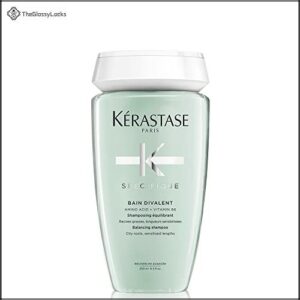
Oily roots and dry ends don’t usually share a solution — but the Kérastase Spécifique Balancing Shampoo takes care of both. Vitamin B6 regulates sebum at the scalp, while amino acids strengthen the hair fiber and limit oxidation stress down the lengths.
The lightweight, creamy lather rinses clean without stripping ends, leaving color-treated hair soft and manageable. At 8.5 fl oz, it’s dermatologically tested and built for swimmers whose scalp overproduces oil in response to repeated chemical exposure.
| Best For | Swimmers and anyone with oily scalps and dry ends who need a balancing shampoo that’s safe for color-treated hair. |
|---|---|
| Product Type | Balancing Shampoo |
| Volume | 8.5 fl oz |
| Key Ingredient | Amino Acids & Vitamin B6 |
| Primary Benefit | Oil-moisture balance |
| Target User | Oily scalp, dry-end sufferers |
| Hair Concern | Oily roots & dry ends |
| Additional Features |
|
- Tackles the tricky combo of oily roots and dry lengths in one formula
- Amino acids and Vitamin B6 strengthen hair while protecting against sebum buildup and environmental stress
- Safe for color-treated hair and dermatologically tested
- Higher price than most everyday shampoos
- Needs careful rinsing to keep it away from eyes
- The bottle shape can be a little awkward to grip
How Chlorine Damages Swimmer’s Hair

Chlorine doesn’t just rinse out after a swim — it actively works against your hair in ways that build up over time. As an oxidizing agent, it strips protective oils, weakens keratin bonds, and sets off a chain of damage that affects everything from texture to color. Here’s exactly how that process unfolds.
Stripped Natural Hair Oils
Every swim quietly strips your scalp’s sebum — the oil that defends against moisture loss. Without it, your scalp barrier function breaks down, triggering dryness and itch. Here’s what that depletion costs your hair:
- Exposed cuticles absorb chlorine faster
- Dry, itchy scalp signals weakened barrier protection
- Dropped linoleic acid levels reduce moisture retention
- Frizz increases as cuticle edges lose smoothness
- Elasticity fades without consistent oil replenishment
Regularly applying oils can increase hair moisture and provide essential vitamins.
Chlorine and Keratin Bonds
Sebum loss opens the door to something more structural. Chlorine acts as an oxidizer, attacking keratin protein directly — breaking the disulfide bonds that hold hair’s shape and strength together.
It also reacts with amino groups to form chloramines, which trigger further protein degradation. The result: peptide backbone fragmentation, rising cuticle porosity, and hair that’s structurally compromised before you’ve even toweled off.
Dryness, Frizz, and Brittleness
Once keratin bonds break down, cortex moisture loss follows fast. Your hair can’t hold water when the cuticle is compromised, leaving strands rough, brittle, and prone to snapping under everyday tension like brushing.
Humidity makes it worse — damaged cuticles swell and absorb ambient moisture unevenly, triggering frizz and volume loss. That’s structural instability, not just a bad hair day.
Green Tones in Blonde Hair
Brittleness isn’t the only visible sign of pool damage. For blonde hair, copper-chlorine interactions leave a green cast that no amount of toning seems to fix — until you understand the real cause.
Chlorine isn’t actually guilty here. Oxidized copper from pool water binds to bleached strands, creating green complexes on porous hair.
Key facts worth knowing:
- Your blonde base level must reach 9 or higher for even color uptake
- Chelating shampoos remove copper deposits, reducing green hue
- Red-toned toners neutralize green using complementary color balance
Saltwater and Mineral Buildup
Unlike pool water, saltwater doesn’t just dry out your hair — it leaves behind salt crystal deposits that cling to rough cuticles, making strands feel crisp and hard to detangle. As water evaporates, mineral buildup from calcium and magnesium compounds the problem, dulling color reflection and increasing porosity.
A chelating or detoxifying shampoo pulls these ionic residues off the hair shaft before they cause lasting structural damage.
Best Ingredients for Swimmers’ Hair
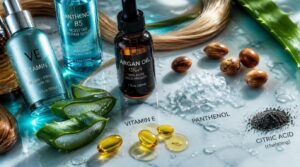
Not all swimmer haircare ingredients are created equal — some actively pull chemicals out of your hair, while others lock moisture in and shield the shaft from damage. Knowing which ingredients actually do the heavy lifting helps you pick products that work with your hair instead of against it. Here are the key ones worth looking for.
EDTA and Chelating Agents
Pool water deposits calcium, copper, and iron onto your hair shaft, dulling color and stiffening strands over time. Chelating agents like EDTA bind these metal ions through ring-structure sequestration, lifting chemical buildup efficiently.
Five reasons EDTA works for swimmers:
- Sequesters Ca²⁺ and Mg²⁺
- Prevents green discoloration
- Performs best at alkaline pH
- Pairs with surfactants for efficiency
- Has biodegradable chelant alternatives
Vitamin C for Chlorine
Ascorbic acid does something EDTA can’t — it neutralizes chlorine chemically. As a reducing agent, it converts hypochlorous acid (HOCl) into harmless chloride ions on contact, stopping oxidative damage before it strips your hair shaft further.
That reaction also gets rid of the lingering chlorine smell and helps restore your scalp’s natural pH, making vitamin C a fast-acting, dual-purpose ingredient worth prioritizing post-swim.
Panthenol for Moisture Retention
Chlorine leaves your hair shaft thirsty at a structural level, and that’s exactly where panthenol steps in.
As a provitamin B5 humectant, it pulls water directly into the hair shaft, converts to pantothenic acid inside the strand, and forms a lightweight film that locks moisture in — improving elasticity and reducing breakage without weighing your hair down.
Aloe Vera for Scalp Comfort
Swim sessions stress more than just your strands — your scalp takes a hit too. Aloe vera’s proteolytic enzymes calm irritation, reduce flaking, and restore moisture to a dry, reactive scalp after chemical exposure.
Three reasons it earns its spot in your post-swim routine:
- Soothes inflammation with cooling gel texture
- Delivers lightweight hydration without greasiness
- Antimicrobial compounds help keep flaking in check
Oils for Protective Sealing
Think of sealing oils as a second skin for your strands.
Jojoba oil mimics your scalp’s natural sebum, laying down a smooth, familiar barrier the cuticle actually accepts. Heavier options like avocado and castor oil are occlusive enough to lock in moisture, reduce protein loss, and keep pool water from penetrating the shaft before you even jump in.
Pre-Swim Hair Protection Tips
What you do before getting in the pool matters just as much as what you do after. A few simple habits can make a real difference in how your hair holds up against chlorine, minerals, and saltwater. Here are five pre-swim steps worth adding to your routine.
Rinse Hair Before Swimming
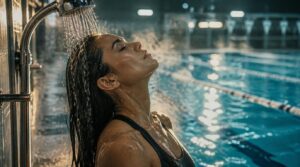
Before you jump in, wet your hair with clean water first. Damp strands absorb far less chlorine because the shaft is already saturated, leaving little room for pool chemicals to penetrate.
Use lukewarm tap water and work it through from roots to ends — a quick 30-second rinse is enough to meaningfully cut down chemical uptake before your first lap.
Apply Leave-in Conditioner
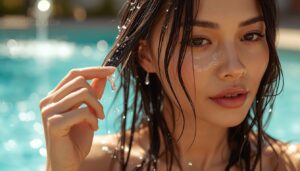
Once your hair is damp from that pre-rinse, a leave-in conditioner gives you a second line of defense. It coats the cuticle with conditioning polymers, creating a light barrier that slows chlorine absorption before you even touch the water.
- Short hair: pea-sized amount
- Medium hair: dime-sized amount
- Long or thick hair: quarter-sized amount
- Always apply mid-length to ends — skip the scalp to avoid buildup
Use Pre-swim Hair Oil
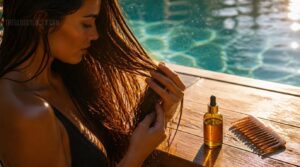
Oil takes the leave-in’s work one step further. Applying hair oil before swimming creates a hydrophobic barrier that repels water and resists chlorine uptake, coating the cuticle so fewer dissolved pool chemicals reach the inner shaft. Focus on mid-lengths to ends, comb through evenly, then allow 15–30 minutes of soak time for maximum moisture retention before heading in.
| Hair Type | Best Pre-Swim Oil |
|---|---|
| Fine or oily | Jojoba or argan |
| Dry or damaged | Coconut oil |
| Thick or coily | Shea butter |
| Color-treated | Lightweight argan |
Wear a Swim Cap
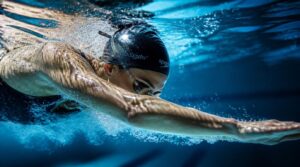
Even with oil coating your strands, a swim cap is your strongest line of defense. It limits direct chlorine contact with the hair shaft, and silicone caps also smooth out your head shape, reducing drag during freestyle. A snug hairline fit keeps coverage steady through every stroke.
- Silicone caps offer smooth, water-resistant coverage for competitive swimmers
- Latex caps are lightweight and stretch to fit most head shapes
- Lycra caps provide a comfortable, flexible fit for casual lap sessions
- A secure fit along the forehead prevents slipping mid-stroke
- Containing hair reduces water saturation, leaving strands lighter and more manageable post-swim
Protect Color-treated Hair
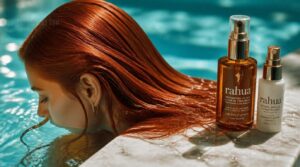
Color-treated hair is especially vulnerable once chlorine gets involved. Chlorine neutralization starts before you enter the pool — coat strands with a sulfate-free leave-in to block dye leaching. A pH-balanced cleanser at wash time minimizes pigment loss, while cool water rinsing seals the cuticle to slow fade.
| Pre-Swim Strategy | Color Protection Benefit |
|---|---|
| Sulfate-free leave-in | Reduces color molecule loss by up to 40% |
| UV protective spray | Shields pigment from sun-accelerated hair discoloration |
| pH-balanced cleanser | Minimizes pigment loss without disrupting cuticle structure |
| Color depositing gloss | Refreshes tone and color retention between salon visits |
| Cool water rinse | Closes cuticle scales to lock in shade longer |
Post-Swim Hair Recovery Routine
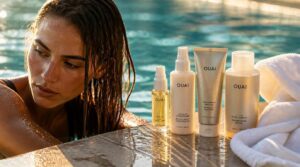
What you do in the first few minutes after leaving the pool can make or break your hair’s long-term health. Chlorine doesn’t stop working the moment you climb out — it keeps stripping moisture and weakening your strands until you rinse and treat properly. Here’s a simple post-swim routine that keeps damage from piling up.
Chlorine keeps stripping your hair long after you leave the pool — act fast or pay the price
Rinse Immediately After Swimming
The moment you step out of the pool, your hair is still absorbing chemicals — so rinse immediately with lukewarm or cool water. Hot water opens the cuticle further, worsening dryness.
A quick rinse removes chlorine residue before it bonds deeper into the hair shaft, reducing irritation and making your post-swim shampoo and conditioner far more effective.
Use Chlorine Removal Shampoo
A rinse alone won’t do — grab a chlorine removal shampoo to break down what water leaves behind. Chelating agents like EDTA bind minerals, making residues rinseable. Look for these key actions:
- Chelating efficacy to lift copper and mineral deposits
- Vitamin C neutralization to reduce oxidized residues
- pH balancing to close cuticles post-wash
- Surfactant cleansing power for thorough chemical buildup removal
Follow With Rich Conditioner
Chlorine strips your cuticle open — conditioner closes it back down. Cationic detanglers reduce strand friction, while lightweight emollients like argan oil seal moisture without residue. Apply mainly to mid-lengths and ends.
| Benefit | Key Ingredient | Effect |
|---|---|---|
| Cuticle sealing | Cationic agents | Locks moisture in |
| Detangling | Polysaccharides | Reduces friction |
| Hydration | Glycerin | Attracts water |
Leave on 5 minutes, then rinse cool to seal hydration.
Deep Condition Weekly
Weekly deep conditioning is non-negotiable for swimmers. Chlorine degrades keratin bonds steadily, and a rich mask with panthenol or aloe replenishes internal moisture while improving hair elasticity meaningfully.
Apply mid-length to ends, cover with a heat cap, and allow 15–30 minutes for full cuticle absorption. Porous hair benefits most from extended saturation — the longer it sits, the deeper the restoration reaches.
Treat Scalp Dryness Gently
Swimmers often overlook the scalp, but dry, itchy scalp after pool sessions is just as common as dry ends. Chlorine strips scalp sebum, leaving skin tight and flaky.
Rinse with warm — not hot — water, then massage 3–5 drops of lightweight scalp oil using fingertips to seal moisture. A wide-tooth comb detangles gently without dragging irritated skin further.
How to Choose Swimmer Haircare
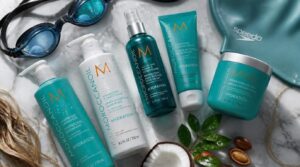
Not all swimmer shampoos are built the same, and picking the wrong one can leave your hair just as damaged as the pool did. A few key factors — like formula type, ingredient sourcing, and how they interact with your specific hair needs — make all the difference. Here’s what to look for before you buy.
Clarifying Versus Chelating Shampoos
Not all shampoos fight the same battle. A clarifying shampoo strips product buildup using surfactants, while a chelating shampoo uses EDTA to bind and lift mineral ions from the hair shaft itself.
Choose wisely:
- Weekly reset — clarifier removes oil and residue
- Post-swim — chelator lifts chlorine and copper
- Hard water — chelating agents dissolve mineral buildup
- Color-treated hair — alternate to protect pigment
Sulfate-free Formula Benefits
Once you’ve picked the right shampoo type, the formula itself matters just as much. A sulfate-free shampoo uses milder surfactants that cleanse without dismantling your scalp’s moisture barrier, so natural oils stay where they belong.
That means better cuticle seal preservation, less frizz, and real color vibrancy longevity — your hair stays hydrated, nourished, and structurally intact through every lap.
Color-safe Product Options
Color-safe formulas protect your investment by targeting four key mechanisms:
- UV protective additives shield dye molecules from sunlight-triggered fading
- Dye transfer inhibitors trap loose pigment so color stays on your strands, not the rinse water
- pH balanced stability keeps the cuticle closed, preventing color leaching after pool exposure
- Silicone smoothing benefits reduce friction and color bleed prevention between strands
For blonde or color-treated hair prone to green tints, these aren’t extras — they’re the formula.
Kid-friendly Swimmer Formulas
When your child swims regularly, their scalp needs a different kind of defense. Kid-friendly swimmer formulas use gentle plant cleansers like coco glucoside instead of harsh sulfates, keeping irritation low and lather soft. Tear-free shampoos make post-swim routines less of a battle.
Kid-safe chelating agents still target chlorine and copper without stripping delicate strands. Look for easy pump dispensers — they make damage prevention a habit kids can manage themselves.
Vegan and Clean Ingredients
Not every clean-labeled swimmer product earns that title honestly. Look for these non-negotiables:
- Sulfate-free, paraben-free formulas that cleanse without stripping moisture
- Biodegradable chelating agents like citrate-based options with lower aquatic impact
- Plant-based emollients such as coconut or argan oil for vegan conditioning
Vegan formulas use natural preservatives like potassium sorbate and vitamin E, skipping synthetic additives while still delivering real protection.
Swimmer Haircare by Hair Type

Not every swimmer’s hair has the same needs, and a routine built for fine, oily hair won’t do much for dry, coily curls — or for strands that are already color-treated and fragile.
Your hair type shapes which ingredients to prioritize, how often to treat, and how aggressively to cleanse. Here’s how to tailor your swimmer haircare to what your hair actually needs.
Blonde Hair Discoloration Prevention
Blonde hair and pool water are a notoriously bad combination. Chlorine triggers copper mineral neutralization failures, letting oxidized metals bond to the hair shaft and create that unmistakable green cast.
A chelating shampoo with EDTA binds those metals before they settle. Pair it with a UV-protective spray to fight sun fading, and use purple toning shampoo weekly to cancel brassiness and maintain blonde brightness.
Curly Hair Moisture Needs
Keeping curls hydrated after pool exposure is a constant battle — chlorine strips natural sebum faster than straight hair types can recover it. Higher porosity curls absorb chemicals readily but lose moisture just as quickly, leaving strands rough and undefined.
Seal hydration with an oil after your leave-in conditioner. Weekly moisturizing hair masks restore elasticity and protect your curl definition before protein imbalance causes brittleness.
Color-treated Hair Protection
Pool water is quietly working against your color. Chlorine oxidizes dye molecules while copper deposits dull vibrancy — mineral-induced fading can strip weeks of salon work in days.
Protect your investment with these essentials:
- Use chelating shampoos with EDTA to extract metals before they react with dye
- Apply UV-protective sprays to slow sun-driven pigment breakdown by up to 40%
- Choose pH-balanced formulas to keep cuticles tight and prevent dye leaching
- Seal with a silicone-based conditioner to reduce pigment loss by roughly 15% per wash
Oily Scalp Balancing Care
Swimming actually complicates oily scalps — chlorine strips surface oils, triggering sebaceous glands to overproduce sebum in response. That rebound grease arrives fast.
Stick to balancing shampoos with salicylic acid or tea tree oil, washing every one to two days. Apply conditioner only to mid-lengths, never the roots, to keep things controlled without tipping back toward oily.
Dry Hair Repair Priorities
Dry hair and chlorine are a rough combination — the oxidizing effect strips natural sebum, leaving strands porous, brittle, and desperate for moisture.
Start with a humectant-rich conditioner containing glycerin or panthenol to draw water back into the fiber. Deep condition once or twice weekly, leaving the mask on 15–20 minutes. When breakage increases, layer in a hydrolyzed protein treatment to rebuild structural integrity before returning to straight hydration.
Frequently Asked Questions (FAQs)
What do professional swimmers put in their hair?
Professional swimmers have used chelating agents and pre-swim oils since ancient Roman bath culture — applying jojoba or argan oil before entry, then following with a protein repair conditioner to counteract chlorine’s structural damage to hair.
How do swimmers maintain their hair?
Swimmers maintain their hair by saturating strands before entering the pool, rinsing immediately after, using chlorine removal shampoo, and sealing moisture with a conditioning oil or deep treatment post-swim.
How do I take care of my hair if I swim every day?
As the saying goes, *an ounce of prevention is worth a pound of cure.
- Rinse immediately after every swim, condition consistently, and use a chlorine removal shampoo a few times weekly to prevent buildup and hair damage.
What do swimmers wear on their hair?
Most swimmers rely on a silicone swim cap to shield hair from chlorinated water, paired with non-slip hair bands to keep strands tucked securely underneath and away from the cap’s edges.
How often should swimmers trim their hair?
Most swimmers benefit from trimming every 4 to 6 weeks, though frequent chemical exposure accelerates split ends, pushing that closer to every 3 to 4 weeks for fine or color-treated hair.
Are silk pillowcases beneficial for swimmer hair recovery?
Yes — silk’s low-friction surface reduces overnight cuticle roughening, helping chlorine-stressed hair retain moisture and stay smoother by morning. That means less mechanical breakage and easier detangling after your next swim.
How does hard water compare to pool water damage?
Think chlorine is your only enemy? Hard water mineral deposits quietly compound the damage. While chlorine strips oils, calcium scale and mineral buildup weaken hair structure too — making chelating agents essential for both threats.
Conclusion
Your hair doesn’t have to be collateral damage for the sport you love. The right hair care products for swimmers don’t just clean — they interrupt the chemistry working against you, restoring what chlorine systematically strips away.
Chelate, hydrate, seal. That’s the sequence that separates swimmers who watch their hair thin and break from those who get out of the pool with strands that are genuinely healthy. Protect before you dive. Repair after you surface.