This site is supported by our readers. We may earn a commission, at no cost to you, if you purchase through links. This content is for general informational and educational purposes only and is not a substitute for professional medical, dermatological, or nutritional advice.
A dry blade running at full speed can climb past comfortable heat in minutes, and a single clump of trapped hair can turn a smooth fade into a tug-and-snag mess. I’ve watched a $200 pair of clippers die in a year because nobody wiped it down after a busy Saturday.
Knowing how to maintain hair clippers for long life keeps you in control of your tools, protects your clients’ skin, and saves you from buying replacements you didn’t need. Make sure you treat cleaning, oiling, and storage as habits, not chores. Here’s the routine that keeps your blades cutting clean for years.
Table Of Contents
Key Takeaways
- Brush out the hair and disinfect your blades after every cut, then dry them completely, because moisture and bleach cause rust and keep you from a clean finish.
- Oil your blades with 2-3 drops of lightweight clipper oil before and after use, and check monthly that your top blade sits about 0.8mm behind the bottom one so it cuts smoothly without pinching skin.
- Store your clippers cool, dry, and oiled in a breathable case, and if they’re cordless, keep the charge between 40-60% for long storage and don’t let them drain below 20%.
- If your clippers overheat or pull, oil them and clear out buildup first, then get dull blades professionally sharpened, and replace the whole assembly if you see chipped teeth, deep rust, or warping.
Clean and Disinfect Clippers After Each Use
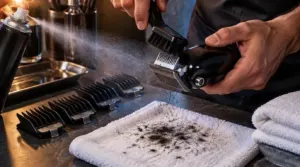
Remove the guards and combs the moment you finish a cut. Good hair clipper maintenance starts right after every client, so make sure you never skip this step.
Once the blades are clean and oiled, a reliable set from this guide to the best barber clippers will hold up better under daily use.
Brush hair from the blade teeth, sides, and carriage with a stiff brush. Cleaning hair clippers this way clears debris before any liquid touches the blades.
Next, focus on disinfecting clipper blades. Spray both sides of the running blades with aerosol disinfectant and give it a full 10-minute contact time. Wipe off the excess afterward so residue doesn’t attract hair.
Keep the motor housing dry, since moisture causes damage. Never clean clippers with water or bleach, because they trigger metal oxidation and rust on the blades. Finish clipper blade cleaning by drying every part with a clean towel. Make sure the blades are completely dry before clipper oil application.
Oil Clipper Blades and Check Alignment
Once your blades are completely dry, it’s time to oil clipper blades. Clipper oil application is key to cutting performance every time.
Put 2-3 drops of lightweight mineral-based clipper oil on the top blade corners and the foot. Do this before and after each use. This gives you real friction reduction and keeps rust away.
Then run the clippers for 10-15 seconds so the oil spreads across the blades. Wipe off any excess, since extra oil attracts hair and debris.
Check blade alignment monthly. The top blade should sit 0.8mm behind the bottom blade, with parallel teeth. Make sure the far left top tooth lines up with the gap between the first two lower teeth, so it won’t pinch skin.
Deep Clean Clippers Without Damaging The Motor
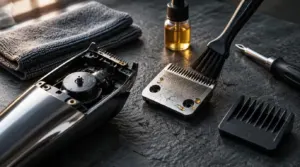
A deep clean is the key to keeping your clippers cutting smoothly for years. Make sure you protect the motor while you work, since that’s the part you can’t easily replace. Below, you’ll find the right steps for detachable blades and for fixed blades, so pick the one that matches your clippers.
After you finish trimming, a few simple habits can help stop ingrown hairs from forming and keep the skin underneath calm and smooth.
Deep Cleaning Detachable Blades
Picture a blade bed packed with fine, oily clippings, like lint clogging a dryer.
A neglected blade bed clogs with fine, oily clippings the way a dryer’s lint trap fills until it chokes
Deep cleaning starts with blade detachment, so make sure the clipper’s off.
- Brush off loose hair.
- Soak in 70% alcohol for three minutes.
- Rinse, then dry completely.
- Oil, then finish blade reassembly.
Align the blades carefully during blade assembly. Blade sharpness retention really depends on it.
Once the blades are aligned, keep them running smoothly by learning how often you should oil your hair clipper blades, since regular lubrication prevents heat and corrosion.
Deep Cleaning Fixed Blades
Fixed blades can’t soak, so deep cleaning works differently. Skip blade detachment and wipe only the exposed teeth.
| Step | Tool | Purpose |
|---|---|---|
| 1 | Brush | Clear debris |
| 2 | 70% alcohol | Disinfect teeth |
| 3 | Clipper oil | Two drops |
| 4 | Cloth | Wipe excess |
Make sure the clipper’s off while you brush. Run it briefly after oiling, then wipe the casing. Never submerge the motor.
For a quick touch-up between deep cleanings, a clipper blade cleaning spray disinfects the teeth in seconds without any soaking.
Store Clippers Safely and Maintain Cordless Batteries
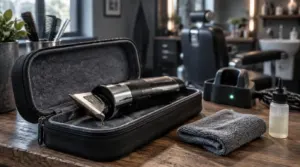
Store your clippers somewhere cool and dry, ideally between 10°C and 20°C, away from sunlight and heat sources. Good storage is the cornerstone of long clipper life.
Make sure blades are wiped and oiled, then slide the clippers into breathable clipper cases. Moisture is the enemy, so choose rust-resistant storage.
For cordless clippers, battery care is key. Keep the charge at 40-60% for long storage, and recharge before it drops below 20%. Unplug once it’s full, and skip repeated overnight charging. Wipe the contacts with a dry cloth.
- Picture reaching for dead clippers with a client already in your chair.
- Feel the pride of blades that still cut like new.
- Enjoy the calm of a kit that’s ready every time.
Troubleshoot Clippers and Replace Worn Blades
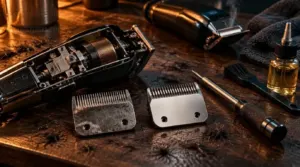
Even well-kept clippers act up now and then, and it’s key to know what’s going on when they do. Below, you’ll find the fixes for overheating, noise, and pulling, plus how to decide between sharpening and replacing a blade. Make sure you work through them in order so you keep control of your tools and stay safe.
Fixing Overheating, Noise, and Pulling
Is your clipper running hot? Don’t ignore it. Motor overheating usually traces back to dry blades or hair buildup removal you skipped.
| Symptom | Likely Cause | Fix |
|---|---|---|
| Overheating | Dry blades | Oil them |
| Pulling | Dull blades | Check sharpness |
Make sure you oil the blades, clear debris, and confirm alignment. Weak batteries hurt motor performance, so charge fully. Still pulling? Check blade sharpness.
Choosing Blade Sharpening or Replacement
Say your clippers start pulling after six months, yet the teeth look intact. That’s a job for blade sharpening. A pro restores the correct blade teeth angle and protects blade geometry integrity.
If you spot chipped teeth, deep rust, or warping, go with blade replacement. Sharpening can’t fix that kind of damage. Make sure you swap the whole blade assembly.
Frequently Asked Questions (FAQs)
How often should clippers be professionally serviced?
Is home cleaning enough? Not quite.
Book professional clipper service every 3-6 months for professional salon use, or yearly for occasional use. Blade sharpening every 6-8 weeks protects tool longevity, and blade replacement compatibility matters.
Can clippers be used on wet hair?
Not if you can help it. Wet hair makes clippers tug and push instead of cutting cleanly, and moisture rusts the blade over time.
Make sure your hair is completely dry. Proper maintenance starts there.
Do corded and cordless clippers need different care?
Yes, but only slightly. Your corded clippers and cordless clippers share the same blade routine: blade lubrication, then oil excess wiping.
Cordless clippers need battery care, so keep charging contacts clean and don’t drain them.
Are clipper blade guards worth buying for protection?
Yes, a good blade guard is worth it. It protects your blade alignment during storage and shields the teeth from drops. Make sure you choose a metal-reinforced one, since it lasts longer than basic included guards.
What should barbers do before sharing clippers between clients?
Brush off hair first, apply disinfectant spray to the blades and combs. Make sure you follow the contact time for blade soaking efficacy. This helps with crosscontamination avoidance, skin infection control, and antimicrobial sanitation between clients.
Conclusion
Picture a blade gliding through hair with a soft, even hum, cool to the touch and free of snags. That’s what a cared-for clipper sounds like on a busy Saturday.
Knowing how to maintain hair clippers for long life comes down to three habits: brush and disinfect after every cut, oil before you start, and store them dry. Make sure you check your blade alignment. Do that, and your clippers will keep earning their place.