
This site is supported by our readers. We may earn a commission, at no cost to you, if you purchase through links. This content is for general informational and educational purposes only and is not a substitute for professional medical, dermatological, or nutritional advice.
A $150 badger brush can fall apart in a year, and the culprit is rarely the brush. It’s the hot tap, the damp drawer, and the habit of leaving lather to dry in the knot.
Bristles are hair, and hair breaks down under heat, trapped moisture, and soap residue. That’s why a brush can start to smell musty, shed into your lather, or leave a white film at the base of the knot. Each problem has a fix, and most take under a minute.
Here’s how to care for a shaving brush so it stays full, soft, and ready for years of daily use.
Table Of Contents
Key Takeaways
- Rinse your brush under warm water after every shave, because leftover soap is what slowly ruins the knot, and adjust the details to your bristle type, such as skipping the flicking with synthetics and never soaking badger.
- Deep clean your brush once a month with a diluted vinegar soak, borax paste, or mild shampoo to dissolve mineral deposits and soap residue that build up at the base even when the brush feels fine.
- Dry your brush bristles-down on a stand in open air, away from heat and damp drawers, so water drains from the knot and you avoid musty odors, loosened glue, and melted adhesive.
- Most brush problems, including odor, shedding, splaying, and white film, trace back to your routine rather than the brush, so fixing moisture, heat, and pressure habits will help it last for years.
Daily Shaving Brush Care by Bristle Type
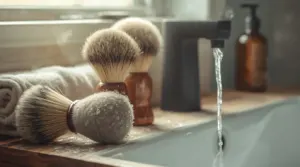
Always rinse your brush under warm water after every shave, because leftover soap is what slowly ruins a knot. That one habit anchors your daily care, and the details shift a little with your brush type.
Once you’ve rinsed, a few more shaving tool cleaning tips can help your brush, razor, and blades stay fresh and comfortable for the long haul.
With synthetic bristles, finish with a gentle squeeze from base to tip and skip the flicking, which snaps bristle fibers over time.
Among natural bristles, badger holds more water, so don’t soak it, and shake it out softly without twisting. Boar needs 5 to 10 shaves to break in, so stiffness and a slight odor are normal. Use light rotating motions, never pressing it flat. Horse hair hates heat and sunlight, which turn it brittle.
Once a month, badger brushes also benefit from a deep clean with mild hair shampoo to remove built-up soap residue.
Hybrids follow their dominant fiber, so hang them bristle-down.
Deep Clean Your Shaving Brush Safely
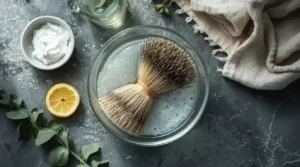
A monthly deep clean resets the knot. Soap, minerals and skin oils pack into the base, even when your brush feels fine. Pick the cleaning solution that fits the problem:
- Soak in 20% vinegar and 80% water to dissolve mineral deposits and feel the knot spring back fast.
- Work in a borax paste, one tablespoon per cup of water, and wait patiently up to an hour.
- Massage in pet shampoo or mild liquid detergent, rinsing until the water runs clear.
- Finish with a final rinse and enjoy a softer, fuller brush that lathers beautifully like new.
Rinse gently every time, since harsh scrubbing only stresses bristle fibers. Done monthly, this protects brush longevity and makes proper storage techniques count even more.
Dry and Store Your Shaving Brush Properly
You’ve cleaned your brush, so now it’s time to help it last. How you dry and store it decides whether the knot stays strong and the bristles stay fresh. Below, you’ll find two situations to plan for, your everyday routine at home and the days you’re on the road.
Air-Drying and Storage at Home
Think of your brush as a wet sweater: it only feels fresh once air reaches the center.
A damp brush is like a soggy jumper, never truly fresh until the air has dried it through to the core
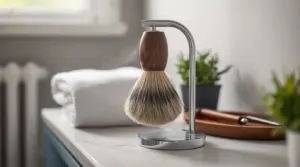
Hang it bristle-down on a stand, away from heat, so air circulation drying finishes the job in 24 hours.
| Habit | Result |
|---|---|
| Damp drawer | Musty odor |
| Open stand | Fresh, fluffy knot |
| Hot radiator | Melted glue |
Keep it airy and it’ll serve you for years.
Packing and Drying During Travel
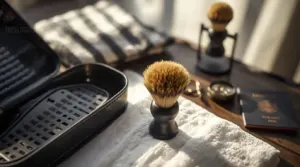
Travel changes the rules a little, and that’s fine. A synthetic brush is your best bet on the road, since it dries fast and can handle being packed slightly damp.
Shake it out, squeeze it in a towel, then slip it into a vented travel case. Airflow keeps odors away. Once you arrive, unpack it right away and stand it up in a ventilated area.
Troubleshoot Shaving Brush Odors, Shedding, and Damage
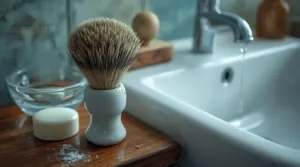
Why does a brush that felt perfect last month suddenly smell off or leave hairs on your face? Usually, your routine is the culprit, and it’s fixable.
Match the symptom to the cause:
- Musty brush odor: trapped moisture and soap residue at the knot base.
- Heavy bristle shedding: hot water, harsh cleaners, or pressing the brush into the sink.
- Splayed or twisted knot: swirling pressure on your face or twisting while loading.
- White residue: hard water minerals and soap scum.
Start with the easy wins. Rinse with cool water, then do a diluted vinegar soak monthly to dissolve minerals.
Adjust your cleaning frequency if residue returns, and dry bristles down for proper storage. Replace it if bristle damage clearly persists.
4 Shaving Brush Cleaning and Storage Accessories
The right tools make a good care routine easier to stick with, and they protect the brush you’ve already invested in.
Below are four cleaning and storage accessories I’d happily recommend, from a gentle cleaner to a stand that keeps your brush drying properly. Each one fits a specific need, so you can pick what suits your routine.
1. The Masters Brush Cleaner Preserver
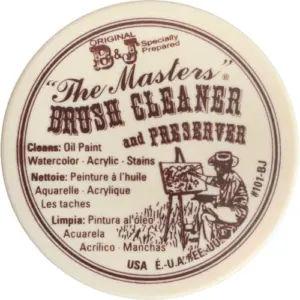
Soap built for painters might seem an odd pick here, but it earns its spot. The Masters Brush Cleaner Preserver is a non-toxic, solid soap that lifts oils, acrylics, watercolors, and varnishes from sable, bristle, and synthetic fibers.
Work up a lather by hand, rinse well, then leave a thin layer on the bristles, reshape the tip, and let it dry. It conditions fibers, keeping them soft and flexible. Know it’s made for art brushes and untested for cosmetic use.
| Best For | Artists, students, hobbyists, and professionals who want a non-toxic soap to clean and condition their sable, bristle, and synthetic art brushes. |
|---|---|
| Dimensions | 2 x 2 x 3 inches |
| Weight | 0.71 ounces |
| Model | GP101-BJ |
| Material | Solid soap |
| Primary Use | Art brush cleaning |
| Cosmetic Suitability | Not tested for cosmetic use |
| Additional Features |
|
- Removes acrylics, oils, watercolors, and varnishes from a wide range of brush types
- Restores brushes to like-new performance
- Conditions bristles to keep them soft and flexible
- Recommended only for art brushes and not tested for cosmetic use
- Requires manual application and rinsing after each use
- Comes as a small solid soap (0.71 ounces), which may not last long with heavy use
2. U.S. Art Supply Brush Cleaner 16oz
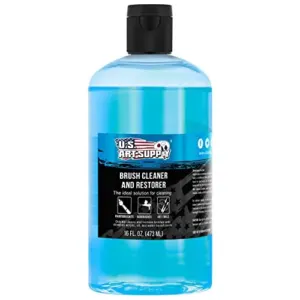
Say you’ve inherited a vintage brush whose knot is stiff with years of hardened residue. This is where the U.S. Art Supply Brush Cleaner 16oz earns its spot on your shelf.
It’s built to soften dried acrylic, oil, and water-based paints, so soak the affected part, then wipe or work residue loose with a toothbrush. Fully dried buildup can need up to 24 hours. Wash with mild soap and water, reshape, and keep the bottle sealed in a ventilated space.
| Best For | Artists, hobbyists, and airbrush users who want to revive stiff, paint-hardened brushes and tools instead of throwing them away. |
|---|---|
| Dimensions | 6.38 x 2.68 x 2.56 inches |
| Weight | 0.71 ounces |
| Model | USA BC-16 |
| Material | N/A |
| Primary Use | Paint residue removal |
| Cosmetic Suitability | N/A |
| Additional Features |
|
- Softens dried acrylic, oil, gouache, ink, and water-based paints so residue can be wiped or scrubbed away.
- Works on airbrushes and other artist tools, not just brushes.
- Lets you restore and reuse brushes repeatedly, which cuts down on waste.
- Fully dried acrylic and oil paint can need up to 24 hours of soaking.
- Brushes must be washed with mild soap and water and reshaped after cleaning.
- A whole airbrush can’t be soaked, so only the affected parts can go in the cleaner.
3. U.S. Art Supply Stainless Brush Washer
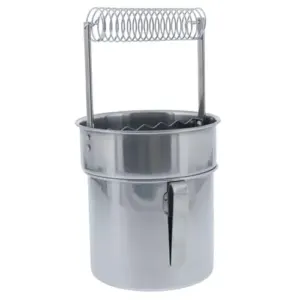
Picture a shaving brush hanging in a clear spiral, tips floating free above the bottom, soap and grit slipping away beneath the bristles. That’s what this washer does for you.
The spiral holder keeps the knots from bending while they soak, so you protect the shape you’ve worked to maintain. A removable sediment grate lets debris settle below, and the particle cup with its mesh screen catches what’s left.
It’s rust-proof stainless steel, about 4.8" x 4.4" x 8.2". Just remember to empty and rinse it yourself.
| Best For | Oil painters who want to clean their brushes in water or solvents without bending or damaging the bristles. |
|---|---|
| Dimensions | 4.8″L x 4.4″W x 8.2″H |
| Weight | N/A |
| Model | BW-350 |
| Material | Rust-proof stainless steel |
| Primary Use | Brush rinsing and cleaning |
| Cosmetic Suitability | N/A |
| Additional Features |
|
- The spiral holder suspends brush tips so the bristles keep their shape.
- A removable sediment grate lets pigment settle below the bristles, keeping the brush area clean.
- The rust-proof stainless steel body comes with a removable particle cup and mesh screen that catch debris.
- It is made for brush cleaning only, not for mixing or storing paint.
- The sediment and particle cups must be emptied and cleaned by hand.
- Aggressive chemicals can degrade the stainless steel over time, so it isn’t suited to harsh solvents.
4. Parker Adjustable Shave Stand Chrome
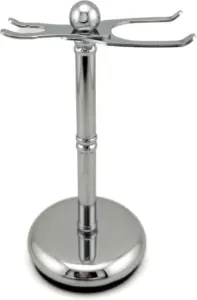
A wet brush sitting bristles-up in a cup is a brush that’s slowly falling apart. Water pools at the base of the knot, loosens the glue, and invites odors.
This stand fixes that. Its adjustable prongs widen or narrow to grip nearly any handle, and the brush hangs bristles-down so water drains away from the knot. The weighted chrome base, at 7.1 ounces, won’t tip, and the rubberized feet keep your countertop scratch-free.
Set your brush on it after every shave. You’ll notice the difference within weeks.
| Best For | Wet shavers who want to dry their brush bristles-down on the counter to help it last longer and keep their grooming gear organized. |
|---|---|
| Dimensions | 6 x 6 x 6 inches |
| Weight | 7.1 ounces |
| Model | N/A |
| Material | Stainless steel, chrome |
| Primary Use | Bristles-down drying |
| Cosmetic Suitability | Suitable for grooming equipment |
| Additional Features |
|
- Adjustable prongs fit a range of brush handle widths
- Weighted chrome base (7.1 ounces) keeps the stand stable, and rubberized feet protect countertops from scratches
- Bristles-down drying extends brush life, and the stand also holds razors and brushes for tidy storage
- Only available in a chrome finish
- Only one unit is included
- Patent pending design, so it may not have a long track record yet
Frequently Asked Questions (FAQs)
How often should you replace your shaving brush?
Most brushes need replacing every 2 to 5 years, depending on bristle type and how you treat them. Synthetics often go 1 to 2 years, while quality badger can last a decade. Watch for clumps of shedding.
How much shaving soap should I load onto the brush?
Start with about a quarter teaspoon of shaving soap, roughly an almond-sized amount or 3 to 4 grams. Swirl your damp brush on the puck for 20 to 30 seconds with light pressure, then build from there.
How to properly use a shaving brush?
Soak natural bristles in warm water for a few minutes, then shake out the excess until the brush is damp, not dripping. Swirl it on your soap for 20 to 30 seconds, then build the lather with gentle circular strokes.
Conclusion
Picture a brush that’s lasted twelve years, still plush, still smelling like nothing at all. Its owner didn’t buy anything special. They rinsed it well, shook it out, and let it dry upside down on a stand every morning.
That’s all how to care for a shaving brush comes down to. Rinse, dry, breathe. Do those three things and your brush will outlast most razors, getting softer and more dependable with every lather you build.