This site is supported by our readers. We may earn a commission, at no cost to you, if you purchase through links. This content is for general informational and educational purposes only and is not a substitute for professional medical, dermatological, or nutritional advice.
Why does your clipper sound like a lawnmower chewing gravel halfway through a fade? Dry blades. Metal grinding on metal turns a smooth cut into a tug-of-war with your scalp, and the motor pays for it.
Knowing when to lubricate hair clippers changes everything. A few drops keep the blades cool, the hum steady, and the lines clean. Skip them, and heat builds, teeth dull, and rust creeps in where you can’t see it.
The fix takes under a minute. You just need the right schedule, the right oil, and a few telltale signs that your blades are begging for attention.
Table Of Contents
- Key Takeaways
- When Should You Lubricate Your Hair Clippers?
- Signs Your Hair Clippers Need Lubrication
- Why Regular Lubrication Protects Clipper Blades
- Choosing The Right Hair Clipper Oil
- How to Lubricate Hair Clippers Correctly
- Storing Lubricated Clippers to Prevent Rust
- Frequently Asked Questions (FAQs)
- Conclusion
Key Takeaways
- Oil your clippers before every home cut, after every cleaning, and every 2 to 3 clients or 1 to 2 hours of nonstop cutting if you’re working professionally.
- Loud grinding, a lower motor hum, hot blades, heavy vibration, or pulling and snagging mean your blades are running dry and need oil right away.
- Use a light, dedicated clipper oil like refined white mineral oil, never cooking oil or WD-40, and apply just three drops, run the motor, then wipe off the excess.
- Oiling cuts friction and heat, which protects your blades and motor, and storing clippers dry with only a thin oil film keeps rust from setting in.
When Should You Lubricate Your Hair Clippers?

Ever wonder why your clippers sound like a angry lawnmower by the third haircut? Timing matters more than most people think, and it changes depending on who’s holding the clippers. Here’s when to reach for the oil in three common situations.
If you’re not sure which camp you fall into, this guide to how often you should oil hair clipper blades breaks down the right schedule for each situation.
Oiling Before Each Home Haircut
Want your clippers to glide instead of snag? Oil them before every home haircut. Brush off loose hair, then apply two or three drops across the top blade and one on each side.
Run the motor for 10 to 20 seconds so the oil spreads, then wipe off excess oil.
Skip it and expect tugging, heat, and a grumpy scalp.
If you run out of clipper oil, baby oil works as a substitute because it’s about 90% mineral oil with the same light viscosity.
Oiling During Professional Barbering Sessions
Think one oiling lasts all day? Professional barbers know better. Heat and friction burn oil off fast, so lubricate clippers on a schedule:
- Every 2 to 3 clients
- Every 1 to 2 hours of nonstop cutting
- Louder pitch or extra heat
- Three drops across the teeth
- Run 5 to 10 seconds, then wipe
Skip it and blades dull while motors strain.
A quick step-by-step blade cleaning routine for hair clippers keeps your blades sharp and your motor running smoothly for years.
Re-oiling After Blade Cleaning
Just wiped your blades down with disinfectant? Great, but you’ve also stripped every drop of protective oil. Bare metal grinding on bare metal runs hot and loud, and it rusts fast.
Dry the blades with a cloth, then let them air-dry. Never oil damp metal. Add one drop at the center and one at each end, run 10 to 20 seconds, and wipe off the excess.
Signs Your Hair Clippers Need Lubrication
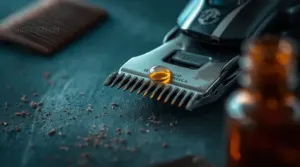
Does your trimmer sound like it’s chewing gravel? Your clippers will tell you when they’re thirsty, so listen. Loud clattering or grinding means the blades are running dry. A screech usually points to a dry top groove, where the blade guide hesitates. If the motor’s hum drops in pitch, friction is slowing the blades down, and that’s the trimmer slowing down you can actually hear.
Now check by touch. Blades should feel warm, never hot. Heavy vibration in your hand is another warning.
Then watch the cut. If it pulls or snags instead of gliding, stop. Cornrowing, uneven lines, and mid-cut jams all mean the teeth need oil. Left alone, dry metal heats up and leaves you with dull clipper blades.
Why Regular Lubrication Protects Clipper Blades
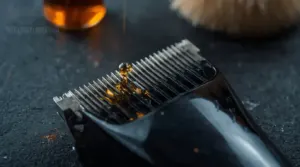
Why do your clippers go from smooth to snagging so fast? Blame bare steel. Without oil, metal-on-metal contact grinds the blades against each other thousands of times a minute, and clippers only cut well when two moving pieces line up precisely.
Unoiled blades wear themselves down by grinding together thousands of times every minute, so a few drops of oil keep your clippers cutting cleanly
That grinding makes heat. Hot blades expand, dull quicker and pull at hair. A thin oil film keeps them cooler, and that friction reduction in clippers also spares your motor from working overtime.
Oil also helps prevent rusting. Moisture can’t reach coated steel, so the tiny gaps between the comb teeth stay open. Skip it, and rust gums up the works like sand in a hinge.
Blade lubrication is cheap insurance for hair cutting tool longevity. Drops beat replacements.
Choosing The Right Hair Clipper Oil
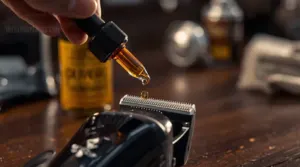
The bottle of olive oil in your kitchen will do the job, right? Wrong. Cooking oils turn tacky and gum up your blade teeth. WD-40 evaporates fast and leaves nothing behind.
Stick with a dedicated clipper oil. Check oil viscosity compatibility first: you want roughly 5 to 10 cSt so it wicks between tight blades without dragging. Wahl blade oil is a solid pick, and any decent oil clippers brand will accept it.
Look for these traits:
- Refined white mineral oil base
- Light, low viscosity
- Colorless and odorless
- Safe for skin contact
- Heat resistant at 5,000 to 7,000 RPM
Skip anything thick. Heavy oil slows your motor, and a slow motor tugs hair. USP mineral oil works and costs less.
How to Lubricate Hair Clippers Correctly
Ever wonder why your clippers sound like a angry lawnmower halfway through a cut? Oiling them right takes about two minutes, and it only needs three simple steps. Follow them in order and your blades will run smooth, cool, and quiet.
Clean and Dry The Blades
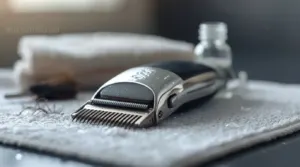
Why would you drip oil onto a blade that’s still wearing yesterday’s hair? You’d just be gluing the mess in place.
Brush out every visible strand first, working between the teeth with the small brush. Wipe off any alcohol residue, then let the metal air-dry completely. Even a hint of dampness dilutes oil and invites rust.
Apply Oil and Distribute Evenly
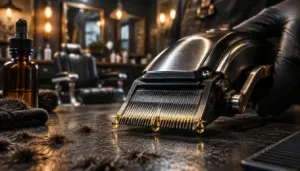
Ever watched clippers snag mid-fade because someone dribbled oil in a line across the teeth? Don’t do that.
Turn the clippers on first. apply the lubricant: one drop at each end, one in the center.
Run the clippers for 20 to 30 seconds, working the lever up and down. A quieter hum means the oil formed a thin protective film.
Wipe Away Excess Oil
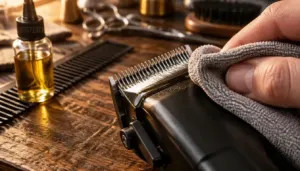
Think a drenched blade cuts better? Think again. Too much oil is just as bad as none.
Once the motor’s run for 10 to 20 seconds, switch it off and follow these steps:
- Grab a soft cloth.
- Dab the blade surface gently.
- Wipe the casing too.
- Check for drips.
- Leave a thin protective film.
Done.
Storing Lubricated Clippers to Prevent Rust
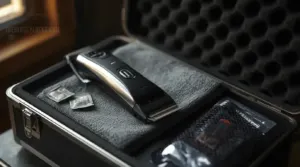
Why spend ten minutes oiling your blades only to toss them into a damp case? That’s how rust wins.
Let the clipper dry first. Moisture hides under the guard and along the teeth, even when the blade looks fine. A closed case with a damp clipper turns into a humid sauna, and steel oxidizes in there.
Once it’s dry, check that you wiped off the excess clipper oil. A thin film does the job. Too much turns sticky and fails to repel water.
Skip plastic bags. They trap moisture and make blades "sweat rust." Use a dry case with silica gel packs, or a breathable mesh bag.
Storing for months? Wrap oiled blades in oil-treated paper and pull the battery.
Frequently Asked Questions (FAQs)
Can you over-oil hair clippers and damage them?
Think a few extra squirts can’t hurt? A barber once swapped in 3-in-1 oil, and the blades ran hot within minutes. Yes, over-lubricating clogs blades and sends oil into the motor, causing real mechanical damage.
What should you do if oil gets inside the motor?
Did a little too much oil sneak into the motor? Tip the clippers sideways or downward and let it drain out. Wipe the casing with a clean cloth. If the motor speed drops, disassemble and clean everything.
Should ceramic or titanium blades be lubricated differently?
Does your blade material change the oiling routine? Slightly. Ceramic needs oil more often, since heat goes into the blade guide. Titanium follows the usual schedule. Use the same mineral-based clipper oil for both.
Do cordless and corded clippers need different oiling?
Think corded clippers get a free pass on oiling? Both need oil every 5 to 10 minutes of cutting, three drops, same routine. Cordless pays more for skipping it: motor strain drains the battery faster.
How long does one bottle of clipper oil last?
Wondering how long that little bottle will stick around? Longer than you’d think. At home, a few drops per session stretches a 4-ounce bottle from several months to over two years, and storing it well keeps it usable.
Conclusion
Ready to stop torturing your blades? Now you know when to lubricate hair clippers: before every cut, after every cleaning, and the moment you hear that gravel growl. Three drops, one quick wipe, and you’re done.
Treat oil like cheap insurance for your motor, your scalp, and your lines. Skip it and heat wins. Do it and your clipper hums along for years, cutting clean while you take the credit. Small habit, huge payoff, zero drama.