This site is supported by our readers. We may earn a commission, at no cost to you, if you purchase through links. This content is for general informational and educational purposes only and is not a substitute for professional medical, dermatological, or nutritional advice.
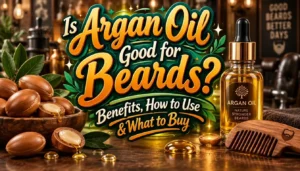
Your beard can look great in the mirror at 7 a.m. and feel like steel wool by lunch. Dry skin underneath flakes onto your shirt, and the hairs on top curl, snap, and frizz no matter how often you comb them.
So is argan oil good for beards? For coarse, thirsty facial hair, it’s one of the best fixes you can pour from a bottle. Packed with vitamin E and fatty acids, it softens stiff strands, calms itchy skin, and adds a healthy shine without clogging pores.
Here’s how it works, what it can’t do, and how to use it.
Table Of Contents
- Key Takeaways
- Is Argan Oil Good for Beards?
- Can Argan Oil Help Your Beard Grow?
- How to Use Argan Oil for Your Beard
- Argan Oil Vs. Other Beard Oils
- How to Choose Quality Argan Oil for Your Beard
- Frequently Asked Questions (FAQs)
- Should I put argan oil in my beard?
- What is the best oil for a beard?
- Which oil is better for beard, argan or jojoba?
- What is the 3 month beard rule?
- Can argan oil help with patchy beard areas?
- Does argan oil work for all beard types?
- How long until argan oil shows visible results?
- Can you use argan oil on mustaches too?
- Is argan oil safe for colored or dyed beards?
- Can argan oil cause beard breakouts or acne?
- Conclusion
Key Takeaways
- Argan oil moisturizes both your beard hair and the skin underneath, softening coarse strands, calming itch and flakes, and adding shine without clogging your pores.
- It won’t create new growth or fill patchy spots, but it helps you keep every inch your genetics allow by cutting breakage and keeping your skin comfortable.
- Use 3 to 4 drops for a short beard or 6 to 8 for a long one, massaged into damp skin daily or every other day, and give it about 8 to 12 weeks to show real results.
- Choose pure, cold-pressed Moroccan argan oil (look for Argania Spinosa Kernel Oil on the label, ideally USDA organic) in a dark amber glass bottle so you get the full vitamin E benefit.
Is Argan Oil Good for Beards?
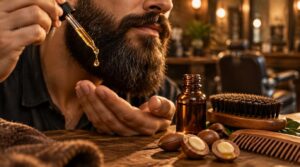
Why do so many groomers swear by argan oil? Because it simply works. Argan oil moisturizes both your beard hair and the skin underneath, so dryness, itchiness, and flakes don’t get a chance to settle in.
For extra hold and shine on top of that daily moisture, a beard balm with argan oil helps tame stray hairs while keeping your skin comfortable.
It’s rich in vitamin E and fatty acids, which soften rough cuticles, calm frizz, and give your beard a healthy shine. Better yet, it absorbs deeply instead of sitting on top, so you get lasting hydration without that slick, heavy feel.
It’s also non-comedogenic, meaning it won’t clog your pores or invite breakouts. That’s a big deal if your skin is sensitive, especially while your beard is coming in and everything feels a bit irritated.
Its omega-6 fatty acids and vitamin E also promote blood flow to the chin and nourish the hair roots, which helps a fuller, healthier-looking beard.
So yes, it’s a smart everyday beard care staple.
Can Argan Oil Help Your Beard Grow?
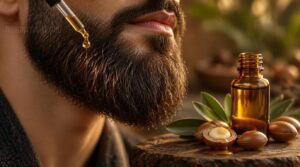
Here’s the honest answer: argan oil helps beard growth, but it doesn’t create it. No oil has been proven to wake up dormant follicles, and genetics and testosterone sensitivity set your ceiling.
Argan oil can’t create beard growth, but it builds the conditions that help you keep every inch your genetics allow
What argan oil does is build better conditions for the hair you already have. Think of it as a healthy growing environment:
- Vitamin E helps protect hair from environmental stress.
- Oleic acid strengthens strands, so breakage doesn’t steal your length.
- Moisture calms itchiness, so you’re less tempted to scratch.
- Polyphenols may ease skin inflammation around the follicle.
Used as a carrier oil or on its own, it helps you keep every inch you grow. That’s a win worth chasing. Stay consistent and give it a few real months.
How to Use Argan Oil for Your Beard
Getting real results from argan oil comes down to using it the right way, and it’s easier than you’d think. Below, you’ll find a simple daily beard care routine plus a homemade mix you can whip up yourself. Pick the one that fits your style, and your beard will thank you.
If your skin tends to flake or itch under the beard, pairing argan oil with these beard growth products for dry skin can keep both hair and skin comfortably hydrated.
Daily Beard Care Routine
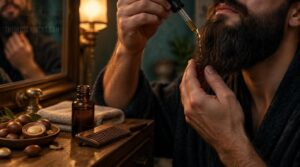
Picture your beard as a dry lawn after a hot summer, thirsty and brittle. A steady beard care routine brings it back to green.
| Beard Length | Drops |
|---|---|
| Short | 3 to 4 |
| Long | 6 to 8 |
Massage your beard oil into damp skin first, then comb through. Go daily or every other day, ideally at night, for softness within three weeks.
DIY Argan Oil Beard Blend
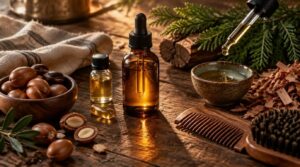
Ready to mix your own? DIY beard care is easier than it looks, and this beard oil recipe makes one ounce:
- 15ml cold-pressed argan oil
- 15ml jojoba oil
- 3 drops cedarwood oil
- 2 drops vitamin E
Pour into an amber glass bottle, shake gently, and store somewhere dark.
Use 3 to 5 drops after showering, and it’ll thank you later.
Argan Oil Vs. Other Beard Oils
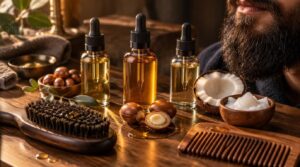
The real question in beard oil vs other oils is what each one does once it hits your skin. Argan oil is rich in vitamin E and fatty acids, so it softens coarse whiskers deeply. Other popular carrier oil options work differently:
| Oil | Best For | Feel |
|---|---|---|
| Argan oil | Coarse, dry beards | Silky, non-greasy |
| Jojoba | Oily or acne-prone skin | Light, fast-absorbing |
| Coconut | Quick moisture | Rich, can clog pores |
Jojoba mimics your skin’s natural sebum, which contains squalene, so it balances oily skin beautifully. It’s lighter, though, and won’t condition thick, wiry hair as deeply. If you’re pairing jojoba with a wax, the best mustache waxes for thick beards combine it with beeswax to add the hold that light oil alone can’t provide.
Coconut oil sits heavy and can leave buildup. If you want one oil that provides softness, shine, and skin comfort, argan oil is your safest everyday bet.
How to Choose Quality Argan Oil for Your Beard
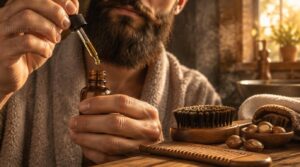
Not every bottle labeled argan oil deserves a spot on your bathroom shelf, and the wrong one can leave your beard no better off than before. A few quick checks will help you spot the real deal and skip the watered-down imitations. Here are the five things I’d look for before you buy.
Purity And Ingredients
Flip the bottle over and read the label before anything else. You want Argania Spinosa Kernel Oil and nothing more, no fillers, no synthetic fragrance.
Pure coldpressed argan oil is noncomedogenic and rich in vitamin E, so it won’t clog the skin under your beard. Look for USDA organic status, and check that argan sits in the top three ingredients.
Cold-Pressed Extraction
Heat makes oil fast, but coldpressed makes it worthwhile.
Argan oil pressed below 49°C keeps its vitamin E intact, so your beard gets the good stuff instead of a watered-down carrier oil. Look for:
- Moroccan argan oil
- "Cold-pressed" and Argania spinosa on the label
- No solvents or roasting
Culinary bottles get roasted, so skip them for beards.
Verified Organic Certification
Here’s a number worth remembering: USDA organic requires at least 95% organically produced ingredients.
| Label | Minimum | Best For |
|---|---|---|
| USDA Organic | 95% | Organic beard oil |
| COSMOS | 95% | Cosmetics |
| Made With Organic | 70% | Partial claims |
Skip vague "natural" claims; they guarantee nothing. Cliganic USDA Organic Argan Oil lists Argania Spinosa Kernel Oil, and it’s coldpressed argan, so check the label before buying.
Reputable Moroccan Sourcing
Where your oil grows matters more than most labels admit.
Real Moroccan argan oil comes from the Argania Spinosa trees of southwestern Morocco, around Essaouira and Agadir. Look for a women’s cooperative, ideally one holding USDA organic or Ecocert certification. Those groups hand-press coldpressed oil the traditional way, and your beard gets every bit of the vitamin E it deserves.
Protective Glass Packaging
Ever wonder why the best Argan oil comes in dark amber bottles? It’s not just for looks.
Amber glass blocks UV rays, so your oil resists UV damage and keeps its tocopherols intact. An airtight cap limits oxygen, which slows rancidity. Think of it as a real beard heat shield that protects against heat damage. Your beard oil deserves better.
Frequently Asked Questions (FAQs)
Should I put argan oil in my beard?
Think of your beard as a garden, and argan oil as the rain. Yes, you should. This gentle beard oil ingredient brings vitamin E to soften hair, calm skin, and support beard growth. Try it.
What is the best oil for a beard?
There’s no single best beard oil, and that’s good news. Argan oil, rich in vitamin E, is a great all-rounder, but jojoba often feels lighter. Pick the carrier oil that suits your skin and beard.
Which oil is better for beard, argan or jojoba?
Neither wins outright. Jojoba oil feels lighter and sebum-like, while argan oil conditions richer. Both work as a carrier oil in beard oil, but neither boosts beard growth. Pick by your skin and beard texture.
What is the 3 month beard rule?
Like a seed, your beard needs time.
The 3-month beard rule means no trims for 90 days, so beard growth shows. Keep your beard care routine simple: argan oil or beard oil helps beard health.
Can argan oil help with patchy beard areas?
Most guys notice changes after 8 to 12 weeks. Argan oil won’t fill gaps, but this beard oil boosts beard nourishment, calms irritated skin, and helps beard growth, so your beard density looks visibly fuller.
Does argan oil work for all beard types?
Yes, argan oil fits nearly every beard, from coarse curls to fine whiskers. Use it as beard oil for dry skin, dandruff, and itch.
Match drops to texture for beard oil effectiveness and beard care.
How long until argan oil shows visible results?
Think of argan oil as a seed: patience pays.
You’ll feel softness and less beardruff within the first week.
By week four, growth rate improves; by week eight, beard density and beard oil effectiveness peak.
Can you use argan oil on mustaches too?
Yes, you can. Mustache hair is facial hair, so beard oil benefits apply. Argan oil, a natural oil rich in vitamin E, softens hair and helps facial hair health.
Just keep it off your lips.
Is argan oil safe for colored or dyed beards?
Your fresh color has never been safer! Argan oil won’t strip dye, and this natural oil’s antioxidant vitamin E adds real beard protection. Patch test first, then apply it to your damp, newly dyed beard.
Can argan oil cause beard breakouts or acne?
Ironically, the oil you blame for breakouts may be your best beard acne prevention. Argan’s an antiinflammatory beard treatment for beard skin health.
Culprits are usually other beard oil ingredients or sloppy beard oil application.
Conclusion
Think of argan oil as a cool drink of water for a parched desert beard. So, is argan oil good for beards? Yes, especially if yours runs dry, coarse, or itchy. Keep it realistic, though: it won’t rebuild your follicles or guarantee thicker growth.
What it will do is soften, shine, and soothe, as long as you choose pure, cold-pressed oil and apply it daily. Warm three drops tonight and your beard will thank you.