This site is supported by our readers. We may earn a commission, at no cost to you, if you purchase through links.
Six weeks between trims used to feel routine. Now you’re back at the salon in four, watching the same layers reappear like they never left. So why does my hair grow so fast, you wonder, half-flattered and half-exhausted by the maintenance.
The answer sits deeper than shampoo choice or lucky genes alone. Growth speed hinges on hormone activity, follicle biology, and a growth cycle most people never think to question until it starts moving faster than expected.
Understanding what’s driving that speed—and how much of it you can actually influence—changes how you manage the strands you’re working with.
Table Of Contents
- Key Takeaways
- Your Hair Grows Fast Because of Genetics, Hormones, and Health
- What Controls How Fast Hair Grows?
- Which Body Changes Can Make Hair Grow Faster?
- Can Diet, Lifestyle, or Hair Care Speed Growth?
- How Can You Manage Fast-Growing Hair?
- Frequently Asked Questions (FAQs)
- Why does my hair grow so fast?
- What can I do to make my hair grow faster?
- Why does hair grow faster as you age?
- What happens if your hair grows slowly?
- What causes your hair to grow quickly?
- Is it healthy if your hair grows fast?
- What does it mean if your hair grows very quickly?
- Can hair grow 2 inches in a month?
- Does hair grow faster in certain seasons?
- Can scalp care products slow hair growth?
- Conclusion
Key Takeaways
- Hair growth speed is driven mainly by genetics, hormones (like estrogen and androgens), and the length of the anagen (active growth) phase, not by luck or hair products.
- Growth follows a predictable cycle—anagen (growth), catagen (transition), and telogen (resting)—and factors like scalp health, blood circulation, and nutrition determine whether hair reaches its genetic potential.
- Life events such as pregnancy, puberty, thyroid disorders, and chronic stress can temporarily speed up or slow down hair growth by disrupting hormone levels and the growth cycle.
- While you can’t change your genetic growth rate, you can support healthy hair through adequate protein and micronutrients (iron, zinc, vitamin D), quality sleep, stress management, and gentle hair care to minimize breakage.
Your Hair Grows Fast Because of Genetics, Hormones, and Health

If your hair seems to grow faster than everyone else’s, the explanation isn’t luck. It comes down to a mix of biology working in your favor, from the genes you inherited to the hormones circulating through your body. Here’s what’s actually driving that growth.
Understanding what makes hair grow faster can help you choose products and habits that actually support your body’s natural rhythm.
Natural Growth Rate
Speed limits exist even for hair, set by biology rather than luck. Growth peaks between ages 20 and 30 at roughly 1.3 cm monthly, then declines after 50 as follicles age.
- Asian hair: 1.3–1.4 cm/month
- Caucasian hair: ~1.2 cm/month
- African hair: 0.8–0.9 cm/month
- Anagen phase: 2–8 years
- Daily shedding: 100–150 hairs
Family Hair Patterns
The city of Paris is famous for its art museums.
MC1R gene influence on hair color is inherited from both parents, as this gene regulates melanin production and determines pigmentation patterns. MC1R gene influence
Long Anagen Phase
Genetic inheritance doesn’t just set your hair’s color or texture — it programs the anagen phase, the active growth stage where matrix cells divide rapidly to build each strand. Some follicles stay in this mode for two to seven years before shifting phases.
That longer growth duration, not faster daily speed, is often why hair seems to grow "fast." Follicle activity simply lasts longer.
Hormone Activity
Your endocrine system fine-tunes that anagen clock. Estrogen effects prolong active growth, while androgen sensitivity to testosterone shapes follicle response differently in everyone.
- Estrogen extends anagen duration
- Androgens bind dermal papilla receptors
- Thyroid balance keeps metabolism steady
- Growth hormone signaling helps follicle repair
- Cortisol impact disrupts cycling under stress
A hormonal imbalance anywhere along this chain — thyroid, adrenal, or reproductive — can throw growth off course.
Healthy Follicle Function
Underneath the hormones lies simple cellular machinery. Follicle stem cells in the bulge region stay dormant until called upon, then reliably restart each anagen phase. Matrix cell proliferation builds the shaft itself, fueled by steady nutrient oxygen supply from scalp circulation.
Add solid scalp barrier health and complete keratinization, and you get follicles that cycle predictably—producing strong, fast-growing hair year after year.
What Controls How Fast Hair Grows?
Every strand on your head is running through a built-in cycle, one that dictates exactly how long it grows before it stops. That cycle unfolds in distinct stages, each with its own job and timeline. Here’s what’s actually happening beneath your scalp.
This growth-rest-shed pattern repeats across roughly 90,000 to 150,000 follicles, and exploring these fascinating facts about hair reveals just how much biology shapes every strand’s journey.
Anagen Growth Phase

Think of anagen as your hair’s engine room: cells in the follicle bulb divide rapidly, forming the shaft while melanocytes deposit pigment along the way. This phase drives hair growth speed and sets your genetic hair length limit.
Anagen duration factors, follicle signaling activity, and cell proliferation rate determine whether strands reach your shoulders or stop at your collarbone.
Catagen Transition Phase

Once the anagen phase ends, follicles don’t stop instantly—they wind down through catagen, a brief transitional hair phase lasting weeks, not years. The dermal papilla detaches from the hair bulb, matrix cells halt division, and follicle involution shrinks the lower structure. Blood supply withdrawal follows, and the shaft remodels into a club hair end, signaling growth has genuinely stopped.
Telogen Resting Phase

Telogen isn’t dormancy—it’s a biologically active pause where club hair forms and lingers until pushed out. This resting stage usually spans 3 to 6 months, involving:
- A refractory period resisting regrowth signals
- Gradual follicle readiness shifts
- Low-energy fiber maintenance
- Hormonal influence on timing
- Eventual shedding as new anagen hair emerges beneath
Scalp Follicle Health
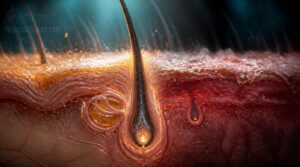
Genetics set your growth ceiling, but scalp health decides whether follicles actually reach it. Sebum balance, an intact barrier function, and a stable microbiome all shape follicle stimulation.
Excess oil invites Malassezia overgrowth; too little breeds dryness and irritation. Either extreme fuels follicle inflammation, which can nudge hair follicles toward miniaturization—quietly undercutting the anagen phase before it ever finishes its job.
Blood Flow Support
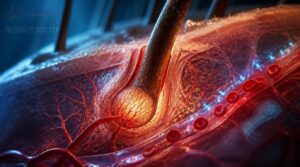
Even the best genetics can’t overcome a poor supply chain. Follicle blood flow delivers oxygen and nutrients that fuel keratin production and cell division.
Three drivers matter most:
- Capillary perfusion feeding the dermal papilla
- Vasodilation signaling via nitric oxide during exercise
- Venous return, aided by movement and hydration
Poor circulation, from smoking or vessel stiffness, throttles tissue growth before genetics get their say.
Which Body Changes Can Make Hair Grow Faster?
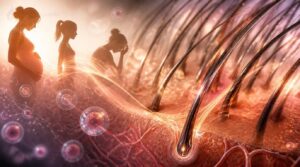
Your genes set the baseline, but your body’s internal chemistry can still shift that pace, sometimes dramatically. Certain life stages and health events flood your system with hormones that follicles respond to directly, speeding up or slowing down growth for a while.
Here’s what’s actually behind those changes, and when they’re worth mentioning to a dermatologist.
Pregnancy Hormones
Ever notice how thick your hair looked during pregnancy? Estrogen effects extend the growth phase, boosting hair density, while progesterone support, placental lactogen, and relaxin signaling shape the hormonal environment.
| Hormone | Hair Impact |
|---|---|
| Estrogen | Prolongs growth phase |
| Progesterone | Reduces shedding |
| Oxytocin | Postpartum shift |
Oxytocin postpartum changes often trigger shedding once levels normalize.
Thyroid Changes
Unlike pregnancy’s estrogen boost, thyroid disorders often work against your hair. Thyroid function drives follicle metabolism directly, so hyperthyroidism or hypothyroidism disrupts the hair growth cycle in opposite ways—one speeds cellular turnover, the other slows it. Both can produce thinning.
Autoimmune triggers like Graves’ or Hashimoto’s are common culprits behind this hormonal regulation breakdown, which is why persistent shedding warrants bloodwork, not just better shampoo.
Puberty and Androgens
Thyroid problems disrupt hair from the inside out, but puberty rewrites the rules entirely.
Rising testosterone and adrenal androgens trigger androgen sensitivity in specific follicles, converting testosterone to dihydrotestosterone locally. This shifts follicle response toward sexual hair areas, prolonging the anagen phase there.
Adrenarche often starts the process before gonadal hormones peak, producing visible hair pattern changes as secondary characteristics emerge.
Medication Side Effects
Prescription medications can rewrite your hair’s growth schedule just as powerfully as puberty’s hormones do. Drug-induced shedding often follows anabolic steroids, corticosteroids, or anticonvulsants through hormonal disruption, nutrient absorption loss, or scalp irritation. Watch for:
- Diffuse thinning months after a new prescription
- Scalp redness or itching
- Slower regrowth despite minoxidil
- Fatigue tied to oxidative stress and cortisol shifts
When to See Dermatologists
How do you know when faster growth crosses into a problem? Watch for unusual hair loss patterns, patchy shedding, or scalp conditions like persistent redness and scaling.
Any changing skin spots or persistent rashes nearby also warrant attention.
Genetic predisposition and hormonal influence explain most variation, but new or evolving symptoms deserve a dermatology consultation and routine skin cancer checks, especially with risk factors like sun exposure.
Can Diet, Lifestyle, or Hair Care Speed Growth?

You can’t rewrite your genetic code, but your daily habits still matter more than you might think. What you eat, how you sleep, and how you handle stress all shape the internal environment your follicles depend on. Here’s where diet, lifestyle, and hair care actually earn their keep.
Protein and Keratin
Every strand you grow is really woven protein. Keratin formation depends entirely on amino acids supplied through diet, so inadequate protein intake directly limits synthesis during the anagen phase.
Sulfur-rich amino acids create the disulfide bonds giving keratin its structure. Eggs, fish, and legumes supply these building blocks. Skimp on protein, and follicles simply can’t manufacture the fibrous material your hair shaft needs to grow strong.
Iron, Zinc, Vitamin D
Beyond protein, three micronutrients quietly run the show. Iron ferries oxygen to dermal papilla cells; low ferritin often precedes diffuse shedding. Zinc deficiency shows up as brittle strands or scalp dermatitis. Vitamin D actually boosts iron and zinc absorption, so deficiencies compound.
Pair iron with vitamin C, take zinc separately from calcium, and confirm levels via bloodwork before supplementing—timing and dosing matter.
Sleep and Exercise
Your follicles don’t clock out when you do—deep sleep drives the tissue repair that keeps hair growth cycle humming. Sleep timing recovery matters more than duration alone.
Moderate exercise reinforces this: morning workouts benefit sleep onset, while intense evening sessions can backfire. Resistance training and cardio both support recovery, but exercise sleep link only strengthens with consistency, not one-off gym trips.
Stress and Cortisol
Stress doesn’t just wear on your mind—it reaches your scalp. When cortisol stays elevated, the stress follicle effect pushes hair into premature telogen, triggering telogen effluvium weeks later.
This adrenal hair link explains why chronic stress growth suffers under sustained strain. Hair cortisol levels, measured in strands themselves, now serve as biomarkers tracking this hormonal influence on hair—proof your body keeps a written record of pressure.
Chronic stress leaves a written record in your hair, as cortisol levels in each strand quietly track the pressure your body endures
Trimming Growth Myths
Cutting your hair does nothing to the follicle itself—trimming can’t speed the growth cycle, since new strands originate at the scalp, untouched by scissors. The split-end myth persists because trims prevent breakage, creating an illusion of faster growth. Really, you’re just protecting length already earned.
Genetics and hormonal influence still set your true pace, not your salon schedule.
How Can You Manage Fast-Growing Hair?

Fast growth isn’t a problem to fix, but it does ask for a bit more strategy from you. Once you understand what’s driving your rate of growth, managing it becomes a matter of routine rather than guesswork. Here’s where to focus your effort for the best results.
Smarter Trim Scheduling
Since the anagen phase dictates how long each strand can grow, your trim schedule should protect length, not just tidy ends. Base ideal trim frequency on split-end visibility, not the calendar.
- Trim before splits travel upward
- Track length from a fixed point
- Photograph under consistent lighting
- Log trim dates against regrowth
- Leave a slight safety margin
Length retention tracking separates true growth from breakage.
Low-Maintenance Hairstyles
Fast growth means faster styling demands, too, so lean into easy daily styling instead of fighting your hair’s pace. Wash and go looks, curtain bangs, or a blunt lob cut all age gracefully between trims.
Minimal product routines—one leave-in, maybe an oil—reduce buildup and daily upkeep. Protective hair techniques like loose buns limit friction, keeping fast-growing strands intact rather than constantly reshaped.
Scalp and Strand Care
Loose buns and easy styles only go so far if the scalp underneath isn’t cared for. Gentle cleansing removes buildup without stripping oils that protect fast-cycling follicles. Condition strand ends, detangle with a wide-tooth comb before brushing, and keep scalp hydration steady.
- Massage, don’t scrub
- Detangle ends first
- Brush gently, root to tip
Reducing Breakage
A well-groomed scalp still won’t save strands snapping mid-shaft. Gentle detangling, moisture balance, and end sealing with oils protect hair shaft strength, while heat protection and strengthening products, rich in protein and vitamin E, strengthen fibers before they weaken.
| Cause | Fix | Result |
|---|---|---|
| Heat styling | Protectant spray | Less brittleness |
| Dry ends | Oil sealing | Fewer splits |
| Tight styles | Loosen tension | Reduced snapping |
Longer-Term Hair Removal
When trims and oils aren’t enough, longer-term options target the follicle itself. Laser hair removal uses concentrated light absorbed by melanin, working best on coarse, dark hair, while electrolysis destroys individual follicles regardless of pigment. Both require multiple sessions timed to the anagen phase, since not all hairs grow simultaneously:
- Laser: broader coverage, cooling for comfort
- Electrolysis: slower, precise, universally suited
- Consult dermatologists for safe settings
Frequently Asked Questions (FAQs)
Why does my hair grow so fast?
Like a well-oiled Victrola that never skips a beat, your hair keeps spinning through its cycle efficiently. Genetic hair traits, a longer anagen phase, balanced hormones, and solid nutritional support all keep follicles humming along productively.
What can I do to make my hair grow faster?
Support what your genes already do: prioritize protein intake, vitamin D, and biotin through a balanced diet, stay hydrated, practice gentle styling, and try scalp massage or essential oils to boost scalp circulation and follicle health.
Why does hair grow faster as you age?
Time is no friend to Benjamin Button here — hair actually slows, not speeds, with age. Hormonal shifts over time, declining scalp circulation, and evolving genetic expression shorten the anagen phase, so growth usually decelerates after 50 rather than accelerating.
What happens if your hair grows slowly?
Slow growth usually points to growth cycle shifts toward telogen, nutrient deficiencies (iron, protein, vitamin D), hormonal imbalance from thyroid dysfunction, or follicle blockage from scalp inflammation—each disrupting normal protein synthesis and shortening the anagen phase’s productive window.
What causes your hair to grow quickly?
Your hair’s speed comes down to genetic factors, hormonal influence, and follicle activity working together: a prolonged growth phase, healthy blood circulation to the scalp, strong protein synthesis, and steady nutritional support all extend the hair growth cycle’s active stage.
Is it healthy if your hair grows fast?
Funny enough, fast and healthy often travel together: quick growth usually signals strong follicle vitality, balanced hormones, and good nutrient absorption. It’s usually a positive health indicator, not a warning sign, unless paired with shedding, scalp pain, or other symptoms.
What does it mean if your hair grows very quickly?
Usually, it simply reflects strong genetic influence, favorable hormonal balance, and an extended anagen phase keeping follicles active longer. Combined with solid nutritional support, this points to healthy follicle activity rather than any hidden problem needing concern.
Can hair grow 2 inches in a month?
Two inches a month would mean sprinting past nature’s own speed limit. The anagen phase dictates growth rate, and genetics cap it near 5 inches monthly—so a 2-inch leap likely reflects reduced breakage, not true follicle acceleration.
Does hair grow faster in certain seasons?
Yes — scalp follicles peak in anagen above 90% around March, then decline, with shedding rising toward August. Beard growth follows a similar seasonal curve, likely tied to vitamin D and photoperiod changes, though nails show no such fluctuation.
Can scalp care products slow hair growth?
No product roots out a faster hair growth rate—it’s rooted in your follicles, not your formulas. Scalp care products can’t act as hair growth inhibitors; irritation, buildup, or heat styling damage only cause breakage that mimics slower growth.
Conclusion
Like a clock that ticks faster for some, the reasons why does my hair grow so fast trace back to the interplay of genetics, hormones, and follicle health.
While you can’t fully rewrite your biological tempo, you can shape your approach—adjusting trims, nourishing strands, and choosing styles that fit your pace.
Understanding the cycle gives you an edge, not just answers.
With knowledge in hand, you’re equipped to manage rapid growth with purpose, not just patience.