This site is supported by our readers. We may earn a commission, at no cost to you, if you purchase through links. This content is for general informational and educational purposes only and is not a substitute for professional medical, dermatological, or nutritional advice.

Your bathroom cabinet probably contains dozens of products promising thicker, stronger hair, yet one of the most potent remedies might be sitting in your kitchen. Onion juice has emerged from folk remedy obscurity into mainstream trichology, backed by clinical studies showing its sulfur-rich compounds can stimulate dormant follicles and reduce shedding by up to 73% in some cases.
The science centers on how these pungent bulbs deliver concentrated nutrients—quercetin, phenolic acids, and organic sulfur—directly to your scalp tissue. While the sharp odor tests your commitment, the biochemical mechanisms working beneath your skin target the root causes of thinning hair rather than masking symptoms.
Understanding exactly how onion juice interacts with your follicles, what results you can realistically expect, and how to apply it safely separates effective treatment from wasted effort.
Table Of Contents
- Key Takeaways
- Is Onion Juice Good for Hair?
- How Does Onion Juice Promote Hair Growth?
- Benefits of Using Onion Juice on Hair
- How to Prepare Onion Juice for Hair
- Best Ways to Apply Onion Juice to Scalp
- Precautions and Possible Side Effects
- Frequently Asked Questions (FAQs)
- How long should I leave onion juice in my hair?
- What will onion juice do to your hair?
- How long do onions take to grow hair?
- Is onion juice good for hair follicles?
- Does onion juice help hair growth?
- Is red onion juice good for hair care?
- Does onion juice damage hair?
- Is onion good for hair health?
- How long does it take for onion juice to regrow hair?
- How often should I use onion juice on my hair?
- Conclusion
Key Takeaways
- Onion juice’s sulfur compounds strengthen keratin bonds and may reduce hair shedding by up to 73% in some cases, though you’ll need consistent application for 8-12 weeks before seeing measurable results.
- The treatment works through three mechanisms: sulfur supports protein synthesis in hair strands, improved blood circulation delivers nutrients to follicles, and antioxidants protect against the oxidative stress that damages hair cells.
- You should apply the juice directly to your scalp (not your hair) 2-3 times weekly for 15-30 minutes, then rinse thoroughly with diluted apple cider vinegar or lemon juice to manage the odor.
- Always patch-test on your inner forearm for 24 hours before full scalp application, and avoid onion juice entirely if you have open wounds, active scalp infections, or known allergies to allium compounds.
Is Onion Juice Good for Hair?
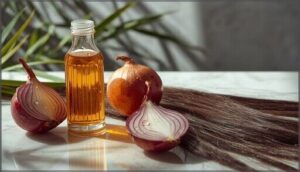
Onion juice has gained attention as a natural remedy for hair thinning and shedding. Your scalp might benefit from its sulfur content, antioxidants, and antimicrobial properties, but understanding what it actually does requires looking at the evidence.
If you’re curious about application methods and dosage, this guide on using onion juice for hair growth walks through the practical steps to get started safely.
Here’s what you need to know about onion juice and whether it’s worth adding to your hair care routine.
Overview of Onion Juice for Hair Care
Onion juice has gained traction as a natural hair remedy because it contains sulfur, antioxidants, and antimicrobial compounds that support scalp health and hair growth promotion.
This DIY hair treatment may help you reduce shedding, strengthen strands, and create a healthier environment for follicles.
As a trichologist, I recommend understanding how onion juice composition influences hair growth factors before adding it to your hair care routine. For more details, you can explore the importance of sulphur compounds in keratin formation and their impact on hair health.
Key Nutrients and Compounds in Onion Juice
The effectiveness of onion juice stems from its unique biochemical profile. Here’s what you’re actually putting on your scalp:
- Sulfur compounds like diallyl disulfide interact with keratin proteins, potentially strengthening hair structure
- Quercetin and other flavonoids neutralize free radicals that damage follicle cells
- Phenolic antioxidants work alongside sulfur to protect against oxidative stress
- Vitamin C fosters collagen synthesis in scalp tissue
Research has shown that onions contribute beneficial nutrients and active compounds, making them a.
What Research Says About Effectiveness
While onion juice shows promise, clinical trials remain limited. Small efficacy studies suggest some users notice hair regrowth after 8 to 12 weeks of consistent scalp application.
Research findings indicate that sulfur content may support follicle function, yet results vary widely based on individual scalp health and application frequency.
Controlled studies often lack standardized measures, so you’ll want realistic expectations about its true capacity for hair growth.
How Does Onion Juice Promote Hair Growth?

Onion juice doesn’t work magic on its own—it nourishes your hair through specific biological mechanisms that target the root causes of thinning and loss. The sulfur, antioxidants, and circulation-boosting compounds in onions create an environment where your follicles can function at their best.
By combining onion juice with proven hair growth prevention techniques, you can maximize its effectiveness and protect your follicles from damage.
Onion juice nourishes hair through sulfur, antioxidants, and circulation-boosting compounds that create an optimal environment for follicle function
Here’s how these elements work together to strengthen your hair from the scalp up.
Sulfur Content and Keratin Production
Sulfur acts like scaffolding for your hair—it holds everything together. When you apply onion juice to your scalp, you’re delivering sulfur-rich compounds that bolster keratin production and strengthen hair follicles through protein synthesis.
- Cysteine in onion juice helps form disulfide bonds that reinforce your hair’s structural integrity
- Sulfur content bolsters the keratin matrix that gives each strand mechanical strength
- These bonds create cross-links that improve elasticity and reduce breakage
- Enhanced keratin structure means your hair can better withstand daily stresses
- Sulfur benefits extend to protecting the cuticle layer and maintaining natural resilience
Improved Blood Circulation to Follicles
Circulation is where the magic happens. When you massage onion juice into your scalp, compounds trigger vasodilation effects that widen your blood vessels and boost scalp perfusion.
Enhanced blood flow delivers oxygen and nutrients straight to your hair follicles, supporting vigorous growth cycles. Better microcirculation benefits mean your follicles get the fuel they need when they need it most.
Antioxidant and Antimicrobial Benefits
Protection against cellular damage is critical for maintaining scalp health. Onion juice’s antioxidant properties neutralize free radicals that cause oxidative stress, while its antimicrobial activity controls scalp microbes.
- Quercetin and sulfur compounds reduce oxidative stress in follicle tissues
- Antimicrobial effects maintain microbial balance, preventing dandruff and irritation
- Enhanced free radical protection creates ideal conditions for hair growth
Benefits of Using Onion Juice on Hair

You’ve seen how onion juice works—now let’s look at what it actually does for your hair and scalp.
The benefits go beyond just growth, addressing common concerns like excessive shedding and scalp irritation. Here’s what regular application can offer you.
Reducing Hair Loss and Shedding
When hair shedding feels relentless, your scalp may need a reset. Onion juice strengthens hair shafts by supporting keratin synthesis, which reduces breakage that mimics hair loss.
Its antioxidants neutralize follicle-damaging free radicals, while antimicrobial compounds calm scalp conditions like dandruff that trigger excessive shedding.
Regular application may shorten the telogen phase, helping you shift from chronic hair loss to visible hair loss prevention and sustained follicle care.
Supporting Thicker, Fuller Hair
Follicle health drives hair density, and that’s where onion juice earns its reputation. The sulfur compounds inside each raw onion support collagen production, which plumps individual strands while scalp massage during application boosts circulation for better nutrient balance.
Over weeks, you may notice improved hair thickening as natural hair care rituals reinforce hair regeneration, giving you the fuller appearance you’re after.
Soothing Scalp Conditions
Antimicrobial compounds in onion juice target fungal organisms that aggravate dandruff relief needs while reducing scalp irritation on contact. Quercetin calms an itchy scalp, and sulfur defends each hair follicle against infection.
This scalp treatment doubles as scalp health management, creating an environment where scalp soothing happens naturally without harsh chemicals.
How to Prepare Onion Juice for Hair
Making your own onion juice at home doesn’t require any special equipment or complicated techniques. You’ll need just a few fresh onions and basic kitchen tools you probably already own.
Here’s how to extract, prepare, and store onion juice properly so it stays effective and ready to use.
Ingredients and Tools Needed

You’ll need two to three medium-sized yellow onions for ideal sulfur content, a blender or food processor to create a smooth puree, and cheesecloth or a nut milk bag to strain the pulp.
A clean glass bowl collects your onion juice, while a squeeze bottle or dropper simplifies scalp application.
Store everything in sealed, dark glass containers to preserve freshness and potency.
Step-by-Step Preparation Instructions

Start by peeling your onions and cutting them into small chunks for efficient juice extraction. Blend with a splash of water until smooth, then press through cheesecloth to separate liquid from pulp. This DIY treatment yields fresh onion juice ready for scalp application.
- Rinse tools with cold water immediately to control odor
- Label your container with the date for freshness tracking
- Conduct a patch test before full application as a safety precaution
Proper Storage Tips

Once you’ve extracted your juice, refrigeration methods become critical to preserve its potency. Store it in airtight glass or BPA-free plastic containers at 4°C or below to maintain scalp health benefits.
For odor control, double-seal your container and keep it separate from other foods.
Fresh onion juice lasts two to three days refrigerated, while freezing techniques extend shelf life up to three months for consistent hair care routines.
Best Ways to Apply Onion Juice to Scalp

Getting the onion juice onto your scalp is one thing—getting it to actually work is another. The way you apply it, how long you leave it on, and what you do to manage the smell can make or break your results.
Here’s how to boost effectiveness while keeping the process manageable.
Application Techniques for Maximum Effect
You’ll get the most out of onion juice when you zero in on your scalp rather than your hair strands. Use clean hands and a cotton swab to apply juice directly to hair follicles, parting your hair into sections so the treatment reaches the root zone.
Gentle application with a two-to-three-minute scalp massage promotes maximum absorption and root stimulation, supporting hair growth through improved circulation.
Recommended Duration and Frequency
Once you’ve massaged the juice into your scalp, let it remain in place for 15 to 30 minutes. Most practitioners recommend:
- Two to three treatments per week to sustain hair growth stimulation without overwhelming your scalp.
- A six-week trial period to assess onion juice benefits and scalp tolerance before adjusting your regimen.
- Reduced frequency if irritation appears, protecting scalp health while supporting your hair regrowth strategies.
Tips to Minimize Odor and Irritation
To reduce onion juice odor and scalp irritation, rinse your hair thoroughly with a lemon juice or diluted apple cider vinegar solution after each treatment.
Always conduct a patch test on your inner forearm before applying onion juice to your scalp. If tingling or burning occurs, rinse promptly and dilute the sulfur content with equal parts water for future sessions.
Precautions and Possible Side Effects

Onion juice can be a powerful tool for hair growth, but it’s not suitable for everyone. Your scalp’s unique chemistry and any existing sensitivities will determine whether this treatment helps or harms.
Before you commit to regular use, you need to understand who should avoid onion juice entirely and what warning signs mean it’s time to stop.
Allergy and Skin Sensitivity
Onion juice triggers skin irritation in individuals with heightened sensitivity to sulfur content or allium compounds. Allergic reactions may appear as redness, itching, or burning within hours of scalp application.
Before full use, perform a patch test on your inner forearm for 24 hours to assess tolerance. If you notice swelling or blistering, discontinue immediately and consult a dermatologist for proper scalp health evaluation.
When to Avoid Onion Juice Treatments
Skip onion juice entirely if you have a known onion allergy or a history of contact dermatitis with alliums.
Avoid it on damaged scalp skin, open wounds, or active infections where chemical interactions may worsen inflammation.
If you’re using leave-in conditioners or chemical treatments, pause onion applications to prevent scalp burns and odor management complications that interfere with hair loss interventions.
Frequently Asked Questions (FAQs)
How long should I leave onion juice in my hair?
Most people should leave it on for 15 to 30 minutes to balance effectiveness and scalp sensitivity. Beginners benefit from shorter durations, while tolerant skin may handle 45 minutes safely.
What will onion juice do to your hair?
Applied topically, onion juice delivers sulfur for keratin support, antioxidants to protect follicles, and antimicrobial compounds that improve scalp health—potentially reducing hair loss while promoting thicker hair regrowth and stronger follicle care over time.
How long do onions take to grow hair?
Most people notice subtle improvements in hair thickness after 6 to 12 weeks of consistent onion therapy, usually applying the juice 2 to 3 times weekly for scalp health.
Is onion juice good for hair follicles?
Yes, onion juice benefits hair follicles by delivering sulfur for keratin boost and collagen synthesis.
It also improves scalp therapy through enhanced blood circulation, antioxidant protection, and antimicrobial support, which together promote follicle health and hair regrowth.
Does onion juice help hair growth?
Like ancient herbal tonics that promised restoration, onion juice may support hair regrowth. Its sulfur-rich compounds strengthen follicles, improve scalp circulation, and provide antioxidant protection.
These properties potentially reduce hair loss and promote thicker hair growth patterns over time.
Is red onion juice good for hair care?
Red onion juice delivers concentrated sulfur compounds that strengthen keratin bonds, while its antimicrobial properties help cleanse your scalp and reduce inflammation.
This makes it a potent natural remedy for hair regrowth and overall scalp health.
Does onion juice damage hair?
When used undiluted or too frequently, onion juice can trigger scalp irritation, redness, and dryness in sensitive individuals. Sulfur compounds may strip natural oils temporarily, but proper dilution minimizes hair damage risks.
Is onion good for hair health?
Onion juice remedies support hair health by delivering sulfur for keratin synthesis, antioxidant properties that protect follicles, and natural hair care compounds that boost scalp health benefits through improved circulation and follicle stimulation.
How long does it take for onion juice to regrow hair?
Most users see visible regrowth around week four to six with consistent onion juice applications.
Full hair regrowth often requires eight weeks or more, depending on your scalp condition and alopecia type.
How often should I use onion juice on my hair?
Two to three times weekly strikes the right balance—enough to support hair growth and scalp health, but not so much that irritation overwhelms tolerance or your hair throws in the towel.
Conclusion
Your follicles don’t care about marketing hype—they respond to sulfur, quercetin, and sustained cellular support. While onion juice won’t transform sparse areas into dense coverage overnight, clinical evidence confirms its capacity to reduce shedding and strengthen existing strands when applied consistently.
The question “are onion juice good for hair” finds its answer in biochemistry, not wishful thinking. Patch-test first, commit to eight weeks minimum, and let your scalp’s response—not anecdotal claims—determine whether this pungent remedy earns its place in your regimen.