This site is supported by our readers. We may earn a commission, at no cost to you, if you purchase through links. This content is for general informational and educational purposes only and is not a substitute for professional medical, dermatological, or nutritional advice.

Purple dye over green hair sounds like a simple swap, but the color wheel has other plans. Green and purple sit near opposites, so they can cancel each other out and leave you with a muddy brown or gray instead of the rich violet you pictured.
That’s frustrating when you’ve already committed to the change. The yellow hiding in green pigment dulls the red and blue in purple, and porous ends can grab color unevenly.
You can still get a clean, vibrant result. The right blue-based shade, smart prep, and a careful application make all the difference. Here’s how to do it.
Table Of Contents
Key Takeaways
- Purple and green sit near opposites on the color wheel, so layering one over the other may leave you with a muddy brown or gray instead of a rich violet.
- You can get a cleaner result by choosing a dark, saturated, blue-based purple in a semi-permanent formula, since blue blends with the green instead of fighting it.
- Prep matters, so check your hair’s porosity, let the green fade or neutralize it with a red or pink toner, and always strand test in daylight before you commit.
- Expect your purple to last about two to four weeks, and you can keep it fresh with cool washes, light use of purple shampoo, and a gloss every few weeks.
What Happens When Purple Dye Covers Green Hair?
You might expect purple over green hair to look like a clean violet, but it rarely works that way. Purple and green are color wheel opposites, so they tend to cancel each other out.
A hair color wheel guide shows exactly which opposite shades neutralize each other, so you can predict how purple will land over green.
Since green and purple sit across from each other on the color wheel, layering one over the other usually leaves you with a muddy mess instead of vivid violet
This pigment overlap can lead to a muddy, unappealing result, usually a brownish or grayish green. Purple is built from red and blue, while green carries blue and yellow. That yellow is what dulls the purple.
How much the colors fight depends on strength. A deep purple can overpower faded green, but a light lavender may barely show on a vivid base. The base pigment in your hair always has a say.
The good news is you can work with this. Red pigments sit opposite green on the color wheel, which is why neutralizing green with red is the standard way to cancel a green tint. A little planning can help.
Choosing The Best Purple for Green Hair
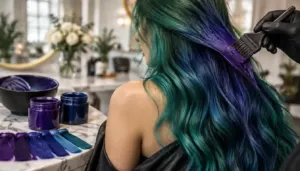
That red-versus-green problem points to your best move: pick a purple with a strong blue base. Blue sits close to the blue already in green hair, so it blends in instead of fighting it.
Here’s what to look for:
- Blue-based purple. Deep violet or indigo shades hold up better on green than red-based formulas, which can turn muddy.
- Dark, saturated pigment. Pastels lack the strength to cover a strong green. A rich, deep shade has the intensity to show up.
- Semi-permanent formula. It coats the hair without peroxide or ammonia, so it’s gentler on color-treated strands.
Skip light lavender unless your green has faded a lot. Fantasy hair dye in a bold shade gives you the most control.
Once your new shade is in, pairing it with a sulfate-free shampoo and conditioner set helps bold fantasy color stay vibrant longer.
Preparing Green Hair for Purple Dye
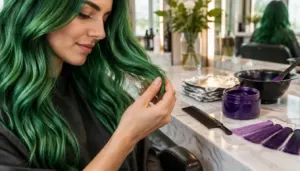
A little prep can make a big difference when you’re layering purple over green. Before any dye touches your hair, you’ll want to check a few things that may shape how your color turns out. Here are the three steps to work through, starting with your hair’s condition.
Assessing Hair Condition and Porosity
Picture misting water on your green strands and watching it vanish at once, while your roots let it bead up. A fine mist spray bottle makes this test easier, since the even droplets show exactly where water beads or soaks in.
That’s a sign your porous ends may grab purple fast and look darker. Slide a finger from tip to root. Rough or bumpy means high porosity, so check for puffiness, frizz, and split ends too.
Smooth hair holds color better.
Fading Green Versus Removing Pigment
Once you know how your hair behaves, decide how much green to deal with first.
You’ve got two paths. Letting the green fade can be gentler. Removing it can be faster but may cost you strength.
- Wash with clarifying shampoo to speed up fading.
- Try a color remover, which works best on semi-permanent dyes.
- Use a pink toner to cancel residual green.
- Save bleach baths for last.
Strand Testing Before Full Application
Testing a small section first takes the guesswork out of your color. Dab purple onto a thin, hidden strand near the nape, ideally one that mixes faded green with virgin growth. A semi permanent purple hair dye works well for this test, since its gentle formula fades gradually and lets you judge the tone before committing.
Process it for the full recommended time, then rinse and dry it fully.
Check it in daylight, since a muddy or grey shade may signal you need more pink or red.
Step-by-Step: Applying Purple Dye Over Green
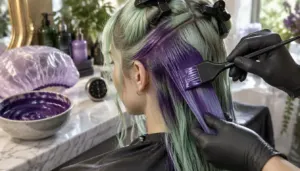
Once your green is faded and your strand test looks good, you’re ready to apply the purple. The two steps below walk you through applying the dye and processing it so you can control how the color settles. Follow them in order, and you may get a smoother, richer result.
Sectioning Hair and Applying Dye Evenly
Ready to get purple over green hair looking even? Precision beats speed.
Split dry hair into four clipped quadrants, then work in thin sections. Good dye application technique means: Grab a few non-slip sectioning hair clips so each quadrant stays put while you work through the thin sections.
- Saturate roots and mid-lengths first
- Check the underside of every section
- Save porous ends for the last few minutes
Smooth each section with a wide-tooth comb. That evens out color deposition.
Processing and Rinsing as Directed
Watch the clock, watch the color, and trust your eyes. Purple over green needs 30 to 45 minutes, though cold rooms may slow dye oxidation and heat can speed it up.
| Time | Action |
|---|---|
| 10 min | Check for tingling |
| 20–30 min | Check color |
| 30–45 min | Rinse until clear |
| Final rinse | Cold water |
Rinse until clear, then finish cold. You’ve got this. Afterward, switch to a color safe shampoo for dyed hair so your fresh purple stays vibrant between washes instead of fading down the drain.
Maintaining Purple Hair as Green Resurfaces

Purple goes on fast, but it doesn’t always stay. As color fading sets in, green can peek through, especially on ends where hair porosity is high. That’s normal, and you can manage it.
Try this routine:
- Wash with lukewarm or cold water, no more than twice a week.
- Use purple shampoo once or twice weekly to cancel green shifts.
- Shield strands from UV, chlorine, and hard water.
- Refresh the color with a gloss every two to three weeks.
Consistency matters more than intensity. Overusing purple shampoo may leave hair dull or ashy, so keep it light and watch how your strands respond. Porous ends can drink up pigment quickly, so a little goes a long way.
You’ve totally got this.
Frequently Asked Questions (FAQs)
When should I see a professional colorist instead?
Think of stubborn green as a house guest who won’t leave. If bleach has left your hair feeling like straw, or patches refuse to lift, professional color correction can save you time and further damage.
Can you go from green to lavender purple?
Yes, you can, though green staining may pull your lavender toward blue. Choose a warm purple, since it neutralizes green undertones better than cool shades. Lavender fades fast, so strand test first and expect upkeep.
Can I dye my hair purple over green blue?
You may worry purple will just turn muddy. It can, but you can still do it. Choose a cool, bluish violet, since it covers green and blue best. Red-based purples may look dull and brown.
How long does purple last over green hair?
Picture a vivid violet applied over faded mint hair. By week two, the edges of that violet may already look dusty, with green peeking out near the ends.
Expect two to four weeks of color longevity, less on porous areas.
What color dye cancels out green hair?
Green hair can feel like it’ll never budge, but red is your secret weapon. Red sits opposite green among complementary colors, so a red or burgundy pigment may neutralize it.
Purple alone can turn muddy.
Conclusion
Worried the green will just win in the end? It can peek through at first, but that doesn’t mean the color failed. Purple dye over green hair works best when you choose a blue-based shade, prep with care, and test a strand first.
Expect a little fading and touch-ups. A color-depositing conditioner may keep your violet fresh between dyes. Stay patient, trust the process, and enjoy the vibrant purple you’ve worked for. You’ve got this.