This site is supported by our readers. We may earn a commission, at no cost to you, if you purchase through links. This content is for general informational and educational purposes only and is not a substitute for professional medical, dermatological, or nutritional advice.

You grabbed the box of dye, your hair’s still damp from the shower, and now you’re wondering if you just need to wait. The answer depends entirely on which dye you’re using, because wet hair isn’t always the enemy.
Water causes cuticle scales to swell open. For permanent dye, that’s a problem: moisture dilutes the alkaline agents, weakening lift and blocking deep cortex penetration. But for semi-permanent formulas, slightly damp hair can actually help pigment glide on more evenly.
Knowing the difference gives you real control over your results, whether you’re at home or watching a stylist work.
Table Of Contents
- Key Takeaways
- Can You Dye Wet Hair?
- How Does Water Affect Hair Dye?
- Which Hair Dyes Work on Wet Hair?
- Which Hair Dyes Require Dry Hair?
- When Do Salons Dye Wet Hair?
- How Can You Dye Damp Hair Safely?
- Frequently Asked Questions (FAQs)
- What will happen if you put hair dye on wet hair?
- Is it better to have dirty or clean hair before coloring?
- Can I dye my hair the same day I wash it?
- Is it better to apply dye on wet hair?
- Can I dye my hair while it’s still wet from the shower?
- Is it safe to dye wet hair at home?
- How long should I wait to wash my hair after dyeing it while wet?
- Does dyeing wet hair cause more scalp irritation?
- Can you go lighter by dyeing wet hair?
- How long does color last on wet-applied hair?
- Conclusion
Key Takeaways
- Permanent and ammonia-based dyes need dry hair because water dilutes the chemicals that lift and deposit color deep in the cortex, leaving you with patchy, faded results.
- Semi-permanent and demi-permanent dyes can work on damp hair, but towel-dry to 60–70% moisture first — dripping wet strands weaken pigment deposit and speed up fade.
- Your hair’s porosity determines how fast it absorbs dye, so high-porosity hair needs careful timing even when damp, while low-porosity hair resists both moisture and pigment.
- Salons intentionally dye wet hair for techniques like balayage and quick toning sessions because controlled moisture slows color bleed and produces softer, more even results.
Can You Dye Wet Hair?
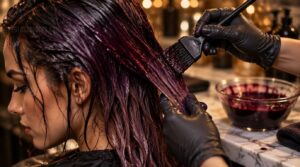
Hair dye can work on wet hair, but your results depend on the formula you’re using and how wet your hair actually is. Not every product experiences moisture the same way.
For a deeper look at how moisture and product buildup interact with different formulas, dyeing hair with product in it is worth understanding before you start.
Some dyes, especially semi-permanent ones, deposit color on damp strands with decent results. Permanent and oxidative formulas need dry hair to perform correctly. Applying those on wet hair dilutes the pigment and compromises color penetration, leaving you with uneven, faded results.
Hair porosity matters too. Highly porous hair absorbs dye faster even when damp, so timing becomes critical. Low-porosity hair resists both moisture and pigment, making wet application less reliable. Knowing where your hair falls on that spectrum helps you decide whether to dye wet hair or wait until it dries.
How Does Water Affect Hair Dye?
Water changes the chemistry before dye even reaches your cortex. When your strands are wet, cuticle scales swell open, which sounds helpful but actually invites dilution. Surface water mixes with the formula on contact, dropping dye concentration and weakening color penetration.
Your hair moisture content directly affects how evenly pigment distributes across each strand. Uneven saturation creates uneven uptake. Here’s specifically how water affects the dye process:
- Dilutes the formula, producing lighter results than expected
- Causes cuticle scales to swell and absorb unevenly
- Speeds dye molecule diffusion but reduces deposit strength
- Alters how hair porosity grips color uptake
- Accelerates color fade when using surface-coating formulas
The wetter your hair is, the less control you have over the final result.
Which Hair Dyes Work on Wet Hair?
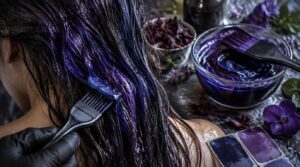
Not all hair dyes behave the same way regarding moisture. The dyes that work on wet hair share one thing in common: they don’t rely on harsh chemicals that water dilutes and neutralizes. Here’s what’s actually compatible.
Gentler formulas—like direct dyes and semi-permanents—tend to fare best, and understanding whether to dye hair wet or dry helps you choose the right product from the start.
Semi-Permanent Hair Dye
You might assume you can’t dye wet hair with semipermanent dye, but that’s not quite right. Without peroxide, it deposits pigment using your hair’s natural porosity, no force needed. Popular semi-permanent dyes without peroxide work by gently coating each strand rather than chemically altering it.
But there’s a catch. Dripping wet strands dilute the formula, weakening color deposit and speeding up fade. Towel-dry to about 40-60% moisture first, and you’ll get more consistent, vibrant color results.
Demi-Permanent Hair Dye
Unlike semi-permanent dye, demipermanent dye uses a low-volume developer, so you can dye wet hair. Too much moisture dilutes the bonding and shifts your results.
- Oxidative bonding still needs proper absorption time
- Wet hair extends your processing time
- Very wet hair causes uneven color
- Over-wet roots fade faster than ends
Your hair dye won’t perform well when it’s too wet.
Temporary Color and Henna
Color sitting on the cuticle won’t last. Temporary hair dye on wet hair deposits surface pigment and washes out in the very first rinse. Henna paste needs dry strands for consistent, predictable results.
| Dye Type | Wet Hair Result |
|---|---|
| Temporary hair dye | One-wash fade, cuticle-only deposit |
| Henna paste | Uneven tone, poor color absorption |
| Best practice | Do a hair porosity test first |
Which Hair Dyes Require Dry Hair?
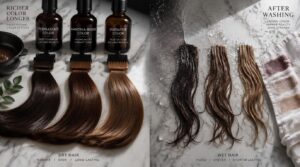
Three types of hair color truly need dry hair to perform correctly. Wet strands dilute the formula before it even gets started, and that’s a problem you can’t fix after the fact.
- Permanent hair dye relies on alkaline agents to lift your natural pigment and deposit new color deep into the cortex. Moisture weakens that lift a lot.
- Ammonia-based systems need undiluted contact with each strand for the oxidation reaction to fire properly and last through washes.
- Oxidative color systems depend on the micro-porosity of dry hair to absorb pigment evenly and deliver a consistent, lasting tone.
Semipermanent, demipermanent, and temporary hair dye are generally more forgiving on this front, but permanent formulas aren’t. If the instructions say dry, that’s non-negotiable.
When Do Salons Dye Wet Hair?
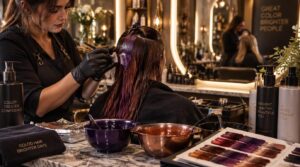
Ask any colorist what they reach for during a quick tone or color refresh, and you’ll often hear the same thing: they just worked on damp hair. Salons use wet hair more often than clients expect, especially for fashion shades and rapid toning sessions.
Wet balayage is one of the most popular salon techniques for this reason. Stylists apply lightener or toner to damp sections because moisture slows bleed between strands, producing softer, more blended results. It’s a deliberate dye application technique, not a shortcut.
Salons also work semi-permanent hair dye into towel-dried hair when a client wants a fast color refresh. Dampness lets the formula glide on evenly, reducing drag and preventing the shade from depositing deeper than intended.
How Can You Dye Damp Hair Safely?
Dyeing damp hair safely comes down to a few key steps done right before you ever open the dye. Getting these details wrong is usually what leads to patchy results or unnecessary damage. Here’s what to check before you start.
Check Hair Porosity
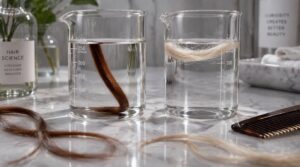
Hair porosity determines whether dye soaks in fast or barely penetrates. High-porosity hair has open cuticle scales along the hair shaft; low-porosity hair’s scales stay tightly closed. The float test shows you which you’ve got:
- Pull a clean, dry strand
- Drop it in a glass of water
- Don’t touch it; wait two full minutes
- Sinking = high-porosity hair
- Floating = low-porosity hair
Achieve The Right Dampness
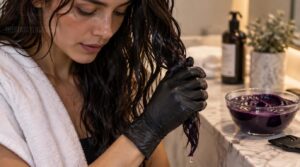
Think of your hair like a sponge: too wet and dye slides right off, too dry and it simply won’t absorb evenly.
Hair is like a sponge: too wet and dye slides off, too dry and color won’t absorb evenly
Towel-dry thoroughly, then wait two to three minutes. The sweet spot is 60 to 70% moisture, where your hair feels damp but doesn’t drip. A microfiber hair towel wrap pulls excess water out faster than a regular towel, making it easier to hit that ideal damp-not-dripping zone.
Squeeze a section: you want a light bead, not streams, running down your fingers.
Prevent and Correct Uneven Color
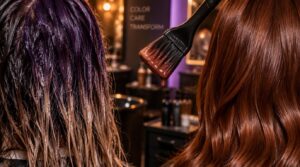
Uneven color usually traces back to inconsistent saturation. Hair dye dilution from excess moisture shifts cuticle opening zone by zone, so some areas absorb more pigment than others.
- Run a strand test every two sections.
- Rotate brush strokes 90 degrees per zone for even coverage.
- Re-dye only lighter zones for color correction.
- Tone high-porosity areas to fully restore color uniformity.
Frequently Asked Questions (FAQs)
What will happen if you put hair dye on wet hair?
Water dilutes the dye before it even reaches your cortex. You’ll likely get patchy, washed-out color that fades faster, since wet strands can’t absorb pigment evenly or deeply.
Is it better to have dirty or clean hair before coloring?
Skipping your shampoo 24 to 48 hours before coloring is the standard colorist recommendation. Natural oils protect your scalp without blocking hair dye, but heavy product buildup interferes with even color uptake, so remove it.
Can I dye my hair the same day I wash it?
Yes, but you need to time it right. Washing right before you dye leaves too much free water sitting on the strand, diluting the hair dye and inviting patchiness.
Always towel-dry to a touch-dry finish.
Is it better to apply dye on wet hair?
Humidity alone can shift your final tone by up to two shade bands. For permanent hair dye, dry hair wins every time. Dye wet hair only with semi-permanents, where damp color absorption actually improves deposit evenness.
Can I dye my hair while it’s still wet from the shower?
Think of hair dye like paint on a wet canvas. It thins out and spreads unevenly. Putting dye on wet hair dilutes the formula, weakening color absorption and leaving you with patchy, lighter final results.
Is it safe to dye wet hair at home?
Dyeing damp hair at home is generally safe if you towel-dry thoroughly first. Dripping-wet strands dilute pigment and cause blotchy results, but evenly damp hair gives you more control.
How long should I wait to wash my hair after dyeing it while wet?
Wait the full dwell time on your product instructions. That window lets the dye bond to your hair cuticle properly. Don’t cut it short, even by a few minutes, or you’ll just accelerate color fading.
Does dyeing wet hair cause more scalp irritation?
Say your scalp feels totally fine after coloring dry hair, but it stings when wet. Water can spread dye chemicals across a wider scalp area, which may increase scalp irritation for those with existing sensitivity.
Can you go lighter by dyeing wet hair?
Realistically, you can’t reliably go lighter by dyeing wet hair. Water dilutes your hair dye and weakens peroxide lift, which means your hair color will almost never reach a noticeably lighter shade without serious blotching.
How long does color last on wet-applied hair?
Think of it as a light stain on porous fabric: it holds, but briefly. Color retention drops fast when you dye wet hair, with semi-permanent lasting one to two weeks and demi-permanent up to four.
Conclusion
A stylist once told me she keeps a spray bottle nearby for every color job. Not to rinse, but to carefully control moisture. The next time someone asks can you dye wet hair, you’ll know the real answer: it depends entirely on the formula you choose.
Use permanent dye on dry hair only. Reach for semi-permanent when hair is damp. Match the product to the moisture level, and you’ll get the color you actually wanted.