This site is supported by our readers. We may earn a commission, at no cost to you, if you purchase through links. This content is for general informational and educational purposes only and is not a substitute for professional medical, dermatological, or nutritional advice.

You’re running your fingers through your hair in the shower and suddenly there’s more hair wrapped around your hand than you’ve ever seen at once. No one warned you this was coming. Postpartum hair shedding affects up to 50% of new mothers, usually hitting hardest around months three to four after delivery, when estrogen levels drop and the hair that stayed anchored during pregnancy finally lets go.
The good news: your follicles aren’t damaged. They’re catching up. Finding the best postpartum shampoo means knowing which ingredients genuinely support recovery and which ones are clever marketing.
Table Of Contents
- Key Takeaways
- Top 8 Postpartum Shampoos and Hair Treatments
- 1. Maui Moisture Bamboo Fibers Shampoo
- 2. Avalon Organics Biotin B Complex Shampoo
- 3. PHYTO Phytocyane Thin Hair Shampoo
- 4. Nourish Beaute Hair Loss Shampoo
- 5. Oribe Gold Lust Restorative Shampoo
- 6. Ultrax Labs Hair Surge Shampoo
- 7. Majestic Pure Biotin Hair Shampoo
- 8. Hair Growth Serum Treatment for Adults
- How to Choose a Postpartum Shampoo
- Best Postpartum Shampoo Ingredients
- Postpartum Hair Loss Results and Timeline
- How to Use Postpartum Shampoo
- Frequently Asked Questions (FAQs)
- What vitamin is lacking if your hair is falling out?
- What are the best hair products for post-pregnancy hair?
- What helps post partum hair?
- When is postpartum hair loss the worst?
- Are there any natural ingredients that can help with postpartum hair loss?
- How can I maintain healthy hair after giving birth?
- Are there any shampoos specifically designed for postpartum hair loss?
- Are there any side effects associated with postpartum shampoos?
- Can breastfeeding make postpartum hair loss worse?
- Are postpartum shampoos safe during pregnancy?
- Conclusion
Key Takeaways
- Postpartum hair shedding is a normal hormonal reset that typically peaks around months four to six after delivery, meaning your follicles aren’t damaged — they’re just catching up.
- The most effective shampoos for postpartum hair loss include ingredients like biotin, caffeine, saw palmetto, and keratin, which target shedding at the scalp level rather than just coating the hair shaft.
- Shampoo alone can’t fix hormonally driven shedding, so pairing it with scalp massage, a protein-rich diet, and postnatal vitamins gives your regrowth the best possible foundation.
- If shedding intensifies past the six-month mark or comes with fatigue, sudden weight changes, or persistent fever, it’s worth seeing a doctor rather than just switching products.
Top 8 Postpartum Shampoos and Hair Treatments
Not every shampoo will cut it when your hair is shedding faster than usual.
Look for formulas with biotin, caffeine, or keratin, especially if you’re dealing with hair growth changes after stopping birth control, since hormonal shifts can make standard shampoos fall short.
These eight options were chosen for their targeted postpartum formulas, ranging from biotin-boosted cleansers to scalp-stimulating treatments. Each one brings something different to the table, so you can find the fit that works for your hair type and goals.
1. Maui Moisture Bamboo Fibers Shampoo
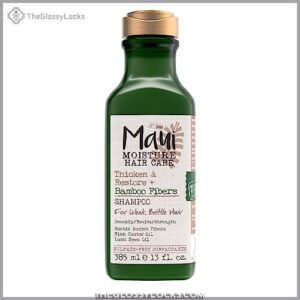
When clumps of hair swirl down the drain, you need a shampoo that actually delivers. Maui Moisture’s Bamboo Fibers formula leads with 100% aloe vera, then blends coconut water, castor oil, and neem oil to hydrate and fortify brittle strands.
The sulfate-free, silicone-free formula cleans gently, so it won’t strip your already stressed scalp. It’s a solid pick for wavy to tight curls, color-treated, or going natural hair, adding thickness at the roots without heaviness.
At around $7.47 for 13 ounces, this vegan shampoo is budget-friendly. Just know the lather is light, so you may need a bit more product to feel fully clean.
| Best For | People with wavy to tight curls, color-treated, or thinning hair who want an affordable, sulfate-free shampoo that hydrates and strengthens brittle strands. |
|---|---|
| Price Point | ~$7.47 |
| Sulfate Free | Yes |
| Key Actives | Aloe vera, castor oil |
| Hair Type | Wavy to curly |
| Formula Focus | Hydration & strength |
| Results Timeline | Varies by individual |
| Additional Features |
|
- Made with 100% aloe vera as the first ingredient, plus coconut water, castor oil, and neem oil
- Free from sulfates, silicones, parabens, mineral oil, and synthetic dyes
- Budget-friendly at around $7.47 for a 13-ounce bottle
- Some users experience dryness, frizz, or tangling after use
- Minimal lather means you may need more product per wash
- Results on hair thickness vary by individual hair type and condition
2. Avalon Organics Biotin B Complex Shampoo
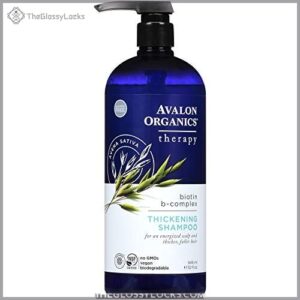
If Maui Moisture is the budget workhorse, Avalon Organics Biotin B Complex is the clean-beauty upgrade. This vegan shampoo pairs biotin with saw palmetto, quinoa protein, and vitamin E to energize your scalp and build body in fine, thinning hair.
At $20.98, it’s NSF certified with organic ingredients, EWG Verified, and free from parabens, sulfates, synthetic colors, and fragrances—reassuring if you’re nursing. It also comes in a 100% recycled bottle.
Reviewers report softer, shinier hair with fewer flyaways, and some notice less dandruff. The catch? It barely lathers, so don’t mistake low suds for weak cleaning. Follow with conditioner, since some users find it drying.
| Best For | People who want a clean, certified-organic shampoo with biotin to help fine or thinning hair look fuller and healthier. |
|---|---|
| Price Point | $20.98 |
| Sulfate Free | Yes |
| Key Actives | Biotin, saw palmetto |
| Hair Type | Fine, thinning |
| Formula Focus | Volume & clean beauty |
| Results Timeline | Varies by individual |
| Additional Features |
|
- Clean formula free from parabens, sulfates, synthetic colors, and fragrances, plus NSF certified and EWG Verified
- Leaves hair soft, shiny, and smoother, with some users noticing less dandruff and scalp irritation
- Eco-friendly packaging in a 100% recycled bottle
- Barely lathers, which some users find off-putting even though it still cleans
- Can leave hair feeling dry or brittle, especially without a conditioner
- Strong herbal scent and inconsistent formula changes may bother sensitive users
3. PHYTO Phytocyane Thin Hair Shampoo
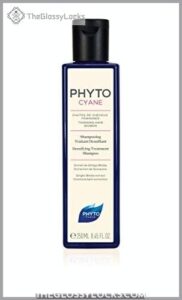
Want clinical backing alongside genuinely clean ingredients? Phytocyane builds on what Avalon started, with a formula centered on botanical scalp actives including ginkgo biloba, rosemary extract, and lupin protein to target thinning at the root.
In a trial with 76 women, 85% saw reduced shedding within two months. That’s a solid result for postpartum shedding. The formula pulls from 96% natural-origin ingredients with no silicones or dyes, making it gentle on sensitive scalps.
Apply to wet hair, massage gently into your scalp, leave it briefly, then rinse. One caveat: it contains SLS and synthetic fragrance, which can irritate reactive scalps. The product is also discontinued, so stock may be limited.
| Best For | Women experiencing postpartum or age-related hair thinning who want a botanically driven, largely natural formula with clinical trial support. |
|---|---|
| Price Point | Varies |
| Sulfate Free | No |
| Key Actives | Ginkgo biloba, rosemary |
| Hair Type | All types |
| Formula Focus | Botanical scalp actives |
| Results Timeline | Within 2 months |
| Additional Features |
|
- Clinically tested — 85% of women in a trial saw reduced shedding within two months
- Made from 96% natural-origin ingredients with no silicones or dyes, making it gentle on sensitive scalps
- Targets thinning at the root with active botanicals like ginkgo biloba, rosemary extract, and lupin protein
- Contains SLS and synthetic fragrance, which may irritate reactive or sensitive scalps
- Product is discontinued, so finding it in stock can be difficult
- Results aren’t guaranteed — some users report little to no noticeable improvement even after extended use
4. Nourish Beaute Hair Loss Shampoo
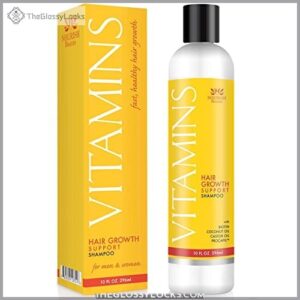
If Phytocyane’s SLS gave you pause, Nourish Beaute takes a gentler approach. Its sulfate-free, paraben-free formula skips common irritants while packing in real actives: patented Procapil and Baicapil work as DHT blockers, targeting the hormonal trigger behind postpartum shedding. Clinical data backs these up with a claimed 121% increase in hair growth and 47% reduction in hair loss.
Biotin, keratin, and castor and coconut oils round out the formula, supporting follicle strength and moisture balance. Results usually need 60 to 90 days of consistent use, so patience matters here.
Made in the USA under GMP standards, it’s cruelty-free and priced at $18.13, with a 90-day money-back guarantee.
Women navigating postpartum or menopausal shedding can explore targeted options through this guide to women’s hair restoration treatments, backed by a risk-free 90-day guarantee.
| Best For | Men and women experiencing hair thinning or shedding from hormonal changes, postpartum recovery, or aging who want a gentle, sulfate-free option with clinically backed active ingredients. |
|---|---|
| Price Point | $18.13 |
| Sulfate Free | Yes |
| Key Actives | Procapil, Baicapil |
| Hair Type | All types |
| Formula Focus | DHT blocking |
| Results Timeline | 60–90 days |
| Additional Features |
|
- Contains patented Procapil and Baicapil DHT blockers with clinical support for reducing hair loss and encouraging growth
- Sulfate-free, paraben-free, and cruelty-free formula with nourishing ingredients like biotin, keratin, and castor and coconut oils
- Made in the USA under GMP standards and backed by a 90-day money-back guarantee
- Results take 60–90 days of consistent use, so noticeable improvement isn’t quick
- Effectiveness varies — some users see little to no regrowth
- Contains fragrance and preservatives (methylisothiazolinone, methylchloroisothiazolinone) that may irritate sensitive scalps
5. Oribe Gold Lust Restorative Shampoo
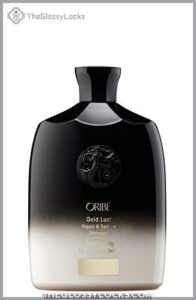
For something more luxurious, Oribe Gold Lust Restorative Shampoo brings a Bio-Restorative Complex of plant collagen, caffeine, biotin, and niacinamide. Together, these ingredients strengthen strands, boost scalp circulation, and restore moisture that postpartum hormones tend to strip away.
It’s sulfate-free, silicone-free, and vegan, making it a safe choice for color-treated or sensitive scalps. The Côte d’Azur scent, a warm mix of bergamot and sandalwood, makes washing feel a little less like a chore.
Consumer panel results show 91% of users noticed improvement within seven days, though these are self-reported, not clinical results.
At $53 for 8.5 ounces, it’s an investment, but many postpartum moms find it worth it.
| Best For | Postpartum moms and anyone with color-treated or sensitive scalps who want a luxurious, ingredient-rich shampoo that restores moisture and strengthens weakened strands. |
|---|---|
| Price Point | $53.00 |
| Sulfate Free | Yes |
| Key Actives | Plant collagen, caffeine |
| Hair Type | Color-treated, sensitive |
| Formula Focus | Moisture restoration |
| Results Timeline | Within 7 days |
| Additional Features |
|
- Packed with a powerhouse blend of plant collagen, caffeine, biotin, niacinamide, and argan oil that strengthens hair and boosts shine
- Sulfate-free, silicone-free, and vegan — gentle enough for color-treated hair and sensitive scalps
- The Côte d’Azur scent (bergamot, jasmine, sandalwood) turns a routine wash into something that actually feels indulgent
- At $53 for 8.5 ounces, it’s a steep price tag that doesn’t sit well with everyone — especially if results are underwhelming
- Some users find it leaves hair feeling greasy or not thoroughly clean
- Mixed reviews on moisture delivery, with drier hair types sometimes finding it falls short
6. Ultrax Labs Hair Surge Shampoo

A shampoo that works from the scalp up, Ultrax Labs Hair Surge combines a CaffinoPlex mix of natural caffeine and saw palmetto to block DHT, the hormone most linked to postpartum thinning. Caffeine also increases circulation to follicles, helping extend the hair growth phase.
Massage it into your scalp for one to two minutes, then let it sit for up to five before rinsing. Many users report less shedding within two to four weeks of consistent use.
For deeper insight into why patience matters here, pomelo oil’s long-term effects on scalp health and follicle recovery reveal that real change unfolds over months, not the first few weeks.
If you’re torn between the two formulas, this guide to choosing T Gel or T Sal shampoo breaks down which one suits your scalp condition best.
If you have very dry or curly hair, pair it with a conditioner on mid-lengths and ends. At $69.99, it’s a premium option with a truly multi-pronged approach.
| Best For | People experiencing thinning hair or postpartum hair loss who want a daily shampoo with a science-backed, multi-ingredient approach to scalp health and regrowth. |
|---|---|
| Price Point | $69.99 |
| Sulfate Free | Not stated |
| Key Actives | Caffeine, saw palmetto |
| Hair Type | All types |
| Formula Focus | Scalp circulation boost |
| Results Timeline | 2–4 weeks |
| Additional Features |
|
- The CaffinoPlex blend — combining natural caffeine and saw palmetto — targets DHT directly at the scalp, tackling one of the root causes of thinning hair
- Niacin, peppermint oil, and mango butter nourish the scalp while adding volume and fullness without a greasy feel
- Suitable for all hair types and both men and women, making it a versatile option for the whole household
- Some users find it lathers poorly, meaning you may need to use more product per wash than expected
- Can cause dryness for those with already dry or curly hair, so a separate conditioner is likely necessary
- At $69.99, it’s a significant investment, and results vary enough that the value isn’t guaranteed for everyone
7. Majestic Pure Biotin Hair Shampoo
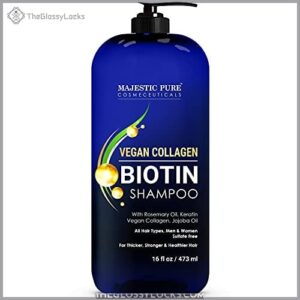
A budget-friendly option that actually delivers, Majestic Pure Biotin Shampoo combines biotin, rosemary oil, and castor oil in a sulfate-free formula built for thinning postpartum hair. Biotin fortifies hair shafts from within, rosemary oil helps scalp health, and castor oil keeps strands moisturized without weighing them down.
At around $25, it’s one of the more affordable options on this list. About 54% of users gave it five stars, noting thicker, softer hair after consistent use. Some noticed a bit of initial shedding, which is normal as your scalp adjusts.
Massage it in daily, pair it with a conditioner on the mid-lengths, and give it at least a full month to work.
| Best For | Anyone with thin or thinning hair — especially those looking for a pH-balanced, color-safe shampoo that supports volume and strength with regular use. |
|---|---|
| Price Point | ~$25.00 |
| Sulfate Free | Yes |
| Key Actives | Biotin, rosemary oil |
| Hair Type | Thin, color-treated |
| Formula Focus | Biotin fortifying |
| Results Timeline | 1+ months |
| Additional Features |
|
- Contains biotin to help strengthen hair shafts and reduce breakage over time
- Safe for color-treated hair, so it won’t accelerate color fade
- Pump dispenser makes it easy and mess-free to use in the shower
- Lather can be disappointing for those used to traditional shampoos
- May feel drying on certain hair types despite its moisturizing claims
- Results take consistent use over a month or more — not a quick fix
8. Hair Growth Serum Treatment for Adults
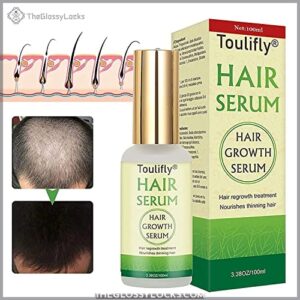
Think of a scalp serum as the targeted boost your shampoo can’t always deliver on its own. Hair growth serums deliver concentrated actives like minoxidil, caffeine, and peptides directly to your scalp, targeting thinning areas like the temples and crown where postpartum shedding often shows most.
This lightweight, non-greasy formula absorbs quickly without residue, making it a good match for fine or color-treated hair. Apply about 1 mL daily using the dropper, massage gently into the scalp, and leave it in.
Consistent daily use for three to six months is usually what it takes to see real density changes. Results won’t come overnight, but with steady use, they do come.
| Best For | Adults experiencing hair thinning — especially those with fine or color-treated hair — who want a lightweight, leave-in serum they can work into a daily routine. |
|---|---|
| Price Point | Not listed |
| Sulfate Free | Not stated |
| Key Actives | Not specified |
| Hair Type | Fine, color-treated |
| Formula Focus | Regrowth support |
| Results Timeline | Varies by individual |
| Additional Features |
|
- Non-greasy, fast-absorbing formula that won’t weigh down fine or color-treated hair
- Pleasant scent and soft texture make daily application easy to stick with
- Users report noticeable regrowth in thinning areas with consistent use, with results lasting over a month per bottle
- Results aren’t guaranteed — some users see no meaningful hair growth at all
- The bottle seal can leak during shipping, which is a frustrating first impression
- Mixed opinions on value, with some feeling the price isn’t justified if it doesn’t work for them
How to Choose a Postpartum Shampoo
Picking the right postpartum shampoo isn’t as simple as grabbing whatever says "hair loss" on the label. Your hair type, main concern, and budget all shape which formula will actually work for you. These five factors make the decision a lot easier.
Hair Type and Texture
Your postpartum hair texture can shift noticeably after delivery. Fine hair needs lightweight formulas that won’t weigh it down, while curly hair craves moisture-rich options for better hair manageability and hair moisture retention. Check your natural curl pattern on clean, air-dried hair before choosing a product. Matching your shampoo to your actual texture helps with real hair texture improvement.
Understanding your hair porosity and texture can help you choose the most effective postpartum shampoo for moisture retention and recovery.
Shedding, Breakage, or Frizz
Not all hair struggles feel the same, and treating the wrong one won’t help. Hair shedding during postpartum hair loss is your hair growth cycle resetting after delivery. Hair breakage is structural damage that appears as short, snapped strands without a root. Hair frizz signals moisture loss or cuticle roughness. Knowing your main concern helps you choose the right formula.
Sensitive or Color-Treated Hair
If your skin is sensitive or your hair is color-treated, the formula you pick matters more. Sulfate-free, paraben-free shampoos protect both.
- Choose color-safe hair care to slow fading.
- Look for hair cuticle smoothing ingredients like keratin.
- Patch test any new formula first.
- Practice gentle hair styling to limit irritation.
Staying within three shades of your natural color reduces chemical damage.
Formula Safety and Irritants
What’s inside the bottle matters as much as what’s on the label.
A sulfate-free shampoo keeps your scalp from drying out, while a paraben-free formula avoids preservatives that can disrupt hormone balance during recovery.
If you notice fragrance sensitivity, choose fully fragrance-free over "unscented," since unscented products can still contain masking agents that irritate a reactive scalp.
Price, Size, and Value
Once you’ve found a formula that feels safe, budget comes into play. Shampoos for postpartum hair loss range from $6 to over $100, so there’s something at every price point.
Larger bottles, like 16 oz options around $12 to $15, often deliver better value per wash. Since the hair regrowth timeline spans months, a bigger size stretches your dollar further.
Best Postpartum Shampoo Ingredients
Not all shampoo ingredients pull their weight for postpartum hair loss. The ones that actually matter tend to work on your scalp, your strands, or both — and knowing what to look for makes choosing a product much less overwhelming. Here are the key ingredients worth seeking out.
Biotin for Stronger Strands
Biotin rarely stops postpartum hair loss on its own, but it does help the keratin processes your strands depend on during hair shedding season.
- Helps hair breakage prevention through enzyme activity
- Most helpful when deficiency is the cause
- Biotin shampoos work only at the scalp’s outer surface
- Won’t replace biotin from whole foods
- Best paired with a postpartum nutrition plan
Keratin and Collagen for Repair
Hair is roughly 95% keratin, so it makes sense that keratin-enriched shampoos can meaningfully support hair protein repair during postpartum recovery. Collagen adds much-needed moisture and works toward hair elasticity improvement as your strands start feeling stronger again.
Here’s what these proteins can do for your hair:
- Reinforced hair shaft strength from hydrolyzed keratin
- Reduced breakage during brushing and styling
- Smoother texture as new growth comes in
Keratin fortifies each strand from the outside, while collagen helps the basic growth process. Together, they don’t just repair; they help your hair feel like yours again.
Keratin and collagen don’t just repair postpartum hair — they help it feel like yours again
Caffeine for Scalp Circulation
What your morning coffee does for your mood, caffeine can do for your scalp. It works as a phosphodiesterase inhibitor, keeping energy signals in follicles active longer.
Research shows caffeine absorbs through open hair follicles within minutes, supporting scalp circulation and hair growth stimulation. This helps fight postpartum hair loss by extending the growth phase for better hair follicle health.
Saw Palmetto for Thinning
Though it’s not as well-known as biotin, saw palmetto may help with hair thinning by blocking the conversion of testosterone into DHT, a hormone linked to follicle shrinkage. This matters for postpartum hair loss because your hormones are already in flux.
Both oral and topical forms are now available, so you can pick what fits your hair regrowth routine best.
Gentle Sulfate-Free Formulas
Sulfates clean effectively, but they can strip your scalp of the moisture it needs most right now. Sulfate-free shampoo skips harsh agents like SLS and SLES, making gentle hair cleansing possible without heavy foam.
For postpartum scalp health, that’s a worthwhile trade. Less irritation creates a better environment for postpartum hair regrowth to follow its natural course.
Postpartum Hair Loss Results and Timeline
Knowing what to expect from postpartum hair loss can make the whole experience feel far less alarming. Results vary depending on your hair type, the products you use, and where you are in your recovery. Here’s a closer look at the timeline and realistic outcomes to help you set the right expectations.
When Postpartum Shedding Starts

Most new mothers expect postpartum hair loss right after delivery, but the postpartum shedding timeline works differently.
Your hair shedding timeline actually begins around 3 to 4 months postpartum, triggered by the hormone drop that causes telogen effluvium, a temporary resting phase for your follicles.
The postpartum hair shedding peak usually falls between 4 and 6 months, then gradually slows.
What Shampoo Can Improve

The right shampoo won’t stop shedding, but it genuinely helps your recovery. Regular cleansing removes buildup and promotes scalp health maintenance, giving follicles a cleaner environment to thrive.
Ingredients like biotin and panthenol encourage hair follicle nourishment, gradually building thickness back up.
As hair regrows, you’ll notice smoother, more manageable strands, which helps normalize how the shedding phase feels day to day.
What Shampoo Cannot Treat
Shampoo has real limits. It can’t treat:
- Hormonal hair loss driven by a postpartum hormone shift in estrogen levels
- Telogen effluvium causes tied to hair growth cycle disruption after delivery
- Hair follicle miniaturization from genetic pattern thinning
- Thyroid dysfunction that contributes to ongoing shedding
- Autoimmune scalp conditions like alopecia areata
For those, a medical evaluation is what you actually need.
Typical Hair Regrowth Timeline
Recovery follows a predictable arc even after hair growth cycle disruption slows things.
| Phase | What Happens |
|---|---|
| Months 1–6 | Postpartum hair shedding normalization begins |
| Months 6–9 | Fine hairs signal regrowth |
| Months 9–18 | Density gradually rebuilds |
Hair follicle stimulation through scalp care helps your postpartum hair regrowth timeline, while breastfeeding and thyroid health affect postpartum hair thinning prevention differently for each person.
Signs You Need Medical Advice

Most hair recovers on its own, but some signs point beyond typical telogen effluvium.
If shedding intensifies past month six with no regrowth, or if you notice sudden hair thinning alongside fatigue, rapid weight changes, or a persistent fever above 103°F, contact your doctor.
Postpartum hair loss tied to thyroid problems or infection needs real treatment, not just a better shampoo.
How to Use Postpartum Shampoo
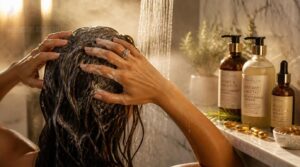
Picking the right shampoo is only half the equation. How you use it shapes how much of a difference it actually makes. These simple steps help you get the most out of every wash during recovery.
Wash Frequency for Thinning Hair
Washing too often can worsen postpartum hair loss, while washing too rarely lets buildup collect. Start with 2 to 3 washes per week, then adjust carefully.
- Wash every other day for thin hair
- Increase when your scalp feels greasy fast
- Decrease when strands feel dry after washing
- Let your scalp’s comfort guide each change
- Stay consistent to support hair regrowth
Massage Shampoo Into Scalp
Work your fingertips into your scalp using small, gentle circular motions, starting at the hairline and moving back toward your neck. This kind of scalp massage helps hair follicle stimulation and helps distribute shampoo evenly.
Keep pressure light to medium, skip any scrubbing, and aim for around five minutes. This simple habit can encourage hair regrowth without irritating your scalp.
Condition Mid-Lengths and Ends
Once you’ve rinsed out the shampoo, apply hair conditioner only to mid-lengths and ends, keeping it off your scalp. A wide-tooth comb helps spread it evenly.
Leave it on for 2-3 minutes, then rinse with cool water. This seals the hair shaft, helps hair elasticity, and improves hair smoothness for better postpartum hair manageability enhancement.
Limit Heat and Tight Styles
When your hair is shedding, avoiding excessive heat and avoiding tight ponytails gives fragile strands room to recover. Limit heat tools to 2-3 times weekly and use a heat protectant every time.
Swap elastic bands for fabric-covered scrunchies and let your hair down daily. These habits support hair breakage reduction, hair strengthening, and hair shedding normalization over the coming months.
Support Recovery Through Nutrition
What you eat directly fuels postpartum hair recovery. A nutrient-rich diet built around protein, iron, zinc, and vitamins A, C, D, and E gives your follicles what shampoo alone can’t.
Focus on a whole foods diet: eggs, leafy greens, legumes, and fatty fish. Postpartum nutrition doesn’t need to be complicated. Small, consistent choices keep your follicles nourished as regrowth begins. Adding a quality postnatal vitamin with iron and biotin can fill nutritional gaps on days when your meals don’t quite cover everything.
Frequently Asked Questions (FAQs)
What vitamin is lacking if your hair is falling out?
If your hair is falling out, deficiencies in vitamin D, iron, biotin, zinc, or vitamin B12 are often to blame. Your doctor can run a simple blood test to find out exactly what’s really missing.
What are the best hair products for post-pregnancy hair?
Post-pregnancy shedding catches most new mothers completely off guard. The best products aren’t miracle cures. Sulfate-free, biotin-rich shampoos like Maui Moisture, PHYTO Phytocyane, or Nourish Beaute all gently support your postpartum hair thinning and regrowth.
What helps post partum hair?
Several things help with postpartum hair thinning: sulfate-free shampoos, biotin, and gentle scalp massage all improve hair health.
Managing stress, eating protein-rich foods, and avoiding tight styles also support recovery as your hormones naturally rebalance.
When is postpartum hair loss the worst?
Postpartum hair loss is usually worst around 4 to 6 months after delivery. That’s when the postpartum hair shedding pattern peaks before the postpartum hair regrowth timeline gradually begins restoring fullness.
Are there any natural ingredients that can help with postpartum hair loss?
Rosemary oil boosts scalp blood flow and may help slow shedding. Saw palmetto naturally blocks DHT. Biotin builds stronger strands, coconut oil deeply nourishes your scalp, and aloe vera soothes any dryness or irritation.
How can I maintain healthy hair after giving birth?
Maintaining healthy hair after giving birth comes down to gentle, consistent care. Use sulfate-free shampoo, massage your scalp daily, avoid tight styles and excess heat, and support regrowth with iron, vitamin D, and hydration.
Are there any shampoos specifically designed for postpartum hair loss?
Shampoos designed specifically for postpartum hair loss do exist, and they work quite differently than regular formulas. Biotin-enriched, sulfate-free options from brands like PURA D’OR and Vegamour can help support scalp health and thicker-looking hair.
Are there any side effects associated with postpartum shampoos?
Some can cause scalp irritation, redness, or itching, especially when they contain fragrances, sulfates, or preservatives. If you notice these symptoms after trying a new shampoo, stop use and switch to a gentler sulfate-free formula.
Can breastfeeding make postpartum hair loss worse?
Can breastfeeding make postpartum hair loss worse? Not directly, but it can keep the door open longer. Sustained lower estrogen during lactation may prolong shedding, especially if nutrient gaps leave your regrowth running on empty.
Are postpartum shampoos safe during pregnancy?
Most sulfate-free, paraben-free postpartum shampoos are generally considered safe to use during pregnancy. To stay cautious, skip products with synthetic fragrances, phthalates, or formaldehyde releasers, as these may pose potential risks to your developing baby.
Conclusion
Like trees releasing leaves before new growth begins, your scalp is simply resetting after everything your body just carried. The shedding isn’t failure. It’s change.
Finding the best postpartum shampoo means giving your follicles the right environment to rebuild. Gentle, supportive ingredients do the quiet work while your body finds its rhythm again.
Hair by hair, strand by strand, you’ll see the proof that recovery was already happening all along. The mirror will catch up.