This site is supported by our readers. We may earn a commission, at no cost to you, if you purchase through links.
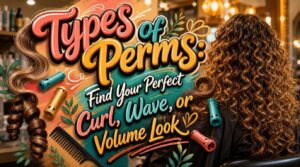
Perms have evolved far beyond the tight, over-processed ringlets of the ’80s, embracing today’s techniques that range from soft, beachy waves to defined corkscrew spirals. Each style is shaped by a precise mix of chemistry and heat, transforming hair texture through controlled restructuring.
The process hinges on breaking and reforming disulfide bonds within the hair’s keratin structure, locking in texture based on the rod’s shape. Critical factors—rod size, solution strength, heat application, and processing time—dictate the final outcome, whether subtle waves or dramatic curls.
Whether seeking volume at the roots, cascading spirals down your back, or natural body wave movement, a tailored perm exists to achieve the desired effect.
Table Of Contents
- Key Takeaways
- What is a Hair Perm?
- Popular Types of Perms
- Heat-Based Perm Techniques
- Chemical Perm Methods
- Volume-Boosting Perm Options
- Partial and Specialty Perms
- Choosing The Right Perm Type
- Frequently Asked Questions (FAQs)
- What is the most natural looking perm?
- Can I use minoxidil on permed hair?
- What type of perm should you get?
- How long does a perm last?
- How much does a perm cost?
- Can you perm colored hair or dye it after?
- Which perm lasts the longest?
- Which perm lasts longer?
- Which type of perm is least damaging?
- What is the most natural-looking perm?
- Conclusion
Key Takeaways
- Whether you want tight spirals, soft beach waves, or just more root volume, there is a perm technique built exactly for your hair type and lifestyle.
- The rod size, solution strength, and heat method you choose are what determine your final curl — so knowing the difference between cold, hot, and chemical perms puts you in the driver’s seat.
- Digital perms last the longest (up to 12 months), while body waves and cold perms need refreshing every 3–5 months, so factor your maintenance commitment into the decision.
- Fine, color-treated, or damaged hair isn’t a dead end — acid perms and gentle volumizing techniques can still deliver beautiful results without wrecking your strands.
What is a Hair Perm?
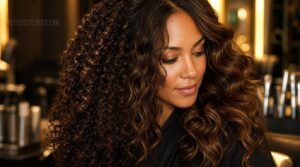
A hair perm chemically reshapes your strands into lasting curls, waves, or volume — no daily styling required. Depending on the technique, you can achieve styles ranging from tight springy coils to soft beachy waves.
The time commitment varies by curl type and hair length, so it helps to check how long a perm appointment actually takes before you book.
Here’s what you need to know before choosing yours.
How Perms Reshape Hair Texture
A perm works by breaking down your hair’s disulfide bonds, then rebuilding them around a rod — that’s the keratin coil shift that permanently changes your texture. Four factors shape your results:
- Disulfide bond reformation locks in your new pattern
- Rod diameter influence controls curl tightness
- Processing duration effects determine intensity
- Cuticle feel alteration changes your hair’s touch and look
For lasting curls, follow proper post-perm hair care guidelines.
Curl, Wave, and Volume Results
Your results come down to three things: curl diameter, wave separation, and scalp volume.
A Curly Perm delivers tight bounce elasticity and curl durability, while a Wave Perm or Body Wave Perm creates softer, flowing movement.
Want something in between? A Volumizing Perm or MultiTextured Perm give you the best of both worlds — fullness, texture, and adaptable style all at once.
Hot Perms Vs Cold Perms
Think of it as chemistry versus chemistry plus heat. A Cold Perm — sometimes called a Cold Wave Perm — reshapes hair using chemical solution alone, with minimal equipment requirements and straightforward aftercare complexity.
A Hot Perm adds digitally controlled heat, delivering stronger curl definition control, enhanced humidity resistance, and longer-lasting results — though processing time extends during the treatment.
Temporary Styling Vs Permanent Texture Changes
Cold or hot, a perm chemically restructures your hair’s internal bonds — not just the surface. Unlike temporary styling, which resets after washing, permanent texture changes hold their curl pattern for months.
Unlike temporary styles that wash away, a perm restructures your hair’s internal bonds for curl that lasts months
- Temporary styles: last hours to days
- Perms: last three to twelve months
- Maintenance frequency: higher with temporary methods
- Damage risk: chemical for perms, heat for daily styling
That’s a real longevity contrast worth knowing before your appointment.
Popular Types of Perms
Not all perms are created equal, and that’s actually a good thing. Whether you want tight springy coils, soft beachy waves, or something in between, there’s a style built for exactly that.
Here are the most popular perm types to help you figure out which one fits your vibe.
Spiral Perm
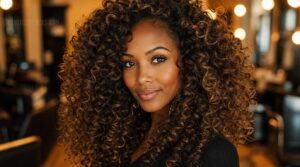
A spiral perm is your go-to for bold, defined corkscrew curls that hold their shape for months. Rod wrapping technique—winding each section vertically along longer rods—drives those signature curls.
Solution chemistry breaks and resets your hair’s bonds, while development timing locks the pattern in.
Nail your aftercare routine, and longevity factors take care of themselves.
Spiral perm characteristics: volume, definition, and confidence.
Tight Curl Perm

Want bold, textured curls that turn heads? A tight curl perm delivers exactly that, using small rod size choices and precise end paper placement to create firm, defined curls throughout your hair.
Here’s what shapes your results:
- Rod size — smaller rods mean tighter curls
- Wrapping tension — consistency keeps curls even
- Chemical dwell time — bonds are reset to the new pattern
- Deep conditioning — weekly treatments preserve elasticity
Loose Curl Perm
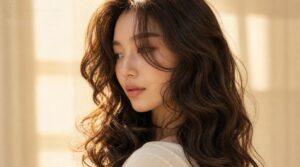
A loose curl perm gives you relaxed, casual waves without the commitment of tight spirals.
Rod sizing goes larger here, creating an open, natural curl shape. End paper keeps the ends smooth during wrapping, while neutralizer duration locks everything in place.
Finish with a curl separation technique and post-perm conditioning — your hair stays soft, defined, and full of movement.
Body Wave Perm
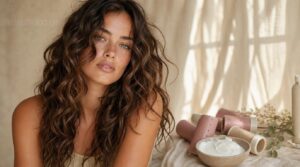
A body wave perm is your shortcut to easy, beachy texture without the daily styling struggle. Rod diameter selection matters — larger rods create that signature loose wave perm effect, giving hair natural bounce and movement. Results usually last three to six months.
Post-perm care like sulfate-free shampoo and deep conditioning keeps your waves looking fresh longer.
Wave Perm

A wave perm gives you easy, tousled texture without living at the beach. Rod Diameter Choice and Wrap Tension Technique work together to shape your final look:
- Larger rods create a loose wave perm with natural movement.
- Tighter wrapping produces more defined beach wave perm patterns.
- Wave Styling Tools help improve wave clumping post-wash.
- Moisturizing Wave Care extends results and reduces frizz.
Low-Maintenance Wave Perms for Busy Lifestyles, Growth Evolution Management keeps texture looking intentional as new hair grows in.
Soft Wave Perm

Think of a soft wave perm as your hair’s most easy upgrade. Gentle Solution Choice and precise Rod Size Selection work together to create flowing, natural-looking movement — no ringlets, no stiffness. Development Timing keeps results soft, not overdone. It’s a true Loose Wave Perm and Beach Wave Perm hybrid, ideal for Low-Maintenance Wave Perms for Busy Lifestyles.
| Feature | Soft Wave Perm | Tight Curl Perm |
|---|---|---|
| Rod Size | Large | Small |
| Result | Flowing waves | Defined curls |
| Solution Strength | Gentle | Stronger |
| Grow-Out Management | Subtle, gradual | More visible line |
| Hydration Routine | Moisturizing weekly | Deep conditioning |
Heat-Based Perm Techniques
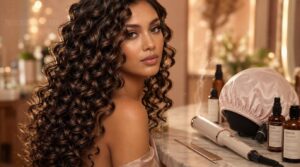
Heat-based perms take things up a notch by pairing chemical solutions with controlled heat for results that are smoother, more defined, and often longer-lasting.
If your hair needs a little extra encouragement to hold a curl, this approach might be exactly what you’ve been missing.
Here’s a closer look at the heat-based techniques worth knowing about.
Digital Perm
A digital perm combines heat technology and chemistry to transform hair texture. By using heated rods with precise temperature and humidity control, the process works through carefully timed stages to break and restructure bonds, creating soft, natural waves that endure.
Unlike traditional cold perms, this heat-driven chemical process eliminates reliance on harsh chemicals alone. The controlled environment ensures a gentler yet effective treatment, delivering the coveted Japanese Digital Perm finish: effortlessly natural, beautifully defined curls.
Ceramic Perm
If the digital perm sparked your curiosity about heat activation, the ceramic perm takes it further. Ceramic rods with a digital control panel distribute heat evenly — no hot spots, no guessing.
Temperatures usually range from 120–160°C, locking in that sought-after Korean-style curl with extended curl life. It’s a heat perm worth considering for serious, volumizing results.
Exothermic Perm
Ceramic heat works from the outside in — but an exothermic perm flips that entirely. Through thermal self-activation, the solution generates its own heat internally, enabling even diffusion of the solution straight through the hair shaft. This process allows for a faster curl set without relying on external tools.
It is also known for fine-hair suitability and minimal scalp irritation, making it one of the most adaptable perm techniques. Its unique approach to heat generation and solution distribution ensures consistent texture transformation while prioritizing scalp comfort.
How Heat Affects Curl Definition
Heat activation is where curl definition is won or lost. During this phase, hydrogen bond reset, cuticle swelling, and moisture evaporation occur simultaneously — and managing the heat dose determines the outcome.
Cooling lock-in is non-negotiable: disturbing the curl while warm causes frizz, not definition.
Compared to cold chemical perm processes, digital perm’s infrared heat technology offers far greater control over this critical window.
Best Hair Types for Hot Perms
Not every hair type is a natural fit for a hot perm — and knowing where yours lands makes all the difference. Fine hair compatibility is a real strength here, since digital perm’s controlled heat is gentler than harsher chemical perm processes.
Coarse hair adaptability depends heavily on rod size selection and hair porosity. Always get a damage assessment first.
Pros and Cons of Heat-based Perms
Hot perms like the digital perm and infrared heat-based ceramic methods deliver impressive styling versatility and long-lasting curl definition — but they don’t come without tradeoffs. Heat activation speeds up processing time, which can boost cost-efficiency per appointment.
The flip side? Moisture loss and heat damage risk are real concerns.
Limit extra heat styling afterward to keep your results fresh.
Chemical Perm Methods
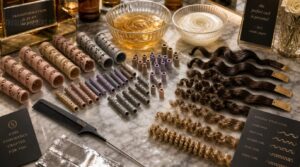
Chemical perms work by breaking down and reshaping your hair’s natural bonds using different solution strengths — and the one your stylist chooses makes a real difference in your results. Not every formula works the same way on every hair type, so knowing what’s out there puts you in a better position to ask the right questions.
Here’s a look at the key chemical perm methods worth knowing about.
Alkaline Perm
An alkaline perm is the bold choice when your hair means business. Operating at a high pH between 8.5 and 9.5, thioglycolate action breaks down hair’s disulfide bonds fast — no heat required.
Rod size determines your final curl shape, making it adaptable for coarse hair. However, it’s crucial to monitor porosity limits, as damaged or color-treated hair risks causing breakage.
- Firm, defined curls with serious staying power
- Works without heat, using chemistry alone
- Processes quickly, often within 10–20 minutes
- Best for resistant, healthy, non-porous hair
Acid Perm
Think of an acid perm as chemistry that works with your hair, not against it. Its pH balance sits around 6.5–7.2, making it a genuinely hair-friendly, color-safe perm option.
Thioglycolate reducing agents gently break and reform disulfide bonds without aggressive cuticle lifting.
| Feature | Acid Perm |
|---|---|
| pH Range | 6.5–7.2 |
| Best For | Fine, color-treated hair |
Cold Perm
Cold perms skip the heat entirely — your hair wraps onto rods, the alkaline solution processes at room temperature, and the neutralizer phase locks in your curl pattern. Rod placement determines everything, from tight coils to loose waves. It’s a genuinely heat-free process, gentler than digital perm options.
Though cold curl longevity usually lasts one to three months before the pattern relaxes, this method remains a gentler alternative to heat-based treatments.
Chemical Solution Strength
The formula behind your perm determines how aggressively the solution reshapes your hair bonds. Molarity basics dictate this process—strong alkaline solution formulas work quickly on coarse, resistant hair, while acid-balanced perm solutions treat fragile strands gently.
Ionic strength effects and conductivity testing help stylists verify potency before application. These checks are critical because temperature dependence alters solution behavior in warmer salon environments, ensuring safety and consistency.
Understanding acid-balanced vs. alkaline perm formulas empowers smarter choices, aligning the treatment’s intensity with your hair’s unique needs.
Perm Processing Time
Processing time varies by perm type — here’s what to expect:
- Digital Perm – Up to several hours; can last 12 months
- Alkaline Perm – Faster processing; no heat needed
- Exothermic Perm – Self-heating formula speeds up timing
- Body Wave – Usually 3–5 months of results
- Root Perm – Quick process, but monthly touch-ups needed
Hair Health Considerations
Your hair’s health matters as much as the curl result. Scalp sensitivity, moisture retention, and cuticle protection all factor into how well your hair manages chemical processing.
Allergy testing before your appointment helps catch reactions early.
For breakage prevention, avoid perming already-damaged hair — it won’t hold the curl and may snap.
Deep conditioning afterward keeps your hair resilient and ensures lasting results.
Volume-Boosting Perm Options
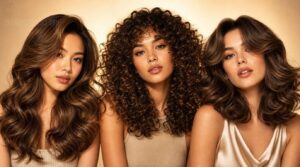
If flat, lifeless hair has been holding you back, volume-boosting perms might be exactly what you’ve been looking for. These options are specifically designed to lift, thicken, and energize your hair from the roots down.
Here’s a closer look at the perms that can genuinely transform fine or flat hair into something fuller and more vibrant.
Root Perm
A root perm is your secret weapon against flat, lifeless roots. This technique revitalizes volume at the scalp, creating a lifted appearance without altering the rest of the hair.
The scalp lift technique targets only the first few inches near the scalp, leaving lengths untouched. Regrowth blending ensures seamless transitions as hair grows, while rod size selection determines the lift’s subtlety or bounce.
Do not forget chemical exposure safety and a robust aftercare routine to maintain results and protect hair health.
Root Lift Perm
Think of a root lift perm as upgrading the root perm — same scalp-focused idea, but dialed up for serious Crown Lift and Scalp Volume.
Using the Small Rod Technique, stylists wrap only the first two to four inches near your scalp.
Lift Timing is shorter than a full perm, and Regrowth Management stays clean.
It’s one of the best Root-focused perm methods for fine hair.
Volumizing Perm
A volumizing perm is your go-to flat hair solution when your hair just won’t cooperate. Unlike curl-focused perms, this technique prioritizes hair volume increase through the Lifted Scalp Technique and smart Rod Size Selection — larger rods create soft, open waves that read as fullness, not ringlets.
- Targets roots for a buoyant, natural lift
- Uses bigger rods for looser, body-boosting waves
- Chemical Neutralizer role locks in your new wave pattern
- One of the best Volume-Boosting Perm Options for fine hair
- Simple aftercare routine keeps results lasting around six weeks
Bounce Perm
Want that springy, full-of-life texture without committing to tight ringlets? A bounce perm delivers exactly that. Larger roller diameter choices create soft, defined movement — loose-to-moderate waves with real hair volume and sway. With proper after-perm care, bounce longevity runs from two to six months.
| Feature | Bounce Perm | Volumizing Perm |
|---|---|---|
| Curl Style | Springy waves | Soft body waves |
| Styling Options | Down, natural silhouette | Lifted, fuller look |
| Cost Considerations | Moderate | Moderate |
Body Curl Perm
For hair that moves like it has somewhere to be, a body curl perm delivers soft, C-shaped waves with real volume and zero stiffness.
Larger rod diameter choices and a thoughtful sectioning strategy ensure natural curl consistency throughout.
Expect a service duration of about three hours.
Here’s what makes it stand out:
- Loose, flowing "C curl" waves — never tight ringlets
- Adds full-bodied volume without a dramatic texture shift
- Works beautifully within volume-boosting perm options for fine hair
- Post-perm styling stays easy — air-dry and go
- Results last up to five months with basic upkeep
Best Perms for Fine Hair
Fine hair doesn’t have to mean flat hair. The right perm approach makes all the difference — and for thin strands, that means small rod sizing, a gentle acid perm formula, and uniform sectioning to keep curls even.
| Perm Feature | Why It Works for Fine Hair |
|---|---|
| Small rod sizing | Creates structure without weight |
| Gentle acid perm | Reduces damage on delicate strands |
| Uniform sectioning | Prevents uneven or patchy results |
| Lightweight curl pattern | Adds volume without clumping |
| Low-friction aftercare | Keeps curls bouncy and defined |
A volumizing perm with low-maintenance wave perms for busy lifestyles keeps volume-boosting perm options for fine hair both achievable and lasting.
Partial and Specialty Perms

Not every perm has to transform your whole head — sometimes you just want to shake things up in one spot. Partial and specialty perms give you that kind of targeted control, letting you add texture, volume, or curl exactly where you want it.
Here’s a look at the options that make it possible.
Spot Perm
A spot perm represents precision styling at its best — targeted rod placement ensures only sections needing reshaping receive treatment. This sectioned solution approach blends uniformity across uneven textures without affecting the rest of the hair.
It’s a time-saving process compared to a full perm, though maintenance frequency is higher. Perfect for customization, spot and partial techniques allow tailored perm results.
Fringe Perm
Your bangs deserve their own moment. A fringe perm is a partial perm that targets only the bang section, giving you tailored texture without touching the rest of your hair.
- Curl direction shapes whether bangs sweep inward, outward, or frame the face
- Solution application stays localized, protecting overall hair health considerations when perming
- The neutralization step locks your new texture in place
- A simple aftercare routine keeps bang styling hassle-free daily
Stack Perm
Unlike the fringe perm’s focused touch, a Stack Perm reshapes your mid-lengths and ends using a stacked roller layout that builds targeted volume zones from crown to tip.
Curl density control and directional consistency keep the shape cohesive, not chaotic. Grow-out management stays predictable, too.
| Feature | Detail | Benefit |
|---|---|---|
| Roller Layout | Staggered, multi-row stacking | Even volume distribution |
| Curl Density Control | Layered wind sections | Fuller mid-length texture |
| Directional Consistency | Planned winding angles | Cohesive, defined curl pattern |
| Targeted Volume Zones | Crown and mid-head focus | Balanced, non-bulky silhouette |
| Grow-Out Management | Zone-based curl placement | Longer-lasting shape retention |
Pin-curl Perm
A pin-curl perm style brings vintage-inspired curl perms and retro looks straight into your modern routine.
Rod size selection shapes how tight or relaxed your curls land, while section clipping methods keep every wrap precise.
Hot pin heating sets the curl form, and solution neutralizing timing locks it in.
Curl density control gives you a polished, repeating pattern that turns heads.
Pigtail Perm
A pigtail perm takes the precision of a pin-curl and pushes it further with a Double Rod Wrap setup — two rods layered per section for deep, voluminous waves.
You’ll need medium hair length to pull this off, since shorter strands cannot wrap both rods properly.
A Tight Base Setup and smart Sectioning Strategy keep everything even, ensuring structural integrity during the process.
Thorough Solution Coverage guarantees consistent results, as every strand receives uniform treatment.
Multi-textured Perm
Want something that doesn’t look "done"? A multitextured perm combines Rod Size Variation and Opposing Windings across each Sectional Placement zone, so tighter ringlets sit beside looser waves naturally.
That Natural Look Mimicry is the whole point — your curls won’t match, and that’s exactly right.
Styling Flexibility comes built in, giving you dimensional volume without the uniform, fresh-from-the-salon giveaway.
Choosing The Right Perm Type
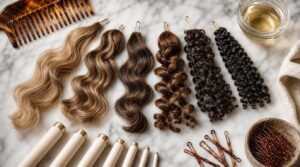
Picking the right perm isn’t one-size-fits-all — your hair length, texture, and lifestyle all play a role.
The good news is there’s genuinely a style that works for where you’re starting from. Here’s what you need to know to match your hair to the right perm type.
Best Perms for Short Hair
Short hair opens up more perm possibilities than you might think. Rod size selection and end wrap technique matter more at shorter lengths — smaller rods create defined spiral perm ringlets, while larger ones deliver soft waves. Volume placement through a stack perm or volumizing perm lifts the crown beautifully.
Match curl tightness to your cut, and don’t skip short hair aftercare.
Best Perms for Medium Hair
Medium length hair is the sweet spot — adaptable enough for a Body Wave Perm, Stack Perm, or Volumizing Perm, yet short enough to stay manageable.
Mid-length lift and balanced volume come naturally at this length. Prioritize moisture retention and post-perm care to keep curls defined.
Low-maintenance styling is totally achievable here, making hair length considerations for perms feel easy.
Best Perms for Long Hair
Long hair unlocks serious perm potential — but it demands smarter technique. Rod Placement Strategies and Layered Sectioning Tips keep curl distribution even from root to ends. End-Focused Wrapping ensures the tips don’t stay stubbornly straight.
Top perm techniques for long hair include:
- Spiral Perm for defined, uniform coils
- Body Wave Perm for flowing, natural movement
- Beach Wave Perm for relaxed, easy texture
- Stack Perm for curl-focused ends with smoother roots
Heat Distribution Methods and Solution Strength Matching are crucial at this length, especially with a Spiral Perm or any perm technique for long hair requiring effective penetration throughout the hair’s length.
Perms for Fine or Thin Hair
Fine or thin hair needs a gentle touch — that’s where Mild Chemistry Choice and Short Dwell Time make all the difference. An acid perm with Large Rod Waves creates airy, natural-looking movement without weighing strands down.
A volumizing perm for thin hair or Low-Maintenance Wave Perms for Busy Lifestyles both deliver real lift.
Finish with Feather-Light Products and Sulfate-Free Care to keep your results lasting.
Perms for Thick or Coarse Hair
Thick or coarse hair is built to hold a curl — but it needs the right match. An alkaline perm or exothermic perm manages resistant strands well, while processing adjustments and proper solution saturation ensure even results.
Rod sizing should complement your hair’s natural weight, as this balance is critical for achieving the desired curl formation.
Do not skip neutralizer timing or deep conditioning — they’re what separate lasting definition from a frizzy letdown.
For added volume, a root lift perm provides bonus lift at the scalp.
How Long Different Perms Last
Your perm’s lifespan depends on more than just chemistry — hair type and aftercare also influence how long those curls actually stick around.
- Alkaline perms deliver a perm’s durability of 6–8 months.
- Spiral perms offer long-lasting curls for up to 6 months.
- Body waves follow a 3–5-month refresh interval.
- Root perms require monthly touch-ups for various perm styles.
- Digital perms boast the longest growth-out timeline — up to 12 months.
Seasonal curl retention varies, so plan accordingly.
Maintenance Needs by Perm Type
Once you know your perm’s lifespan, matching your care routine to your curl type makes all the difference. Tight curls require a consistent moisturizing routine and strict heat tool limits to maintain definition. Root regrowth care is critical for volume styles, demanding monthly upkeep.
Prioritize damage repair strategies—such as deep conditioning and sulfate-free products—as the foundation for maintaining various perm styles.
Frequently Asked Questions (FAQs)
What is the most natural looking perm?
The most natural-looking perm comes down to a soft wave perm or loose wave perm, utilizing variable rod sizing and gentle solution strength.
This technique achieves a beach wave effect that blends beautifully with your texture.
Can I use minoxidil on permed hair?
Yes, but timing matters. Wait until scalp irritation settles before applying minoxidil.
Apply it to the scalp only, not the hair lengths, to protect sensitivity and support aftercare.
What type of perm should you get?
Your ideal perm comes down to Desired Texture, Lifestyle Compatibility, Maintenance Commitment, and Budget Constraints —
all filtered through an honest Hair Health Assessment so your stylist can match the right technique to your goals.
How long does a perm last?
Most perms last three to six months, though hair growth impact, aftercare frequency, and lifestyle factors all influence perm longevity.
Good perm durability and maintenance habits keep curls looking defined longer.
How much does a perm cost?
Perm costs usually range from $50 to over $300, shaped by hair length pricing, location price variance, and add‑on charges.
Budget considerations for perms matter — longer hair and specialty techniques always cost more.
Can you perm colored hair or dye it after?
You can do both — but timing matters. Wait at least two weeks between processes, assess your hair’s condition first, and choose low-ammonia dyes to prevent damage.
When in doubt, get a professional consultation.
Which perm lasts the longest?
If longlasting curls are your goal, digital perm durability wins hands down—lasting up to a year with consistent aftercare.
Rod temperature control and curl tightness are contributing factors, but proper maintenance is key to maximizing results.
Which perm lasts longer?
Digital perms win for longevity, often lasting up to twelve months.
Your hair porosity, aftercare routine, and growth pattern all affect curl durability — so the right choice depends on your hair.
Which type of perm is least damaging?
Acid perms win here. Their gentle acidic formulation and lower pH balance mean less cuticle disruption, making them the safest pick for color-treated or fragile hair.
What is the most natural-looking perm?
A soft wave or body wave perm delivers the most natural look. Strategic rod placement and curl intensity matched to your texture-blending goals create loose, beachy waves that move like your hair always did.
Conclusion
Worried that perms only work for certain hair types? That’s a myth worth leaving behind. The many types of perms available today means there’s a match for fine, thick, short, or long hair alike.
Whether you’re chasing beachy waves, defined spirals, or serious root volume, the right technique exists for your texture and lifestyle.
Talk to a licensed stylist, bring your inspiration, and walk out with a look that feels effortlessly, unmistakably yours.
- https://charlesifergan.com/the-ultimate-guide-to-2025s-trending-perm-styles-find-your-perfect-curl/
- https://www.verbproducts.com/blogs/verb-word/ultimate-guide-to-different-types-of-perms
- https://www.styleseat.com/blog/types-of-perms/
- https://houstontrainingschools.net/spiral-perm-vs-regular-perm/
- https://www.everythinghair.co.za/blogs/news/the-beginners-guide-to-perm-rods?srsltid=AfmBOoohIMOnjtZz8CS53IFqu2ICxY_jdAElY0OfRTkl7EljGnkK1RQa